Key Takeaway
An alu fence is simply an aluminum fence, typically built from powder-coated 6063-T5 structural-grade aluminum panels that range from open ornamental pickets to full privacy systems. Aluminum does not rust, rot, or warp, and panels stay rigid once installed. California pool enclosures must meet a minimum 60-inch height with self-closing, self-latching gates under Health and Safety Code Section 115922.
“Alu” is shorthand for aluminum, so an alu fence is simply an aluminum fence. These are powder-coated aluminum fence panel systems that range from open ornamental pickets that look like traditional wrought iron all the way to modern slatted and full privacy fence panels. Aluminum doesn’t rust, rot, or warp, and the components are light without being flimsy. If you’re comparing metal fence materials for a backyard, a pool, or a driveway gate and your search results are showing five products that look nothing alike, here’s how to tell the styles apart and pick the right one for your project.
What Does “Alu Fence” Mean?
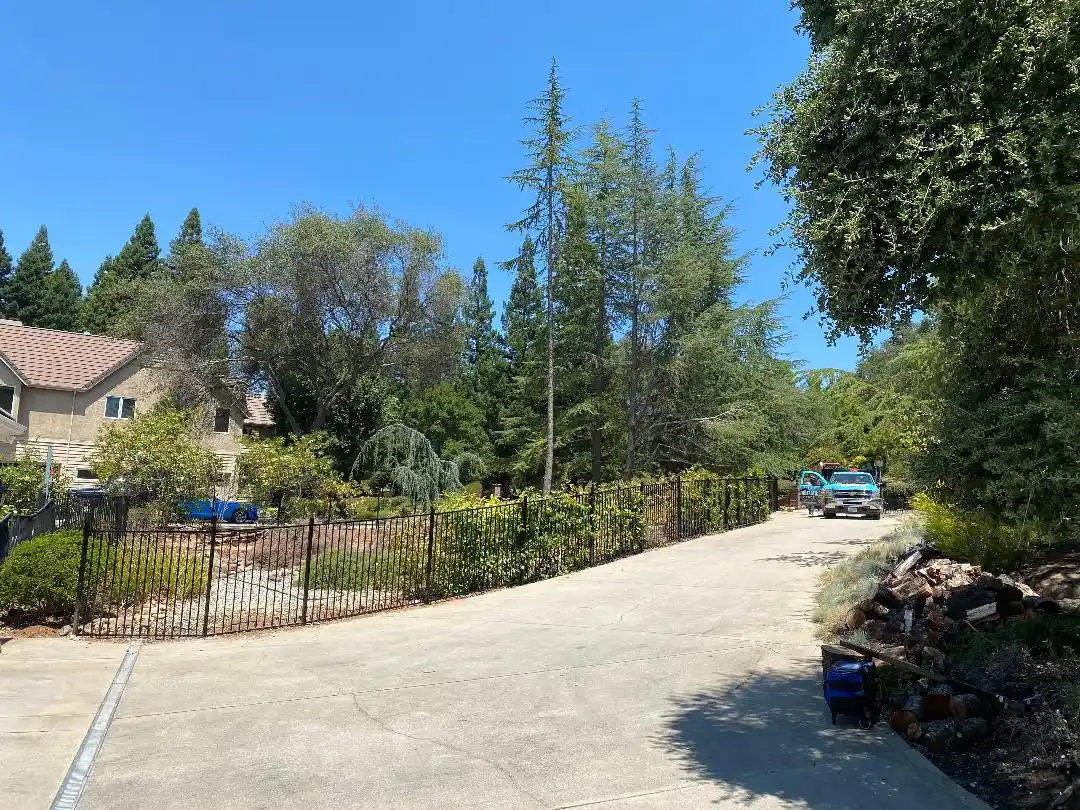
The term gets used three ways. It’s casual shorthand for aluminum. It’s a clipped version of the British and international spelling, aluminium. And some manufacturers use “ALU” as a model prefix on a specific aluminum fencing product line, which is why the phrase pulls up such a strange mix of pages. In the U.S., the standard term is aluminum fence, and that’s what we’ll use from here.
Most residential and commercial aluminum fence extrusions are made from 6063-T5 structural-grade aluminum alloy. That one spec explains a lot: the alloy is engineered for strength without weight, which is why a fence panel you can carry across the property by yourself still stands rigid once it’s installed in a panel run.
The Main Aluminum Fence Styles and Fence Panel Types
Open ornamental aluminum and full privacy aluminum are not the same product. They look different, they perform differently, and they place very different demands on posts and footings. Sort out which of the aluminum fence styles you’re actually shopping before you compare anything else.
Open ornamental picket fence panels
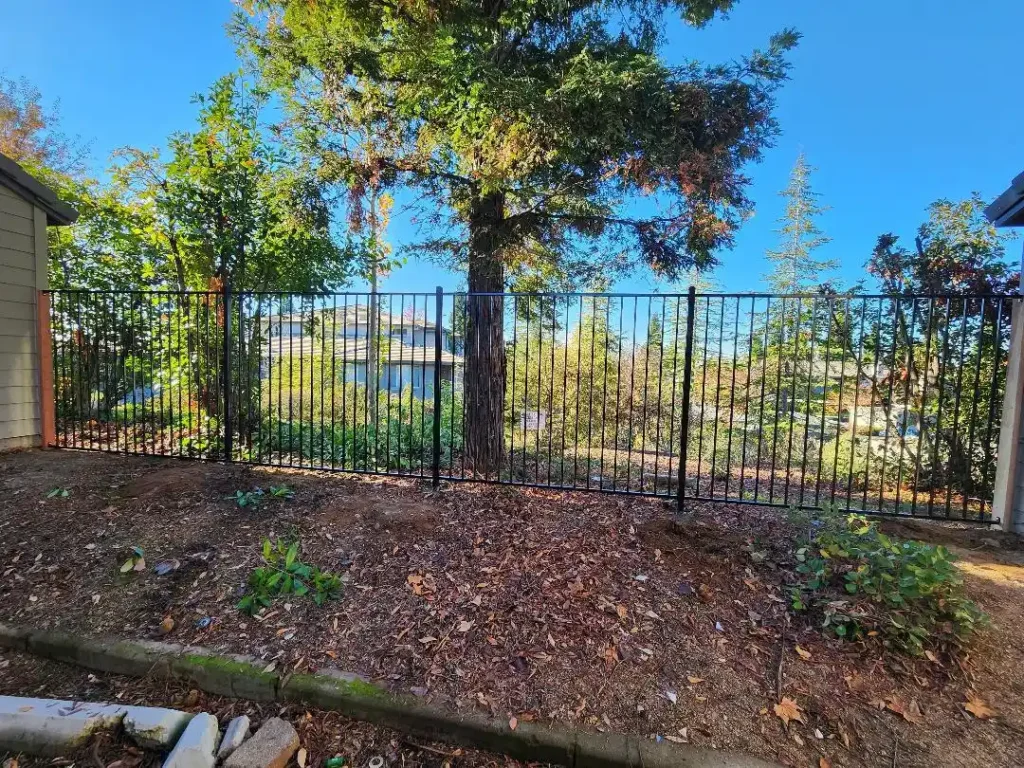
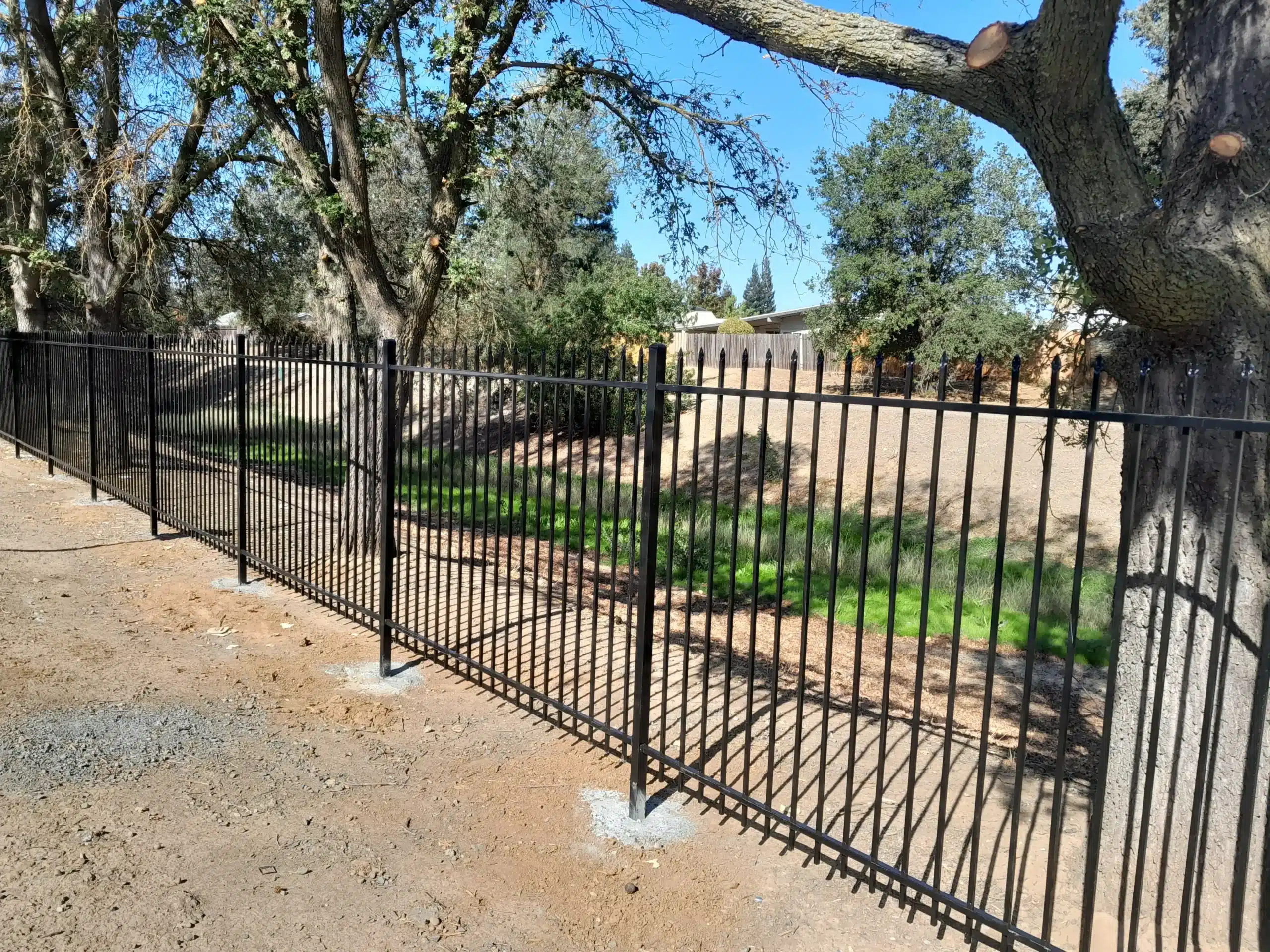
The classic look. Flat-top, spear-top, staggered picket, and security picket tops, in 3-foot, 4-foot, and 5-foot heights, with fence panels typically spanning 6 feet between posts. The horizontal rails that tie the pickets together come in two-rail and three-rail configurations, and taller panels usually add the third rail for stiffness. Black, bronze, and white are the common powder-coat colors. Visually, these pickets mimic traditional wrought iron closely enough that most people can’t tell from the sidewalk.
Horizontal and vertical slat panels
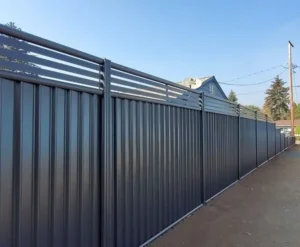
A more modern profile with tighter slat spacing. You get partial screening and a contemporary line without going fully solid, which works well when the fence is framing an outdoor space you actually use. These systems are popular on newer Elk Grove lots where the architecture leans clean and linear.
Full privacy and tongue-and-groove panels
Solid-face systems with no sightlines through them. They deliver real privacy and real protection from a neighbor’s view, and they also change the engineering: heavier panels catching more wind means bigger posts, deeper footings, and more support at every connection.
Aluminum-framed infill and gate systems
An aluminum frame with a separate infill material, plus pedestrian and driveway gates. A gate is the hardest-working element of any fence run, so the frame, hinges, and post reinforcement matter far more than the panel style you picked. Automated gate systems raise the stakes again, because a gate opener multiplies every weakness in the frame and takes real project coordination between the fence crew and the gate opener install.
Why Homeowners Choose Low Maintenance Aluminum Fencing
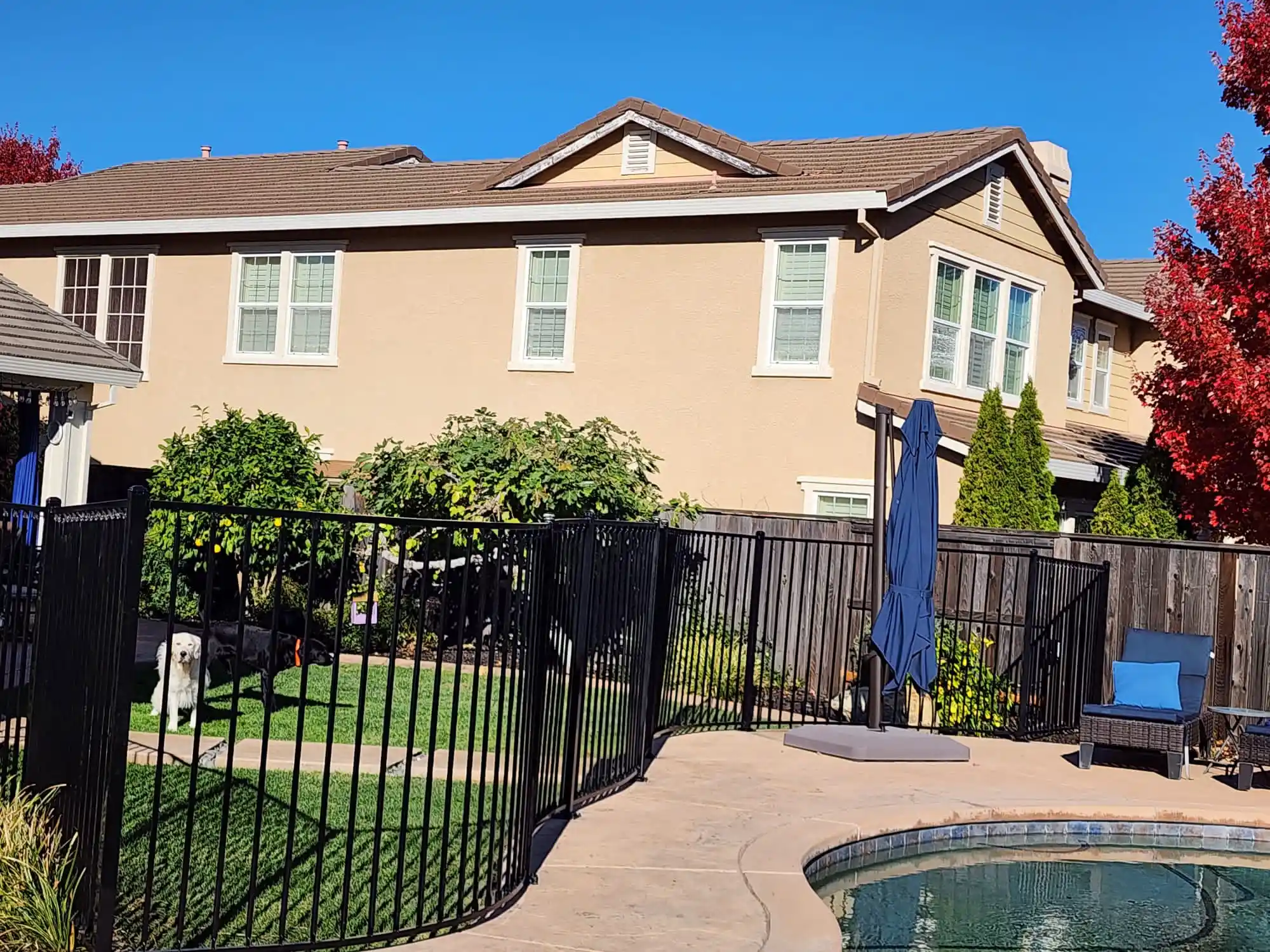
The main draw is a clean look that stays clean. Aluminum doesn’t develop iron rust, and it won’t rot, cup, or warp the way wood eventually does. A good powder coating resists chipping and fading, so there’s no paint to reapply every few seasons and no chemical treatments to schedule.
Maintaining it is simple in the practical sense: rinse it, check the hardware, and get on with your weekend. Well-finished aluminum fencing holds up for decades with very little asked of you, and that durability is a big part of why the material keeps showing up on Sacramento-region property where summer heat punishes everything else.
The lightweight components help too. Fence panels are easier to handle during installation, which makes on-site assembly faster and more efficient, and gate leaves swing with less strain on hinges and posts. Aluminum is also 100% recyclable and often manufactured with recycled content, which takes fewer resources than producing new metal. And because open pickets barely interrupt a view, aluminum fencing is a popular choice around pools and planted areas where you want the boundary without the wall.
The Limitations You Should Know Before You Buy
Aluminum resists corrosion because it forms a protective oxide layer on its surface. That protection is real, but resistant is not proof. Deep scratches, trapped moisture, harsh pool chemicals, and contact with dissimilar metals can all affect the finish or the metal over time, and environmental exposure adds up fastest where a sprinkler head hits the same rail every morning. The industry publishes actual cleaning and periodic maintenance guidance for architecturally finished aluminum (AAMA 609 and 610-25), which tells you plainly that “maintenance-free” was always marketing.
Open ornamental pickets give you a defined boundary, not privacy. Solid privacy panels solve that but catch far more wind, so posts, footings, rails, and gates all have to be sized for the load. And impact resistance is lower than a comparable steel system. None of this makes aluminum a bad choice. It just means you should know what you’re buying.
Residential Grade vs. Commercial Grade Aluminum: What’s the Difference?
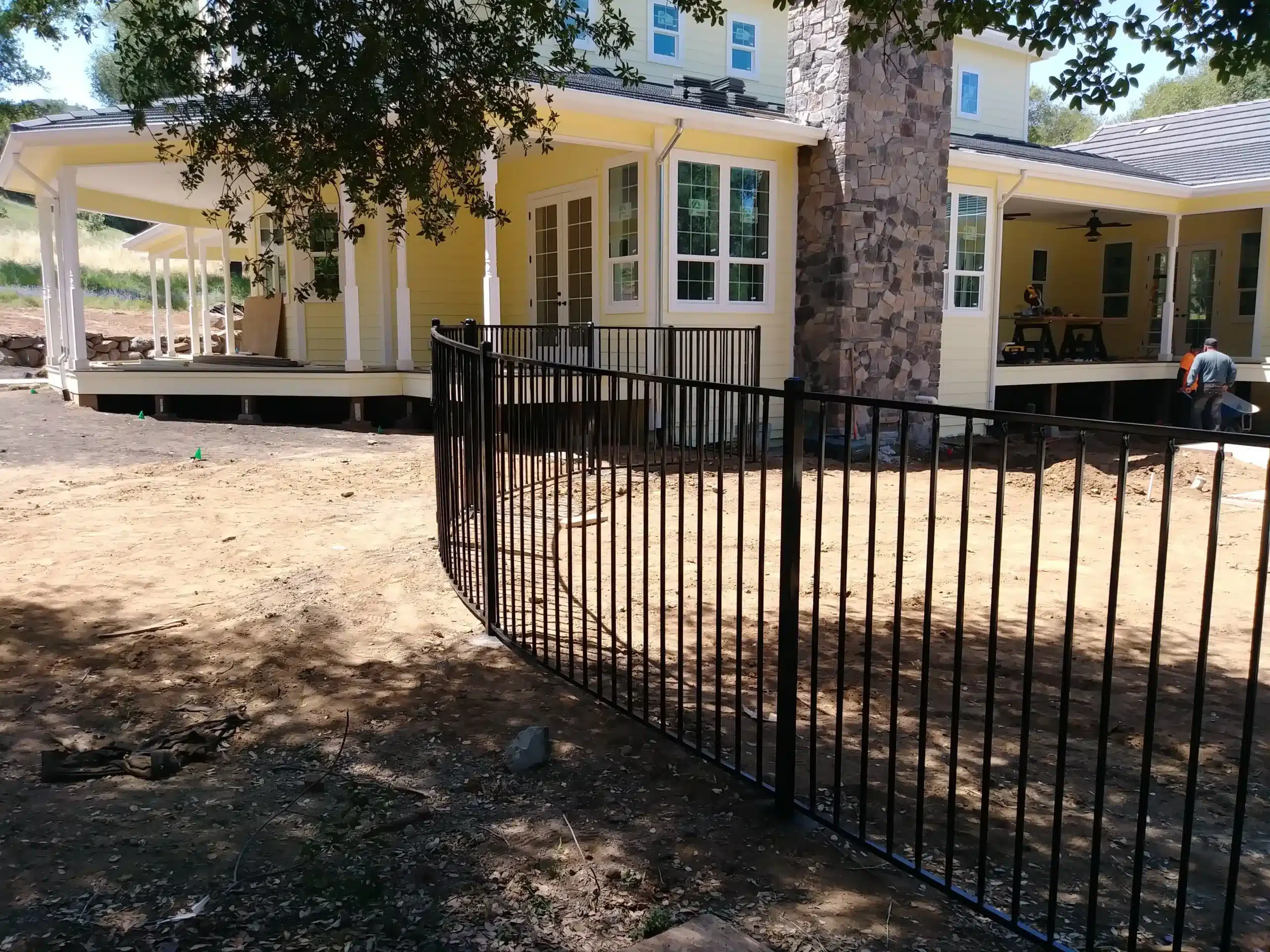
“Aluminum fence” tells you nothing about strength until you know the grade and the section sizes. Two fence panels can look identical in a photo and be built very differently.
Residential grade aluminum panels
Typically 5/8-inch pickets and 1-inch rails in 6063-T5 alloy. Suitable for property boundaries, front-yard curb appeal, pet containment, and pool areas.
Commercial and industrial grades
Thicker 3/4-inch pickets, 1.5-inch rails, and heavier posts. Commercial grade aluminum is built for perimeter control on business property and higher-traffic gate systems, including sites where a gate cycles dozens of times a day. Heavier sections make sense when the scale of the property or the traffic through the gate calls for it. Whatever the grade, a heavier gate leaf needs a reinforced gate post. That’s the part most quotes gloss over.
Aluminum Fencing vs. Iron, Steel, Vinyl, Wood, and Chain Link
There’s no universal winner here. The right material depends on what the fence has to do, how durable it needs to be, what grade you buy, and where it sits on the property.
| Material | Best suited for | Trade-off to weigh |
|---|---|---|
| Aluminum | Open decorative boundaries, pool fencing, sloped yards | No privacy in open styles; lower impact resistance |
| Ornamental iron (pre-galvanized steel) | Timeless curb appeal with more mass behind it | Finish care matters more over the years |
| Durabond steel | High-security perimeters, sleek modern lines | Heavier system, higher investment per foot |
| Vinyl | Full privacy with very little upkeep | Fewer style options than metal |
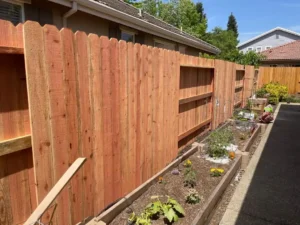
| Wood (including a good neighbor fence) | Affordable full privacy, shared property lines | Periodic maintenance; posts are the weak point |
| Chain link | Practical containment, large properties, commercial sites | Utilitarian appearance, no screening |
If impact resistance or higher security is the priority, compare against a heavier steel system rather than upgrading aluminum. If you want full privacy affordably, wood or vinyl usually wins. Aluminum’s sweet spot is open, decorative, low maintenance boundaries and pool enclosures. All of these materials are affordable at different price points, and the real cost drivers (run length, height, grade, number of gates, and grade work) move the price far more than the material name does.
Is Aluminum Fencing Right for Your Project?
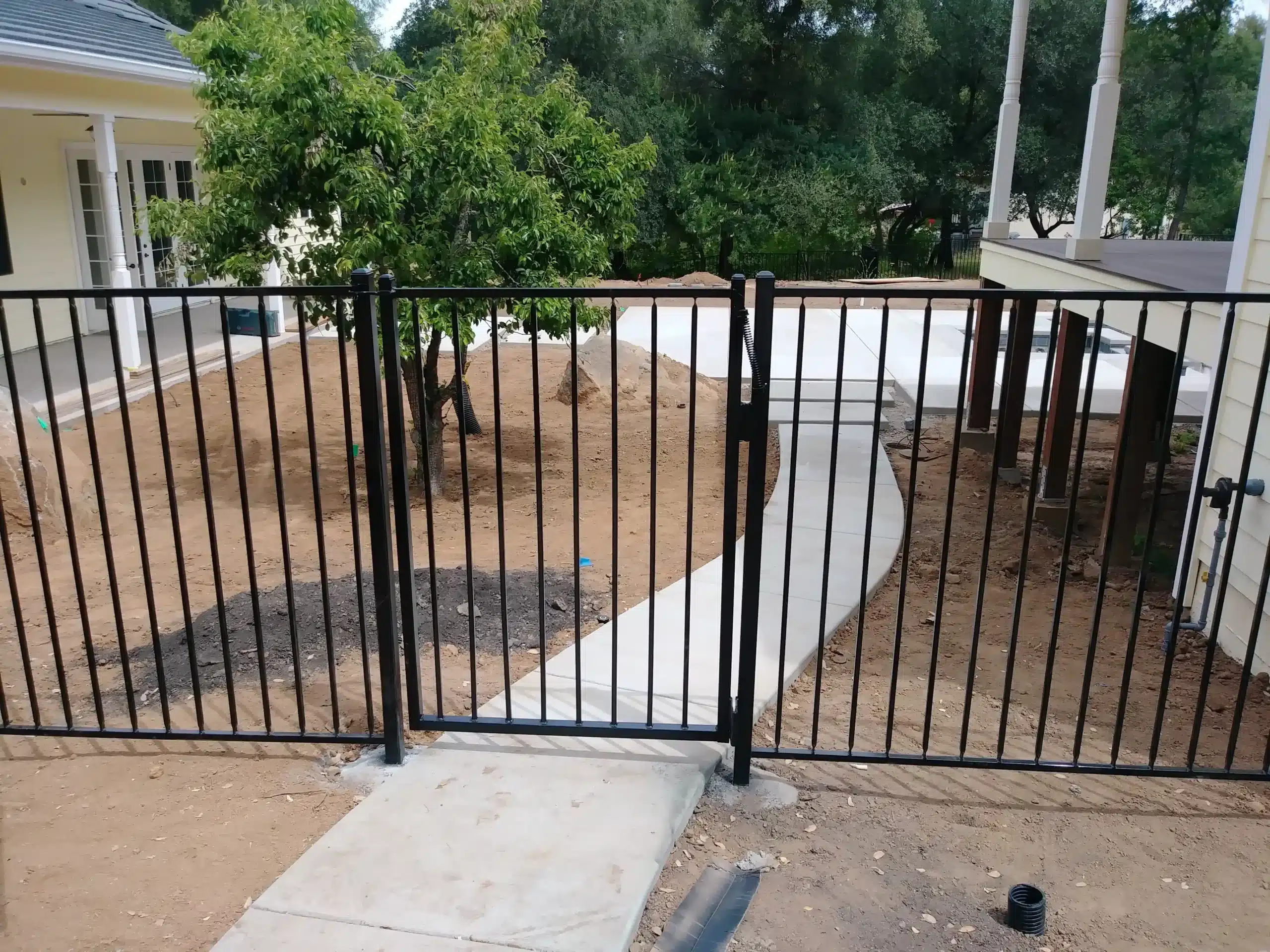
It depends on the job the fence is doing.
Pool fencing, pets, and kids
Seeing through the fence is a genuine safety advantage at a pool. Picket spacing has to stay tight (under 4 inches), and gates must be self-closing and self-latching. For dogs, height and bottom clearance matter more than what the panel is made of.
Privacy and security
Open aluminum is not a privacy fence. Slatted or solid aluminum fencing can screen a patio or the side of the house well, provided posts and footings are specified for wind load. For security-first applications, put steel on the table.
Sloped and uneven yards
Rackable fence panels follow grade nicely, but only within that specific panel’s racking range. Steeper lots may need stepped panels, shorter sections, custom widths, or grade work.
How to Judge Aluminum Fence Quality, Powder Coating, and American Made Systems
ASTM F2957-13(2025) is the active standard specification for architecturally coated, tubular-picket ornamental aluminum fence systems. It covers materials, structural testing, dimensions, and finish performance. One honest limitation: it applies to coated tubular-picket ornamental systems, not automatically to every privacy or infill product on the market.
For coatings, the current AAMA 2603, 2604, and 2605 specifications set “good, better, best” tiers for organic finishes on architectural aluminum, with 2605 demanding a high level of weathering and color-hold performance. “Powder-coated” on its own tells you nothing about quality, and superior quality is defined by the specification a finish is tested against, not by the word on the label. Ask which specification the finish meets, because that one question tells you more about finish quality than any brochure photo. It’s also worth asking whether the system is American made, because domestically manufactured lines tend to be easier to match years later when you need a replacement fence panel or a hinge in the same color.
- System grade: residential, commercial, or industrial
- Whether ASTM F2957 applies to the exact system quoted
- The AAMA finish specification
- Picket, rail, and post dimensions
- Fastener compatibility and connection method (rail systems vs. welded)
- Gate-post reinforcement and footing detail
- Racking capacity for your grade
- Written manufacturer and finish warranty
- Repair-part availability, including whether the product lines ship nationwide and whether a supplier will still stock matching components in five years
What California and Elk Grove Homeowners Should Check First
A fence that’s perfectly legal in one city can be non-compliant two miles away. Check local code before you order panels, since height, material, and setback standards are written city by city.
California pool fencing and pool safety fence requirements
Health and Safety Code Section 115922 requires at least two of seven drowning-prevention features when permits are issued for a new or remodeled pool or spa at a private single-family home. A qualifying enclosure is one of those options. Under Section 115923, that enclosure needs a minimum 60-inch height, a latch at least 60 inches above the ground, a gate that opens away from the pool and is self-closing and self-latching, no more than 2 inches of clearance underneath, no gap a 4-inch sphere can pass through, and no climbable handholds or footholds on the exterior. No fence panel is “code-compliant” by itself. The installed barrier gets evaluated, including grade changes, hardware, and whatever climbable object sits next to it.
Elk Grove fence height and material rules
General maximums run 3 feet in a required front yard and in clear visibility areas, 7 feet in required interior side and rear yards, and 7 feet in a street-side yard set at least 5 feet behind the sidewalk (3 feet if closer). Interior side or rear-yard fencing may reach 8 feet with a City building permit, and 10 feet applies outside a required yard, subject to other rules. Elk Grove adopted the 2025 California Building and Residential Codes effective January 1, 2026.
Here’s the aluminum-specific catch: the street-side exception allowing up to 6 feet expressly names decorative open wrought iron or tubular steel, and the residential screening-material list names solid wood, solid vinyl, masonry, tubular steel, and wrought iron. Aluminum isn’t named. Confirm material, location, openness, and height with Elk Grove Planning before ordering, especially on a corner lot or where the fence serves as screening. HOA architectural guidelines and CC&Rs can layer on more rules for material, color, and style.
Permits, property lines, and 811
Zoning clearance applies when a building permit is required, and exceeding the standards triggers minor design review. Every post hole is an excavation, so premark the area and contact USA North 811 at least two working days before digging. We handle utility marking as part of our installation process.
Questions to Ask Any Fence Contractor Before You Sign
- What exact system and grade are you quoting?
- What finish specification does the coating meet?
- Is this design approved for its intended use (pool, screening, corner lot)?
- How will the fence follow the grade?
- How are the gate posts reinforced?
- Who verifies permits, HOA rules, and utility markings?
- What’s in the written estimate, and what’s in the written guarantee?
Ask for the contractor’s license number and verify it yourself at the Contractors State License Board. Fencing work should be performed under a C-13 Fencing Contractor classification.
Frequently Asked Questions
What are the downsides of aluminum fences?
Lower impact resistance than a comparable steel system, no privacy in open picket styles, and a finish that can scratch. Aluminum is corrosion-resistant, not corrosion-proof, and its strength depends entirely on the grade you buy.
How much does 100 feet of aluminum fence cost?
The price drivers are height, grade, picket and rail sizes, the number and type of gates, slope and grade work, post depth, and site access. Run your numbers through our Fence Price Calculator or request a free fence estimate for flat pricing with zero hidden fees.
Is an aluminum fence cheaper than wood?
It depends on grade and style. Wood is typically the more affordable path to full privacy, while ornamental metal generally costs more per foot but asks far less of you in upkeep over its life.
Who makes the best aluminum fence?
Judge quality by criteria, not brand. Match the grade to the use, confirm ASTM F2957 applicability for ornamental picket systems, ask which AAMA finish spec the coating meets, then check picket and rail dimensions, gate-post reinforcement, racking capacity, and the written warranty.
Talk It Through Before You Commit
Choosing the wrong material is expensive to undo, and we’d rather help you pick right than sell you the fence you happened to search for. We’re licensed, bonded, and insured (CSLB License #979657), with approximately 35 background-checked W-2 employees, flat pricing with zero hidden fees, and a written guarantee: the job isn’t finished until you give us the thumbs up. We clean up thoroughly when the installation is done, and financing is available for Sacramento-region residents.
Our Elk Grove office is at 9245 Laguna Springs Dr, Suite #228, at 916-345-0142, alongside our Sacramento and Rocklin offices serving Sacramento, Placer, El Dorado, Yuba, Yolo, and Nevada counties. Get a Free Fence Estimate: Call Us or Book Online.