Key Takeaway
A bamboo privacy fence works best as decorative screening attached to a structurally sound fence or frame, not as a standalone boundary or security fence. Rolled bamboo can go up in an afternoon and block sightlines the same day. Durability depends heavily on treatment, with untreated culms lasting under two years and well-treated panels reaching 15 to 20 years when kept off the soil.
A bamboo privacy fence can add attractive, affordable screening to a backyard in a hurry, but rolled bamboo fencing works best as decorative infill attached to a structurally sound fence or frame. On its own it is not a boundary fence, a security fence, a pet-containment fence, or a pool safety fence. Bamboo fence panels and rolls go up over existing fencing or a wall and create a high visual barrier that blocks the view from next door, which is exactly why homeowners like them.
We get asked about bamboo fencing constantly by people who want privacy fast in their outdoor space without wasting money. Here is how to tell whether you need a privacy screen or a real fence, and what it takes to keep bamboo looking good outdoors.
What Do People Mean by a “Bamboo Privacy Fence”?
Three different products share the name, and most articles treat them as interchangeable. They are not.
Rolled bamboo fencing or reed screening
Thin canes wired together and sold by the roll in stock heights and finishes. It is lightweight, versatile, easy to purchase online, and attaches to an existing fence, wall, railing, or frame. You can roll it back up, store it, and move it, which is part of the appeal.
Framed bamboo fence panels and poles
Bamboo used as infill between wood or metal posts and rails. This is the closest thing to a true bamboo fence, and panels can be crafted to a custom size for a specific yard.
Living bamboo privacy screens
Bamboo is a giant evergreen grass with tropical and subtropical origins, and it grows far faster than most hedge plants. UC Integrated Pest Management separates running from clumping types and notes that running varieties spread well beyond where you planted them. Choose a clumping variety or plan on a rhizome barrier. That is a garden topic more than a fencing one.
How bamboo fencing is sold and shipped
Most bamboo fencing is bought online rather than off a local yard’s stock or a hardware store shelf, so measure your run before you purchase, since rolls rarely trim to a perfect fit. Shipping is the part buyers underestimate. Rolls are long and awkward, shipping is often quoted separately from the sale price, and rough freight handling shows up as cracked canes and kinked wire. Inspect every shipment the day it arrives. Shipping distance also belongs in the sustainable math, since much of this material is harvested and treated overseas.
The Benefits of Bamboo Fencing: Natural Color and a Fast Privacy Screen
- Warm natural color and texture. It softens hard landscaping, and its natural beauty reads as an alternative to synthetic privacy materials.
- Immediate screening. A roll goes up in an afternoon and blocks sightlines the same day.
- Affordable upgrade. When the supporting fence is sound, it is one of the less expensive ways to add a stylish edge to a patio or garden.
- Lightweight and easy to handle. Far more privacy than bare chain link fencing, with no heavy material to move.
- Some noise softening. A dense screen takes the edge off nearby noise. It will not soundproof anything.
- Rapidly renewable raw material. Bamboo regrows quickly, though the real picture also depends on treatment chemicals, shipping, fasteners, service life, and how often the screening gets replaced.
The Drawbacks Homeowners Should Understand
- Most bamboo fencing is not a standalone structural fence. It needs something behind it.
- Irregular gaps between canes mean filtered privacy, not a solid wall.
- UV fading and surface checking. A one-year outdoor weathering study documented noticeable color change within months, then surface checking and erosion.
- Individual canes can warp or split as they dry and get wet again.
- Moisture, mold, fungal decay, and pests. Research indexed by the U.S. Forest Service found untreated moso bamboo products did not provide adequate mold resistance, and that treatment improved it.
- Wire and fastener corrosion, which is often what fails first.
- Wind load. A closely spaced privacy screen catches wind like a sail.
- Bamboo is combustible, with limited security and impact resistance.
It is more upkeep than most buyers expect going in, and keeping a screen looking new in full sunlight is challenging.
How Long Does Bamboo Fencing Last Outside?
Published figures vary from a couple of years to 20 and beyond, and almost none say what product, treatment, or climate they describe. What is useful: the International Bamboo and Rattan Organisation notes untreated culms may last under two years, while proper harvesting, drying, and preservative treatment substantially improve durability. Treatment is the variable that matters most.
After that, service life comes down to cane thickness, ground clearance, sun and moisture exposure, end sealing, fastener quality, the frame behind it, and maintenance. Graying and the tendency to fade are cosmetic. Splitting canes, corroded wires, and failing posts are real failure.
Can You Attach Bamboo Fencing to an Existing Fence in Good Condition?
Usually yes, if the fencing underneath is in genuinely good condition and you have the right to attach to it. Walk the line and check:
- Are the posts plumb and firmly set in their footings?
- Any rot, rust, or wood sitting in soil contact?
- Are rails loose, and does the fence move in moderate wind?
- Who owns the fence, and do HOA rules restrict added screening?
- Is the product approved by its manufacturer for that substrate?
- Will it block a gate, a latch, utility access, or drainage?
Covering open chain link or a picket fence changes how the whole assembly handles wind, so posts and footings matter more than the bamboo does. And screening should never be used to hide a failing fence. That is a repair or replacement conversation, and we would rather tell you up front than watch you spend money twice.
Bamboo Fencing Maintenance: What You’re Signing Up For
- Follow the manufacturer’s exterior-use instructions for cleaning and sealing. There is no single correct product or recoating interval.
- Keep bamboo off soil and out of sprinkler overspray. Direct soil contact leads to rot.
- Clear leaves and debris, especially where screening traps material between two fences.
- Inspect wires, ties, screws, rails, and posts, and check again after wind events.
- Clean before recoating, and replace cracked or loose canes early.
Cleaning and inspection are the essential habits here. Maintain it on a schedule and the screen holds its shape far longer.
Bamboo Fencing Compared to Wood Fencing, Vinyl, and Steel
Bamboo competes on aesthetic and speed. Permanent fencing competes on structure, functionality, and service life. Here is the honest side-by-side, without prices or lifespan rankings.
| Priority | Bamboo fencing | Wood privacy fence | Vinyl (PVC) privacy fence | Steel or ornamental iron |
|---|---|---|---|---|
| Natural appearance | Strong | Strong | Product-dependent | Modern, architectural |
| Works as a structural boundary | Needs support | Yes | Yes | Yes |
| Maintenance | Moderate to high | Moderate | Low | Low to moderate |
| Security | Limited | Moderate | Moderate | Strong |
| Pool suitability | Never assume | Design-specific | Design-specific | Design-specific |
| Wildfire consideration | Combustible | Combustible | Heat and flame concerns | Noncombustible |
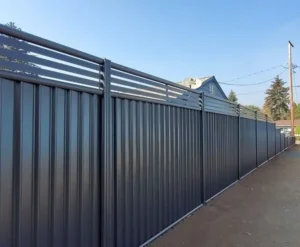
Compared with a purpose-built privacy fence, bamboo asks for more attention and gives you less structure. Wood fencing remains the popular default for backyard privacy around here, and vinyl wins on low maintenance. Those permanent options, including Durabond steel, are what we install.
Sacramento and California Rules to Check Before You Install
Fence heights depend on where the fencing sits
Inside the City of Sacramento, fences in front-yard and street-side setback areas are generally limited to 4 feet, rear and interior side-yard fencing to 6 feet along the property line, and anything in a driveway visibility triangle to 3.5 feet. The City exempts fences “not over 7 feet” from a building permit. Unincorporated Sacramento County is different: generally 3 feet for a solid front-yard fence, 4 feet for semi-open styles, and 7 feet in interior yards. A permit exemption is not permission to ignore zoning, easements, or design review. Check the Fence Ordinance Quick Links and your building department before you buy anything.
Call 811 before digging
USA North 811 lists fence installation as excavation. Pre-mark the area, give at least two working days’ notice, and wait for every utility operator to respond. Privately owned lines past the utility’s point of responsibility may not get marked.
Shared fences, neighbors, and HOA review
California Civil Code §841 presumes adjoining owners share equally in the benefit and reasonable cost of a boundary fence, with 30 days’ prior written notice when you invoke that process. That does not put your neighbor on the hook for decorative screening. If it is a shared good neighbor fence, confirm ownership and get permission in writing first, and read your CC&Rs before you order materials, not after.
Bamboo Fencing Around a Pool or in a Wildfire-Prone Area
Pools. Visual privacy is not pool safety. California Health & Safety Code §115922 generally requires at least two of seven drowning-prevention features for permitted new or remodeled private pools and spas. A qualifying enclosure under §115923 must be at least 60 inches high, with no more than 2 inches of ground clearance, no opening that passes a 4-inch sphere, a self-closing and self-latching gate that opens away from the pool, and no climbable handholds outside. Bamboo canes, tie wires, and horizontal rails frequently create spacing or climbability problems. Confirm any product with your building department.
Wildfire. Bamboo burns. CAL FIRE’s home-hardening guidance recommends replacing attached combustible fencing or gates with a noncombustible option for the first 8 feet from the house, and keeping debris clear. That matters most for foothill properties in Placer, El Dorado, and Nevada counties. A steel transition near the house is one common answer.
When Bamboo Fencing Makes Sense, and When a Permanent Fence Is Better
Bamboo may be ideal when: the goal is decorative patio or garden screening, the existing fence is sound and yours, you accept weathering and upkeep, security and pool protection are not part of the job, and local and HOA rules allow it.
Go with a purpose-built fence when: the existing fencing leans or is deteriorating, it defines a property boundary, pets or kids need containment, a gate has to be supported, security matters, it is part of a pool enclosure, it attaches to the house in a fire-exposed area, or you want lower maintenance and a more predictable service life.
We don’t install bamboo, so we have no reason to talk you into it or out of it. What we do is repair, replace, and installation of wood, vinyl, ornamental iron, Durabond steel, chain link, and pool safety fencing across Sacramento, Placer, El Dorado, Yuba, Yolo, and Nevada counties. Ask us to explore other types with you if you are undecided. Licensed, bonded, and insured (CSLB License #979657), background-checked W-2 employees, flat pricing with zero hidden fees, a written guarantee, and a thorough clean-up when we leave. If you are still pricing your outdoor project, try the fence price calculator on our site, and financing is available for Sacramento-region residents. When you’re ready, Get a Free Fence Estimate: call us or book online.
Frequently Asked Questions
Is bamboo a good privacy fence?
It is good as a privacy screen and limited as a standalone fence. Attached to sound fencing or a frame, bamboo gives you an attractive visual barrier quickly. By itself it will not hold a gate, contain a dog, or define a boundary.
What are the disadvantages of bamboo fencing?
Fading and surface checking, moisture and insect exposure, fastener corrosion, added wind load, combustibility, limited security, and ongoing upkeep. Soil contact is the fastest route to rot.
How long does bamboo fencing last outside?
There is no reliable universal number. INBAR notes untreated culms may fail in under two years, while well-treated panels kept off the soil are commonly cited at 15 to 20 years. Treatment, ground clearance, UV exposure, and maintenance decide where you land.
Do I need a permit for bamboo fencing in Sacramento?
The City exempts fences not over 7 feet from a building permit. Height limits by yard location, different rules in unincorporated county areas, and HOA restrictions still apply, so verify with your building department before you order.