
Key Takeaway
Barbed wire fencing is the right choice for containing cattle on open pasture and marking rural property lines at the lowest cost per foot, but the wrong choice for horses, goats, dogs, children, pools, and suburban yards. A standard galvanized barbed wire fence lasts 15 to 25 years and runs four to five strands on posts spaced 12 to 20 feet apart. For anything other than large livestock or long agricultural perimeters, a different fence material will do the job barbed wire cannot.
Barbed wire is the right choice for exactly two jobs: containing cattle and other large livestock, and marking a property line across long distances at the lowest cost per foot. For horses, goats, sheep, dogs, kids, or a suburban backyard, it’s the wrong tool. If your goal is keeping something in that’s smaller than a cow, or keeping anything out at all, a barbed wire fence won’t do it. This guide is for rural and acreage owners, farm and ranch property owners, and anyone weighing barbed wire against another option. We’d rather help you pick the fence that actually works for your property than sell you the cheapest one and let you find out later it was a bad idea.
Barbed Wire Fencing: When It’s the Right and Wrong Choice at a Glance
Here’s the whole decision in one place.
| Situation | Verdict |
|---|---|
| Cattle on open pasture | Right. The classic use, and it works. |
| Marking a property line across acreage | Right. Lowest cost per foot over long runs. |
| Miles of perimeter fencing on a working ranch | Right. Nothing else is close on price. |
| Horses | Wrong. Serious injury risk. |
| Goats, sheep, pigs | Wrong. They go through, under, or between strands. |
| Dogs | Wrong. Won’t contain them. |
| Suburban or residential yards | Wrong. And often needs a permit in Sacramento County. |
| Child or pool safety | Wrong. Never a barrier. |
Barbed wire is a specialized agricultural tool, not a general-purpose fence. It was built to do one thing well: put a boundary in front of large livestock that will learn to respect a barb and stay off it. Cattle do exactly that. Almost everything else on the wrong side of that table defeats it in seconds.
Its containment ability starts and ends with animals big enough to respect the barbs. That’s the honest ceiling on what this wire fence can do, and it explains every “right” and “wrong” you just read. In most cases the barbs work as a psychological barrier for cattle rather than a solid wall. The rest of this article walks through why, so you can match the fence to your actual property, animals, and local rules. It also compares barbed wire against the smooth wire and electric options a lot of farm owners overlook, because the right containment answer often isn’t barbed wire at all.
Why a Barbed Wire Fence Is the Cheapest You Can Build
Barbed wire exists because it puts the smallest possible amount of material between the fewest posts over the longest distance. That’s the entire reason it still dominates agricultural fencing. On a quarter-mile run, the gap in cost between barbed wire and woven wire is significant, and across a full ranch it can be enormous. When you’re fencing miles of perimeter, nothing else comes close on price per foot. It’s one of the most affordable and cost effective options for large areas and long agricultural runs, and for a working cattle operation that math is hard to argue with. A barbed wire fence keeps your posts spaced farther apart than most other systems, which means fewer posts, less digging, and lower labor cost across acreage.
We don’t publish per-foot pricing in our content, because real numbers depend on strand count, posts, terrain, and how much clearing your line needs. If you want a specific figure for your property, our Fence Price Calculator or a free fence estimate will get you an honest number rather than a guess.
It’s also durable. Standard barbed wire is 12.5-gauge twisted wire, galvanized to resist rust, and a properly braced and stretched fence has very few parts to fail. No mesh to break, no boards to rot, no panels to sag. Installed and maintained correctly, a barbed wire fence commonly lasts 15 to 25 years. It’s the most common perimeter fencing in North America for good reason, and it’s easy to install and repair with simple tools when a strand does break. On a working farm where a downed strand needs to be back up before the herd finds the gap, that simplicity is worth a lot.
The tradeoff is maintenance. Wire loosens over time, posts heave, and tension drops. A fence that isn’t checked and re-tensioned periodically starts to sag, and a sagging barbed wire fence stops doing its job and starts becoming a hazard. Keeping a run tight is ongoing work: you walk the fence line, reset leaning posts, and pull slack wire back to tension a few times a year. Cheap to build, but not zero-maintenance. Compared with the near-hands-off upkeep of a high tensile system, the barbed wire fence you save money on up front asks for more of your time down the road.
What a Barbed Wire Fence Will Contain, and What It Won’t
What it contains: cattle and large livestock
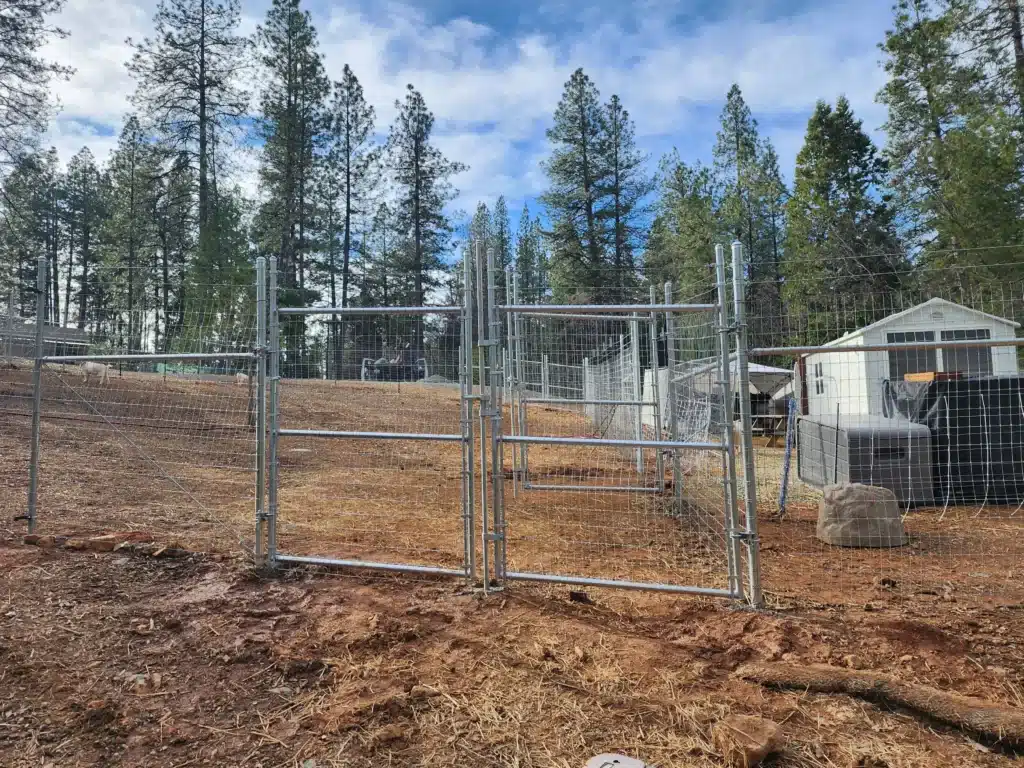
Cattle learn a barb quickly and stay off it. That’s the design intent, and it works. A cow tests the fence once, feels the barbs, and keeps its distance from then on. Barbed wire is a deterrent boundary that large livestock respect, not a sealed physical barrier. As long as the animal is big enough for a barb to register and smart enough to back off, the fence holds. On open pasture and large pastures where the herd has room to graze and isn’t crowded against the line, a well-built barbed wire fence does its job for years with little more than routine maintenance. This is why most ranchers still reach for it when they run cattle across open ground.
What it doesn’t contain: almost everything else
University of California Agriculture and Natural Resources guidance is direct on this point: barbed wire is effective for cattle but not for goats, sheep, chickens, and small livestock. The failure modes are predictable:
- Goats, sheep, and pigs go between the strands, under the bottom wire, or straight through. Small stock simply isn’t stopped by gaps a barb was never meant to close. Woven wire is the answer here.
- Dogs walk under it or squeeze between strands without slowing down. A barbed wire fence does nothing to contain a dog.
- Deer and other wildlife try to jump it and get tangled, usually a hind leg caught between the top two wires. This is a real and lethal problem covered in the cattle section below.
- People, including children, step through it in seconds. It stops no human trespassers who want to cross.
If your goal is keeping anything out, a barbed wire fence does almost nothing. It’s a boundary marker with cattle-stopping ability. Treat it as a strong deterrent for large animals, not an impenetrable security system, and you’ll never be surprised by what it lets past.
Why You Use Barbed Wire for Cattle: Strands, T Posts, Tension, and Wildlife-Friendly Design
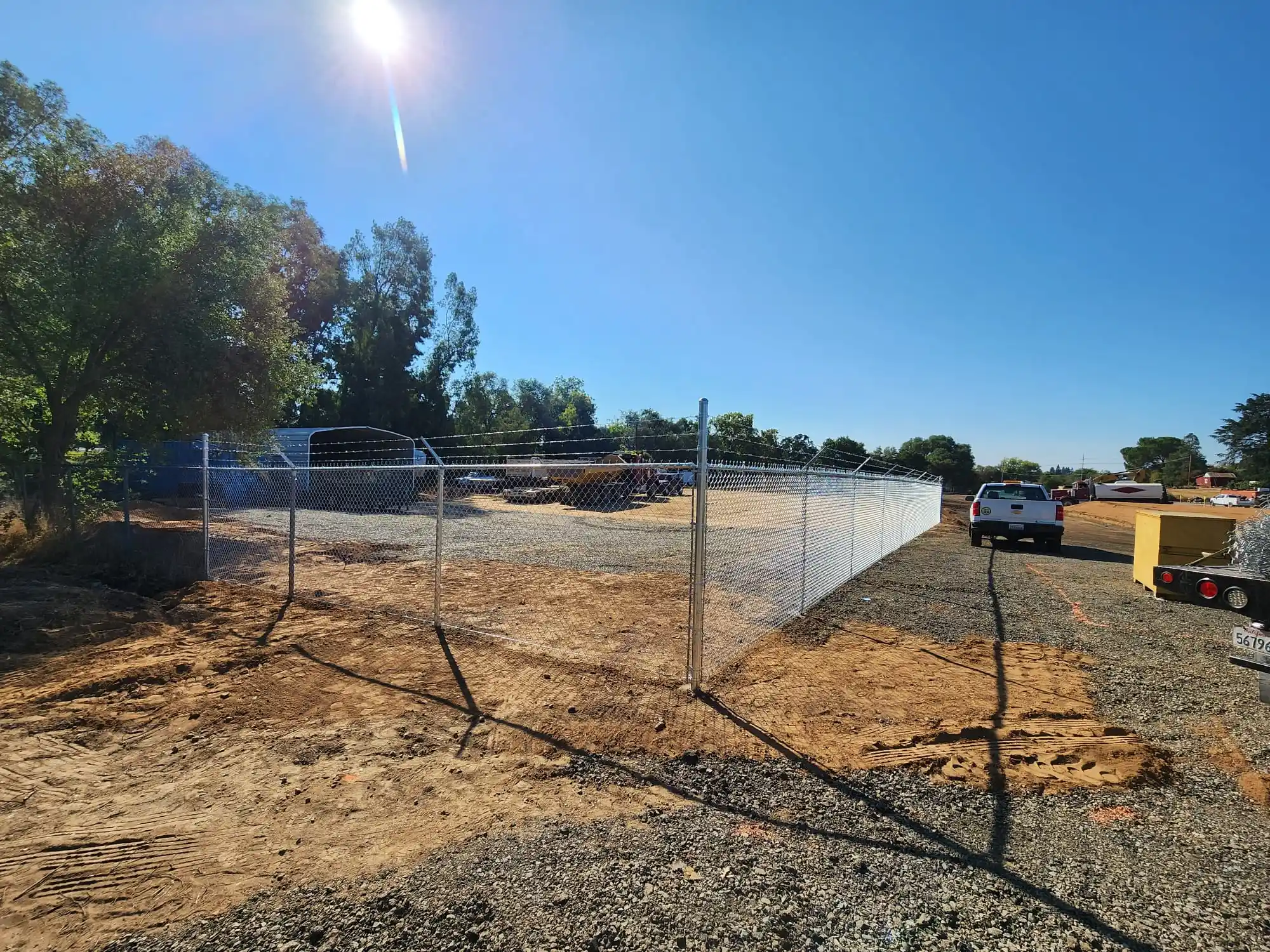
When barbed wire is the right tool, the details decide whether the fence actually holds. Most cattle fences run four to five strands, with three to six being the typical range depending on pressure and terrain. Fewer strands work on calm, well-managed pasture. More strands make sense where cattle push a line or where you’re mixing in other livestock.
The strands are only as good as what holds them. Corner and end assemblies carry the entire tension of the fence, so proper H-braces and corner bracing are where a good barbed wire fence is won or lost. Line posts, usually steel T posts with wood posts at corners and stretches, keep the wire spaced and upright between those braces. Set them at regular intervals, usually 12 to 20 feet on the line, with tighter spacing on rough ground or where the herd leans hard on the wire. The wire has to be pulled tight and kept tight. High tensile barbed wire can hold 150 to 250 pounds of tension, and that tension is what keeps the fence from sagging into a cow-shaped gap. Terrain and clearing matter too. Brush, dips, and washouts all pull a fence out of line if you don’t plan for them, which is why the best barbed wire fence starts with a clean, surveyed line, solid corners, and proper installation. In wooded areas especially, clearing the run first keeps limbs and falling branches from dropping the top strand.
Wildlife-friendly design
A poorly designed barbed wire fence kills wildlife. A guide hosted by the California Department of Fish and Wildlife reports that, in one cited study, about one hoofed animal per year was found tangled for every 2.5 miles of fence, with most dying after catching a hind leg in the top two wires while trying to jump. Juveniles were roughly eight times more likely than adults to die in fences. Woven wire topped with barbed wire was the most lethal type because it snared legs between the top wires.
You can build a cattle fence that still lets deer and antelope through. The recommended approach keeps the top wire to a fence height of about 40 to 42 inches so animals can clear it, allows about 12 inches of space between the top two wires to reduce entanglement, and uses a smooth bottom wire set around 16 to 18 inches so wildlife can pass underneath. That smooth wire on the bottom is the single easiest change to make, and it spares countless animals a snared leg. Keeping the fence properly tensioned and maintained isn’t only about containment. A tight fence at the right heights is far safer for the animals moving across your land, and it’s the kind of detail a crew that fences rural property every week already builds in without being asked.
Smooth Wire and Electric: The High Tensile Alternatives Worth Knowing
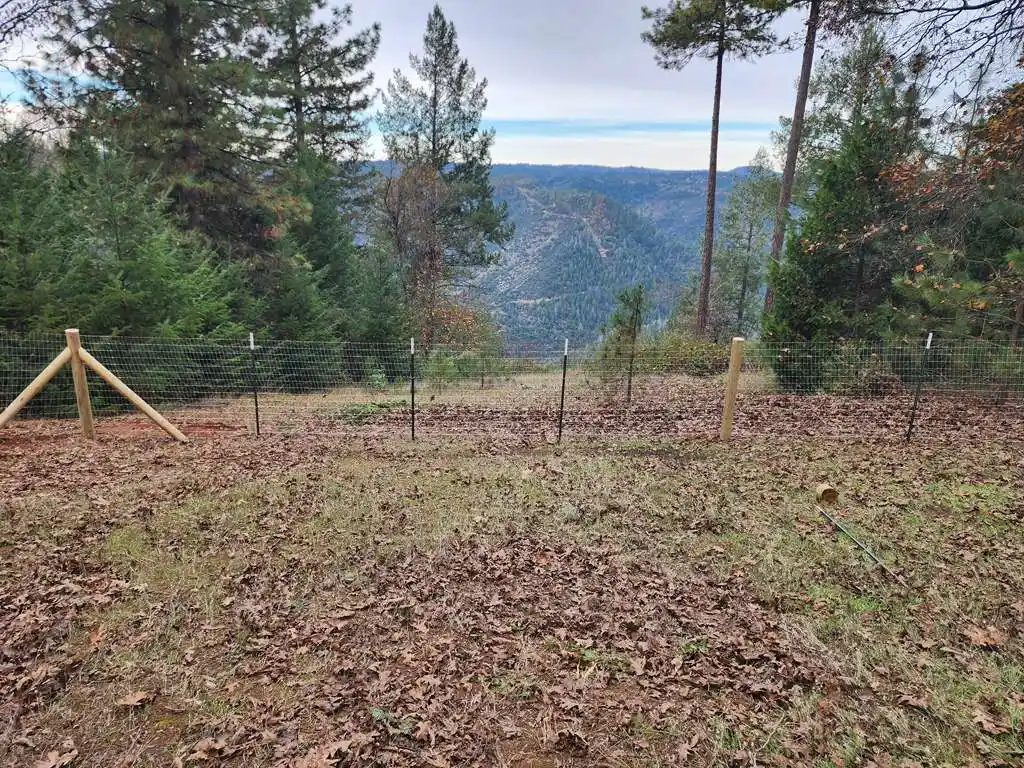
Before you default to barbed wire, it’s worth knowing the two systems experienced ranchers reach for when a barbed wire fence isn’t the best fit. Both change the cost and maintenance picture, and both are safer around certain animals.
High tensile smooth wire. High tensile smooth wire trades barbs for tension. Instead of relying on a barb to sting an animal off the line, a high tensile fence relies on strong, springy wire pulled to high tension between well-braced posts. It holds its shape through temperature swings, needs far less re-tensioning than a barbed wire fence, and carries no barbs to cut a horse or tangle wildlife. For horses and mixed operations, high tensile smooth wire is often the smarter perimeter fencing choice. It costs a bit more up front but rewards you with lower long-term maintenance and fewer injuries.
Electric fencing. Electric fencing works on psychology rather than physical force. A single strand of electrified wire, or a hot wire added to an existing fence, teaches an animal to respect the line after one contact. It’s flexible, relatively cheap to expand, and works on animals a barbed wire fence can’t touch, including pigs that root under barbs and goats that climb between strands. Options like electric rope and electric tape add visibility, which helps animals see and avoid contact with the line, and they’re popular for rotational paddocks and horse pasture setups. Many farm owners run a hot wire along the top or inside of an existing barbed wire fence to keep cattle from leaning on it, which cuts maintenance and extends the life of the whole run. An electric system depends on a working charger and clear vegetation, so it asks for a different kind of attention than barbed wire, but for small pastures, rotational grazing, and small stock it’s often the most practical tool on the property.
Neither of these replaces barbed wire for a low-cost cattle perimeter across miles of open ground. But for horses, small livestock, or any place you want containment without barbs, smooth wire and electric fencing usually beat a barbed wire fence. If you’re not sure which system fits your animals and your budget, that’s exactly the kind of question a free estimate should answer before you build.
Property Lines: The Other Job Barbed Wire Does Well
Barbed wire is genuinely good at showing where a line is. On acreage, an unmarked boundary invites encroachment, easement disputes, and confusion over who maintains what. A straight barbed wire fence built on the survey line settles all of that cheaply, and it’s a cost-effective way to define a large perimeter without spending on materials you don’t need for boundary marking. If containment isn’t the goal and you only need to mark a line, few options match barbed wire on cost per foot.
Two things need to happen before the first post goes in.
Survey first. A fence built on assumption becomes an argument later, and moving it costs far more than surveying would have. Know exactly where your line runs before you spend a dollar on wire or set a single post.
Understand California’s good neighbor fence law. Shared boundary fences fall under Civil Code §841, which presumes adjoining owners share equally in the cost of a reasonable dividing fence. This matters when the fence separates your grass and pasture from the property on the other side. If you plan to incur costs on a shared line, §841 requires 30 days’ prior written notice to each affected neighbor, describing the problem, your proposed solution, the estimated cost, how you propose to split it, and the timeline. That notice protects you and keeps a boundary project from turning into a dispute. We cover this in more depth in our guide to the California good neighbor fence law.
Call 811 before you dig. California Government Code §4216.2 requires you to notify the regional notification center, Underground Service Alert, at least two working days and not more than 14 calendar days before excavation. The CSLB notes that a USA ticket is valid for 28 calendar days. We call in every dig as standard practice, because hitting a gas or utility line while setting fence posts is exactly the kind of avoidable mess a professional crew shouldn’t create.
Why Barbed Wire Is a Bad Idea for a Horse Pasture

Barbed wire should never be used for horses. This isn’t a preference, it’s the clearest consensus in the fencing industry, and we won’t install it around horses.
The reason comes down to how horses react under stress. A cow stops at a barb. A horse panics and runs into a fence rather than away from it, and instead of backing off it pushes through. The barbs open long, deep lacerations that can cut tendons, damage eyes, and take months of veterinary care to heal, if they heal at all. A single panicked horse tangled in barbed wire can end a career or a life, and it turns a routine fence into a life threatening hazard overnight. The wire that stops a cow does the opposite to a horse. University of Minnesota Extension flatly advises avoiding barbed wire for horses because of the serious and dangerous injury risk, and Penn State Extension frames the economics plainly: the money you save on cheap, unsafe horse fencing tends to come back later as vet bills.
If you keep horses, there are fences built for them. No-climb woven wire, rail or pipe fencing, and horse-safe smooth wire or electric systems all give you containment without the laceration risk. High tensile smooth wire and electric fencing designed for horses are especially popular because they combine visibility, give, and lower cost than rail. We go through the options in our guide to the best fence for horses. The short version: for horses, spend on a fence that keeps them safe, because barbed wire is the one material that reliably makes injuries worse.
Wrong for Goats, Sheep, Dogs, Kids, Pools, and Suburban Yards
Everything else on the “wrong” side of the table has a better answer, and knowing the right tool saves you from paying twice.
Goats, sheep, and pigs. Small stock goes through, under, and between strands, so woven wire or field fence is what you actually want. Fixed-knot woven wire is safer and holds up better for mixed livestock, and woven wire is the standard recommendation for goats specifically. For pigs, a couple of strands of electric wire low to the ground often does what no barbed wire fence can. We break this down by animal in our guide to the best fence for goats and sheep.
Dogs. Barbed wire won’t contain a dog, full stop. For pets, look at wood fencing, vinyl, chain link, or ornamental iron, depending on whether you need privacy, visibility, or just a solid physical enclosure.
Kids and pool safety. Barbed wire is never a child-safety or pool-safety barrier, and razor wire is even less suited to any residential setting. California pool safety is regulated under Health & Safety Code §115922, and a compliant enclosure commonly means a minimum 60-inch barrier, openings that won’t pass a 4-inch sphere, no more than 2 inches of clearance at the bottom, and a self-closing, self-latching gate. Exact requirements depend on your jurisdiction, so a proper pool safety fence and a quick check with your local building department, or the Fence Ordinance Quick Links on our site, is the right path. Never treat barbed wire as any part of a pool barrier.
Suburban privacy or security. For a residential yard, barbed wire is the wrong tool and, in much of the Sacramento region, not even allowed without review. If you want privacy near the house, wood or vinyl. If you want security, chain link, steel, Durabond steel, ornamental iron, or an automated gate system. All of them do the job barbed wire can’t do in a neighborhood, and none of them leave sharp barbs at a child’s height in a space where kids and pets play.
Barbed Wire Rules in Elk Grove and Sacramento County
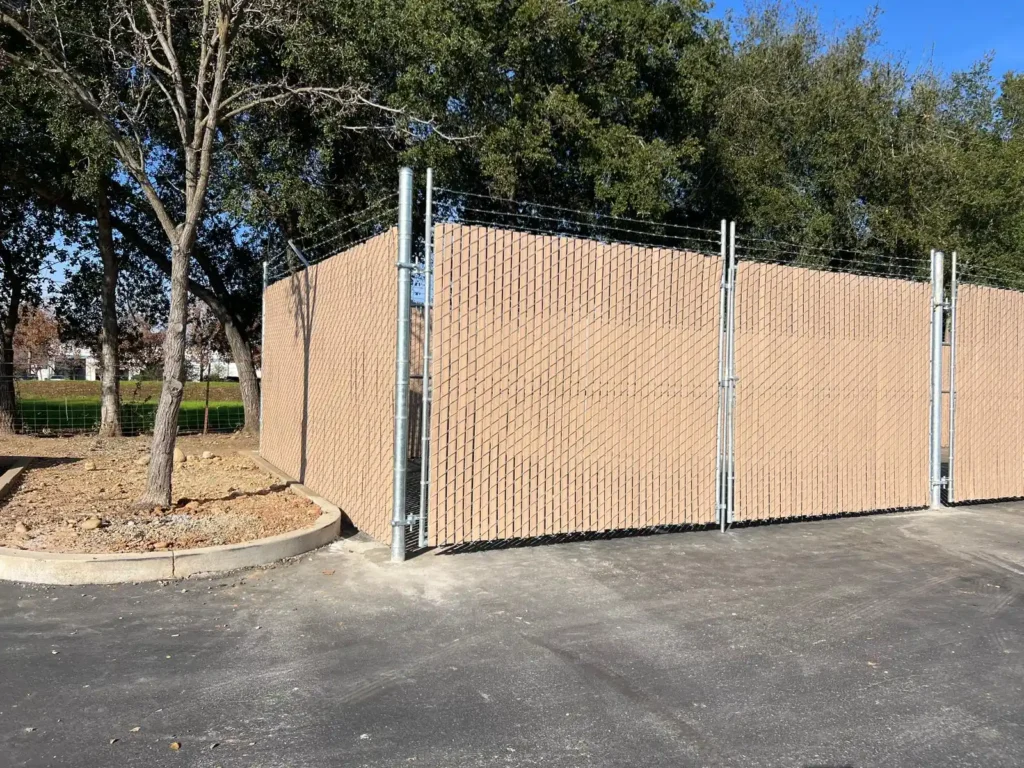
If your property is in or around Elk Grove or the greater Sacramento area, check the local code before you install barbed wire anywhere near a residential or commercial line. Local rules restrict it more than most people expect, and that’s true whether you’re planning a barbed wire fence, electric fencing, or both. This is one reason a suburban barbed wire fence is rarely suitable in the first place.
The Elk Grove Municipal Code generally prohibits barbed wire on top of a fence except in agricultural, open space, or industrial areas, and it requires minor design review for barbed wire abutting residential or commercial areas. Sacramento County Zoning Code §5.2.5 goes further: barbed wire, concertina wire, or electric fencing requires a Minor Use Permit unless it’s in Agricultural, M-1, or M-2 zoning adjacent to agricultural or industrial property. It’s allowed in AR-2, AR-5, and AR-10 zones when used for keeping animals, which covers a lot of legitimate farm and acreage use.
Codes change, and jurisdiction matters. Confirm the current requirement with your city or county planning and building department before you build, since a permit issue is a lot cheaper to solve before installation than after. As a licensed, bonded, and insured local contractor (CSLB License #979657), we help property owners across Sacramento, Placer, El Dorado, Yuba, Yolo, and Nevada counties sort out what’s allowed on their specific parcel before a crew ever shows up.
Is a barbed wire fence legal in Elk Grove or Sacramento County?
It depends on your zoning. Elk Grove generally restricts barbed wire near residential and commercial areas and requires minor design review, while Sacramento County requires a Minor Use Permit outside agricultural and certain industrial zones. Electric fencing falls under the same §5.2.5 permit rule. Confirm your specific parcel with the local planning department before installing.
Is barbed wire safe for horses?
No. Horses panic and push through fences instead of backing off, and the barbs cause deep lacerations that can cut tendons and damage eyes. Extension experts are consistent on this, and we won’t install barbed wire around horses. Use no-climb woven wire, rail, or a horse-safe smooth wire or electric system instead.
Will a barbed wire fence contain goats, sheep, or pigs?
No. Small livestock goes through, under, or between the strands. UC ANR guidance confirms barbed wire is effective for cattle but not for goats, sheep, or small stock. Woven wire, fixed-knot field fence, or electric fencing is the right choice for small animals.
How many strands and posts does a cattle barbed wire fence need?
Most cattle fences use four to five strands, with three to six being the typical range depending on terrain and how hard the cattle push the line. Line posts usually sit 12 to 20 feet apart. Proper bracing and tension matter as much as strand count, and high tensile wire holds 150 to 250 pounds of tension to prevent sagging.
What about smooth wire or electric fencing instead?
High tensile smooth wire and electric fencing are both strong alternatives. Smooth wire gives you a tight, low-maintenance perimeter with no barbs, which is safer for horses and wildlife. Electric fencing works on animals a barbed wire fence can’t hold, including pigs and goats, and is easy to add to an existing line. Which one fits depends on your animals and budget. Some owners even swear by what their brother in law runs on his own place, but the right answer is always the one that matches your animals.
What should I use instead of barbed wire?
Match the fence to the goal. Woven wire for goats and sheep, horse-safe rail or no-climb for horses, high tensile smooth wire or electric for low-maintenance containment, wood or vinyl for privacy, chain link, steel, or ornamental iron for security and pets, and a proper pool safety fence for pools. We can walk you through the right option for your property.
Not Sure Which Fence Fits Your Property?
Barbed wire is the right answer for cattle and long rural boundaries, and the wrong answer for almost everything else. If you’re weighing it against smooth wire, electric fencing, or another option and want honest guidance instead of a sales pitch, we’ll help you choose the fence that actually works for your land, your animals, and your local rules. We serve the Sacramento and Roseville region with flat pricing, zero hidden fees, and background-checked W-2 employees. Get a free fence estimate and let’s figure out the right fence for the job.