Key Takeaway
A black vinyl fence is either a factory-engineered rigid PVC privacy fence or black polymer-coated steel chain link, and the two products serve very different purposes. Quality black PVC systems use heat-resistant compounds, UV inhibitors, and internal reinforcement to handle full-sun climates where July highs regularly reach 94°F or above. Always request written documentation that the specific black product is approved for full-sun installation, and confirm warranty terms cover heat distortion and fading before you order.
Yes, black vinyl fencing exists and you can buy it. But “black vinyl fence” describes two different products: a factory-black rigid PVC (or CPVC) fence system, or steel chain-link fabric wrapped in a black polymer coating. If you want a solid black privacy fence, buy a factory-engineered black system that’s rated in writing for full sun, and don’t paint a white vinyl fence black. The fear underneath this search is a fair one: paying for a modern-looking fence and finding out later the wrong product was specified. Here’s how to avoid that.
What Is a Black Vinyl Fence? (The Two Products People Mean)
Vinyl is PVC, polyvinyl chloride. It doesn’t absorb water, doesn’t rot, and doesn’t interest termites or carpenter ants. Two very different fences get sold under the same phrase:
- Solid rigid-vinyl fencing. Posts, rails, pickets, panels, and gates extruded from rigid PVC profiles. This is the true privacy fence category, and it’s covered by ASTM F964 (material and profile standard) and ASTM F1999 (installation practice).
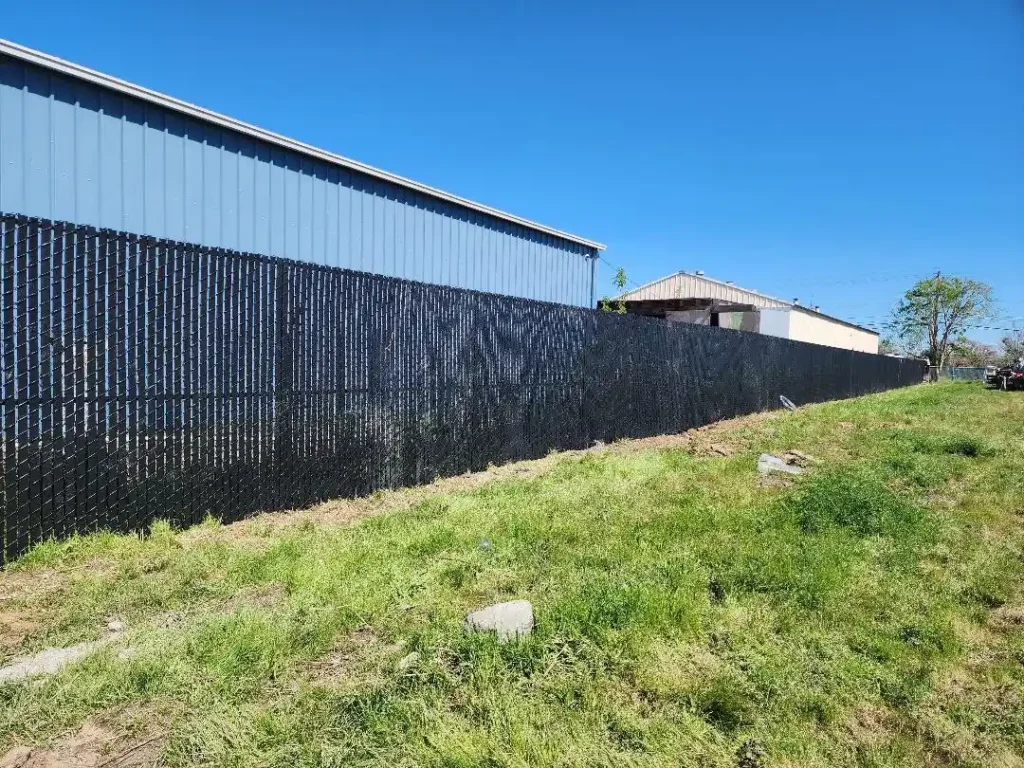
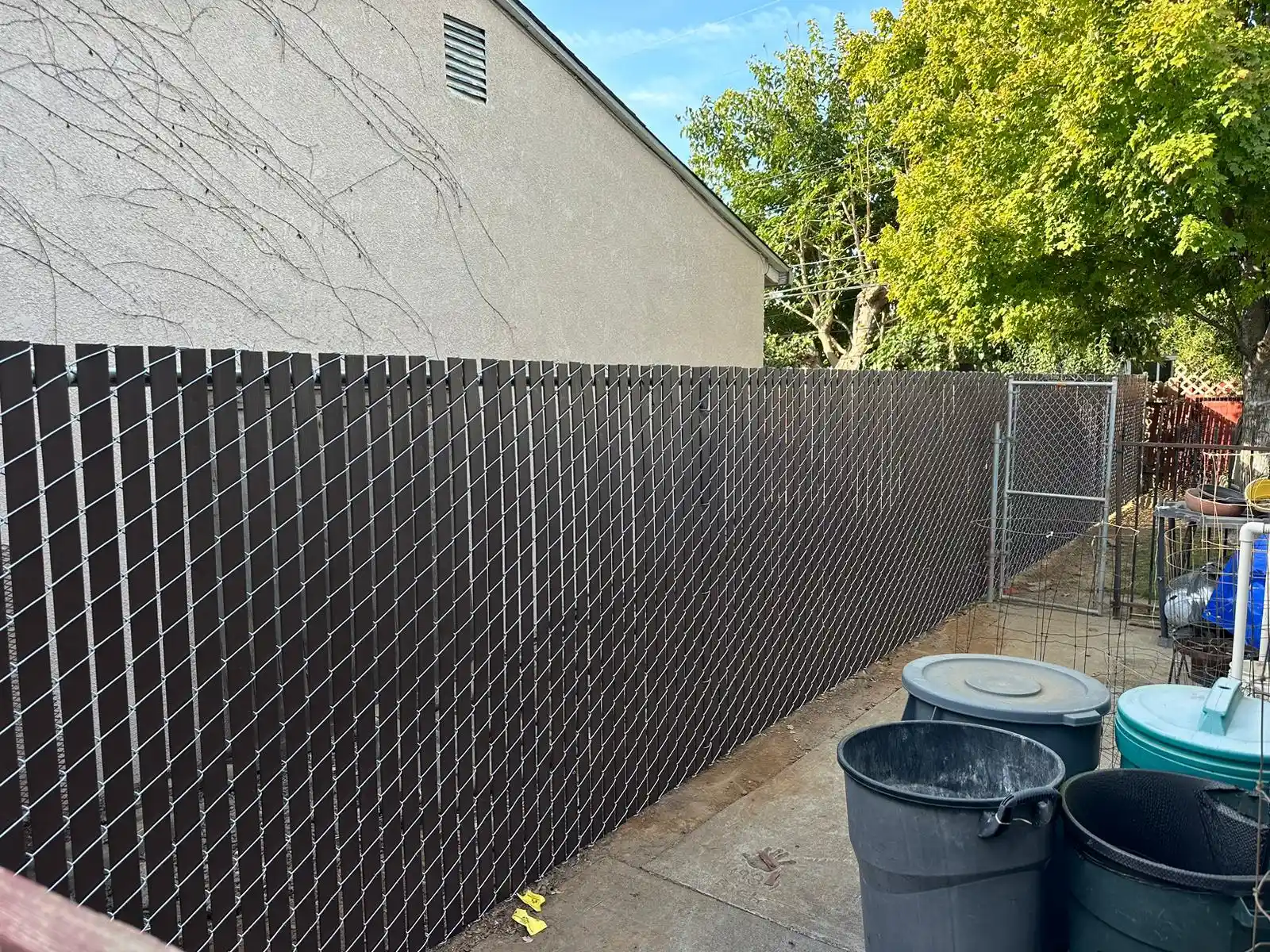
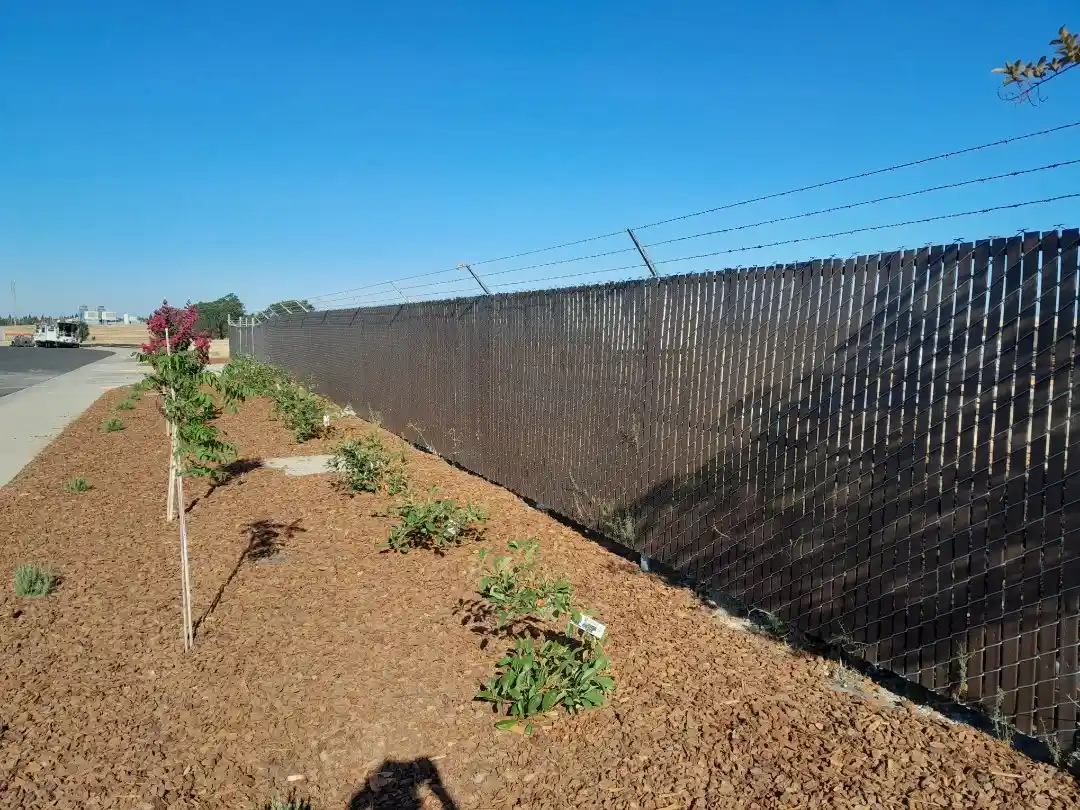
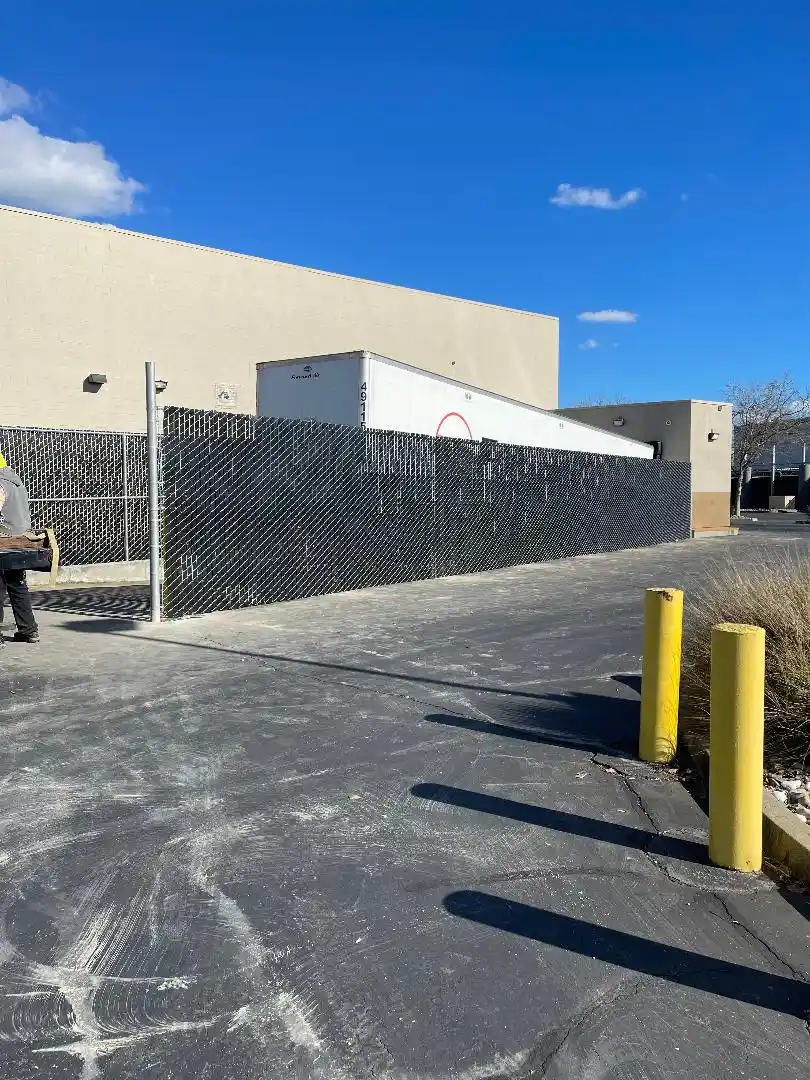
- Black vinyl-coated chain link. Still a steel-wire fence, just with a black polymer coating over the fabric (the ASTM F668 category). It’s a boundary fence, not a solid panel system.
Retail “black vinyl fencing” filters muddy this further by mixing in aluminum parts, steel privacy screens, and small no-dig garden panels. Identify the product before you compare anything.
Why Black Vinyl Isn’t Just White Vinyl in a Different Color
Darker surfaces absorb more solar energy, so manufacturers engineer black systems differently than standard white. Depending on the brand, that can mean mono-extruded profiles with color through the material, coextruded or laminated surface layers, heat-resistant CPVC compounds, infrared-reflective pigments, UV inhibitors formulated to slow fading, or aluminum stiffeners inside specified rails and posts.
Those are product-specific approaches, not interchangeable quality guarantees. One manufacturer’s black is not another’s. That’s exactly why you ask for the data sheet on the exact system being quoted rather than trusting the color swatch shown on a website.
Benefits of a Black Vinyl Privacy Fence

Black reads modern, and it frames green landscaping better than almost any other fence color. When solid panels are specified, you get a real backyard privacy fence. Most product lines offer three looks: solid, lattice-top, and decorative picket, in common heights from 4 feet up to 8 feet, with taller options available in some systems. You can customize height, style, and gate placement to fit how you actually use the yard.
The practical upside is affordable long-term upkeep. There’s nothing to paint, stain, or seal. No rust, no splinters, and smooth surfaces that are easier on kids and pets than weathered wood or metal edges.
The Honest Drawbacks of Black Vinyl
We’d rather you hear this from us than discover it in year three.
- Dark colors absorb more solar heat than white or tan, which raises the stakes on formulation and installation.
- Fade and heat-distortion risk is product-specific. The problem is rarely the color itself. It’s a low-quality black profile that cracks or warps under extreme heat.
- Black is a smaller slice of the vinyl market than white, so regional availability is narrower and matching black gates, posts, and replacement profiles can be harder to source years later. Ask about parts support, because long-term reliability includes being able to replace one damaged panel without redoing a whole run.
- Pale dust, pollen, hard-water mineral spots, and scratches all show more on black.
- Warranty coverage for dark colors is often written separately from standard colors, with its own terms.
Will Black Vinyl Fade, Warp, or Sag in Harsh Weather?
Separate normal weathering from premature failure. Every exterior material changes slightly over decades. What you’re actually guarding against is a panel that bows in August or a color shift that shows up unevenly across one sun-baked run.
Here’s the part most articles skip: visible color doesn’t tell you how much near-infrared a surface reflects. Some engineered dark pigments reflect considerably more than others, so no single surface-temperature number applies to every black fence. Ignore any universal figure you see quoted. Reflected heat is a genuine risk too, especially from low-E windows and light-colored hardscape that concentrate sun onto one section.
Performance is the product and the installation: expansion and contraction allowances, rails (including the rail through the middle of taller panels) seated exactly per instructions, reinforced gate posts, sensible long-run layout, and the correct fasteners. When a manufacturer cites a wind certification (some publish ratings up to 130 MPH) or a service life, treat that as a claim tied to one tested system installed correctly, not a category-wide fact.
Buying Black Vinyl Panels Online vs. an Installed Privacy Fence
Plenty of black vinyl fence shopping starts on a retail site. You select a style, choose a height, click to add panels to a cart, and the price on screen looks reasonable. Read the product details before you check out. Online panels ship in fixed widths, commonly 6 or 8 feet, and the listed price usually covers the panel alone. Posts, post caps, gate hardware, concrete, and delivery get added separately, and the cart total climbs fast.
Then there’s the part no cart accounts for: your yard. Sloped ground means racking or stepping the fence sections. Odd corners mean a panel has to be cut to width, which takes the right blade and a clean edge. Post spacing has to match the exact rail length of the product you bought, or you inherit issues you can’t fix later without reordering. Before you commit to a project, contact us and we’ll tell you whether the system you’re looking at is worth installing.
Can You Paint a White Vinyl Fence Black?
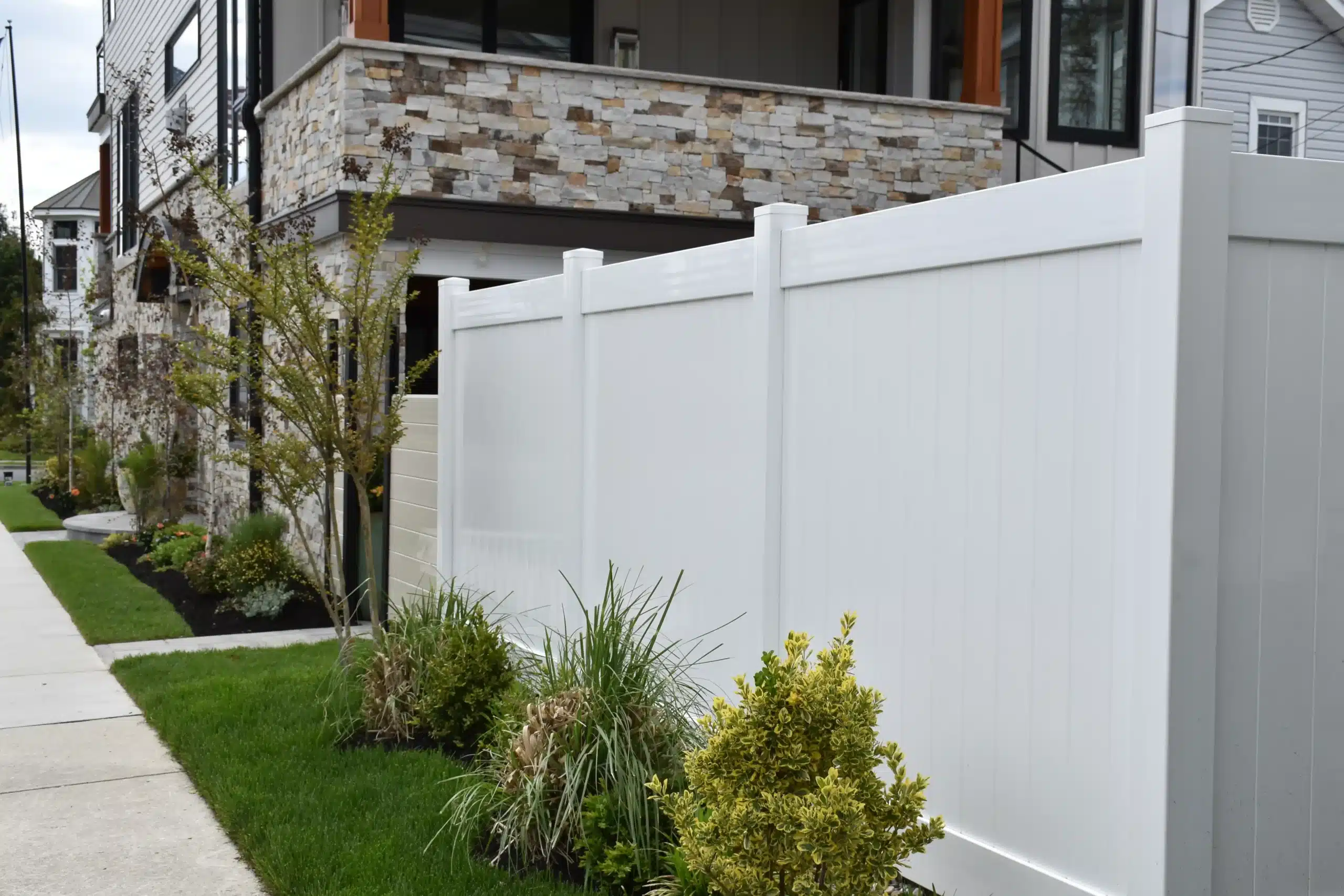
Generally, no. Paint doesn’t bond reliably to smooth vinyl, a dark coating raises heat absorption and distortion risk on a profile never designed for it, and applying paint or any other coating typically voids the manufacturer’s warranty. Buy factory-black material instead.
What to Verify Before You Order: Specs, Details, and the Limited Lifetime Warranty
- Does the profile meet ASTM F964, and will the installer follow ASTM F1999?
- Has the black product been tested and expressly approved in writing for full-sun installation in a hot climate? That’s the single question that separates a system built for this climate from one that simply comes in black.
- Is it PVC, CPVC, coextruded, laminated, wrapped, or coated?
- What reinforcement is required in posts, rails, and gates?
- What does the warranty say about fading, uneven sun exposure, reflected heat, and heat distortion? Are labor, removal, and reinstallation covered? Must it be registered?
- Will matching black gates, hardware, and replacement panels still be available in five years?
- Are written installation instructions provided, and do they address expansion and contraction?
One note worth holding onto: a manufacturer’s limited lifetime warranty covers material. It is a different thing from our written guarantee that the job isn’t finished until you give the thumbs up.
Black Vinyl vs. Ornamental Iron, Steel, Wood, and Chain Link
| Material | Best fit | Privacy | Main tradeoff |
|---|---|---|---|
| Solid black vinyl | Low-maintenance privacy fence | High | Heat engineering and availability |
| Ornamental iron | Elegant, open views | Low | Little privacy |
| Durabond steel | Sleek security and strength | Varies | Different look, system requirements |
| Black vinyl-coated chain link | Affordable boundary and security | Low unless slatted | Not a solid privacy fence |
| Black-painted or stained wood | Natural, fully customizable | High | Ongoing coating and wood upkeep |
Sometimes the right recommendation is a different material, and we’ll tell you that during the estimate. It costs nothing to explore ornamental iron or a good neighbor wood fence side by side with vinyl.
What Sacramento Homeowners Should Check Before Choosing Black Vinyl
NOAA’s 1991 to 2020 normals for the Sacramento 5 ESE station put the July daily maximum at 94.4°F and August at 93.5°F, with about 7.8 July days at or above 100°F and roughly 22.6 such days per year. Full-sun documentation and expansion detailing matter more here than in a mild coastal climate.
- Permits and planning. The City of Sacramento generally doesn’t require a building permit for a fence not over 7 feet, but Planning Division standards under City Code Chapter 17.620 still apply, along with corner-visibility, frontage, and design-review rules. “No permit” is not “no rules.”
- HOA. Architectural guidelines and CC&Rs can restrict black outright or require approval first.
- 811. California requires notification at least two working days before excavation, not counting the day you call.
- Pools. California Health & Safety Code §115922 generally requires at least two of seven drowning-prevention features when a pool permit is issued. The §115923 enclosure criteria include a 60-inch minimum height, a latch no lower than 60 inches, no more than 2 inches of ground clearance, and no gap that passes a 4-inch sphere. No panel is automatically compliant. Check the Fence Ordinance Quick Links and your local reviewer.
- Wildfire. CAL FIRE recommends noncombustible or ignition-resistant materials, especially where fencing connects to the house, and California’s Safer from Wildfires framework addresses a 5-foot ember-resistant zone. Verify current rules for your address before ordering vinyl in a higher-risk area.
Rinse with a hose, wash with a mild cleaner using a soft cloth or soft-bristle brush, then rinse thoroughly so nothing dries on the surface. Any stronger cleaner should be tested in a hidden spot first. Skip abrasive pads and harsh solvents, keep a pressure washer well back, and follow the manufacturer’s written instructions for your exact system. Check gate hinges, latches, and hardware once or twice a year.
Frequently Asked Questions About Black Vinyl Fencing
Is a black vinyl fence more expensive than white vinyl?
Usually, yes. Black systems use different compounds, pigments, and reinforcement, and they’re produced in lower volume. Rather than quote figures, we’d point you to the fence price calculator on our site, then a free estimate with flat pricing and zero hidden fees.
What are the negatives of vinyl fencing?
Heat absorption in dark colors, impact cracking in cold, real quality variation between manufacturers, and limited color matching for future repairs. There’s also no refinishing option. You replace a damaged panel rather than sand and repaint it.
What does 100 feet of vinyl fencing cost?
It depends on height, style, gate count, post reinforcement, terrain, and whether an old fence has to come out. A cart total for panels rarely reflects an installed privacy fence. Use the fence price calculator, then get a written flat-price quote.
How long does a black vinyl fence last?
Manufacturers commonly cite roughly 20 to 30 years, and some higher-grade systems claim longer. Actual life depends on formulation, sun exposure, and installation quality, which is why the written warranty and full-sun approval tell you more than a headline number.
Talk It Through With a Local Fence Company Before You Commit
Black vinyl is a good candidate if you want a full privacy fence with a dark modern look, and you can confirm a heat-engineered product with acceptable warranty and parts support. Consider another material if the fence ties into your house in a wildfire-prone area, the product lacks full-sun documentation, you need open ornamental views, or your HOA prohibits black.
We’ve been locally owned since 2011, and we built this company on answering the phone, showing up on time, and treating every customer like a neighbor rather than a transaction. Approximately 35 background-checked W-2 employees (never subcontractors), licensed, bonded, and insured under CSLB License #979657. Flat pricing, zero hidden fees, a thorough clean-up because we’re guests on your property, and a written guarantee that the job isn’t done until you give the thumbs up. Financing is available for Sacramento-region residents. Ask us which black vinyl fence systems are currently available and how they compare to ornamental iron, Durabond steel, wood, or black vinyl-coated chain link.
Ready for a fence you’ll actually love? Let’s talk. Get a Free Fence Estimate: call Sacramento at 916-248-5518, Rocklin at 916-790-7100, or Elk Grove at 916-345-0142, or Book Online.