Key Takeaway
A cattle panel fence uses rigid welded galvanized steel panels, typically 16 feet long and 50 inches high, fastened to posts or set inside a wood or steel frame. No wire stretching is required, making setup fast for livestock pens, garden enclosures, and open-view residential fencing. Panels are not suitable for long perimeters, uneven terrain, horses, or California pool barriers, which require a 60-inch qualifying fence.
A cattle panel fence uses sturdy welded galvanized steel cattle panels, commonly about 16 feet long and 50 inches high, fastened to posts or set inside a wood or steel frame. Most feed and farm supply stores keep these panels in stock, and because each panel holds its own shape, there’s no wire to stretch. Those dimensions are common stock sizes, not an industry standard. Whether you’re penning livestock, protecting a garden, or after an open-view residential fence, here’s where cattle panel fencing works, where it doesn’t, and what to confirm before anyone starts digging.
What is a cattle panel fence?
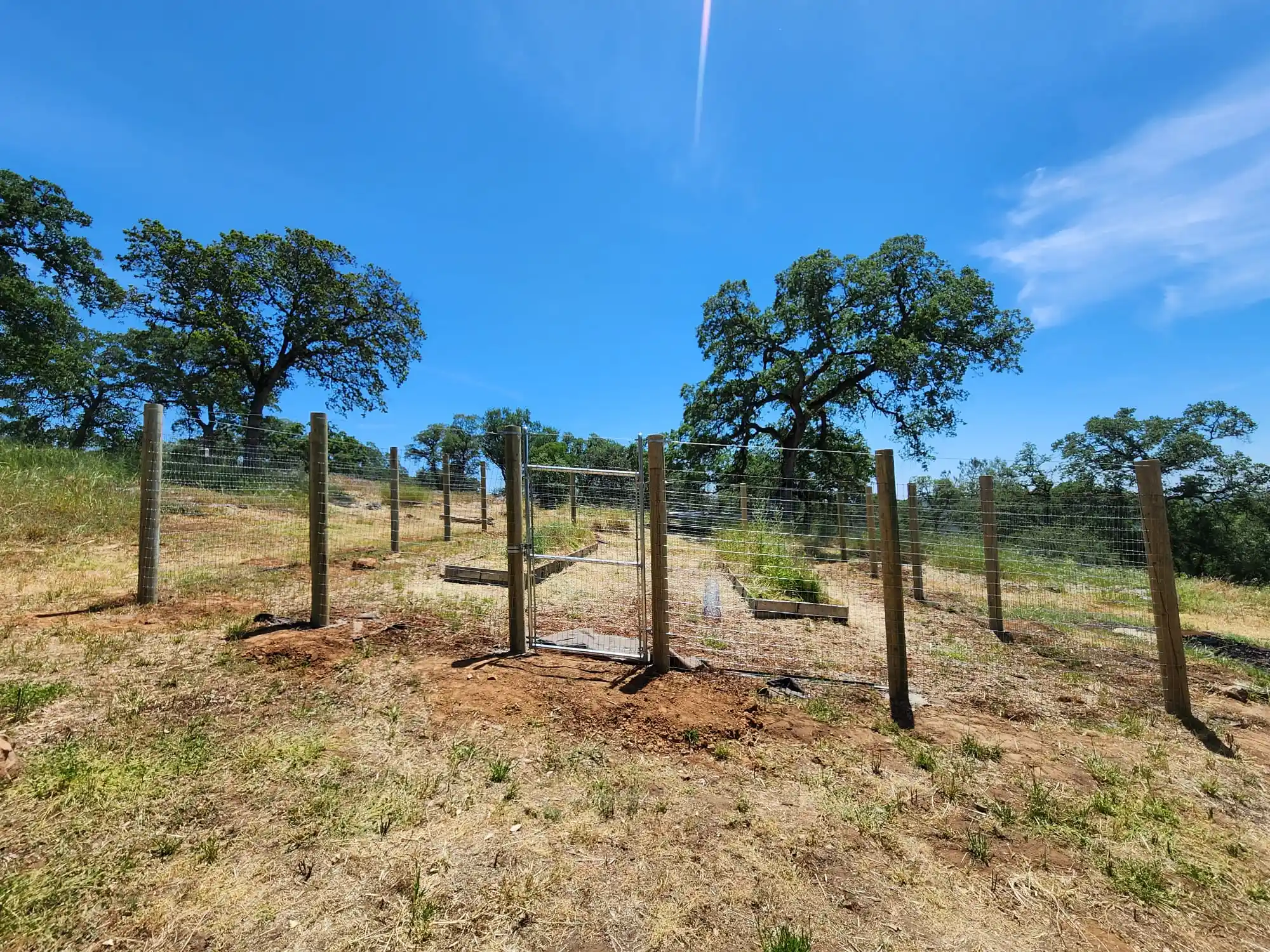
A cattle panel is a sturdy welded-wire section. Factory welding at every rod intersection means the panel arrives as a finished piece rather than a roll you unspool and tension. That’s the whole difference between cattle panels and rolled or woven wire fencing.
The practical upside is speed and stiffness. You set your posts, lift the panel into place, secure it, and move on. No stretchers, no come-alongs, no sagging middle. The downside shows up on real ground: a rigid panel won’t contour to a dip or a rise, and it won’t follow a long, irregular run the way flexible fencing does. Most cattle panels are hot dip galvanized, with 6-gauge and 4-gauge both widely sold. Take your terrain into account before you commit to panels over rolled fencing.
Cattle panel fence specs at a glance (and why “standard” isn’t standard)
- Common length: 16 feet (8-foot panels are also sold)
- Common height: 50 inches (52-inch versions exist)
- Common gauge: 4-gauge, with 6-gauge widely stocked; heavier gauge means more strength
- Horizontal wires: often 10 on a 50-inch panel
- Finish: hot dip galvanized steel
- Form: rigid welded section, not rolled
Here’s the part most guides skip. Those are common stock specifications, not a universal standard. Catalogs list several categories: combination panels with tighter openings near the bottom, lighter 12-gauge garden panels, and utility panels in sizes from roughly 3 by 6 feet up to 8 by 8 feet. Two products can both be sold as cattle panels and perform very differently. Read the spec sheet for the actual gauge, height, coating, and opening pattern before you buy any fence panels.
Cattle panels vs. hog panels vs. welded wire vs. field fencing

| Type | Form | Typical height | Opening pattern | Best use |
|---|---|---|---|---|
| Cattle panel | Rigid welded panel | About 50 inches | Fairly uniform, larger openings toward the top | Short pens, small paddocks, framed open-view fencing |
| Hog panel | Rigid welded panel | Usually shorter | Graduated, tighter near the bottom | Hogs, smaller stock, keeping predators out low |
| Welded wire roll | Rolled, lighter gauge | Varies widely | Uniform grid | Gardens, light pet containment, temporary work |
| Field/woven wire | Rolled, must be stretched | Varies widely | Graduated, flexible knots or welds | Long pasture perimeters and rolling ground |
The nicknames aren’t reliable. One manufacturer’s hog panel can be taller than another’s cattle panel, and utility panels get labeled both ways. Compare gauge, panel dimensions, opening size near the bottom, coating, and features like graduated spacing instead of trusting the name on the tag.
Benefits of cattle panel fencing: livestock fencing, gardens, and garden trellis use
The benefits of cattle panels show up in specific situations rather than everywhere on a property.
- Short livestock enclosures, pens, and small paddocks. Rigid panels resist pushing better than unstretched wire over a short span, and quick setup means you can create a secure pen in a day.
- Hog pens and small stock. Panels with graduated openings hold hogs well and keep low predators from slipping under.
- Garden enclosures and orchard protection. Openings are big enough to reach through and small enough to keep most browsing animals out.
- Garden trellis work. A panel arched or set upright carries heavy climbing plants without sagging, and one 16-foot panel can create a full tunnel.
- Temporary or reconfigurable enclosures. Panels can be unbolted, moved, and reused, so the creation of a new pen doesn’t always mean new material.
- Open-view residential and decorative fencing. Set inside a finished wood or steel frame, cattle panels work as infill that gives you sightlines and a stylish modern look along a patio or side yard.
- Catch pens and holding areas. Short runs where you want visibility through the fencing.
Where a cattle panel fence is the wrong choice
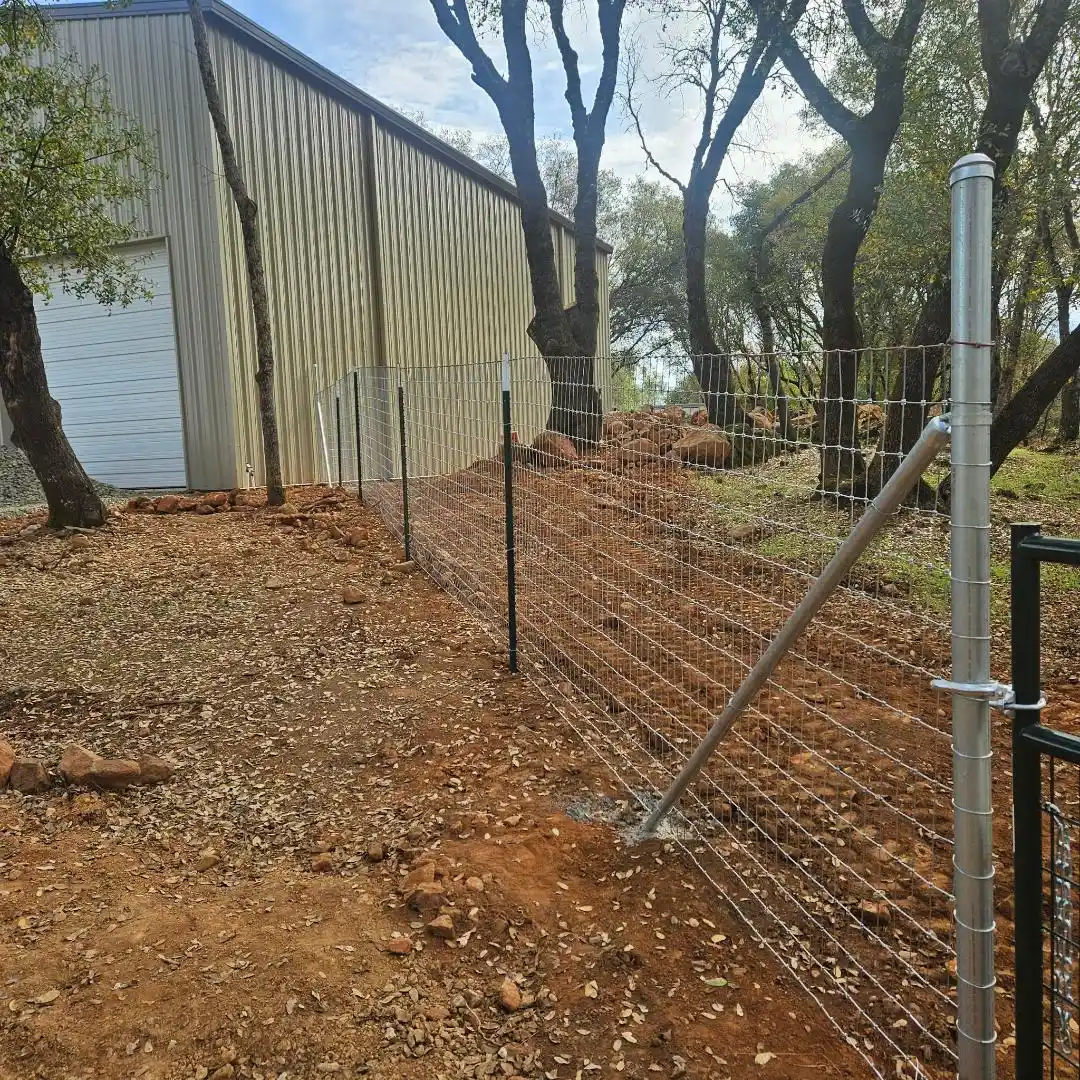
- Long acreage perimeters. Woven or fixed-knot fencing covers distance with fewer joints, fewer posts, and less cutting.
- Rolling or uneven terrain. Panels don’t contour, so you end up with gaps under the low spots.
- Privacy. There is none. An open grid is the point.
- Horses. Large openings can trap a hoof or a shoe, and horses lean on fencing hard. Most horse owners are better served by smaller-mesh no-climb fencing or a rail system.
- Small dogs, puppies, and horned goats. Heads go through openings, and horizontal wires make a convenient ladder for a climbing dog.
- Aggressive cattle, crowding pens, and working chutes. Mississippi State University Extension design guidance for cattle-handling facilities recommends around 60-inch holding-pen fencing and 60 to 72 inches of top-rail height for aggressive cattle. That’s facility design guidance, not code, but it explains why a 50-inch panel isn’t automatically strong enough for cattle.
- Pool barriers in California. A standard cattle panel doesn’t qualify. More on that below.
One more practical note: full-length panels are heavy and awkward. Moving them without a trailer is a genuine problem.
Farm-style vs. framed residential cattle panel fences
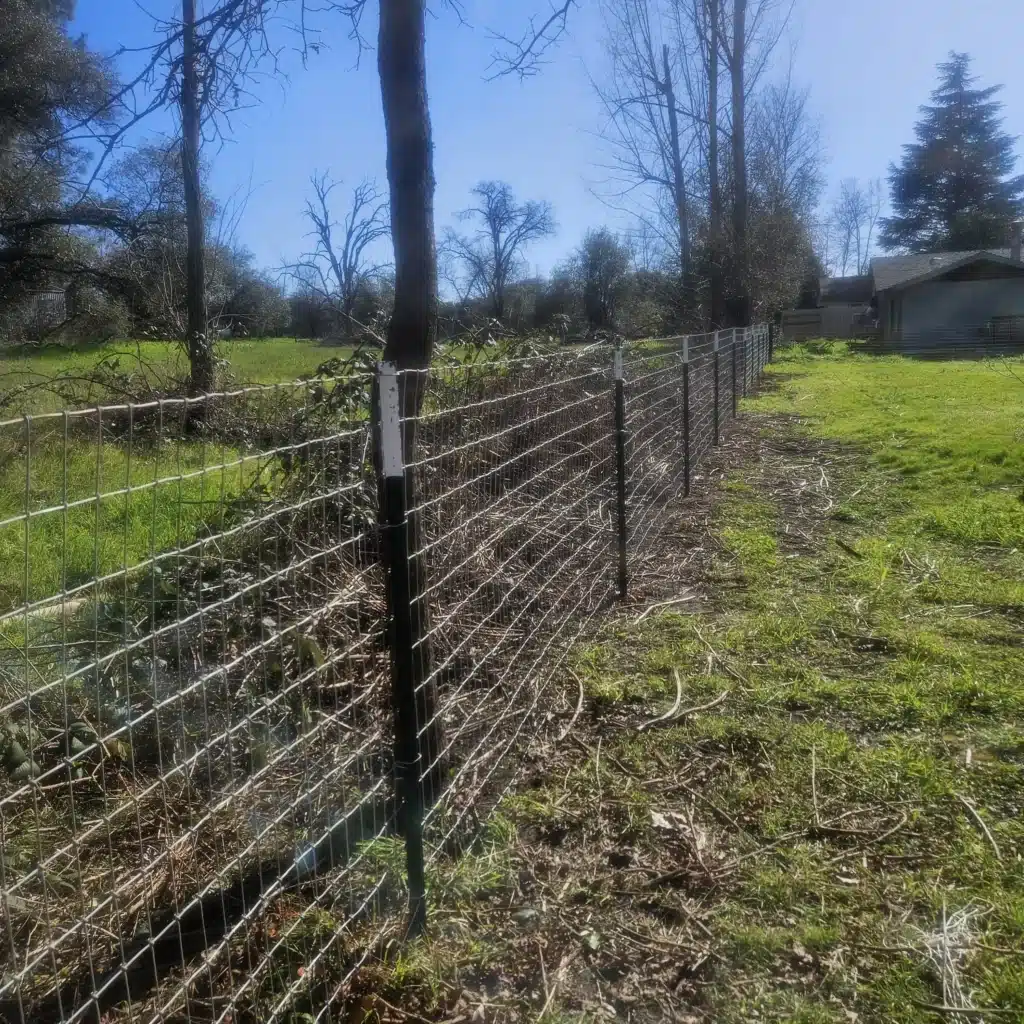
Panels clipped to T-posts along a pasture or ranch boundary and panels set inside a finished frame on a residential lot are two different systems. They look different, use different hardware and materials, and carry different expectations for finish and longevity.
Wood-framed cattle panels
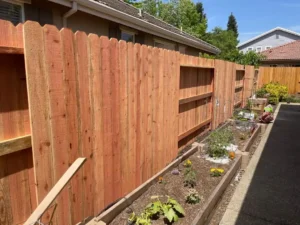
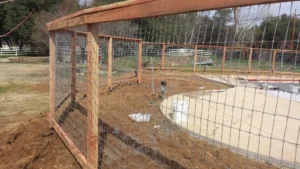
An affordable way to get the crafted, framed look, and it’s easy to match existing wooden fencing on the property. Wood does need upkeep, though. Posts and rails in ground contact or under sprinklers will eventually rot without maintenance.
Steel-framed cattle panels
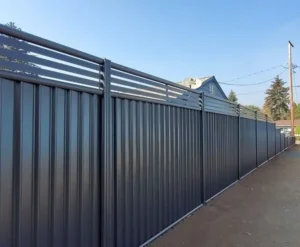
Metal frames don’t rot and stay low maintenance for decades. Frame kits with self-tapping screws are sold to make assembly easier. If you like this look but want more security, our steel and Durabond steel fencing options are worth comparing.
How to build and install a cattle panel fence
- Confirm your property line and lay out the run before ordering materials.
- Plan corners and gate openings first. A good layout accounts for those, then panels get cut to fit around them.
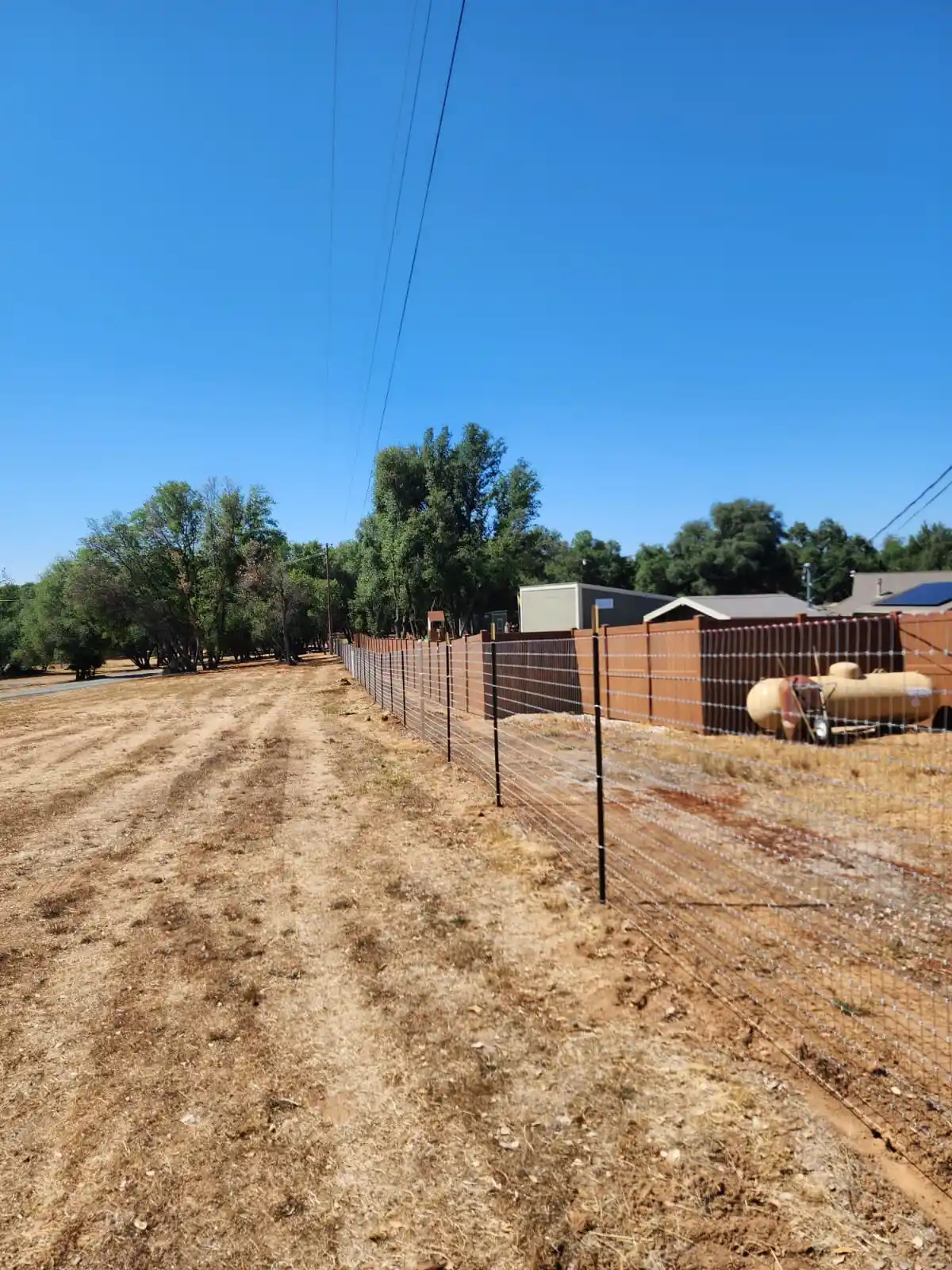
- Set posts to a depth that suits your soil, not a number off a forum. A post at each end of a 16-foot panel plus one at the midpoint gives roughly 8-foot support intervals, a common configuration for stability rather than an engineering rule.
- Tighten post spacing at corners, gates, soft soil, and anywhere animals crowd.
- Mount panels on the livestock-pressure side so animals push the panel into the posts, and keep that detail consistent on all sides of a pen.
- Secure each panel with proper clips, staples, or brackets rated for the post type.
- Protect cut ends. Bare steel is where rust starts.
- Close bottom gaps on sloped ground to ensure a calf or a dog doesn’t find them first.
Call 811 before you dig
Digging fence posts counts as excavation. CPUC guidance describes starting your request roughly two to three business days before you dig, and USA North 811 covers Northern California. Utility marking is standard practice on every job we run.
How to select the right livestock panels for your property
Answer these before you order:
- Which animal, and how many? Cattle, hogs, sheep, and horses all push on fencing differently.
- Size and temperament. A calm mature cow and a bull are not the same problem.
- Opening size. UC ANR notes that smaller mesh, around 2 by 4 inches, may be needed to ensure sheep and goats stay contained.
- Gauge and panel height for the pressure you expect.
- Coating, especially if the fencing will sit in wet ground.
- Permanent or temporary, framed or unframed.
Where to buy cattle panels: store pickup vs. shipping fence panels to your site
A local feed store or farm supply store will stock full-length panels, and online retailers sell smaller utility sizes from about 3 by 6 feet up to 8 by 8 feet, plus lighter 12-gauge garden panels. Source panels locally when you can, because a 16-foot panel won’t fit in most vehicles. Check the terms before you add anything to a cart: carriers deliver oversized panels on a freight schedule, and shipping charges can move your material budget more than the panels themselves. If you want a ballpark on a finished fence, our Fence Price Calculator page is the better starting point.
California and Sacramento-area rules to check before you build

The Sacramento County Zoning Code requires fencing that encloses livestock to be of adequate height, designed to contain the animals at all times, and to keep them from crossing property lines or damaging adjacent property. It doesn’t name a single panel height, because suitability depends on the animal. In unincorporated Sacramento County, fences over 7 feet generally require a building permit. The City of Sacramento has its own fence rules, so confirm first whether your parcel is inside city limits or in unincorporated county. HOA architectural guidelines and CC&Rs can also restrict open-grid fencing on residential lots.
A standard cattle panel is not a pool safety fence in California. Health and Safety Code §115923 requires a qualifying barrier at least 60 inches high, no more than 2 inches of ground clearance, no opening that passes a 4-inch sphere, and no climbable footholds. A 50-inch panel with horizontal wires fails on all counts. Use a proper pool safety fence instead.
Rules change, so verify current requirements with the relevant city or county building department, or start with the Fence Ordinance Quick Links on our site. We’re licensed, bonded, and insured (CSLB License #979657), and we handle permitting as part of the job.
Maintenance and repair
- Check clips, welds, posts, and gate hardware each season.
- Keep the bottom wire out of standing water and chronic mud where you can.
- Treat cut ends. Galvanizing protects the factory surface, not the spot you cut, and sealing it gets you the full lifetime out of the steel.
- Straighten leaning posts and re-secure loose panels early. One post replacement now beats rebuilding a whole run later.
- Wood frames need periodic upkeep. Metal frames don’t rot.
DIY or professional installation?
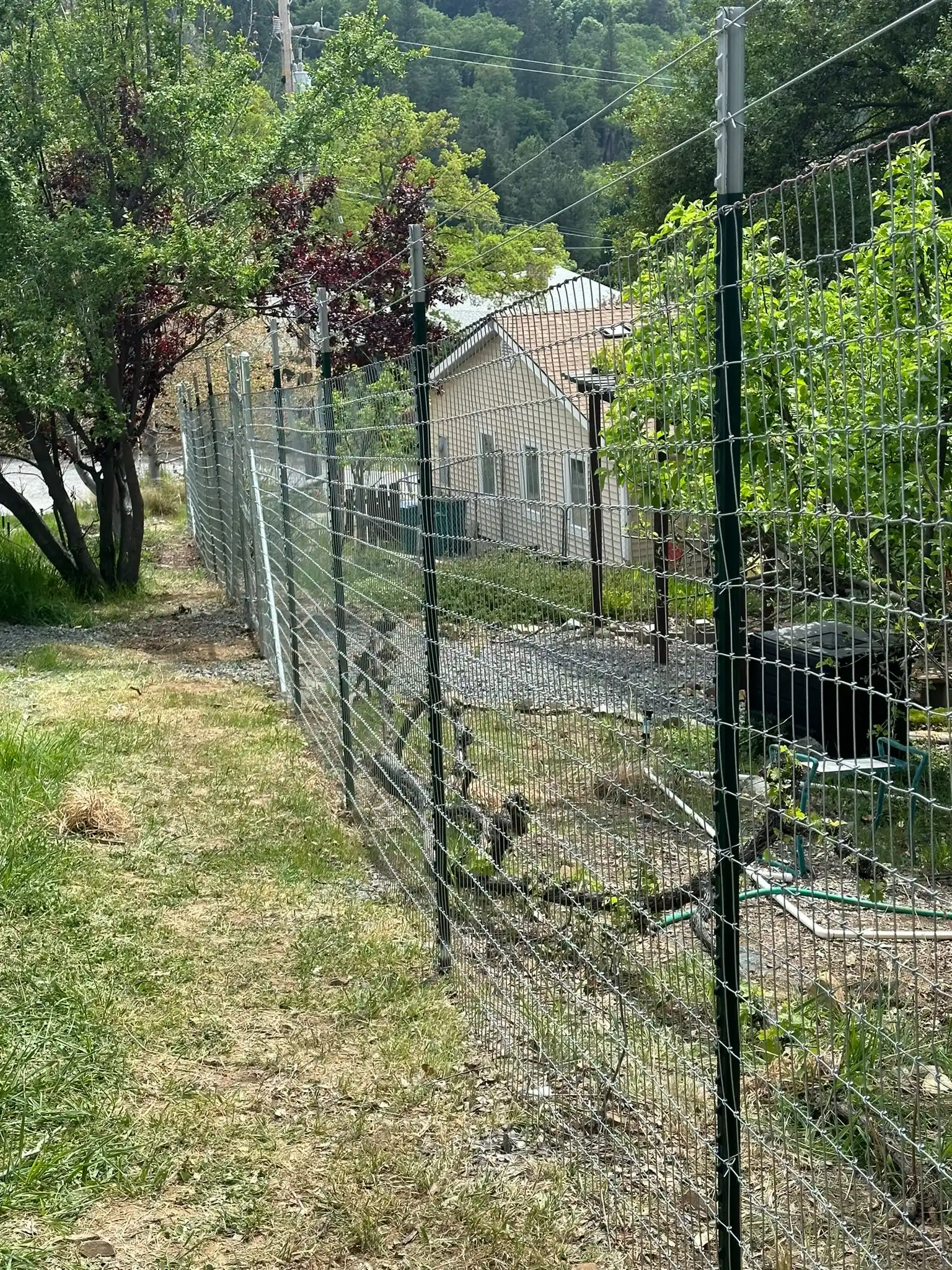
Rigid panels are self-supporting, which makes a short, level garden enclosure or a temporary pen genuinely doable on a weekend, and a decent build video will get you most of the way there. Bring in a professional when you’re dealing with gates and gate openers, slopes, long runs, real livestock pressure, a shared property line, or anything that needs a permit.
When our crews come out, they’re background-checked W-2 employees, not day labor. You get flat pricing with zero hidden fees, quality workmanship, a written guarantee that the job isn’t finished until you give the thumbs up, and a thorough clean-up when we leave.
Frequently Asked Questions
What are the disadvantages of using cattle panels?
No privacy, an industrial look that doesn’t suit every yard, and rigidity that won’t follow uneven ground without leaving gaps underneath. Full-length panels are also heavy to transport, and common heights are shorter than what some livestock situations call for.
How much does cattle panel fencing cost?
The number accounts for panel gauge and size, post type and count, framing materials, gates, terrain, site access, and total run length. Try our Fence Price Calculator for a starting figure, or request a free fence estimate for real numbers on your property. Financing is available for Sacramento-region residents.
What’s the difference between cattle panels and hog panels?
Hog panels are typically shorter with graduated openings that tighten near the bottom, which also helps keep predators out low. The labels vary by manufacturer, so verify actual specifications rather than trusting the nickname.
What’s the most affordable way to fence cattle?
It depends on acreage. Cattle panels are an ideal choice for short pens and catch areas. For long perimeters, woven or field fencing usually covers distance for less material and labor per foot.
Do I need a permit for a cattle panel fence in Sacramento?
In unincorporated Sacramento County, fences over 7 feet generally require a building permit. Confirm whether your property falls under the city or the county, and check HOA rules before ordering materials.
Talk it through with a local fence company before you buy panels
We install agricultural, steel, chain link, and pool safety fencing across Sacramento, Placer, El Dorado, Yuba, Yolo, and Nevada counties, with three local office locations and crews who know the local ordinances and neighborhood styles. That means we can walk your whole property and focus on what actually fits, instead of selling you one product. Licensed, bonded, and insured, CSLB License #979657. Get a Free Fence Estimate: call us or book online.