Key Takeaway
Concrete fence posts are precast or prestressed reinforced-concrete posts, distinct from wood or steel posts simply set inside a poured concrete footing. They resist rot, insects, and fire, and suppliers commonly cite 50-plus years of service life with minimal maintenance. However, they are heavy, with some posts weighing up to 178 pounds, difficult to modify on site, and better suited to agricultural, vineyard, or livestock fencing than typical residential privacy fences.
A concrete fence post is a precast or prestressed reinforced-concrete post, meaning the post itself is concrete. That’s different from wood posts or steel posts set inside a poured concrete footing, which is what most people actually have in their yard. Real concrete fence posts resist rot, rust, insects, and moisture, and they don’t burn. They’re also heavy, hard to adjust on site, and awkward to repair. If you’re staring at a leaning fence and comparing materials before you call anyone, here’s a plain comparison of concrete, wood, and steel fence posts, plus the California rules that apply either way.
What Is a Concrete Fence Post, and What It Isn’t?
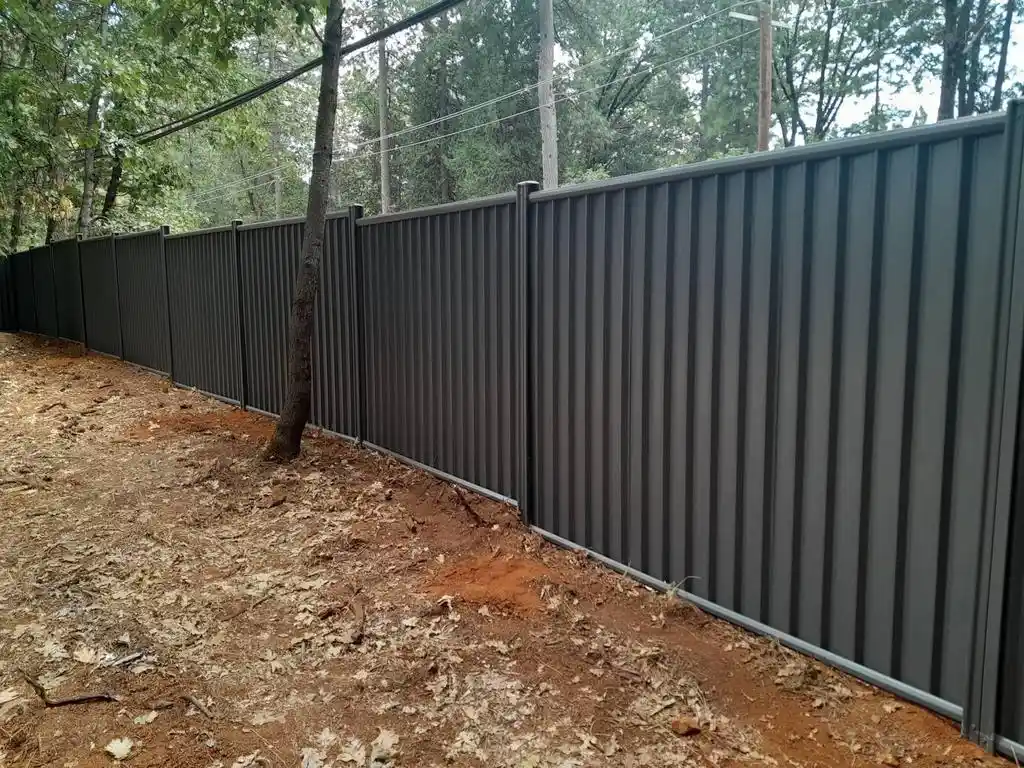
Three different things get called the same thing:
- An actual precast or prestressed concrete post. The structural post is concrete, cast in a form at a plant.
- Wood posts, steel posts, or vinyl posts set in a concrete footing. You dig a post hole and fill around the post with concrete. The post itself is not concrete.
- A precast concrete column used in a full post-and-panel wall system, which behaves more like a wall than a fence.
This article covers the first one. The three aren’t interchangeable structurally, legally, or in cost, and mixing them up is where most bad estimates start.
How Are Precast Concrete Fence Posts Made?
They’re cast in a controlled plant and reinforced or prestressed with internal steel, then produced in profiles built for a job: slots that create a channel for drop-in wooden or composite fence panels, holes for horizontal rails, or cast-in points for wire. One published U.S. manufacturer spec calls for a 5,500 psi minimum compressive strength and no more than 6% absorption, but that’s that manufacturer’s specification, not a national standard. Lead times vary depending on the plant and the profile, so ask early whether posts and fence panels arrive together. The product documentation tells you more than the word “concrete” does.
What Are the Advantages of Concrete Fence Posts?

Here’s what precast concrete fence posts genuinely do well.
- No ground-line rot, which is the failure point on most old wood fence posts.
- Insects can’t eat concrete, so termites and carpenter ants aren’t a factor.
- The post material is noncombustible.
- Strong lateral stiffness, a real benefit under heavy fence panels, high winds, and heavy rain.
- Durable at the ground line, with far less seasonal maintenance than staining wood or treating rust on metal.
- Suppliers commonly cite 50-plus years with minimal maintenance, and well-made, well-installed fence posts can stay serviceable for decades.
We won’t promise a specific service life. Concrete doesn’t rot, but long term performance still depends on how the posts were installed and how fast damage gets addressed.
What Are the Disadvantages of Concrete Fence Posts?
Weight is the first thing you notice about concrete fence posts. One current U.S. product line lists a two-rail post at 104 pounds and a three-rail post at 178 pounds. Those are product-specific figures, not typical of every post, but they show the reality: two-person lifts, lifting tools, and a transport plan. A narrow gate into a back yard becomes a real problem.
You also can’t trim a concrete post on site the way you can trim wood fence posts with the tools already in the truck, and you generally can’t drive a screw into it. Attachments work through the cast-in slots, rail holes, or manufacturer-approved brackets. Impact, soil movement, or installation stress can create cracking and spalling, which lets moisture reach the internal steel, so cracks should be sealed promptly. Replacing one damaged post often means disturbing the sections next to it, and corners are the worst place for that to happen. Some systems read industrial. And in much of the U.S., local supply, fence panel compatibility, and lead time are genuine limits. Upfront cost is typically higher than traditional wood.
Concrete vs. Wood vs. Hidden Steel Fence Posts
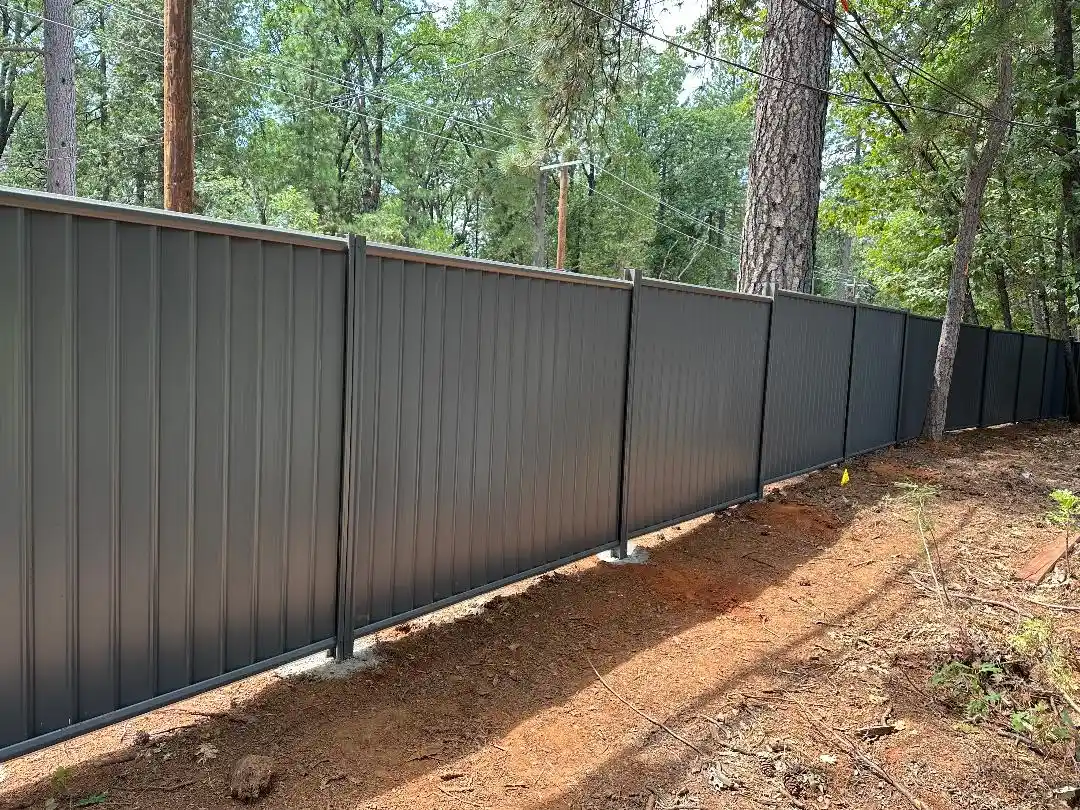
Most homeowners compare fence posts when what really matters is the whole fence system. Here’s how the three stack up.
| Precast concrete fence post | Pressure-treated wood fence post | Galvanized / hidden steel fence post | |
|---|---|---|---|
| Rot and insect resistance | Excellent | Fair, rots at grade over time | Excellent when galvanized |
| Weight and handling | Heavy, often needs equipment | Light, one person | Light to moderate |
| Look with a wood fence | Visible concrete between fence panels | Matches traditional wood naturally | Hidden inside the wood |
| Attachment flexibility | Limited to cast-in slots and brackets | Very flexible | Flexible with brackets |
| Corners and gate posts | Heavy, needs planning ahead | Easy to brace and adjust | Straightforward with brackets |
| Single-post repair | Difficult | Straightforward | Straightforward |
| Post fire behavior | Noncombustible | Combustible | Noncombustible |
| Best-fit styles | Rail, wire, precast panel systems | Good neighbor and privacy fences | Wood privacy fences needing strength |
Bolt-Up Hidden Steel Posts are the middle path a lot of homeowners like: steel strength carrying the fence, with the clean wood face left uninterrupted.
Where Do Concrete Fence Posts Make the Most Sense?
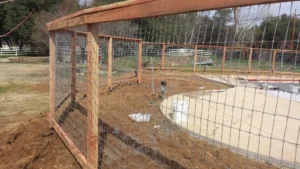
- Agricultural fencing, including ranch rail or wire fencing across large acreage.
- Vineyard and orchard rows where rot and equipment contact shorten wood post life.
- Livestock containment, where lateral strength earns its keep.
- Selected commercial boundaries.
- Post-and-panel systems engineered to use them.
- Properties where the owner is deliberately choosing noncombustible materials.
On those properties the benefit is simple: fewer post replacements over the life of the fence. A typical residential privacy fence does not require concrete fence posts.
When Are Wood or Steel Fence Posts the Better Choice
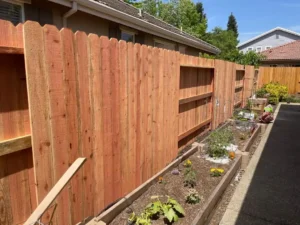
- Residential good neighbor fences, where the wood face should look uninterrupted.
- Projects you may modify later: adding a gate, a dog panel, a trellis.
- Tight-access back yards where a 100-plus-pound post simply can’t get there.
- Fence repair, where new fence posts need to match existing construction.
- Gate posts carrying an automated gate opener, where hardware mounting and adjustability matter.
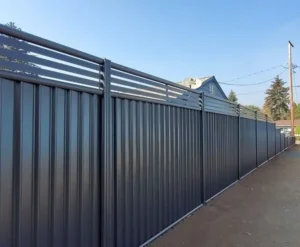
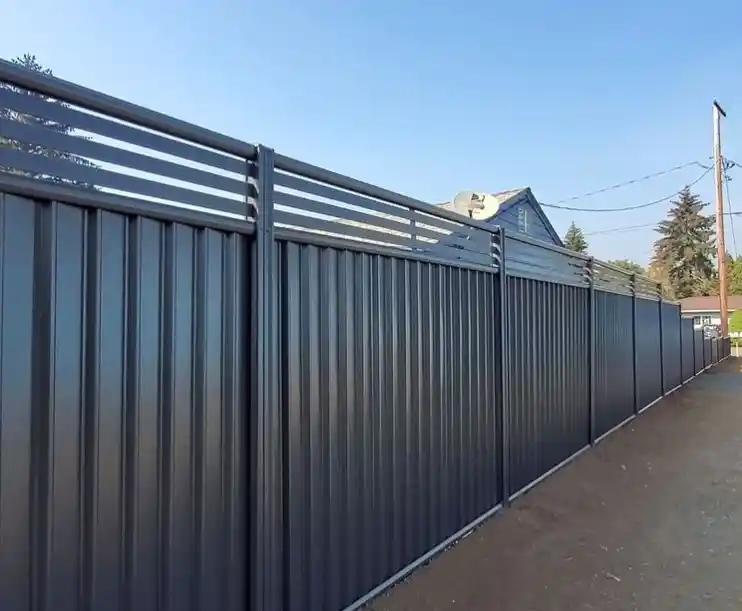
Durabond steel is worth a look when you want high security and a sleek line without concrete-post weight.
How Deep Should Concrete Fence Posts Be Set in the Ground?
There’s no universal depth. It depends on finished fence height, whether the fence is solid or open, wind exposure, soil type and movement, and whether the post is a line, corner, terminal, or gate post. One U.S. precast product line specifies a 2-foot minimum embedment, but that’s a product instruction, not a code.
The rules of thumb you’ve probably read, dig a hole about three times the post width, add a gravel base for drainage, fill to about 3 to 4 inches below grade, brace the post until the footing sets, and fast-setting mixes firm up in roughly 20 to 40 minutes, come from setting wood posts or metal posts in poured concrete footings. Don’t transfer them to a proprietary precast post. If you do install concrete fence posts, follow the manufacturer’s embedment table. Corners, ends, and gate posts almost always need more, whether that’s extra depth, a wider footing, or a diagonal brace, because corners take pull from two directions at once. Get depth, footing size, reinforcement, and spacing in writing.
Sacramento and California Rules That Apply No Matter Which Fence Posts You Choose

The City of Sacramento generally exempts fences 7 feet and under from a building permit, though Planning Division standards still apply. In unincorporated Sacramento County, fences over 7 feet generally trigger a permit, with typical front-yard limits of 3 feet for solid fences, 4 feet for chain link or woven, and 7 feet for open ornamental. County guidance also requires a building permit for concrete or masonry walls over 4 feet measured from the bottom of the footing, which is why a concrete post-and-panel wall isn’t treated like an ordinary fence. The CSLB’s C-13 fencing classification covers fences, posts, and gates but excludes masonry walls.
Pre-mark your work area and contact USA North 811 at least two working days before digging any post hole. Current CAL FIRE home-hardening guidance recommends replacing combustible fencing or gates attached to the home with a noncombustible option for the first 8 feet, and a concrete fence post carrying wood panels is still a combustible fence. For a pool safety fence, California Health and Safety Code enclosure rules apply to the whole barrier: 60-inch minimum height, 2-inch maximum ground clearance, no gap that passes a 4-inch sphere, and self-closing, self-latching gates that open away from the pool. Permitted new or remodeled pools generally need at least two of seven drowning-prevention features. Check your HOA architectural guidelines and CC&Rs, and confirm current local ordinance before you build. Fantastic Fence is licensed, bonded, and insured, CSLB License #979657.
What to Ask Before You Accept a Fence Estimate
- Is this an actual precast concrete fence post, or a wood or steel post set in a concrete footing?
- What reinforcement is inside, and is there product documentation?
- What depth and footing dimensions are specified?
- How do the fence panels or rails attach?
- Can the post be drilled or modified later?
- How are corner posts and gate posts built differently?
- What’s the lead time on posts and panels?
- If a post cracks, can one post be replaced without rebuilding the run?
- Is every specification written into the estimate?
Communication is the foundation of a good project. Flat pricing and zero hidden fees start with a written scope you can actually read.
Frequently Asked Questions
How deep should a concrete fence post be in the ground?
There’s no universal depth. One U.S. precast product line specifies a 2-foot minimum for its posts. Actual depth depends on fence height, wind exposure, soil, and whether it’s a line post, a corner, or a gate post. Get it in writing.
Are concrete fence posts cheaper than wood?
Upfront cost is typically higher than traditional wood. Long-term value depends on rot resistance, how easy repairs are, and site access. For your own numbers, run your project through our fence price calculator.
Is it a good idea to use concrete for fence posts?
Two different questions. Setting wood or steel posts in concrete footings is standard good practice. Choosing precast concrete posts is a specialty decision that depends on the fence system and the property.
How many 50-pound bags of concrete per fence post?
It depends on hole diameter, depth, and post size rather than one number. Calculate the hole volume and subtract the post volume. A 4×4 needs less than a 6×6, and corner posts and gate posts need more.
Not Sure Which Fence Post Is Right for Your Property? Let’s Talk.
A free estimate is a chance to compare fence posts side by side, wood, steel, Durabond steel, Bolt-Up Hidden Steel Posts, and the right footing design for your soil and fence height. We’re locally owned, with approximately 35 background-checked W-2 employees, flat pricing with zero hidden fees, and a written guarantee that the job isn’t finished until you give the thumbs up. We clean up thoroughly, because we’re guests on your property. Financing is available for Sacramento-region residents. Our Rocklin/Roseville, Sacramento, and Elk Grove offices serve Sacramento, Placer, El Dorado, Yuba, Yolo, and Nevada counties. Get a Free Fence Estimate: Call Us or Book Online.