Key Takeaway
Fence lights work best when matched to a specific job: post cap lights or rail lights for ambiance along a run, a focused or motion-activated light at the gate, and ground-mounted wash lights if you prefer no holes in the fence at all. Solar powered options suit fence lines with dependable direct sun, while low-voltage wired systems deliver consistent output for larger yards. Always choose outdoor fixtures rated for wet locations, and aim beams downward onto your own property.
Choose fence lights by the job they need to do. Downward-facing post cap lights or rail lights handle ambiance and footing along a run. A focused or motion-activated light belongs at a gate where you’re fumbling for a latch in the dark. Solar powered lights work well, but only where the panel gets dependable direct sun. Whatever you pick, use outdoor-rated, wet-location waterproof lights and keep the beam on your own property.
This is for the homeowner who wants a fence that looks good and feels safe after dark, without glare, guesswork, or an electrical hazard hanging off a wood rail. Two ideas run through everything below. First, there’s a difference between putting lights on the fence (post cap lights, rail lights, sconces) and lighting the fence (ground lights aimed at it). Second, every option falls into one of three power tiers: solar, low-voltage wired, or hardwired. Price, installation effort, and night-to-night reliability all follow from that one choice. Sort those two things out and the shopping gets easy.
What Type of Fence Light Should You Choose?
Match the light to the purpose:
- Ambiance across the outdoor space: post cap lights, under-rail lights, or string lights. Low output, warm color, spread across a run.
- Paths, stairs, and steps: downward-facing step lights or deck lights to illuminate a walkway, a set of treads, or the pathways between beds. Lighting a dark perimeter is a real trip-and-fall fix, not just decoration.
- Gates, driveway entries, and latches: one focused task light or a motion light. You need it for ten seconds, not all night.
- Security: controlled light at access points, layered with motion-activated lights. An evenly overlit perimeter is worse than a few well-aimed lights.
- Planting beds and specimen trees: small garden lights or slim solar spotlights tucked into mulch, aimed up into a shrub or across a border. This is where a backyard starts to look designed instead of just lit.
- The fence as a design feature: ground-mounted wash lights, carefully aimed, with no holes drilled in the fence at all.
Most solar fence lights include dusk to dawn sensors, so they come on by themselves and there’s no switch to remember. One caveat before you buy anything: there is no universal lumen number and no universal spacing number that works for every fence. Anyone who gives you one is guessing. We’ll explain what actually drives those decisions further down.
Start With What the Light Needs to Accomplish
Name the job first. Is it seeing the last two steps off the deck? Setting a mood on the patio when you’ve got people over? Finding the gate latch with your hands full of groceries? Pulling a nice fence panel or a garden bed out of the dark? Giving a camera something usable to look at? Marking a property edge so the far corner of the backyard doesn’t disappear at night?
Most disappointing fence lighting is a shopping problem, not a product problem. Plenty of people buy a ten-pack of solar lights at a tempting price, screw them to the fence posts, get one decent summer out of them, and still can’t see the gate. The lights were fine. The job was never defined. Write down the job in one sentence and you’ll skip that whole cycle.
The Main Types of Fence Lights (and What Each One Is Good For)
There are more styles of outdoor lights than most homeowners need. Here’s the short version of each, with what it does well and where it bites you.
Fence Post Cap Lights
The most popular on-fence option, sold in both solar and low-voltage versions. A cap light sits on top of a fence post and pushes light down and outward, which spreads illumination evenly along a run without putting a bulb at eye level. It also gives the fence a finished appearance from the street. Fit is driven by your actual fence post dimensions, so measure the post before you order, including whether it’s a nominal size or a true one. Most post cap lights include dusk-to-dawn sensors. Watch out for solar post cap lights on a shaded fence line, which is the single most common cause of buyer’s remorse here.
Fence and Rail Lights
Small lights mounted to a rail or picket and aimed down. They give a low, even glow along a fence line that reads as intentional rather than decorative. Good choice when post cap lights don’t fit your fence style or your posts already have decorative caps you’d rather keep. The tradeoff is that you’ll need more of them than you think, and each one is a penetration in the fence.
Outdoor Step Lights, Deck Lights, and Railing Lights
Where a fence meets a deck, a set of stairs, or a raised patio, recessed step lights and deck lights solve an honest safety problem with almost no visual clutter. Recessed deck lights look clean and modern because the housing disappears into the surface and you only see the light. They need to be planned before the surface goes on, though. Retrofitting a recessed light into finished decking or a solid fence board is a lot more work than mounting a surface light.
If the deck is already built, you have two easy retrofits. Surface-mount deck lights can go under the nose of each tread or under the cap of the railing, where the fixture body stays hidden and only the pool of light shows. Or use solar deck lights shaped as railing post caps, which mount with a few screws and need no wire at all. A fully charged panel on a south-facing railing will generally carry those lights through the evening. The same lights on a railing shaded by a patio cover will underperform every night of the year, and no amount of shopping around fixes that.
Downlights and Wall Sconces
These are the bigger outdoor lights, mounted on a post, a wall, or a masonry column. Use them where you need genuine task light: a gate, a narrow side yard, a dumpster or trash enclosure. Shielding matters more here than anywhere else, because a bare, bright light source at head height throws blinding glare straight into eyes and across property lines. Look for a light that puts the output down and hides the lamp. Solar wall lights are an option on a shed or detached wall with no circuit nearby, though a solar lamp rarely matches a wired sconce for steady output at a gate.
String, Festoon, and Curtain Lights
The lowest-price way to change how a yard feels, and the easiest to take down. Festoon bulbs strung along the top of a fence give that warm, slightly vintage patio look. Curtain-style strands hung on a solid panel turn a blank wall into a backdrop. Hanging jar lights with solar lids skip wiring entirely. Mind the weight and the sag, support at posts, and understand these are seasonal-to-semi-permanent, not a permanent wiring system.
LED Strip and Rope Lights
Tuck a strip under a cap rail, behind a top board, or beneath a deck railing and you get continuous glow with no visible fixture. Color-changing versions are fun for a patio or a party. The problem is always adhesive: extreme temperatures and moisture will let go of a taped-on strip within a season or two. Use mechanical clips or an aluminum channel from the start and you’ll avoid re-doing the whole run.
Ground-Mounted Fence Wash and Uplights
This is lighting the fence rather than lights on the fence. Nothing gets drilled, the lights stay reachable for cleaning and aiming, and a grazing wash often looks better on a board fence or ornamental iron than any mounted fixture. Set into a garden bed, the same lights can graze a shrub and the fence behind it at once. The risk is aim. An uplight angled too steeply sends light over the fence and into a neighbor’s upstairs windows, so set the angle at night and check it from their side.
Motion-Activated Gate and Security Lights
Motion-activated floodlights do deter people, because a dark hiding spot suddenly isn’t one. But brighter is not automatically safer. A harsh light creates glare that hides whatever is behind it and washes out camera footage. DarkSky International’s lighting principles call for light that’s targeted and controlled, which is exactly right here: put a modest, well-aimed light at each access point, put it on motion control, and skip the floodlight aimed at the whole yard. Many current outdoor lights let you adjust both warmth and detection range, so use those settings.
Smart Lights and Modern Designs
App control lets you set schedules, group lights into zones, and dim a run down to a level that flatters the fence instead of blasting it. Plenty of smart and solar fixtures also ship with several lighting modes, so you can drop the output on a quiet night and save the bright setting for when you need it. There are also decorative options: shadow-casting lights that project patterns onto a fence panel, and battery LED candle lights for atmosphere without a flame. LED draw is low enough that running a modest fence lighting scheme all evening costs very little. One firm rule on a wood fence: no actual candles, no open flame, no torches with real fuel.
| Type of light | Best for | Power options | Main drawback |
|---|---|---|---|
| Post cap lights | Even ambiance along a run | Solar, low-voltage | Must match fence post size; solar needs sun |
| Rail and fence lights | Low glow without eye-level glare | Solar, low-voltage | Many lights, many penetrations |
| Step, deck, and railing lights | Stairs, decks, raised patios | Low-voltage, hardwired, solar | Recessed versions best planned early |
| Downlights and sconces | Gates, side yards, enclosures | Hardwired, low-voltage | Needs shielding; often an electrician |
| String and curtain lights | Patio atmosphere, events | Plug-in, solar | Sag, weather wear, not permanent wiring |
| LED strip and rope | Hidden continuous glow | Low-voltage, plug-in | Adhesive fails outdoors |
| Ground wash, uplights, garden lights | Showing off the fence and plantings | Low-voltage, solar | Easy to aim into a neighbor’s window |
| Motion security lights | Gates and entry points | Solar, hardwired | Glare and camera washout if overdone |
Solar vs. Low-Voltage vs. Hardwired Fence Lights: Which Is Right for You?
| Power source | Easy installation? | Consistency | Sun dependent? | Controls | Maintenance | Best use |
|---|---|---|---|---|---|---|
| Solar | Yes, no wiring | Varies with weather conditions and season | Yes | Built-in dusk-to-dawn sensor | Clean panels, replace batteries | Ambiance, marking, no power nearby |
| Low-voltage | Moderate, transformer and cable | Consistent | No | Timers, photocells, smart control | Occasional connection checks | Whole-yard schemes, path, deck, and rail lighting |
| Hardwired | No, licensed work | Most consistent | No | Switches and automatic controls | Low once installed | Sconces and floodlights at gates and side yards |
Price and effort rise as you move down that list. So does reliability. Pick the lowest tier that will actually do your job.
Are LED Solar Lights Worth It on a Fence? Easy Installation, Real Limits
Yes, when the panel gets dependable direct sunlight and the job is ambiance or gentle marking. An LED solar light packages a small photovoltaic panel, a rechargeable battery, and a low-draw LED into one sealed housing. It charges through the day, comes on at dusk on its own, and draws no electricity from the house, which makes it both environmentally friendly and the only realistic option for a back fence with no power anywhere near it. Easy installation is the whole appeal: a couple of screws per light and you’re done in an afternoon.
No, when the fence line sits in shade, when you need the same brightness every single night, or when the light is doing real task or security work at a gate. Run time drops on overcast days, and short winter afternoons leave less charge for a long evening. In the foothill counties we serve, snow or heavy frost on a panel stops charging until someone wipes it clear. A good housing will withstand various weather conditions, but surviving the weather and collecting a full charge are two different things.
Two maintenance facts to plan for. Dust and pollen on the panel cut charging noticeably, so wipe the panels a few times a year. And the rechargeable cell inside most solar lights is a consumable, not a lifetime part, so expect to replace batteries eventually or accept dimmer output. Check whether the model you’re buying has a user-replaceable battery before you commit to twenty of them.
Solar Deck Lights and Solar Garden Lights
Beyond the fence, the same technology shows up as solar deck lights for railing caps and stair risers, and as solar garden lights on spikes for beds and borders. They’re a sensible low-commitment way to test a lighting idea. Put a few solar garden lights where you think you want permanent low-voltage lights, live with the layout for a week, then decide. The output will be softer than a wired system, so treat solar deck lights as guidance and atmosphere rather than as the light you read a house number by.
Low-Voltage Wired LED Systems
A transformer at an outdoor outlet feeds buried cable out to each light. Output stays consistent regardless of sunlight, you can run the whole system on a timer or photocell, and you can add lights later on the same run. It’s the sweet spot for most yards, and it lets you put fence lights, deck lights, and garden lights on one coordinated scheme. The one thing to plan for is trenching cable along a fence line, which is where the 811 call comes in. More on that below.
Hardwired Outdoor Lights
Best for sconces and floodlights where you want real light and no batteries to worry about. This means a permanent circuit, most likely a permit, and a licensed electrician. Being clear about our lane: we handle the fence and gate, including repair, replace, and installation, and permanent electrical work belongs to a qualified electrical professional.
Can You Put Lights on Wood, Vinyl, Steel, Iron, or Chain Link?
Yes, on all of them, but the mounting method changes completely. One rule governs the whole thing: follow both the light manufacturer’s instructions and the fence manufacturer’s instructions, and never fasten into a component that was not designed to carry the load.
Wood Fences
The most forgiving material. A fence post carries weight better than a rail, so put anything substantial on a post. Use exterior-rated stainless or coated fasteners, since plain steel will bleed rust streaks down a board within a season. Seal every penetration so water isn’t sitting in a hole in end grain. Keep low-voltage wiring up off the dirt and out of leaf litter.
Vinyl Fences
Vinyl rails and posts are hollow, and that changes everything. Use caps and mounting blocks the manufacturer approves for the system. Drilling into an unapproved spot can crack a panel when temperatures drop, and it may affect your warranty. Post cap lights made for vinyl systems are usually the cleanest answer, because the load transfers to the fence post rather than hanging off thin wall material.
Steel and Ornamental Iron Fences
Clamp-on and bracket mounts are your friends here, because they hold a light without piercing the finish. Any hole you do drill needs touch-up paint or primer right away, or you’ll get rust creeping from the edge. Durabond steel and ornamental iron are durable enough to carry slim rail-mounted lights easily, and they look especially good with ground-mounted wash lights raking across the pickets.
Chain Link Fences
The fabric won’t carry a light. Anything you mount needs to land on a terminal post, a gate post, or the top rail with a proper clamp sized to the pipe. For anything heavier, set an independent support post next to the fence and mount there instead.
Bolt-Up Hidden Steel Posts and Masonry Columns
With Bolt-Up Hidden Steel Posts, the whole point is a clean, seamless line with no visible hardware, so confirm where an attachment can be made before you drill into anything. For masonry columns, use proper masonry anchors rated for the fixture weight. Wood screws in a pilot hole in mortar will loosen.
How Bright Should Fence Lights Be?
Compare lumens, not watts. As the Federal Trade Commission explains, lumens measure light output while wattage measures energy use, and with LEDs wattage tells you almost nothing about how bright a light will look. Beyond that, no universal number exists, because output interacts with beam pattern, mounting height, fence color and reflectivity, and how much light is already in the yard from streetlights and windows. A dark-stained fence swallows light that a white vinyl fence bounces back at you. For ambiance, low output is almost always right. Only gates and stairs need enough light to actually perform a task.
Before you commit to a whole run, do a mockup:
- Buy one light, not the ten-pack.
- Hold or temporarily clamp it exactly where you plan to mount it.
- After dark, look at it from the patio, from the street, and from your neighbor’s side of the fence.
- Then decide brightness, spacing, and quantity, and start drilling.
Warm White vs. Cool White: What Color Temperature and Beam Direction Work Best Outdoors?
Go warm. DarkSky International recommends residential outdoor lighting at 3000 K or lower. Cool white reads bluer, tends to make a wood fence look institutional rather than inviting, and contributes more to light pollution than warmer light at the same output. Cool white does have honest uses, mostly utility ones: a work area, a shop door, a side yard where you’re looking for a tool rather than relaxing. Just don’t let cool white lights sneak into the patio or garden zones, and don’t mix the two color temperatures along the same fence run, because the mismatch is obvious at night.
Direction matters just as much. DarkSky estimates that somewhere between 20% and 50% of outdoor residential lighting gets thrown into the sky because lights aren’t shielded properly. That’s light you paid for, landing where nobody benefits. Aim down, aim inward, and pick lights that hide the lamp from view. Then add controls: a photocell for dusk-to-dawn operation, a timer to shut things off after the yard is empty, and motion sensors on anything you only need occasionally. Lights burning at full output until sunrise serve no one.
Are Fence Lights Waterproof? Outdoor Electrical Safety Basics
Wet-Location vs. Damp-Location Ratings
“Waterproof” is a marketing word, not a rating, and the two real terms get used interchangeably in product copy. Per UL guidance, a damp location is partially protected and subject to moisture or condensation, like a covered porch ceiling. A wet location is where water can drip, splash, flow, or fall directly onto the equipment. A light hanging on an open fence in the rain is a wet location, so a damp-rated fixture is not waterproof enough for that spot. Look for a product listing that states the light is suitable for wet locations. “Weatherproof,” “weather resistant,” and even “100% waterproof” in a description mean nothing on their own.
IP numbers are useful but partial. An IP65 waterproof claim describes dust and water-jet resistance in a lab test, and it says nothing about how the housing, the gasket, or the wiring will hold up after five Sacramento summers. Line-voltage outdoor luminaires are evaluated to wet-location requirements under UL 1598, and an IP number by itself isn’t the whole safety test. For solar lights, the weak points are usually the seam around the panel and the battery compartment, so check that the model you’re buying is genuinely waterproof at those joints and not just splash resistant.
Outlets, Cords, and What Not to Do
Consumer Product Safety Commission guidance for outdoor lighting comes down to a short checklist:
- Use only cords marked for outdoor use.
- Plug into a working GFCI-protected outdoor outlet.
- Never nail or staple a cord to a fence. A staple through insulation is a shock and fire risk.
- Don’t daisy-chain extension cords together.
- Replace any cord that’s damaged or warm to the touch.
Plainly: an extension cord is not permanent wiring for a fence lighting system. If the lights are staying up year-round, they need a proper power source. Call 811 before any trenching, and confirm permit requirements before permanent electrical work begins.
Shared Fences, HOAs, and Being a Good Neighbor About It
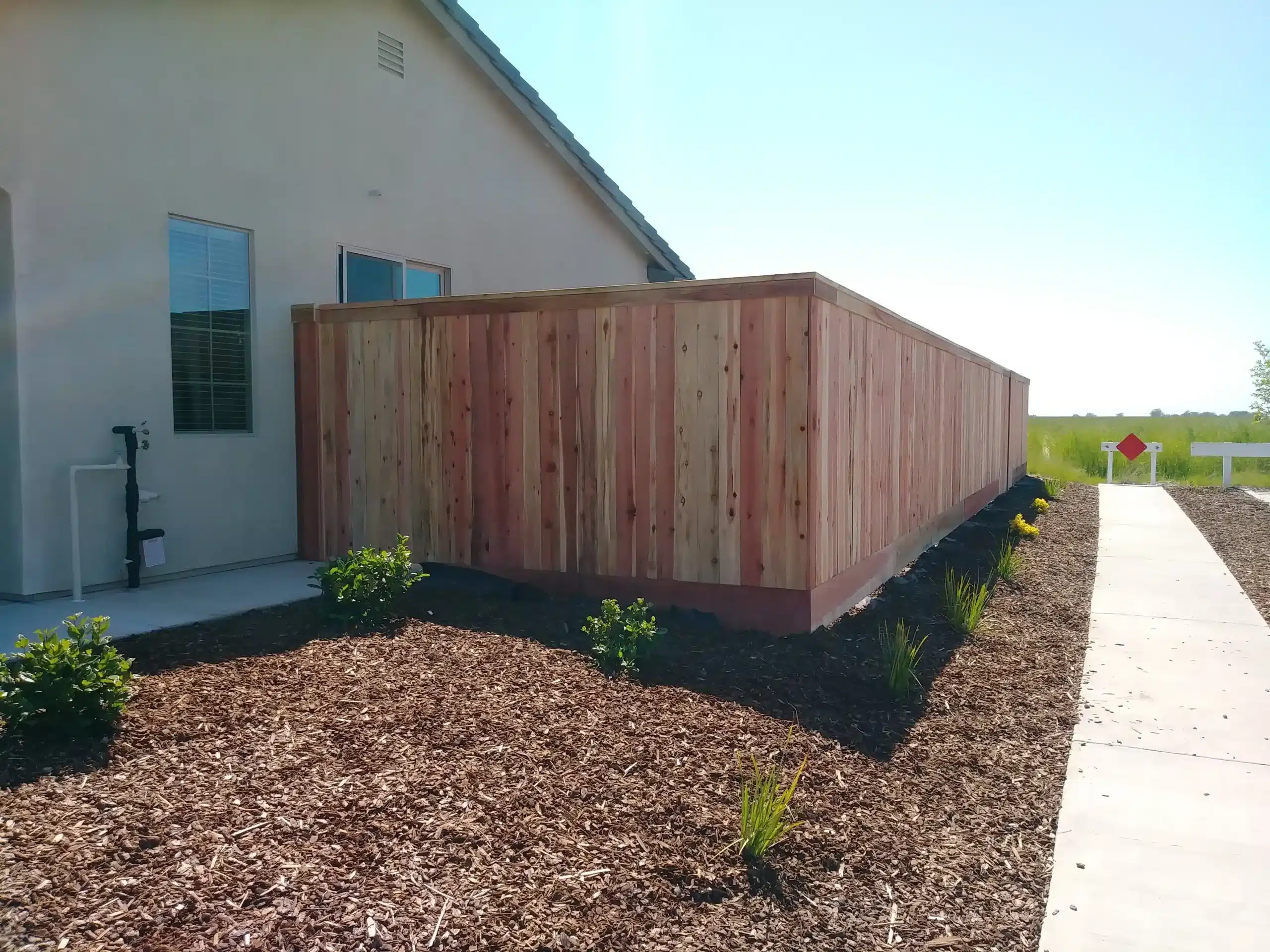
If it’s a shared good neighbor fence, talk to your neighbor before you drill. A five-minute conversation prevents a five-year grudge, and most people say yes when they’re asked rather than surprised. Check your HOA architectural guidelines and CC&Rs before you buy lights, not after, because some communities restrict fixture style, color temperature, or anything mounted above fence height.
Keep the light, the beam, and the wiring on your side of the line. Aim down and inward, which matters most in narrow side yards where the fence is only a few feet from a window. Walk the yard at night and make sure no beam reaches a bedroom window on either property. Use timers and motion sensors instead of floodlights that run until dawn.
What Sacramento-Area Homeowners Should Know
A few regional specifics worth having in hand before you start:
- Current code cycle. The 2025 California Building Standards Code, including the California Electrical Code and Energy Code, took effect January 1, 2026. The California Electrical Code adopts the 2023 National Electrical Code with state amendments.
- Permits. The City of Sacramento and Sacramento County generally require a permit for electrical work, including new lighting circuits. Solar, cord-and-plug, low-voltage, and new permanent circuits are treated differently, so confirm your specific scope with your city or county building department.
- Automatic controls. Under the 2025 Energy Code, qualifying outdoor lighting permanently mounted to a residence or another building on the lot must use automatic controls, and any forced-on override has to return to normal operation within six hours. That language is about building-mounted lighting, not every standalone solar cap on a fence post.
- Call before you dig. USA North 811 asks you to contact them regardless of excavation depth. Allow at least two working days, not counting the day you call, wait for all notified operators to respond, and respect the 24-inch tolerance zone on each side of every mark. Private irrigation and landscape lighting lines usually aren’t marked at all, so probe carefully.
- Glare and spill. Sacramento County design guidance favors shielded, downward-directed lighting that minimizes glare and spill onto neighboring properties, and encourages timers and sensors.
- Fire-hazard areas. No open flames on or near a wood fence, and keep lights and wiring clear of dry leaf buildup. Office of the State Fire Marshal wildfire-hardening guidance recommends a noncombustible fence section within five feet of the home in applicable risk settings.
Requirements change. Verify current rules with the authority having jurisdiction before you start.
Lighting the Whole Outdoor Space: Fence, Deck, Patio, and Garden

Fence lights rarely work alone. What makes a backyard feel finished is layers at different heights: a few deck lights or step lights down low, post cap lights at fence height, and one or two garden lights washing a shrub or a tree trunk in between. That vertical spread is what creates depth. A single brightness at a single height flattens everything.
Think in zones and light each one for what happens there. The patio wants warm, dim, and glare-free, because people are sitting and facing each other. The deck stairs, the walkway, and the driveway apron want just enough to see edges. The gate wants a short burst of real light on demand. The far fence line wants only enough to tell you where the yard ends. Put each zone on its own control if you can, so you’re not lighting the entire outdoor space to host two people on the patio. Done this way, a modest set of lights can create a bigger effect than a dozen bright ones aimed everywhere at once.
Plan Your Fence Lighting Before a New Fence Goes In
If the fence is getting replaced anyway, lighting becomes much simpler and usually lands at a lower installed price. Fence post dimensions can be matched to the post cap lights you want. Mounting blocks and solid backing can be built in where sconces will go. Wire routes and conduit sleeves can be run before the panels go on, so nothing has to be fished or surface-mounted later. Gate light placement gets decided alongside the gate opener and keypad, where it belongs. And you avoid drilling a dozen fresh holes in brand-new material.
The inverse is just as true. If your fence is leaning, rotting, or sitting on failing posts, fix or replace it before you hang lights and run cable on it. We’re happy to advise on the fence and gate structure while your electrical professional handles the circuits.
What Drives the Price of Fence Lights
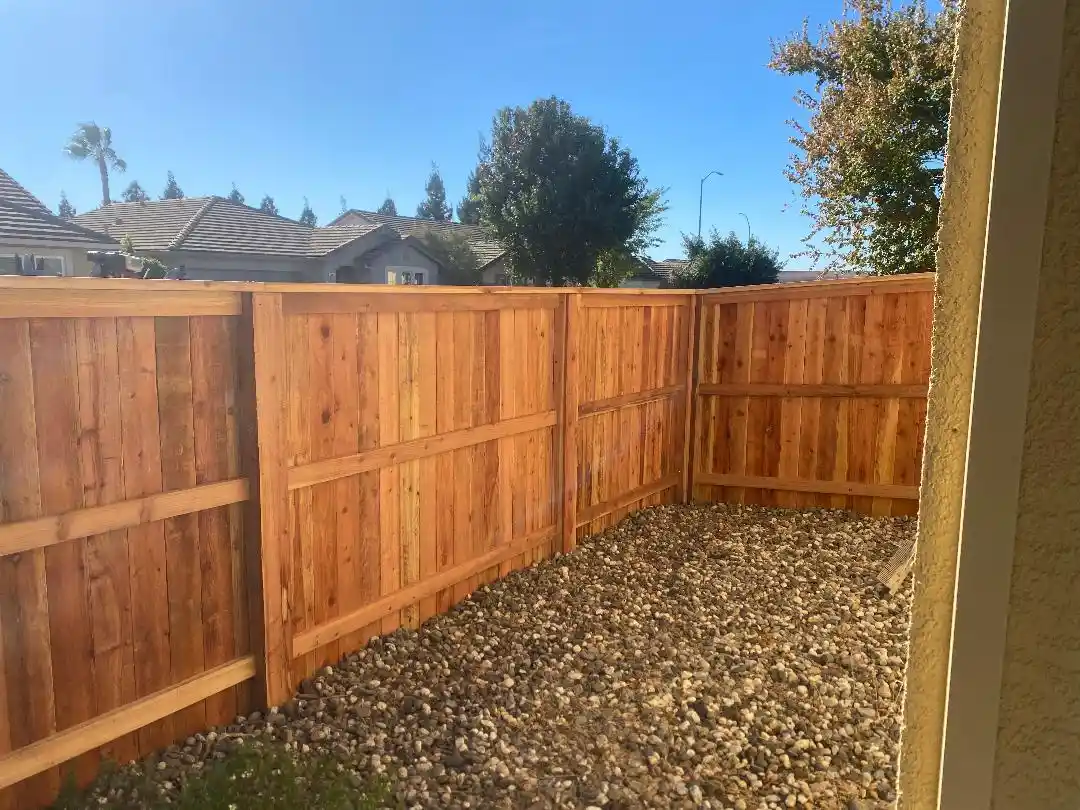
Price shows up in two places, and shoppers usually only look at the first one. There’s the price of the lights themselves, and then there’s the installed price: transformer, cable, trenching, labor, and a permit if the work is permanent. Solar lights have almost no second number, which is why they look so attractive at the shelf price. Low-voltage adds hardware and labor. Hardwired adds an electrician.
Two things quietly raise the real price. The first is quantity. Rail lights and step lights are individually low in price, but a long run needs a lot of them, and the total climbs fast. The second is replacement. A very low price per light often means thin housings and sealed batteries, and replacing the whole set every second season costs more than buying better lights once. Look at the price across five years, not at checkout.
Whatever you spend on lighting, the fence underneath has to be sound first. For that side of the project we quote flat pricing with zero hidden fees, and our fence price calculator gives you a starting number before anyone comes out.
Frequently Asked Questions
What is the best type of lighting for a fence?
For most homeowners, downward-facing post cap lights or rail lights along the run, plus one motion light at the gate. If you’d rather not put holes in the fence at all, ground-mounted wash lights aimed at the panels give a better look with easier access for maintenance.
What is the best way to hang lights on a fence?
Use clips, hooks, or manufacturer-approved brackets sized for the light. Never staple or nail a cord. Support string light runs at posts rather than mid-panel, where sag pulls on nothing structural. Seal every penetration in wood.
Are solar fence lights worth it?
Yes, for ambiance and low-level marking on a fence line that gets dependable direct sun and has no power nearby. Solar fence lights are much less reliable in shade, through a stretch of gray weather, or when the light is doing real task or security work.
Do fence lights need to be waterproof?
Anything mounted on an open fence, deck, or railing is exposed to rain and sprinklers, so yes. Look for a wet-location listing rather than a vague waterproof claim, and check the panel seam and battery door on solar lights, since that’s where water gets in first.
How far apart should fence lights be placed?
There’s no universal spacing number, and anyone offering one is guessing. It depends on output, beam pattern, mounting height, fence color, and how much ambient light your yard already has. Test one light after dark, then set spacing from what you can actually see.
How much do fence lights cost?
Think about price in tiers instead of dollar figures. Solar lights are the lowest price to install because there’s nothing to run. Low-voltage adds a transformer and cable. Hardwired adds an electrician and possibly a permit. Get a lighting quote from a licensed electrical professional. For fence and gate work, financing is available to Sacramento-region residents.
Ready for a Fence Worth Lighting Up?
Lights only look as good as the fence they’re mounted on. If yours needs work first, we’re licensed, bonded, and insured (CSLB License #979657), we send background-checked W-2 employees, we quote flat pricing with zero hidden fees, and our written guarantee means the job isn’t finished until you give the thumbs up. We clean up thoroughly when we’re done, because we’re guests on your property. We’re a local company serving Sacramento, Placer, El Dorado, Yuba, Yolo, and Nevada counties from offices in Rocklin, Sacramento, and Elk Grove.
Get a Free Fence Estimate: Call Us or Book Online. Want a number first? Try our fence price calculator.