
Key Takeaway
A fence post driver is the right tool only if you’re setting driven steel T-posts for an agricultural wire fence such as field fence, barbed wire, or welded wire. Residential wood, vinyl, and ornamental iron fence posts are dug and set in concrete, so a fence post driver serves no purpose on those jobs. For agricultural runs, manual drivers suit a handful of posts while gas-powered units handle any real run of fence.
You need a fence post driver if you’re setting steel T-posts for an agricultural wire fence: field fence, barbed wire, welded wire, or cross-fencing. You don’t need one for a residential wood, vinyl, or ornamental iron fence, because those fence posts get dug and set in concrete. A fence post driver embeds the post straight into undisturbed soil without excavating a hole. If you’re a small-acreage or farm owner, or a homeowner mapping out a project, that single distinction settles most of the question. Plenty of people search “post driver” when what they really need is a shovel, an auger, or a bag of concrete. Fantastic Fence has built agricultural fence across the Sacramento region since 2011, and here’s how we sort out which tool and which process fits the job.
What a Fence Post Driver Actually Does

The whole article turns on one distinction: driven posts versus dug-and-set posts. A driven post is pointed steel forced straight down into soil that stays put around it. A dug-and-set post goes into an excavated hole, gets plumbed, and is locked in with concrete. A fence post driver forces the post down and the surrounding soil compacts against it, which is why a properly driven metal post holds as well as a concrete-set one on a wire fence. The tool also keeps consistent post alignment and spreads each blow evenly across the top. Swing a sledge directly and you mushroom the post cap. A driver protects it, keeps the post stable, and disturbs almost no turf. That matters when the installation runs hundreds of posts and every one has to land straight along your fence lines.
When a Post Driver Is the Right Tool for the Task
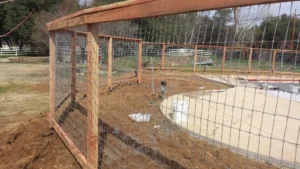
Post drivers are for steel T-posts on agricultural wire fence. T-posts have a pointed end and an anchor plate near the base that grips the soil once it’s buried, so they’re built to be driven rather than dug. Field fence, barbed wire, welded wire, and the cross-fencing that subdivides pastures all run on driven line posts. Round posts also get driven on ranch and vineyard fence construction, usually with a tractor- or skid-steer-mounted pounder rather than by hand. The classic use case is livestock containment and boundary work on larger properties, and we see plenty of that across the Sacramento region. Choosing the right post driver early keeps the rest of the installation moving and helps you build a reliable fence the first time.
When You Do NOT Need a Post Driver

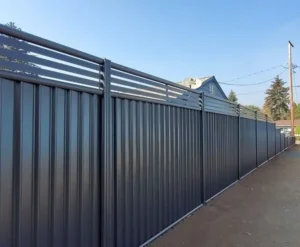
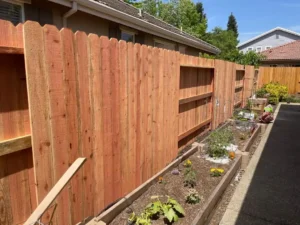
Residential wood privacy, vinyl, ornamental iron, and pool safety fences are dug, plumbed, and set in concrete. That’s a different job entirely, and the process means digging holes with an auger or post hole digger, then pouring concrete, not driving posts. Gate posts and structural corner assemblies also need holes and concrete to carry the load. A fence post driver also struggles badly in rocky ground or bedrock, where there’s nothing soft for the post to bite into. If you’re planning a good neighbor fence or a backyard privacy fence, you don’t need a driver at all, and none of that equipment belongs on the job.
Manual vs Gas-Powered Post Drivers: The Two Types
| Manual driver | Gas-powered driver | |
|---|---|---|
| How it works | Weighted steel sleeve slips over the post; you lift and slam it each blow | Handheld engine drives an internal hammer while you hold it steady |
| Typical weight | About 17 lb / 24 in., up to 21 lb / 31 in. | Roughly 30 to 46 lb |
| Cost | Affordable to own | Usually a rental for larger runs |
| Best for | A handful of posts, repairs, tight spots | Any real run of fence |
| Downside | Exhausting, fast | Loud, heavy, needs fuel |
Manual Drivers
A manual driver is a capped steel sleeve with handles. It slides over the top of the T-post, and you lift it and drive it down. Every blow is you. This is the simplest fence post driver you can own: affordable, nearly indestructible, no fuel, and it works anywhere. A common unit runs about 17 pounds at 24 inches, with heavier models around 21 pounds at 31 inches. For a few metal posts, a repair, or a spot too tight for anything else, a manual driver is the right tool, and it’s a cheap purchase to keep on hand. The catch is volume and fatigue. Ten posts is a workout. Fifty is a long, hard day, and the fatigue shows up in crooked posts by the afternoon.
Gas-Powered Drivers
Gas powered drivers are handheld units with a small engine driving an internal hammer. You hold it plumb on the post, apply steady down-pressure, and it does the pounding. Weights run roughly 30 to 46 pounds, with impact rates around 1,720 beats per minute. That kind of driving force is what speeds up a long installation. Keep it level, hold about 10 to 12 pounds of down-pressure, and never dry-fire it off a post. It saves time and energy, so you have fuel left for the rest of the job: stretching wire, building braces, hanging gates, and clipping. Less fatigue means a crew that isn’t worn out, and they set straighter posts, so the fence turns out better for it.
What About Hydraulic Drivers and Pneumatic Drivers?
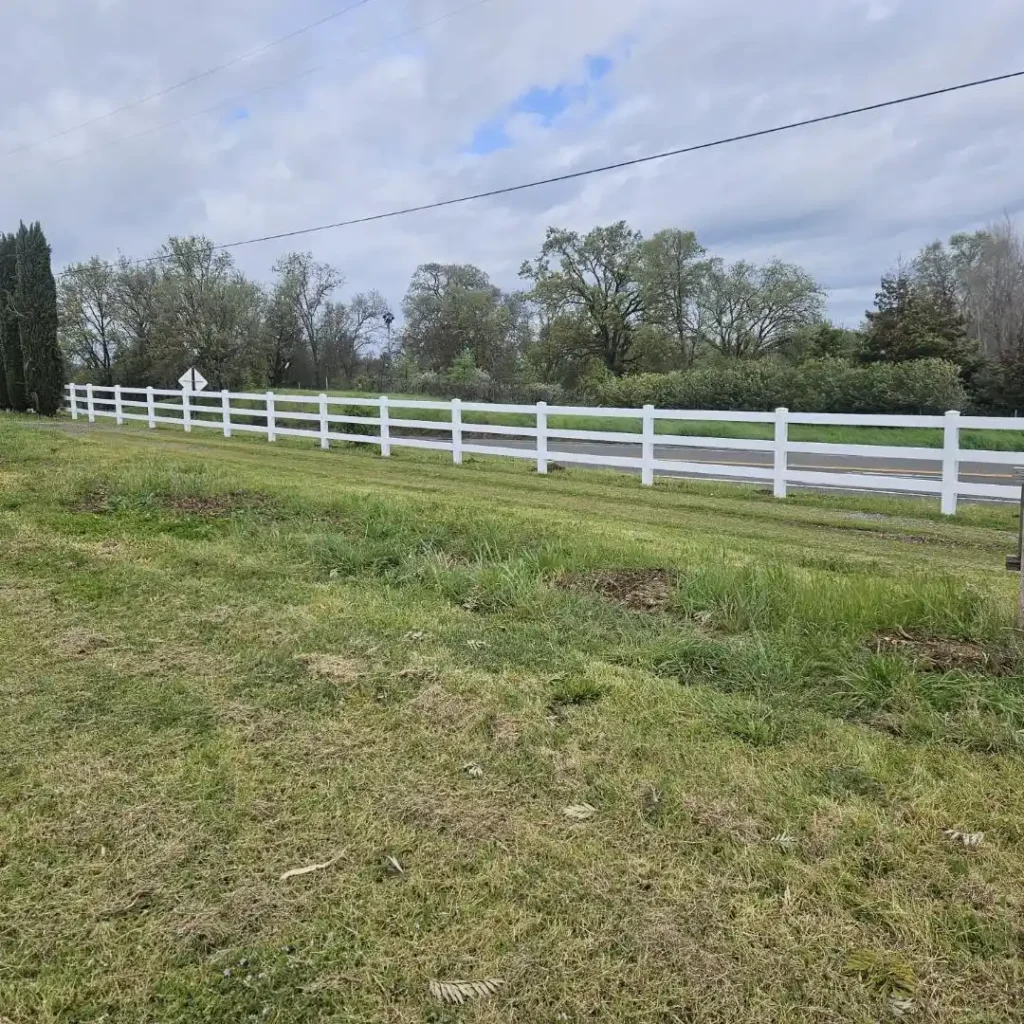
These are heavy equipment territory. Pneumatic drivers run on compressed air, so they need a compressor along for the ride, which cuts portability. Hydraulic drivers are typically mounted on a skid steer or tractor and deliver serious force for big commercial fencing and large-property runs. This specialized equipment moves professional contractors through hundreds of posts fast. Most homeowners and small-acreage owners are choosing between a manual tube and a gas-powered unit, not a skid steer with that kind of machinery attached.
How Many Posts Are You Setting? Where the Line Falls
Do the arithmetic and the project usually answers itself. At 10-foot spacing, a 500-foot run is about 50 posts, a quarter mile is roughly 132, and a full mile is over 500. Those are line posts only. Under a couple dozen posts, a manual driver and your morning beats a trip to the rental yard. A real run justifies a gas driver: rent by the day for a one-off, buy if you do this often, and factor in transport, money spent on fuel, and any late fees on a rental. Remember, the driver only gets posts in the ground. The fence isn’t complete yet.
Depth, Spacing, and the Braces You Can’t Skip

Drive T-posts to a desired depth that fully buries the anchor plate. Eighteen to 24 inches is a useful working range, deeper in loose or sandy ground so the post stays stable. Soil conditions decide how far you go and how hard the driving gets. Space them 8 to 12 feet apart. Extension guidance puts 10 to 12 feet as fine for lighter barbed-wire runs, and you tighten it up for cattle or rough terrain.
The braces matter more than the line posts. Line posts aren’t what holds a wire fence together. Braced wood corner, end, and gate assemblies carry the tension, and those get dug and set. When wire is first stretched, pull on a corner can hit about 3,000 pounds, and winter contraction can push it toward 4,500 pounds. That is critical to a fence that won’t sag or break under load. California law also defines a lawful livestock wire fence: posts no more than 16.5 feet apart, with at least one wire 4 feet above the ground.
Safety First: Call 811 Before You Drive a Single Post
A driver forces steel into the ground even though it doesn’t dig a hole, and it can still strike a buried utility. Call 811 before you drive or dig, and confirm access to the work area before anyone starts. In California, notify at least two working days ahead, no more than 14 calendar days out, and revalidate the ticket if work runs past 28 days. Wear gloves and ear protection. Marking utilities is standard practice on every one of our jobs, and it protects both the person swinging the tool and the property.
DIY or Call a Professional Fence Contractor?
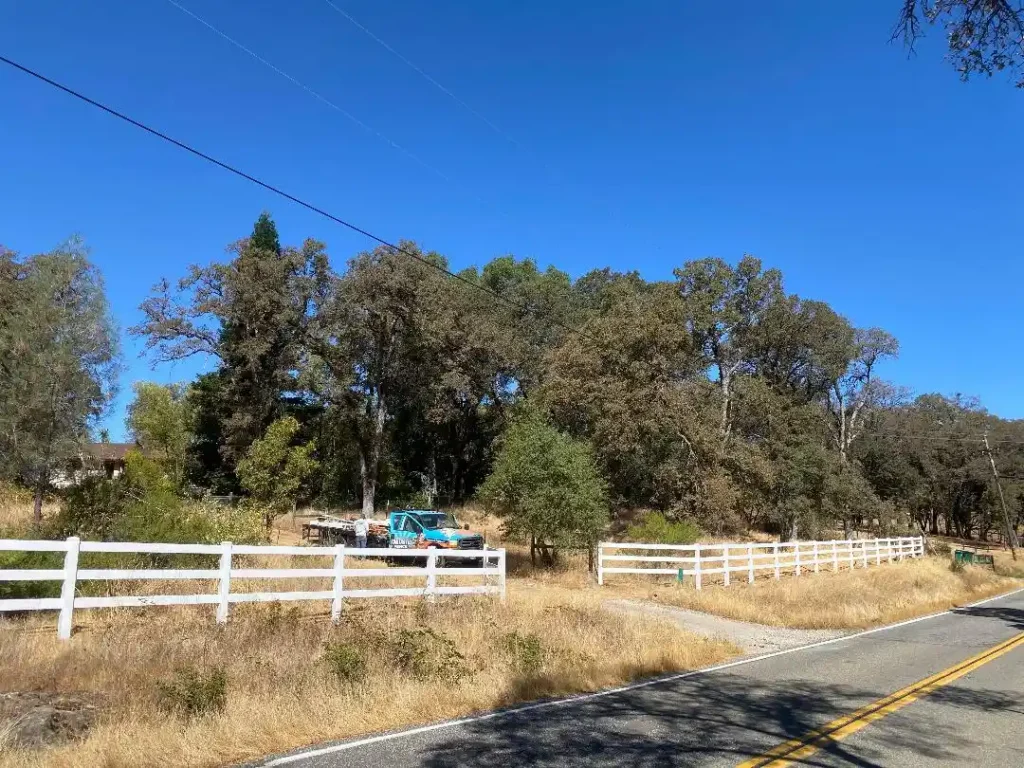
Some projects are a fair DIY job: a few T-posts, a repair, a simple temporary wire fence. Others aren’t. Long runs, livestock containment, gates, uneven terrain, hard or rocky soil, property-line questions, or a mix of residential and agricultural fencing all reward experience, the right materials, and the right equipment. It also helps to plan the location of corners and gates before anyone loads the truck. Fantastic Fence has built agricultural fence across the Sacramento region since 2011. We’re licensed, bonded, and insured (CSLB #979657), our crews are background-checked W-2 employees, and our team works on flat pricing with zero hidden fees and a written guarantee. No pressure. If you can handle the installation yourself, you should.
Get a Free Fence Estimate
If your project runs bigger than a handful of T-posts, with corners, gates, livestock, or uneven ground, let our professional team handle it. We’ll adjust the plan to your farm and your soil, and we bring the support and equipment to install it right. Get a free fence estimate by phone or online. Ready for a fence you’ll actually love? Let’s talk. We serve Sacramento and Roseville and the surrounding counties.
Frequently Asked Questions
Do you need a fence post driver for your project?
Only if you’re setting driven steel T-posts for a wire fence. Wood, vinyl, and iron posts get dug and set in concrete, so a fence post driver won’t help there.
What are the disadvantages of using a post driver?
Manual units wear you out fast, and fatigue leads to crooked posts. Any driver struggles in rocky or bedrock soil. A driver also only sets line posts, so you still need dug-and-set braced corners and gates to hold the fence.
What can I use instead of a post driver?
For dug posts, an auger or post hole digger plus concrete. For a few T-posts, a manual tube driver, or even a sledge in a pinch, though a driver protects the post top far better and reduces fatigue over a run.
What size fence post driver do I need?
Match the tool to the post. A 16 to 21 pound manual tube handles standard T-posts and small runs. Step up to a gas-powered unit, or hydraulic drivers on a skid steer, for any real run of fence.