Key Takeaway
The best garden fence ideas match the structure to its purpose: use ornamental iron or picket fencing to frame and display planting beds, solid wood or vinyl panels for backyard privacy, and wire mesh with openings no larger than 1 inch to protect vegetables from rabbits. Deer require a properly built 7 to 8 foot fence, and pool barriers must meet regulated safety standards regardless of how they look. Always check your city’s height limits before you build.
The best garden fence idea is the one matched to the job. Use a low or open fence to define and display planting beds, a solid wood, vinyl, or steel fence when you want to create privacy, and correctly sized wire mesh when animals are the real problem. Choose the function first. Then compare style, sunlight, maintenance, gate access, and your local height rules.
Most idea galleries hand you forty photographs and never tell you whether any of them will actually work in your space. This guide sorts the garden fence ideas by what you need the fence to do. We install garden fencing across the Sacramento region every week, and the fences homeowners regret are almost always the ones chosen on looks alone. Let a photo inspire the look, then test it against your light, your soil, and your city’s height rules.
What Counts as a “Garden Fence”? Six Different Jobs, Six Different Fences
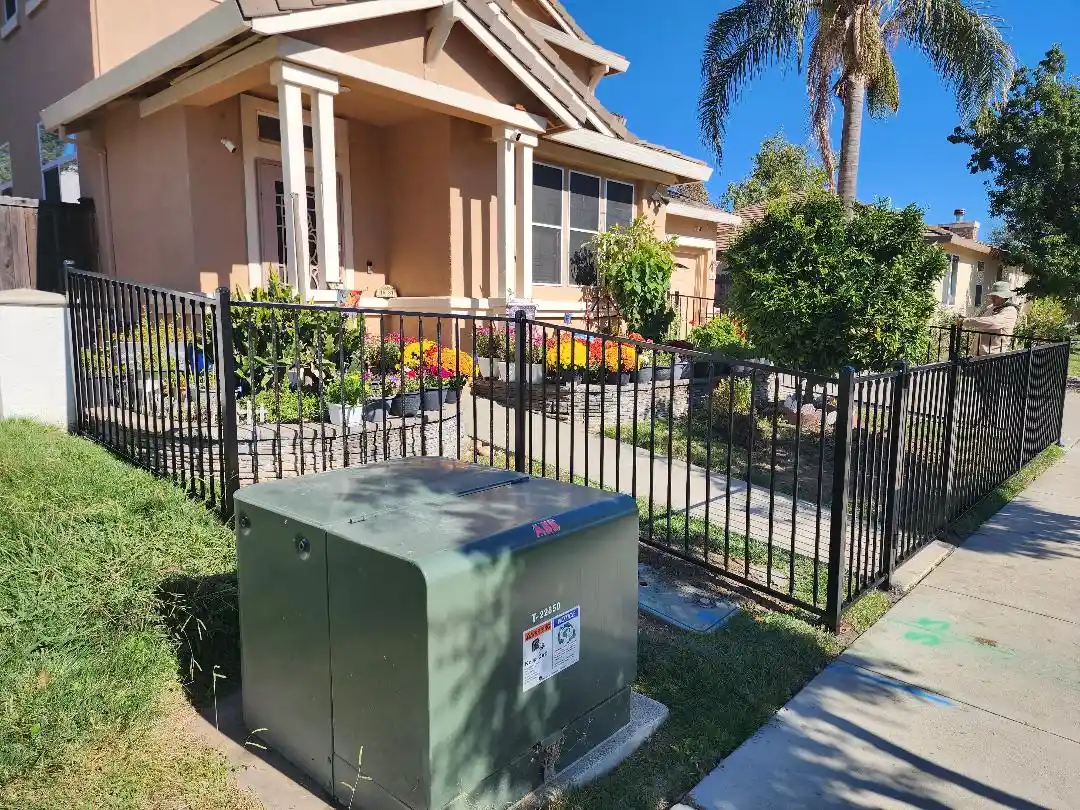
A 12-inch flower-bed border and a 7-foot boundary fence both get called garden fencing. Confusing the two is the single most common planning mistake we see. Here’s what people usually mean:
- Decorative garden border. A low edging that frames beds and keeps mulch where it belongs. It stops nothing and isn’t meant to.
- Vegetable garden or animal-protection fence. A working barrier sized to a specific animal. Mesh opening, height, and what happens at ground level matter more than the style.
- Privacy or property-line fence. A full-height backyard fence that screens the yard and often sits on a shared boundary, which brings a neighbor and a set of rules into the conversation.
- Pet barrier. Built around how your pets actually behave: jumping, digging, or squeezing through gaps.
- Pool safety fence. A regulated safety installation, not a design choice. Height, clearances, gap size, and gate hardware are all specified. A pretty garden fence beside a pool is not necessarily a compliant barrier.
- Trellis or climbing-plant support. A structure for plants. It can look like a fence without doing a fence’s structural work.
Get clear on which one you’re building before you start collecting photos. It changes the material, the height, the gate, and whether you need a permit.
Quick Garden Fencing Selection Guide
Start here, find your goal, and the right fence usually narrows to two or three options.
| Goal | Strong options | Privacy | Light & airflow | Maintenance | Main caution |
|---|---|---|---|---|---|
| Show off flower beds | Ornamental iron, picket, low border | None | Excellent | Low to moderate | No screening, no animal protection |
| Define a path or outdoor room | Post-and-rail, open slat, low picket | Low | Excellent | Moderate | Won’t contain a determined dog |
| Add backyard privacy | Wood, vinyl, Durabond steel | High | Reduced | Low to moderate | Shades beds on the shaded side |
| Protect vegetables from rabbits | Wire mesh with openings no larger than 1 inch | None | Excellent | Moderate, needs inspection | Must be buried and bent outward at the base |
| Keep deer out | 7 to 8 foot fence, gates matched to height | Varies | Varies | Moderate | May exceed local height limits |
| Contain a dog | Solid wood, vinyl, chain link, ornamental iron | Varies | Varies | Low to moderate | Diggers and jumpers need design changes |
| Secure a pool area | Ornamental iron, qualifying mesh, approved enclosure | Low | Excellent | Low | Regulated. Requires code review |
| Support climbing plants | Standoff trellis, arbor, wire system | Grows over time | Good | Ongoing pruning | Vines trap moisture against wood |
| Replace a shared boundary fence | Good neighbor fence, vinyl, steel-post wood | High | Reduced | Low to moderate | Written notice rules apply in California |
Pricing questions? We don’t publish per-foot figures, because scope, terrain, and gates change everything. Use the Fence Price Calculator on our site or ask for a free fence estimate.
Open Garden Fence Ideas That Show Off Your Plants

These fences frame a landscape without hiding it. All of them let light and air through, which plants care about more than people realize.
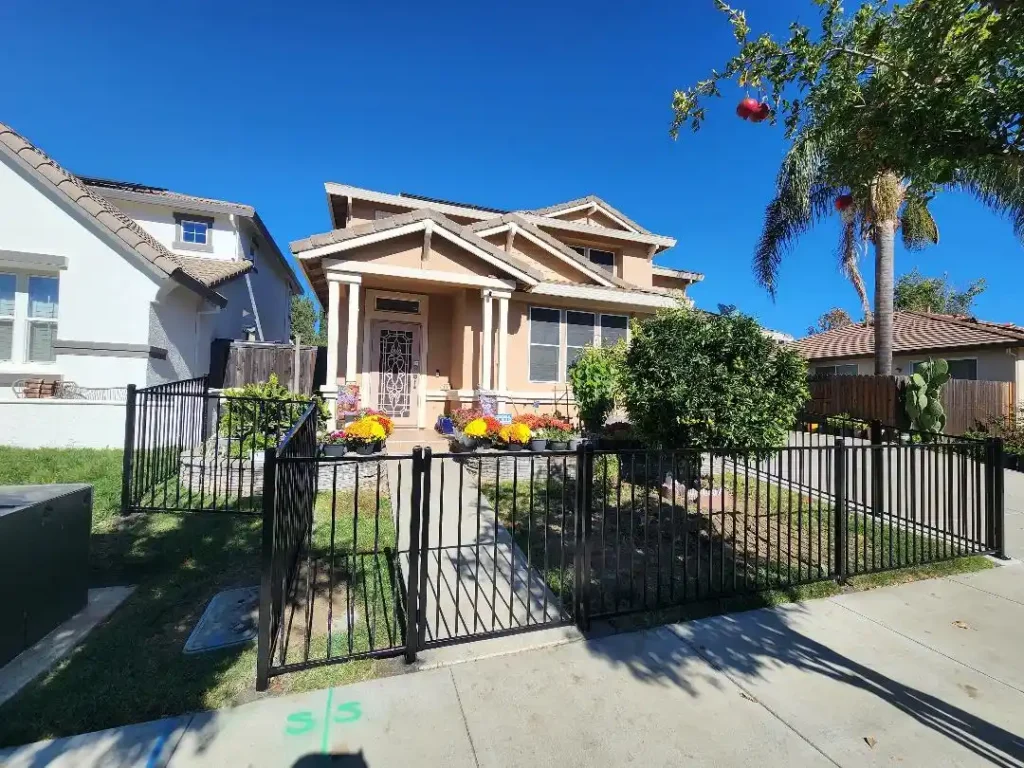
Ornamental iron garden fence
Elegant and durable, and best for formal gardens, front yards, and anywhere the planting is the point. Privacy is zero and airflow is excellent, so beds behind it get full sun. Maintenance is low: watch for rust at the base where sprinklers hit. Open wrought-iron and tubular-steel designs are also the style many cities allow taller in street-facing locations, which we’ll come back to.
Classic wood or vinyl picket fence
An affordable, friendly way to enclose a cottage garden or front bed without walling it off. Partial privacy at best, with a softer feel than a solid panel. Light passes through the gaps, so it won’t shade your beds. Wood pickets need paint or stain every few years; vinyl needs a hose. Keep the bottom rail clear of soil and mulch, because wood sitting in damp dirt is the first thing to rot.
Post-and-rail fence with discreet wire mesh
Rustic, affordable, and honest, with the open country look that suits a larger lot or a rural landscape. The rails give you the style and the mesh does the work, whether that’s containing a dog or slowing rabbits down. From ten feet away the wire nearly disappears. Main caution: the mesh has to be sized for the animal you’re excluding, and it has to be fastened tight at ground level.
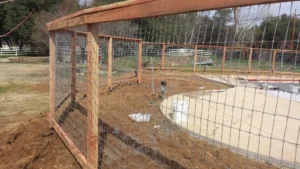
Wood-framed welded-wire panels
Framing welded wire inside a wood or steel frame turns a utility material into something that looks deliberate. It’s an affordable way to enclose a kitchen garden while keeping every bit of sunlight. Maintenance is mostly on the frame. The caution is gate design: a panel fence is only as good as the gate that swings in it.
Open vertical-slat fence
Slats with deliberate gaps create a sense of enclosure and dappled light instead of a hard wall. Great for screening a seating area without darkening the beds behind it. Wood or steel both work, and the repeating rhythm reads clean and modern. The tradeoff is real: partial privacy is exactly that, and sightlines change depending on where you stand.
Low decorative border for flower beds
Six to eighteen inches of iron, wood, or bent steel edging that says “bed ends here.” No privacy, no protection, no permit, and no shade. This is the one idea on this list most homeowners can genuinely install in an afternoon. Keep any wood component up out of direct soil contact or plan to replace it.
Backyard Fence Ideas That Create Privacy and a Garden Backdrop
A solid backyard fence is the best backdrop a garden can have. It’s also a wall, and walls cast shade. Every idea below gets an honest note on what it does to your light.
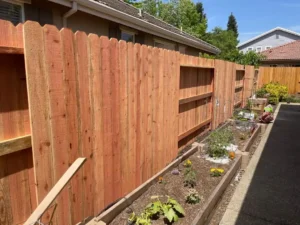
Vertical wood privacy fence
The default for a reason: warm, affordable, and easy to customize in height and board style. It will shade beds on its shaded side for part of the day. Use naturally durable or preservative-treated wood for anything touching the ground, and avoid detailing that traps water on top of rails. Current residential preservatives such as ACQ and copper azole are registered for fence posts and rails; older CCA-treated material was discontinued for most residential uses after December 30, 2003.
Good neighbor fence for a shared boundary
Boards alternate from side to side so the fence looks finished from both yards. It’s the design we recommend most often to customers replacing a shared property line, because nobody gets stuck looking at the posts. Light and shade behave about the same as a standard privacy fence, with slightly better airflow through the offset boards.
Horizontal wood slat fence
Clean, modern, and it makes a narrow space read wider. Full privacy when the boards are tight. Horizontal fencing can cup or sag over long spans, so post spacing and board selection matter more than they do on a vertical fence. Kids can climb a horizontal ladder of slats, which is worth thinking about near a pool.
Board-on-board privacy fence
Overlapping boards eliminate the gaps that open up as wood dries and shrinks. You get complete screening and a heavier, more finished look with real shadow and texture. It uses more material and blocks essentially all light on its shaded side, so keep sun-loving beds off that run.
Low-maintenance vinyl privacy fence
Weather-resistant, easy to rinse clean, and it won’t rot where the irrigation hits it. That makes it a sensible pick for a garden fencing line that gets watered constantly. Full privacy and full shade behind it. Color options are more limited than paintable wood.
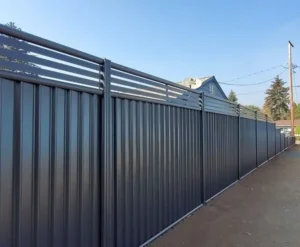
Durabond steel or corrugated metal accent fence
Steel gives you a sleek, high-security line with almost nothing to maintain. Used as an accent panel or a full run, it reads modern next to grasses and architectural plants. Full privacy where solid. Metal reflects heat, so give tender plants a little breathing space on a south or west exposure.
Wood fence with Bolt-Up Hidden Steel Posts
You get the warmth of a wood fence with steel strength hidden behind it, and no visible post caps interrupting the line. It’s especially worth considering in gardens, where irrigation overspray and constantly damp soil are brutal on wood posts. Same privacy and shade profile as any solid wood fence, with the structural weak point engineered out.
If you need privacy but you also have sun-hungry vegetables, don’t build the same fence on all four sides. Put the solid fence on the run where it blocks a neighbor’s window and use an open style elsewhere. Or top a solid fence with an open lattice or slat section, which buys you height and screening while letting light and air over the top.
Vegetable Garden Fencing Ideas That Actually Keep Animals Out
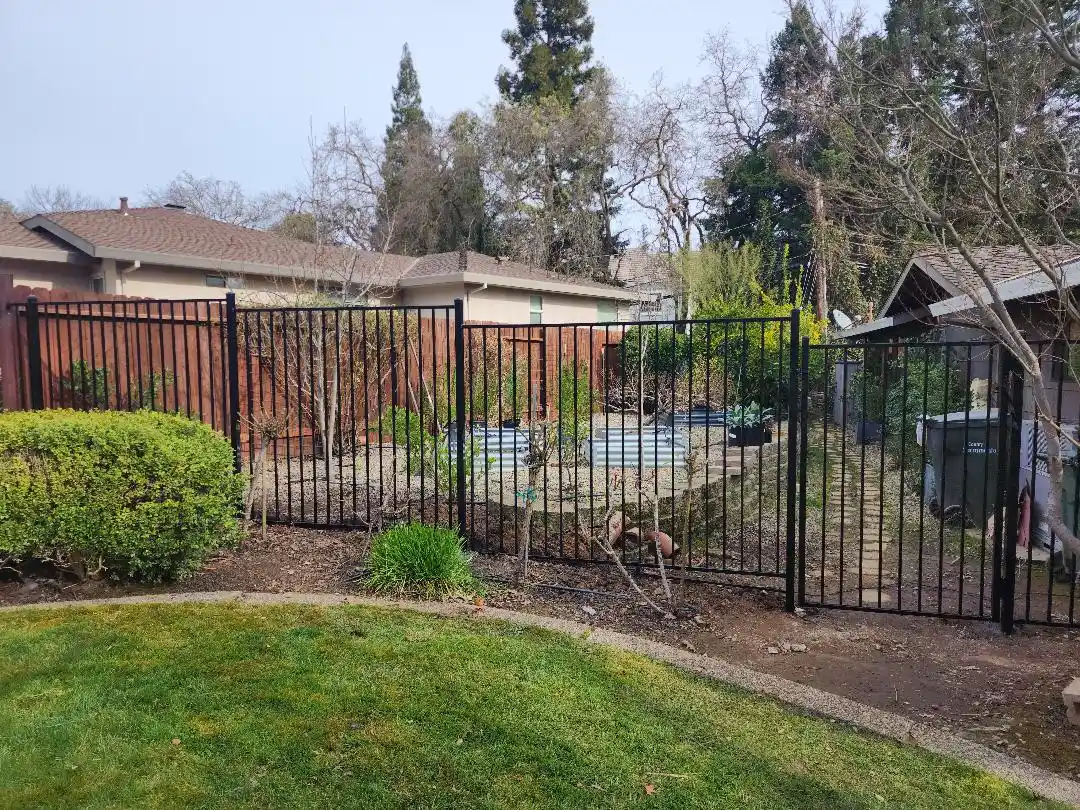
“Put chicken wire around it” is where most advice stops. Animals are more specific than that, and so are the fences that work. The specifications below come from University of California Integrated Pest Management.
Small-mesh rabbit fence
UC IPM recommends mesh openings no larger than 1 inch and wire about 48 inches tall, with the bottom 6 to 10 inches buried and the buried portion bent outward to discourage digging. Where jackrabbits are present, keep at least 3 feet above ground. Gates must fit tight, and the whole line needs a walk-around inspection now and then. Rabbits find the one loose corner.
Tall deer-exclusion fence
UC IPM identifies a properly built and maintained 7- to 8-foot fence as the most effective conventional control for deer. Taller may be needed on steep slopes, where deer gain elevation on the uphill side. Gates have to match the fence height, and the bottom must be fitted close to the ground, because deer will push under an opening as readily as they’ll jump.
Mixed-height mesh for rabbits and deer together
Most properties with deer also have rabbits. The practical answer is one structure doing two jobs: small-opening mesh at the bottom, buried and turned outward, with lighter large-mesh wire carrying the height above it. Keep the transition tight. A gap at the seam is an open door.
Raised-bed enclosure with a full-size gate
If your growing space is a few raised beds nestled along one side of the yard, fence the beds rather than the whole property. Less material, less visual weight, and the barrier sits where the food is. Build the gate wide enough to accommodate a wheelbarrow or garden cart, because a 24-inch gate will annoy you every single spring.
Chain link or welded-wire enclosure softened with planting
Chain link is affordable, practical, and nearly transparent. Inside a yard, as a dedicated garden enclosure, it works well and disappears behind a row of evergreen shrubs or a standoff trellis. One caveat: many cities restrict chain link in required yards or street-facing locations, so check before you plan it as a boundary fence.
The gate is where most homeowners get a surprise. A beautifully built barrier with a 3-inch gap underneath is not a barrier. And if you have serious deer pressure, flag the height question early, because a deer-height fence can run straight into your city’s maximum height rules. More on that below.
Small Details That Enhance Your Outdoor Space
A long fence run is a blank canvas, and the difference between a fence that looks built and one that looks installed usually comes down to five or six small decisions.
- A properly proportioned gate. The single biggest visual upgrade available. A gate sized and detailed to match the fence turns a barrier into an entrance without giving up security.
- An arbor or trellis over the opening. A covered entry frames the view into the garden and gives climbing plants somewhere to go.
- Post caps and top trim. They finish the line and, on wood, they shed water off end grain, which is where rot starts. Sealing freshly cut ends before installation is a small step that pays off.
- Coordinated paint or stain. Repeat the color on a raised bed, a bench, or the shed so the fence complements the architectural features of the house.
- Layered planting in front of the fence. A deep border does wonderful things for a plain run. In front, not against: leave a working gap so air moves and you can still reach the boards.
- Climbing plants on a standoff trellis. Set the trellis a few inches off the fence to create a green screen without trapping moisture. Vines fastened directly to boards hide damage until the damage is expensive.
- Low-voltage landscape lighting on appropriate hardware. Mounted properly, not stapled.
One caution on shared fences: if you don’t solely own it, get your neighbor’s agreement before you attach planters, heavy vines, mirrors, or lights. Drilling into a fence that belongs to two households is how a good relationship becomes a bad one.
How Do Garden Fencing Materials Compare?
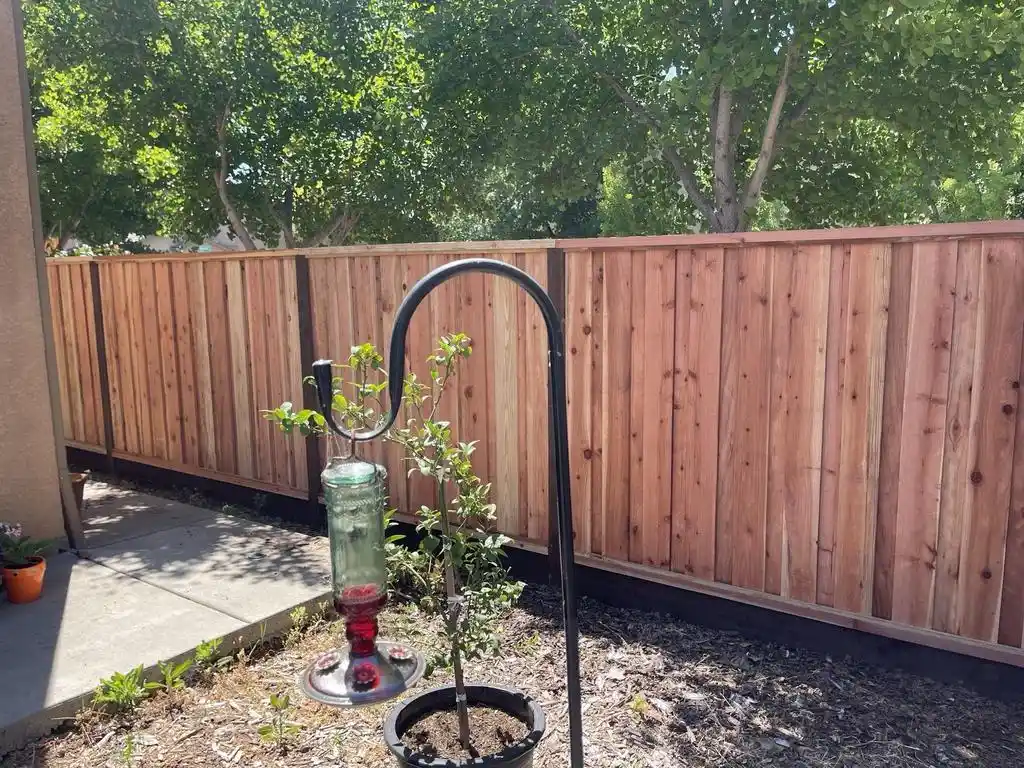
| Material | Privacy | Visibility | Maintenance | Plant compatibility | Best garden use |
|---|---|---|---|---|---|
| Wood | High when solid | Low | Periodic stain or paint | Good, but keep soil and vines off it | Privacy backdrop, shared boundaries |
| Vinyl | High | Low | Low, rinse clean | Excellent near irrigation | Wet or heavily watered fence lines |
| Ornamental iron | None | High | Low, watch for rust at grade | Excellent | Showcasing planting, pool-area enclosures |
| Durabond steel | High | Low | Low | Good, reflects heat | Modern privacy runs and secure lines |
| Chain link / welded wire | None | High | Low | Excellent | Vegetable enclosures, animal exclusion |
| Mixed wood and wire | Low | Moderate to high | Mostly on the frame | Excellent | Kitchen gardens that need to look good |
A note on composite
Customers ask about composite boards often enough that it’s worth answering. Composite blends wood fiber with recycled plastic, and the appeal is obvious: something close to the texture of wood with less upkeep and no staining. Done well, it reads high end from a few feet away. The tradeoffs are a higher cost up front and panel systems that are less forgiving on uneven ground. If composite is on your list, take a closer look at how the posts are built, because the post is still doing the structural work. Either way, judge it on total cost over the life of the new fence, not the price of one board.
Here’s what nobody photographs. Irrigation heads that spray a wood post four times a week will shorten its life dramatically. Mulch, soil, and dense vegetation piled against boards hold water right where the fence is weakest. Vines mask rot for years. And a mature hedge planted tight to the fence line means that when a board finally does need replacing, there’s no space to reach it. Design for repair access now, while the shovel is still in your hand. For anything in ground contact, USDA Forest Products Laboratory guidance points to naturally durable or preservative-treated wood, and to avoiding details that trap water.
On reclaimed and pallet material: it can look great, and we understand the appeal of vintage flair. But only build with it if you know its treatment history and its condition. Unidentified reclaimed wood is not something to assume is safe next to edible beds. If cost is what’s driving you toward salvage, run the numbers first with our Fence Price Calculator or ask for a free fence estimate.
Planning Garden Fencing in Elk Grove or Anywhere in California
If you’re reading this from outside California, the specifics below won’t apply, but the process will: call your municipal planning or building department before you finalize a height or a location. What follows is Elk Grove as a worked example of why where the fence sits matters as much as what it looks like.
Elk Grove’s zoning code sets maximum heights by position on the property. These standards were amended by Ordinance 13-2025, effective July 25, 2025.
| Location on property | Maximum height |
|---|---|
| Required front yard | 3 feet |
| Clear-visibility areas at streets, alleys, driveways | 3 feet |
| Required street-side yard less than 5 feet from back of sidewalk | 3 feet |
| Required street-side yard at least 5 feet from back of sidewalk | 7 feet |
| Required interior side and rear yards | 7 feet (8 feet with a City building permit) |
| Outside a required yard | 10 feet |
A qualifying decorative open wrought-iron or tubular-steel fence may reach 6 feet in certain street-side-yard locations, which is one reason open ornamental designs show up in front yards so often. Elk Grove generally exempts non-pool fences not over 7 feet from a building permit, but permit exemption does not override the zoning rules on placement, height, and visibility. Exceeding the standards in the fence chapter triggers a minor design review. For screening fences in residential districts, the city lists solid wood, solid vinyl, masonry, tubular steel, and wrought iron as acceptable, with chain link restricted within required residential yards.
That resolves the deer question raised earlier. Seven feet is the typical interior side and rear maximum, and 8 feet requires a City building permit. If you have real deer pressure, plan on a permitted design or another configuration evaluated by a professional, rather than quietly building tall and hoping.
Before anything goes in the ground:
- Confirm the property line. Don’t guess from an old fence.
- Check your city’s height and clear-visibility rules for each section of the yard.
- Review HOA architectural guidelines and CC&Rs.
- Talk to your neighbor before touching a shared fence.
- If you want to share costs, California Civil Code Section 841 presumes adjoining owners share equal benefit and reasonable responsibility for a boundary fence, and requires 30 days’ prior written notice describing the work, estimated costs, cost-sharing approach, and timeline.
- Contact 811 before digging post holes. In Northern California, notice is required at least 2 working days in advance (excluding the notification date) and no more than 14 calendar days before you start.
- Check for easements. Utility and drainage easements can limit what goes where.
- Treat a pool barrier as a regulated safety installation. The California Swimming Pool Safety Act generally requires at least 2 of 7 drowning-prevention features for permitted new pool construction or qualifying remodels, and Elk Grove’s guidance calls for an enclosure at least 60 inches high, no more than 2 inches of clearance beneath, no passage of a 4-inch sphere, gates that swing away from the pool, self-closing and self-latching hardware, and a latch at least 60 inches above the ground.
- If you’re in a fire-exposed area, CAL FIRE recommends a noncombustible section for the first 8 feet of any fence attached to the home and treats the first 5 feet around a structure as ember-resistant Zone 0. Zone 0 rules have been moving through rulemaking, so verify current local requirements.
- Verify your contractor’s license. The CSLB advises checking license status directly on its website rather than trusting a number printed in an ad.
Our site also keeps a set of Fence Ordinance Quick Links for surrounding jurisdictions, which is a faster starting point than searching a municipal code from scratch.
Which Garden Fencing Projects Are DIY, and Which Aren’t?
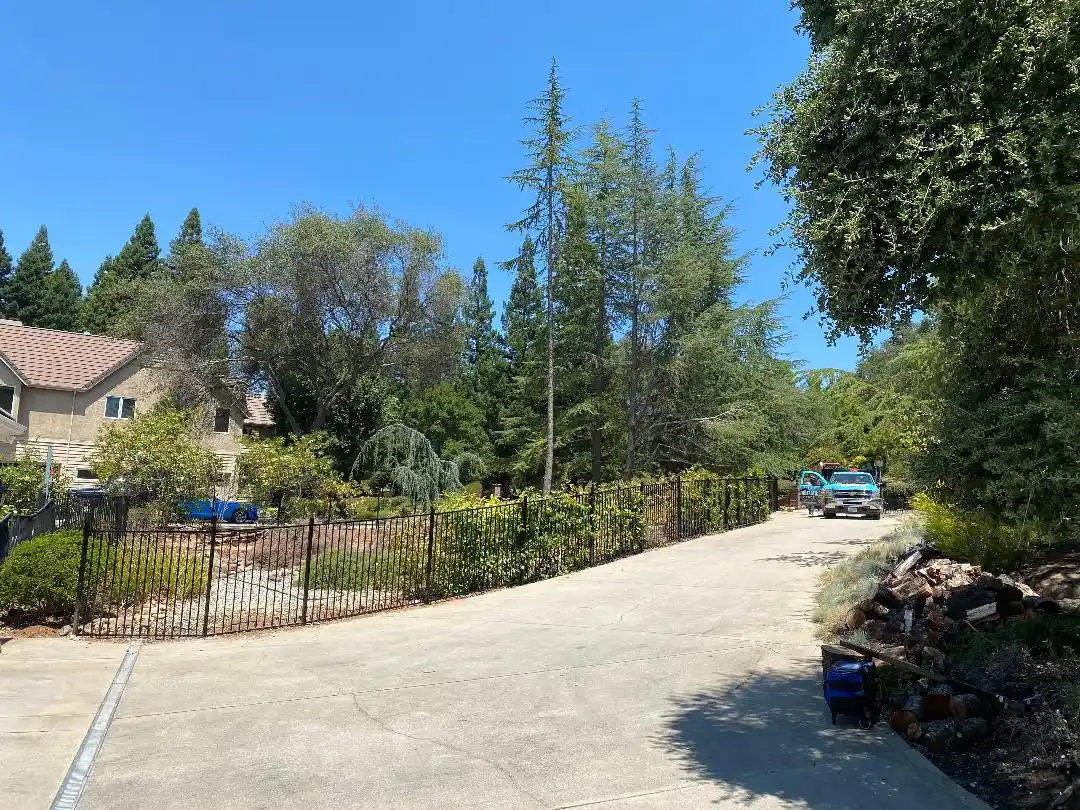
Plenty of garden fencing is a genuinely reasonable weekend project. Some of it isn’t, and the difference isn’t skill so much as consequence.
Reasonable DIY:
- Low push-in decorative borders around beds
- Temporary crop netting
- Small removable panels around raised beds
- Painting or staining an existing fence
Worth calling a professional:
- Full property boundaries
- Structural wood, vinyl, ornamental iron, or steel fences
- Large or frequently used gates, and any automated gate
- Sloped or uneven sites
- Shared fences with a neighbor involved
- Deer fencing that runs up against local height limits
- Pool safety fences
- Anything near utilities, easements, or a public sidewalk
Two notes. Fence post holes count as excavation, so the 811 call applies to DIY projects exactly as it does to ours. And gates and slopes are where homeowner-built fences usually fail: a gate carries all its weight on one post and swings a few thousand times a year. The real cost of a DIY fence usually isn’t the materials. It’s redoing it in three years when the posts lean.
What Professional Planning Actually Looks Like
If you’re skeptical of fence contractors, you have company. Most people who call us have already been let down by one. That’s not a marketing observation, it’s the reason this company exists. Dominic Vella was a Sacramento-area homeowner who hired a couple of fence companies and got unreturned calls, dirty job sites, and crews that showed up whenever. He started Fantastic Fence in 2011 with Steve Kempster, who brought 20 years in pool safety fencing. Steve still runs estimates and is one of our most-requested estimators.
So here are the concrete parts, not promises. We answer the phone. Our crews are approximately 35 background-checked W-2 employees, not day labor. We’re licensed, bonded, and insured under CSLB License #979657, and you should go verify that yourself on the CSLB website rather than taking our word for it. We quote flat pricing with zero hidden fees, and we carry a written guarantee: the job isn’t finished until you give us the thumbs up. After every job we do a thorough clean-up, because we understand we’re guests on your property. That standard is what keeps our customers coming back for the next gate, the next repair, and the next fence.
The planning we handle is the unphotogenic part: locating the property line, sizing the gate to what you actually push through it, checking drainage and irrigation conflicts, calling 811, confirming height rules for your specific yard, and leaving space to reach the fence for repairs years from now. Financing is available for Sacramento-region residents.
Frequently Asked Questions About Garden Fences
What is the best fence for a garden?
It depends on the job. Ornamental iron or a picket fence for showing off planting, solid wood or vinyl for privacy, and wire mesh sized to the animal if you’re protecting vegetables. If one fence has to do several jobs, a wood or steel frame with welded wire infill is usually the best compromise.
How tall should a garden fence be?
A decorative border runs 6 to 18 inches, privacy fences typically 6 to 7 feet, and deer exclusion 7 to 8 feet. Your city sets the ceiling. In Elk Grove, the required front yard and clear-visibility areas are capped at 3 feet, while interior side and rear yards allow 7 feet, or 8 with a building permit.
What garden fence keeps rabbits out?
UC Integrated Pest Management recommends wire mesh with openings no larger than 1 inch, about 48 inches tall, with the bottom 6 to 10 inches buried and bent outward to stop digging. Keep at least 3 feet above ground where jackrabbits are present, fit the gate tight, and inspect the line regularly.
How tall does a fence need to be to keep deer out?
UC IPM points to a properly built and maintained 7- to 8-foot fence as the most effective conventional control, and taller on steep slopes. Gates must match the fence height, and the bottom has to sit close to the ground, since deer will crawl under a gap. Check your local maximum height before you build.
Do I need a permit for a garden fence in Elk Grove?
Elk Grove generally exempts non-pool fences not over 7 feet from a building permit, but that exemption doesn’t override zoning rules on placement, maximum height, or clear-visibility areas. An interior side or rear fence taller than 7 feet requires a City building permit, and pool barriers are handled separately as regulated safety installations.
Ready to Plan Garden Fencing You’ll Actually Love?
If a photo has inspired a direction and you know roughly what you want, call us and we’ll come look at the yard. Our estimators will walk the line with you, talk through height rules, gate sizing, and how a new fence will change the light in your outdoor space, then give you flat pricing with zero hidden fees. Still researching? The Fence Price Calculator on our site is a no-pressure place to start.
Our Elk Grove office is at 9245 Laguna Springs Dr, Suite #228, Elk Grove, CA 95758, 916-345-0142. We also serve Sacramento, Placer, El Dorado, Yuba, Yolo, and Nevada counties from our Sacramento and Rocklin offices. Get a Free Fence Estimate by phone or Book Online.
Ready for a fence you’ll actually love? Let’s talk.
Reviewed September 2026. Fence ordinances change, so confirm current height, placement, and permit requirements with your local planning or building department before you build.