Key Takeaway
Metal privacy fence options come down to two real choices: solid coated steel panels like Colorbond or Durabond for full, zero-gap privacy lasting 30 to 50 years, or expanded metal mesh added to an existing ornamental iron fence for partial screening. Both offer low maintenance and far outlast wood, but neither is cheap. You’re paying for lifespan, fire performance, and near-zero upkeep.
Metal privacy fencing is a smaller category than most homeowners expect, and it helps to know that going in. Metal usually gets chosen for fences you can see through: ornamental iron, aluminum picket, chain link. Most metal fences were never designed to block a view. Building one you can’t see through leaves you two real choices. You either install a solid coated steel panel system for full privacy, or you add expanded metal mesh to an existing iron fence for partial screening. If you’re weighing whether metal can give you privacy without the maintenance headaches of a traditional wood fence, that’s the honest answer. Metal privacy is a premium category. You’re buying lifespan, low maintenance, and fire performance, not a cheaper fence.
That distinction between full privacy and partial screening runs through this entire guide, so we’ll define it clearly and then show you what each option costs, what it fits, and what actually wears out over time.
The Two Real Metal Privacy Fence Options at a Glance
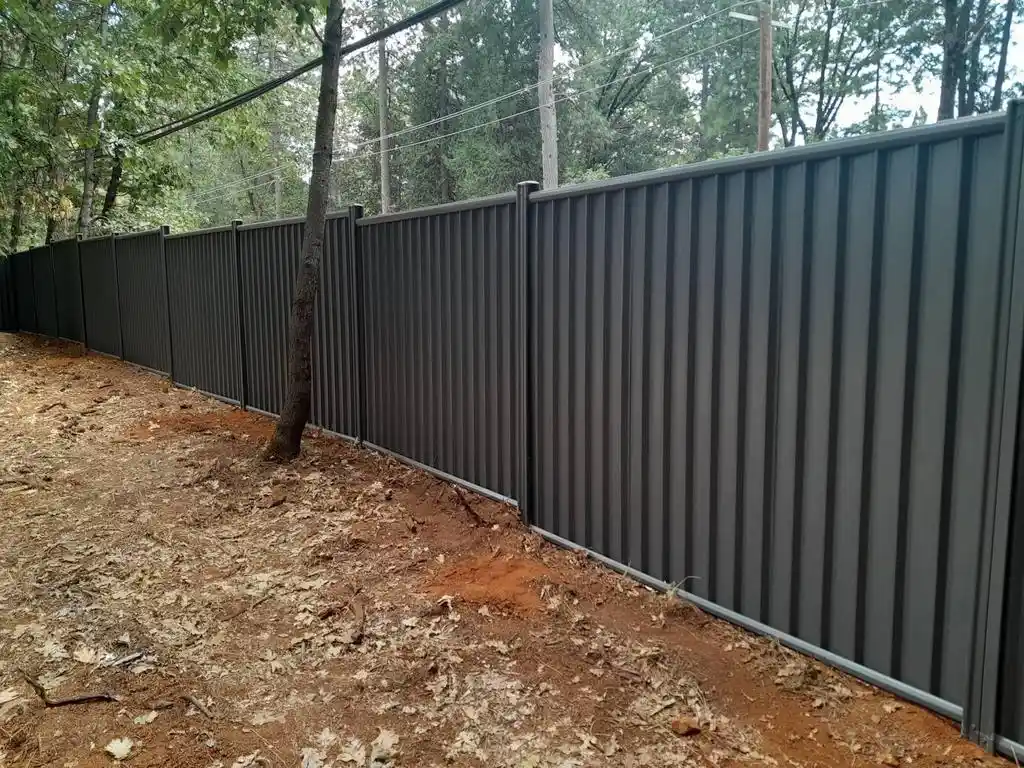
Across the six counties we serve, metal privacy comes down to these two paths.
| Option | Privacy level | Best for | Maintenance | Style fit | Cost level |
|---|---|---|---|---|---|
| Colorbond / Durabond steel panels | Full, zero gaps | Fire zones, modern homes | Minimal maintenance (occasional rinse) | Contemporary | Premium |
| Expanded metal on ornamental iron | Partial screening | Security, iron fence retrofits | Low maintenance | Traditional-industrial | Add-on to existing fence |
Want to see where a project lands for your yard? Our Fence Price Calculator gives you a starting number before you ever pick up the phone.
Why Most Metal Fences Aren’t Privacy Fences
Ornamental iron, aluminum picket, tubular steel, and chain link fencing are all open by design. These types of metal fences were built for security, boundary definition, and curb appeal, not for blocking sightlines. Wrought iron offers nearly endless customization and looks elegant, but you can see straight through it. Wrought iron fences reward you with timeless looks and real strength, and openness is simply part of the deal. Aluminum fences are lightweight and rust resistant, which makes them a favorite around pools, and again, they’re a see-through picket. Chain link fencing is practical and affordable, and it’s about as open as fencing materials get.
That’s why the privacy category narrows so hard once you go metal. Horizontal aluminum or steel slats get you closer to the sleek modern aesthetics people picture when they say “modern metal fence,” but even tight privacy slats rarely guarantee full privacy head-on. For a fence you genuinely can’t see through, you’re back to the two options above.
Option 1: Colorbond and Durabond Steel Privacy Panels
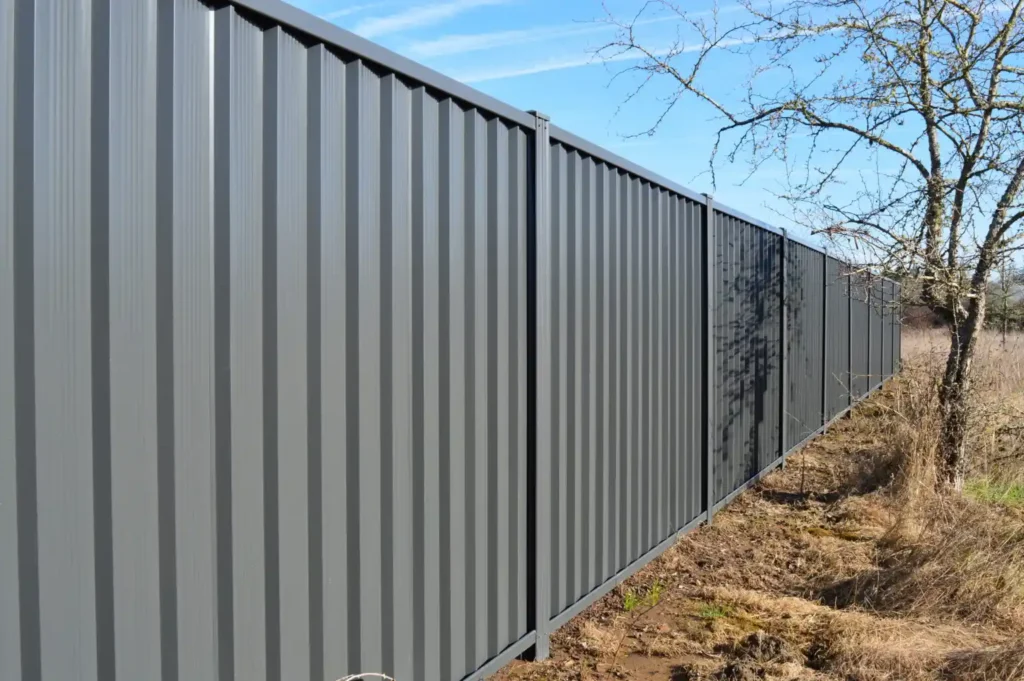
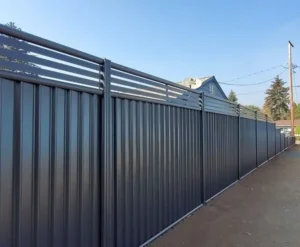
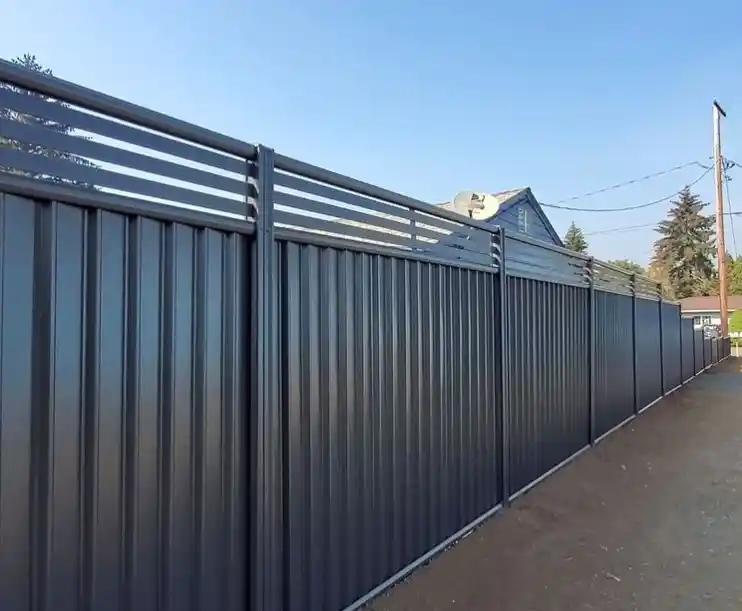
This is the most complete metal privacy fence available in our area, and an unusual product in the U.S. market. Colorbond is a pre-painted steel developed by BlueScope in Australia back in the 1960s, where it has become the default backyard fence. What makes it worth understanding is what it isn’t. It is not powder coated over bare steel, and it isn’t paint rolled on after the fact.
Colorbond is a five-layer system, and every layer goes on at the mill before the panel is ever formed from the raw materials: a steel base, a corrosion-resistant zinc-aluminum alloy coating, a bonding pretreatment, a baked primer, and a baked color topcoat. That alloy layer, not the steel itself, is what fights corrosion. Because this protective coating is applied at the factory rather than sprayed on after fabrication, the corrosion resistance is more consistent than a typical powder coated finish and holds up longer. DuraBond is the official U.S. distributor, which is why the material shows up in Sacramento, Rocklin, and El Dorado Hills but in relatively few other American markets. Some panel systems in this category carry industry leading warranties, another reason property owners view them as a premium material.
Steel fencing like this resists warping, cracking, and rotting, and it stands up to insects and heavy winds in ways wood never will. Its structural integrity holds through harsh weather conditions, from summer heat to the occasional stretch of extreme cold. A properly installed steel privacy fence can serve for decades with almost no attention, which is a large part of why property owners accept the higher upfront cost.
What You Actually Get with Colorbond Steel
- Zero gaps. The panels interlock, so there’s no shrinkage gap opening up in year three the way a wood fence dries out and separates.
- Identical on both sides. A true good neighbor fence with no “back side,” so you and your neighbor both look at the finished face.
- Non-combustible. Steel doesn’t ignite. More on why that matters below.
- No rot, warping, termites, or repainting. Rinse it occasionally and that’s genuinely the minimal upkeep this fence asks of you.
The trade-off is that it reads modern style rather than traditional. On a Craftsman bungalow or a Victorian it can look out of place. On a contemporary home or a clean foothill build, it looks intentional and holds that look for years, whatever your architectural style calls for.
Option 2: Expanded Metal on Ornamental Iron
This third option isn’t really a fence type. It’s a modification: expanded metal mesh welded or fastened onto a traditional black ornamental iron fence. Expanded metal is sheet steel that’s been slit and stretched into an open lattice pattern, and it’s governed by ASTM standard F1267. You’ll see it used a lot in perimeter security fencing.
Be clear about what it delivers. Expanded metal is a screening material, not a privacy material. Because the strands sit out of plane, it reads nearly solid when you view it from an angle. But head-on, and especially with light behind it, you can still see through. If your goal is “the neighbors can’t watch us in the pool,” this won’t get you there.
Where Expanded Metal Works and Where It Disappoints
What it does well is security and visual softening on a fence you already own. It stops hands and small objects from passing through, it makes climbing harder, and it takes the bare openness off an iron fence without replacing the fence. On a commercial yard, or anywhere a wrought iron fence is already installed and you want it less transparent, it’s a sensible retrofit that offers superior security compared to what wood or vinyl provide. It’s a practical answer for high security needs and for anyone focused on their property’s security.
Where it disappoints is anywhere you need real privacy: shielding a pool area, blocking a close neighbor’s view, or cutting a direct head-on sightline. For those jobs, you want solid steel panels, not mesh.
Long Term Durability: How Long Metal Privacy Fencing Lasts
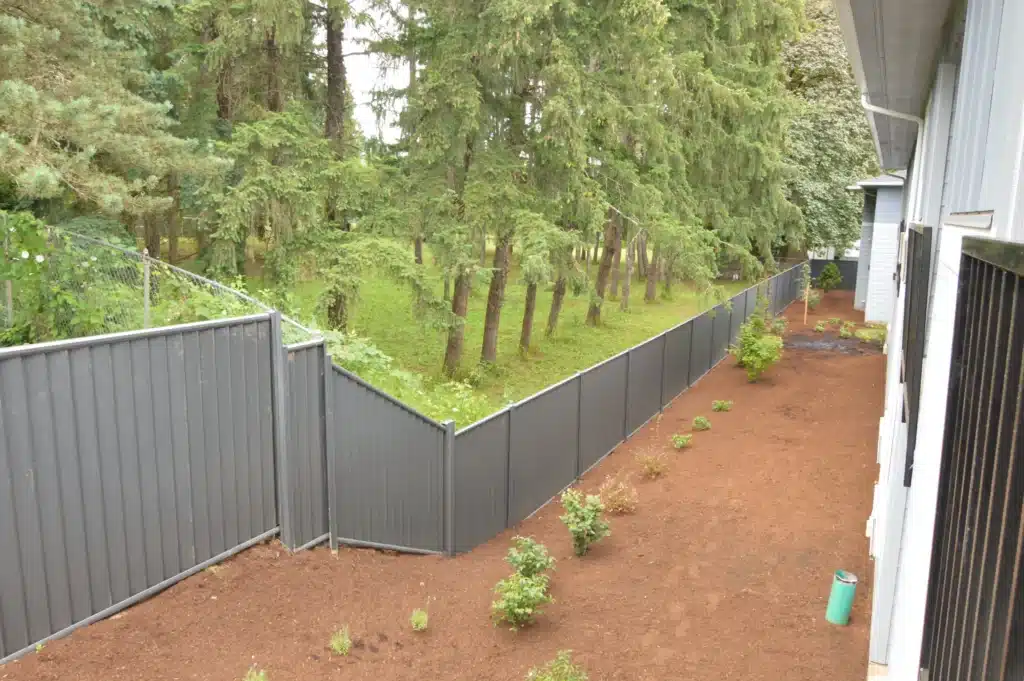
Metal privacy is among the longest-lasting residential fence options, and the numbers back that up. With professional installation, steel privacy panels commonly last 30 to 50 years. Most aluminum fences run about 25 to 30 years. Galvanized steel typically lands in the 20 to 40 year range, and corrugated or coated panel systems can push 40 years and beyond. Wrought iron, when it’s kept up, can last generations.
Those ranges assume two things: a proper installation and a coating that stays intact. Long term durability on any metal fence tracks directly with how well the finish holds up, which is why the next section matters as much as this one. As a bonus, steel and aluminum are recyclable, so a metal fence that eventually reaches the end of its life doesn’t just go to a landfill. That long term performance is a big part of the long term value metal delivers.
What Actually Fails on a Metal Fence: Maintenance Needs Over Time
Metal fences don’t rot, so people assume they don’t fail. They do. They just fail differently.
The coating is the wear item, not the metal. On steel, everything depends on the finish staying intact. The vulnerable spots are cut edges, drilled holes, and the bottom few inches where a string trimmer clips the panel or where soil and irrigation sit against it. Fence posts set at grade take the same abuse. Nick the coating at grade, keep it wet, and you’ll get rust there years before the rest of the fence shows any sign of age. The factory alloy and galvanized steel coating are excellent at preventing corrosion across an undamaged surface, but they can’t protect a spot where the coating has been breached and stays damp. The same holds true for a powder coated aluminum or wrought iron section: once the finish is broken, moisture goes to work.
Sprinklers hitting a metal fence line every day do the same slow damage they do to wood. It’s the one failure mode that catches homeowners off guard, because they bought metal specifically for minimal maintenance requirements. Compared with other fencing materials, though, its maintenance needs and ongoing maintenance stay light, and reinforced posts set by professional installers help the whole run last.
Maintenance Requirements for a Metal Privacy Fence
- Rinse the panels occasionally to clear dust and buildup.
- Keep vegetation, wet leaves, and debris off the base of the fence.
- Redirect sprinklers so they aren’t spraying the fence line daily.
- Keep soil from piling up against the panels at grade.
- Touch up any coating nicks promptly, before rust gets a foothold.
The maintenance requirements are minimal compared to wood fencing. Just not zero, so calling it fully maintenance free would overstate it.
Comparing Fencing Materials: Metal Privacy vs. Wood vs. Vinyl
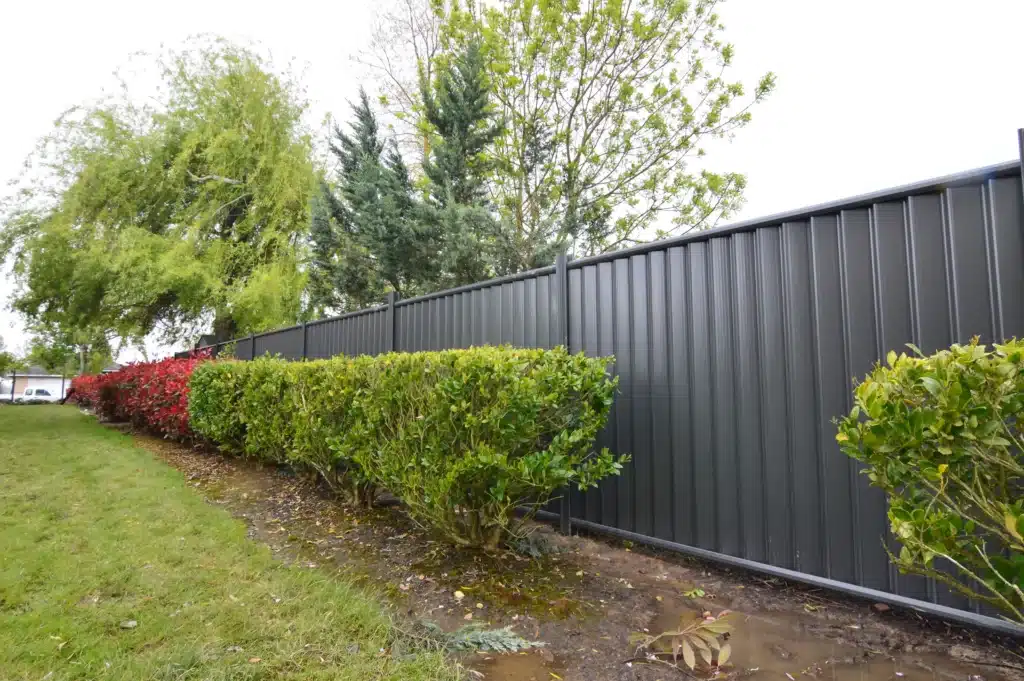
The right fencing materials depend on what you’re solving for, so here’s an honest three-way look at your fencing options. All three are common wood alternatives or wood itself, and each earns its place for different reasons.
Wood fencing is affordable, classic, and easy to customize, and it’s still the region’s most common good neighbor fence. The trade-off is maintenance. Wood shrinks and warps, it needs periodic sealing or staining, and it’s combustible.
Vinyl fencing is low maintenance and privacy-friendly with a clean look, which makes it a strong wood alternative and a solid middle option. Its weakness is heat: vinyl can deform under sustained radiant heat, so it isn’t the best pick where wildfire exposure is a real concern. Composite fencing lands in a similar spot, offering a wood look with less upkeep, though composite materials still can’t match steel on fire performance.
Steel privacy panels are premium, modern, non-combustible, and close to maintenance-free. The trade-offs are style fit and a higher upfront fencing investment. Metal privacy gets chosen for lifespan, fire performance, and low maintenance, not because it’s the cheapest fence you can buy. If budget is the main driver and fire isn’t a factor, wood or vinyl may serve you better. If longevity and fire resilience matter, steel earns its price and can be a smart long term investment for many residential properties.
What Does a Metal Privacy Fence Cost? Understanding the Fencing Investment
Metal privacy is a premium category. Measured per linear foot, it typically costs more upfront than standard wood or chain link, and often more than vinyl. What drives the final number is the material and panel system, the height and length of the run, and the site conditions, along with professional installation by a crew that gets the coating protected and the posts set right. Because pricing is usually quoted per linear foot, a longer run or a taller fence moves the total quickly.
You’re paying for full privacy, a 30-to-50-year lifespan, fire performance, and near-zero maintenance requirements. We’re not the cheapest option, and we don’t pretend to be. We compete on value, with flat pricing and zero hidden fees, so the number you’re quoted per linear foot is the number you pay. If you’re comparison-shopping, start with our Fence Price Calculator or ask us for a free fence estimate. We’ll walk you through what fits your outdoor space and your budget.
Why Metal Privacy Fencing Matters More in Wildfire Country
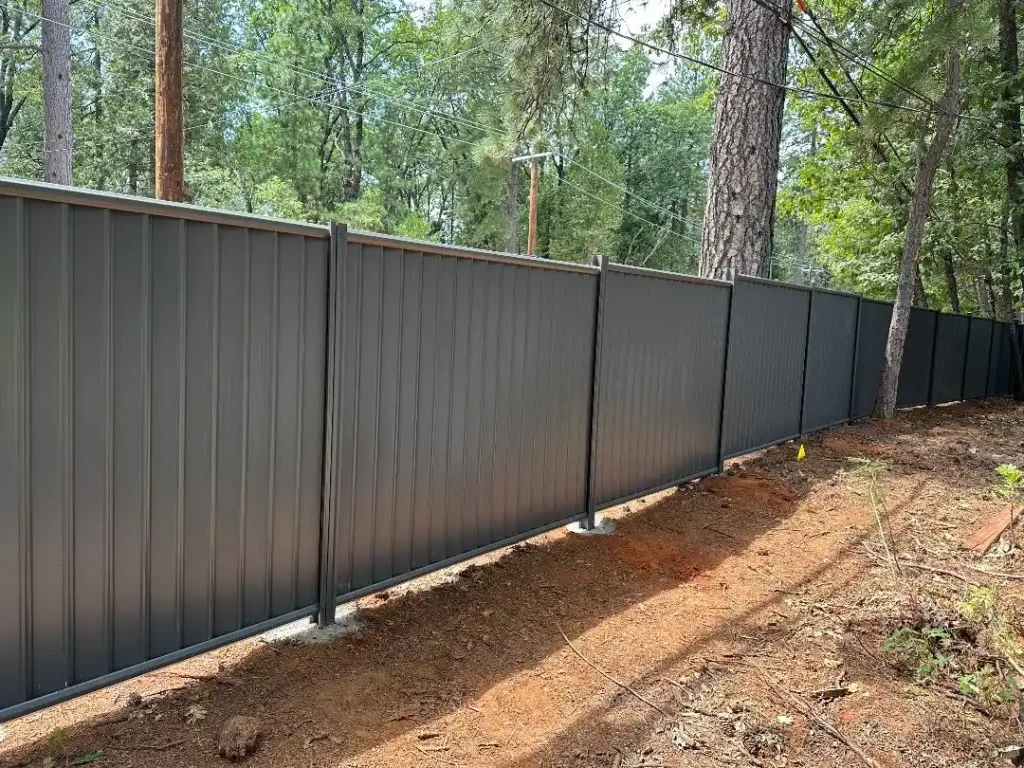
For foothill and fire-exposed communities across Placer, El Dorado, and Nevada counties, and in areas like El Dorado Hills, fire performance is a real reason metal privacy earns its premium. A steel fence doesn’t ignite, and that changes the risk calculation around your home. While Sacramento sits inland rather than near the coast, the corrosion resistance that makes coated steel a favorite in coastal climates and coastal properties, where salt air exposure punishes ordinary metal, is the same quality that makes it a nearly rust proof, naturally resistant choice here.
CAL FIRE’s home-hardening guidance is direct about this: a combustible fence attached to your house can act as a fire pathway, carrying flame straight to the structure. Their guidance recommends replacing attached combustible fencing or gates with a non-combustible option for the first 8 feet, keeping parallel combustible fences at least 10 feet from the home, and keeping double neighboring wood fences at least 20 feet away. The California Department of Insurance’s Safer from Wildfires framework goes further, treating the first 5 feet around a home as an ember-resistant zone that includes fencing, and calling out combustible fencing connected to a house as something that can act like a candle wick.
None of this is a code-compliance promise for your specific address. Requirements vary by jurisdiction, and defensible-space rules are still being finalized. But if you live in fire country, non-combustible steel fencing that stands up to weather resistance and harsh conditions is worth a serious look, and it may factor into how insurers view your property.
A Few Sacramento-Area Considerations Before You Install
Local rules shape what you can build. City of Sacramento residential rules generally allow rear and interior side-yard fences up to 6 feet, with exceptions. Sacramento County generally caps fences at 7 feet before additional permit conditions apply. Front-yard and street-side placement, HOA design approval, and pool safety requirements can all change the right answer, so confirm your city, county, and HOA rules before locking in height, opacity, and location.
If a pool is involved, California Health and Safety Code Section 115923 sets specific barrier requirements, including a minimum 60-inch enclosure height, a self-closing and self-latching gate, and gaps that won’t pass a 4-inch sphere. And before any digging starts, call 811 to get underground utilities marked. Metal privacy fences are heavier and more permanent than a quick repair, and they aren’t well suited to DIY projects, so this is work worth handing to a licensed, bonded, and insured C-13 fencing contractor. Our CSLB license number is 979657, and you’re welcome to verify it.
What is the best metal fence for privacy?
Solid coated steel privacy panels, such as Durabond or Colorbond-style systems, are the best choice for full privacy. The panels interlock with zero gaps and look identical on both sides, so they block sightlines completely. Most other types of metal fences, from wrought iron to aluminum picket to chain link, are open by design, with decorative elements like decorative finials, post caps, and ornamental features that add beauty and aesthetic appeal but no cover.
Can expanded metal make an iron fence private?
Not fully. Expanded metal screens views from an angle and adds security, but it’s an open mesh you can still see through head-on, especially with light behind it. It’s a screening and security upgrade for a wrought iron fence, not true privacy.
Does steel fencing rust?
The coating is what protects it, and undamaged coated or galvanized steel resists rust for decades and stays rust resistant across an intact surface. Rust starts where the finish gets breached, usually at cut edges or the bottom few inches, and stays wet. Keep the coating intact and the fence line dry, and rust isn’t a problem. The same is true of powder coated aluminum fences, which come in a range of powder coated colors.
Is a metal privacy fence fire resistant?
Steel is non-combustible, so it doesn’t ignite. That’s a meaningful advantage in wildfire-prone foothill areas, where CAL FIRE recommends non-combustible fencing near the home. Confirm specific defensible-space requirements with your local jurisdiction.
Is metal privacy fencing better than wood or vinyl?
It depends on your priorities. Metal lasts longer, needs minimal maintenance, and won’t burn, but it costs more upfront and reads modern rather than the traditional appearance of wood. It also brings fewer repairs over its life. Wood fencing is affordable and classic, and vinyl and composite fencing are clean low maintenance wood alternatives, though both are weaker choices where fire is a concern.
Ready for a fence you’ll actually love? Get a free fence estimate or book your fence or gate service today, and we’ll help you choose the option that fits your home, your neighborhood, and your budget.