Key Takeaway
A pallet fence is an affordable DIY option for garden borders, compost enclosures, or rustic screens, but it is not suitable as a permanent property-line fence, pool safety barrier, or reliable pet enclosure. Most standard pallets measure 48 by 40 inches, and wood species, slat spacing, and structural quality vary widely between units. Always check local codes and HOA rules before building.
Pallet fence ideas are all over social media, and most of them look better in a photo than in a Sacramento-region backyard. A pallet fence can be a genuinely affordable DIY project for a garden border, a compost area, a temporary pen, or a rustic screen. It’s a much weaker choice as a permanent property-line fence, a full privacy fence, a dependable pet barrier, a security fence, or anything near a pool. Wood pallets are often free or close to it, and that’s the appeal. Pallets are also simpler and less durable than a built fence. If you’re weighing a stack of free pallets against a real fence, here’s how to decide before you start putting posts in the ground.
What Is a Pallet Fence?
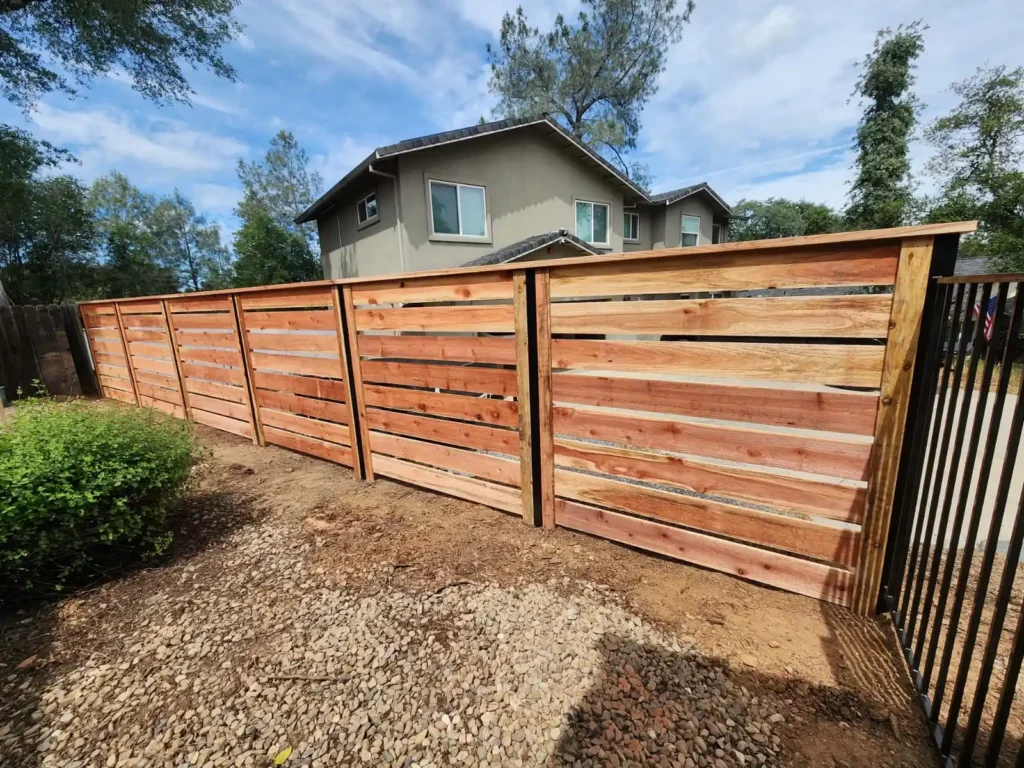
There are two ways people build one. The first stands whole wood pallets upright and fastens them between two posts or across a top rail. The second takes the pallets apart and installs the boards on a conventional post-and-rail frame, the same way a wood fence is built.
Pallets are shipping platforms, not fence panels. Most pallets in North America run about 48 by 40 inches, but slat spacing, wood species, and board thickness vary widely. Measure every pallet you collect before you picture the finished run. Three standard pallets laid end to end gives you roughly a 14-foot run, as an example only. A pallet cut in half gives you a lower line for a garden border. Collect more pallets than the math calls for, because you’ll reject some.
When Does a Pallet Fence Make Sense, and When Doesn’t It?
In the right spot, a pallet fence is genuinely functional. In the wrong spot, it’s a liability.
| Reasonable use | Not recommended without redesign or approval |
|---|---|
| Garden border or raised-bed protection | Pool safety fence |
| Compost bin enclosure | Security fence |
| Rustic decorative screen or patio screen | Front-yard architectural fence |
| Hiding trash cans, equipment, or an AC unit | Containment for a digging dog or climbing kids |
| Temporary farm or large-property divider | Long-term good neighbor fence on a shared line |
| Short-term livestock pen where rules allow | Anything an automated gate opener attaches to |
Most DIY guides jump from ideas straight to building. Deciding what the fence actually has to do is the part that saves you a weekend and a pile of wasted screws.
Pros and Cons of a Pallet Fence
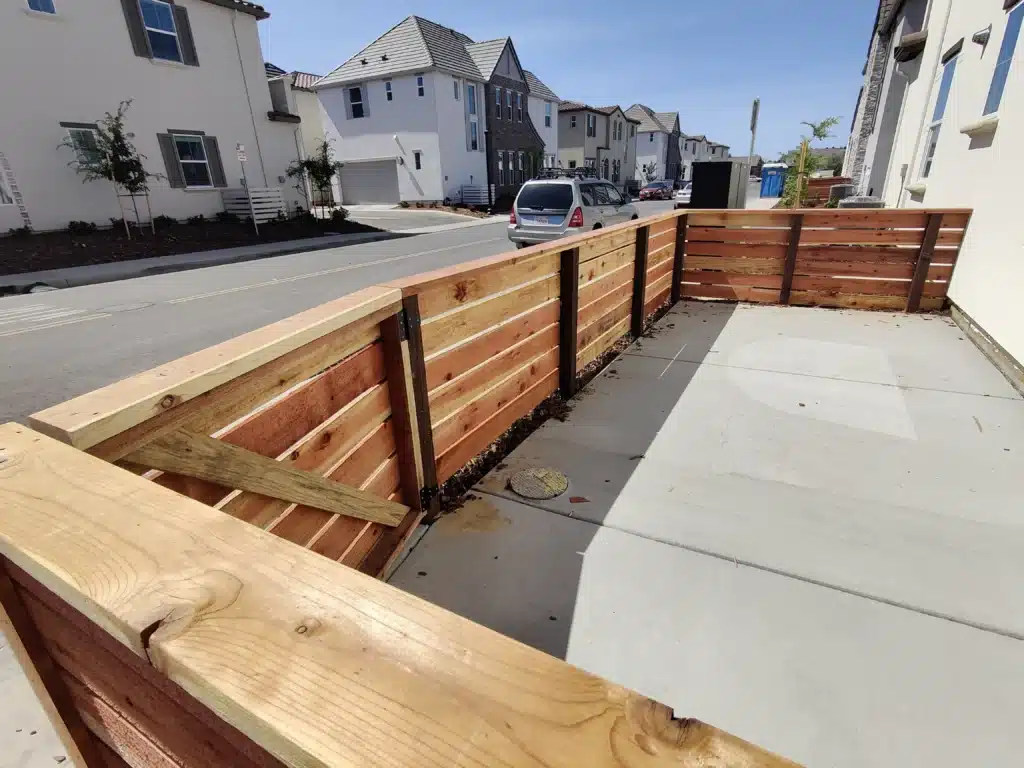
Pros:
- Affordable reclaimed pallet wood, often free
- A cost effective way to create a garden divider or screen
- Reuses wood pallets that would otherwise be discarded
- Assembles quickly without specialty tools
- Easy to customize with paint, planters, or a trellis
Cons:
- Unknown treatment and cargo history
- Inconsistent dimensions and a patchwork appearance
- Hidden and spiral nails
- Limited weather resistance
- Heavy panels and gates that sag
- Gaps small pets slip through and slats kids can climb like a ladder
- Code and HOA uncertainty
- Ongoing maintenance and board replacement
The labor is what gets understated. Plenty of these projects start with a homeowner and a husband or a neighbor pulling nails on a Saturday, and that part always runs long. Finding enough matching pallets, pulling nails, repairing split boards, and sanding rough wood takes far more elbow grease than the assembly does.
How Do You Know If Pallet Wood Is Safe to Use?
Look for the IPPC stamp on the stringer. Imported wood packaging carries a mark with the IPPC symbol, a country code, a facility number, and a treatment code. HT means heat treated, which USDA APHIS describes as bringing the wood core to at least 56°C for a minimum of 30 minutes. MB means methyl bromide fumigation. Penn State Extension advises homeowners not to use MB-marked pallets for home projects and not to burn treated pallet wood.
Here’s the nuance most guides miss: that stamp certifies pest treatment for international shipping. It says nothing about what the pallets carried afterward or whether the wood is structurally sound. University of California Agriculture and Natural Resources recommends favoring HT pallets and rejecting any with spills, stains, odd odors, rot, insect damage, or an unknown history. Be cautious with unmarked pallets.
Painted pallets usually belong to a rental pooling company, not to whoever set them out back, so ask before you load them. Where do you find free pallets you can trust? Feed stores, garden centers, small retailers, and equipment shops often hand over one-time-use wood pallets, and a known source beats roadside pallets every time.
Denailing and Cutting Safely
One peer-reviewed analysis estimated 30,493 U.S. emergency-department visits for non-occupational pallet-related injuries between 2014 and 2018. Most pallets hide broken or spiral-shank nails in the stringers, so take the denailing process slowly, wear gloves and eye protection, and add a mask when you’re cutting or sanding wood whose history you can’t confirm.
Whole Pallets or Pallet Boards?
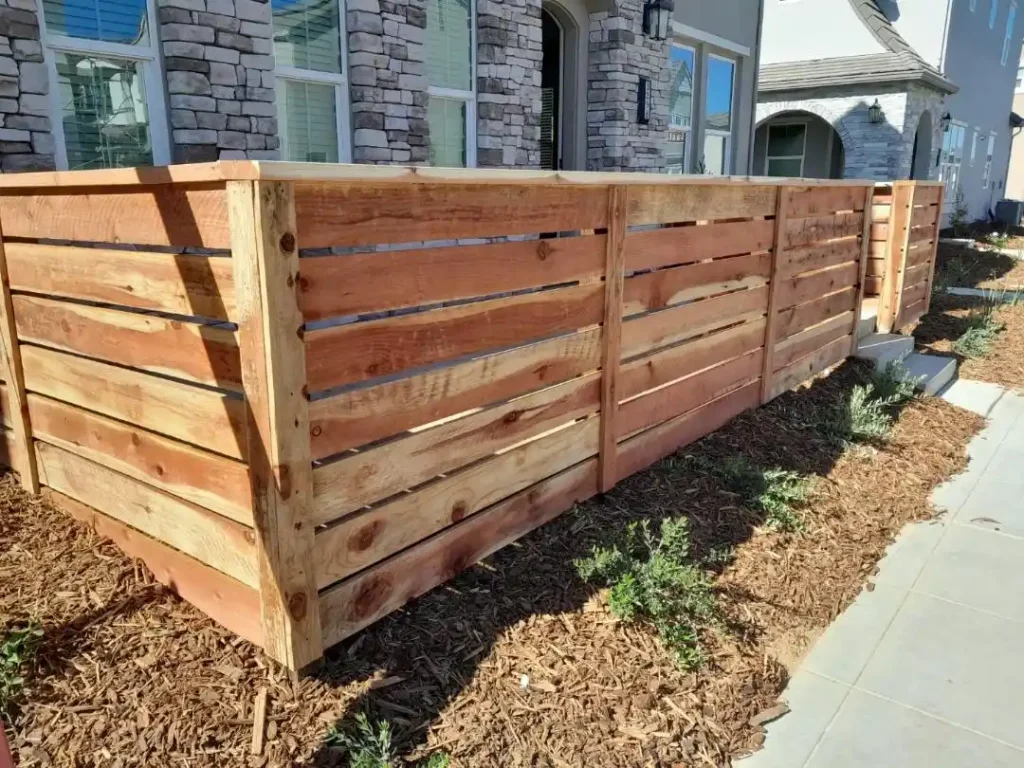
Putting whole pallets up on posts is the fastest route. They’re also the heaviest, the most uneven, the most wind-catching, and the hardest to repair one section at a time. A whole pallet reads reasonably well on one side and shows its stringers and block feet on the other side, so plan which face your neighbor sees. Dismantled boards on a proper frame look intentional, let you control gap spacing, and create a cleaner line, but the labor is real.
Our recommendation: if the fence needs to look finished or last more than a season or two, take the pallets apart and frame it. Use exterior-rated screws rather than nails. Just know that breaking down most pallets removes the quick-and-easy advantage you came for.
How to Build a Pallet Wood Garden Fence, Step by Step
This sequence assumes a low run around a vegetable garden, which is the most defensible use of pallets.
- Define the purpose of the project and how long the fence needs to last.
- Confirm the property line, your city’s fence rules, and your HOA guidelines before you haul home a single load of pallets.
- Call 811 at least two working days before putting a shovel or a T-post in the ground. USA North 811 handles Northern California, and you should wait for every notified utility to respond. Private lines like irrigation, landscape lighting, and pool equipment often aren’t marked.
- Sort and inspect your pallets, setting aside anything stained, rotted, or badly repaired.
- String a line and lay out the run so the space reads straight before anything is fastened.
- Set wood posts (4×4 is the common DIY choice) in holes dug deep enough for your fence height, soil, and wind exposure, using concrete where the load calls for it, or drive T-posts instead.
- Keep pallet wood off the soil wherever you can, since buried or ground-contact boards are the first to rot.
- Attach the pallets or the individual boards with exterior-rated screws.
- Build and brace the gate separately, with diagonal bracing.
- Clean up every nail and scrap before kids or pets are back in the yard.
Do You Need Chicken Wire?
For a vegetable garden, yes, usually. Stapling chicken wire to the opposite side of the pallets closes the slat gaps and keeps rabbits, chickens, and other small critters out of the beds. That same chicken wire trick turns a short run of pallets into a screen around a chicken coop, though the coop itself deserves hardware cloth rather than light wire.
How Do You Keep a Pallet Fence From Falling Over?
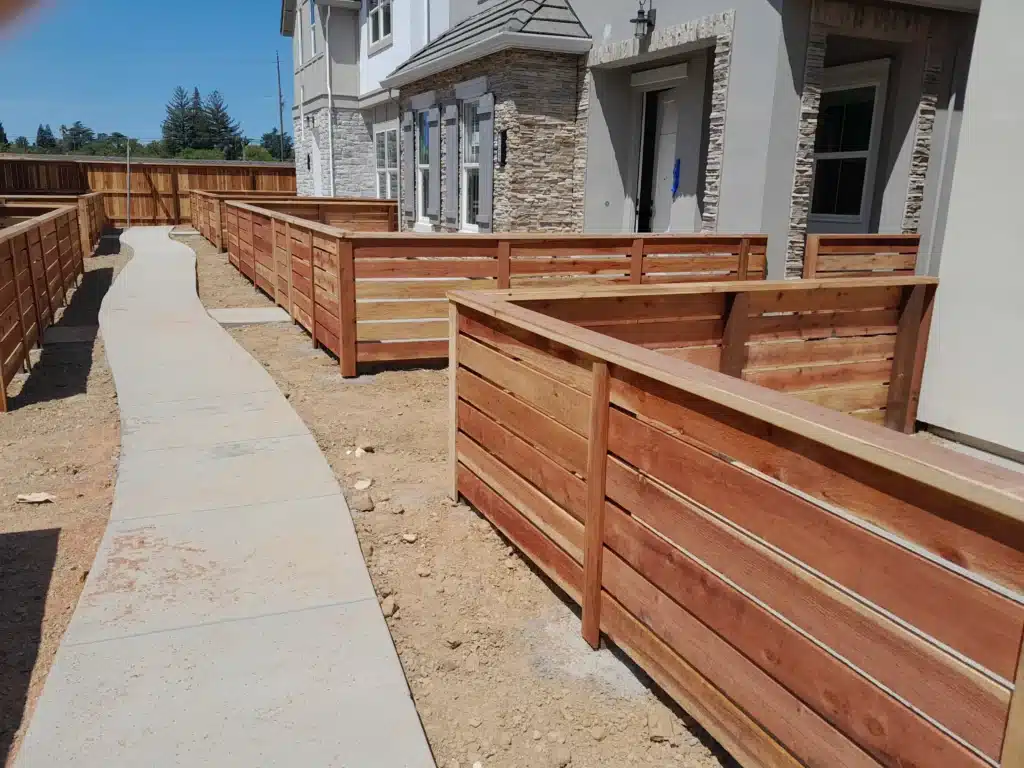
Wood pallets are engineered to carry load flat, not to stand as a vertical wall, so pallets can’t support themselves upright. The posts do all the work. Every panel needs a post at both ends, and posts at corners, ends, slopes, and gates need extra bracing. Solid pallets catch wind. Building a gate out of pallets is the hardest part of the job, because the weight sags fast without diagonal bracing, properly sized hinges, and a latch post set opposite that carries its own load. Tall runs, long spans, slopes, or a wide gate are the point where the project has outgrown a weekend and a stack of free pallets.
Pallet Fence Ideas: Planters, Paint, and the Top Stories We Hear
The ideas homeowners bring us are usually good ones. An upright pallet lined and filled with soil will create a vertical planter wall. Built-in planter boxes along the top rail work well on a garden divider. Open slats make a natural trellis for climbing plants, and paint or stain in two colors gets close to the rustic look people picture when they start a project like this. Putting up a low screen around a compost pile, a log pile, or an AC unit is one of the best uses for pallets there is, and a short wall of pallets can cover an awkward utility space without touching the main fence.
Two of the top stories we hear at estimates: the planter idea that rotted the boards inside one season, and the pallet gate that sagged by the second summer. Planters and vines hold moisture against the wood, and debris packing into horizontal slats is a fire consideration. Save the ambitious ideas for spots where a rebuild is easy.
How Long Does a Pallet Fence Last?
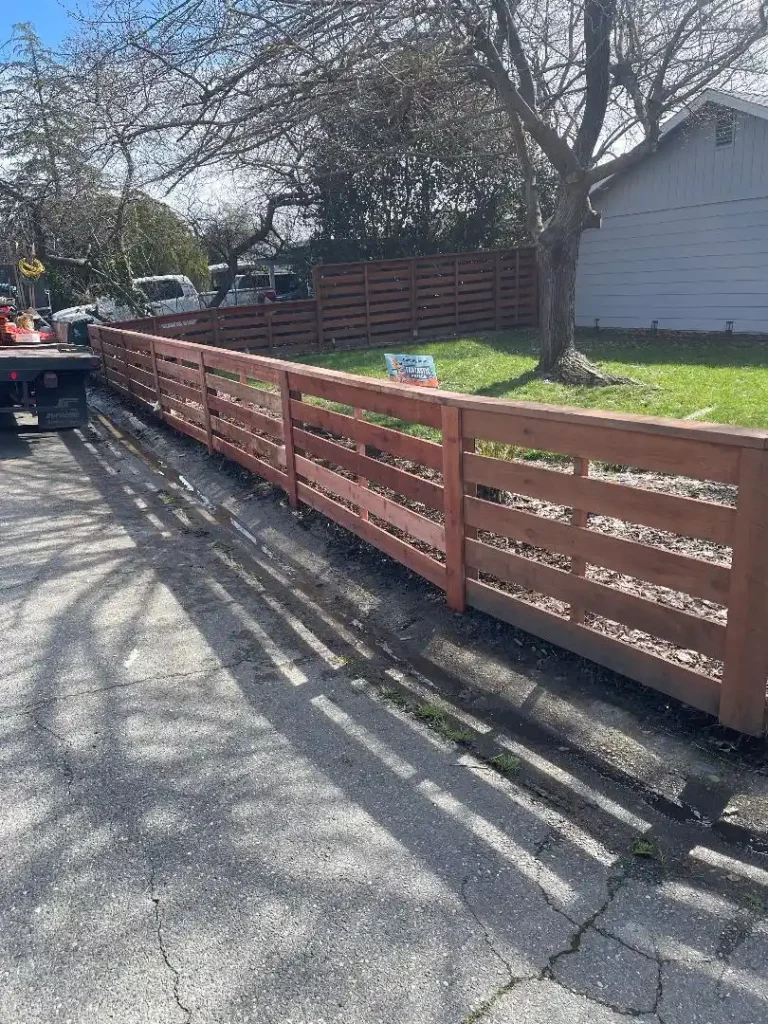
Nobody can give you an honest figure. Service life depends on wood species, board thickness, soil contact, framing, drainage, finish, and exposure, and wood pallets generally aren’t built from lumber rated for exterior or ground contact. UC ANR cautions that pallet wood not treated for prolonged moisture may be short-lived.
Putting a finish on the wood buys you time. Let the pallets dry and clean them, seal the end grain, apply an exterior-rated stain or paint, keep boards off the ground, inspect each spring and after storms, and replace split boards and loose fasteners right away. Sacramento-region summer heat and winter moisture are hard on untreated reclaimed wood.
Do You Need a Permit for a Pallet Fence?
Start with your city planning and building department. Those rules cover height limits by yard, material and appearance standards, clear-visibility triangles at corners and driveways, and easements. Then check your HOA architectural guidelines and CC&Rs. Putting a fence on a line you haven’t confirmed is how neighbor disputes start, so verify the property line first.
California and Elk Grove Rules to Check
Elk Grove’s fence ordinance requires long-lasting materials architecturally integrated with the building and existing site fencing, as determined by the City. Residential screening fences and gates are generally limited to solid wood, solid vinyl, masonry, tubular steel, or wrought iron. Alternative materials, which is where reclaimed pallets land, may require discretionary approval. That’s a real hurdle for a visibly improvised whole-pallet fence.
Current height limits: 3 feet in the required front yard and in clear-visibility areas; 3 feet in a required street-side yard within 5 feet of the back of sidewalk, or 7 feet if set at least 5 feet back; 7 feet in interior side and rear yards, and 8 feet there with a building permit; 10 feet outside a required yard. The City’s fee schedule places wood or masonry fences greater than 6 feet in the building-permit category. Rules change, so verify with the City before you build.
If you’re expecting a neighbor to split the cost of a division fence, California Civil Code Section 841 requires 30 days’ prior written notice describing the problem, your proposed solution, the estimated cost, the cost split, and the timeline. And under CSLB rules, paid fence work generally requires a licensed contractor when it needs a permit, uses additional workers, or totals $1,000 or more in combined labor and materials.
Wildfire and Combustible Fencing
CAL FIRE’s home-hardening guidance recommends replacing the first 8 feet of combustible fencing or gates attached to the house with a noncombustible option, and keeping debris and vegetation off fences. Reclaimed pallets with leaves packed into the slats deserve that same attention.
Why a Pallet Fence Is Not a Pool Safety Fence
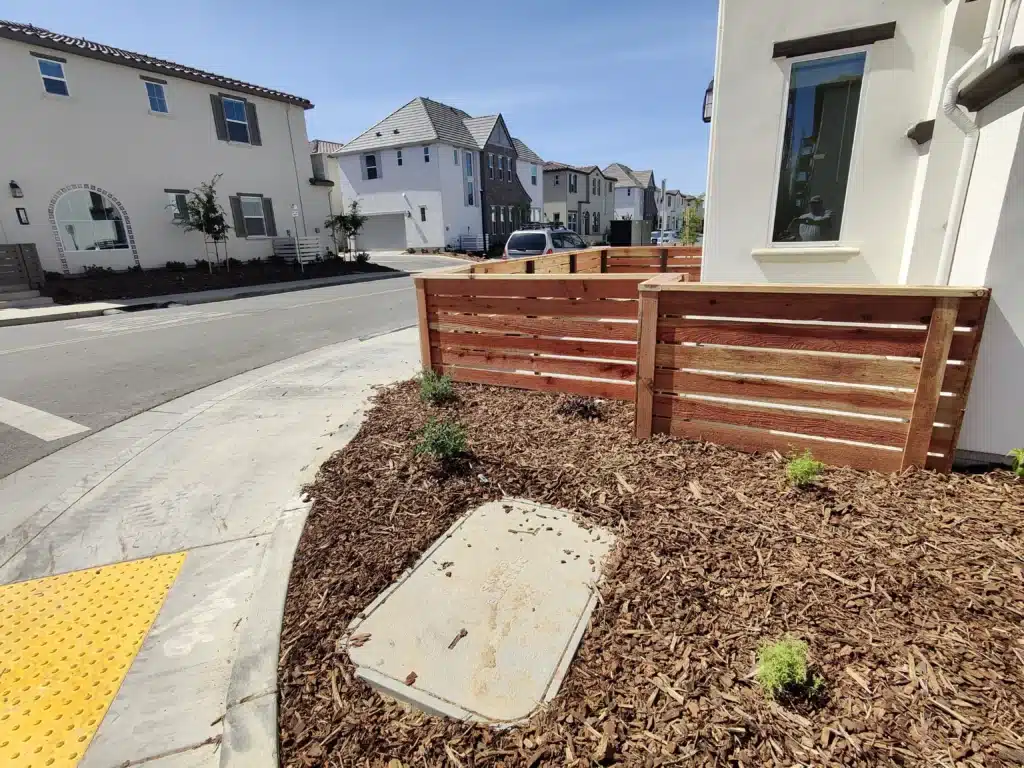
California Health & Safety Code Section 115922 requires at least two of seven drowning-prevention features for qualifying new or remodeled residential pools. An enclosure under Section 115923 must be at least 60 inches high, have no more than 2 inches of ground clearance, allow no opening that passes a 4-inch sphere, use a self-closing and self-latching gate that swings away from the pool with the latch at least 60 inches up, and present an outside surface with no handholds or footholds. Pallet slats are both, and kids climb them. Use a professionally built pool safety fence and confirm requirements with your local building department.
Pallet Fence vs. a Permanent Fence: What You Actually Get
| Material | Privacy | Maintenance | Appearance consistency | Pet containment | Permanent property line? |
|---|---|---|---|---|---|
| Pallet wood | Partial | High | Low | Unreliable | No |
| Framed wood (good neighbor fence) | Full | Moderate | High | Good | Yes |
| Vinyl | Full | Low | High | Good | Yes |
| Chain link | None | Low | High | Good | Yes |
| Ornamental iron | None | Low | High | Good | Yes |
| Durabond steel | Full | Low | High | Excellent | Yes |
Free pallets look cost effective up front. Repeat repairs, a sagging gate, mismatched boards, and a possible code problem can erase that savings. Wood is the versatile, affordable permanent choice most homeowners land on, chain link is the practical one, and our fence price calculator will give you a ballpark without a phone call.
Should You DIY It or Bring In a Pro?
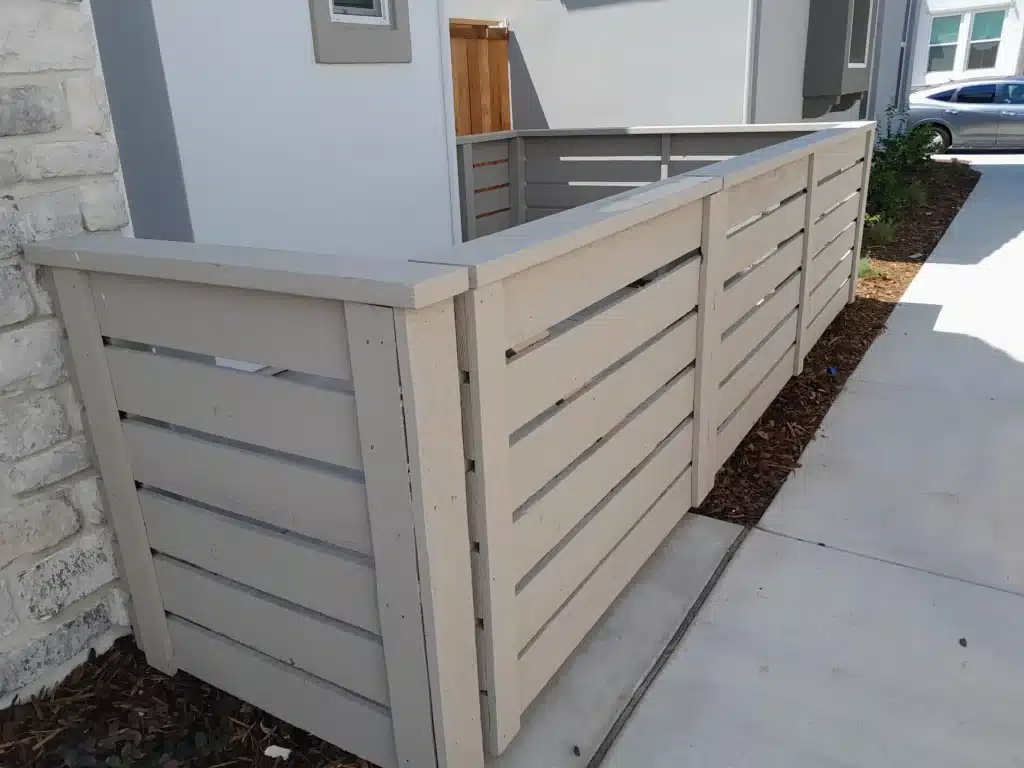
DIY fits when: the fence is short, low-stakes, and temporary; it’s for a garden space or decoration; you know where the pallets came from; there’s no pool or security role; and the design is clearly allowed by local rules and your HOA.
Hire it out when: you’re building on a shared property line, the fence has to contain a pet reliably, you need full privacy or wind resistance, there’s a large or frequently used gate, it’s anywhere near a pool, or a permit or design review is involved.
If that second list sounds like your project, here’s what you get from us. We’re licensed, bonded, and insured under CSLB License #979657. Our roughly 35 background-checked W-2 employees are our own crews, not subcontractors. You get flat pricing with zero hidden fees, a written guarantee that the job isn’t done until you give the thumbs up, and a thorough clean-up, because we’re guests on your property. Financing is available for Sacramento-region residents. We work from offices in Rocklin, Sacramento, and Elk Grove, serving Sacramento, Placer, El Dorado, Yuba, Yolo, and Nevada counties.
Not sure whether reclaimed pallets or a permanent fence fit your property? Get a free fence estimate. Call us or book online.
Frequently Asked Questions
Can you make a fence out of wood pallets?
Yes. The simplest versions skip posts and latches entirely, but they won’t stay upright long. Pallets work best for garden borders, compost enclosures, screening, or temporary use, with real support posts.
How many pallets do you need?
Measure the run, divide by the width of the pallets you’ve collected, then add 10 to 15 percent for the boards you’ll reject once you start building.
What are the cons of a pallet fence?
Unknown treatment and cargo history, inconsistent boards, hidden nails, a short service life, gaps that let small animals through, heavy gates that sag, and uncertainty about whether your city and HOA will allow pallets at all.
What is the cheapest fence to put in?
Free pallets have the lowest material cost by far. Among permanent fences, chain link is typically the most affordable. Our fence price calculator is the fastest way to compare options for your yard.
Can I build a no-dig pallet fence?
For low, temporary garden runs, driven T-posts or surface-mounted brackets can work, and those posts still do all the work of holding the pallets up. It isn’t appropriate for a tall, permanent, or property-line fence, and you still call 811 before putting anything into the ground.