Key Takeaway
Wooden fence panels are preassembled sections, most commonly sold in a 6-foot-high by 8-foot-wide privacy format, that speed up installation on flat, straight fence lines. Cedar and redwood panels typically last 15 to 20 years with proper maintenance. For sloped ground, gates, or irregular layouts, a site-built wood fence almost always fits better and repairs more easily.
Wood fence panels are preassembled sections of pickets and rails that attach between fence posts. The most common retail format is a nominal 6-foot-high by 8-foot-wide privacy panel, though heights of 4, 5, and 6 feet are widely stocked. Before you set a single post, measure the actual panel width from the manufacturer’s current specs, because “6-by-8” is a product category, not a guaranteed dimension. Below we cover panel styles, sizing, wood types, a purchase inspection checklist, and when premade panels make more sense than building the wood fence board by board. We also cover what actually drives price and long-term value, so you know what you’re comparing before you add anything to a cart.
What Are Wood Fence Panels, and Why the Panel Is Not the Whole Fence
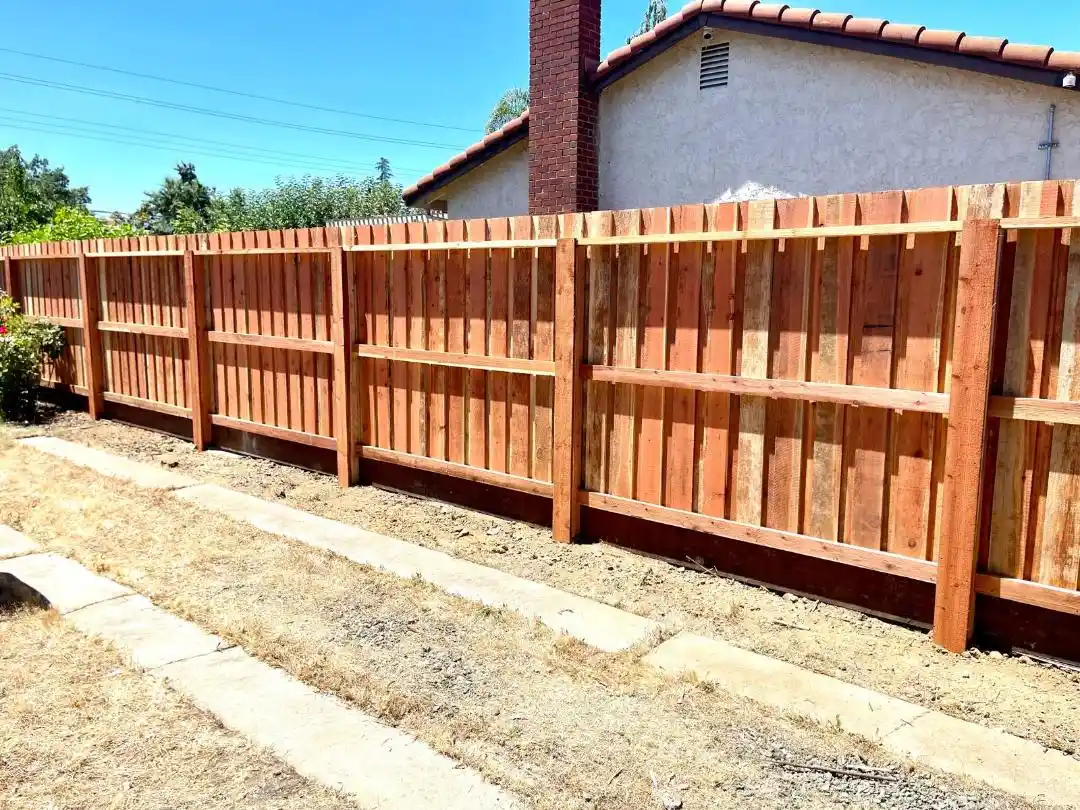
A panel is the infill. It’s the part you see and the part that sells the look on the sales floor. The fence itself is a system, and the panel is only one piece of it.
- Panel: pickets and rails, preassembled
- Posts: wood, or Bolt-Up Hidden Steel Posts, which add strength without a visible post line
- Rails and framing: what the pickets actually hang from
- Fasteners: exterior-rated, corrosion-resistant
- Footings: depth and diameter appropriate to soil and fence height
- Gates: hardware, posts, and swing clearance
- Grade and drainage: where water goes and how much sits against the wood
Fences rarely fail because a picket looked wrong on the rack. They fail at the posts, at rail ends, and wherever wood stays wet. Installation quality carries most of the structural load here, and so does climate: what holds up in a shaded Sacramento backyard behaves differently on a windy, west-facing property line. That’s why two fences at the same shelf price can deliver very different value ten years out.
Shopping for Panels: Wooden Fence Styles and What Each One Is Good For
Style is mostly a decision about privacy versus visibility. Pick the look you want, then judge the framing behind it.
| Panel Style | Best For | Trade-Off |
|---|---|---|
| Dog-ear privacy | Affordable full-height privacy | Finished on one side only |
| Board-on-board | No sightline gaps as boards shrink | More lumber per foot |
| Shadowbox (good neighbor fence) | Shared boundaries, airflow, same look both sides | Partial privacy at an angle |
| Spaced picket | Gardens, front yards, defining borders | Little privacy or screening |
| French Gothic picket | Decorative curb appeal | Pointed tops need careful finishing |
| Horizontal privacy | Modern homes, clean lines | Boards can sag without tight post spacing |
| Lattice-top privacy | Height and light without a solid wall | Lattice is the first part to weather |
Privacy panels block sightlines and help keep children and pets secured, which makes them the ideal choice for most backyards. Picket fences keep the yard visible while still marking the line, so they suit front yards, garden borders, and homes where you’d rather define space than close it off. If curb appeal is the goal, picket fences usually win.
What Size Are Wood Fence Panels? Nominal vs. Actual Dimensions

The most common size is a nominal 6 feet high by 8 feet wide, with 4-, 5-, and 6-foot heights also standard. Actual dimensions vary by brand, mill, and inventory, so pull the real width from the product spec sheet before anyone digs a hole. Posts set to an assumed 8 feet produce bays that are too tight or too wide, and neither is fixable without re-digging.
To estimate panel count: measure your full fence line, subtract gate openings, then divide by the actual panel width. Add posts for every corner and end, and expect at least one partial bay you’ll need to trim. Add a few extra pickets to the order while you’re at it, since matching a dye lot or a mill run later is rarely a perfect match.
Different brands also frame their panels differently, and that matters more than the price tag on the end cap. Two panels that look identical in the aisle can carry different rail thickness, picket count, and fastener quality, and those differences show up in year five. So before you add panels to a cart online or load a flat cart in the store, compare the spec sheets side by side. If you want a price range before you talk to anyone, our Fence Price Calculator is the low-pressure place to start. For vinyl, steel, ornamental iron, or chain link panels, see our broader Fence Panels 101 guide.
Premade Panels vs. a Site-Built Wood Fence: Which Is Right for Your Project?
Premade doesn’t mean poor quality. Panel quality varies a lot by brand, and some are built well. The real trade-off is flexibility: with a panel, you’re locked into that manufacturer’s dimensions and assembly decisions.
| Panels Make Sense When… | Site-Built Makes Sense When… |
|---|---|
| The run is short and the ground is flat | The yard slopes or the grade changes |
| You want a uniform, repeating look | Bay lengths are irregular |
| It’s a weekend project with help | You need a custom height or gate opening |
| You’re matching an existing panel fence | You’re matching an older or unusual fence |
| Access is easy and openings are simple | You want control over lumber, rails, and fasteners |
| Speed matters more than exact fit | You want to replace single boards later |
Can wood fence panels be installed on a slope?
Yes, but rigid panels have to be stepped, which leaves triangular gaps under the high side of each bay, or trimmed down into partial bays. A site-built fence can rack with the terrain and hold a consistent gap under the boards from one end to the other. That’s one of the reasons we build our wood fences board by board on the property instead of hanging prefabricated panels.
Which Wood Type Holds Up Best, and What to Check Before You Purchase

Cedar is popular for good reason, and it’s close to ideal for a fence: naturally resistant to rot and insects, and fairly stable. Redwood is the other strong performer regionally, but grade matters. Heartwood carries the decay resistance; sapwood boards look similar on the shelf and don’t perform the same. Pressure-treated pine is the affordable workhorse and holds up well when the treatment matches the exposure.
That last point is where most shoppers get tripped up. The American Wood Protection Association calls for UC3B or higher for exposed above-ground components like pickets and rails, and UC4A or higher for anything in ground contact, including posts. A sign reading “treated” doesn’t mean every piece in that bundle is rated for soil. Check the end tag. The EPA notes that preservatives are there to control fungal decay, molds, and wood-destroying insects, and the treatment only works if it suits the actual exposure.
Panel inspection checklist
- Treatment end tag or stamp present, with the use category readable
- Rails straight, sound, and free of splits at the ends
- Panel square when stood upright (measure corner to corner)
- Exterior, corrosion-resistant fasteners, not bright interior nails
- No excessive twist, cupping, or wane along the pickets
- No cracked or broken boards, including the back face
- Actual measured width and height, not the label
- Whether the vendor stocks matching replacement pickets
How to Protect a Wood Fence From Rot, Weathering, and Early Failure
Wood fences almost always fail in the same handful of places: soil piled against the pickets, sprinkler spray hitting the boards daily, leaf debris trapped at the base, unsealed cut ends, under-rated posts, and fasteners that rust out. The USDA Forest Products Laboratory recommends keeping boards off the ground, protecting exposed cuts and end grain, and giving horizontal rails extra attention because they hold moisture longer than vertical boards. UC Agriculture and Natural Resources suggests clearing soil to roughly 1 inch below the bottom of the boards and pointing irrigation away from the fence.
On finishes, many homeowners stain or seal every 2 to 3 years. USDA’s technical service-life ranges put a water-repellent preservative at 1 to 3 years and a semitransparent stain on saw-textured wood at 4 to 8 years. Those are exposure-driven ranges, not warranties. Walk the fence once a year and refinish based on what you see. A well-maintained wood fence commonly lasts 15 to 20 years, and that number depends far more on posts and water management than on which panel style you chose.
Permits, Property Lines, and California Checks Before You Order Panels

- Confirm your jurisdiction. A Sacramento mailing address doesn’t always mean City of Sacramento rules. The City generally exempts fences up to 7 feet from a building permit while zoning still applies: roughly 4 feet in front and street-side setbacks, 6 feet in rear and interior side yards, and 3.5 feet inside a driveway visibility triangle. Unincorporated Sacramento County front-yard limits differ (about 3 feet solid, 4 feet semi-open, up to 7 feet open ornamental).
- Check HOA architectural guidelines and CC&Rs before you purchase anything.
- Shared fences: California Civil Code § 841 presumes adjoining owners share costs equally and generally requires 30 days’ prior written notice before incurring shared-fence costs. Knowing your rights, and your neighbor’s rights, before the first post goes in keeps a good neighbor fence from turning into a dispute. That’s a general overview, not legal advice.
- Call 811. USA North 811 asks for white premarking, at least two working days’ notice excluding the day you call, and hand tools within the 24-inch tolerance zone on either side of a mark.
- Verify any contractor’s license on the CSLB license-check tool.
Where a combustible fence attaches directly to the house, CAL FIRE recommends making the first 8 feet noncombustible. Codes and interpretations change, so verify the rules for your specific address.
Frequently Asked Questions
Is it cheaper to build a wood fence or buy panels?
Panels can cut labor on short, flat runs. Site-built usually wins on fit and long-term value because the framing and posts are chosen for your yard. Compare installed price, not shelf price.
Where is the lowest-cost place to buy wooden fence panels?
Big-box and lumberyard pricing shifts constantly by brand and stock. Compare actual dimensions, treatment rating, and rail quality first, then price. Also ask whether replacement boards are available.
How much would a 100-foot wood fence cost?
It depends on height, wood type, post type, gates, grade, and whether the old fence needs removal. Use our Fence Price Calculator or request a free fence estimate for flat pricing with zero hidden fees.
Can I replace one damaged board in a fence panel?
Often yes on a site-built fence. On some premade panels, the pickets are fastened in a way that makes replacing the whole panel simpler. Look at how it’s assembled before you buy.
Do pressure-treated fence panels need to be stained or sealed?
Treatment resists decay and insects. A finish resists UV and weathering. Most homeowners stain or seal every 2 to 3 years for appearance and moisture control.
Get a Free Fence Estimate From a Local Team That Builds On Site
If a fence contractor has already left you waiting on a callback, we understand the hesitation. Here’s what we can point to instead of promises: founded in 2011, approximately 35 background-checked W-2 employees, and three offices serving Sacramento and Roseville plus Sacramento, Placer, El Dorado, Yuba, Yolo, and Nevada counties. Licensed, bonded, and insured under CSLB License #979657. Flat pricing with zero hidden fees, a written guarantee that the job isn’t done until you give the thumbs up, and a thorough clean-up because we’re guests on your property. Affordable wood fencing, with financing available for Sacramento-region residents. We’ll measure the real dimensions, talk through the style that fits your property, and build a fence you’ll actually be glad you paid for.
Call the office for your area or Book Online to Get a Free Fence Estimate.