Key Takeaway
Renting a temporary fence makes more sense for short-term or one-off projects, while buying pays off when the fence will be deployed regularly across multiple jobsites. The break-even point on renting a temporary fence vs. buying generally falls within two to four years, driven by two variables: total linear footage needed and how many days per year the fence will actually be standing. High-utilization contractors recover purchase costs faster; low-utilization owners often pay more to own than they ever would have renting.
Rent when the need is short. Buy when it isn’t. The payoff point on owning temporary fencing generally lands somewhere around two to four years, and it comes down to two things: how many feet of fence you need, and how many days a year that fence will actually be standing. If you’re a contractor, project manager, or property owner weighing this call, the goal here isn’t a price sheet. It’s a decision framework you can actually use to decide whether to rent or buy.
Most people frame this as “how long is the job?” That’s the wrong question, and getting it right is what separates a smart purchase from an expensive mistake. Let’s start with the short answer, then get into the two variables that do most of the work in the cost comparison.
What Counts as Temporary Fencing?

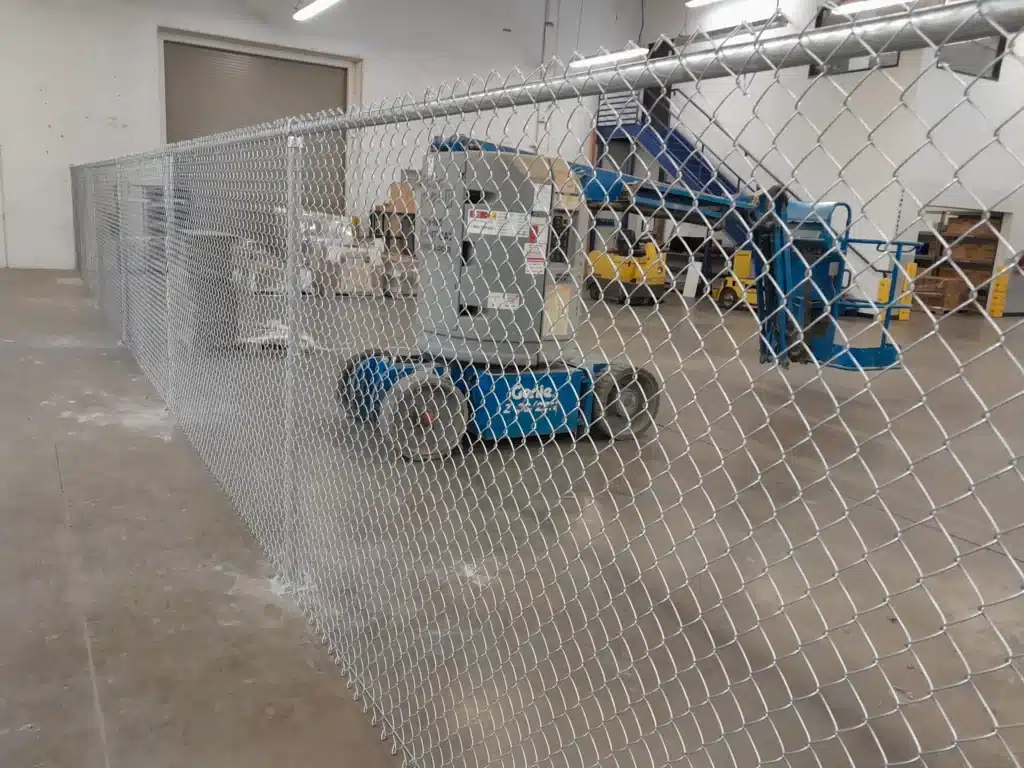
Temporary steel fencing is a system of freestanding temporary fence panels set into weighted stands. Each panel is a steel frame filled with chain link or wire mesh, and it clamps to the next one to form a continuous barrier. The whole thing is movable and reusable, which is the point. Fence panels typically run 10 to 12 feet long and stand 6 to 8 feet high. Some crews add privacy screens or a company logo banner to the panels for site branding or dust control.
How long do they last? Industry estimates put the useful life of a panel somewhere between three and ten years, with five years often cited as a working average. That’s an estimate tied to how often the materials get handled, dropped, and repaired, not a warranty you can count on. Maintenance and periodic repairs are part of the picture the moment you own the inventory rather than rent it.
Footage and Project Duration Are the Whole Equation
Footage sets the size of the commitment. A short run is a small purchase and a small storage problem. A long perimeter multiplies everything at once: the buy, the yard space, the hauling, and the installation labor to stand it up and take it down. The more linear feet you need, the more the decision deserves real thought instead of a default. Pricing on a per linear foot basis climbs fast on a big site, and the same is true when you measure by square footage of enclosed area.
Project duration decides whether that commitment pays back. Rental is billed by the day or the month, so the meter never stops. A monthly rental on long term projects adds up quietly. Ownership is a one-time cost that gets cheaper every additional month the fence stays useful. Short term jobs favor renting overwhelmingly. Long or repeating needs flip it.
Put the two together and you get the two- to four-year window. Inside it, renting is usually the cleaner answer. Past it, you’ve paid the rental costs several times over without owning anything. That’s the general rule. The next section sharpens it.
The Better Question: How Many Days a Year Will It Actually Stand?

Here’s the reframe that makes this easy. Rental is priced by the day. Ownership is priced by the year. So the real question isn’t “how long is this job?” It’s “how many days a year will this fence be standing across all my projects?”
A contractor with continuous work fences every site and keeps panels deployed most of the year. The per-use cost of owning collapses, and buying wins decisively. A company that runs two projects a year has fence panels sitting in a yard the rest of the time. Those panels didn’t get cheaper. They just stopped working. At low utilization, you’ve bought an asset that costs you storage and returns nothing.
So estimate your annual deployed days across every project, not the length of the one job in front of you. Then weigh your total cost of ownership against that number. Divide the total cost by the days the fence is actually up, and you get a cost per use day you can compare against a rental quote. That single number is worth running before you decide, and it resolves most of these decisions.
When Renting Temporary Fencing Makes More Sense
Renting is usually the right call when:
- You have a short term or one off project.
- Your schedule is uncertain or likely to shift.
- You don’t have a storage yard.
- You don’t have a crew or equipment to haul and set fence panels.
- You want delivery, installation, relocation, and removal handled for you, including remote sites your crew can’t easily reach.
- You want a predictable operating expense that protects cash flow.
One practical note on rental supply: it tightens during the spring and summer construction and event season, when demand runs highest. If your project lands in the busy months, book early with a rental company so you’re not scrambling for panels. Rental agreements should spell out delivery fees, pickup, cleaning fees, and any relocation charges before the fence ever reaches your site. Match the terms to your specific project timeline so the rental costs don’t outrun the budget.
When Buying Temporary Fencing Pays Off and Rental Costs Add Up

Buying starts to make sense when:
- You run recurring jobsites or continuous construction work.
- You need a long-term perimeter that stays put for years.
- You have secure yard space to store the materials.
- You have an in-house crew and hauling equipment.
- You can standardize your fence panel inventory.
- You have a process to repair, inventory, and replace parts.
Construction companies with steady work often find buying temporary fencing cheaper over time, since purchasing spreads the panel price across dozens of deployments. Buying only works if your utilization is high enough to beat the hidden costs. Those costs are where most ownership math falls apart, so let’s look at them next.
The Hidden Costs of Owning That Don’t Show on the Invoice
The purchase price is the easy part. The sticker price on a panel is only part of what you’ll spend. These are the costs people underestimate when they compare buying against renting.
Storage. Panels are heavy and twelve feet long. Even a modest inventory needs real yard space and a rack, and a full truckload runs a few hundred panels. If you’re paying for that space, it’s a monthly cost against an asset that isn’t currently working.
Transport and delivery. Every mobilization means a trailer, a truck, fuel, and someone’s time loading and unloading, in both directions. A rental company handles delivery for you. When you own, that’s your crew and your equipment on every job, and the transportation costs land on you.
Setup and teardown labor. Rental pricing frequently includes delivery and installation. Owning shifts that labor onto your payroll. On a long perimeter, that’s real hours you’re absorbing that used to be someone else’s problem.
Maintenance and attrition. Panels bend. More reliably, stands and clamps disappear. Small loose hardware walks off jobsites at a steady rate, and repairs plus replacing feet and clamps become a recurring line item nobody budgets for.
Theft. Steel panels have scrap value and legs. Securing your inventory is part of owning it.
Industry testimony to the U.S. International Trade Commission splits temporary fence rental costs into three big pieces: the fence itself, freight, and handling or installation. Freight and handling aren’t minor add-ons. When you own purchased fencing, those become your problem to manage on every single job.
The Tax Benefits Nobody Talks About

This is where buying gets more attractive than it first appears, and it rarely comes up in the conversation. The tax benefits can change the math.
Rental is an operating expense. You generally deduct it in full in the year you spend it, and nothing lands on your balance sheet. That predictability is friendly to cash flow. Purchased panels are a capital asset, so they’re typically capitalized and depreciated rather than written off at once. But the tax code currently treats equipment generously.
Section 179 lets businesses expense qualifying equipment purchases outright. For tax years beginning in 2026, the federal maximum deduction is $2,560,000, phasing out once qualifying purchases pass $4,090,000. Those caps sit far above anything a fence inventory will cost. On top of that, 100% bonus depreciation applies to qualifying property (with a MACRS recovery period of 20 years or less) placed in service under current rules after January 19, 2025.
One California catch: the state does not conform to the enhanced federal bonus depreciation or the higher federal Section 179 limits. So a Sacramento-area business’s federal deduction strategy may not produce the same result on its California return. This is general information, not tax advice. Talk with your CPA before purchasing panels for tax reasons.
Safety, Permits, and Calling 811
Compliance matters whether you rent or buy. OSHA requires guardrails, fences, barricades, or covers around wells, pits, and excavations 6 feet or more deep, and a warning system where mobile equipment operates near an excavation edge without a clear view. Traffic-control signs and barricades on construction areas have to follow the applicable standards and stay visible while the hazard exists.
If your temporary fence installation involves any ground disturbance, driven stakes or post-set panels included, California law requires you to notify 811 at least two working days and not more than 14 calendar days before you dig. If the work runs long, renew the ticket by the 28th day.
Check your local building department too. In Elk Grove, non-pool-barrier fences up to 7 feet high are exempt from a building permit, but an exemption never lets you skip code compliance.
A Simple Rent or Buy Decision Matrix and Break-Even Point

Match your specific situation to the better fit:
| Situation | Better Fit |
|---|---|
| One short project | Rent |
| Timeline may change | Rent |
| No storage yard or hauling crew | Rent |
| Fence needed most of the year | Buy |
| Multiple projects every year | Buy |
| Long-term security perimeter | Consider buying or permanent fencing |
| Need permanent, professional access control | Permanent commercial fence or gate |
The pattern holds: the more days a year the fence stands, the sooner you cross the break-even point on buying. Generally speaking, past a few years standing, permanent fencing usually beats both options on total cost and delivers better long term value. For short term needs, renting still wins the money math.
When “Temporary” Should Really Be Permanent
If a fence is going to stand for years, temporary panels are rarely the cost effective or professional answer. A permanent chain link, steel, ornamental iron, or automated gate system usually wins on both appearance and total cost once you count the storage, hauling, and repairs that come with buying outright.
For Sacramento-region commercial properties, a long-term security perimeter, a dumpster enclosure, or real access control often deserves a permanent solution. Fantastic Fence can help with affordable commercial chain link, Durabond steel, ornamental iron, gate repair, and automatic gate installation. If your “temporary” fence has quietly become a fixture, it may be time to build something meant to stay.
Talk to a Local Fence Contractor You Can Trust

Nobody wants surprise costs or a contractor who won’t return a call. We were built to be the opposite of that. Fantastic Fence is a licensed, bonded, and insured local company (California CSLB License #979657) with background-checked W-2 employees, flat pricing, zero hidden fees, and a written guarantee. We serve Elk Grove, Sacramento, Roseville, and the surrounding six-county region from three local offices, and property managers across the region count on us to get it done right.
If your temporary fencing need is starting to look permanent, get a free fence estimate. Call Us or Book Online, and we’ll help project managers and owners alike figure out what actually makes sense for your property.
What is the best option for temporary fencing?
Rent for short term, one-off, or uncertain needs. Buy when the fence will be deployed regularly or stay up for years. The deciding factor is how many days a year the fence will actually be standing across all your projects, not the length of a single job.
How long before buying temporary fence panels pays off?
Ownership generally reaches its break-even point somewhere in the two- to four-year range, depending on total footage and annual utilization. High-use contractors get there faster. If panels will sit idle most of the year, renting usually stays cheaper once you add up the real rental costs against the cost of ownership. Over six months of light use, renting almost always wins.
What is the biggest hidden cost of owning temporary fencing?
Storage and transportation. Panels are heavy and twelve feet long, so they need real yard space, plus a truck and crew for every mobilization and delivery. Attrition of clamps and stands, ongoing maintenance, and outright theft add recurring costs most owners never budget. Renting can save money when use is occasional.
When should I choose permanent fencing instead of temporary?
When the fence will stand for years or you need a real security perimeter, dumpster enclosure, or access control. A permanent chain link, steel, ornamental iron, or gate system usually costs less over time and looks far more professional. A local contractor can quote the right fit and the right installation for your site.