Key Takeaway
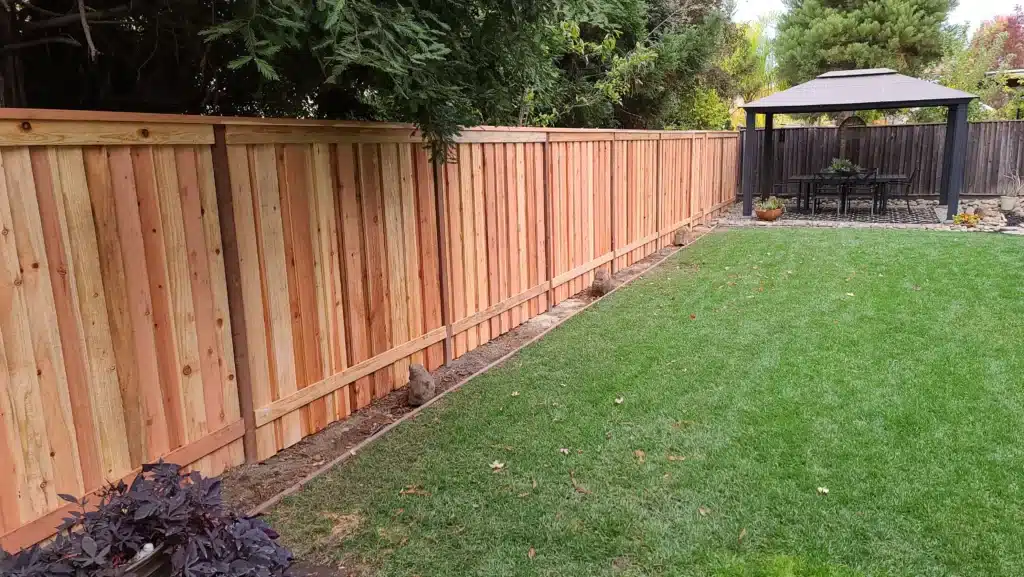
A shadow box fence is a semi-private wood fence where pickets alternate sides of the horizontal rails, giving both yards a finished look while allowing airflow through the gaps. It stands most commonly at 6 feet tall but does not block sightlines at an angle. Choose it for shared property lines where a two-sided appearance and wind resistance matter more than complete screening.
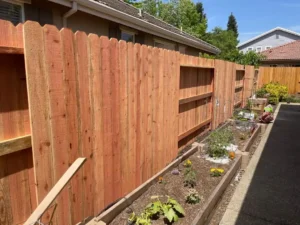
A shadow box fence is a semi-private wood fence with pickets attached to alternating sides of the horizontal rails. Because the boards trade sides, the fence looks finished from both yards and air moves through it. You can still see through the gaps at an angle, so it isn’t full privacy. If you’re comparing wood fence styles, this is the honest version, so you pick the right design the first time.
What Is a Shadow Box Fence?
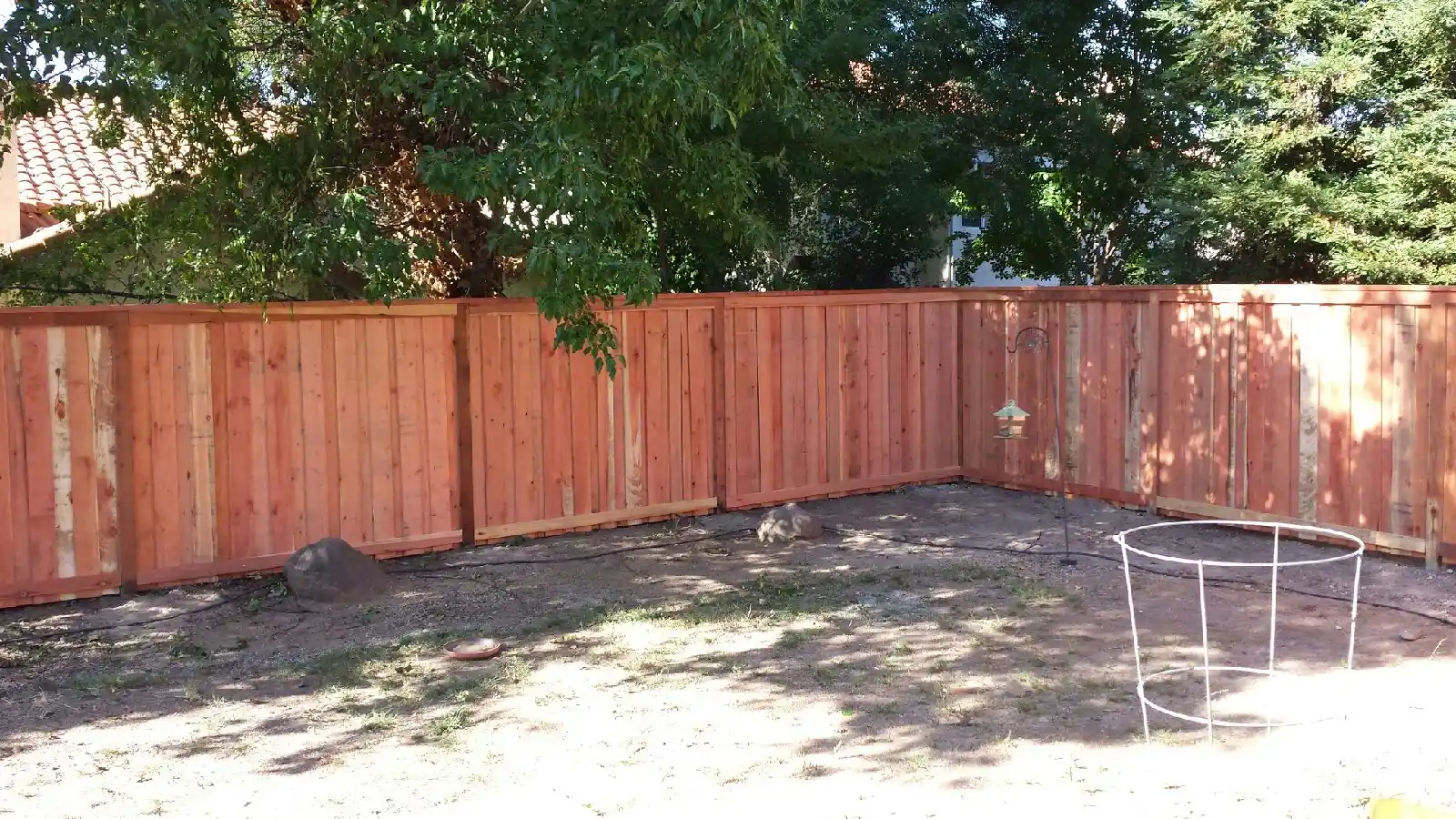
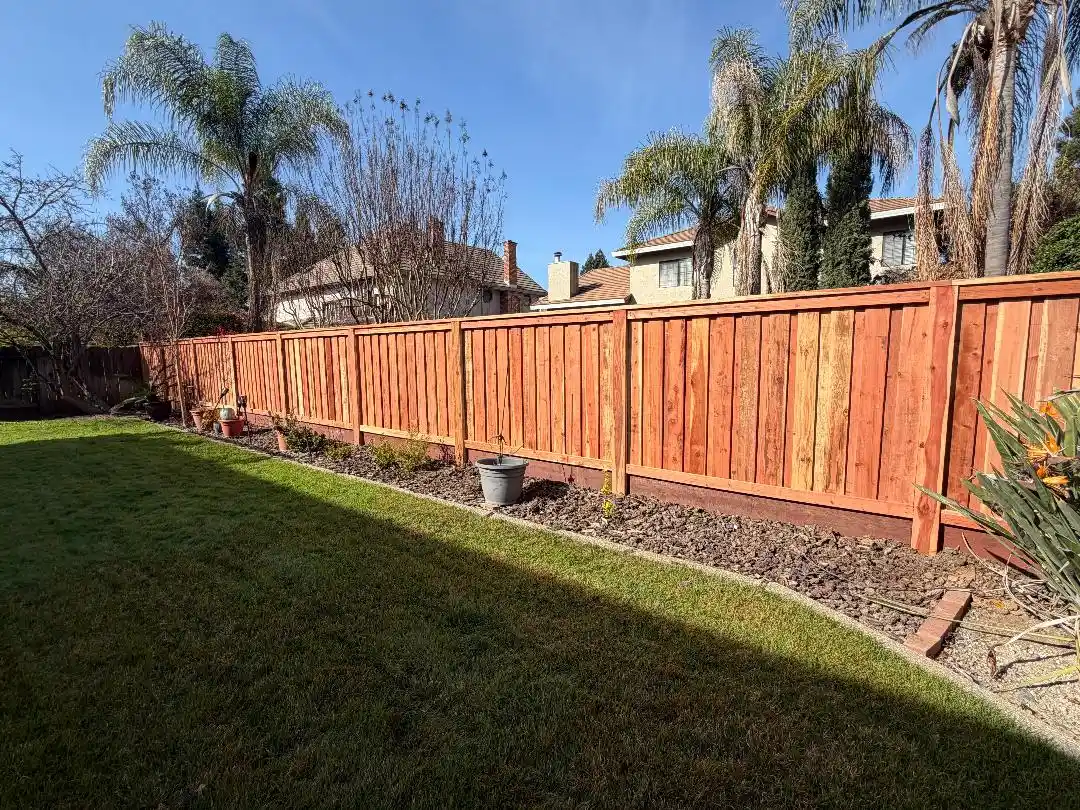
Posts go in first, set roughly 6 to 8 feet apart. Two or three horizontal rails span between them. Then pickets get fastened in an alternating pattern: one board on your side, the next on your neighbor’s side, each wide enough to overlap the gap behind it. That offset creates the layered look and the shadow lines the style is named for. Most run about 6 feet tall, though heights vary by yard and by code. You’ll see it spelled both “shadow box” and “shadowbox.”
Can You See Through a Shadow Box Fence?
Straight on, the sightlines are mostly blocked. Walk past at an angle and you’ll see through the gaps. That’s the design working as intended, not a defect.
Gaps also change, because wood shrinks and swells as moisture content changes, and movement across the grain is much greater than along the length of a board, according to the USDA Forest Products Laboratory. If the angled view bothers you, tell us at the estimate and we’ll recommend a tighter layout.
Shadow Box Fence Pros and Cons

- Looks finished from both sides, which suits a shared property line.
- Visual depth that a flat fence doesn’t have.
- Airflow and filtered light through the yard.
- Less solid surface to wind than a comparable solid fence.
- Not complete privacy at an angle.
- More boards means more material and more surface to stain.
- Layout precision matters; uneven spacing shows immediately.
- Access may be needed on both sides of the line.
- Heavier gates need reinforced gate posts.
Shadow Box Fence vs. Privacy Fence vs. Board-on-Board
Solid privacy or stockade puts every picket on one side, edge to edge. Board-on-board keeps pickets on the same side but overlaps their edges for maximum screening. Shadow box alternates them on opposite sides of the rails. Unlike a solid fence, it never fully blocks the view, so choose solid or steel if security and screening outrank the two-sided look.
| Style | Privacy | Airflow | Two-sided look | Best for |
|---|---|---|---|---|
| Solid privacy | High | Low | No | Maximum screening |
| Board-on-board | Highest | Low | Partial | Every sightline closed |
| Shadow box | Semi-private | Good | Yes | Shared, windy boundaries |
Terminology gets used loosely across the industry, so confirm the picket layout in writing. Shadow box uses more boards than the simplest solid fence, so it typically costs more to build. Enter your dimensions in our Fence Price Calculator for a ballpark.
Is a Shadowbox Fence the Same as a Good Neighbor Fence?
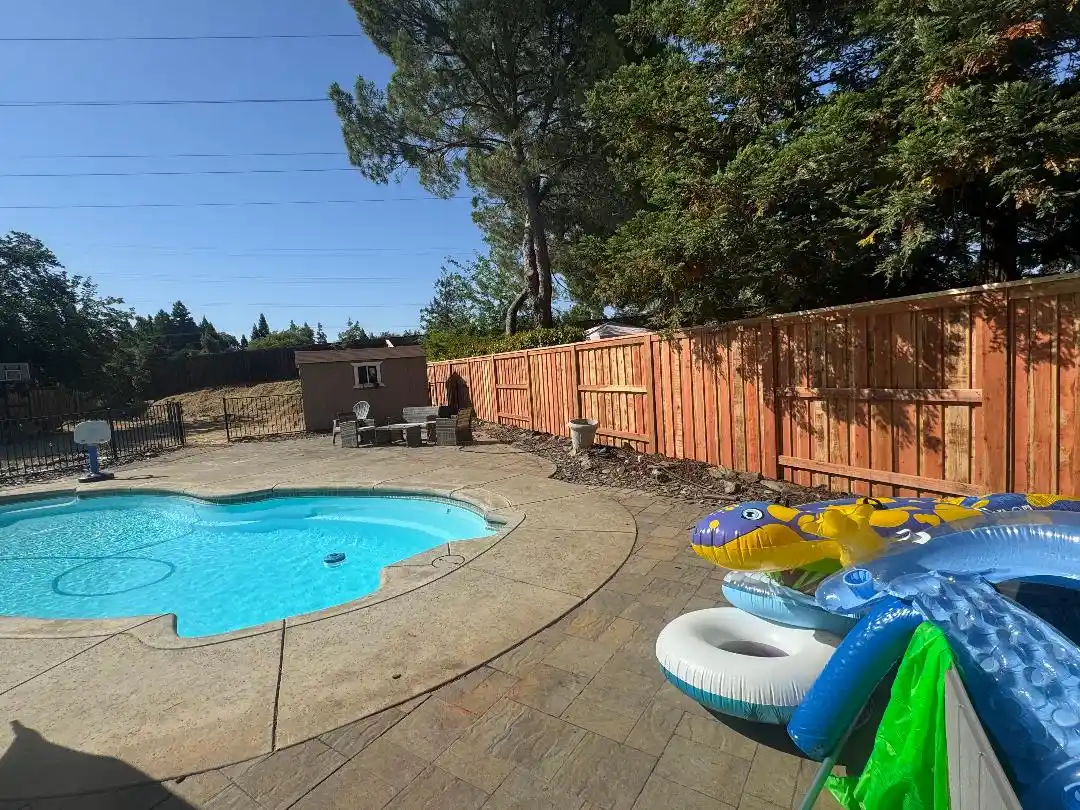
Sometimes, not always. Nationally, “good neighbor fence” loosely describes any fence that looks finished from both sides. Around Sacramento, it often means full panels that alternate direction, so each neighbor gets some picket-side and some rail-side runs rather than individual alternating pickets. Have the layout written into your specification.
Materials, Styles, and Ways to Customize the Design
Redwood and cedar bring natural durability, and pressure-treated pine and vinyl versions are common too. Use material rated for the job: AWPA UC3B for exposed above-ground pickets, UC4A for ground-contact posts. Pair wood with corrosion-resistant fasteners, and ask whether Bolt-Up Hidden Steel Posts add strength and a clean seamless look to your design.
- Dog-ear pickets, the traditional look
- Flat-top for something more contemporary
- Scalloped for a decorative curved top
- Horizontal pickets for a modern line
- Cap and trim boards to finish the top
For finish, penetrating semi-transparent or pigmented stains weather by eroding instead of cracking and peeling. There’s no universal interval, so follow the product instructions and log when the fence was last coated.
What Sacramento Homeowners Should Check Before Installing
- City vs. county. The City of Sacramento generally requires no permit for a fence not over 7 feet, but zoning limits front and street-side fences to about 4 feet and rear and side yards to about 6 feet. Unincorporated Sacramento County allows roughly 3 feet solid or 4 feet semi-open picket in front yards, and 7 feet at side-street and interior yards. Whether a shadow box counts as semi-open picket is your planning department’s call, so start with our Fence Ordinance Quick Links.
- HOA. Check architectural approval and your CC&Rs before ordering.
- Shared lines. California Civil Code §841 presumes neighbors benefit equally and share reasonable costs, and requires 30 days’ written notice to seek contribution. See our California good neighbor fence law guide.
- Utilities. Post holes are excavation, so call California 811 at least 2 working days and not more than 14 calendar days before digging; tickets are generally valid 28 calendar days.
- Pools. Under Health & Safety Code §115923, a qualifying pool enclosure must be at least 60 inches tall, leave no more than 2 inches of clearance beneath, block a 4-inch sphere, and have no handholds or footholds; permitted pool projects need at least 2 of 7 drowning-prevention features under §115922. A wood shadow box isn’t automatically compliant, since rails and layered boards can create climbable surfaces, so your building authority has to review the design.
- Fire risk. CAL FIRE recommends noncombustible fencing where it attaches to the house, and statewide Zone 0 rules are still being finalized, so confirm with your local fire authority.
Frequently Asked Questions
Is a shadowbox fence more expensive?
It uses more boards and labor than the simplest solid fence, and wood choice drives the rest. Get a free estimate for a firm number.
What are the cons of a shadow box fence?
It isn’t fully private at an angle, there’s more surface to maintain, and gates need reinforced posts.
What is the purpose of a shadow box fence?
Semi-private screening that looks finished from both yards, with airflow coming through, which makes it ideal for shared property lines.
How do you shadow box a fence?
Set posts roughly 6 to 8 feet apart, run the rails, then start attaching pickets on alternating sides with consistent spacing. Plumb posts and even spacing make or break the look.
Get a Free Fence Estimate
If a previous contractor let you down, we get it. That’s the reason this company exists. We’re licensed, bonded, and insured (CSLB License #979657), our crews are background-checked W-2 employees, and our pricing is flat with zero hidden fees. Our written guarantee means the job isn’t done until you give the thumbs up, and we clean up because we’re guests on your property. Your estimate spells out picket layout, posts, rails, gates, removal, and cleanup for your project in writing. Financing is available for Sacramento-region residents. Call Us or Book Online to get a free fence estimate.