Key Takeaway
Solar fence lights are wire-free fixtures powered by a photovoltaic panel that charges a battery during the day and automatically switches the LED on at dusk. They work best for accent lighting, fence-line definition, deck and stair wayfinding, and gate visibility, but are not a substitute for security lighting. Panels need roughly four to six hours of direct sun daily, and warm white fixtures rated IP65 or better with replaceable batteries deliver the best long-term value.
Solar fence lights are wire-free outdoor fixtures powered entirely by the sun. The panel charges a battery during the day, and the light switches itself on after dark. They’re a genuinely affordable way to add accent light, define a fence line, and make steps or a gate easier to find at night, as long as the panel gets decent sun. Solar lights are much less dependable in shade, and they are not a substitute for real security lighting. This guide is written for homeowners planning to add lights to an existing wood, vinyl, steel, ornamental iron, or chain link fence, or to the deck, balcony, and patio sitting next to it, from the point of view of people who repair fences for a living. What to buy, what drives the price, where to put it, and how to get it installed without wrecking the fence. Because nobody wants to drill forty holes in a fence they just paid for.
How Do Solar Fence Lights Work?
Every solar fence light has four working parts:
- A small photovoltaic panel that converts sunlight into electricity during the day.
- A rechargeable battery that stores that solar power for later.
- An LED that draws from the battery after dark.
- A light sensor that handles dusk to dawn switching automatically.
That’s the whole system, and it explains almost everything people complain about. The fixture spends at night exactly what the panel banked during the day. A shaded panel means a short, dim night. A clean panel in open sun means a longer, brighter one. Nothing about solar lights changes that arithmetic.
The Department of Energy makes the same point about any photovoltaic system: the energy reaching a panel changes with your location, the time of day, the season, the weather, and shade from trees, eaves, and structures. Some solar fence lights use lithium-ion batteries, which tend to be more efficient than older chemistries. Some skip the dusk sensor in favor of motion activation or a timer. Higher-end fixtures add features like multiple brightness modes, adjustable heads, or a separate panel on a short cable. The basic physics doesn’t change.
Are Solar Fence Lights Worth It?
For ambience, boundary definition, and modest wayfinding, yes. The price per fixture is low, there’s no wiring and no trenching, they cost nothing to run once installed, and the LEDs last a long time with almost no attention. You can put a solar fence light almost anywhere a fastener will hold, limited mainly by where the sun hits.
Where solar lights disappoint people is when the expectations were wrong from the start.
Where Solar Fence Lights Work Well
- Accent light along a fence line, so the yard has an edge after dark instead of a black wall.
- Patio and backyard ambience for evenings outside.
- Deck railings, deck posts, and the stair treads leading down to the lawn.
- Steps, grade changes, and basic walkway wayfinding, which is a real safety improvement when family members are coming and going after dark.
- Gate and address visibility for guests and deliveries.
- Garden beds and landscape edges.
- Rentals, or anywhere running wire isn’t practical or permitted.
When a Solar Light Is the Wrong Tool
Skip solar on a fence line that sits in shade most of the day. Skip it anywhere you need light reliably on all night, every night, because runtime depends on how the day went. Skip it for high-output security lighting, for anything a code or an insurance company requires, and for spots that take direct sprinkler blasting, mower impact, or standing water.
DarkSky is blunt about the security question: a bright light can create as much glare as visibility, and brighter does not automatically mean safer. A soft post-cap glow tells you where the property line is. It is not a security system, and it should not be sold to you as one.
How Outdoor Solar Lights Compare to Wired Low-Voltage Post Lights
Wired low-voltage systems run off a transformer and a timer, so they light up on schedule regardless of how cloudy the week was. That reliability comes at a higher installed price, since somebody has to trench the cable, set the transformer, and wire each fixture. Solar outdoor lights flip that equation. The fixture price is modest, the installation is a screwdriver and twenty minutes, and the ongoing power price is zero. What you trade away is consistency. If you want post lights that come on at the same brightness every single evening from dusk to dawn, wired is the honest answer. If you want a warm glow along the fence and on the deck most nights, solar power does the job for a fraction of the effort.
Types of Solar Fence Lights (and Which Suits Your Fence)
Search results lump a 3-lumen deck marker and a 500-lumen motion fixture into the same comparison table. They do completely different jobs. Start with the type, then the product, then the price.
| Type | Look / effect | Best use | Sun-placement flexibility | Mounting concern |
|---|---|---|---|---|
| Solar post lights (post caps) | Soft glow at the top of each post | Fence-line definition, deck posts, rhythm along a run | Excellent (nothing shades a post top) | Must match actual post dimensions |
| Face-mounted wall lights / downlights | Washes light down the fence face | Patio walls, gate areas, seating zones | Fair, panel faces outward | Two screws into a rail or post, not a picket edge |
| Solar deck lights and stair lights | Low, directional pool of light | Deck boards, stair risers, path edges | Fair to poor if mounted low | Small fasteners, easy to overtighten |
| Solar string lights | Decorative, overhead | Patios, pergolas, gatherings | Good, panel mounts separately | Tension and attachment points, wind |
| Motion-sensor fixtures | Off, then bright on approach | Gates, side yards, dark corners | Fair | Aiming and neighbor light spill |
| Remote-panel fixtures | Any of the above | Shaded fence lines | Best | Running and securing the short panel cable |
Solar Fence Post Cap Lights and Post Lights
Fence post cap lights are the most popular option, and usually the best-charging one, because nothing shades the top of a post. Solar post lights are sold to fit standard 4×4, 5×5, and 6×6 posts, and some change colors on a cycle, which is fun for about a week. The same caps work on deck posts and stair newels, which is why a single purchase often lights the fence and the deck together.
Face-Mounted Solar Wall Lights and Downlights
These bolt to the fence face and throw light downward onto the boards or the ground. Good near a patio or a gate. Most use two screws per fixture and include a sticker template for marking, which keeps the installation square and puts the two holes where you meant them.
Solar Deck Lights and Solar Stair Lights
Small, low-output, directional. Solar deck lights are ideal on railing caps, stair risers, and the bottom rail of a fence beside a path. Because they sit low, check that nothing shades them at midday. On a stair run, mount one light every second or third riser rather than every one. Your eye only needs the edge of the tread, not a runway.
Solar String Lights for the Patio
Best for patios and pergolas rather than the fence itself. The panel mounts separately, so you can put it in the sun and the bulbs where you want atmosphere. Over a patio table or along a deck rail, solar patio lights carry the whole evening on their own.
Motion-Sensor LED Solar Lights
Stay dark until something moves, then light up hard. Detection range on consumer models is often listed around 26 feet, but treat that as a product spec, not a standard. Motion modes also tend to stretch battery life further than always-on modes, which matters on a short winter charge.
Fixtures With a Separate Solar Panel
This is the fix for a shaded fence line. The panel goes where the sun is, on a roof edge, a post top, or a sunny section of fence, and the light goes where you actually want it. Expect a modest price premium for the flexibility, and expect to spend a few minutes securing the cable so a weed trimmer doesn’t find it.
Solar Deck Lights, Patio Lights, and Garden Lights Beyond the Fence
Most people who shop for solar fence lights end up lighting more than the fence. That’s usually the right instinct, because a fence line glowing on its own looks like a runway, while a fence, a deck, and a patio lit together read as one finished set of outdoor spaces.
On a deck, the useful spots are the post caps, the underside of the top rail, and the stair stringers. Solar deck lights mounted under a rail bounce light onto the deck boards without shining into anyone’s eyes. On a patio, a couple of face-mounted downlights on the adjacent fence plus string lights overhead will do more for the space than a dozen scattered stakes. In the garden, keep it restrained. Low fixtures throwing warm light along bed edges and at the turns in a path read as intentional. A light at every plant reads as a parking lot.
One practical note: garden and patio fixtures get bumped, hosed, and buried by growth faster than fence-mounted ones. If a stake light keeps vanishing into the salvia, move it to the fence or the deck rail where it stays put and stays clean.
Seven Things to Check Before You Purchase

1. Decide What the Light Is Actually For
Decoration, wayfinding, gate visibility, and motion-triggered security are four different jobs needing four different fixtures. Write down the job before you shop. Most bad solar-light purchases are purpose mismatches, not product failures.
2. Measure the Daily Sun at That Exact Spot
Walk out in the morning and again mid-afternoon and look at the specific post you plan to use. Solar fence lights charge fastest in open, unobstructed sun, and common manufacturer guidance asks for roughly four to six hours of it, though some manuals call for eight, and a few want ten to twelve for full performance. Check the manual for the fixture you’re buying.
3. Confirm Actual Fence Post and Fixture Dimensions
Nominal is not actual. A vinyl post sold as 5×5 may not measure 5×5, and a wood 4×4 usually measures less. Put a tape on the fence post before you order post caps, and check the fixture’s stated inside dimensions. Deck posts wrapped in trim or sleeves need measuring too.
4. Brightness and Beam Pattern, Not Just Lumens
A shielded downlight at 40 lumens can be more useful than a bare 200-lumen globe that throws most of its output sideways into the neighbor’s yard. Look at the beam description and the shape of the housing, not only the number on the box.
5. Color Temperature (Warm White Wins)
Correlated color temperature is measured in kelvins. Roughly 2700 to 3000K reads warm and slightly yellow. 4000K and up reads cool and blue, which looks clinical against wood and landscaping. DarkSky recommends 3000K or lower for residential outdoor lighting, and that’s a good rule for a fence, a deck, and a patio alike.
6. IP Rating and Housing Material
Shoppers hunting for solar outdoor lights waterproof enough to sit through a sprinkler cycle should start here. IP ratings come from IEC 60529. The first numeral covers solids and dust on a 0 to 6 scale, the second covers water on a 0 to 9 scale. IP44 handles splashing water. IP65 means dust-tight and protected against water jets. IP67 adds protection from temporary immersion. IP65 is a sensible preference for a weather resistant fixture on an exposed fence, and a housing built to withstand rain and irrigation overspray will outlive a thin one. Just know that an IP rating says nothing about UV degradation, irrigation chemicals, corrosion, impact, or a sloppy installation.
7. Replaceable Battery, Parts, and a Written Warranty
Rechargeable batteries are consumables. Manufacturer guidance commonly lands somewhere in the one to three year range, with one maker citing two to three years. None of that is a guarantee. Favor fixtures with an accessible battery compartment, a clearly stated battery type, available replacement parts, and a written product warranty. A light with a sealed battery has a fixed lifespan no matter what you paid.
What Drives the Price of Solar Fence Lights
We don’t publish product prices here, and any number you read in a blog post goes stale in a month. What’s worth knowing is what actually moves the price, so you can tell a fair value from an expensive logo.
- Panel size and battery capacity. This is the real price driver. A bigger panel and a larger battery mean longer dusk to dawn runtime, and they cost more to build.
- Housing material. Cast aluminum and stainless hardware carry a higher price than thin plastic, and they hold up far better through harsh weather and a Sacramento-region summer.
- Replaceable versus sealed battery. A serviceable fixture at a higher price often works out cheaper over five years than two rounds of disposable ones.
- Features. Motion sensors, dimming modes, remote panels, and adjustable heads all add price. Some earn it. Color-change modes rarely do.
- Quantity. A multi-pack looks like a great price on a per-light basis, which is why people buy twelve and install five.
Compare the total installed price honestly. Solar fence lights have no wiring price, no transformer, and no electrician, so even a premium fixture usually lands well under a wired run of the same length. Just remember the fence underneath them is the bigger investment, and no amount of lighting fixes a failing one.
How Many Lumens Do Solar Fence Lights Need?
There is no single correct number, and anyone who gives you one is guessing. Lumens measure the total light leaving the fixture. What you actually care about is how much illumination lands on the walking surface or the fence face, and that depends on beam angle, mounting height, shielding, spacing, and how reflective the fence is. Illuminance is measured in footcandles, and one footcandle equals one lumen per square foot. Two lights with identical lumen ratings can produce wildly different results on the ground.
Consumer solar fixtures run from about 3 lumens to 1,200. Most soft ambient fence lighting lands somewhere in the 10 to 100 lumen band, though that’s an observation about the market, not a specification. Start with the job:
- Decoration or boundary definition: gentle, low output. You’re marking a line, not lighting a room.
- Steps, stairs, and wayfinding: directional light that actually reaches the tread or the path surface.
- Gate or entry visibility: more output, aimed carefully so it doesn’t blind anyone walking up.
- Security: motion-controlled higher-output fixtures, or a properly designed wired system.
Buy one or two lights first. Live with them for a few nights before you commit to an entire fence run. The price of guessing wrong on two fixtures is nothing. The price of guessing wrong on twenty is a drawer full of returns.
How Far Apart Should Solar Fence Lights Be?
Ignore the “one light every eight feet” advice you’ll see repeated across product blogs. There’s nothing behind it. Real spacing depends on post layout, beam spread, mounting height, fixture output, the color of the fence, and how much ambient light is already in your yard from streetlights and neighboring houses.
A method that works:
- Light the places that matter first: the gate, the corners, the deck stairs, any grade change, and the seating area.
- Look at the result after dark. Not from the patio door, from the yard.
- Fill in only the dark gaps that genuinely bother you. Most people need fewer lights than they planned.
- Do a temporary layout before you drill anything. Tape or clamp the fixtures in position, leave them a night or two, then mark the holes.
Easy Installation on Wood, Vinyl, Metal, and Chain Link Fences

Wire-free doesn’t mean consequence-free. You’re putting fasteners into a structure that has to survive weather, wind, and gate slams for years. A few installation rules apply no matter what the fence is made of. Read both sets of instructions, the light’s and the fence manufacturer’s. Confirm your fence warranty before drilling or applying permanent adhesive. Use exterior-rated installation hardware, stainless or coated, because plain steel screws will streak rust down a fence face within a season. Mark with the included template, and drill a pilot hole rather than driving a screw cold into anything.
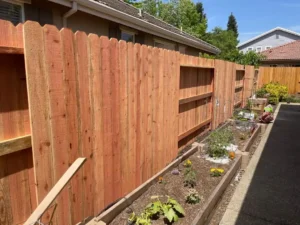
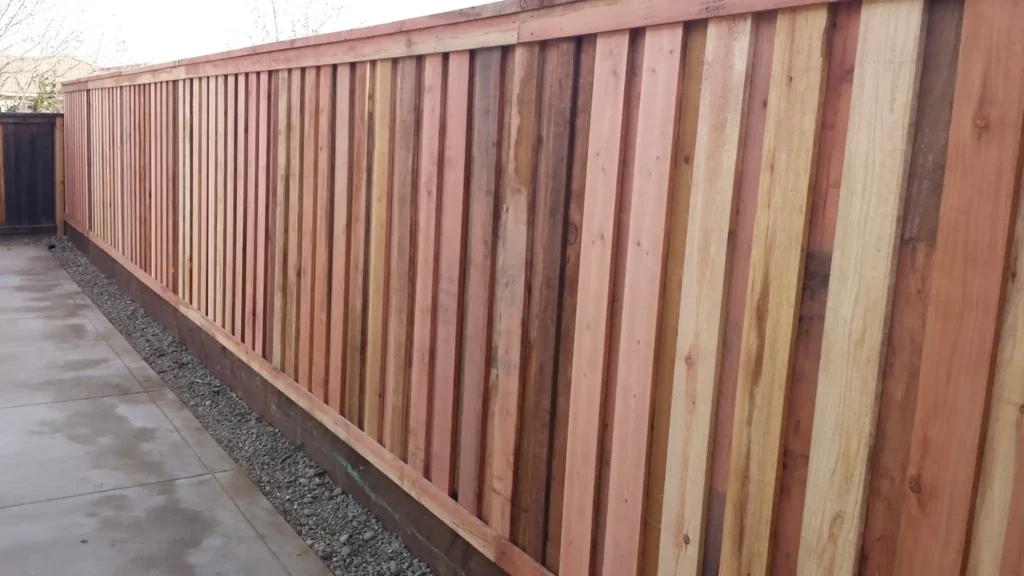
Wood Fences
Pilot holes and exterior-rated screws. Mount into rails and posts, which have real thickness, rather than into the thin edge of a picket where the screw will split the board. Never hide rot or a split picket behind a fixture, because the damage keeps spreading where you can’t see it. Watch for spots where the housing will trap water against the wood.
Vinyl Fences
Measure the actual outside post dimensions before ordering post lights. Prefer a compatible cap or a bracket that clamps rather than penetrates. Vinyl components are hollow, and overtightening a screw will dimple or crack the wall, especially in cold weather. Unnecessary drilling can also void the fence manufacturer’s warranty, so check that first.
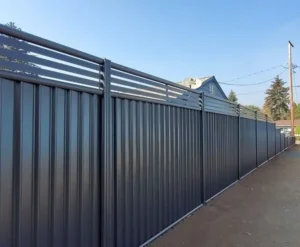
Ornamental Iron and Durabond Steel Fences
Use compatible clamps or brackets wherever possible. A field-drilled hole breaks the protective coating and becomes a rust point that will bleed down the fence long before the light fails. If you genuinely have to drill, touch up the coating on the bare metal, inside and out.
Chain Link Fences
Mount to the posts or the top rail with purpose-made clamps. Never hang weight on the fabric, which will distort and sag. Check that the light isn’t loose enough to rattle in wind, because chain link transmits every vibration along the run.
Decks and Stairs
On a deck, screw into the post, the rail, or a stair stringer, never into the face of a hollow sleeve or a composite cap that isn’t backed by framing. Keep solar deck lights out of the traffic path so nobody catches a toe on one, and keep stair fixtures below eye level so the light shows the tread instead of flashing at the person using it.
Gates and Automated Gates
Keep fixtures, brackets, and every fastener clear of hinges, latches, the gate opener, photo eyes, LOOP sensors, wiring, and the full swing or slide travel path. Added weight on a gate leaf changes how the gate hangs and how hard the opener has to work. If your gate is already dragging or hesitating, deal with that first. Solar powered gate openers are a separate subject entirely, and they’re a functional access system, not a decorative light.
Placement Tips for Better Dusk to Dawn Performance
- Give the panel an open, unobstructed view of the daytime sky. That matters more than compass direction on a fixture this small.
- Watch for tree canopy and eave shadows, and remember the seasonal trap: a post that bakes in July can sit in shade all December when the sun angle drops.
- Keep the solar panels clean. Dust and film cut charging and shorten the night.
- Check what else is lit nearby. A porch light or streetlight shining on the sensor can convince the fixture it’s still daytime, so it never switches on and you never get dusk to dawn operation.
- Aim light downward, onto the ground, the deck, or the fence face, not out at eye level.
- Use the lowest output that does the job, in warm white, with motion or timer features where they fit.
- Keep the light on your own property. Nobody’s neighbor has ever been grateful for a fixture pointed at their bedroom window.
California, Elk Grove, and Good Neighbor Fence Considerations
In the Sacramento region, sun is rarely the limiting factor for solar power. Shade is, and so is grime. Dust, pollen, irrigation overspray, and smoke season all build film on panels, so plan on wiping them a few times a year. In the foothill counties, snow sitting on a panel stops charging cold until somebody brushes it off.
On a shared good neighbor fence, ask before you mount anything, and put it in writing if you can. Think about where the light lands, not just where the fixture sits. Then check your HOA architectural guidelines and CC&Rs, because exterior lights frequently fall under them.
Elk Grove updated its residential exterior-lighting standards effective October 11, 2024. Under the current code, qualifying low-voltage landscape lighting under 15 volts is exempt from the main residential standards, outdoor string lighting is exempt when individual bulbs do not exceed 140 lumens, temporary seasonal lighting is capped at 90 consecutive days, and permanently installed exterior lighting that continuously blinks or flashes is prohibited on single-unit residential property. That does not mean every solar fence light is automatically exempt. Classification depends on the fixture, its voltage, where it’s placed, and how it’s used. Before you install an extensive, color-changing, or unusually bright system, confirm the current municipal code and your HOA rules. We’re a local company, and keeping track of regional fence and property ordinances is part of what we do.
Battery Life, Maintenance, and Troubleshooting
Runtime claims on the box assume a fully charged battery and best-case conditions. Shade, season, panel cleanliness, battery age, weather conditions, and lighting mode all cut into them. Most solar lights hold a charge for roughly six to twelve hours under good conditions, but an independent test of one fixture advertised at up to nine hours measured four hours in always-on mode, while its motion modes held up better. Never assume a solar fence light will stay lit all night, every night, from dusk to dawn.
Keeping Panels and Lenses Clean
A damp or soft cloth is all it takes. Skip abrasives and chemical cleaners, which can haze the panel or the lens. Rather than following a rigid schedule, check the panels whenever output drops off and whenever you’re already doing yard work.
Why Your Solar Fence Lights Are Dim or Not Turning On
- Confirm the switch is actually on. It sounds obvious. It’s also the most common cause.
- Peel off the protective film covering the panel if the instructions call for it.
- Check the spot for daytime shade you didn’t notice when the light was installed.
- Clean the panel and the lens.
- Look for a porch light or streetlight defeating the dusk sensor.
- Give it a full day or two of uninterrupted sun to reach a full charge before judging it.
- Open the housing and inspect the battery contacts for corrosion.
- Replace the rechargeable battery with the exact type specified.
- Look for water intrusion, fogging, or a cracked housing.
Recycling Old Rechargeable Batteries
The EPA is clear that rechargeable batteries, including lithium-ion, nickel-cadmium, and nickel-metal-hydride, do not belong in a curbside recycling bin. Take them to a specialized recycler, a participating retailer, an electronics recycler, or a household hazardous waste program. Tape the terminals or bag each one individually so they can’t short out.
Check the Fence Before You Add Lights
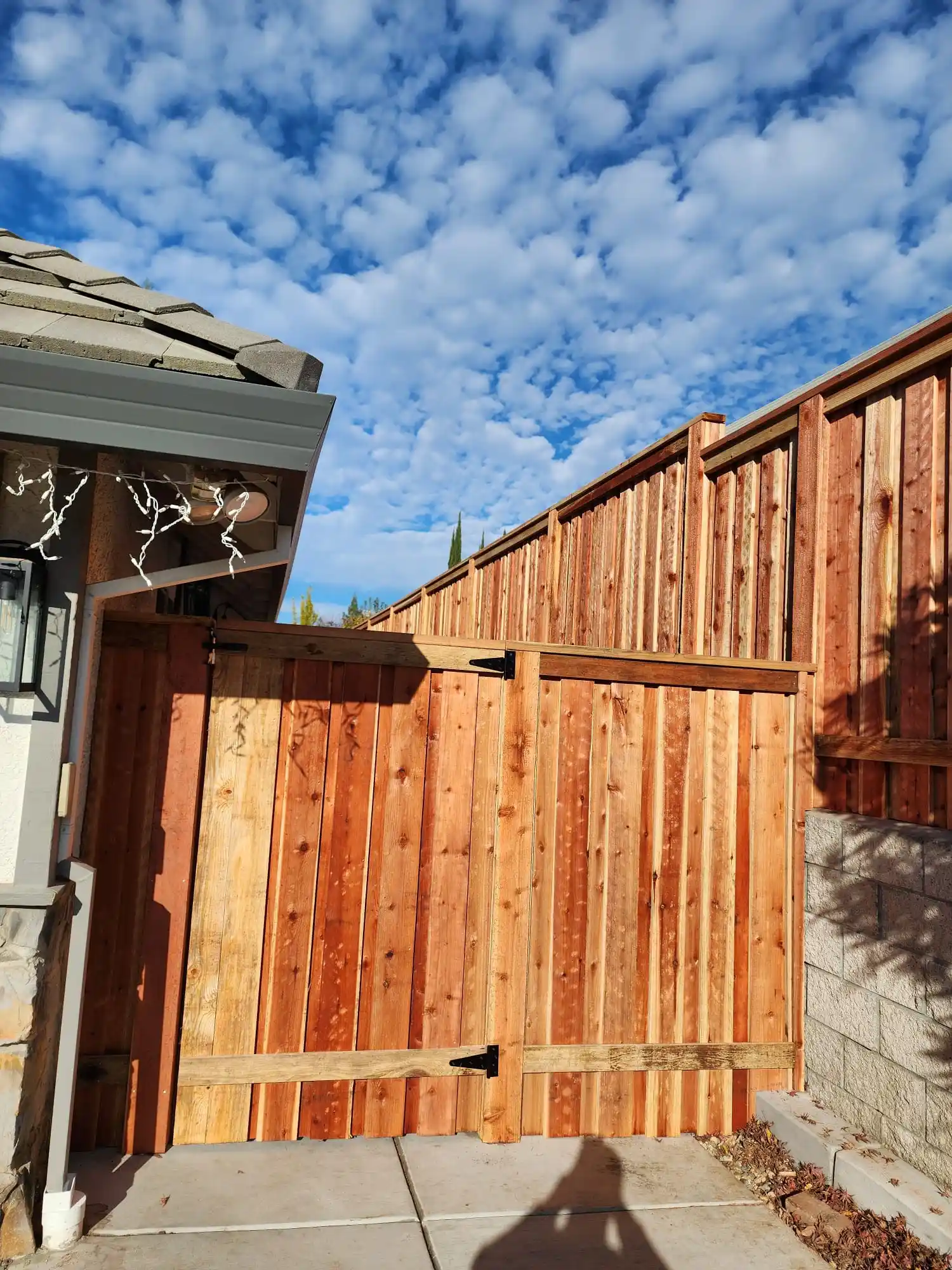
Walk the whole fence in daylight before you buy a single fixture. Push on the posts and see if any of them move. Look for rot at the base of posts and pickets, loose or missing boards, cracked or brittle vinyl, rust bleeding through failed coatings on steel or iron, and gates that drag or won’t latch cleanly.
A solar fence light screwed into a soft or split board will work its way loose within a year. And lighting a deteriorating fence doesn’t hide the problem, it advertises it, because now the leaning post is visible at night too. If the fence needs work, do the repair or replacement first, then light it. We handle repair, replace, and installation across every fence material, and on wood fences with failing posts, Bolt-Up Hidden Steel Posts are often a way to extend the life of a fence that’s otherwise in decent shape.
Frequently Asked Questions
What Are the Best Solar Lights for a Fence?
The best fixture is the one matched to the job you need done, sized to your actual post dimensions, warm white at 3000K or lower, rated IP65 or better, with a replaceable battery and a written warranty. Then mount it where the panel sees open sky. Everything else is preference.
What Are the Best Solar Lights for a Garden Fence?
Low-output warm fixtures aimed downward along beds and paths, usually solar deck lights or solar step lights. String lights work well over a seating area when the individual bulbs stay modest. Keep the spill off your neighbor’s property and off garden plantings you’d rather not highlight.
What Solar Lights Can Be Installed on Top of a Fence?
Solar post lights, sized to your actual 4×4, 5×5, or 6×6 post dimensions. Measure with a tape before ordering, because nominal sizes rarely match real ones. Post caps also tend to charge best, since nothing shades the top of a post.
Do Solar Fence Lights Need Direct Sunlight, and Do They Work in Winter?
They charge best in direct sunlight, and common manufacturer guidance asks for roughly four to six hours a day, with some models wanting more. On cloudy days they still charge, just less. Expect shorter, dimmer nights in winter and during long overcast stretches.
Are Solar Fence Lights Cheaper Than Wired Lighting?
Almost always, once installation is counted. There’s no trenching, no transformer, and no electrician, so the installed price of a solar run is a fraction of a comparable wired one, and the running price stays at zero. The tradeoff is consistency, not quality.
Can I Put Solar Lights on a Shared or Good Neighbor Fence?
Ask your neighbor first, in writing if you can, and talk about where the light will land. Check your HOA rules as well. Keep hardware out of shared structural members and off your neighbor’s face of the fence unless you’ve both agreed to it.
Get the Fence Right First
Solar fence lights are an affordable, easy upgrade when the panel gets real sun, the fixture matches the fence material, and the light is warm and aimed down. Add a few solar deck lights and some string lights over the patio, and the whole backyard changes character after dark for very little money. If the fence itself is leaning, rotted, rusting, or a gate is dragging, get that handled before you start drilling.
Fantastic Fence is licensed, bonded, and insured (CSLB License #979657), staffed by background-checked W-2 employees, with flat pricing, zero hidden fees, and a written guarantee. Three offices serve Sacramento, Placer, El Dorado, Yuba, Yolo, and Nevada counties. Call us or book online to Get a Free Fence Estimate.