Key Takeaway
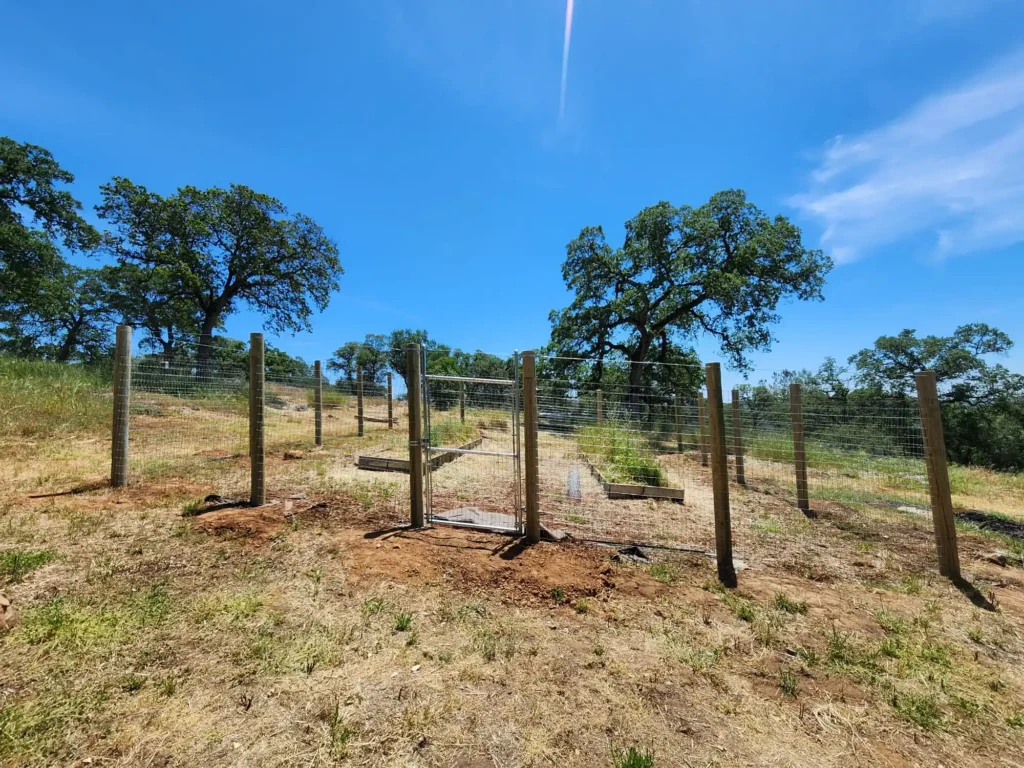
A T post fence uses driven steel line posts to support wire, mesh, or livestock panels, making it one of the most affordable fencing systems available. T posts are typically spaced 8 to 12 feet apart and driven 18 to 24 inches deep so the welded anchor plate is fully buried. They work well for pastures, garden exclusion, and dog runs, but cannot serve as corner, gate, or tension posts, which require separate braced terminal assemblies.
A T post fence uses driven steel line posts, shaped like a T in cross-section, to support wire, mesh, or livestock panels. T posts are typically set 8 to 12 feet apart and driven 18 to 24 inches deep so the welded anchor plate sits fully below grade. This guide walks you through whether a T post fence fits your property, and what makes one stand straight instead of leaning three seasons in. The core idea: a T post is a line post, not a complete fence system.
What Is a T Post Fence?
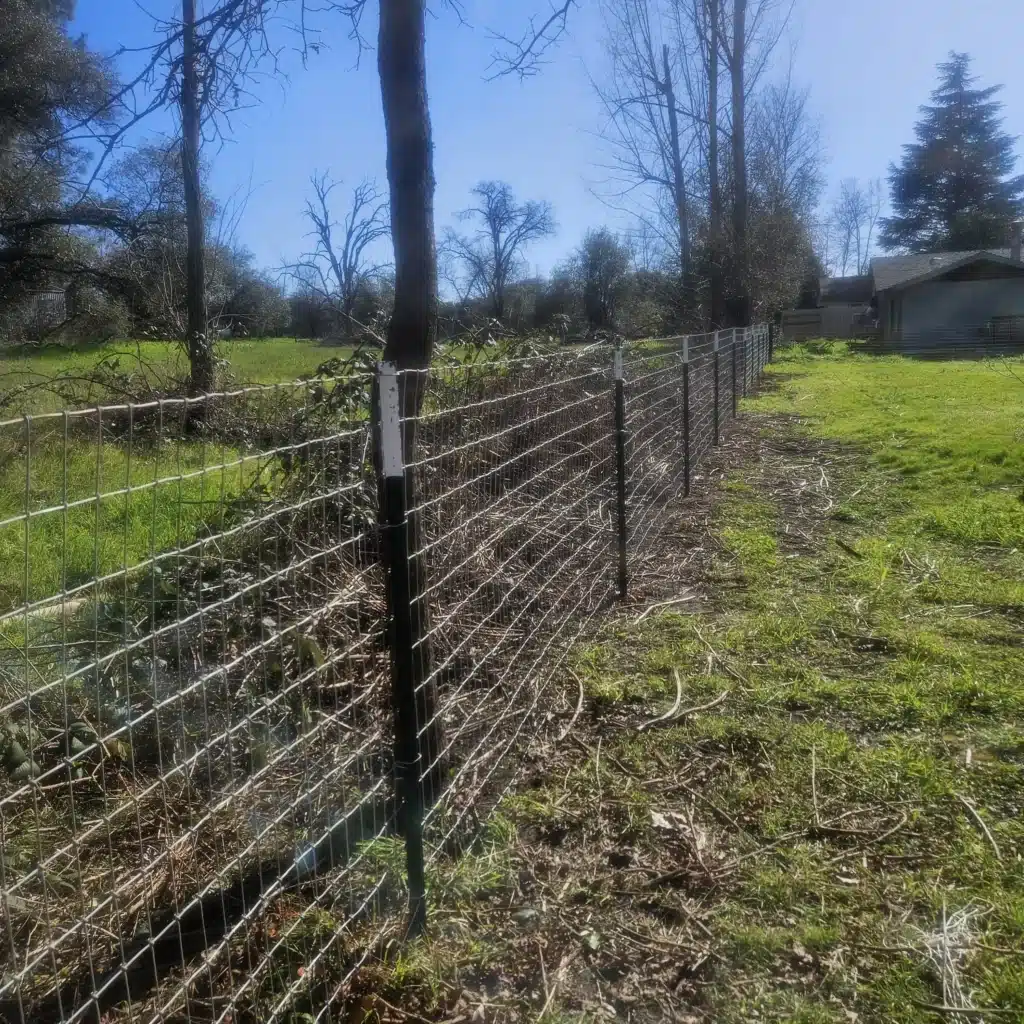
Three parts do the work. First, the T post itself: a studded steel line post rolled from rail-grade steel, with a carbon content stiff enough to resist bending and an anchor plate welded near the bottom to resist movement in the soil. Second, the fencing material those posts carry, whether that’s woven wire, welded mesh, or rigid panels. Third, the braced corner, end, and gate assemblies that actually hold tension. Metal T posts won’t rot, warp, or feed termites, and they drive straight into the ground, which makes this an affordable system compared with wood or vinyl fence posts.
T Post Fence Basics at a Glance
| Item | Typical guideline |
|---|---|
| T post spacing | 8 to 12 feet (10 to 12 feet is common) |
| Driving depth | 18 to 24 inches, or roughly one-third of fence height |
| Anchor plate | Fully buried, set perpendicular to the fence line |
| Stud direction | Studded face toward the pressure side |
| Corners, ends, gates | Braced fence posts, not T posts |
| Concrete | Not normally used for driven T posts |
| Safety caps | Recommended anywhere animals are present |
These are common guidelines, not universal rules. Wire type, soil moisture content, and terrain all change them.
T Posts Are Line Posts, Not the Whole Fence
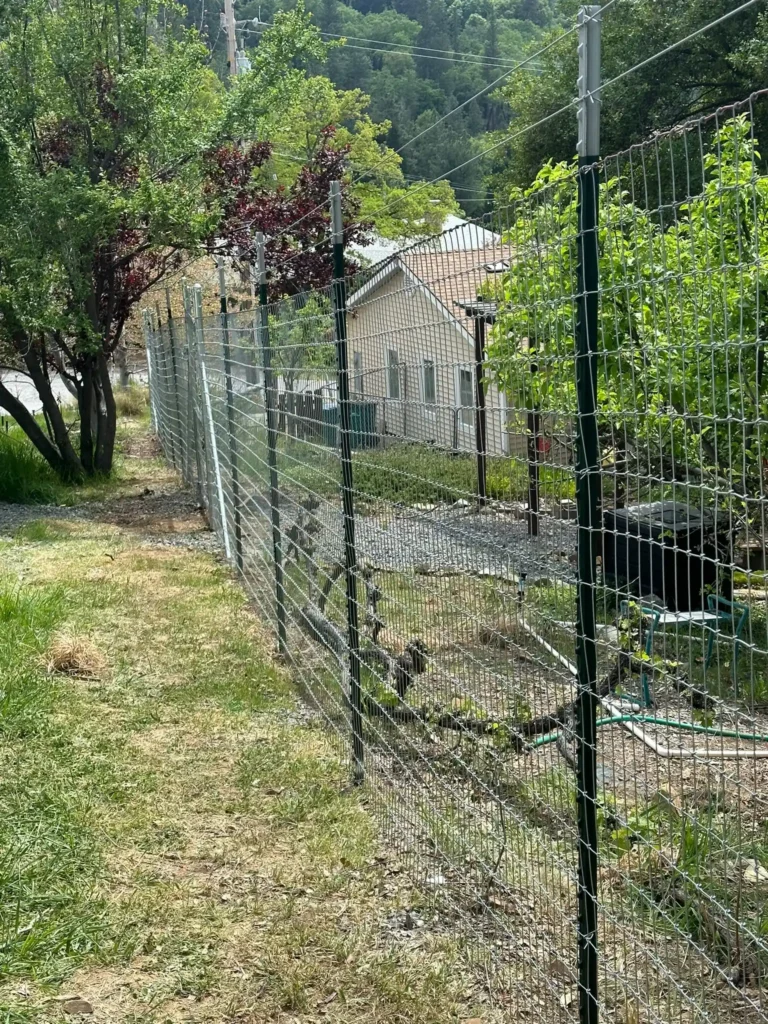
In a tensioned T post fence, the braced corner, end, and gate assemblies carry the pull. Line posts just support and space the wire. UGA Cooperative Extension makes this load path clear, and the USDA NRCS fence specification requires bracing at terminal points, gates, tie-off posts, corners, and any alignment change greater than 20 degrees. So never use an ordinary T post as a gate post or a tension corner. It will bend, or it will be pulled out of the ground. The old advice about setting a wood post every tenth T post isn’t an engineering rule either. Brace placement depends on your wire system, terrain, and run length. T posts are designed to carry wire between sturdy terminals, nothing more.
What T Post Fences Are (and Aren’t) Good For
| Good fit | Choose something else |
|---|---|
| Pasture and livestock lines | Horse fencing |
| Agricultural boundary fence | Privacy fencing |
| Garden and deer exclusion with welded wire mesh | Residential curb appeal |
| Dog runs and temporary partitions | Security fencing and heavy gates |
| Rigid livestock panels, rotational grazing | Pool barriers |
Penn State Extension does not recommend metal T posts for horses because of impalement risk, and plastic caps alone don’t make an otherwise unsuitable fence safe. Wire and T posts also aren’t a compliant pool safety fence.
How Far Apart Should T Posts Be Spaced?
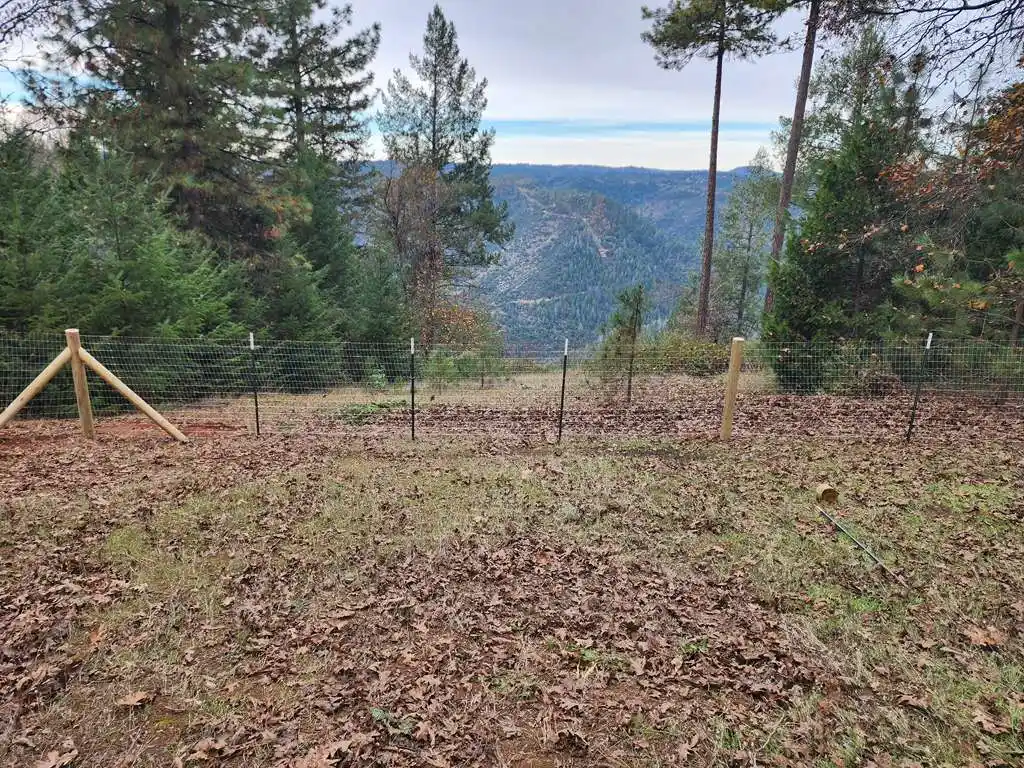
Start with 8 to 12 feet between T posts. Then adjust. Woven wire, welded wire, high-tensile, and rigid panels all behave differently across a span, and heavy animal pressure, soft soil, slopes, and dips all call for tighter spacing. At the specification level, USDA NRCS allows up to 15 feet for woven wire and 15 to 30 feet for barbed wire depending on conditions and wire stays, which is engineered agricultural practice rather than a residential rule. You’ll find UGA guidance tightens spacing from 12 feet to 8 feet as a curve gets sharper. Tighter spacing raises the quantity of steel you need, so measure the run first. More on post selection in our Fence Posts 101 guide.
How Deep Should T Posts Go Into the Ground?
Drive T posts 18 to 24 inches, and cross-check against the one-third-of-height rule of thumb. The anchor plate has to end up completely below grade, because that plate is what keeps the post from being pulled over as the wire loads it and the soil shifts. For a 4-, 5-, or 6-foot fence, buy post lengths that leave room for that burial depth rather than trimming your fence height. Soft soil means longer posts or a deeper set. Rocky ground may need a pilot hole. No concrete for ordinary T posts.
Which Way Should T Posts Face?
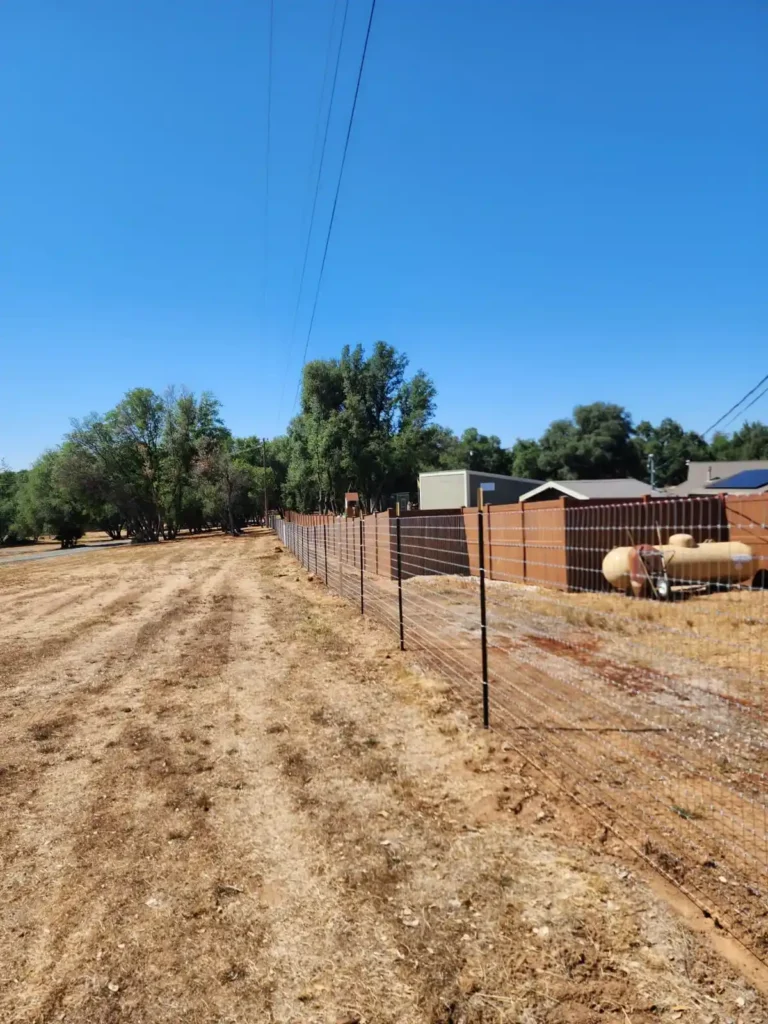
Set the anchor plate perpendicular to the fence line so it works against the direction of pull. Point the studded face toward the pressure side: inside toward the animals for containment, outward for deer and wildlife exclusion. Clips wrap around the back of the post and attach the wire tight against that studded face, where the studs stop it from sliding down. Studs plus a buried plate are where T posts get their superior strength over a plain U post of the same length.
Shopping List: T Posts, Fence Posts, Clips, Caps, and a Post Driver
- Braced terminal, corner, and gate fence posts
- T posts for the line, quantity based on run length and spacing
- Wire, mesh, or rigid panels
- T post clips, plus insulators if you’re running electric wire
- Safety caps
- Tubular post driver, string line, gloves, and eye protection
T posts are usually sold in bundles or by the pallet, and weight per foot matters as much as length when you shop. Heavier steel buys durability on a long run. Count your terminals and gate posts as separate items from your T posts, since that’s where most material lists go wrong on quantity. The two items people underbuy are clips and caps.
How to Install a T Post Fence, Step by Step
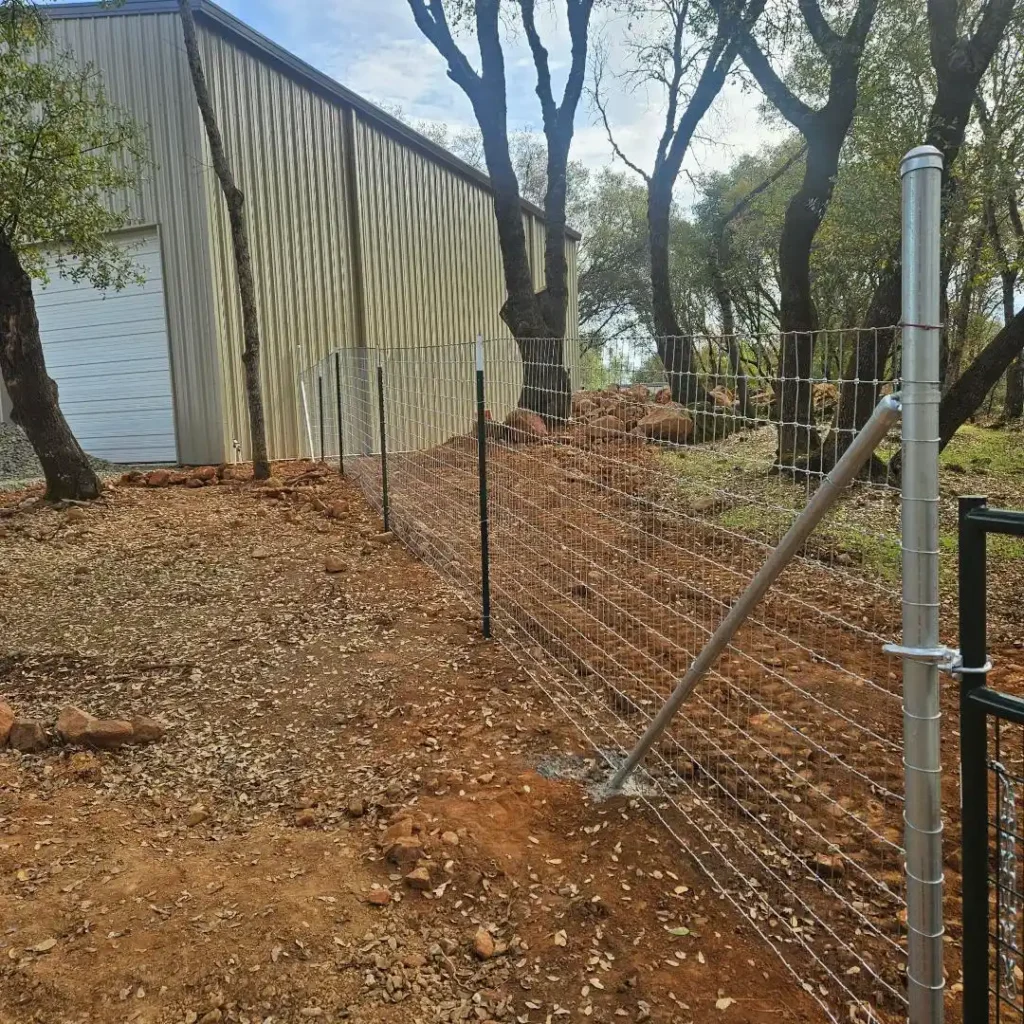
- Confirm the fence’s purpose and walk the intended line.
- Verify property lines, easements, HOA rules, and local height limits.
- Call 811 before you drive anything.
- Set and brace corner, end, and gate fence posts first.
- Run a guide string between terminals.
- Mark your T post spacing along the string.
- Drive T posts until the anchor plate is buried.
- Stretch or hang wire against the studded face without over-pulling.
- Install clips, insulators, and caps.
- Walk the line and check tension, ground gaps, and sharp tops.
Common T Post Fence Mistakes
- Leaning T posts: spacing too wide, or the anchor plate never got buried.
- Sagging mesh: wrong wire for the span.
- Wire lifting at dips and low spots.
- Failed corners from using a T post as a terminal.
- Loose clips that let wire slide down the post.
- Uncapped T posts around livestock.
- Electric wire grounding out without insulators.
- Driving posts before utility marking.
When to DIY and When to Hire a Fence Contractor

A short garden run of T posts, a temporary partition, or a rotational grazing line is reasonable weekend work. Bring in a professional for long permanent boundaries, heavy livestock pressure, horse properties, real slope, gates and access systems, uncertain property lines, pool barriers, and commercial or security fencing. Properly braced systems handle pressure that a DIY line of T posts won’t. We’re licensed, bonded, and insured (CSLB License #979657), we staff background-checked W-2 employees, and we quote flat pricing with zero hidden fees and a written guarantee. See our agricultural and farm fencing work.
A Note for Elk Grove and California Property Owners
California requires you to contact 811 at least two working days and no more than 14 calendar days before excavation, and driving fence posts counts (CSLB). USA North 811 treats closely spaced post locations as one continuous excavation area when described properly. In Elk Grove, fences are generally limited to 3 feet in a required front yard, 7 feet in required interior side and rear yards, and 3 feet in designated visibility areas, with open-view allowances in agricultural zoning and barbed wire generally restricted to agricultural, open-space, or industrial areas. Fences not over 7 feet are currently permit-exempt, pool barriers excluded. Permit exemption doesn’t waive zoning, setbacks, easements, or HOA rules, so confirm with the City and your CC&Rs, or use our Fence Ordinance Quick Links.
Frequently Asked Questions
How deep should T posts be in the ground?
Drive T posts 18 to 24 inches, roughly one-third of the fence height, with the anchor plate fully buried. Go deeper or use a longer post in soft soil.
Which is better, a T post or a U post?
T posts are heavier duty, with studs and a welded anchor plate built for wire fencing. U posts suit lighter, shorter-term jobs like garden mesh and sign posts.
How much does a 10 ft T post cost?
Pricing moves with steel weight, post length, and quantity, since posts are often sold bundled or by the pallet. For installed pricing, use our Fence Price Calculator or request a free fence estimate.
What are the disadvantages of using T posts?
No privacy and limited curb appeal. T posts can bend under heavy pressure, can’t serve as gate or tension corners, and uncapped tops are a hazard around animals. They aren’t a pool safety barrier.
Can T posts be used for corners or gates?
No. Corners, ends, and gates need braced terminal assemblies. The USDA NRCS specification requires bracing at any alignment change greater than 20 degrees.
Get a Free Fence Estimate
If a fence contractor has already let you down, we understand the hesitation. We answer the phone, we show up, and the job isn’t finished until you give the thumbs up in writing. Flat pricing, zero hidden fees, and a thorough clean-up when we’re done. Financing is available for Sacramento-region residents. Our Elk Grove office is at 9245 Laguna Springs Dr, Suite #228, and we serve Sacramento, Placer, El Dorado, Yuba, Yolo, and Nevada counties. Call 916-345-0142 or book online.