Key Takeaway
A white fence is available in vinyl or painted wood across open picket, semi-private, and solid privacy styles, and choosing the right one starts with deciding what the fence must do before focusing on appearance. White vinyl requires no painting and resists fading, while painted wood offers custom profiles but needs regular upkeep to prevent cracking and moisture damage. Post quality and installation depth matter most for long-term durability, especially on solid panels that catch wind.
A white fence isn’t one product. It’s a color category covering open pickets, semi-private spaced boards, and solid privacy panels, built in either white vinyl or painted wood. White vinyl is the lower-maintenance route. Painted wood gives you a natural look and more freedom in the profile, but it needs ongoing protection from water and sun. The part most homeowners get backwards: decide what the fence has to do before you select how it looks. White reflects light, which makes a small yard feel open and gives planting beds a crisp backdrop. Here’s how to work through purpose, style, material, posts and panels, price, and the local rules.
What Is a White Fence? Color, Material, and Style Are Three Separate Choices
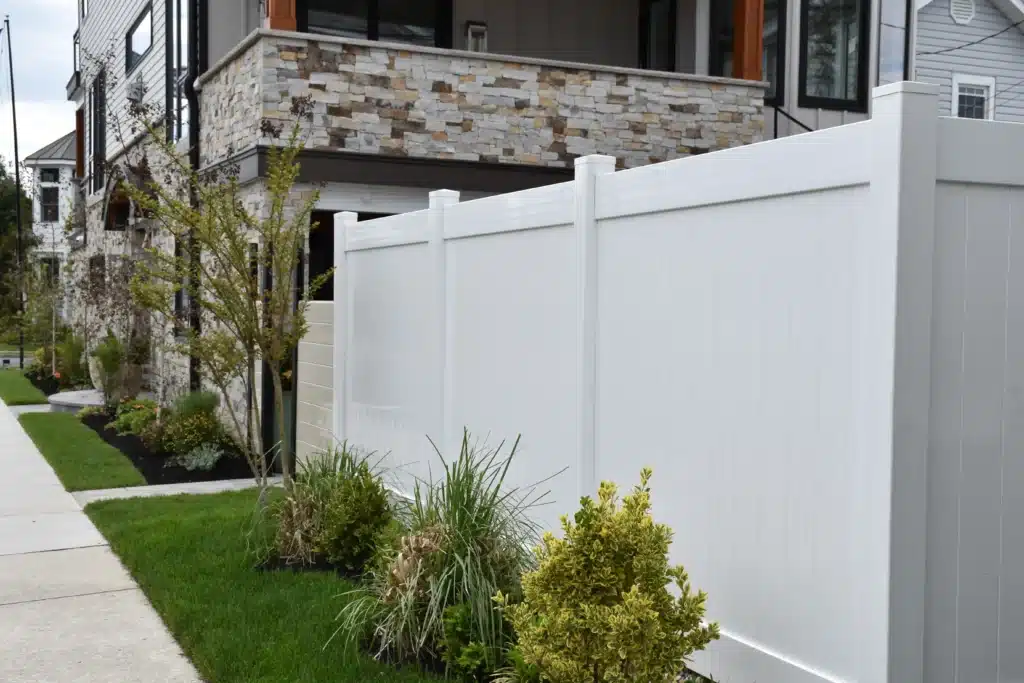
Three decisions sit underneath every white fence, and they’re independent of each other. Search results mix all three together.
- Material: vinyl or painted wood most often. Composite gives a wood-like look with less upkeep. Aluminum panels offer durability and low maintenance, but no privacy at all.
- Opacity: open, semi-private, or solid. This decides whether the fence screens anything.
- Style: picket, solid privacy, lattice-top, horizontal, scalloped. This is appearance only.
An open picket fence and a solid privacy panel are both white fences. They do completely different jobs, and most inspiration galleries blur that line.
What Do You Need Your White Fence to Do?
Match the job to the design before you select a style:
- Mark a property boundary: an open picket keeps sightlines.
- Curb appeal: a low picket across the front yard.
- Screen a patio: solid panels, taller, no gaps.
- Contain a dog or small kids: height, picket spacing, and gate latch matter more than the style name.
- Enclose a garden: a low fence that defines beds without shading them.
- Pool safety: regulated. Read the pool section below first.
White Fence Options at a Glance
| Type | Privacy | Typical placement | Maintenance | Key limitation |
|---|---|---|---|---|
| Open picket | None | Front yard, garden | Low to moderate | Screens nothing |
| Semi-privacy (spaced picket) | Partial | Side yards, breezy lots | Low to moderate | Views pass through the gaps |
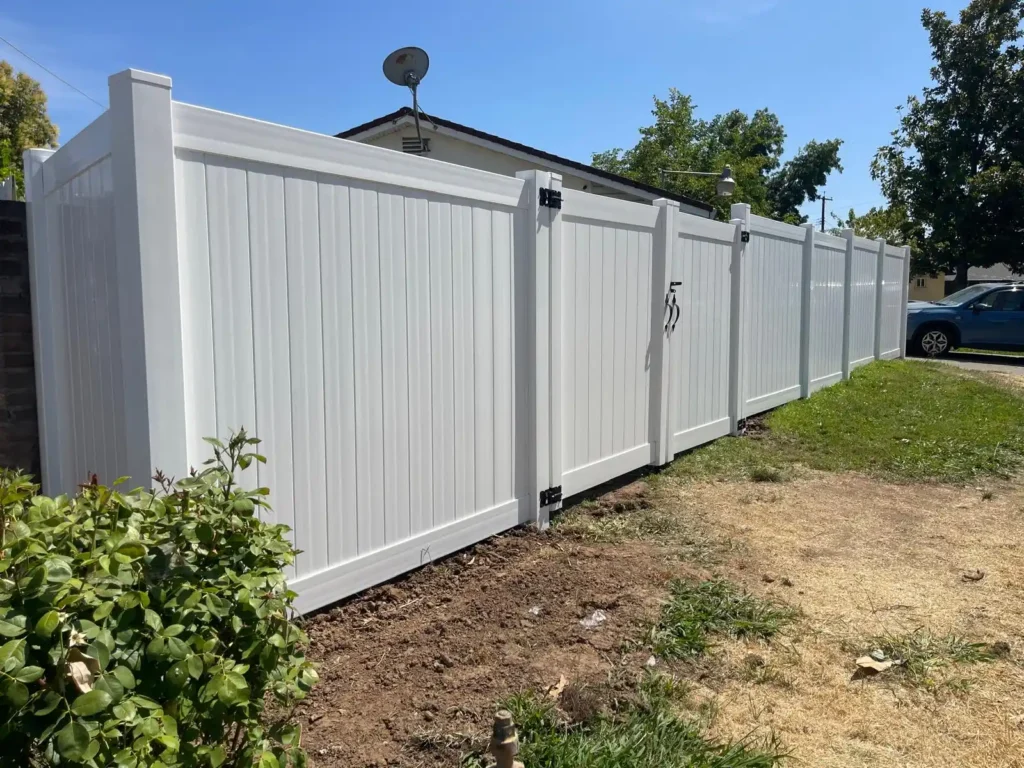
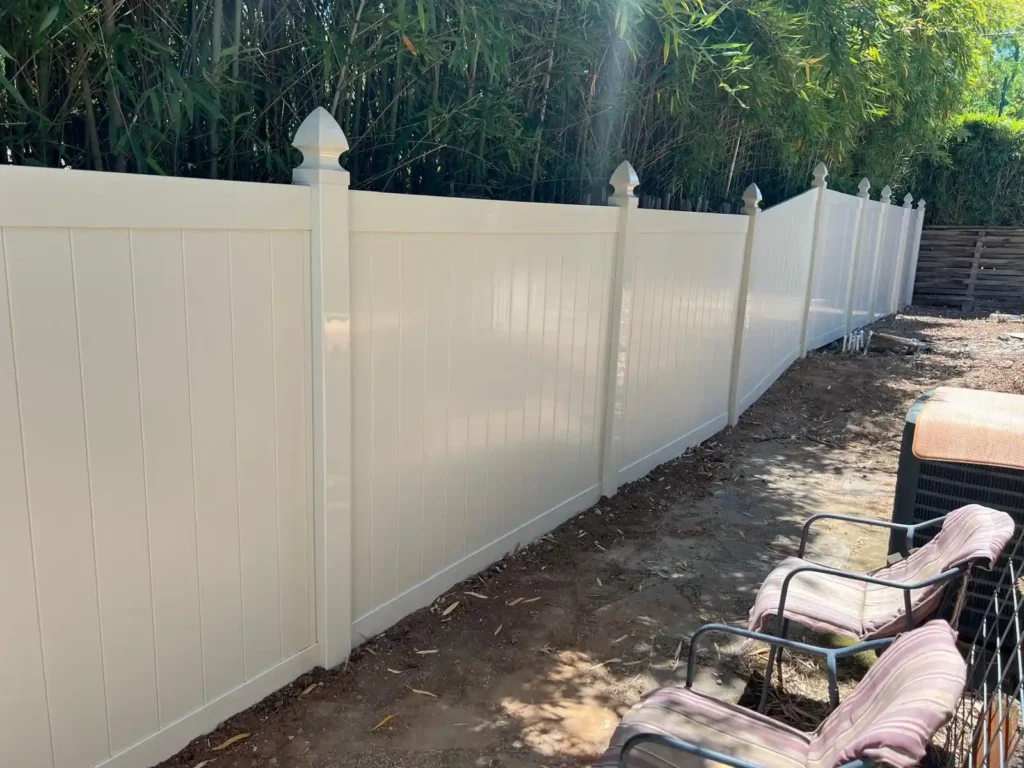
| Solid privacy panel | Full screening | Backyard, patio | Low (vinyl) | Catches wind; posts and footings must be sized for it |
| Lattice-top | Most of the run | Backyard, pool deck | Low to moderate | Lattice can be climbable |
| Ornamental metal | None | Front perimeter | Low | Pickets topped with arrows add detail, not privacy |
A common white vinyl privacy panel runs roughly 6 feet high by 8 feet wide. That one dimension drives everything downstream: how many posts you need, where the posts land, and how the run turns a corner. Select the panel height first, then count posts and gates before you price anything.
White Vinyl vs. Painted White Wood: Which One Holds Up?
White Vinyl
The surface is nonporous, so soap and water handles most cleaning. No painting, no staining. Quality vinyl resists fading, cracking, and peeling. Two standards are worth knowing: ASTM F964-13(2024) covers rigid PVC exterior profiles used in fencing, and ASTM F1999-14(2024) covers installation practice for PVC fence systems. Be clear-eyed about what that means. F964 addresses impact resistance, dimensional stability, and weatherability of the profile itself, not the wind or load performance of the finished assembly. Panel grade and installation still decide the outcome, and you’ll discover a real gap in wall thickness between a bargain panel and a heavier one.
Painted White Wood
You get a natural look, custom profiles, and board-by-board repairability. The tradeoff is upkeep. The USDA Forest Products Laboratory frames the purpose of an exterior finish as protecting wood from water, sunlight, and weathering. USDA guidance also explains the failure pattern on painted outdoor fences: the coating cracks at joints, water gets into the wood, and the paint film then slows it from drying back out. Decayed wood won’t hold paint. Older USDA finishing guidance notes that painting wood above 20% moisture content makes blistering and peeling likely, so dryness matters more than any calendar rule.
Posts, Rails, and the Bottom Rail: Where Dependable Performance Starts
Panels get the attention. Posts do the work. On a vinyl system, the rails and the bottom rail seat into a routed channel in the posts, so post spacing has to match panel width exactly, and a channel cut for one profile won’t accept another. Line posts carry the run. Corner posts and end posts handle turns and terminations. Gate posts take the heaviest load, which is where a rushed install fails first. Solid panels catch wind, so those posts need deeper footings than an open picket line. Our Bolt-Up Hidden Steel Posts add strength behind a wood fence while keeping the clean look of wood from the street. On sloped yards the panels get racked or stepped and the bottom rail follows grade. Keep the bottom rail up out of wet soil, and cap the posts so water stays out. Before we set any posts, we call the regional notification center for utility marking. California excavation law generally requires that notice at least two working days ahead, not counting the notification date, and no more than 14 calendar days before work begins.
Which White Fence Style Fits Your Home and Yard?
- Classic picket: traditional, cottage, and farmhouse-inspired homes.
- Gothic tops: pointed profiles with period character.
- Flat-top picket: a cleaner, contemporary read.
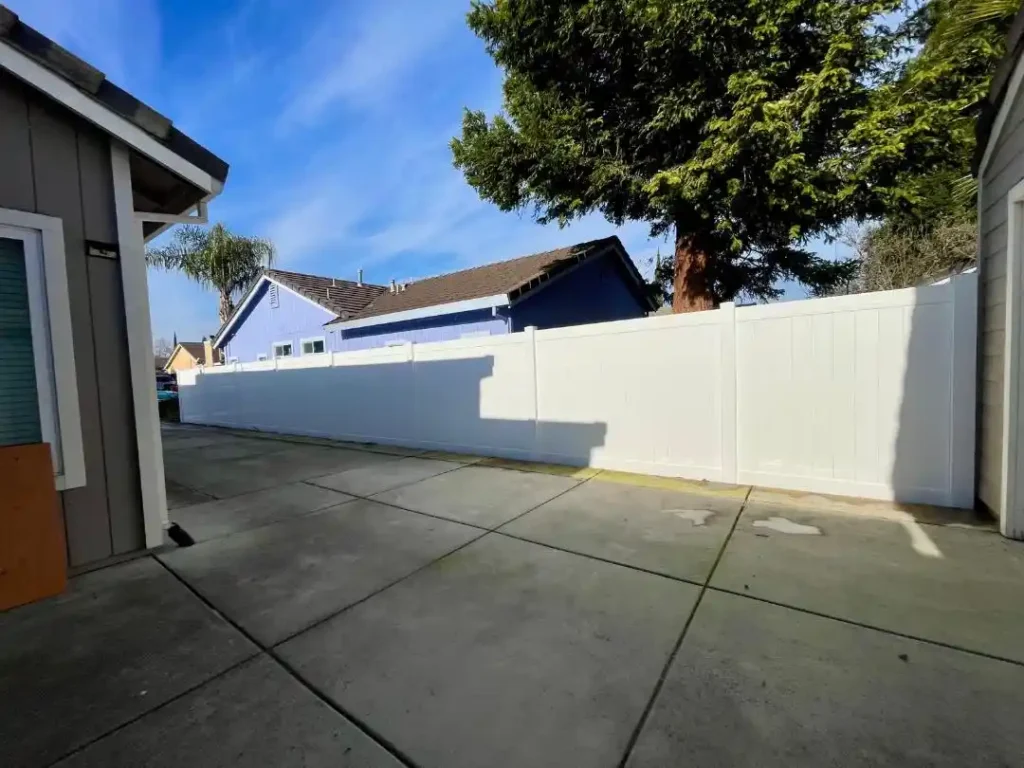
- Solid vertical privacy: the standard backyard answer, built board-on-board or with tongue-and-groove boards for a gap-free face.
- White horizontal boards: pairs with newer homes and clean trim lines.
- Lattice-top: add height without a solid wall.
- Scalloped or arched sections: breaks up a long, flat run.
- Ornamental metal with arrows: formal front perimeters.
- Matching gates and post caps: what ties the whole thing together.
Select a white that works with your trim; a softer off-white sometimes suits a warm-toned house better. If you’re in an HOA, check the approved color list before you fall in love with a shade. For picket profiles in detail, see our white picket fence guide.
How Do You Keep a White Fence Looking Clean?
White shows grime, sprinkler minerals, and landscaping stains more than darker colors. That’s the honest tradeoff. Nonporous vinyl is easy to wash. Painted or bare wood is not.
For vinyl: soap, water, a soft brush, and the manufacturer’s cleaning instructions. For painted wood, inspect the joints and the bottom rail, because coatings crack there first. Redirect sprinklers off the posts and panels. Keep soil, mulch, and bark away from the base so the wood can dry. Repair peeling paint and decay instead of painting over it. Around Sacramento, irrigation overspray and mulch piled at the base are the two things we find cut a painted fence’s life short.
Buying White Fence Panels Online vs. Having Them Installed
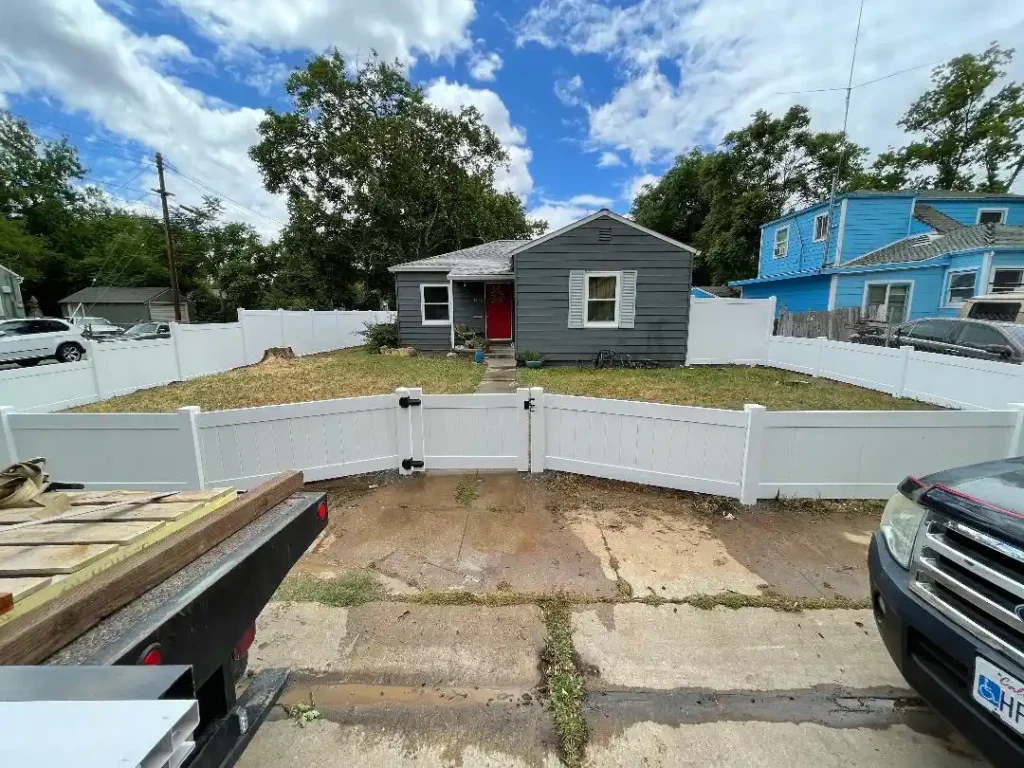
A quick search brings up white vinyl panels you can select, add to a cart, and purchase in a few minutes. It looks easy, and for a short garden run it can be. Just note what a cart total leaves out. Posts, rails, post caps, gate hardware, and concrete are usually separate items, so the price on the panel page isn’t the price of the finished fence. Oversized shipping adds more. Order the wrong quantity and the return costs you money and time, and no cart flags that for you. Most homeowners discover the real number only once the posts and hardware get added in. An on-site estimate gives you one price for the whole job, with posts, panels, and gates as clear line items instead of a cart you’re guessing at. Measure the run before anything goes in the cart, or pick up the phone and we’ll do it with you.
Planning a White Fence in Elk Grove and the Sacramento Region
Under the Elk Grove Municipal Code, a fence in a required front yard is limited to 3 feet. Clear-visibility areas at street, alley, and driveway intersections are also limited to 3 feet. In a required street-side yard, a fence less than 5 feet from the back of the sidewalk is generally held to 3 feet, with a 7-foot maximum once it’s set back at least 5 feet. Required interior side and rear yards are generally 7 feet, and up to 8 feet with a building permit. Height is measured from the lowest finished grade at the base to the top edge.
Elk Grove also cautions that work exempt from a building permit still has to comply with zoning, and plenty of homeowners discover that after the posts are set. HOA architectural approval often governs color and style, so confirm it early, and confirm your surveyed property line before you order material. Ordinances change, so verify current requirements by phone with the city building department or through our Fence Ordinance Quick Links. Our Elk Grove office is at 9245 Laguna Springs Dr, Suite #228, and we work across Sacramento, Placer, El Dorado, Yuba, Yolo, and Nevada counties.
Sharing a White Fence With a Neighbor
California Civil Code Section 841 presumes adjoining owners share reasonable costs for a division fence, and it requires 30 days’ prior written notice when you’re seeking shared responsibility. Courts may weigh costs driven by one owner’s aesthetic preferences, so agree in writing on color, material, decorative profile, and any upgrades before work starts. That conversation is what makes a good neighbor fence neighborly. This is legal information, not legal advice.
Why an Ordinary White Picket Fence Is Not a Pool Safety Fence
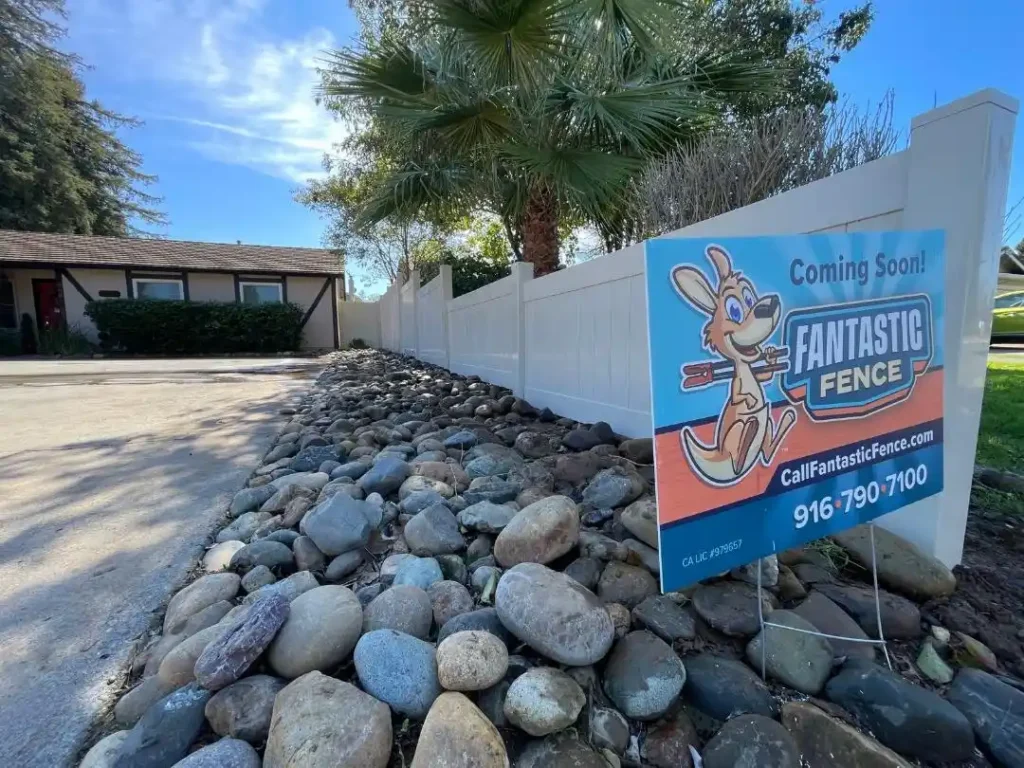
A low decorative picket fence does not meet California’s pool barrier standards. Under Health and Safety Code Section 115922, a permit for a new or remodeled residential pool or spa generally requires at least 2 of 7 listed drowning-prevention features. A qualifying enclosure under Section 115923 needs a minimum 60-inch height, no more than 2 inches of ground clearance, no opening that passes a 4-inch sphere, a gate swinging away from the pool, self-closing and self-latching hardware, a latch at least 60 inches up, and no climbable handholds or footholds. That last one rules out some rail and lattice designs. Local jurisdictions approve and enforce, so a site review comes first. See our pool safety fence page.
Frequently Asked Questions
Is a white fence a good idea?
For curb appeal, yes. White reflects light, opens up a small yard, and makes planting stand out. It shows dirt more than darker colors, and the style still has to match the job.
Are white fences expensive?
Price depends on material, height, style, number of gates and posts, terrain, and linear footage. Start with our Fence Price Calculator, then get a free fence estimate. We use flat pricing with zero hidden fees, and financing is available for Sacramento-region residents.
Can I just purchase white fence panels and install them myself?
You can. A cart total on a retail site covers panels, not usually the posts, concrete, gate hardware, and labor, and it won’t tell you whether your height passes. Get a real price on the full job before you order.
How tall can a white front-yard fence be in Elk Grove?
Generally 3 feet in a required front yard. Interior side and rear yards generally allow 7 feet, and up to 8 feet with a building permit. Verify your lot with the city before you order material.
How long will a white fence last?
There’s no universal number, and anyone quoting one is guessing. Panel grade, post installation, drainage, irrigation contact, and sun exposure all set service life. Installation quality is the single biggest factor in durability and dependable performance.
Get a Free Fence Estimate on Your White Fence
If a contractor has left you waiting on a callback before, we get it. That experience is why this company exists, and it’s why someone here answers the phone. We’re licensed, bonded, and insured under CSLB License #979657, with approximately 35 background-checked W-2 employees rather than subcontractors. Three offices, six counties, and the region’s largest local fence and gate company. You get flat pricing with zero hidden fees, a written guarantee (the job isn’t finished until you give the thumbs up), and a thorough clean-up, because we’re guests on your property. That’s what exceptional customer service looks like day to day, and over 1,000 five-star reviews back it up.
We’ll walk the yard, confirm heights, posts, and gate placement, and recommend the material that fits how you’ll actually use the fence. Call us in Elk Grove at 916-345-0142 or Book Online. Ready for a fence you’ll actually love? Let’s talk.