Key Takeaway
Wire fencing options range from chicken wire to field fence, and the right choice depends entirely on what will push, climb, dig, or jump against it. Woven wire (field fence) is the best all-around option for livestock and acreage, built with wrapped joints at 12.5 gauge that stay taut for decades. Chicken wire suits poultry runs and gardens only, while high-tensile fixed-knot fence at 7 to 8 feet handles deer exclusion.
For most permanent livestock and acreage fencing, woven wire (sold as field fence) is the best all-around choice. Its wrapped joints hold real tension and flex instead of breaking under impact. Chicken wire is light-duty poultry netting. Rolled welded wire suits low-pressure pens. Fixed-knot is a stronger type of woven wire, not a separate family. If you have bought the affordable roll and replaced it two years later, this guide prevents the second bill.
Wire Fencing Options From Chicken Wire to Field Fence at a Glance

| Fence type | How it’s built | Best for | Main limitation |
|---|---|---|---|
| Chicken wire | Thin hex netting (ASTM A390) | Coops, runs, garden beds | Sags, stretches, no predator resistance |
| Rolled welded wire | Grid held by spot welds | Light pens, small pet yards | Welds are individual failure points |
| Heavy welded panels | Thick rod, rigid panel | Pigs, gate approaches | Poor on rolling ground |
| Hinge-joint field fence | Stays wrapped around line wires (ASTM A116) | Cattle, horses, goats, dogs | Needs bracing and tension |
| Fixed-knot woven wire | Separate knot at each intersection | Long runs, deer exclusion | Higher upfront investment |
Wire fencing cost tracks footage, gates, terrain, clearing, and old fence removal, which is why we quote one flat price after seeing the property.
Chicken Wire: Fine for a Coop or Garden Bed, Not a Perimeter
Containing birds and repelling predators are two different jobs. Chicken wire does the first affordably and fails the second badly. Raccoons tear through hex netting at night, and the mesh sags, stretches, and corrodes. Most of the comments we hear about chicken wire start with a predator that got in. Use the light stuff to cover raised beds, close in a run against daytime predators, or wrap the base of a stronger fence for rabbits. If an animal you care about depends on it, choose one of the heavier options below. Our chicken wire pros and cons article has the details.
What Is Better Than Chicken Wire? Hardware Cloth
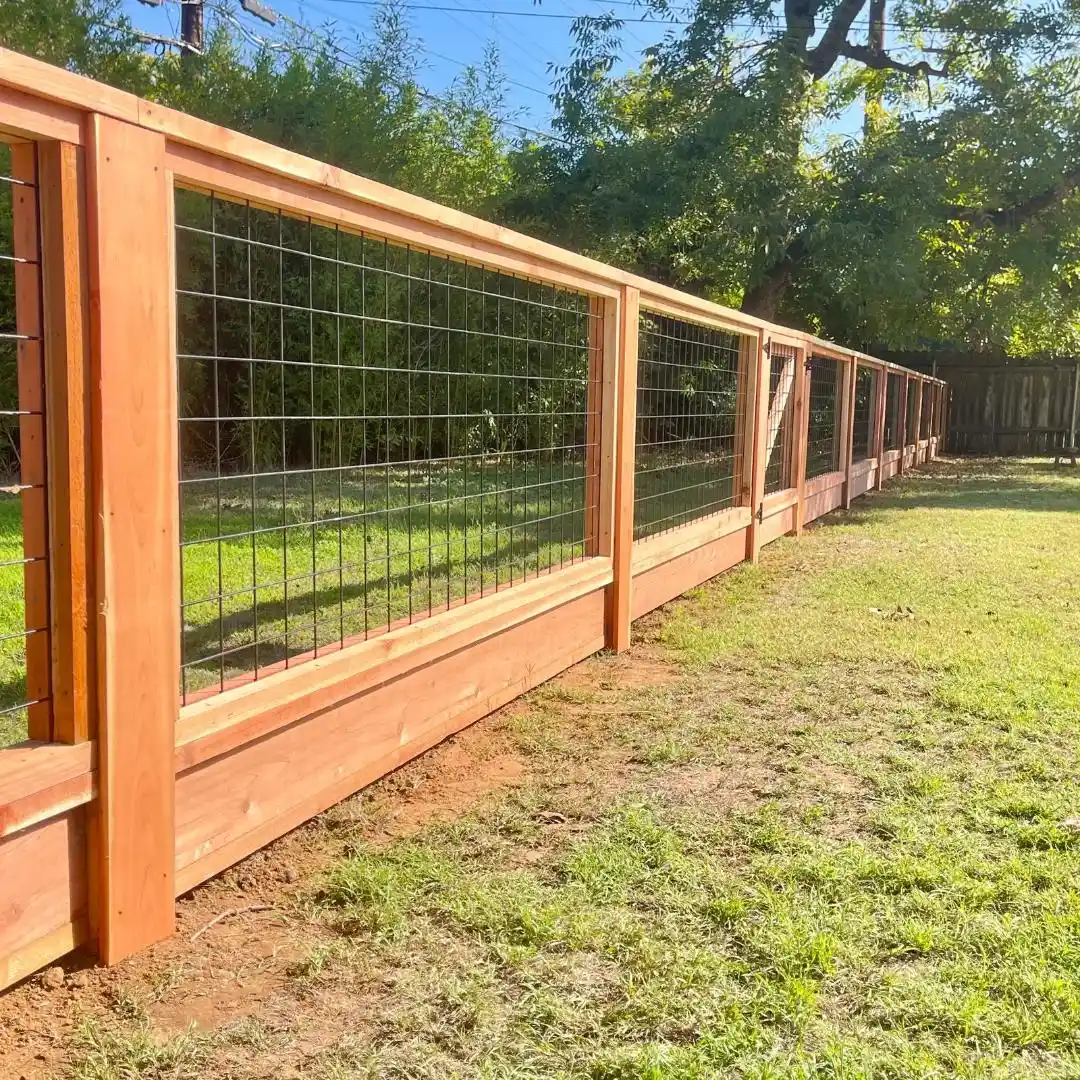
Hardware cloth is a tighter, stronger mesh for coop walls, run sides, and vents. Fasten it to a rigid frame, then bury the bottom edge or turn it out as an apron to stop diggers. On a large run, add a layer of overhead netting where birds of prey hunt. This is coop-and-run fencing, not perimeter fencing.
Welded Wire Fencing: Rolls Versus Panels
Rolled welded wire looks clean, but every spot weld is a potential failure point under sustained animal pressure, and it cannot be stretched tight without welds breaking. NRCS specifications exclude welded mesh as a woven-wire substitute for livestock fencing. Heavy welded panels are a different product class. UC ANR recommends purpose-built panels for swine, and they hold up at gate approaches, where pressure concentrates on a single post.
Woven Wire Field Fencing: The Best All-Around Option
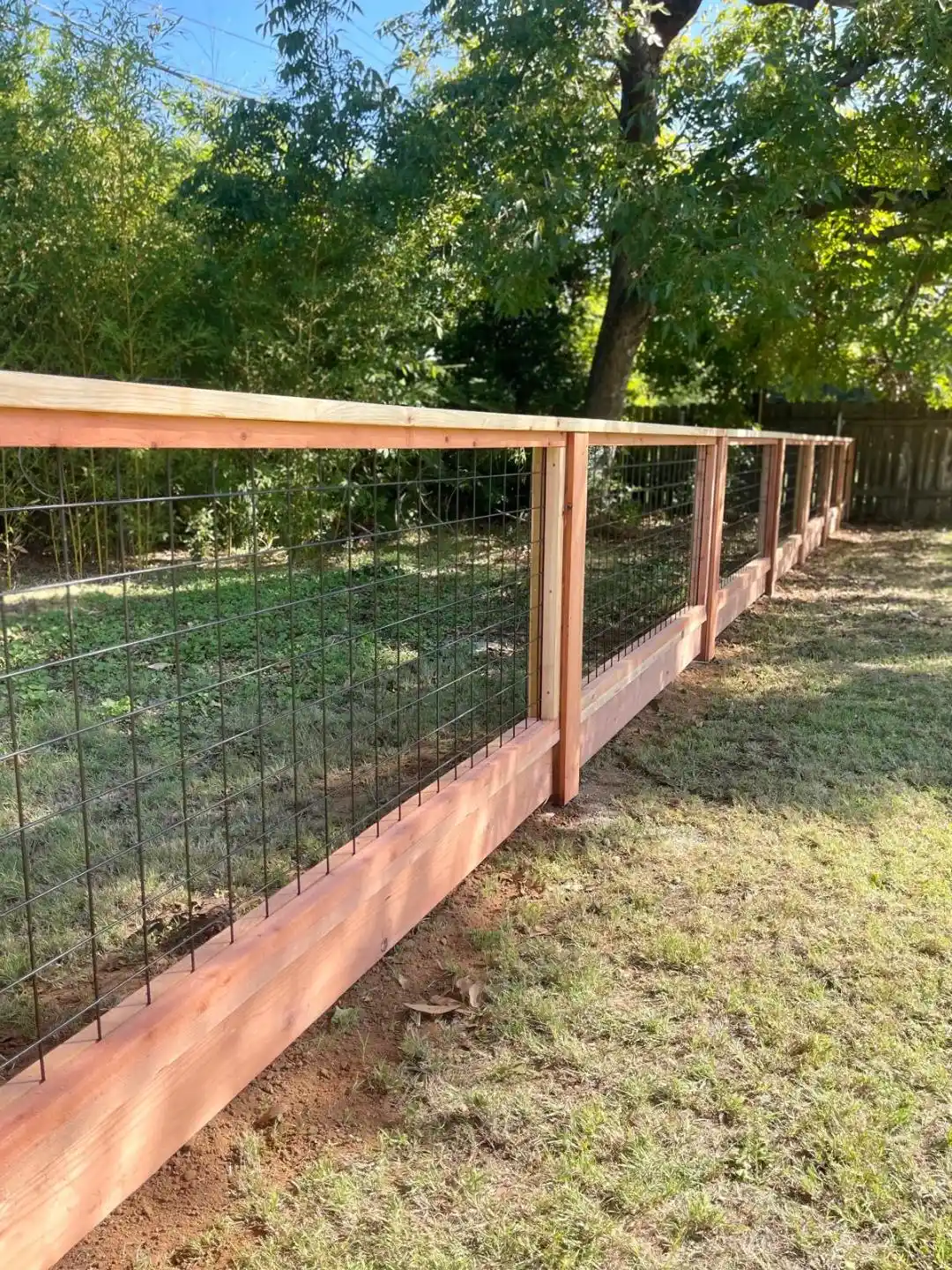
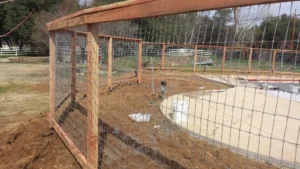
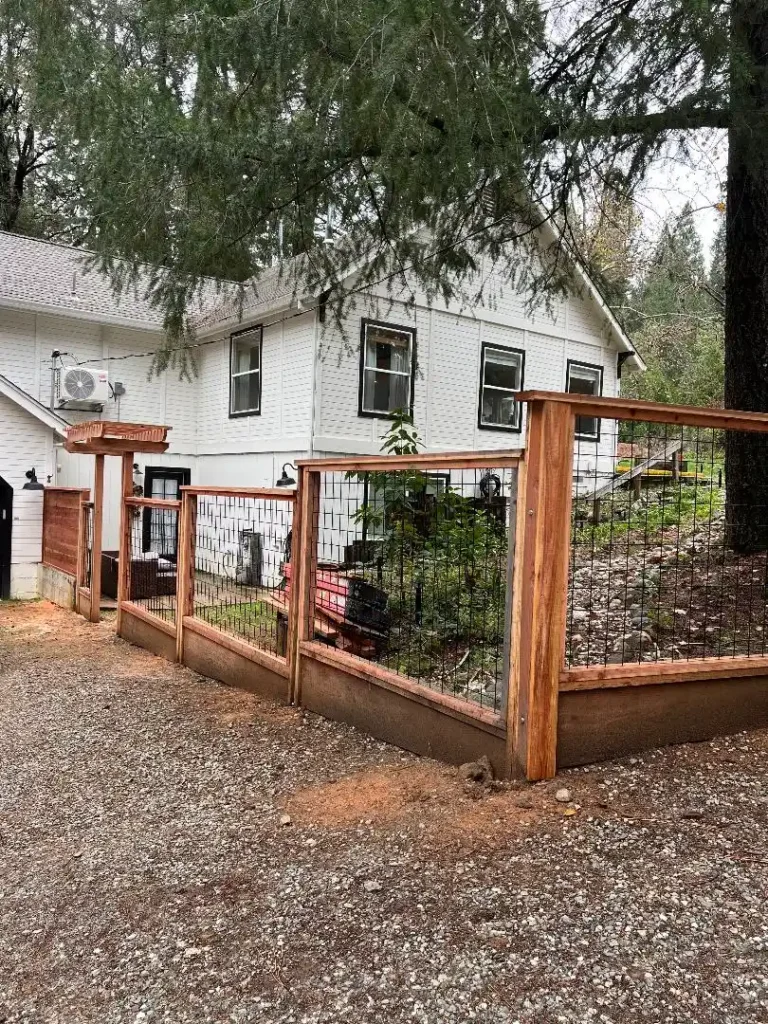
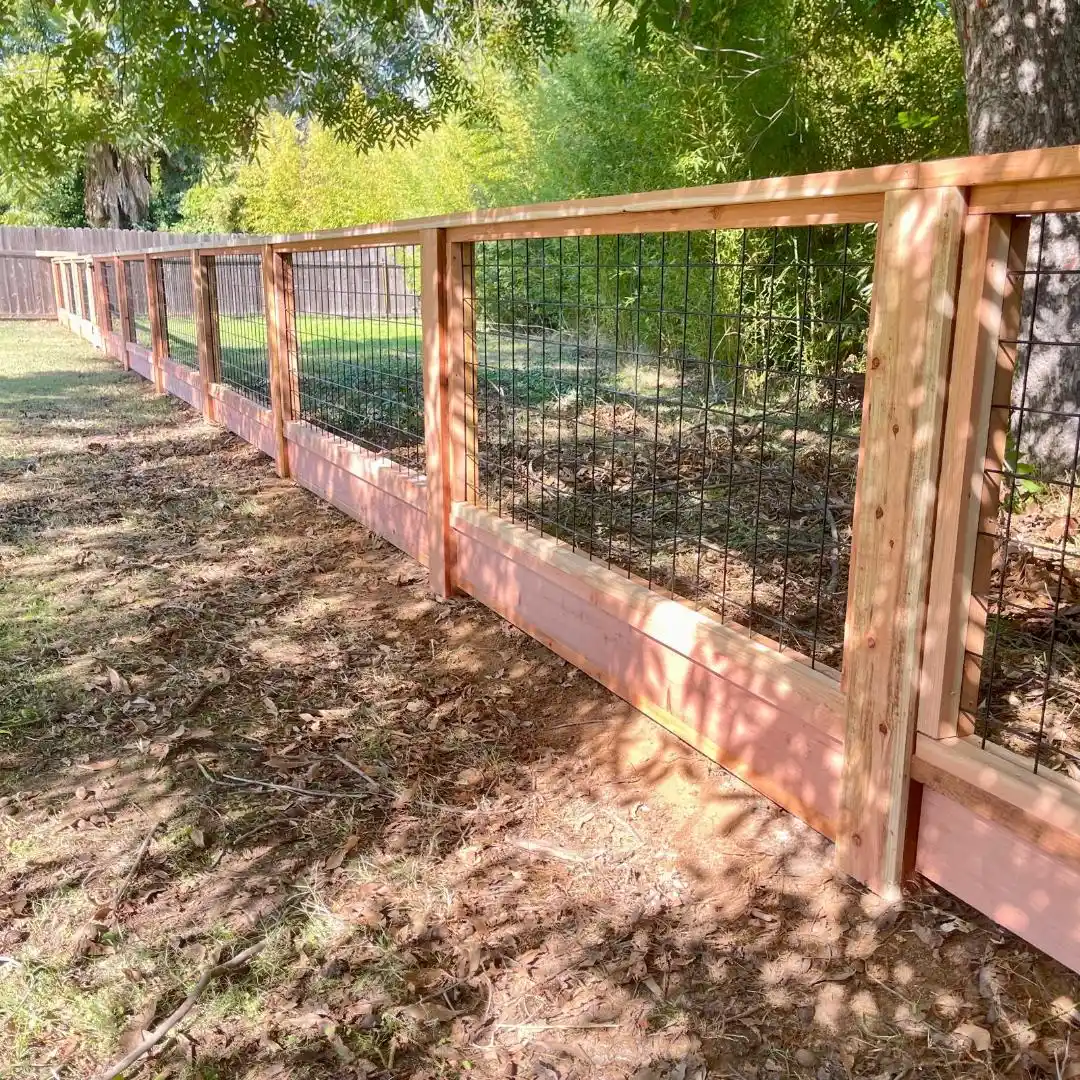
Stay wires wrap around the line wires instead of being welded, and that changes how the fencing behaves. It takes genuine installation tension, and it deflects and springs back when a horse or steer hits it. On the rolling acreage common in Placer and El Dorado counties, it follows dips and rises cleanly, where rigid panels leave escape gaps at every low spot. Graduated mesh widens toward the top, while no-climb mesh keeps small openings at every height. Check the coating class too: Class 3 carries roughly two to three times the zinc of Class 1.
Hinge-Joint vs. Fixed-Knot: What Height for Deer?
Both are woven wire fencing. Hinge-joint wraps the stay around the line wire; fixed-knot adds a separate knot wire. High-tensile describes wire strength (ASTM A116 grades 60, 125, 175), not joint style, so fixed-knot does not automatically mean deer fencing. California wildlife guidance puts permanent non-electric deer and elk exclusion at 7 to 8 feet, with 8-foot woven wire brought tight to the ground common around gardens and vineyards. Confirm zoning before you order material at that height.
Which Wire Fencing for Which Animal?
| Animal or purpose | What we’d install |
|---|---|
| Poultry | Hardware cloth, plus overhead cover |
| Garden and rabbits | Chicken wire on a frame |
| Dogs | Woven wire, secured bottom edge |
| Goats and sheep | No-climb woven wire, 2×4-inch mesh |
| Horses | 2×4-inch mesh to reduce hoof entrapment |
| Cattle | Hinge-joint or fixed-knot woven wire |
| Pigs | Heavy welded livestock panels |
| Deer exclusion | 7 to 8 feet, tight to the ground |
| General boundary | Field fence sized to the pressure |
Breed, size, horns, jumping, digging, and predator pressure change the answer. Remember that the comments we hear most at estimates come from owners who sized the fencing for the calm animal instead of the determined one.
The Wire Is Only Half the Fencing Job
A modest wire installed correctly outperforms a premium wire installed badly.
- Corner, end, and gate post bracing carries the entire tension load
- Correct tension keeps the wire from belling out between posts
- The bottom edge at dips and washouts is where animals actually get out
- Nicked coating during stretching invites corrosion early
Our background-checked W-2 employees do that work on every fencing job and back it with a written guarantee: the job is not finished until you give the thumbs up. Customer comments on our reviews page name crew members by first name, which is what nearly zero turnover looks like.
Before Starting Your Wire Fencing Project in Elk Grove
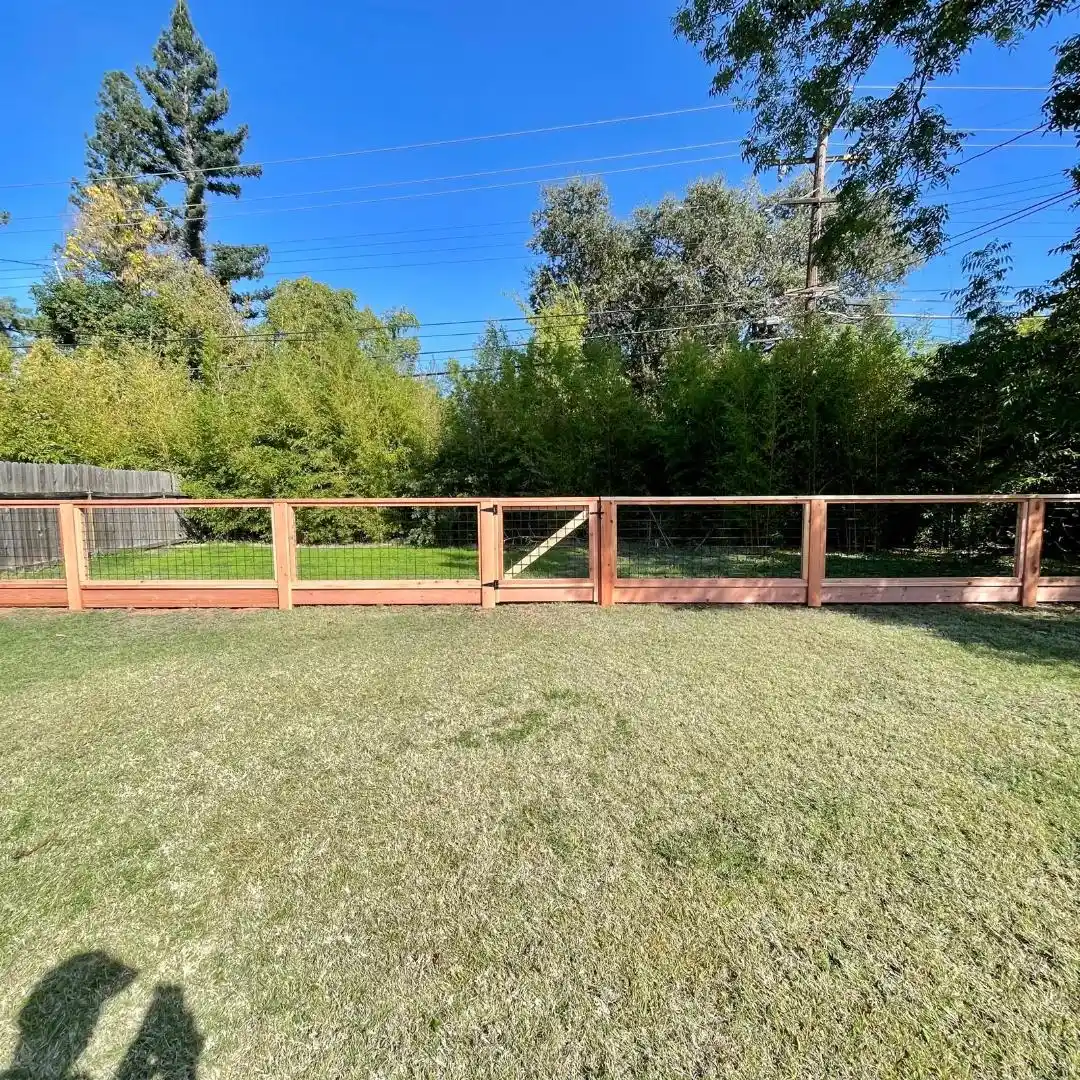
- Elk Grove Municipal Code Ch. 23.52 generally allows 3 feet of fence height in a required front yard and 7 feet in required side and rear yards, up to 8 feet with a building permit
- Agricultural zoning allows qualifying open-view fencing at 6 feet within required yards and 10 feet outside them
- Call 811 at least two working days before digging post holes
- California Civil Code 841 requires 30 days written notice when seeking a neighbor’s cost participation on a shared fence
Not every fencing material is approved at those heights. Confirm your parcel’s zoning with the City of Elk Grove Planning Department and check any HOA architectural guidelines.
What is better than chicken wire?
Hardware cloth for coops and runs, and woven wire field fencing for perimeters and livestock.
What are some alternatives to chicken wire fences?
Your options are hardware cloth, rolled welded wire for light pens, heavy welded panels, and woven wire. Pick by the pressure the fencing will actually take.
What are the different types of wire fencing?
Three construction categories: hexagonal poultry netting, welded wire in rolls and panels, and woven wire, either hinge-joint or fixed-knot.
What is the best way to secure chicken wire to a fence?
Use a frame that can support it, with fence staples, screws and washers, or hog rings at close intervals. Overlap seams, then bury or apron the bottom edge.
Ready to Compare Your Wire Fencing Options?
We have been fencing Sacramento, Placer, El Dorado, Yuba, Yolo, and Nevada counties since 2011, licensed, bonded, and insured under CSLB License #979657, with flat pricing and zero hidden fees. Try the Fence Price Calculator, or call our Elk Grove office at 9245 Laguna Springs Dr, Suite #228 for a free fence estimate. Bring your questions and comments; answering them is the job.