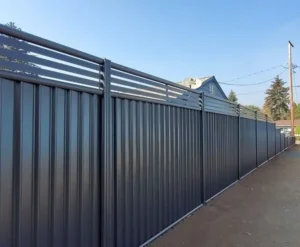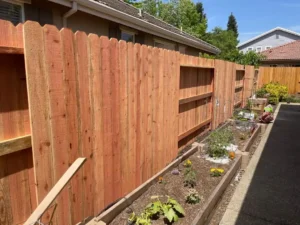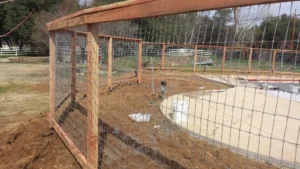

Start with what the fence has to do. Rank your top needs (privacy, security, pet or child containment, pool safety, curb appeal, boundary definition), then decide how solid or open it should be. Confirm the height your city and HOA allow. Then pick the style that fits your home and your neighborhood. In the Sacramento region, that usually means redwood dog-ear across the backyard in tract neighborhoods, upgraded redwood styles in higher-end areas, and black ornamental iron where homeowners want security without losing the open feel.
“Figuring out the perfect fence for a homeowner is a blend of meeting their goals, like privacy, and matching the right design aesthetic for the property. After installing thousands of fences every year, our fence pros can help you pick the fence that matches your home’s style.”
— Dominic Vella, Owner, Fantastic Fence
Worried about choosing wrong and paying to redo it? Fair concern. One thing to know up front: style is not the same as material. Two fences built from the same redwood can perform completely differently depending on height, board layout, and the posts holding them up.
What Should Your Fence Do Before You Decide How It Looks?
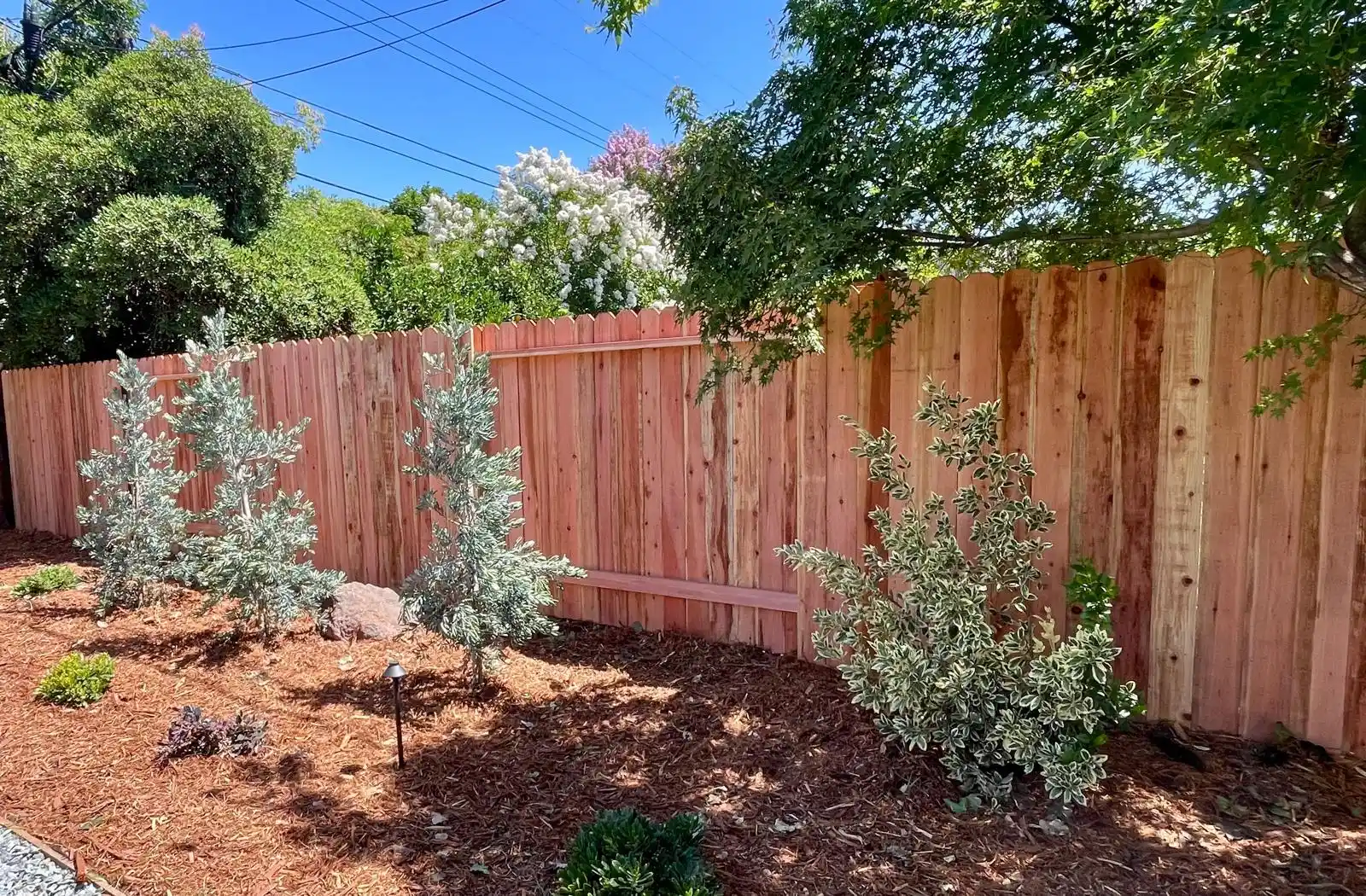
Pick your top two jobs and let everything else follow:
- Privacy from neighbors or a busy street
- Security and deterring intruders
- Containing a dog or small children
- Pool safety
- Curb appeal
- Boundary definition on a shared line
- Preserving a view
- Low maintenance
- Screening trash bins, HVAC equipment, or a side yard
- Containing animals on acreage
A fence that tries to do every job ends up overbuilt and mismatched to the house. Two priorities is plenty.
“The crew did a great job. It was done in two days and provides the privacy and security that I was looking for. I love my new fence!”
— C. J., BBB review
Do You Want a Privacy Fence, a Picket Fence, or Something in Between?
Decide how open the fence should be, because openness shapes your fence more than material does. There are three basic levels:
Solid. A redwood privacy fence in dog-ear or board-on-board, horizontal redwood, vinyl privacy panels, or Durabond privacy steel. These completely block sightlines and do the most to dull street noise.
Semi-private. Redwood with a lattice top, or chain link with privacy slats. You get real separation while letting some light and air through.
Open. A picket fence, ornamental iron, see-through chain link, or woven wire on acreage. These define the boundary while keeping your view and sunlight.
What Fence Styles Are Most Common in Each Part of the Sacramento Region?
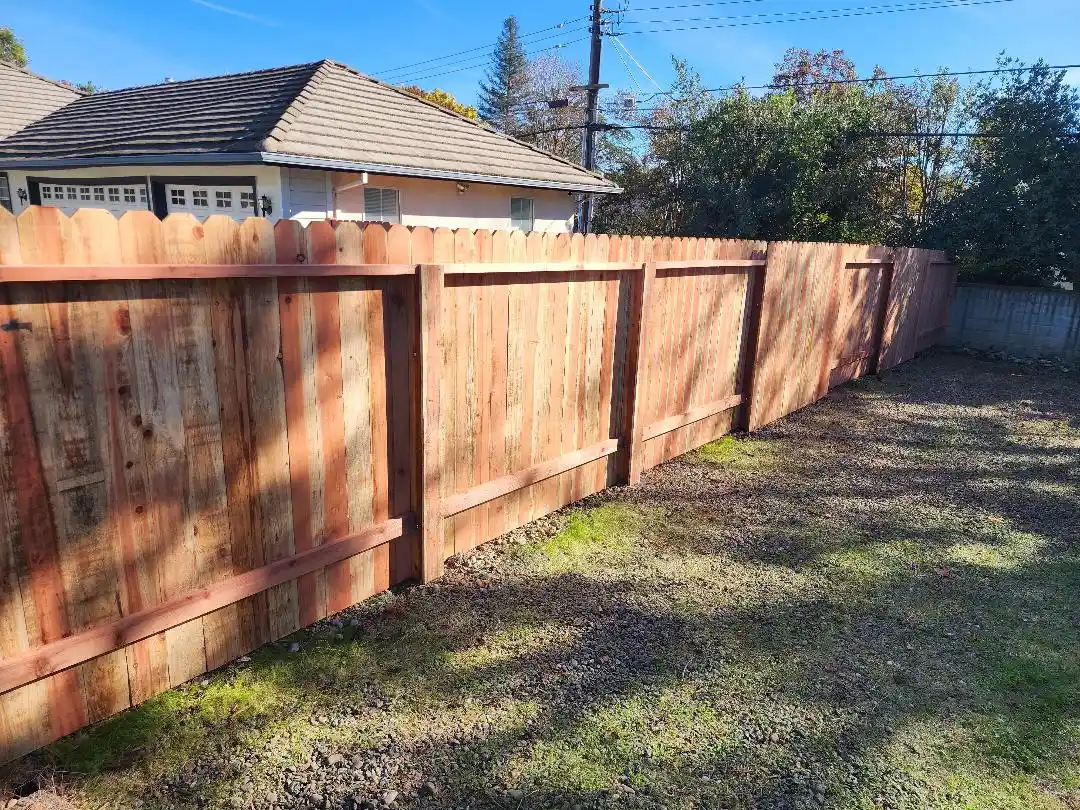
Each part of our service area has a fence that most homeowners land on. Here’s what our crews install most often across Sacramento, Placer, El Dorado, Yuba, Yolo, and Nevada counties:
|
Area |
Most common fence |
Why homeowners choose it |
|---|---|---|
|
Tract neighborhoods: Roseville, Lincoln, Elk Grove, West Sacramento, Citrus Heights |
Redwood dog-ear in the backyard |
Full privacy at an affordable price, and it matches the fences already on the block |
|
Folsom, El Dorado Hills, Granite Bay, Davis |
Upgraded redwood styles like cap and trim and board-on-board |
A finished, custom look that suits higher-end homes |
|
Downtown Sacramento |
Black ornamental iron in the front yard |
Security for the front of the home without walling it off from the street |
|
Country and acreage: Loomis, Penryn, Auburn, Grass Valley, Penn Valley, Wilton |
Black ornamental iron, and woven wire on T-posts |
Iron adds security while keeping the open feel of the land; woven wire handles containment across large acreage |
|
Foothill fire areas in Placer, Nevada, and El Dorado counties |
Durabond privacy steel and chain link |
Non-combustible, long-lasting materials that make sense in wildfire country |
|
Yuba City, Marysville, Chico |
Redwood dog-ear, often with wider 1×8 pickets |
A look that is unique to this area |
Your neighborhood is a good starting point, not a rule. If your home or lot calls for something different, your estimator will walk you through the options on site.
“Fantastic Fence did a great job on our new fire safe fence. Their customer service is fast and responsive … price is very reasonable.”
— Marci O., BBB review
“So happy to have fantastic fence installed our iron gate in the Easement. … Highly recommended for the workmanship and their professionalism.”
— Merle T., BBB review
Where Does Each Fence Style Belong on Your Property?
It depends on the zone. Most homeowners like their fence to match all the way around the side and back yards, and that’s usually the right call. The front yard is where a different style makes sense: a picket fence or open ornamental iron out front, a matching redwood privacy fence along the sides and back, pool fencing around the pool, chain link for a dog run, and a wider gate at the driveway. If you do mix styles, tie them together with a shared color or a consistent post detail.
“Fantastic Fence did a great job with our front fence and gate. We did a 7 foot board on board design. We are very pleased.”
— Natalie M., Google review
How Do Redwood, Vinyl, Iron, Steel, and Chain Link Fences Compare?
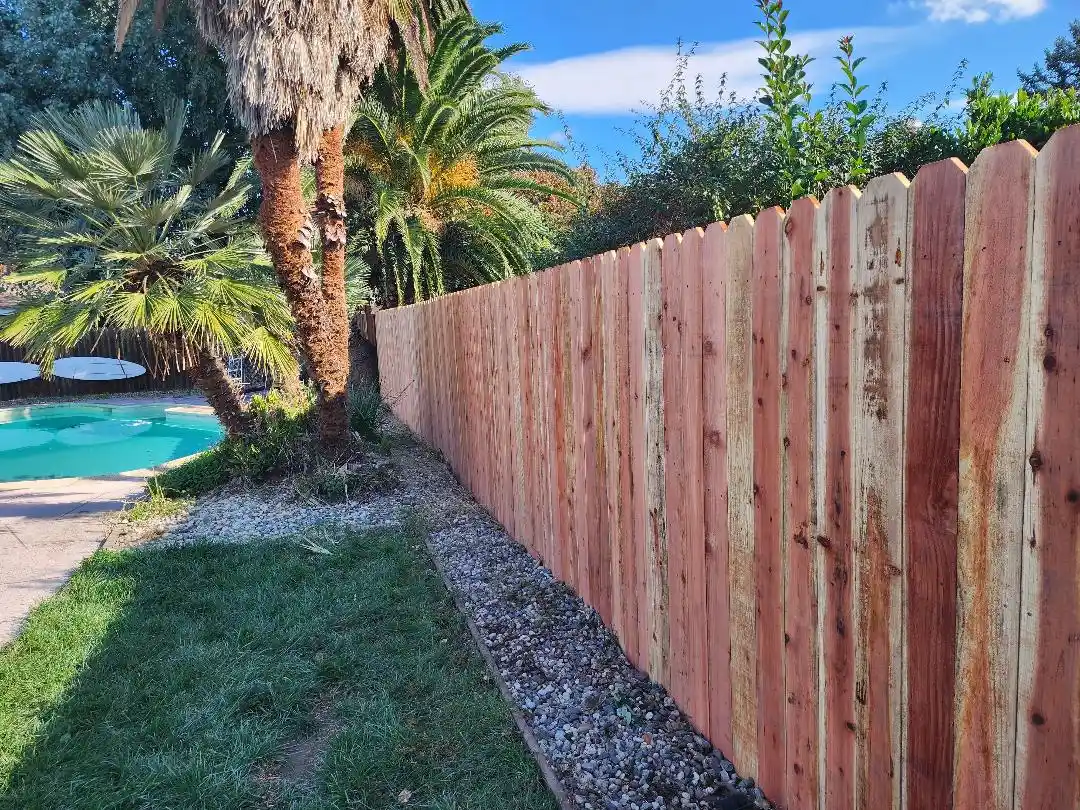
Material sets the maintenance, character, and lifespan of the fence. Redwood gives the most design freedom at an affordable price. Ornamental iron and Durabond steel add security. Vinyl and chain link need the least upkeep.
|
Material |
Strongest benefit |
Privacy |
Maintenance |
Best fit |
|---|---|---|---|---|
|
Natural look and the most design freedom at an affordable price |
High with dog-ear, cap and trim, or board-on-board |
Stain or seal every couple of years |
Backyard privacy and good neighbor fences |
|
|
Redwood on Bolt-Up Hidden Steel Posts |
Redwood’s look with steel in the ground |
Depends on style |
Boards still need stain or sealer |
A wood privacy fence built to last |
|
Never needs staining, holds up well in Sacramento heat |
High |
Wash occasionally |
Busy homeowners who want low upkeep |
|
|
Security with an elegant, open look |
Low |
Low |
Front yards, pool areas, country properties |
|
|
High-security, non-combustible privacy with a sleek look |
High |
Low |
Foothill homes and modern designs |
|
|
Practical and durable, lasts for decades |
Low unless you add privacy slats |
Very low |
Dog runs, side yards, larger lots |
|
|
Contains animals across large acreage |
None |
Very low |
Ranch and rural properties |
Which Fence Materials Need the Least Maintenance?
Vinyl, Durabond steel, and chain link need the least. Vinyl holds its color and washes clean with a hose. Ornamental iron is low maintenance too. Redwood can give you 20 good years, but plan on staining or sealing every couple of years, and put it on hidden steel posts so the posts don’t give out before the boards do.
How Do You Match a New Fence to Your Home’s Style?
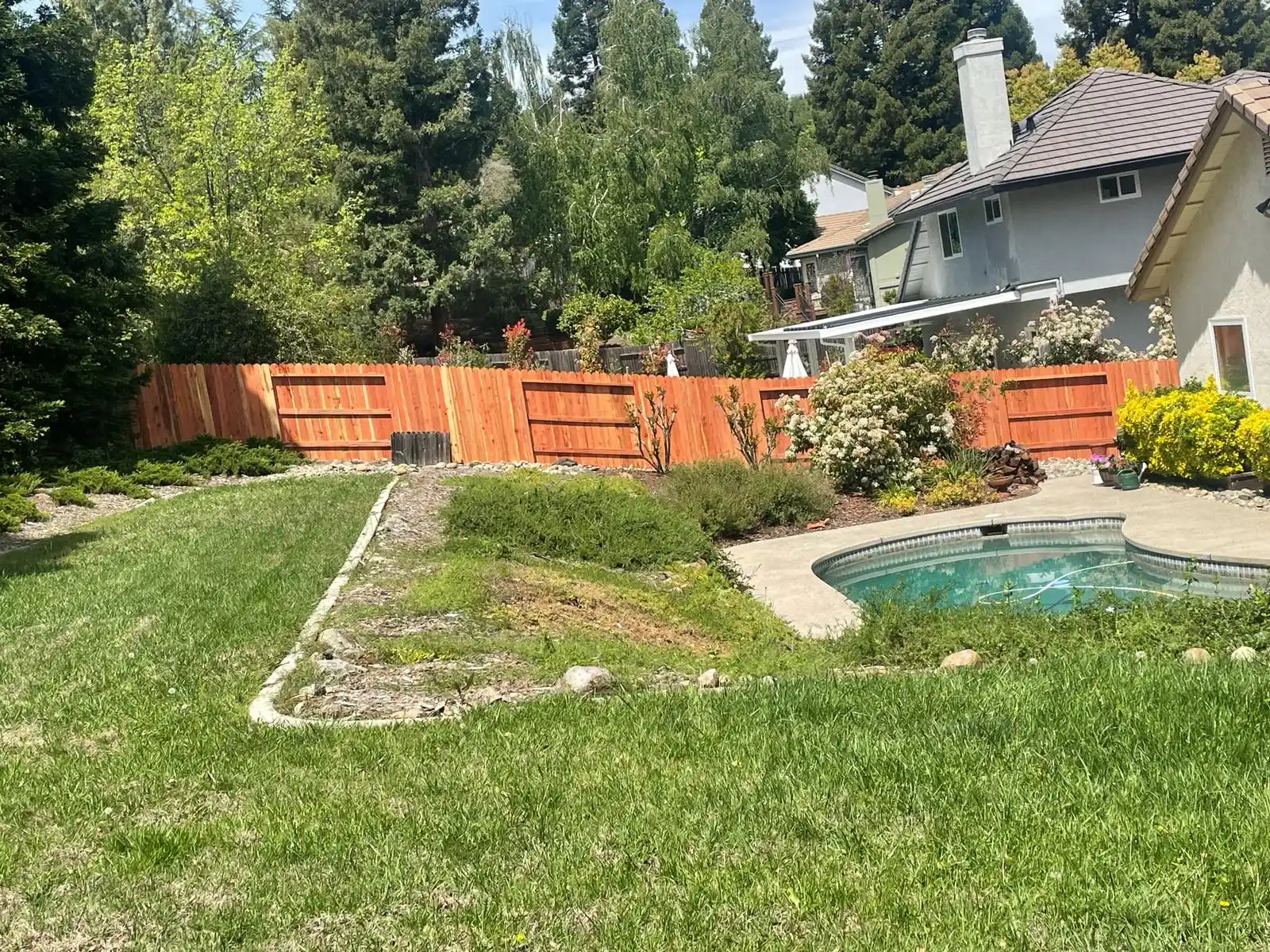
Read your home before you shop. Look at its dominant lines, trim and paint colors, existing railings or hardscape, and the look of the street. A fence that echoes one of those elements looks intentional and lifts the house instead of competing with it.
- Traditional: picket fence or ornamental iron
- Craftsman: natural redwood with cap and trim details
- Ranch: simple redwood lines or horizontal redwood
- Mid-century and contemporary: horizontal redwood or Durabond steel
- Farmhouse: picket fence or simple vertical redwood
- Mediterranean and stucco: ornamental iron
These are starting points, not rules. The fence also has to suit your lot and the height you’re allowed to build.
“They were patient when I raised a few questions about some design details that hadn’t occurred to me, and the final product looks great!”
— Margaret C., BBB review
What Local Rules Limit Your Fence Style?
Height limits, setbacks, and HOA rules can rule out a style before looks ever come into it. Check local regulations covering:
- Height limits by yard (front, street-side, side, rear)
- Setbacks and corner or driveway sight lines
- Whether your height triggers a permit
- HOA architectural guidelines and CC&Rs
- Easements and where the property line actually falls
- A conversation with the neighbor if the fence is shared
Which Sacramento and California Rules Should You Check?
The City of Sacramento generally limits front-yard and street-side-yard fences to 4 feet, allows decorative open wrought iron or tubular steel up to 6 feet, and doesn’t allow chain link or woven wire in front-yard or street-side setbacks. Rear and interior side yards are generally allowed up to 6 feet. That’s one reason ornamental iron is so common in front yards downtown. Unincorporated county areas and other cities set their own limits, so check yours.
California Civil Code §841 requires 30 days’ written notice to an adjoining owner before you incur shared-fence costs. Pool enclosures have their own state safety requirements, including self-closing, self-latching gates. In fire country, fire-safety guidance favors noncombustible fencing where a fence attaches to the house. USA North 811 needs two working days’ notice before digging.
Researching your city, county, and HOA requirements and getting HOA approval is the homeowner’s responsibility, so do it before you sign. Bring us the requirements and we’ll build to them. Start with our Sacramento fence ordinances resource.
Why Shouldn’t the Gate Be an Afterthought?
Because gates take more wear than any other part of the fence. Decide on pedestrian versus vehicle access, placement, swing direction, and width, and measure for your mower and a trailer. Gate posts carry load that fence posts don’t, so a durable gate starts with sizing them right. Pool gates need self-closing and self-latching hardware. If a driveway gate might be automated later, plan for it now: we install and repair automated gates, including slide and swing gates, keypads, and solar powered gate openers.
“Very happy with our new redwood gate. … The gate looks awesome and works so effortlessly.”
— Jonathan T., Google review
What Goes on Your Five-Minute Fence Style Shortlist?
Fill in these eight lines before your estimate:
- My fence’s top two jobs are:
- Solid, semi-private, or open:
- Areas of the property it covers:
- My maintenance tolerance:
- The look I want:
- Site conditions (slope, drainage, rocky ground, retaining walls):
- Local and HOA restrictions:
- Gate and access needs:
Those eight lines narrow most homeowners to two or three real options, and usually one clear fit. Hand it to your estimator and the conversation gets shorter.
Frequently Asked Questions
What is the best type of fence for a house?
The one that handles your top two jobs at a height your city allows, then fits your maintenance tolerance and your home’s style. For most backyards in our area, that’s redwood dog-ear on hidden steel posts.
Should my fence match my house?
It should complement it, not copy it. Echo one element, like a trim color or a cap detail. Most homeowners also want the fence itself to match all the way around the yard.
What are the most common fencing mistakes to avoid?
Choosing appearance before purpose, ignoring height and HOA rules, undersizing gates and gate posts, guessing at the property line, skipping the neighbor conversation on a shared fence, and skipping privacy slats on chain link to save money when you may want them later.
What type of fence adds the most value?
A well-built fence that suits the neighborhood and looks finished on both sides. A quality redwood good neighbor fence in back, or open ornamental iron in front, does the most for curb appeal. For pricing, see our privacy fence cost guide.
Ready to Pick the Right Fence With a Local Fence Pro?
An on-site look is worth it when the ground slopes, the fence shares a boundary, a pool is involved, property lines are unclear, or you want an automated gate. We’re licensed, bonded, and insured (CSLB License #979657) with approximately 35 background-checked W-2 employees and three offices in Rocklin, Sacramento, and Elk Grove serving Sacramento, Placer, El Dorado, Yuba, Yolo, and Nevada counties. Whatever style you land on, our own crews install it. Flat pricing, zero hidden fees, a written guarantee that the job isn’t done until you give the thumbs up, and a thorough clean-up after every job. Financing is available for Sacramento-region homeowners.
Get a Free Fence Estimate or call us at (916) 790-7100.