The most eco-friendly fence is the one you only have to build once. In the Sacramento region that means sustainably harvested redwood built on hidden steel posts, or a long-life metal fence — galvanized chain link, ornamental iron, or Durabond steel — that can last up to twice as long as a wood fence on wood posts and can be recycled as steel when it finally comes down. And if your current fence is still mostly sound, the greenest move of all is to repair it.
Fantastic Fence has built and repaired fences across Sacramento, Placer, El Dorado, Nevada, Yolo and Yuba counties since 2011. Here is how we think about “green” fencing, based on what we actually install and what we see fail in local backyards.
What Makes a Fence Eco-Friendly?
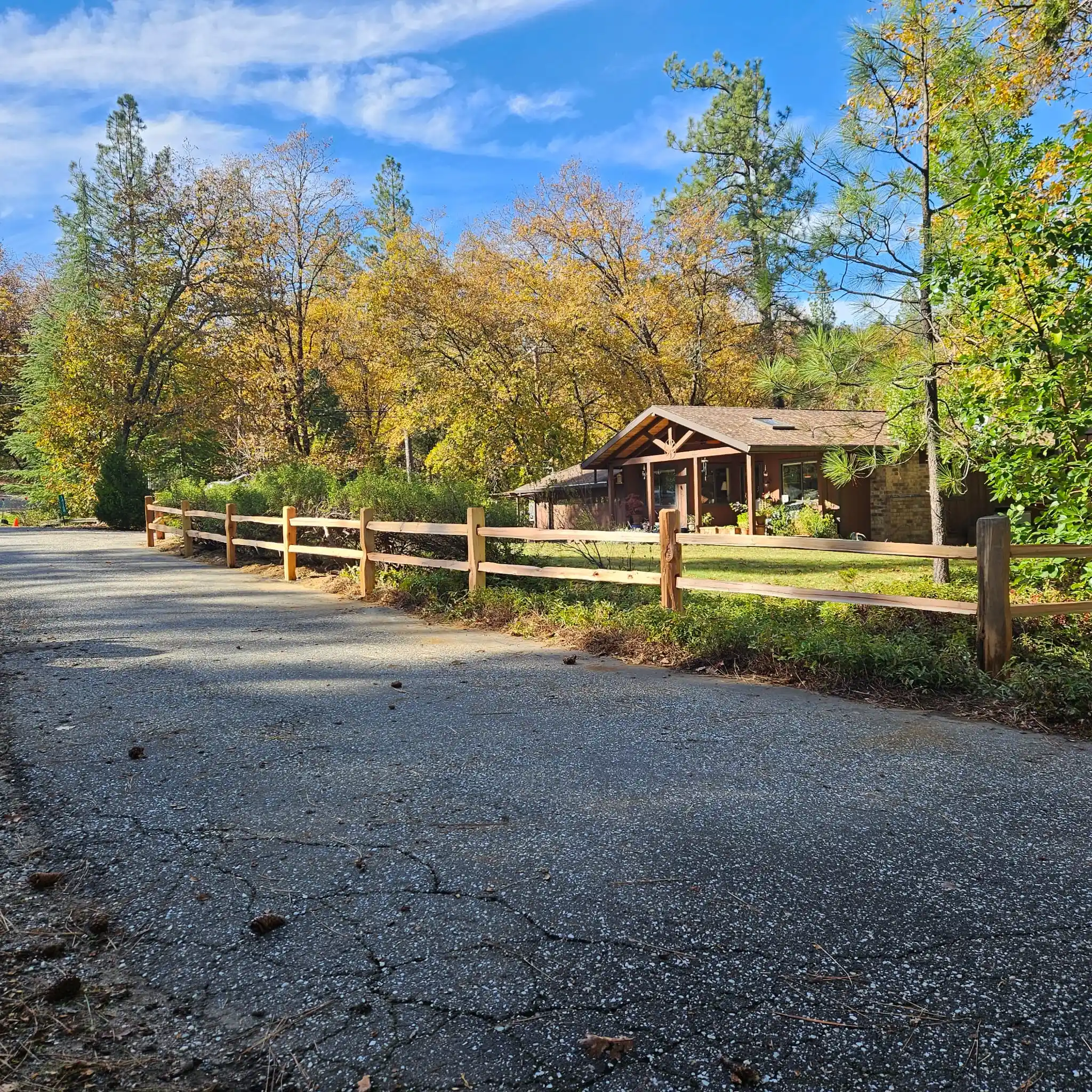
A fence is eco-friendly when it uses fewer resources over its whole life — not just on install day. We look at five things:
- How long it lasts. Every replacement means new material, new concrete, more truck trips, and an old fence headed to the dump.
- Where the material comes from. Renewable, well-managed timber or steel with a long recycling history.
- Whether it can be repaired. A fence you can fix one post or one section at a time stays in service far longer.
- How much upkeep it needs. Fewer coats of stain, paint, and sealer over the years.
- What happens at the end. Steel recycles easily. Some materials have nowhere to go but the landfill.
This page covers the materials we install. For a side-by-side of how long each one lasts here, see our guide to what type of fence lasts the longest.
Is the Longest-Lasting Fence Really the Greenest?
Yes, in most cases. Think about the next 50 years on your property. A wood fence on standard pressure-treated posts might be torn out and rebuilt two or three times in that span. A galvanized chain link or ornamental iron fence installed right may only be built once.
That is why we call durability an environmental feature. Chain link and iron can last as much as two times longer than other fence types, which cuts the material, fuel, and landfill waste of a whole replacement cycle.
|
From Dominic Vella, owner of Fantastic Fence: “People ask me which fence is the green one. My answer is: the one you never have to tear out. Redwood is grown like a crop — it’s farming, just on a 50-year timeline. And steel fences like chain link and iron last so long that you’re simply building fewer fences over your lifetime. Whatever you choose, build it right the first time, and fix what’s fixable before you replace it.” |
Is Redwood an Eco-Friendly Fence Material?
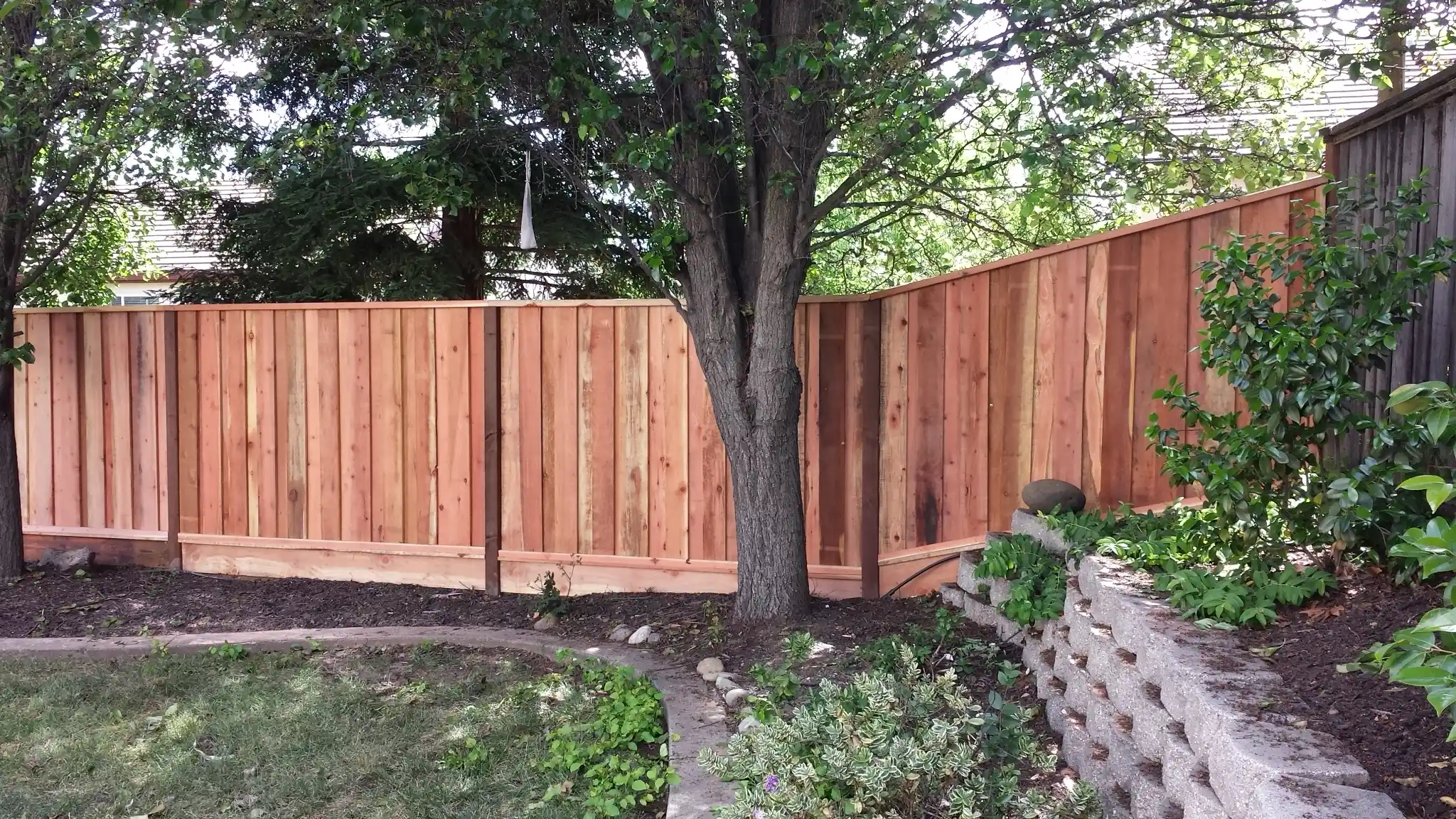
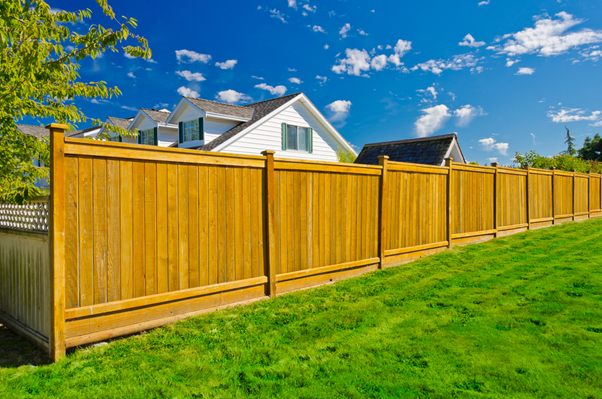
Yes. Redwood is a renewable material that is grown, harvested, and replanted like a crop. California’s large redwood timberland owners typically harvest a small share of their land each year — around 2% of their acreage — and replant behind the harvest. At that pace it takes about 50 years to work across the whole property, so the forest is regrown by the time the cycle comes back around. It is farming, just on a 50-year timeline.
One example is Mendocino Redwood Company, which has been FSC certified since 1999. Its 2025 data sheet reports about 3.4 billion board feet of conifer growth against 958.5 million board feet harvested since 1998, more than 13 million seedlings planted, and a standing inventory that grew from 2.1 billion to 4.6 billion board feet. In other words, the forest is growing faster than it is being cut.
How we build redwood fences to last longer
- Full 3/4-inch boards. Our redwood boards are thicker than the 5/8-inch cedar commonly sold around Sacramento, so they bow and twist less. See why we prefer redwood over cedar.
- Built on site, never from pre-made panels. Thin stock panels warp and gap, and they don’t fit slopes. A fence that fits right lasts longer.
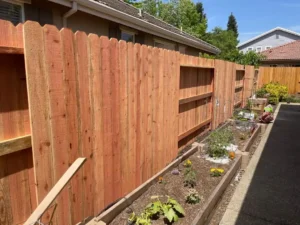
- Hidden steel posts. Posts are what fail first on a wood fence. Our bolt-up hidden steel posts are galvanized steel wrapped in redwood, so they look like wood but won’t rot or draw termites. Over 80% of the wood fences we build now go on steel.
- No staining required. Redwood looks great left natural. Stain is optional and purely cosmetic.
Hidden steel posts also mean there is no chemically treated wood post sitting in your soil. Pressure-treated post quality has dropped since the industry moved to less toxic treatments, and we routinely pull posts that rotted off at the base in just a few years. Learn more about our redwood fences.
Why Are Chain Link and Ornamental Iron Fences Eco-Friendly?
Because they last. A well-built galvanized chain link or ornamental iron fence can last as much as two times longer than other fence types, so you build fewer fences over the life of your home. Both are made of steel, which is one of the most widely recycled materials there is.
Chain link
Chain link lasts practically forever unless something hits it. When it does get damaged, we don’t replace the run — we weave in new fabric and re-tension it, which we do every week. That repair-first design keeps a chain link fence in service for decades. It’s especially common in the foothills of Placer and El Dorado counties, around Auburn, Placerville, and Grass Valley. Read more about chain link fences and how long chain link lasts.
Ornamental iron
Our ornamental iron is galvanized under the powder coat, and it needs very little: walk the fence line once a year and touch up any spots at the welds with a high-gloss enamel. Stay ahead of rust and an iron fence will outlast most other materials. See our ornamental iron fences and our guide on how to maintain an iron fence.
Is Durabond Steel a Sustainable Fence Choice?
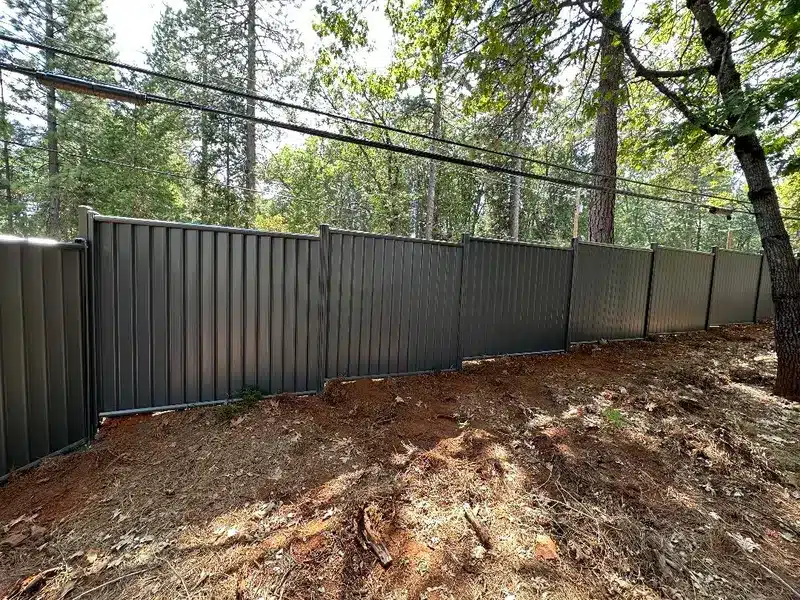
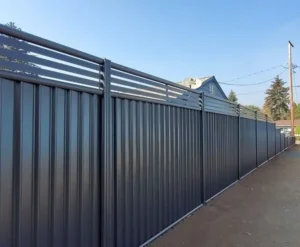
Durabond is a solid corrugated steel privacy fence with a factory COLORBOND finish, so it never needs paint or stain. It typically lasts 25 to 30-plus years, the steel can be recycled at the end, and it’s non-combustible — a big reason it has become popular in the fire-prone foothills of Placer, Nevada, and El Dorado counties, and as a modern replacement for wood fences in neighborhoods across the valley.
Learn more about Durabond steel fences and choosing a fire-safe fence in high-risk fire areas.
|
Fire-zone note: Researching your property’s fire-hazard designation and any rules for materials near your home is the property owner’s responsibility. Check with CAL FIRE or your local fire district ahead of time, bring us the requirements, and we’ll build to meet them. |
Is Vinyl Fencing Eco-Friendly?
Vinyl is a mixed bag, and we’d rather be straight with you about it.
The case for vinyl: a quality vinyl fence holds up well in Sacramento heat, never needs paint or stain, and cleans up with a hose and a soft brush. A fence that lasts decades without coatings has a real environmental upside.
The case against: vinyl is PVC, a plastic made from fossil fuels, and most local curbside programs won’t take old fence panels. Repairs can also be tricky. Panels aren’t labeled, so matching an older brand is hard, and on 6-foot vinyl privacy fences it’s often more practical to replace a section than repair it.
Our take: choose vinyl because you love the look and the low upkeep, not because it’s the greenest option. More on our vinyl fences and whether vinPreview Changes (opens in a new tab)yl fencing is recyclable.
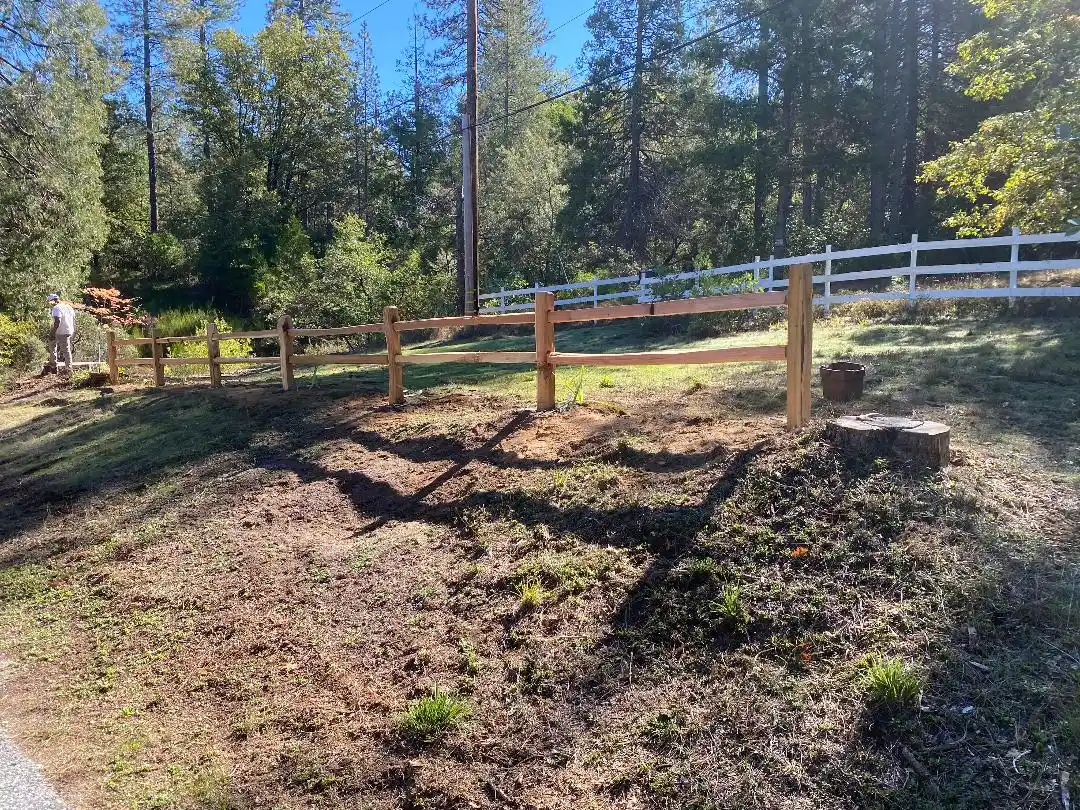
Eco-Friendly Fence Materials Compared
|
Material |
Why it’s green |
Upkeep |
End of life |
Where we see it most |
|---|---|---|---|---|
|
Redwood on hidden steel posts |
Renewable, replanted on a ~50-year cycle; no treated posts in the ground |
Optional stain only |
Steel posts recyclable; wood breaks down naturally |
Backyards in Roseville, Elk Grove, Lincoln, Folsom, El Dorado Hills |
|
Galvanized chain link |
Lasts up to 2x longer; repaired section by section |
Very little |
Steel recyclable |
Foothills: Auburn, Placerville, Grass Valley |
|
Ornamental iron |
Lasts up to 2x longer; galvanized under powder coat |
Yearly touch-up at welds |
Steel recyclable |
Front yards in Sacramento; country properties |
|
Durabond steel |
No paint or stain ever; non-combustible |
Very little |
Steel recyclable |
Placer, El Dorado, and Nevada County fire areas |
|
Vinyl |
Long life with no coatings |
Occasional wash |
Limited local recycling |
Homeowners who want zero staining |
For how many years each material typically lasts here, see what type of fence lasts the longest. For current pricing, try our Fence Price Calculator.
Should You Repair Your Fence Instead of Replacing It?
Often, yes — and it’s the greenest choice when it works. About 99% of the time, a leaning wood fence is leaning because the posts failed, not the boards. Try a push test: a rotted post can look straight but feels weak the moment you push on it. Replacing a few posts can buy a sound fence many more years.
Some fences should be repaired and some should be replaced. If most of the fence is worn out, a new fence resets the clock for the next 25 years. We’ll tell you honestly which one yours needs. See our fence repair services and repair or replace my fence.
What Do Customers Say About Our Fences?

A few recent Google reviews:
|
“Rather than replace the whole gate they simply fixed the parts that needed replacement.” — Peter Kvam “…solidly built with steel posts, new wood and hinges… the last one we need for a long time to come.” — Jay Knowles “Fantastic Fence did a superb job repairing damages to sections of our redwood fence.” — Harry Chamberlain “…used great, over the top materials.” — Casey Lynn |
Read more on our reviews page.
Frequently Asked Questions
What is the most eco-friendly type of fence?
The one that lasts the longest and can be repaired. In our area that’s usually galvanized chain link, ornamental iron, Durabond steel, or redwood on hidden steel posts. If your current fence is mostly sound, repairing it beats any new fence.
Is redwood fencing sustainable?
Yes. Redwood timberland is harvested in small portions — around 2% of the acreage a year — and replanted, so the forest regrows over a roughly 50-year cycle. Large California growers report more growth than harvest.
Is a chain link fence eco-friendly?
Yes. Galvanized chain link can last up to twice as long as other fence types, damaged sections can be repaired without replacing the fence, and the steel is recyclable.
Is pressure-treated wood bad for the environment?
Today’s treatments are less toxic than the arsenic-based CCA phased out in 2004, but they also protect wood far less in the ground, so posts rot sooner. Our hidden steel posts avoid treated wood posts in your soil entirely.
Is vinyl fencing recyclable?
PVC can be recycled, but most local curbside programs won’t accept fence panels. See our full answer on vinyl fence recycling.
Which fence is best for a fire-prone area?
Non-combustible metal fences — Durabond steel, ornamental iron, and chain link — are the common choices in the Placer, El Dorado, and Nevada County foothills. Confirm your property’s fire-zone requirements with your local fire authority first.
Get a Free Fence Estimate
We’ll tell you honestly whether your fence can be repaired before we quote a new one, then help you pick the longest-lasting option for your property. Fantastic Fence is licensed, bonded, and insured (CSLB License #979657), with about 35 background-checked W-2 employees, flat pricing, and financing available.
- Rocklin: (916) 790-7100
- Sacramento: (916) 248-5518
- Elk Grove: (916) 345-0142