Two Proven Ways to Add Height to Your Wood Fence
If your standard 6-foot wood fence isn’t giving you the privacy, security, or look you want, the good news is you have options. Standard vertical fence pickets come in a 6-foot height, which is the industry norm for residential privacy fencing. But what if you want a little more? Maybe you need to block the view from a neighbor’s second-story deck, keep a large dog from jumping over, or simply want that extra sense of seclusion in your backyard.
There are two main approaches to adding height to a wood fence: adding a kickboard at the bottom or adding a top section with lattice panels. Each method has its own advantages, costs, and aesthetic appeal. Let’s walk through both so you can make the best decision for your property—without the hassle.
Option 1: Add a Kickboard at the Bottom
What Is a Kickboard?
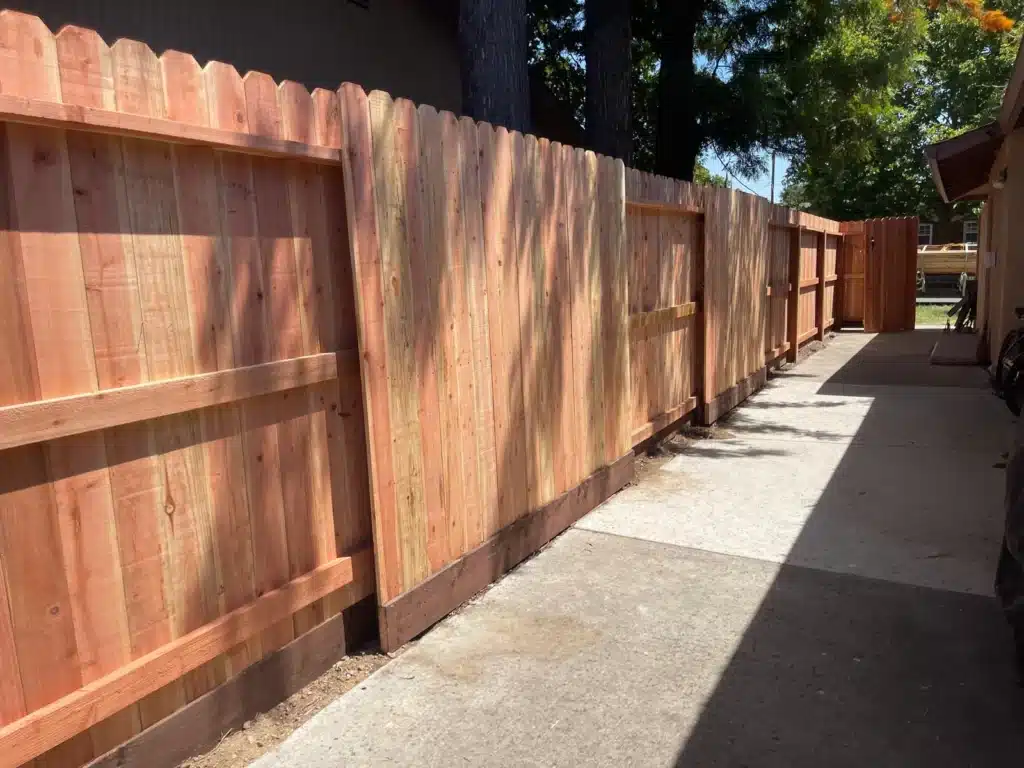
A kickboard (sometimes called a rot board or bottom board) is a horizontal plank that runs along the base of the fence, installed between the ground and the bottom edge of your vertical pickets. By raising the entire picket section upward on the posts and adding a kickboard underneath, you gain additional height—typically bringing the total fence height to approximately 7 feet. The kickboard fills the gap at the bottom, creating a clean, seamless appearance from top to bottom.
Kickboard Material Choices: Redwood vs. Pressure-Treated
When it comes to kickboard material, you have two popular options, and both have their loyal fans.
Redwood Kickboard
Redwood is a natural choice for fence kickboards, and it’s our personal favorite. The biggest advantage is the color and thickness match—a redwood kickboard blends right in with your redwood or cedar fence pickets, creating a uniform look as if the fence was built that way from the start. The grain, tone, and board thickness are consistent, so the kickboard doesn’t look like an afterthought. It looks like it belongs.
- Color and thickness match standard fence pickets seamlessly
- Natural resistance to insects and decay
- Beautiful, clean aesthetic that blends with the rest of the fence
- Weathers gracefully alongside the existing pickets
Pressure-Treated Kickboard
Pressure-treated lumber is the other popular option, and a lot of homeowners prefer it. The main draw is that pressure-treated boards are thicker and chemically treated, which helps it hold up longer against ground contact, moisture, and the general wear and tear that comes with sitting at the base of a fence. Pressure-treated wood is chemically treated to resist rot and insects, which makes it a solid performer in direct ground contact situations.
- Thicker, denser board that feels more substantial
- Chemical treatment provides strong rot and insect resistance
- Often preferred by customers who prioritize durability over aesthetics
- Widely available and cost-effective
The bottom line: Both materials do the job well. Redwood gives you a seamless look, while pressure-treated gives you added thickness and peace of mind for ground contact. Either way, you’re getting a taller, more private fence.
Option 2: Add Lattice on Top

What Is a Lattice Fence Topper?
The second approach to adding height is to install a lattice panel along the top of the fence, sitting above the standard 6-foot pickets. Lattice is a criss-cross / diamond-patterned wood panel that allows light and airflow to pass through while still adding visual height. With lattice, you can bring the total fence height to 7 or even 8 feet depending on the panel size.
A Different Look
There’s no getting around it—lattice gives your fence a completely different look. It’s more decorative and open compared to the solid, uniform appearance of a kickboard extension. Some customers love the way lattice looks. It can add a touch of elegance, allow climbing plants to weave through, and let more light into the yard. If that’s the aesthetic you’re going for, lattice might be exactly what you want.
That said, we’ll be upfront: lattice isn’t for everyone. Because the panels are thinner and more exposed to the elements, lattice tends to break down faster over the years and shows its age more quickly than solid wood. The thin slats can crack, warp, and weather unevenly, especially in harsh climates. It’s still functional, but it won’t look as crisp five or ten years down the road compared to a solid kickboard fence.
Side-by-Side Comparison
Factor | Kickboard (Bottom) | Lattice (Top) |
Total Height | Approx. 7 feet | 7 to 8 feet |
Look & Style | Solid, uniform, seamless | Decorative, open, airy |
Privacy Level | Full privacy top to bottom | Partial—lattice allows visibility |
Durability | Excellent—solid board lasts | Moderate—thin slats age faster |
Cost per Foot | Lower | A few dollars more per foot |
Maintenance | Minimal—ages like the fence | Higher—may need earlier replacement |
Best For | Maximum privacy and longevity | Decorative appeal and plant trellising |
Our Honest Take
For most homeowners who want a taller fence with maximum privacy and the longest lifespan, we recommend the kickboard option. It’s clean, it’s solid, and it ages gracefully alongside the rest of your fence. Whether you go with redwood for the seamless look or pressure-treated for the extra thickness, a kickboard adds meaningful height without changing the character of your fence.
But here’s the thing—if you love the look of lattice, go for it! Lattice can be beautiful, especially when draped with climbing jasmine or ivy. It costs a few more dollars per foot, and it won’t last quite as long, but if it makes your backyard feel like the retreat you’ve always wanted, that’s what matters. Your fence, your call.
You’re Busy. We Make Fences Easy.
We know you’ve got a million things on your to-do list. Figuring out fence heights and materials shouldn’t have to be one of them. Most of our customers are busy professionals and families who simply don’t have the time to become fencing experts—and they shouldn’t have to.
That’s where we come in. We handle the details, walk you through your options, and make sure you get exactly the fence you want—at the right height, with the right materials, installed the right way. No guesswork, no stress, no wasted weekends.
Ready to make your fence taller?
Contact us today for a free estimate. We’ll take it from here.