Are you planning a pickleball court at your home, HOA, community park, or commercial facility? Fantastic Fence specializes in custom pickleball court fencing and gate solutions across Sacramento County and surrounding Northern California, including Placer, El Dorado, Yuba, and Nevada counties.
Whether you’re building a new court, converting an old tennis court, or upgrading existing fencing, we’ve built many fences that enhance safety, playability, and aesthetics — indoors and outdoors.
Why a Fence Matters for Your Pickleball Court
Fencing around a pickleball court is more than just a boundary — it:
- Contains balls so you spend less time chasing them
- Defines the play area for safety and clarity
- Helps manage wind conditions that affect lighter pickleball play
- Provides privacy and separation from neighbors or other courts
- Improves aesthetics and integrates with your property design
Unlike a tennis ball, a pickleball is lighter and more susceptible to wind drift. That’s why many Sacramento-area players want windscreen or privacy features that help keep breezes from affecting play.
Chain-Link Fencing: The Standard for Pickleball Courts
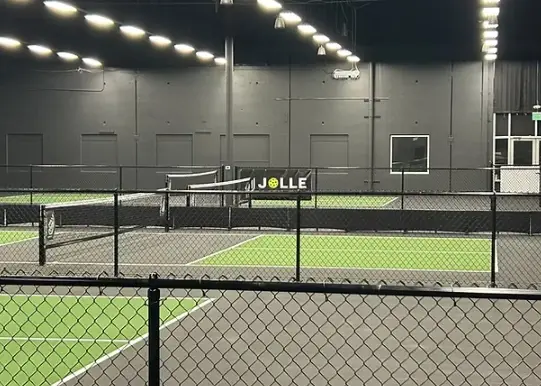
The most common fence type for pickleball courts is chain-link fencing — especially when paired with optional screens or slats. It’s:
- Durable and low maintenance
- Great visibility for courts without blocking sightlines
- Easy to customize with color coatings like black vinyl
- Cost-effective compared with solid panel systems
We install both galvanized and black vinyl-coated chain link. Most clients prefer the black vinyl coating if the budget allows — it looks cleaner and resists rust, with an attractive finish.

Fence Height Options Explained
Which height is right for you depends on how the court will be used:
4–6 Feet — Interior Barriers & Dividers
Perfect for inside the playing area or between adjacent courts. Keeps sightlines open while separating play zones.
6 Feet — Standard Perimeter Height
Great for backyard courts where balls don’t fly as far and you want a balance of containment and open feel.
8 Feet and Taller — Maximum Containment
We’ve installed fences 8 feet high that work well for community courts, HOA facilities, and where extra ball containment is needed. Taller fencing is common for tournament-style play but can be customized based on your site and budget.
Wind & Privacy Options: Windscreen vs Slats
Pickleball players often want help managing wind, especially in open yards or parks. We offer two common screen options:
Wind Screens / Mesh Fabric
- Helps soften wind gusts
- Adds background contrast for better ball visibility
- Easier to install on existing fences being repurposed
- Less durable long-term than solid slats
Privacy Slats
- More durable and long-lasting
- Offers greater visual privacy
- Works well on newly built fences
- Slightly higher cost than basic windscreen
If we’re modifying a current chain-link fence (like on a tennis court conversion), windscreens are often a better choice for airflow and ease of install.
Gates & Access Controls
We usually install single walk gates (about 4’ wide) — perfect for player and guest access. Some clients choose to leave an opening instead of a gate, depending on usage and access needs.
Each gate can be fitted with hardware that matches the fence finish and swings smoothly for everyday use.
Conversions: Tennis to Pickleball
Converting an old tennis court into pickleball courts is a growing request. We’ve done several, including:
- A private indoor facility in Elk Grove
- A park court conversion in Folsom
For these projects, we often reuse the existing tennis fencing, adjust gate placement, and modify the layout to fit multiple pickleball courts, ensuring optimal access and ball control.
Where We Serve
Fantastic Fence proudly installs pickleball court fencing throughout:
- Sacramento County
- Placer County
- El Dorado County
- Yuba County
- Nevada County
Whether it’s a backyard court in Fair Oaks, an HOA court in Roseville, or a park in Folsom, we tailor the solution to your property and preferences.
Ready to Enhance Your Pickleball Court?
If you’re planning a new court or upgrading existing fencing in Sacramento or nearby communities, our team at Fantastic Fence can help. From fence design and height options to gates and wind screening, we’ll guide you to the best solution for your space and goals.
Contact us today to learn more or to request a free consultation!
Pickleball Court Fencing FAQs
Do pickleball courts need fencing?
While fencing isn’t always required, most pickleball courts use fencing to keep balls contained, improve safety, and define the play area. In Sacramento County, fencing is especially helpful for backyard courts, HOAs, parks, and shared spaces.
What is the best fence height for a pickleball court?
Most pickleball courts use 4- to 6-foot chain link fencing.
- 4 feet is common for interior dividers between courts
- 6 feet works well for perimeter fencing
- 8 feet may be used when extra ball containment is desired
We help determine the best height based on space, usage, and layout.
Is chain link fencing good for pickleball courts?
Yes. Chain link fencing is the most common choice for pickleball courts because it’s durable, cost-effective, and allows visibility. Many Sacramento-area clients prefer black vinyl-coated chain link for its clean look and added corrosion resistance.
Do wind screens help with pickleball?
Yes. Pickleballs are lighter than tennis balls and more affected by wind. Wind screen mesh helps reduce wind interference and improves ball visibility. Some clients choose privacy slats instead for greater durability and long-term performance.
Can you convert an old tennis court into pickleball courts?
Absolutely. We frequently reuse existing tennis court fencing, modify layouts, and move gate locations to accommodate pickleball courts. This is a cost-effective way to upgrade underused tennis courts in Sacramento County and surrounding areas.
Do pickleball courts need gates?
Many courts use single walk gates (typically 4 feet wide) for access. Some private courts leave an opening instead of a gate. The right option depends on security needs, traffic flow, and whether the court is public or private.