Which Style Is Right for Your Yard?
When homeowners start thinking about installing a privacy fence, the goal is usually simple. You want your yard to feel comfortable, safe, and truly yours. A well built fence gives children and pets room to play, adds beauty to the property, and creates a peaceful place to relax. But before fence installation begins, many homeowners face the same decision, horizontal or vertical? The discussion around horizontal vs vertical privacy fencing often comes down to appearance, durability, and practical needs. Both styles provide strong privacy and security, but the way the fence panels are built can change the look and long term performance of the fence. Understanding the differences between horizontal fences and vertical fences helps homeowners choose the best bet for their property and their personal taste.
What Is a Privacy Fence?
A privacy fence surrounds a yard with tightly spaced boards that block outside views and create a secure outdoor space. Many homeowners install a fence to protect their family, improve the look of the property, and clearly define property boundaries. The right fence design can turn an open yard into a comfortable retreat without sacrificing style. Fence panels can be built in many ways, but the most common layouts involve either vertical boards or boards running parallel to the ground. These horizontal and vertical designs create two distinct styles that both deliver privacy. Each approach offers different advantages depending on the yard layout, weather conditions, and design preferences.
The Purpose of Privacy Fencing
Privacy fencing provides several important benefits for homeowners. A strong fence improves security and helps keep children and pets safely contained within the yard. It also reduces noise and visual distractions from nearby streets or neighbors. In suburban yards, a privacy fence often becomes the backbone of the outdoor space. It frames patios, gardens, and play areas while creating a quiet environment for family time. With thoughtful fence installation, homeowners can enjoy their outdoor space with greater confidence and comfort.
Most Common Privacy Fence Materials
The most common material used for privacy fence panels is wood. Wood remains popular because it feels natural, versatile, and durable when properly sealed. Vertical wood fences have been common for decades, especially in traditional homes and suburban neighborhoods. Horizontal wood fences have gained popularity as homeowners look for a more modern look and minimalist aesthetics. Vinyl and composite materials are also used for fence panels. Horizontal vinyl fences can offer low maintenance and weather resistance while maintaining a sleek appearance. Some modern fence design ideas also combine wood with mixed materials such as corrugated metal for added visual interest and durability.
What Is a Vertical Privacy Fence?
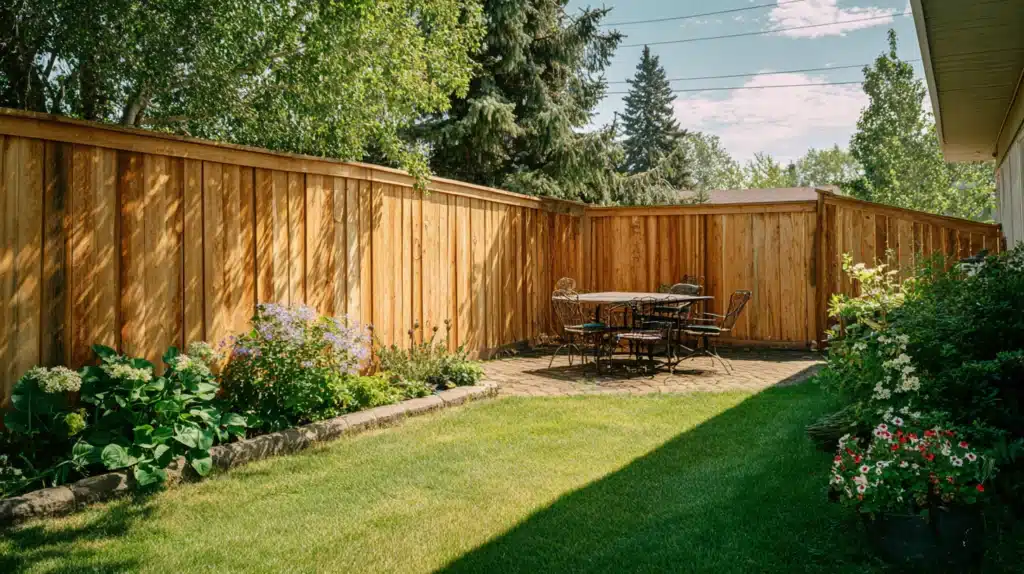
Vertical fences are the classic privacy fence design that most homeowners recognize. In this layout, vertical fence panels are constructed with boards standing upright from the ground. The boards attach to horizontal stringers that run between fence posts. These vertical boards create strong vertical lines that give the fence a traditional look.
How Vertical Fencing Is Built
During vertical fence installation, posts are set firmly into the ground and spaced evenly across the yard. Horizontal stringers connect the posts and support the vertical fence panels. Fence boards are then attached to those rails, creating a solid barrier with tightly spaced boards. This structure helps vertical fences work well in a wide variety of conditions, including uneven ground or slopes. Vertical fence panels can be adjusted slightly to follow the ground level while still maintaining a polished look.
Why Vertical Fences Are the Traditional Choice
Vertical fences remain one of the most popular fence styles because they complement traditional homes and suburban yards. Many homeowners associations also prefer vertical designs because they maintain a consistent appearance throughout the neighborhood. The vertical lines created by these fences provide a timeless look that blends easily with gardens, patios, and landscaping features.
Advantages of Vertical Privacy Fences
Vertical fences offer several distinct advantages for homeowners. The upright orientation allows water to flow down the fence boards rather than sitting on the surface. This natural drainage improves weather resistance and durability over time. Vertical fences also require fewer structural adjustments because gravity supports the design instead of pulling against it. For many properties, vertical fence installation also allows fewer posts and simpler construction compared with horizontal ones. That efficiency can sometimes reduce labor costs and create a lower cost installation while still delivering excellent durability. Another benefit is wind resistance. Vertical fence panels tend to perform well in windy areas because the boards are firmly supported by the rails behind them.
Possible Drawbacks
While vertical fences provide dependable performance, some homeowners feel the design looks more traditional than modern. The vertical lines create a familiar appearance that blends well with traditional homes, but homeowners looking for minimalist aesthetics or a modern vibe may prefer another option.
What Is a Horizontal Privacy Fence?
Horizontal fences offer a different approach to fence design. In these fences, the boards run parallel to the ground instead of standing upright. Horizontal fence panels stretch between posts and create long horizontal lines across the yard. This design creates a sleek look that many homeowners associate with contemporary homes and modern landscaping.
How Horizontal Fencing Is Built
During horizontal fence installation, posts are placed securely into the ground and spaced carefully to support the fence panels. Boards are installed parallel to the ground and attached either directly to the posts or to hidden supports. Horizontal stringers may also be used in some fence designs to provide additional strength. Because the boards span between posts, horizontal fences often require careful planning and precise installation to maintain straight lines across the yard.
Why Horizontal Fences Are Popular in Modern Homes
Horizontal fences have been gaining traction as homeowners look for a more modern design for their outdoor spaces. The long horizontal lines create a sleek appearance and modern appeal that works well with contemporary homes. Horizontal lines create a sense of width, which can help small yards feel larger and more open. This visual effect makes horizontal fence panels especially attractive for homeowners working with limited outdoor space.
Advantages of Horizontal Privacy Fencing
Horizontal fences provide several benefits beyond style. The clean lines and minimalist aesthetics complement modern architecture and contemporary homes. Horizontal designs also allow homeowners to experiment with mixed materials such as wood and corrugated metal. Corrugated metal panels combined with wood frames can create a bold fence design that balances durability and visual interest. Corrugated metal also improves durability and weather resistance while requiring minimal maintenance. Some horizontal wood fences use horizontal slats with tighter board spacing to create a stylish shadow effect while still maintaining privacy. This type of fence design can add a polished look to patios, gardens, and entertainment areas.
Potential Challenges
Horizontal fences require careful installation because the boards run parallel to the ground. Without proper support, the boards can eventually sag. The exposed ends of horizontal fence panels may also absorb moisture if they are not sealed properly. Because of these structural factors, horizontal fence installation sometimes requires more planning and professional installation to ensure long term durability.
Horizontal vs Vertical Privacy Fencing: Key Differences
When homeowners compare horizontal vs vertical privacy fencing, the differences become clear in several key areas. Understanding how horizontal and vertical elements influence durability, maintenance, and appearance helps homeowners make an informed decision.
Appearance and Style
Vertical fences create strong vertical lines that produce a classic appearance suited for traditional homes and suburban yards. Horizontal fences create long horizontal lines that deliver a sleek look and modern vibe. Both styles benefit from thoughtful fence design, but the visual impact is different. Horizontal designs often appeal to homeowners who want a modern look, while vertical designs offer timeless curb appeal.
Durability and Longevity
Durability is a key factor when choosing between horizontal and vertical fence panels. Vertical fences allow water to run down the boards naturally, improving weather resistance and protecting the wood from long term moisture exposure. Horizontal fence panels can be equally durable when installed correctly, but they rely on proper sealing and support. Materials such as corrugated metal can improve durability in horizontal designs because the metal panels resist moisture and wear. Corrugated metal also provides excellent weather resistance and can extend the life of horizontal fence panels when used in mixed materials designs.
Maintenance
Maintenance requirements for horizontal and vertical fences are generally similar. Wood fence panels require periodic staining or sealing to maintain durability. Horizontal wood fences may need occasional inspection because the boards run parallel to the ground and may experience stress over time. Vertical wood fences often require slightly less adjustment because gravity supports the fence boards more naturally. Vinyl options such as horizontal vinyl fences offer low maintenance and minimal upkeep, making them a popular option for homeowners seeking a low maintenance solution.
Installation Complexity
Fence installation is often simpler for vertical fences. The traditional layout allows installers to place posts and attach vertical fence panels quickly. Horizontal fence installation can take more time because maintaining straight horizontal lines requires careful leveling. Horizontal fences also may require closer post spacing to prevent sagging. These additional steps can influence labor costs and make horizontal installation slightly more complex than vertical installation.
Security and Climbability
Another difference between horizontal and vertical fences involves climbability. Vertical fences have fewer horizontal elements that could act as footholds. This makes vertical fences slightly more difficult to climb. Horizontal fences sometimes include horizontal slats that could allow climbing in certain situations. Homeowners with children or pets may consider this factor when choosing between horizontal or vertical fence styles.
Cost Comparison in 2025
Fence installation costs vary based on materials, terrain, and yard size. Homeowners planning a new fence should understand how labor costs and materials affect the final price. On average, a privacy fence installation in the United States ranges from $1,800 to $8,000, with many projects averaging around $4,300. In areas like Sacramento, many full backyard projects fall between $7,500 and $10,500 depending on materials and property size.
Average Cost by Fence Material
Wood remains one of the most popular materials for privacy fence panels. Wood fence installation typically ranges between $40 and $60 per linear foot. Vinyl fence panels often cost between $50 and $60 per linear foot. Composite fence panels can reach $70 to $90 per linear foot depending on the design. Aluminum fences fall between $48 and $55 per linear foot, though they are usually chosen for decorative purposes rather than privacy.
Why Horizontal Fences Sometimes Cost More
Horizontal fences can sometimes cost slightly more than vertical fences due to the complexity of installation. Achieving perfectly straight horizontal lines often requires additional planning and structural support. Horizontal fence panels may also require more posts and reinforcement to maintain durability. These factors can increase labor costs during installation.
Which Fence Style Is Best for Your Yard?
Choosing between horizontal or vertical fence styles depends on the goals for your yard and the surrounding environment. Both horizontal and vertical fences provide privacy and security, but the right option will depend on appearance preferences and practical needs.
Choose Horizontal Fencing If
Horizontal fences are a strong choice for homeowners seeking a modern look. The horizontal lines create a sleek appearance that complements contemporary homes and minimalist landscaping. Horizontal designs work especially well in small yards where the horizontal lines create the illusion of additional width. Homeowners interested in mixed materials such as wood and corrugated metal may also prefer horizontal fence design because it highlights modern architectural features.
Choose Vertical Fencing If
Vertical fences remain the best bet for homeowners who prefer traditional styles and reliable performance. Vertical fences work well in suburban yards and complement traditional homes. The vertical fence panels provide dependable durability and natural drainage, which can be especially helpful in humid climates.
Climate Considerations
Climate conditions can influence the performance of horizontal and vertical fence panels. Areas with heavy rainfall or humid climates often benefit from the natural drainage of vertical designs. However, horizontal fences built with proper sealing and durable materials can perform well in many environments.
Local Factors Homeowners Should Consider
Before beginning fence installation, homeowners should review local regulations and property lines. Many cities allow privacy fences up to six feet in backyard areas. Property boundaries should be clearly identified before installation begins to avoid disputes with neighbors.
Fence Height Regulations
Backyard privacy fence panels are typically built at heights of five to six feet. This height offers privacy without blocking sunlight or views unnecessarily.
Property Line and Neighbor Considerations
Discussing plans with neighbors before fence installation can prevent misunderstandings and improve cooperation. In many cases, shared fence projects can benefit both properties.
HOA Guidelines
Some homeowner associations have rules regarding fence design and materials. Reviewing these guidelines before installation helps homeowners choose a fence style that meets community standards.
Design Ideas for Horizontal and Vertical Fences
Creative fence design allows homeowners to personalize their outdoor space while maintaining privacy. Horizontal and vertical designs each offer opportunities to experiment with materials and styles.
Popular Horizontal Fence Designs
Horizontal fence panels can feature tightly spaced boards for full privacy or horizontal slats for a lighter appearance. Some horizontal wood fences combine wood frames with corrugated metal inserts to create bold visual contrast. Corrugated metal panels add durability while maintaining a sleek appearance. Corrugated metal can also improve weather resistance and reduce maintenance requirements. This combination of wood and corrugated metal creates a fence design that balances strength and modern appeal.
Popular Vertical Fence Designs
Vertical fence panels also offer many design possibilities. Board on board vertical fences provide complete privacy with tightly spaced boards. Decorative tops such as lattice panels can add visual interest while maintaining privacy below. Vertical wood fences with simple vertical lines remain one of the most popular fence styles for traditional homes.
How the Right Fence Transforms a Backyard
A new fence can completely change how a yard feels. A worn fence or broken fence panels can make a property feel neglected. But strong fence panels with thoughtful fence design create a sense of comfort and pride. The right fence turns an open yard into a protected outdoor retreat. Children and pets can play safely, and homeowners can enjoy quiet evenings outside without distractions from the street or neighboring properties.
Frequently Asked Questions
Is a horizontal fence stronger than a vertical fence?
Both horizontal and vertical fences can provide excellent durability when built correctly. Vertical fences often distribute weight more naturally, but horizontal fences can be equally strong with proper installation.
Which fence style lasts longer?
Durability depends on materials and maintenance. Wood, vinyl, and composite fence panels can all last many years when properly maintained.
Are horizontal fences more expensive?
Horizontal fences can sometimes cost more because horizontal fence installation may require additional structural support and labor.
Do horizontal fences require more maintenance?
Maintenance depends on materials and climate conditions. Horizontal wood fences may require occasional inspection, while vinyl or metal options can reduce maintenance.
Which fence style increases property value?
Both horizontal and vertical fence styles can improve curb appeal and increase property value when professionally installed.
Can HOA rules restrict horizontal fencing?
Yes, some associations require certain fence styles. Checking HOA guidelines before installation is always recommended.
Final Thoughts: Choosing the Fence That Feels Right for Your Home
Choosing between horizontal or vertical fence styles ultimately comes down to personal taste and practical needs. Horizontal fences bring modern appeal and sleek design to contemporary homes. Vertical fences offer classic durability and reliable performance that suits traditional homes and suburban neighborhoods. Both styles benefit from thoughtful fence installation and quality materials. The right fence design should protect your yard, enhance your home, and provide a comfortable outdoor space for years to come. If you are considering a new fence and want expert guidance, our team offers professional fencing services and can help homeowners explore the best options for their property. Reach out today for a free estimate and let us help you build a fence that feels strong, beautiful, and built to last.