
If you are asking yourself, how often do I need to stain a wood fence, you are already doing something right. A fence is not something most homeowners think about every day, but it quietly protects your property, frames your yard, and adds value to your home. Over time, sun, rain, moisture, and wear slowly take their toll. Staining is how you protect that investment and keep your wood fence strong, durable, and beautiful for years to come.
This guide is written for real homeowners who want clear answers, not confusing rules. There is no single calendar date that works for every fence. Several factors come into play, including stain quality, weather conditions, and the type of wood used. Let’s walk through it together so you can feel confident about your fence maintenance plan.
The Short Answer So You Can Relax
For most homeowners, a good rule is to check your fence once a year and plan on fence staining about every two to three years. That timing works for many wood fence installations, especially when high quality stains are used. However, some fences require staining sooner, while others last longer. The condition of the wood matters more than the calendar.
Frequent staining is not always better. More frequent staining without proper prep can actually harm the wood fibers and reduce durability. What matters most is regular staining done at the right time, based on how your fence is responding to its environment.
Why Staining Your Fence Matters More Than You Think
It Is About Protection, Not Just Looks
Many homeowners think stain is only about appearance, but fence staining plays a much bigger role. A good stain creates a barrier that helps protect wood from uv rays, moisture, rain, snow, and dirt. Without that protection, wood begins to dry out, crack, and weaken.
Sun exposure breaks down wood fibers over time. Moisture seeps in and can lead to rot, mold, mildew growth, and decay. Temperature changes cause boards to expand and contract, which leads to wear and loose fasteners. Staining wood fences slows all of this down and helps the fence lasts longer.
What Happens When a Fence Goes Too Long Without Stain
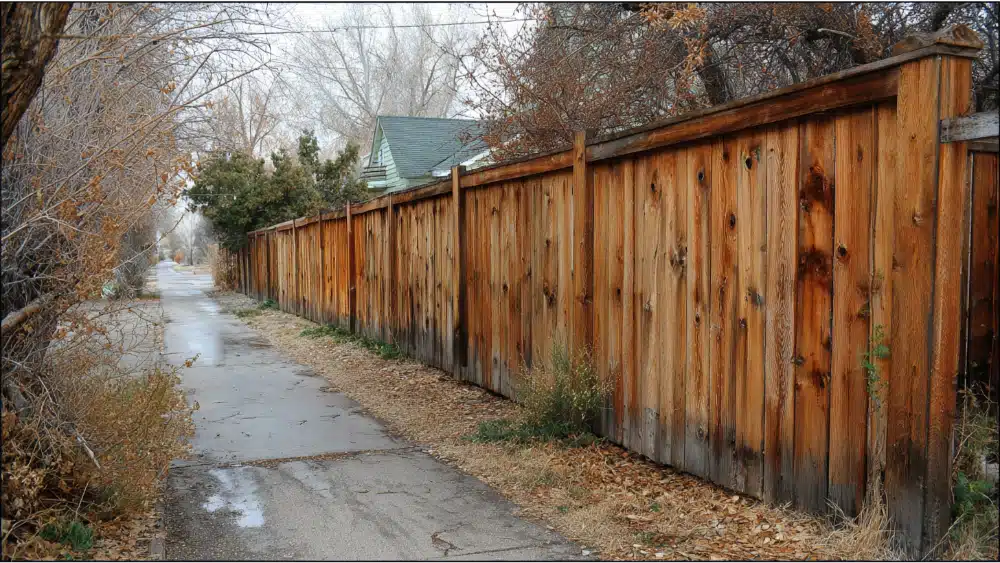
When a fence goes without maintenance, the changes happen gradually. The color fades. The wood turns gray. Discoloration appears. Boards begin to feel rough. Over time, cracks form, moisture enters, and rot sets in, potentially leading to costly repairs or even full replacement. Regular staining is one of the most essential steps in avoiding those problems.
How Often You Need to Stain Based on Stain Type
Clear and Transparent Stains
Clear and transparent products highlight the natural wood grain and are popular with homeowners who love a natural look. These finishes offer minimal protection from uv rays, which means they wear out faster. With this type of stain, more frequent staining is expected, often about once a year. These stains require frequent maintenance but can look beautiful when cared for properly.
Semi Transparent Stains
Semi transparent stains strike a balance between appearance and protection. They allow some wood grain to show while providing better resistance to sun and moisture. Many homeowners choose this option because it typically holds up for two to three years. With proper prep and even application, this is one of the most reliable choices for a wooden fence.
Semi Solid and Solid Stains
More opaque stains provide the highest level of protection. They block more sun exposure and reduce wear caused by weather conditions. These stains often last three to six years, depending on exposure and stain quality. The tradeoff is that less wood grain is visible, but durability is significantly improved.
Climate, Sun, and Sprinklers Change Everything
Full Sun Versus Partial Shade
A south facing fence or one exposed to full sun throughout the day will break down faster than one in shade. Sun is one of the biggest factors that affect how often you need to stain a fence. Sections exposed to constant sun often require more frequent maintenance.
Irrigation and Moisture Exposure
Sprinklers that regularly soak the boards create constant moisture. Wet wood breaks down stain faster and increases the risk of mildew, mold, and rot, especially near the ground. If part of your fence is always wet, it may need more frequent staining.
Regional Weather Conditions
In milder climates, fences may last longer between coats. In areas with hot summers, heavy rain, or snow, fences require staining sooner. Weather conditions such as rain, moisture, sun, and exposure all play a role in how long a stain holds up.
New Fence? When to Stain for the First Time

Pressure Treated Wood Timing
If you have a new fence, timing matters. Pressure treated wood is often wet when the fence installed is completed. Staining too soon traps moisture and leads to peeling and uneven results. A simple water test helps. If water beads on the surface, wait. If it absorbs, the wood is ready.
Cedar and Redwood Fences
Cedar and redwood are popular fence types because they resist decay better than pine. However, they still require staining. Without protection, they fade, dry out, and lose durability. Staining early helps protect these woods and maintain their natural beauty.
How to Tell When Your Fence Is Ready for Re Staining
The Water Test
Pour water on the fence. If it soaks in, the stain barrier is gone and it is time to stain your fence again.
Visual Signs
Look for signs such as fading, gray color, discoloration, peeling, or uneven wear. These signs indicate the stain is breaking down.
The Touch Test
Run your hand along the boards. Rough texture, splintering, or dryness means the wood needs protection.
What Happens If You Wait Too Long?
Delaying fence staining often leads to problems that cost more money over time. Moisture enters the wood, mold and mildew growth spread, and rot weakens posts and rails. Small issues turn into larger repairs, potentially leading to costly repairs or early replacement. Regular staining protects your property and saves money long term.
DIY Versus Professional Fence Staining
When DIY Makes Sense
DIY staining can work for small projects if you have the time and patience. Keep in mind that fence staining is time consuming. Prep work such as cleaning dirt, removing mold, and allowing the wood to dry is essential.
When Professional Staining Is Worth It
Professional staining ensures proper prep, even application, and the correct products for your fence. Professionals understand different types of wood, including pine, cedar, redwood, oak, and other hardwoods. Professional staining often results in better durability and longer lasting protection.
How Much Does Fence Staining Cost in 2025
Fence staining costs vary depending on fence size, stain type, and condition. While paint can sometimes seem cheaper, paint often peels and traps moisture. Stain penetrates the wood and wears more naturally. Investing in quality fence staining helps your fence lasts longer and reduces maintenance over time.
Common Fence Staining Mistakes Homeowners Make
Staining Too Soon
Applying stain to wet wood leads to peeling and poor absorption.
Skipping Prep
Dirt, mold, mildew, and old stain prevent proper adhesion and reduce protection.
Using the Wrong Product
Oil based stains, water based products, and different types of stain perform differently. Choosing the wrong product for your fence can shorten its lifespan.
Ignoring One Side of the Fence
Both sides of the fence should be stained to ensure even protection and prevent warping.
A Simple Annual Fence Care Plan
Walk your fence once a year. Look for signs of wear, rot, mold, mildew, and discoloration. Check areas near the ground and around more posts where moisture collects. Plan your project ahead of time and budget for maintenance. Frequent maintenance done correctly keeps your fence strong.
FAQs Homeowners Ask All the Time
How long does fence stain really last?
It depends on stain quality, exposure, and maintenance. Anywhere from one to six years is common.
Can I stain over old stain?
Yes, but proper cleaning and prep are required.
What time of year is best to stain a fence?
Dry weather with moderate temperatures works best.
Should I stain both sides of my fence?
Yes, both sides need protection.
Is staining better than paint?
Stain penetrates wood and is more durable, while paint can peel.
What happens if I never stain my fence?
Without staining, wood will gray, crack, rot, and fail much sooner.
From Worn and Worrying to Strong and Beautiful
A fence is part of your yard, your property, and your daily life. With the right care, a wood fence stays durable, safe, and attractive for years. Staining is not about constant work, it is about smart, regular protection. When you stay ahead of maintenance, your fence protects what matters most and continues to create pride in your home.