If you are a homeowner trying to do the right thing, figuring out what height fence is required for pool safety compliance can feel overwhelming. Rules vary, wording is technical, and mistakes can be expensive. More importantly, the goal is not just legal compliance, it is protecting people you care about. A properly designed pool fence is an essential safety measure that helps prevent accidents, prevent unsupervised access, and create peace of mind for pool owners.
This guide explains pool fencing requirements in clear, practical language. It reflects current 2025 pool safety regulations, focuses on residential pools, and helps you understand how fence height, gates, and design all work together to ensure compliance and maximum safety.
Why Pool Fence Height Laws Exist and Why They Matter to Families
A swimming pool is a place of joy, but it also carries risk. Pool safety laws exist because water access can quickly turn dangerous, especially for young children. A fence creates a physical barrier between the pool area and the rest of the yard. That barrier slows movement, alerts adults, and helps prevent children from reaching the pool side without supervision.
Fence height is a critical factor because a barrier that is too short can be climbed. A compliant pool fence is designed to prevent climbing, prevent unsupervised access, and reduce the risk of injury or loss. For pool owners, following safety requirements is both a moral responsibility and a legal one.
The National Standard for Pool Fence Height in 2025
The Most Common Requirement: 48 Inches
Across the United States, the most widely accepted minimum fence height for residential pools is 48 inches. This measurement is taken from the finished ground level on the side away from the pool to the top of the fence. Many local authorities adopt this standard through the spa code or related safety standards.
The minimum fence height of 48 inches has proven effective when combined with proper gate design and spacing. However, it only works when the fence meets all barrier requirements and is installed correctly.
When 48 Inches Is Not Enough
While 48 inches is common, it is not universal. Some local codes require a taller barrier, especially in areas with stricter rules or higher population density. In certain regions, the least 54 inches or even 60 inches is required to ensure compliance. This is why understanding local regulations is so important.
Pool Fence Height Requirements by State
California Pool Fence Height Requirements
California enforces stricter pool fencing requirements than many states. Most residential pools must have a fence height of at least 60 inches. This applies to new construction and many existing pools when permits are involved. Local building department inspections will verify fence height, gate function, and spacing.
For pool owners in California, failing to meet minimum fence height can lead to non compliance, delays, and hefty fines. These stricter rules are designed to maximize safety and prevent accidents involving small children.
Other States With Taller Requirements
Arizona and parts of Florida and Nevada also enforce taller barrier requirements. Some jurisdictions require a taller barrier based on property lines, proximity to public access, or local government policy. Local ordinances may exceed state law, making local level research essential.
States That Allow 48 Inches
Some states still allow a 48 inches minimum fence height. Even in these areas, local requirements may differ. Local authorities can adopt specific regulations that affect fence height, gate design, and placement around hot tubs or spas.
Local Codes, Permits, and Why Neighbor Examples Do Not Count
One of the biggest mistakes pool owners make is assuming that a nearby fence sets the standard. Local codes change, and enforcement varies by local government. What passed inspection years ago may not meet today’s applicable regulations.
Your local building department is the final authority. Inspectors look for code compliance, legal compliance, and full compliance with current pool safety regulations. Relying on examples instead of permits can result in non compliance and costly corrections.
Pool Fence Height Is Only One Piece of Compliance
Closing and Self Latching Gates
A pool fence is only effective if the pool gate works properly. Gates must be closing and self latching, meaning they close automatically and latch automatically every time. Self closing hinges and self latching gates are required to prevent unsupervised access to the swimming pool.
Latch placement is also regulated. The release mechanism must be positioned high enough that young children cannot reach it from outside the pool area.
Spacing Rules and Climb Prevention
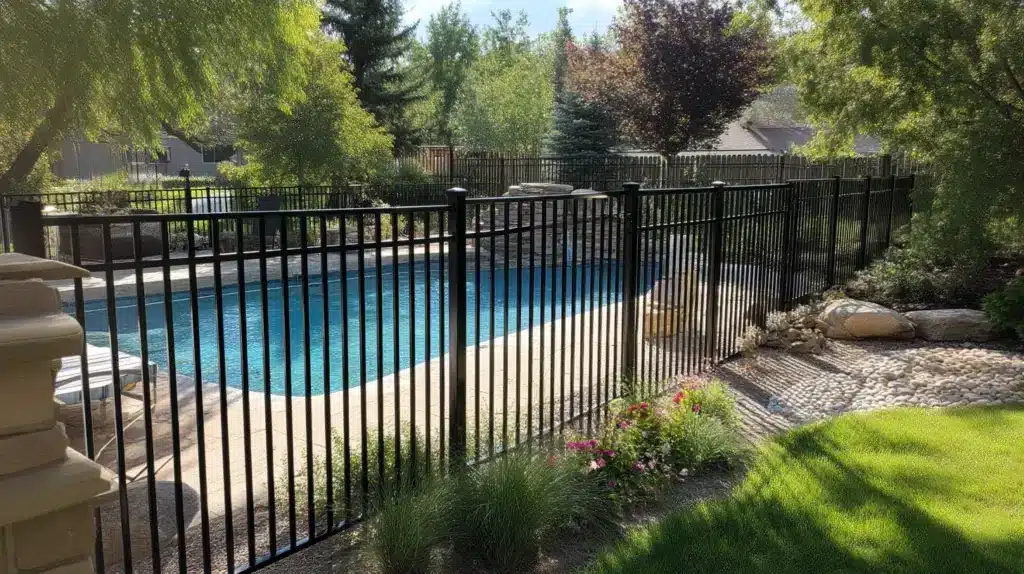
Fence design must prevent climbing. Codes often require vertical bars rather than horizontal bars. Horizontal rails and horizontal members on the outside of the fence can act as a ladder. Many codes require that you avoid horizontal rails or place them on the pool side of the fence.
Spacing between vertical bars and between the bottom of the fence and the ground is regulated to prevent children from squeezing through.
Distance From the Pool and Home Walls
The fence must be positioned to control access to the pool. In some cases, the house can form part of the barrier, but only with additional safety measures such as alarms. Doors that act as a gate providing access to the pool area must meet strict safety requirements.
Fence Material Choices That Meet Height Requirements
Wood Pool Fence Options
Wood fencing can meet pool fencing requirements when designed properly. The fence height must be correct, spacing must comply, and maintenance is essential. Fence regularly inspected for damage is important, as warped boards can reduce compliance.
Vinyl Pool Fence Options
Vinyl fencing is popular because it is low maintenance and easy to keep compliant. Panels are manufactured to meet barrier requirements and maintain consistent fence height.
Aluminum and Metal Pool Fences
Aluminum fencing is commonly used for compliant pool installations. Vertical bars, durable construction, and clear visibility help ensure safety while meeting local regulations.
Glass Pool Fence Considerations
Glass fences must meet the same minimum fence height and gate rules as other materials. While visually appealing, professional installation is critical to ensure compliance and long term safety.
Common Pool Fence Height Mistakes Homeowners Make
Common mistakes include measuring fence height from the wrong grade, installing decorative caps that reduce effective height, or failing to adjust for sloped ground. Gates that do not open outward or do not self closing properly are another frequent issue.
Avoiding horizontal bars and ensuring the fence meets spacing rules helps prevent climbing and improves safety.
How Inspectors Measure Pool Fence Height
Inspectors measure from ground level away from the pool to the top of the fence. They check multiple points, especially near slopes and property lines. They also test each pool gate to confirm it is self closing and self latching.
A fence meets code only when all components function together.
Should You Build Taller Than the Minimum
Many pool owners choose to exceed the minimum fence height. A taller barrier can provide maximum safety, reduce risk, and improve property value. Taller fences can also discourage climbing and provide added privacy.
While not always required, building taller than the minimum fence height is often a wise investment.
Pool Cover and Additional Safety Measures
In some cases, a pool cover can be used as an additional safety measure alongside a compliant pool fence. While a pool cover is not a substitute for fencing, it adds another layer of protection by preventing accidental falls into the water when the pool is not in use. Combining a properly installed pool fence with a secure pool cover and self closing and self latching gates offers maximum safety for families and property owners.
Pool Fence Height and Insurance Considerations
Insurance providers expect pool safety measures to meet local requirements. Non compliance can affect coverage if an incident occurs. Ensuring safety through proper installation and documentation protects both families and finances.
How Fantastic Fence Helps Homeowners Get Pool Safety Right
We help pool owners navigate pool fencing requirements with confidence. Our professional installation process focuses on safety measures, code compliance, and long term durability. We work with local authorities, understand local ordinances, and ensure every fence meets applicable regulations.
Homeowners come to us unsure. They leave knowing their pool is protected, compliant, and safe.
Frequently Asked Questions About Pool Fence Height
Is a 4 foot fence enough
In some areas, yes. In others, stricter rules require taller barriers. Always check local regulations.
Does California require 5 feet
Most California residential pools require at least 60 inches.
Can my house count as part of the barrier
Sometimes, but only with additional safety measures such as alarms.
How tall must a pool gate be
A pool gate must match the fence height and meet latch requirements.
Do hot tubs require fencing
Hot tubs and spas often fall under similar safety requirements depending on access and depth.
What happens if my fence is too short
Non compliance can lead to failed inspections, hefty fines, and mandatory corrections.
Final Thoughts on Pool Safety and Compliance
Understanding what height fence is required for pool safety compliance is about more than numbers. It is about preventing accidents, protecting small children, and creating a safe environment around the pool.
A compliant pool fence, installed correctly, with self closing and self latching gates, is an essential safety measure for any swimming pool. If you want to ensure compliance, protect your family, and enjoy your pool with confidence, doing it right the first time makes all the difference.