What Homeowners Need to Know Before Building
Can a retaining wall also function as a fence is a question many homeowners ask when their yard sits on a slope or when ground level changes make a traditional fence feel incomplete. The idea makes sense. You already need a retaining wall to hold back soil and prevent erosion, so why not let that same wall serve as a fence and boundary too. When done correctly, a retaining wall fence can be both functional and beautiful. When done incorrectly, it can threaten safety, stability, and property value. The key is understanding how retaining structures and fences work together, how fence posts interact with concrete and blocks, and how to protect the wall’s structural integrity over time.
Why This Question Comes Up So Often

Many homeowners deal with uneven land, raised patios, or backyards where the ground drops away sharply. A slope can make a yard feel unsafe, especially for kids and pets. At the same time, people want security, privacy, and a clear boundary. Putting a fence at ground level alone may not work because the soil behind it can shift. A retaining wall solves the earth and dirt problem, while a fence adds security. Combining them feels like the right solution. The challenge is making sure the structure can handle weight, wind loads, and long term drainage concerns.
The Short Answer and Why It Is Not Simple
Yes, a retaining wall can function as a fence, but not as a single unsupported element in most cases. A wall is built to retain soil. A fence is built to act as a barrier and handle wind loads. When you combine them, you are really creating a retaining wall fence system. That system must include proper structural support, correct installation of fence posts, and attention to total height and safety requirements. Skipping these steps can compromise stability and integrity.
Retaining Wall vs Fence, Understanding the Difference
What a Retaining Wall Is Designed to Do
A retaining wall is a structure built to hold back soil and dirt. Its job is to prevent erosion, manage elevation changes, and keep the ground stable. Retaining structures rely on concrete, stone, or concrete block walls with proper footings and drainage. Water pressure behind the wall is a major concern, so drainage holes, gravel, and proper back side preparation are critical. The wall must withstand the weight of the earth and maintain structural integrity for decades.
What a Fence Is Designed to Do
A fence is designed as a barrier. It provides security, defines a boundary, and protects people from falls. Fence panels, fence design, and fence posts are engineered to handle wind loads and lateral forces, not the pressure of soil. Posts are typically anchored into the ground with concrete or brackets, depending on materials and style.
Why the Difference Matters
When homeowners try putting fence posts directly into an existing retaining wall without planning, they risk damaging the wall’s structural integrity. A wall not designed for posts may crack, shift, or lose stability. Understanding the role of each element helps create a durable and functional solution.
When a Retaining Wall Can Function Like a Fence

Low Walls and Minor Elevation Changes
Short retaining walls at ground level can sometimes act as wall fences when the total height does not present a fall risk. These walls create a visual boundary and help with landscaping, but they are not a substitute for safety fencing in most yards.
Raised Areas That Require a Barrier
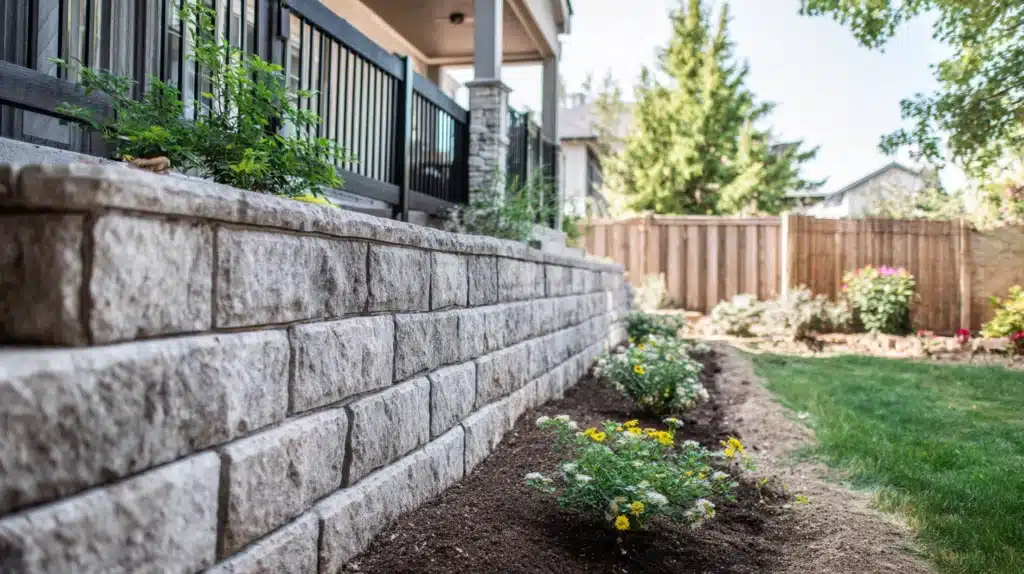
When a yard has a significant elevation change, safety becomes the priority. In these cases, a retaining wall with a fence on top is the most common method. The wall handles soil and erosion, while the fence acts as the barrier.
Integrated Retaining Wall Fence Systems
Modern retaining wall fence systems are designed as one structure with multiple elements. Concrete block walls are reinforced for strength, and fence posts are installed using sleeves, anchor systems, or core drilling. This approach maintains structural integrity while allowing the fence to function properly.
Code, Permits, and Safety Requirements in 2025
Building codes exist to protect homeowners and guests. Any retaining wall fence project must consider total height, site conditions, and local safety rules. Walls over certain heights or walls supporting a fence often require permits and inspections.
Height and Total Height Considerations
The total height of the wall plus fence determines whether additional structural support or a barrier is required. Taller systems increase wind loads and require stronger footings and support.
Engineering and Structural Support
Adding fence posts to a retaining wall introduces new forces. Core drilling is often used to create precise holes for posts without damaging blocks or concrete. Proper brackets, anchors, and reinforcement help the structure withstand wind and weight.
Drainage and Water Management
Drainage is essential. Poor drainage can lead to hydrostatic pressure behind the wall, causing cracks or failure. Drainage concerns must be addressed before installing fence posts, fence panels, or any additional elements.
Common Design Options Homeowners Choose

Concrete or Block Retaining Wall With Fence on Top
This is one of the most durable options. Concrete block walls provide strength, while wood, metal, or vinyl fence panels add security and style. Fence posts are often installed using core drilling or embedded sleeves to protect integrity.
Segmental Block Wall Systems
Segmental blocks allow flexibility in design and are common methods for sloped yards. These blocks rely on proper back side preparation, drainage, and reinforcement to support fence posts.
Terraced Walls With Upper Fencing
Terracing reduces pressure on any single wall and helps manage slope and erosion. A fence at the top creates a clear boundary and improves safety.
Seat Height Walls With Full Fence
Lower walls create usable space and improve aesthetics. A fence above adds security without overwhelming the yard or the home’s architecture.
Cost Considerations and Value
Comparing Separate and Combined Projects
Building a wall and fence together can reduce overall cost by sharing excavation, materials, and labor. It also simplifies installation and construction planning.
When Costs Increase
Engineering, drainage systems, and reinforced materials increase cost but also improve durability and stability. Investing upfront helps maintain the structure and protect property value.
Pros and Cons of Retaining Wall Fence Systems
Benefits
A retaining wall fence saves space, enhances landscaping, and creates a clean look. It can increase security, improve functionality, and make better use of land.
Drawbacks
These projects require careful planning, proper installation, and professional construction. Mistakes can lead to rot in wood elements, shifting blocks, or compromised support.
Mistakes Homeowners Should Avoid

Ignoring drainage, skipping permits, or installing fence posts without proper anchoring are common errors. Putting posts too close to the edge, using the wrong materials, or failing to consider wind loads can damage the wall and fence.
How to Know If Your Yard Is a Good Candidate
Site Conditions and Soil
Soil type, dirt composition, and slope affect how a retaining structure performs. Clay, loose earth, or steep slopes require additional support.
Height and Safety Needs
If there is a significant drop, a fence barrier is essential for safety.
Goals for Privacy and Style
Fence design should match the home’s architecture and desired aesthetics while remaining functional.
Why Professional Installation Matters
A retaining wall fence is not just a wall with a fence attached. It is a system of elements working together. Professional installation ensures correct footings, drainage, anchoring, and alignment. This protects structural integrity and long term durability.
FAQs
Can a retaining wall replace a fence entirely?
In limited situations with low walls, yes, but most applications still need a fence barrier for safety.
Do I need a permit?
Most retaining wall fence projects require permits due to height, structure, and safety considerations.
Can I add a fence to an existing wall?
It depends on the wall’s condition, materials, and ability to support posts and wind loads.
Is it safe for kids and pets?
When designed and installed correctly, these systems provide excellent safety and security.
Final Thoughts
So, can a retaining wall also function as a fence? The answer is yes, when the wall, fence, posts, and materials are planned as one unified structure. The right solution balances safety, stability, aesthetics, and cost. When built with care, a retaining wall fence can protect your yard, prevent erosion, define your property boundary, and create a space that feels secure and complete.