Key Takeaway
A white picket fence costs roughly $40 to $45 per linear foot installed in the Sacramento area, and that price does not include paint. The classic white picket fence style suits front yards where taller solid fences are restricted, typically to 3 or 4 feet, but the real cost of ownership includes prep, painting, and repainting every three to five years. Letting sprinklers spray the fence is the single most common mistake that shortens its life.
In the Sacramento area, budget roughly $40 to $45 per linear foot installed for a custom wood white picket fence. And paint is not in that number. That second part is the piece most people never hear until the fence is already up, and it’s the single most important thing to understand before you buy one.
This guide is for the homeowner trying to decide whether a picket fence is worth it. You’ll get a real cost expectation, the difference between the picket styles you’re actually picturing, and the one field mistake we see over and over that shortens a picket fence’s life by years. Two ideas run underneath all of it. First, the installed cost is only the first number; the finish work and the repainting over time are the real cost of ownership. Second, a white picket fence is a curb appeal decision, not a privacy or security fence. It’s open by design, and that’s the whole point.
The $40 to $45 figure is our local estimate at Fantastic Fence, based on the picket fences we’ve built across the region since 2011. Treat it as a starting point, not a quote.
Picket Fence at a Glance
Here’s the short version before we get into the detail.
| Detail | What to expect |
|---|---|
| Installed cost | $40–$45 per linear foot |
| Paint included? | No, budget separately |
| Typical height | 3 to 4 feet |
| Fence materials we build in | Cedar, redwood, vinyl |
| Picket top styles | Gothic, French Gothic, dog ear, flat top |
| Front-yard legal in most jurisdictions? | Often, because 3–4 ft fits where a 6-ft fence won’t. Confirm locally. |
| Privacy | None, open by design |
| Containment | Limited |
| Biggest hidden cost | Paint and repainting over time |
| Biggest avoidable mistake | Letting sprinklers spray it |
What Makes It a “Gothic” Picket? Picket Fence Styles and Fence Design Explained
Most cost and fence design decisions lean on the top of the picket, so it helps to name what you’re looking at. When people picture a white picket fence, they’re usually picturing a pointed top. But “pointed” splits into two profiles that get treated as one, and they don’t look the same up close. Small decorative elements like the top cut are what give each individual picket its character.
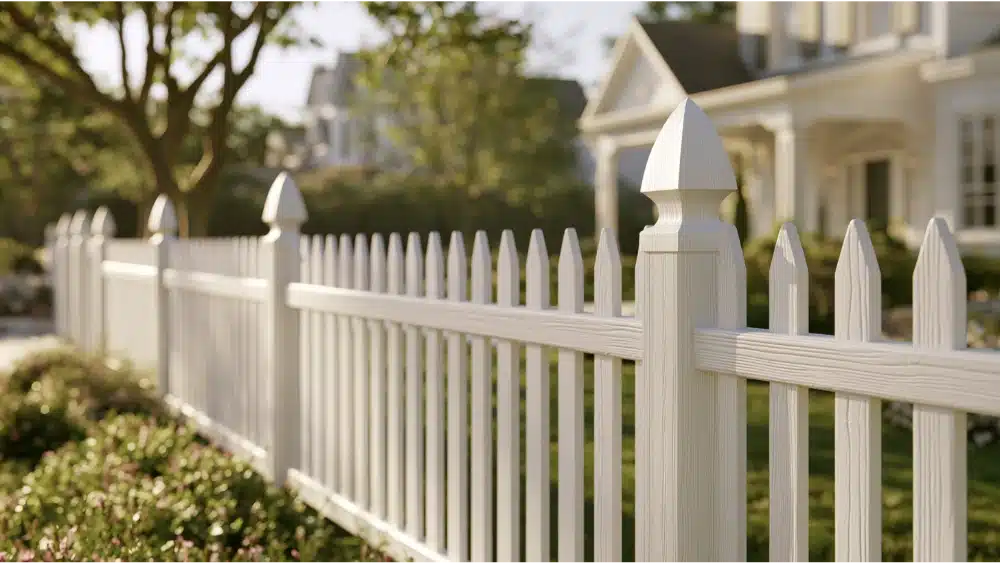
Gothic
A clean, simple point cut into the top of each picket. It’s the understated version of the classic picket fence look and reads as traditional right away. If you want the storybook feel without a lot of ornament, this is it.
French Gothic
A spear-shaped tip with a small shoulder or step below the point. More ornate than a plain Gothic, and this is the profile you’ll see on most genuine period fences. If you’re matching a Victorian or chasing the true storybook look, French Gothic is the one.
Dog Ear
The top corners are clipped at an angle with a flat span between them. It’s the simplest profile, the most economical, and reads as casual rather than formal. For a lot of homeowners it’s the sensible everyday choice, and it keeps the per linear foot cost down without giving up the picket character.
Flat Top (Square)
A clean square cut across the top. It leans contemporary and suits modern or minimalist homes where a pointed picket would feel out of place. Paired with a flat top rail, it’s a tidy fence design for a newer build.
Scalloped and Arched Designs
So which fits your home? French Gothic for a Victorian or anything storybook. Gothic for a simpler traditional point. Dog ear when you want the picket look without the added cost. Flat top for a cleaner, more current aesthetic. You can also run scalloped or arched designs between posts, where the pickets dip lower in the middle of each section, as a decorative touch that softens the fence line. These small choices in picket styles are what make a fence pop against the front of a house.
How Picket Spacing, Fence Panels, and Post Caps Shape the Look
The gap between pickets does more than you’d think. Pickets are set evenly, usually with gaps somewhere in the range of one and a half to three inches. Tighter spacing looks fuller and more finished, but it uses more pickets, so it costs more per linear foot. Wider spacing feels lighter and more open, and it’s easier on the budget. Neither is wrong; it’s a look-and-cost tradeoff you get to make. Picket heights sit mostly in the 3-to-4-foot range, which shapes the proportions of each section.
Panel width and post layout matter too, because they drive how much material and labor the job takes. Fence posts set at consistent intervals keep each section square and stop the horizontal rails from sagging over the years. Whether we build custom on site or set pre made panels, consistent spacing is what keeps the top line true. Post caps are a small finishing detail that can dress up the top of every post, and a picket fence gate needs its own hinge posts sized to carry the swing without pulling loose. White earns its keep here as a bright neutral. It frames a garden and stands apart from green landscaping in a way that darker fences never manage, and it’s a big part of the timeless appeal that makes people call this the American dream fence.
Why a White Picket Fence Adds Curb Appeal on Sacramento-Area Homes
It’s the most recognizable fence in America, an iconic symbol of home, of history, of a certain kind of settled comfort. That appeal is universal, but it lands especially well here because of what our older neighborhoods are built from.
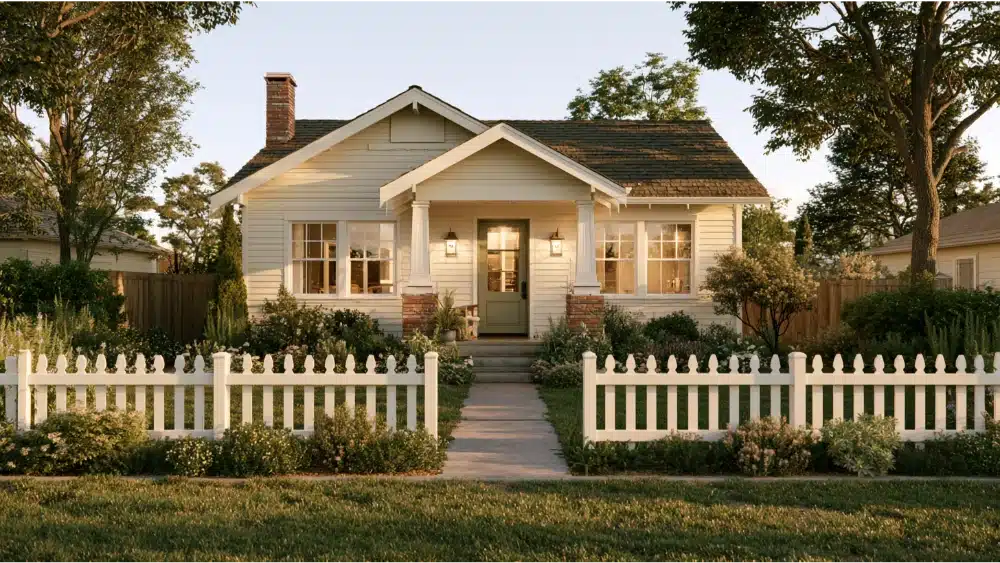
Downtown and Midtown Sacramento are full of Victorian, Craftsman, and early-century homes, and the picket fence comes from exactly that era. In neighborhoods like Boulevard Park, Alkali Flat, Poverty Ridge, Newton Booth, Curtis Park, and Land Park, where the housing stock is largely pre-1940, a Gothic picket doesn’t just look nice. It looks correct. It’s period-appropriate in a way a six-foot dog-ear privacy fence never will be. Put a tall solid fence in front of a 1910 bungalow and something feels off. A low white picket, and the house looks like itself again.
It works out in the country too. Toward Loomis, Penryn, Wilton, and the Auburn foothills, a white picket around a farmhouse or a vegetable garden reads as warm and traditional rather than fussy. We’ve built a lot of them since 2011, on Victorians in the city and farmhouses at the edge of the foothills, and the fence carries the same quiet charm in both settings. The curb appeal a white picket fence brings to your home’s curb appeal is hard to match with any other fence, and its natural beauty is a big part of why many homeowners keep asking for it. This is the dream fence for a reason. Fantastic Fence serves the greater Sacramento area, including Elk Grove, so wherever your home sits in the region, this is a fence we know well.
Local Regulations: Why 3 to 4 Feet Matters
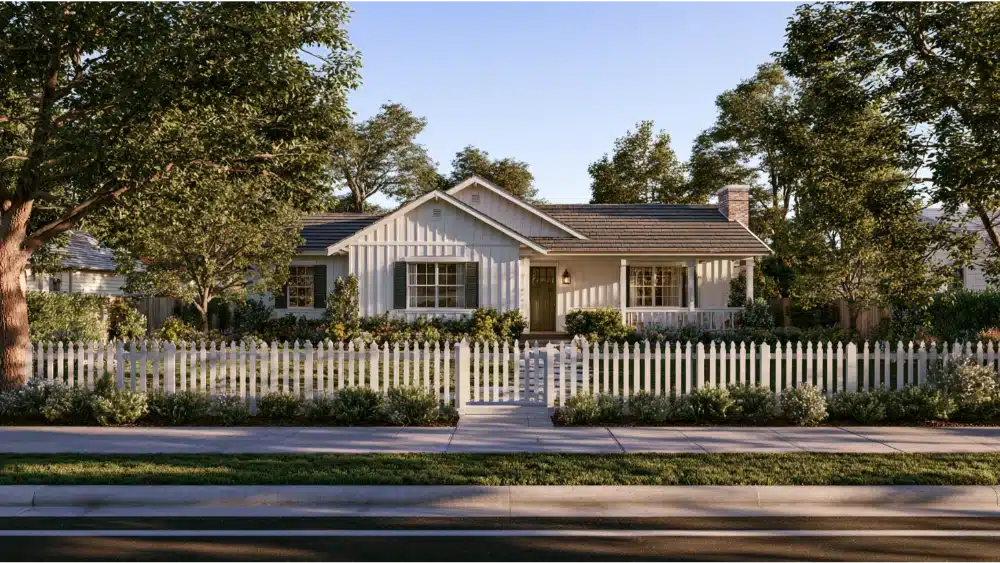
Here’s a practical advantage most buyers don’t anticipate. A picket fence’s low height is exactly why you can put one in your front yard at all.
Most Sacramento-area jurisdictions cap front-yard fences low. The City of Sacramento generally limits fences along front and street-side property lines to 4 feet. A picket fence at 3 or 4 feet sits right inside that window, so you can fence a front yard where a taller solid fence simply isn’t allowed. There’s one exception worth knowing: Sacramento permits decorative open wrought-iron or tubular-steel fencing up to 6 feet in front and street-side yards, precisely because you can see through it. Aluminum fencing in that same open, ornamental style falls into the same visual category, and metal fences of this kind read as open rather than solid. Solid privacy fencing stays at 4.
Sacramento’s own design guidelines effectively describe a picket fence without naming it. They ask for front-yard fencing that’s at least about 50 percent transparent, complements the style and color of the home, and keeps the front entrance visible. That’s a white picket fence to the letter.
Elk Grove is stricter on the numbers. Within a required front yard, the maximum fence height is 3 feet, and fences inside clear-visibility areas on corner lots are also capped at 3 feet. Height there is measured from the lowest finished grade at the base of the fence to the top of the fence material.
Don’t take any of this as “legal everywhere.” Local regulations vary by city, by county, by HOA, and by corner-lot sightline requirements, and a planned development can add its own restrictions on top. Check your city and county building department and your CC&Rs before you build, and take a look at Fantastic Fence’s Fence Ordinance Quick Links for a starting point on local rules.
Material Cost: What Affects the Price of a White Picket Fence
The honest local number for a custom wood white picket fence is $40 to $45 per linear foot installed, before paint. National cost guides throw out much wider ranges, roughly $10 to $45 per foot installed depending on the page, but those numbers are too broad to help you make a real decision. Here’s what actually moves the material cost and installation costs on your property:
- Total length. More feet means more fence materials and labor, though longer runs sometimes bring the per linear foot cost down slightly.
- Gates. Every picket fence gate is extra material, hardware, and labor beyond the straight fence line.
- Demolition and removal. Tearing out and hauling off an old fence adds to the job.
- Grade and access. Sloped ground and tight or hard-to-reach yards take more time and drive labor costs up.
- Picket profile. An ornate French Gothic costs more to produce than a plain dog ear.
- Wood species. Cedar and redwood carry different costs, and both are worth it for a wooden fence meant to last.
- Post layout and spacing. The number of fence posts and the picket spacing both change material totals.
When we say “installed,” that includes the real structural work. Fence posts are set roughly 24 to 30 inches deep in concrete so the fence stays true through the seasons, and a professional crew typically completes 100 to 150 linear feet in a day of efficient installation. That’s what you’re paying for, not just pickets stapled to a rail. It’s also why professional installation holds up so much better than a rushed weekend job; proper installation with a plumb post set in concrete is the difference between a fence that stands straight for decades and one that leans within a season.
DIY Installation vs Professional Installers
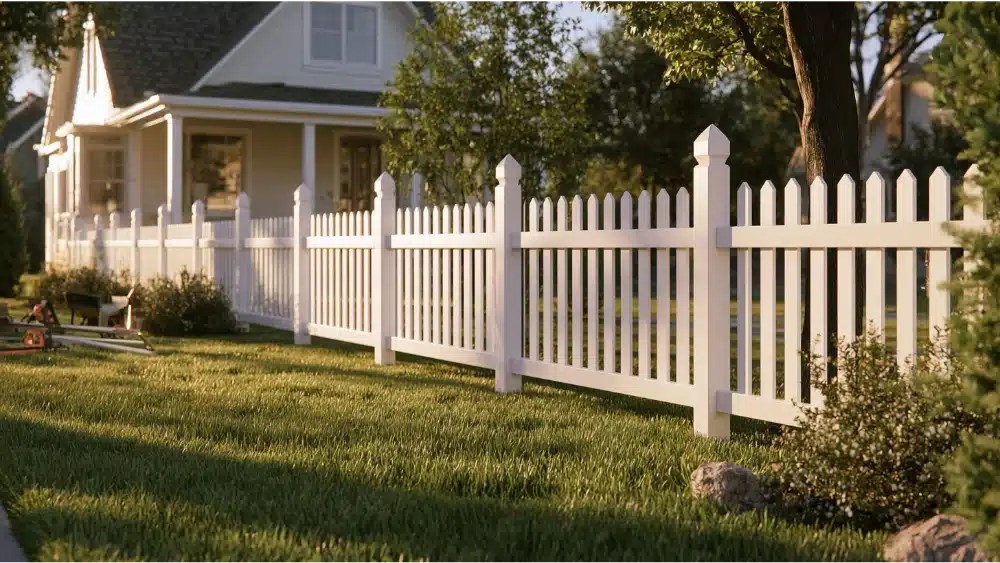
A quick word on DIY installation, because people ask. You can build wood picket fences yourself, and some homeowners do. The installation process needs a few specialized tools and a lot of patience. What trips most people up is the layout: setting posts perfectly plumb and evenly spaced, digging to the right depth, and keeping the top line straight over uneven ground. Professional installers do this every day, which is why the finished result usually looks tighter and lasts longer. Our pricing is flat with zero hidden fees, so the number we give you is the number. If you want to compare costs against a weekend build, the Fence Price Calculator on our site is a low-pressure place to start with a figure tailored to your own yard.
The Paint Is the Part People Forget
This is the honesty gap in almost every cost guide out there, so we’ll say it plainly. The installed price of white picket fence costs does not include paint or the finish work, and white is the most demanding color to keep looking classic. A brand-new white picket fence is stunning. A neglected one, with paint peeling and gray wood showing through, is the opposite of the look you paid for.
The real cost of ownership includes prep, priming, painting, and then repainting down the road. Common guidance puts wood fence repainting at every three to five years and restaining at every two to three years, but don’t treat any of that as a fixed schedule. How much maintenance a wood picket really needs depends on sun exposure, moisture, how well the wood was prepped, the paint system used, and whether sprinklers hit it. A fence in full afternoon sun will fade and check faster than one in partial shade.
A quick note on paint versus stain, since it comes up. Stain lets the wood grain show and generally peels less, but the true white picket look is almost always paint, not stain. If you want that crisp, bright white, plan on paint and plan on maintaining it.
None of this is a reason to skip a wood picket fence. It’s a reason to go in with clear eyes. This is exactly the kind of thing we walk through during a free consultation, so the finish and the upkeep are part of the conversation before you commit, not a surprise afterward.
The Sprinkler Mistake That Shortens a Fence’s Longevity
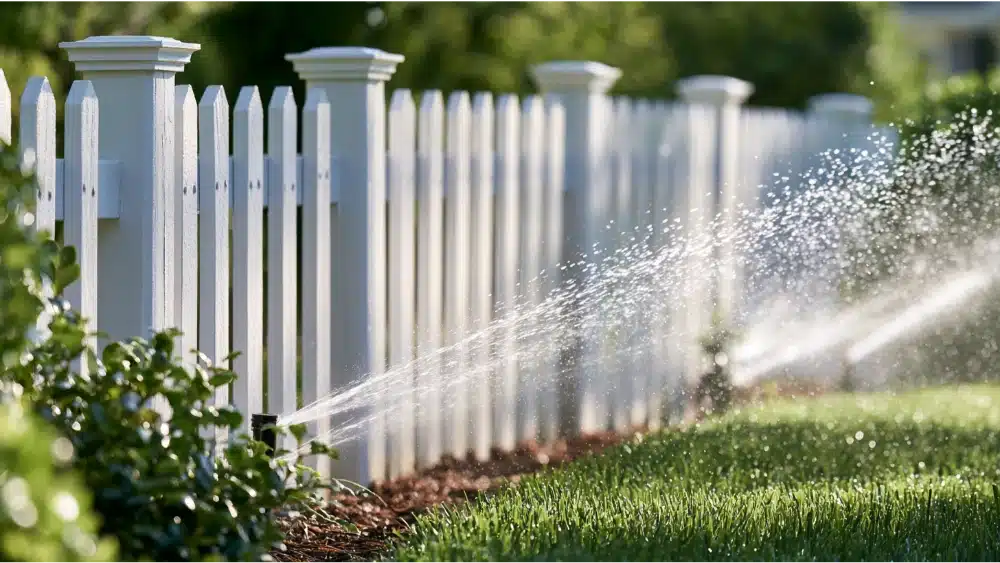
Here’s the single mistake we promised at the top. It’s the same one we see again and again: letting the sprinklers spray the fence.
Daily sprinkler spray keeps the base of the pickets and fence posts wet and slow to dry. Wood decay starts exactly where water gets trapped and drying is slow, a principle backed by UC Agriculture and Natural Resources and USDA Forest Products research on moisture and wood. A fence that gets hit by overspray every morning can lose years off its life, and no amount of fresh paint fixes rot working up from the bottom. Protecting the wood this way is one of the biggest factors in a fence’s longevity.
The fix is simple and cheap if you do it early:
- Adjust or redirect sprinkler heads so they throw water away from the fence.
- Reduce overspray and keep a clearance gap between the fence and the spray zone.
- Keep the base of each post clear of piled soil and mulch, which hold moisture against the wood.
- Rinse the fence and give it a look-over once a year.
Do that and a well-maintained wood fence commonly lasts 15 to 20 years, with cedar reaching toward 30 under good care. We point this out before you buy, not after, because it’s the difference between a fence you replace in eight years and one you keep for twenty.
What a Picket Fence Does, and Doesn’t, Do
Buying the right fence starts with honest expectations. A picket fence is excellent at some things and genuinely wrong for others.
It’s great for: curb appeal, marking your property lines, framing a garden, getting a period-correct look on an older home, and fencing a front yard where taller solid fences aren’t allowed.
It’s not the right choice for: privacy, since it’s open by design and offers no screening; reliable containment of a determined dog, since it’s low and has gaps; or high-security needs. And it should never be treated as a pool safety fence.
That last point matters legally. California’s Swimming Pool Safety Act requires at least two listed drowning-prevention safety features when a permit is issued for a new pool, spa, or remodel at a single-family home. A qualifying enclosure has to be a minimum of 60 inches tall, which is well above a 3-to-4-foot picket. If pool safety is your goal, that’s a separate job with its own rules, and our pool safety fence service is the right place to start.
Wood vs Vinyl: When White Means Minimal Maintenance
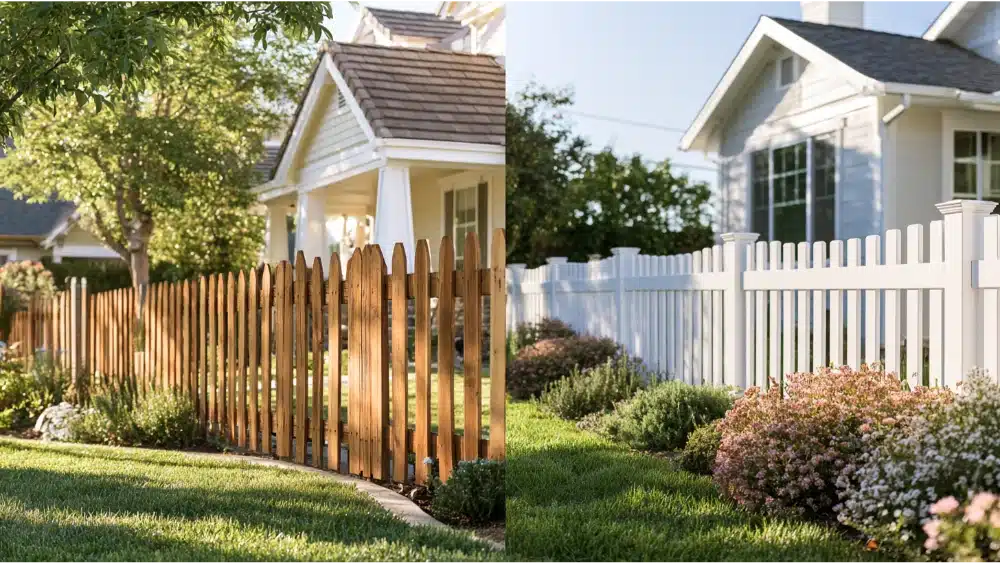
If the repainting section gave you pause, vinyl is the obvious question. Here’s the short answer. Wood is the classic, period-appropriate material, and it’s what a genuine white picket fence is made of. It rewards you with authenticity and the real thing, and it asks for maintenance in return.
Vinyl fencing comes white from the factory and never needs paint, so it’s low maintenance by a wide margin. Unlike wood, high quality vinyl and cellular pvc keep their color through the seasons without prep, priming, or repainting, and a rinse with a hose is about the extent of the upkeep. That minimal maintenance means virtually no maintenance headaches for busy homeowners, along with fewer repairs and minimal upkeep over the life of the fence. A vinyl picket resists rot in a way wood never will. The tradeoff is that vinyl can look slightly less authentic on a historic home, and Sacramento’s design guidelines actually discourage vinyl in some front-yard settings. So the decision often comes down to the home itself. For a modern house or someone who wants the look with the least fuss, a vinyl picket fence can be a smart, low maintenance call that can last a lifetime with proper care. For a 1915 Craftsman, wood is usually the answer. If you’re weighing the two, our vinyl fence page lays out where vinyl fencing fits, and a free estimate is the fastest way to figure out which one suits your home and how you plan to live with it.
How Fantastic Fence Handles the Installation Process
Fantastic Fence started in 2011 because one of our founders, a homeowner himself, got tired of contractors who didn’t call back, didn’t show up on time, and left a mess behind. Everything about how we run picket fence installation comes from that.
We’re licensed, bonded, and insured, California CSLB License #979657. The crews who show up are background-checked W-2 employees, not day-labor subcontractors, so the same standards apply to every new fence we build. Before we dig post holes, we handle 811 utility marking through Underground Service Alert, which California law requires, and we confirm gate locations and property lines with you first. Our pricing is flat with zero hidden fees, and we back the work with a written guarantee: the job isn’t finished until you give the thumbs up. When we’re done, we clean up and leave your property the way we found it, because we treat your home as your home, not a job site. Whether you want wood picket fences on a period home or a vinyl picket fence on a newer build, that same professional installation standard applies.
Frequently Asked Questions
How much does a white picket fence cost in Sacramento?
Is paint included in the installed price?
How tall should a white picket fence be?
What's the difference between Gothic and French Gothic pickets?
Why are sprinklers bad for a wood picket fence?
Ready for a Real Number on Your Property?
A white picket fence is one of the best-looking front-yard fences you can put on the right Sacramento-area home. The honest cost is the fence, the finish work, and how well you protect the wood over time, and we’ll walk you through all of it with no pressure. Call us at (916) 790-7100 for a free fence estimate, or book online whenever it’s convenient. Let’s talk about what would look right on your home.