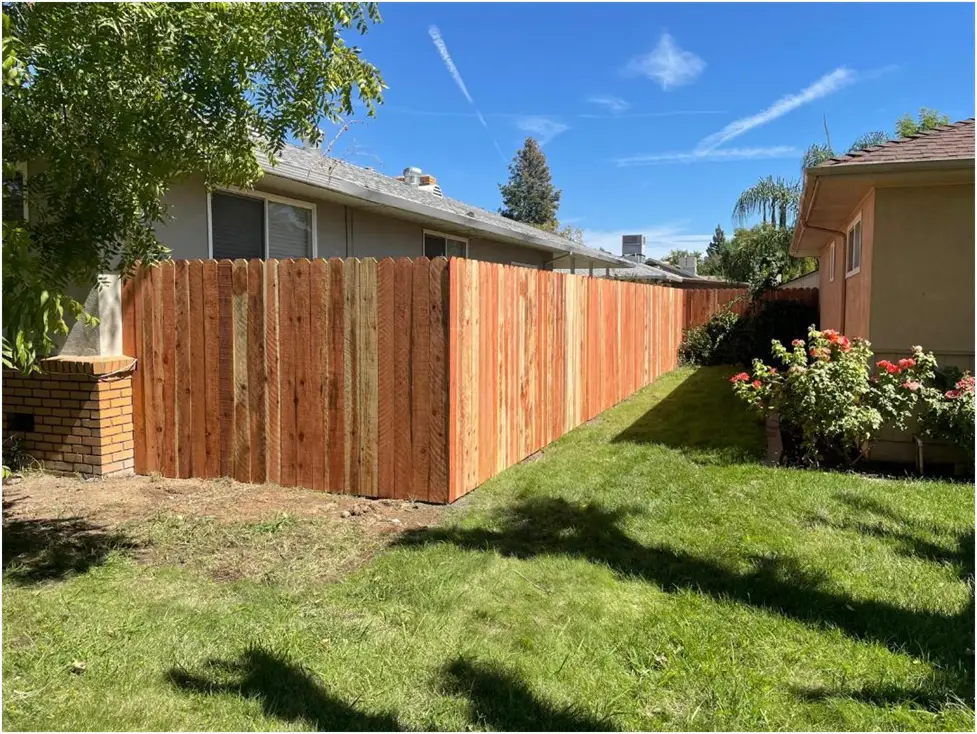
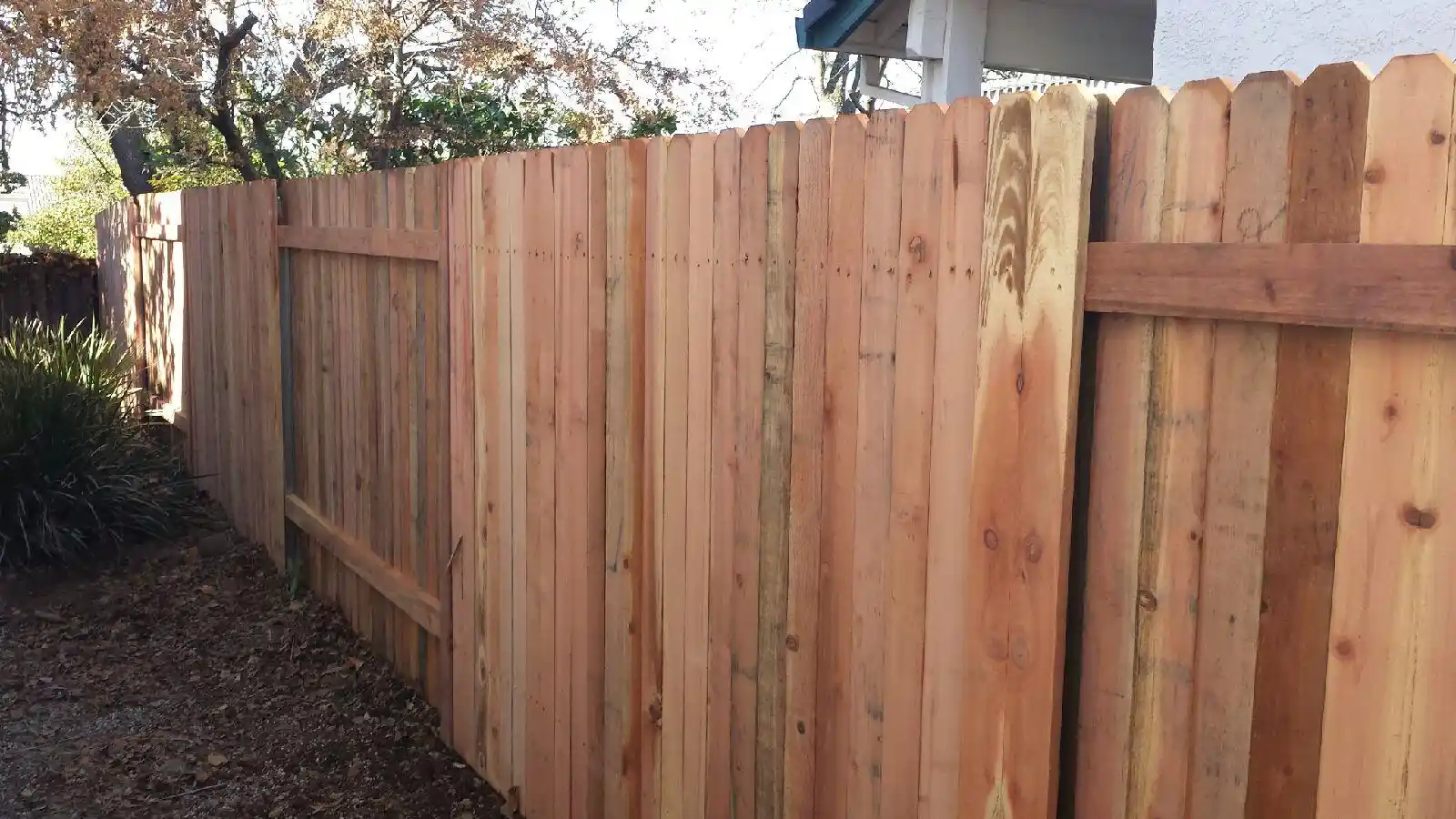
In the Sacramento region, the cheapest fence for a typical backyard is a redwood dog-ear fence on pressure-treated wood posts. Not chain link. That surprises people, because nearly every national cost guide puts chain link at the bottom. Steel prices have climbed over the last five years while redwood has stayed fairly flat, so here a basic see-through chain link fence now costs about the same as a standard dog-ear redwood fence, and chain link with privacy slats usually runs 10 to 20 percent more.
For acreage and livestock, T-post and woven wire is the lowest-cost fence per foot. For the best value over time on a wood fence, our answer is the same dog-ear redwood fence built on hidden steel posts. The cheapest fence on paper and the cheapest fence once it is finished and still standing are two different numbers, and this article shows you both.
What Is the Cheapest Fence Option for Each Job?
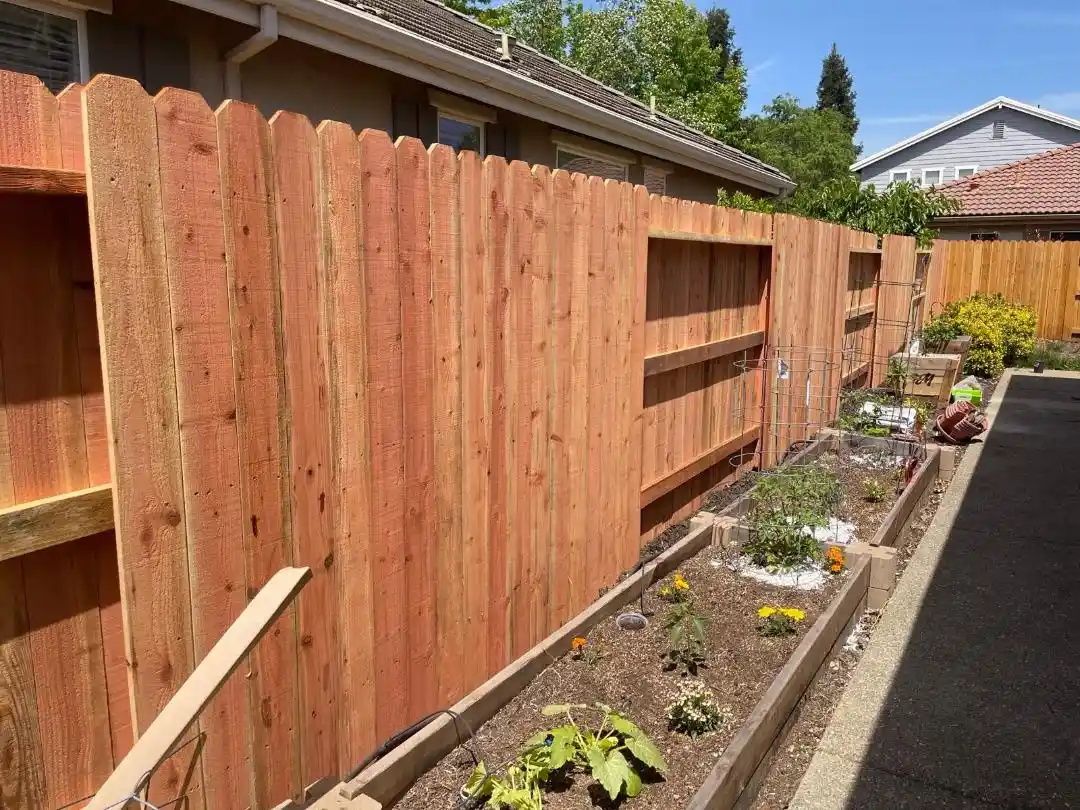
The cheapest fence is the lowest-cost fence that actually does the job on your property. A fence that doesn’t give you privacy, can’t hold your dog, or fails HOA review isn’t affordable. It’s a do-over. Find the row that matches your goal, then compare quotes only within that row.
| What you need | Most affordable option we install | Why it wins | The tradeoff |
|---|---|---|---|
| Backyard privacy | Redwood dog-ear fence (good-neighbor style) | Lowest-cost privacy fence in our area | Pressure-treated posts are the weak point |
| Best long-term value on wood | Dog-ear redwood on hidden steel posts | Posts won’t rot or take termites | Costs a little more upfront |
| Pets, kids, see-through enclosure | Galvanized chain link | Lasts practically forever unless something hits it | No privacy without slats |
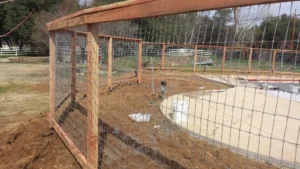
| Acreage and livestock | T-post and woven wire (no-climb) | Lowest cost per foot over long runs | Not a finished residential look |
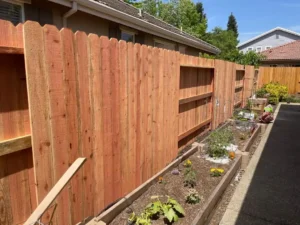
| Front yards and gardens | Hog wire (redwood frame + wire panel) | Premium look, short runs keep the total down | Higher per-foot price than plain wire |
| Low-upkeep privacy | Vinyl | Hose it off; no rotting pickets | Higher upfront than redwood |
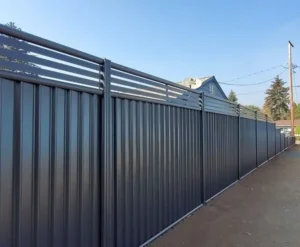
| Fire-resistant, modern privacy | Durabond steel | Non-combustible, very durable | Top of our price range, not a budget fence |
What Is the Fence Price Order, Cheapest to Most Expensive?
From cheapest to most expensive, the order we see on residential jobs is: dog-ear redwood on pressure-treated posts, chain link, ornamental iron, vinyl, then Durabond privacy steel. More complex redwood styles, like cap and trim or board-on-board, can climb into the same range as the others.
- Dog-ear redwood, pressure-treated posts. The lowest-cost privacy fence in Sacramento, Placer, and El Dorado counties.
- [Chain link](cl). See-through chain link is now on par with a standard dog-ear redwood fence. Black costs more than galvanized.
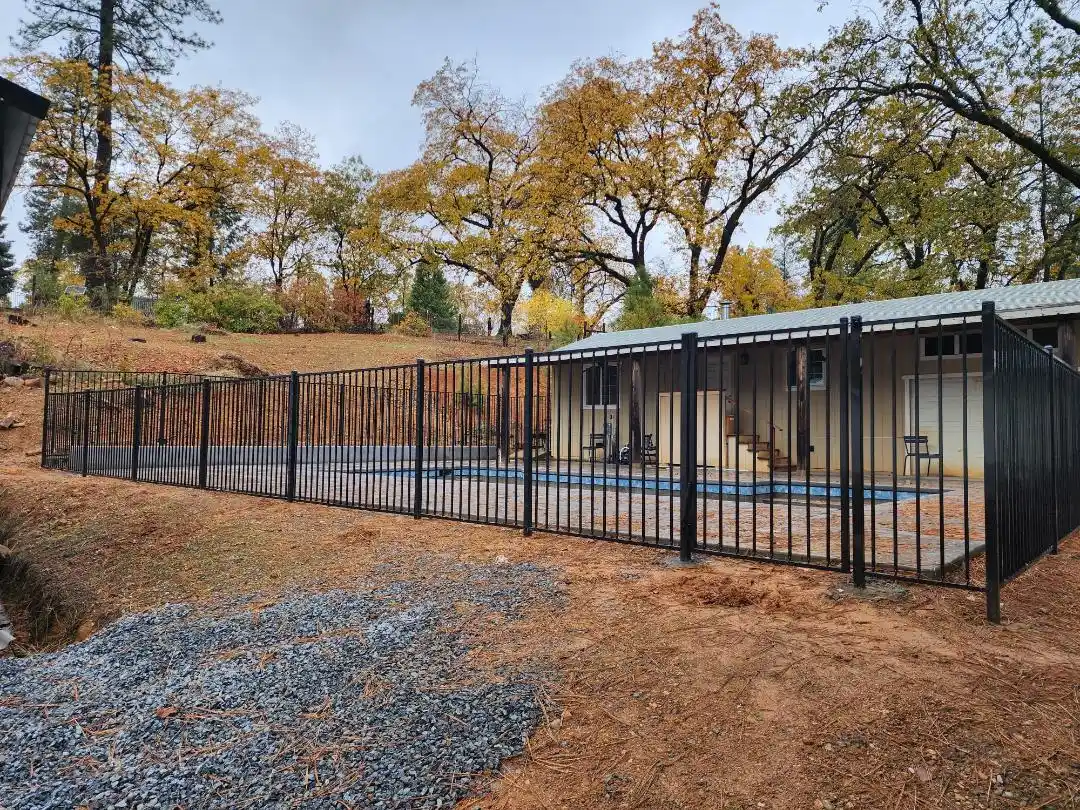
- [Ornamental iron](iron). Open and elegant, popular in front yards and pool areas.
- [Vinyl](vinyl). Higher upfront, very little upkeep, and a quality vinyl product holds up well in Sacramento heat.
- [Durabond steel](dura). Non-combustible privacy steel with a modern look. Worth it for many foothill and design-minded buyers, but not a budget pick.
We keep per-foot prices off our articles because your yard, not a catalog, sets the number. For a ballpark on your own footage, run our Fence Price Calculator. For full style-by-style privacy pricing, see how much a privacy fence costs.
Why Isn’t Chain Link the Cheapest Fence Anymore?
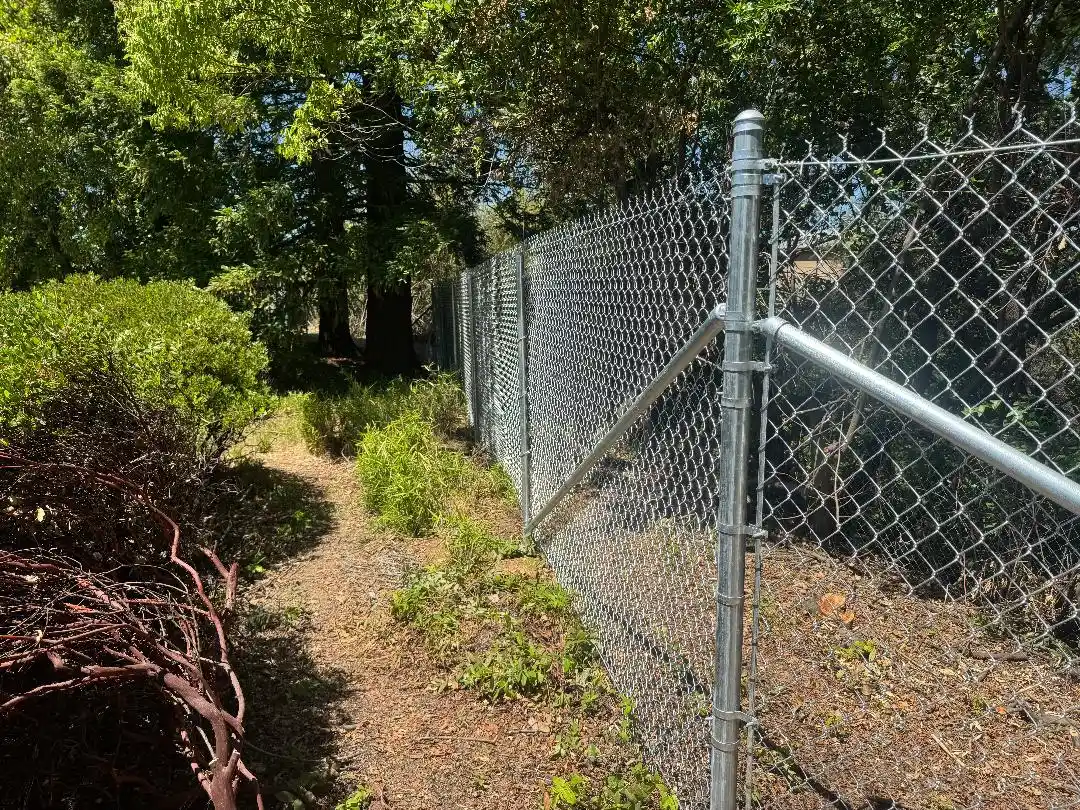
Because steel got more expensive and redwood didn’t. Over roughly the last five years, steel material costs rose while redwood stayed flat, so plain chain link caught up to a basic dog-ear redwood fence. Add privacy slats and chain link usually lands 10 to 20 percent above the most basic redwood fence.
Chain link still earns its spot. It’s the fence we call the best value for a lot of jobs, because a well-built chain link fence lasts practically forever unless a car or a falling tree hits it. You’ll see much more of it in the foothills, in places like Grass Valley, Penn Valley, Placerville, and rural Placer and El Dorado counties.
| The #1 chain link mistake we see: skipping privacy slats to save money. If the posts are sized for a fence without slats, they may not handle the wind load when you add slats later. If there’s any chance you’ll want privacy, put the slats on the original quote. |
What Is the Cheapest Privacy Fence?
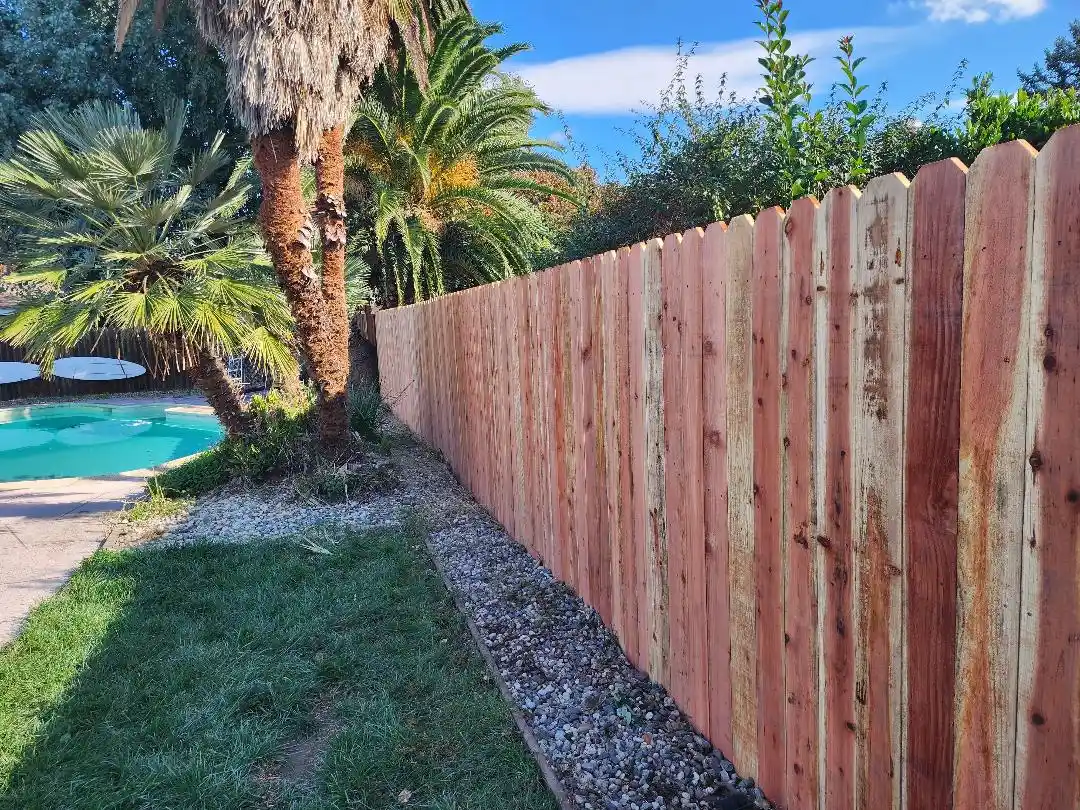
A redwood dog-ear fence in a good-neighbor style is the cheapest way to get full backyard privacy in our area. It’s finished the same on both sides, which matters because roughly 95 percent of the fences we build sit on a shared line between two properties. That makes the cost-split conversation with your neighbor much easier. Read more on why good neighbor wood fences are popular in Sacramento backyards.
A few things national guides get wrong about Northern California wood fences:
- There’s no pressure-treated pine fence here. Our pickets, rails, and kickboards are redwood, which isn’t pressure treated. Only the posts are pressure treated.
- Redwood doesn’t need staining. Stain is a cosmetic choice, not a maintenance requirement, so you don’t need to budget for it to keep the fence standing.
- Cheaper cedar isn’t the bargain it looks like. Locally available cedar boards are cut at 5/8 inch, and our redwood boards are a full 3/4 inch. Thinner cedar commonly bows and twists. See the advantages of redwood over cedar fencing.
Vinyl costs more upfront and asks almost nothing of you afterward. We highly recommend it on fences you don’t share with a neighbor, like side-yard returns, back fences on open space, and front yards.
Are Hidden Steel Posts Worth the Extra Cost on a Budget Fence?
Yes, for anyone keeping their home more than a few years. About 99 percent of the wood fences we repair or replace are on wood posts, and the post is what fails first. Pressure-treated posts aren’t what they used to be: when the industry switched to less toxic treatment chemicals, posts got much less resistant to ground rot, and we now pull posts rotted off at the base after only three to five years.
Our hidden steel posts are galvanized steel wrapped in redwood, so the fence still looks like a classic 4×4 wood fence. They won’t rot or take termites, and they last 50 percent or more longer than wood posts. That’s why more than 80 percent of our wood fences now go in on steel. The only time we’d point you to plain wood posts is if you want the absolute lowest price and plan to sell in the next two or three years.
What Is the Cheapest Fence for Acreage and Livestock?
T-post and woven wire, also called no-climb, is the lowest-cost fence per foot for acreage, and it’s the most common livestock fence we build. It works for nearly every kind of farm animal, follows slopes without concrete, and keeps the open country look. Woven wire commonly lasts 30 to 50 years or more if animals or equipment don’t damage it.
- Five feet is the happy number for most livestock fences: animals stay in, predators stay out.
- Barbed wire and high-tensile wire are options for cattle and large boundary runs. Check your zoning before planning barbed wire anywhere near a residential area.
- Pipe fencing is very strong and permanent, but it costs more and is less common in our counties.
On acreage, total footage, terrain, old-fence tear-out, and truck access drive the cost more than the wire does. A crew averages about 150 feet a day on T-post and wire. Learn more about our agricultural fencing.
Which Cheap Fence Ideas Cost More Later?
The cheap fence that most often costs more is the one built with corners cut where you can’t see them. These are the shortcuts we see turn into repair calls:
- Pre-assembled big-box panels. We never build with them. Thin boards warp and gap, and stock panels don’t fit slopes, so they end up stair-stepped with gaps underneath. A fence built on site costs about the same and uses much nicer material.
- Plain wood posts on a fence you’ll keep for 10+ years. You save a little now and pay for post replacements later.
- Reusing old chain link posts for a new wood fence. Chain link posts sit about 10 feet apart. A redwood fence needs a post every 8 feet to stay straight.
- Leaving out slats you’ll want later. The posts may not be sized for the added wind load.
- Skipping the rules. A fence that breaks a height limit or HOA guideline and has to come down is the most expensive fence there is.
| “Great, affordable, or fast: pick two. We’re usually booked out, so we’re not the fast option. What you get is great and affordable. The cheapest fence I can build you is one that’s still standing straight 20 years from now. Pre-made panels, skipped slats, and rotting wood posts all look like savings on day one. The downsides far outweigh the tiny savings. That’s why I steer most Sacramento homeowners to a dog-ear redwood fence on hidden steel posts. It supercharges the life and value of the fence for a small difference in price.”
— Dominic Vella, Owner, Fantastic Fence (CA License #979657) |
What Makes an Affordable Fence Quote Go Up?
Footage, height, gates, and site conditions move the price more than anything else. Fencing is priced per linear foot, and professional installation follows the property:
- Total footage and fence height
- Material and style (dog-ear vs. cap and trim vs. board-on-board)
- Number and size of gates
- Removal and haul-away of an existing fence
- Rocky ground, which takes more dig time to reach proper post depth (common in Folsom, El Dorado Hills, Rocklin, and Gold River)
- Slopes and site access for crews and material
- Privacy slats and the heavier posts they need
- Hidden steel post upgrade
- HOA review requirements
Anyone quoting your yard over the phone without asking about terrain or gates is guessing. When you’re ready for a real number, a free fence estimate gets you flat pricing in writing with zero hidden fees.
Which Local Rules Can Rule Out the Cheapest Option?

Height limits, HOA guidelines, and shared-fence rules can eliminate your cheapest choice before you get a quote. Check these first:
- Height. Most backyard fences top out at 6 feet; in the City of Sacramento, 6 feet is the limit in almost all residential backyards. Front-yard limits are lower and vary by city. Start with our Sacramento fence ordinances guide.
- HOAs. Architectural guidelines and CC&Rs can restrict materials entirely; some HOAs in our area restrict vinyl or chain link. Read them before you shop. We provide drawings and specs, and the homeowner submits for approval.
- Shared fences. California Civil Code §841 presumes neighbors share the reasonable cost of a boundary fence equally and generally requires 30 days’ written notice. In practice, many neighbors agree to an uneven split, like 70/30. This is general information, not legal advice.
- Call 811. USA North 811 needs at least two working days’ notice before post holes are dug.
- Pools. A pool fence is never a price-first decision. It has to meet California’s drowning-prevention requirements. See pool compliant gates and fences in California and our pool fencing service.
| Rules change and vary by city, county, and HOA. Confirm current requirements with your local planning department and HOA before you buy. Locating property lines is the property owner’s responsibility. |
How Do You Compare Cheap Fence Estimates Without Getting Burned?
Line the bids up on identical specs, then check the license. Plenty of people who call us already learned this, because they’re calling about a fence someone else built. Before you sign, make sure every bid matches on:
- Footage and height
- Material, style, and post type (wood or steel)
- Number and size of gates
- Slats, gauge, and finish on chain link
- Old fence removal and haul-away in writing
- Cleanup included
- A written change-order process
- A license you’ve verified with the CSLB
California law requires a written home-improvement contract on jobs over $500, and the down payment generally can’t exceed 10 percent of the contract price or $1,000, whichever is less.
On our side: CA License #979657, bonded and insured. Background-checked W-2 employees, not day labor. Flat pricing with zero hidden fees, a thorough cleanup, and a written guarantee that the job isn’t finished until you give the thumbs up.
What Do Customers Say About Our Pricing?
| “Job was done very well and the estimate was fair. I like the split invoice document so shared neighbors have the ability to input their info and shared cost.”
— Colleen O., BBB review |
| “Great work and great value.”
— Jennifer M., BBB review |
| “Great company. Efficient workers and finished on time. Good pricing.”
— Brandon W., BBB review |
| “Fantastic Fence did a great job on our new fire safe fence. Their customer service is fast and responsive … price is very reasonable.”
— Marci O., BBB review |
Read more on our reviews page.
Frequently Asked Questions
What is the most inexpensive type of fence?
For acreage, T-post and woven wire is the least expensive per foot. For a residential backyard in the Sacramento region, a dog-ear redwood fence on pressure-treated posts is the lowest-cost fence we build, with see-through chain link close to the same price.
What is the cheapest privacy fence?
A redwood dog-ear good-neighbor fence. For the best value over time, build it on hidden steel posts. Chain link with privacy slats usually costs 10 to 20 percent more than the most basic redwood fence.
Is chain link cheaper than wood?
Not anymore in our area. Plain chain link is now on par with a standard dog-ear redwood fence because steel prices rose while redwood stayed flat. Chain link still lasts practically forever if nothing hits it.
Is vinyl cheaper than wood?
No. Vinyl costs more upfront than redwood, but it needs almost no upkeep. We highly recommend it on fences that aren’t shared with a neighbor.
What is the cheapest fence to install yourself?
Wire fencing is the usual DIY answer, but in our experience the savings are small. As our owner puts it: “There are a lot of projects that homeowners can save a significant amount of money doing themselves successfully. My experience is that fencing is not one of these home projects because the savings tend to be fairly small and the quality of installation is noticeable.”
How do I fence a yard on a budget?
Decide whether you need privacy, containment, or a boundary. Fence only what you need, choose a simple style at a standard height, limit gates, keep runs straight, and get written bids on identical specs. Financing is available for homeowners in our six-county service area.
How much does it cost for 200 feet of fencing?
It depends on material, height, gates, terrain, access, and whether an old fence has to come out. Start with our Fence Price Calculator, see how much 200 ft of chain link fence costs, or request a free fence estimate for a written price.
Get a Free Quote on an Affordable Fence
The cheapest fence is the lowest-cost fence that does the job on your property and keeps doing it. Run the numbers with our Fence Price Calculator, or have one of our estimators walk your property and give you a flat, written price with no pressure. Book your free fence estimate, or call the office nearest you:
- Rocklin: (916) 790-7100
- Sacramento: (916) 248-5518
- Elk Grove: (916) 345-0142
We serve Sacramento, Placer, El Dorado, Yuba, Yolo, and Nevada counties. Phones are answered Monday through Friday 8 a.m. to 6 p.m. and weekends 9 a.m. to 5 p.m.
Reviewed by Dominic Vella, founder and owner of Fantastic Fence, CA License #979657. Fantastic Fence has served the Sacramento region since 2011. Last updated October 2026.