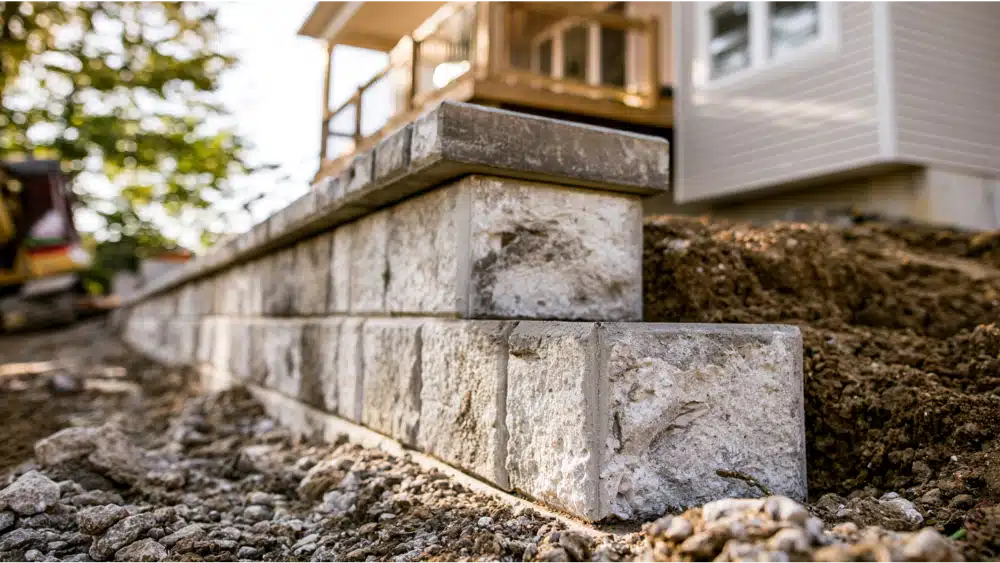
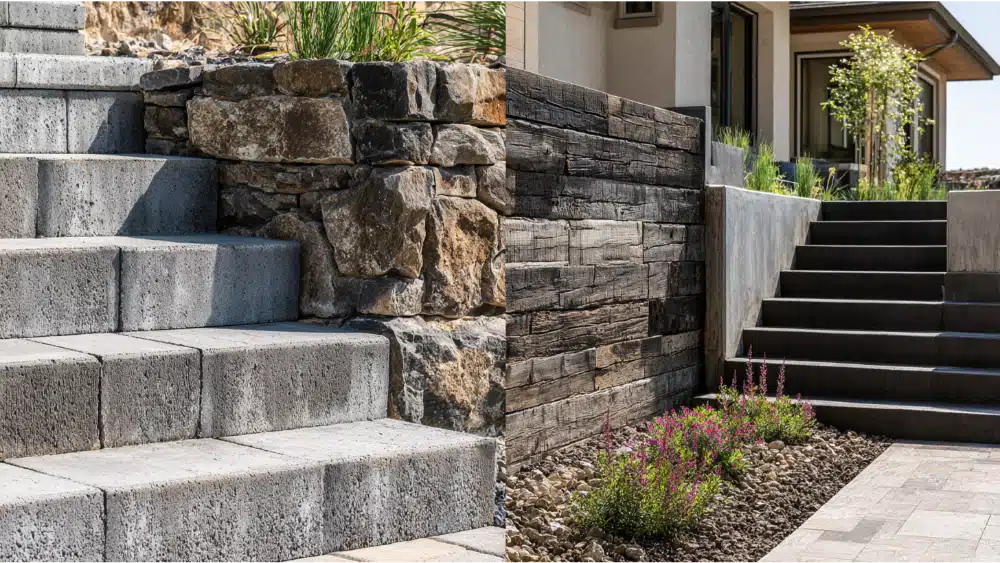
When homeowners ask what materials are used in retaining wall construction, they are often picturing concrete blocks or stone. But one of the most dependable, cost-effective options is a wood retaining wall, built with the right lumber, the right posts, and the right spacing to hold soil in place for years.
A retaining wall has one job: hold back soil and keep it where it belongs. To do that for the long haul, it has to be built from the right materials and put together so the whole structure works as a unit. Here’s what goes into a wood retaining wall, and how we build them at Fantastic Fence.
A Retaining Wall Is More Than What You See
A wood retaining wall isn’t just a row of boards. Behind the visible face, a properly built wall depends on the right lumber, correctly sized posts, precise spacing, and solid footings working together. Skip any one of those, and even good materials can eventually lean, bow, or fail under the constant push of the soil behind them.
The Wall Boards

The face of the wall, the horizontal boards that actually hold back the soil, is built from pressure-treated lumber or redwood. Most commonly we use 2×12 boards, which give a tall, solid course with each board.
The number of boards and the overall height of the wall depend on how much grade is being retained. A low wall might only need a couple of boards stacked, while a taller wall stacks more courses to reach the needed height.
Both pressure-treated lumber and redwood are chosen for the same reason: they stand up to constant contact with damp soil far better than untreated wood, which is exactly the punishment a retaining wall takes every day. Untreated lumber against wet soil will rot far faster than either of these options.
The Posts
The posts are the backbone of the wall. They’re what the boards attach to, and what actually carries the load of the soil pushing against them. There are three common options, in order of strength:
- 4×4 pressure-treated posts for lighter applications.
- 4×6 pressure-treated posts, which we prefer for most jobs. The deeper post gives significantly more strength to resist the constant pressure of the soil.
- Hidden steel posts, our strongest option, for the most demanding walls where maximum holding power is needed without a bulky look.
The taller the wall and the more soil it holds back, the more important it is to step up to a stronger post. A short garden-bed wall might be fine on 4x4s, but a wall retaining several feet of grade needs the strength that 4×6 or steel posts provide.
Post Spacing and Footings
Materials only work if they’re set right. Posts should be spaced four feet on center and set in concrete.
That spacing keeps each post carrying a manageable share of the load, instead of asking any one post to do too much. Setting posts in concrete anchors the entire wall against the constant force of the soil trying to push it forward.
Skimp on post spacing or footings, and even good lumber will eventually lean, bow, or fail. This is one of the most common mistakes we see on wood retaining walls that were not built to last: the boards and posts might be quality materials, but if they were not spaced and anchored correctly, the wall was compromised from the start.
What Happens Behind the Wall Matters Too
A wood retaining wall’s boards and posts do the visible work, but drainage behind the wall is what keeps water from working against it over time.
Compacted Gravel Base
A compacted gravel base under the wall provides a level, stable foundation. Without it, the wall can settle unevenly.
Drainage Rock
Drainage rock behind the boards helps move water away from the wall. Proper drainage reduces the hydrostatic pressure that builds when water has nowhere to go, which is one of the biggest threats to any retaining wall, wood or otherwise.
Perforated Drain Pipe
A perforated drain pipe carries water away from behind the wall. This is especially important in sloped yards, clay soil, and areas with heavy irrigation, all common conditions in Sacramento-area yards.
Geotextile Fabric
Geotextile fabric keeps soil from clogging the drainage rock, helping the drainage system keep working over the life of the wall.
Good drainage doesn’t show once the wall is finished, but it’s often the difference between a wood retaining wall that holds its line for years and one that starts bulging or leaning within a season.
Built to Hold
The right materials, pressure-treated or redwood boards, properly sized posts, and concreted footings at the correct spacing, are what separate a retaining wall that holds its line for years from one that starts bulging after a season or two.
We size every wall to the job, because the amount of soil being held back determines exactly how strong the structure underneath has to be. A two-board garden wall doesn’t need the same posts as a wall retaining a steep backyard slope, and building both the same way is how walls fail early.
Common Mistakes That Shorten a Wood Retaining Wall’s Life
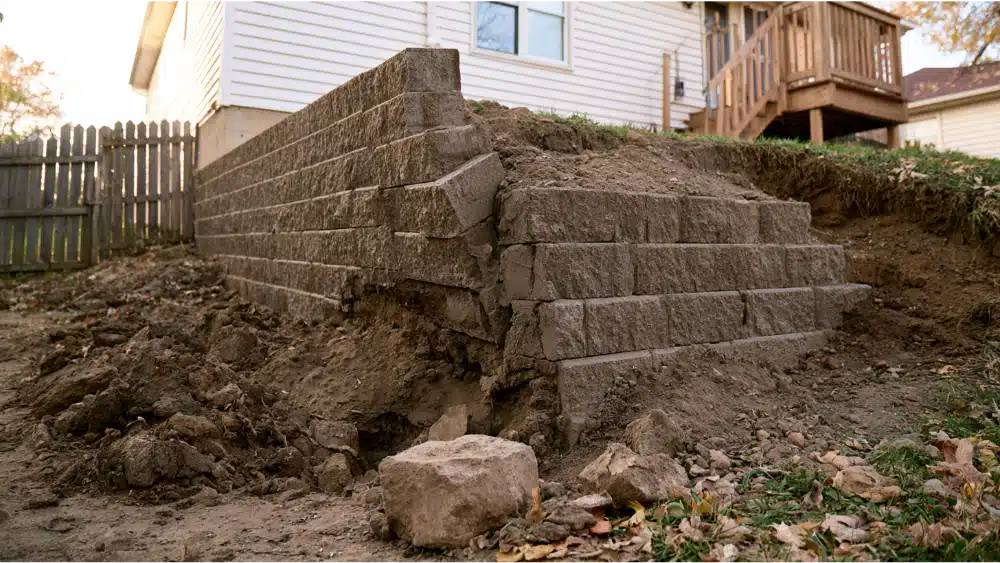
Skimping on Post Spacing or Footings
Posts need to be spaced on a consistent interval, commonly four feet on center, and set in concrete. Wider spacing or shallow footings can cause even good lumber to lean, bow, or fail under the constant push of soil.
Ignoring Drainage
A wood retaining wall without proper drainage behind it can lean, bow, or rot faster than expected. Water adds pressure the wall may not be built to handle, and it accelerates the breakdown of even pressure-treated lumber.
Using the Wrong Post for the Job
A taller wall holding back more soil needs a stronger post. Using 4x4s where the load calls for 4x6s, or wood posts where steel would perform better, is a common way walls end up underbuilt for the grade they’re retaining.
Choosing Untreated Lumber
Pressure-treated lumber and redwood are chosen specifically because they resist rot from constant soil contact. Untreated wood breaks down far faster in that environment.
Skipping Professional Guidance
Taller walls, walls near a fence or structure, or walls built on a significant slope benefit from professional planning. Getting the board size, post type, spacing, and drainage right the first time costs far less than rebuilding a wall that failed.
Retaining Walls and Fences: Why They Often Work Together
Retaining walls and fences often solve two parts of the same backyard problem. A wood retaining wall shapes the land and creates usable space out of a slope, while backyard fence designs define boundaries, add privacy, and help the yard feel complete.
If a fence is planned near retaining walls, the wall structure, drainage, soil, and post placement should be reviewed carefully. Professional fence post replacement and layout planning help manage the extra load and wind pressure from fence posts.
When Should You Call a Professional?
Call a professional if a wood retaining wall is leaning, bowing, rotting at the base, or showing signs of soil pushing through or around it. It’s also wise to bring in a professional when a wall is tall, close to a fence, near a structure, or built on a significant slope. Consult local retaining wall specialists in Sacramento for complex projects.
Professional installation helps make sure the board size, post type, spacing, and drainage system are matched to the actual job, not just close enough. That’s what gives a wood retaining wall the best chance of holding its line for years.
FAQs About Retaining Wall Materials
What lumber is used for a wood retaining wall?
Pressure-treated lumber or redwood, most commonly in 2×12 boards. Both resist rot from constant soil contact far better than untreated wood.
What size posts does a wood retaining wall need?
It depends on the wall’s height and how much soil it’s holding back. 4×4 pressure-treated posts work for lighter applications, 4×6 pressure-treated posts offer significantly more strength for most jobs, and hidden steel posts are used for the most demanding walls where maximum holding power is needed.
How far apart should retaining wall posts be spaced?
Posts should be spaced four feet on center and set in concrete. That spacing keeps the load manageable for each post and helps prevent leaning or bowing over time.
Do wood retaining walls need drainage?
Yes. Drainage behind the wall, typically compacted gravel, drainage rock, a perforated drain pipe, and geotextile fabric, helps prevent the water buildup that leads to leaning, bowing, or premature rot.
How long does a wood retaining wall last?
A wood retaining wall built with the right lumber, correctly sized posts, proper spacing, and good drainage can hold its line for years. The difference between a wall that lasts and one that fails early usually comes down to whether it was built to the right specifications for the job, not the material itself.
Can you build a fence on top of or near a wood retaining wall?
Sometimes, but it depends on the wall’s structure, height, soil, drainage, and the fence design. Because fences add their own load and wind pressure, professional guidance is recommended so the two structures work together instead of against each other.
When does a wood retaining wall need to be engineered?
Taller walls, walls holding back significant grade, walls near structures, or walls that will carry a fence often benefit from professional engineering to confirm the board size, post type, and spacing are correct for the load.
Conclusion
A wood retaining wall, built right, is a fully engineered structure, not a casual backyard accent. The right lumber, properly sized posts, correct spacing, and solid footings are what separate a wall that holds its line for years from one that starts bulging after a season or two.
We size every wall to the job, because the amount of soil you’re holding back determines exactly how strong the structure underneath has to be. Proper planning, the right materials, and professional installation are what make a wood retaining wall a long-term solution rather than a short-term fix.