In the Sacramento region, the privacy fences we install run roughly $40 to $75 per linear foot installed, from an affordable redwood dog-ear fence up to Durabond privacy steel. Most of our customers choose redwood dog-ear on hidden steel posts at about $47 per foot, and our average privacy fence job is about 70 feet, or roughly $3,300 before gates. Use our Fence Price Calculator for a planning number, then get a written estimate. If you’re building a budget or trying to figure out whether a quote you already have is fair, this guide covers what’s included in a per-foot price, what changes it, and how to compare written estimates side by side.
How Much Does a Privacy Fence Cost Per Linear Foot?
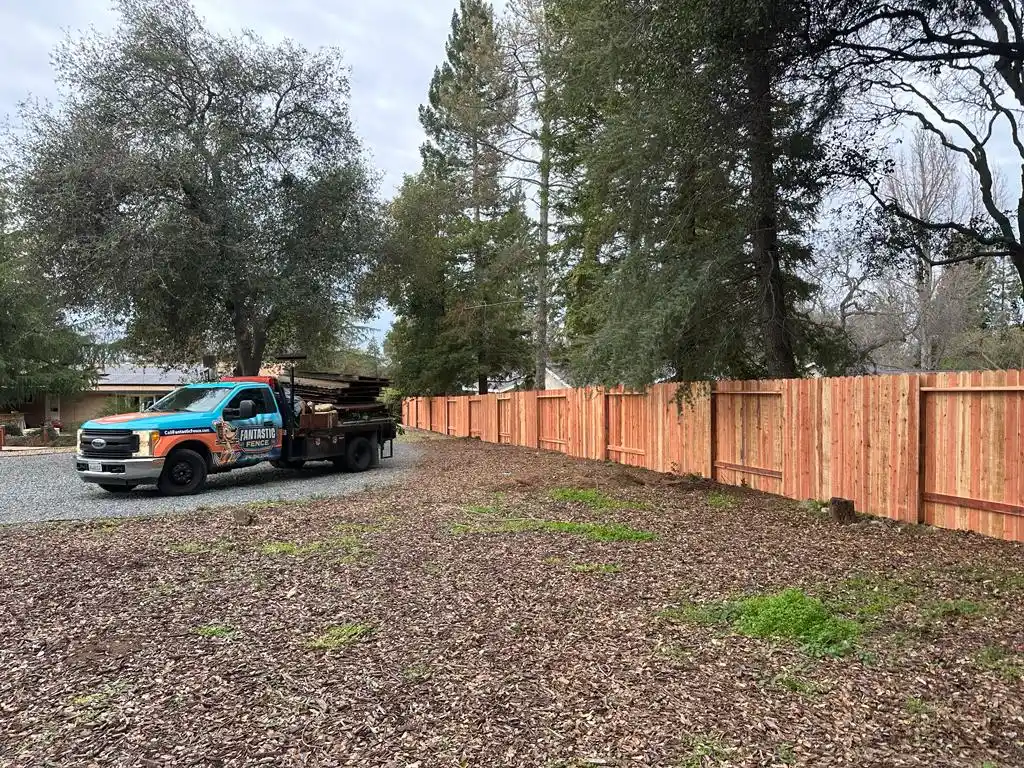
Here’s what privacy fences are running on our installs across Sacramento, Placer, El Dorado, Yuba, Yolo, and Nevada counties in 2026:
|
Privacy fence style |
Price per linear foot |
Privacy and maintenance |
|---|---|---|
|
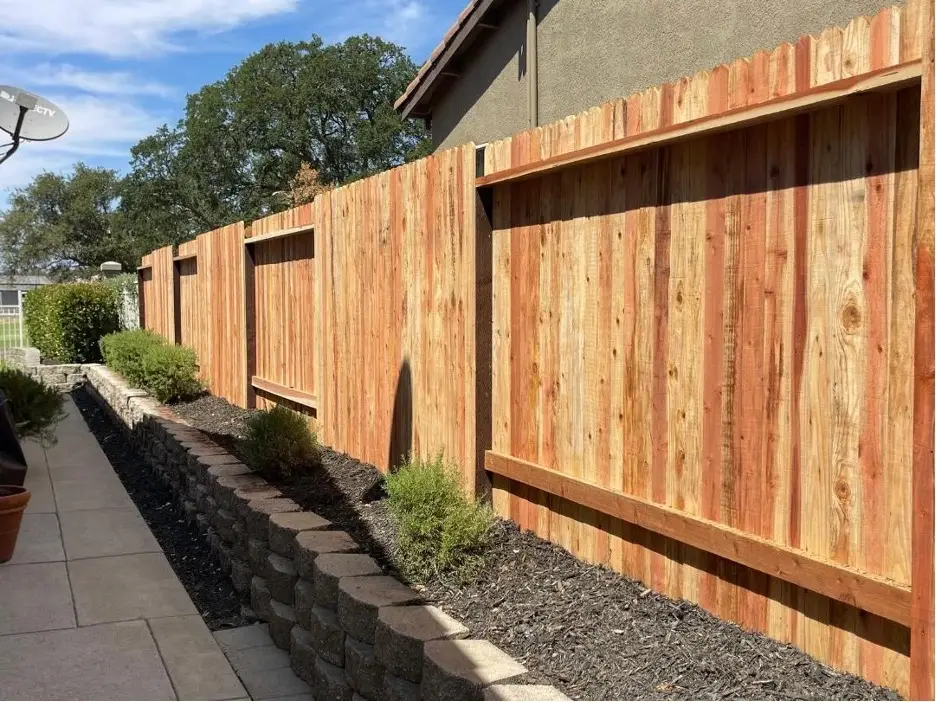
Redwood dog-ear |
$40 |
Full privacy, periodic staining or sealing |
|
Redwood dog-ear on Bolt-Up Hidden Steel Posts (our most popular) |
$47 |
Full privacy, steel posts in the ground, wood upkeep on the boards |
|
Redwood cap and trim |
$50 to $55 |
Full privacy, finished look, same wood upkeep |
|
Chain link with privacy slats |
$52 |
Partial privacy, very low maintenance |
|
Vinyl privacy |
$52 |
Full privacy, low maintenance |
|
Redwood board on board with cap and trim |
$55 to $60 |
Full privacy that holds as wood dries, wood upkeep |
|
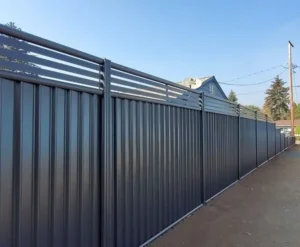
Durabond privacy steel |
$65 to $75 |
Full privacy, high security, low maintenance |
These are installed prices for the fence run itself. Gates, retaining work, and old-fence removal are separate line items, which is why the next sections exist.
Why Is Redwood Dog-Ear on Hidden Steel Posts the Best Privacy Fence Value?
Because the posts are what wear out first on a wood fence, and steel posts take that weak point away. A standard pressure-treated wood post sits in wet soil and eventually rots at the ground line, and that’s when a fence starts to lean. Pressure-treated posts also aren’t what they were ten years ago, since the treatment chemicals are less toxic now. Our Bolt-Up Hidden Steel Posts add about $7 per linear foot, and more than 80% of the wood fences we build now go on them. The steel stays hidden behind the redwood, so you still get a redwood fence on both sides.
“For most homes in our area, I recommend redwood dog-ear on our hidden steel posts. It runs about $47 a foot, and it’s what most of our customers install. A regular pressure-treated post is where a wood fence gives out first. Put steel in the ground instead and you supercharge the lifespan of the whole fence, and the value along with it. Dollar for dollar, that’s the best privacy fence we build.”
— Dominic Vella, Owner, Fantastic Fence
What Does a Per-Foot Fence Price Include?
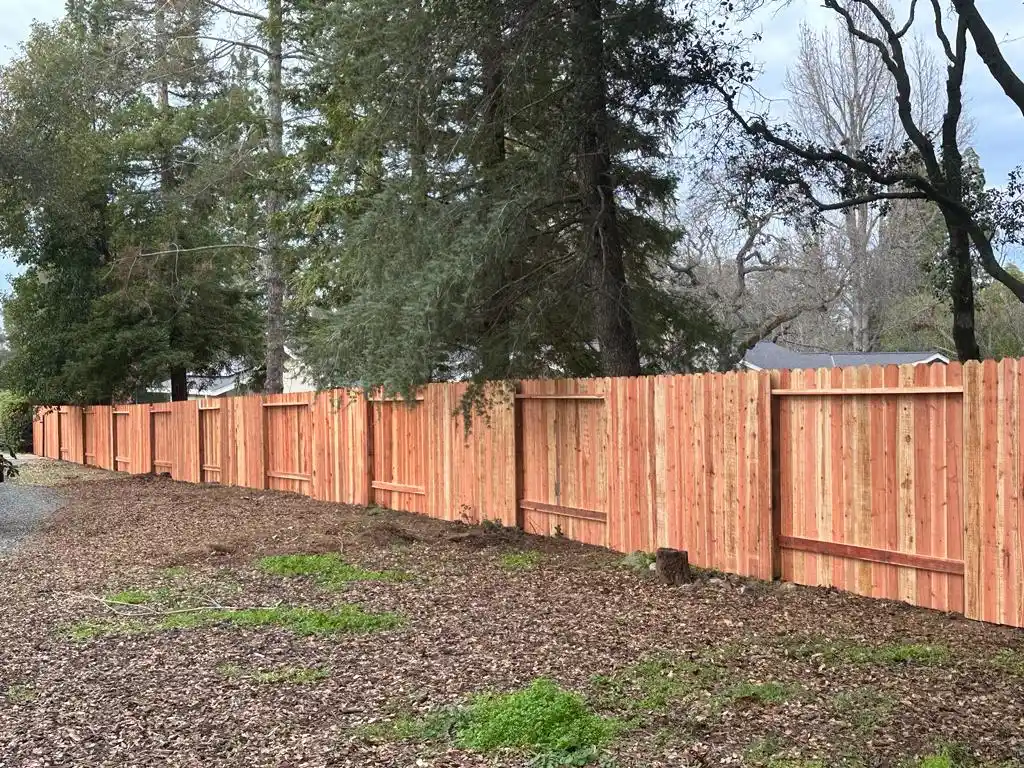
A per-linear-foot number covers the fence run itself: materials, posts, rails, boards or panels, and the labor to install them. Gates, retaining work, post upgrades, and old-fence removal are priced separately. Our calculator lists those additions plainly: Bolt-Up Hidden Steel Posts at $7 per linear foot, retaining walls at $35, $45, and $50 per linear foot for 12-inch, 24-inch, and 36-inch heights, a 4-foot person gate at $600, a 10-foot double swing gate at $1,000, and a 10-foot double swing steel-frame gate at $2,300. We quote flat pricing with zero hidden fees, so the add-ons show up on the estimate, not on the final invoice.
How Much Do Gates Add to a Privacy Fence Project?
Gate installation is priced per opening. A yard with multiple gates, say a person gate on each side plus a double gate into the backyard for a trailer, carries more posts, hardware, and hanging labor, so every opening moves the final cost.
How Much Does a Privacy Fence Cost by Material?
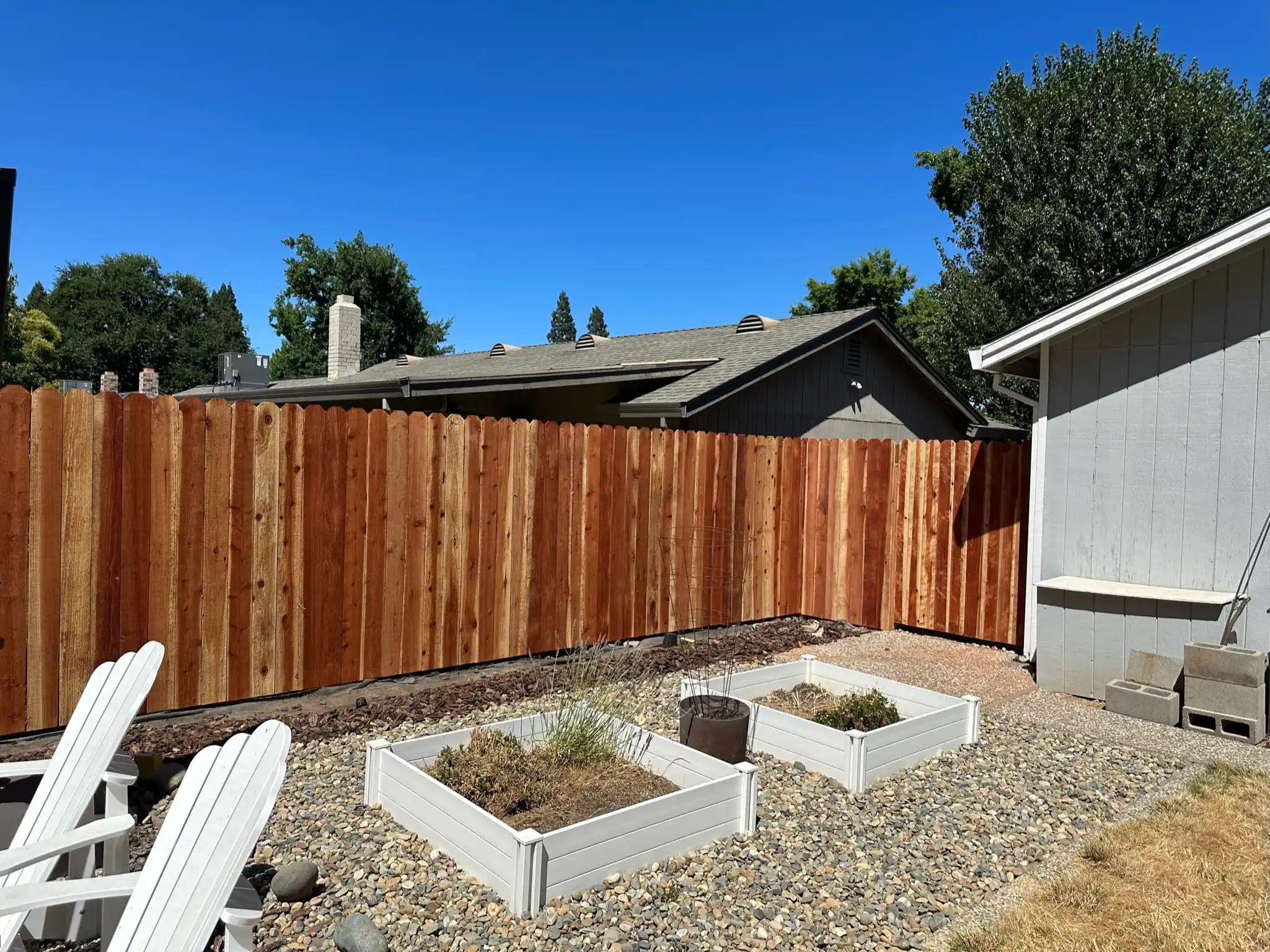
Material drives the price, the privacy you actually get, and how long the fence lasts. These are the four privacy materials we install, and they’re worth comparing side by side.
How Much Does a Redwood Privacy Fence Cost?
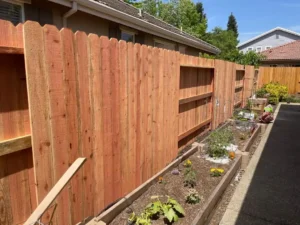
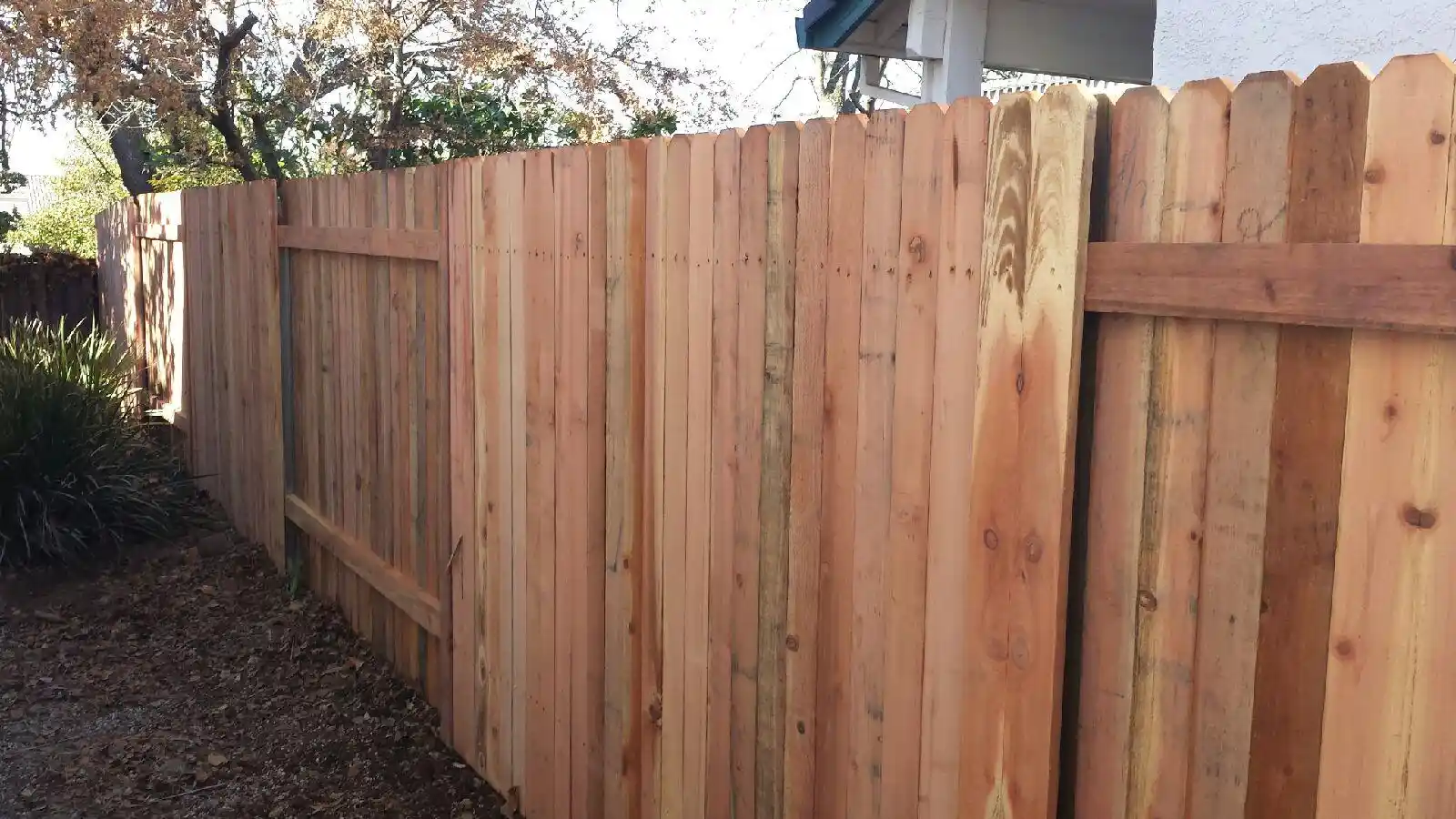
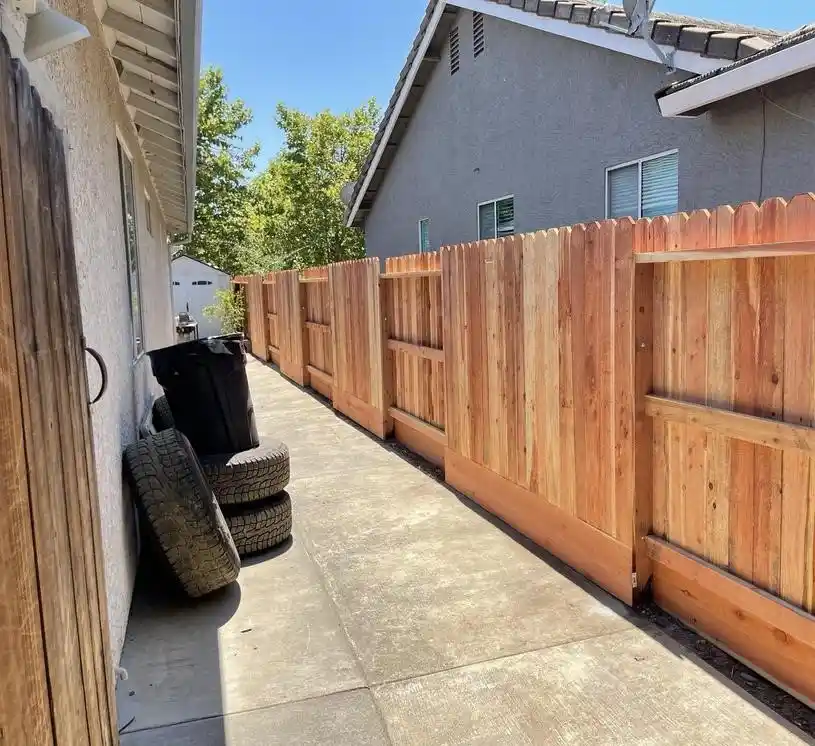
Redwood is what we build wood fences with here: the pickets and rails are redwood, and every fence is built on site, not from pre-made panels. Dog-ear is the affordable workhorse at $40 per foot, or about $47 on hidden steel posts. Cap and trim at $50 to $55 adds a finished top for fences that face the street. Board on board with cap and trim at $55 to $60 overlaps the boards, so sightlines stay closed as the wood dries and settles. Horizontal redwood is the premium design choice and is quoted per project. Plan on staining or sealing every couple of years, since wood needs regular maintenance that vinyl and steel don’t.
How Much Does a Vinyl Privacy Fence Cost?
Vinyl privacy fencing runs about $52 per linear foot. The interlocking tongue-and-groove panels give you complete visual privacy with no staining and no sealing, and a quality vinyl product holds up well in Sacramento heat.
How Much Does a Durabond Privacy Steel Fence Cost?
At $65 to $75 per linear foot, Durabond privacy steel is the top of our privacy lineup. You’re paying for a sleek panel with full privacy, real security, and a non-combustible material, which matters to foothill homeowners in Placer, Nevada, and El Dorado counties building to Firewise standards. It’s also a favorite for modern home designs.
“Many compliments on the durobond fence. It was promptly scheduled and installed. … Great price and great workmanship.”
— Gregory D., Google review
How Much Does Chain Link With Privacy Slats Cost?
Chain link with slats comes in at about $52 per linear foot. It’s practical, durable, and common on side yards, rentals, and larger foothill lots. Be clear-eyed, though: slats give partial screening, not the solid privacy of redwood, vinyl, or steel. If there’s any chance you’ll want slats, add them up front, because posts sized for see-through chain link may not handle the wind load once slats go in later.
How Does Fence Height Affect Privacy Fence Cost?
Six feet is the standard privacy height. We build 7-foot privacy fences wherever the city ordinance allows it, and going to 7 feet adds about $8 to $12 per linear foot depending on the style and the type of kickboard. Taller fences take more boards, longer posts set deeper, and extra rails. Before you budget for extra height, check the local limits below.
“Our neighbor built a horribly tall ADU against our fence. … Fantastic Fence custom designed a privacy “fence/screen” and we are thrilled to have our privacy back. … And their price was more than fair!”
— Wendy L., Google review
Does Rocky Ground Raise the Cost of a Privacy Fence?
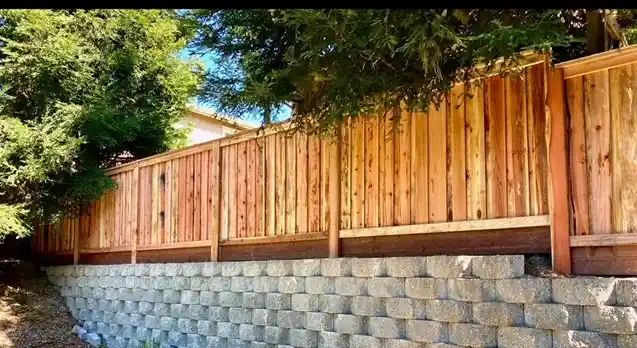
Yes, by about $4 per linear foot. Rocky ground takes more time to dig, and we don’t cut corners on post depth, because that depth is what keeps a fence standing strong for years. Folsom, El Dorado Hills, Rocklin, and Gold River are the most common places we run into it.
“They had their work cut out for them too because we have very difficult, rocky dirt for them to dig and place the posts and during the hottest time of the year! … Price was very reasonable and we will definitely use them again.”
— Lori P., Google review
What Else Affects Privacy Fence Installation Cost?
Several factors move the number, and estimates vary depending on how many of them apply to your yard.
- Total linear footage. Longer runs often shave a little off the per-foot cost but raise the total cost.
- Height. 7-foot fences add about $8 to $12 per foot where the city allows them.
- Material and style. Board on board uses more lumber than dog-ear for the same run.
- Post system. Pressure-treated wood posts, or Bolt-Up Hidden Steel Posts at $7 per linear foot.
- Gates. Number, width, and hardware.
- Removal and haul-away. Tearing out and disposing of the old fence is real labor.
- Digging conditions. Rocky ground adds about $4 per foot, and tree roots or buried concrete slow post holes down.
- Slope and retaining needs. Sloped lots add complexity, and some need retaining work along the fence line.
- Access. A narrow side yard means material and spoils move by hand.
- Seasonal demand. Calendars tighten during the busiest stretch of the year.
- HOA design requirements. Approved styles, colors, and heights can change the material.
Why Do Property Lines and Site Prep Matter Before You Build?
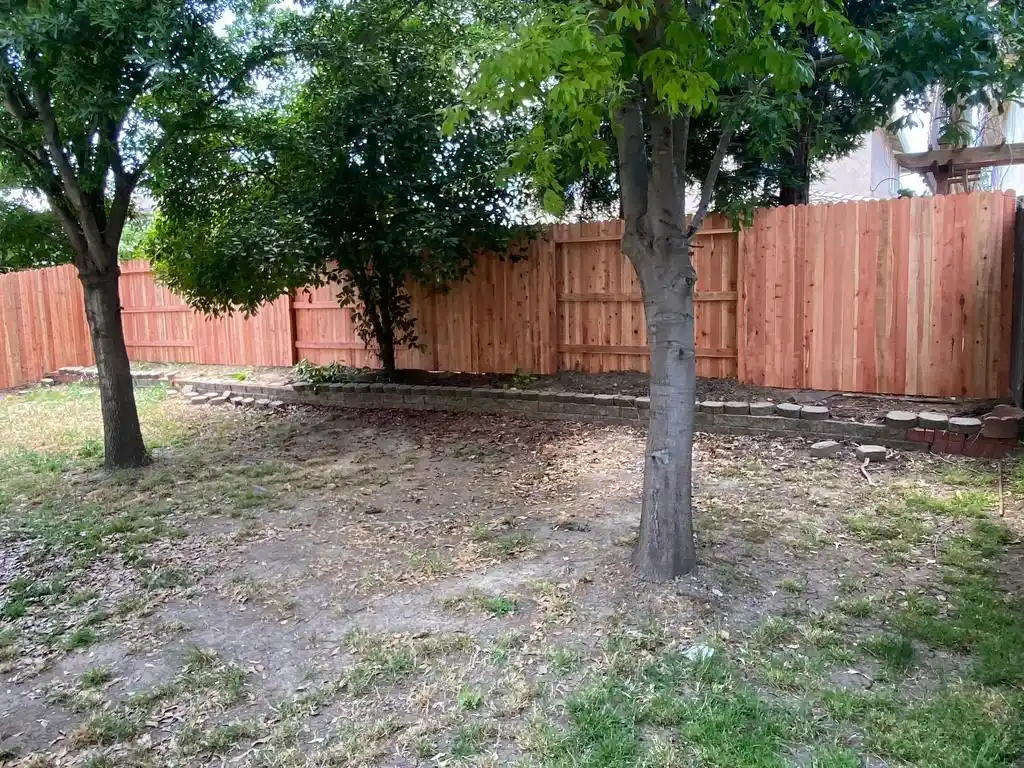
Because unclear boundaries and hidden obstacles change the job. Know where your property lines sit before anyone digs, since unclear boundaries may call for a survey and a conversation with the neighbor. Site prep matters too: brush, an old structure in the way, or site conditions nobody can see until the first hole opens up.
Does a Privacy Fence Add Property Value?
A well-built fence rarely pays for itself dollar for dollar, but it adds curb appeal, defines usable outdoor space, and removes a visible defect from the property. For a home you plan to sell, that presentation counts toward property value.
How Do You Estimate Your Total Privacy Fence Cost?
- Measure your linear footage along the run you want fenced.
- Pick a material and style.
- Count your gates and note their widths.
- Decide between wood posts and Bolt-Up Hidden Steel Posts.
- Flag old-fence removal, slope, rocky ground, access problems, or retaining needs.
- Confirm height limits with your city or county and your HOA.
- Run the Fence Price Calculator, then book a free estimate for a written number.
Can You Finance a Privacy Fence?
Yes. Financing is available for Sacramento-region homeowners, which helps on longer runs or projects that combine a new fence, gates, and retaining work.
What Should Be Included in a Written Fence Installation Quote?
California requires a written home improvement contract for any project over $500, and CSLB advises getting at least three written bids from licensed contractors based on identical scope. Your quote should spell out:
- Exact footage and height
- Material, style, and board or panel specification
- Post type
- Gate sizes and hardware
- Removal and disposal of the old fence
- Any retaining work
- Who pulls permits
- Utility marking
- Cleanup
- Payment schedule (down payments are capped at $1,000 or 10% of the contract price, whichever is less)
- Change-order process, in writing and signed
- Written guarantee
- Contractor license number
Two quotes at the same per-foot price can describe two very different fences. Ours are flat priced with zero hidden fees, backed by a written guarantee, under CSLB License #979657.
“I contracted with Fantastic Fence to remove and replace my 100ft backyard fence. The price they initially quoted me was very fair. … In two days Jesus and Luis completely took down my old fence and replaced it with a spectacular looking new fence.”
— Steve R., Google review
What Sacramento-Area Rules Can Affect Your Fence Cost?
Height limits and setbacks set by your city or county can change the fence you’re allowed to build. Inside the City of Sacramento, fences under 7 feet generally don’t need a building permit. That exemption doesn’t erase zoning: front and street-side yards are generally capped at 4 feet, rear and interior side yards at 6 feet, with 8 feet allowed in specified cases where the line abuts certain nonresidential uses. Within a driveway visibility triangle (measured 10 feet from the driveway and sidewalk), the limit is generally 3.5 feet. If you’re in Roseville, Elk Grove, or anywhere in Placer, El Dorado, Yuba, Yolo, or Nevada counties, confirm with your own planning department and HOA. See our fence ordinance quick links. We also notify 811 at least two working days before digging and no more than 14 calendar days ahead, which is professional work a material-only comparison never shows. If the fence will enclose a pool, that’s a separate code review under our pool safety fence guidance.
Can You Split the Cost of a Good Neighbor Fence With Your Neighbor?
Often, yes. California Civil Code Section 841 presumes adjoining owners benefit equally from a boundary fence and share reasonable replacement costs unless they agree otherwise in writing. If you want your neighbor to contribute, you generally owe 30 days’ prior written notice describing the problem, the proposed work, the estimated cost, the cost-sharing approach, and the timeline. The presumption can be rebutted. This is general information, not legal advice.
“We went board on board with metal post. Best for neighbors with dogs. Thank you Ivonne for working with the neighbors and splitting the cost on easy sign contract.”
— Steven A., Google review
Is DIY Cheaper Than Professional Installation?
DIY saves on labor, but you’re taking on measuring, the 811 notice, post holes and concrete, keeping a long run plumb and straight, disposal, and any rework. We’re called in fairly often to correct work that was done inexpensively the first time. Our crews are background-checked W-2 employees, not day labor.
“I recently attempted to build my own fence and quickly realized I should stick to my day job. … we agreed on a fair price and start date. … The fence is solid, secure, and looks great.”
— Steven F., Google review
Is Repairing Your Fence More Affordable Than Replacing It?
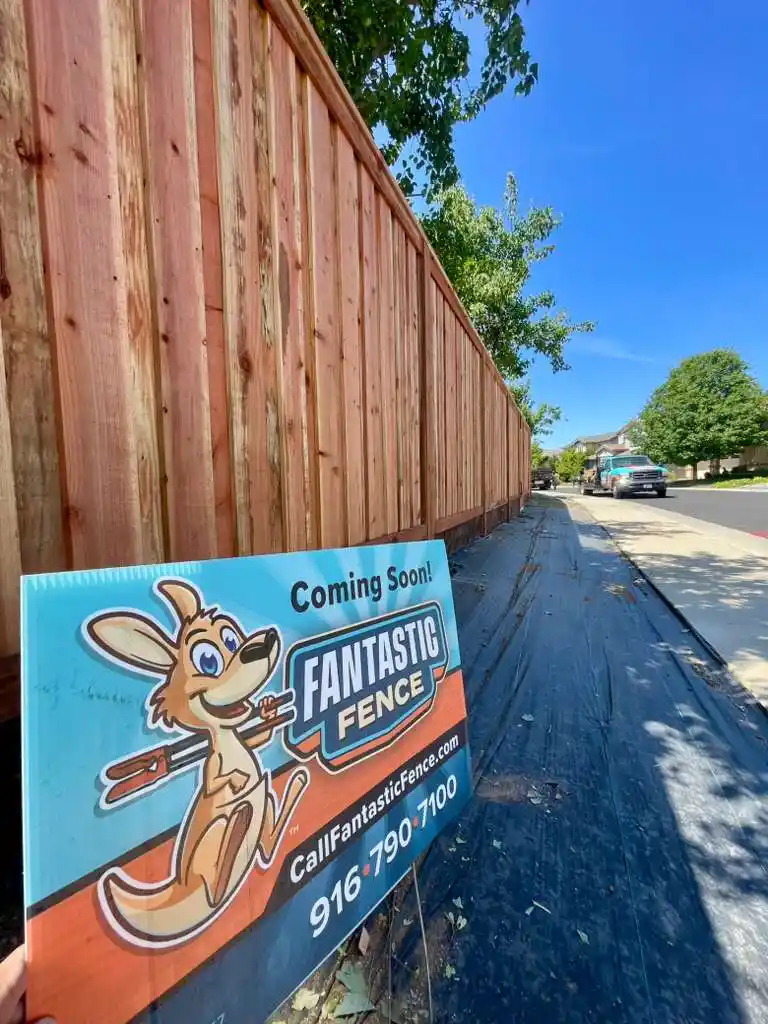
It can be. If the posts and structure are sound and only a few boards, a rail, or a gate have failed, get a fence repair estimate first. If posts are rotting or leaning across the whole run, replacement is usually the better value. We handle repair, replacement, and new installation, from small repairs to full fence and gate services.
Frequently Asked Questions
What’s the average cost to put up a privacy fence?
Our average privacy fence job is about 70 linear feet of redwood dog-ear on hidden steel posts at about $47 per foot, which comes to roughly $3,300 before gates. Across all our privacy styles, prices run $40 to $75 per linear foot installed.
How much is 300 feet of fencing?
At our most popular style, redwood dog-ear on hidden steel posts at about $47 per foot, 300 feet is roughly $14,100 before gates, removal, and any retaining work. Run your own style through the calculator for a planning number.
How much is 400 ft of privacy fence?
Same method: 400 feet at about $47 per foot is roughly $18,800 before gates and add-ons. Over a run that long, access, slope, and rocky ground have a bigger effect on the total.
Is it cheaper to buy or build a privacy fence?
Building it yourself saves labor, but factor in tool rental, concrete, disposal, and the cost of redoing a section that didn’t hold.
Ready for a Free Fence Estimate With Flat Pricing and Zero Hidden Fees?
Use the Fence Price Calculator for a planning number, then let us come out and give you a written one. Licensed, bonded, and insured under CSLB License #979657, approximately 35 background-checked W-2 employees, three offices in Rocklin, Sacramento, and Elk Grove, and a written guarantee: the job isn’t done until you give the thumbs up. Get a Free Fence Estimate, call us at (916) 790-7100, or book online.