Key Takeaway
For most wood fences, fence paint means a 100% acrylic latex exterior system applied over a compatible primer on clean, dry, prepared wood. Solid-color or penetrating stain is often easier to maintain on rough-sawn boards. Paint slows weathering but does nothing for rot, leaning posts, or split rails – structural problems need repair, not a new coat of paint.
The right fence paint depends on your fence material and its condition. For a sound wood fence, a compatible exterior 100% acrylic latex system on clean, dry, prepared wood (primer plus two topcoats) is the standard choice, though a solid-color or penetrating stain is often easier to maintain on rough-sawn boards. Here’s the part product pages leave out: paint won’t stop rot, straighten a leaning post, or repair a split rail. We install, repair, and replace fences and gates. We don’t paint or stain, so none of this is a pitch for a service we sell.
Which Fence Paint Should You Use for Your Fence Material?

| Fence surface | Recommended finish | Primer? | Key caution |
|---|---|---|---|
| Bare smooth wood | 100% acrylic latex exterior paint | Yes | Wood must be dry first |
| Bare rough-sawn wood | Solid-color or penetrating stain | Per label | Paint film struggles on rough grain |
| Previously painted wood | Compatible acrylic latex or oil enamel | Spot-prime bare areas | Remove all loose coating |
| Cedar or redwood | Acrylic latex over blocking primer | Yes, stain-blocking or alkyd | Extractive bleed stains the finish |
| Pressure-treated wood | Acrylic latex or stain | Yes for paint | Test moisture, don’t guess |
| Ornamental iron or steel | Exterior metal topcoat | Rust-inhibiting primer | Remove loose rust and scale |
| Galvanized chain link | System approved for galvanized | Yes, galvanized-rated | Standard primers peel off zinc |
| Vinyl or factory-finished steel (including Durabond) | Usually don’t paint | N/A | Check the warranty first |
| Structurally damaged fence | Repair before any coating | N/A | Paint hides damage, doesn’t fix it |
Acrylic latex is the workhorse on wood because it flexes as boards expand and contract. Oil-based (alkyd) enamels adhere well and hold up on weathered wood, but they dry slower and carry higher VOCs. Whatever you buy, the product label controls the primer, coats, and conditions.
Fence Paint vs. Staining: Which Lasts Longer on a Wood Fence?
Paint forms an opaque film. It gives you the widest color range and strong UV protection, and it can peel. Solid-color stain is an opaque exterior wood coating, and some formulas are film-forming too. Semi-transparent penetrating stain soaks in, keeps the grain visible, and tends to fade rather than flake.
Neither one always wins. The real tradeoff is future maintenance: paint needs scraping and sanding at recoat time, while penetrating stain can often just be washed and refreshed. Flat and matte sheens hide board imperfections but offer less UV resistance. For timing, see our guide on how often to stain a wood fence.
Can You Paint Vinyl, Chain Link, or Ornamental Iron Fencing?
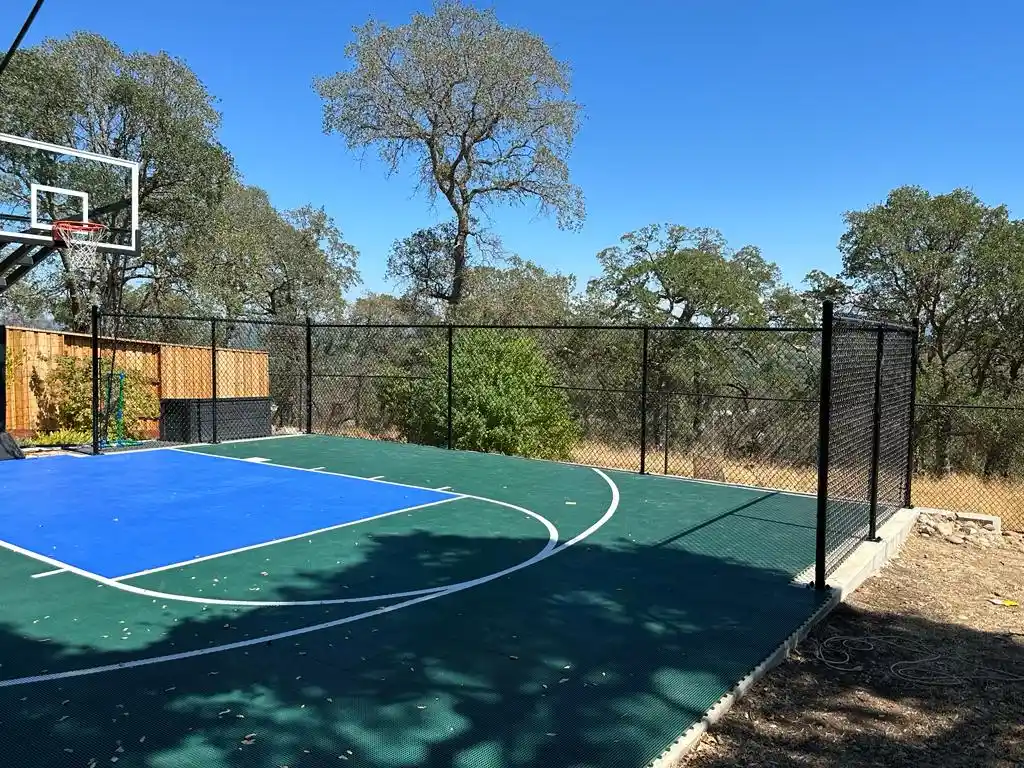
Metal, yes. Wash off dirt and grease, knock back loose coating and rust, prime bare steel with a rust-inhibiting primer, then apply an exterior metal topcoat. Galvanized chain link needs a system specifically approved for galvanized surfaces. Chain link takes a roller or sprayer well, though overspray control matters.
Vinyl is different. Many vinyl fence warranties exclude painted or coated product, and dark colors absorb heat and can bow panels. Read the manufacturer’s written warranty before you open a can. Cleaning it, swapping a damaged panel, or buying factory-colored vinyl is usually the smarter move. Same caution applies to factory-finished steel systems.
How Do You Prepare and Clean a Wood Fence Before Painting?
- Make repairs first. Coating over bad wood wastes the paint.
- Clear vegetation and mask landscaping, walkways, patio surfaces, and anything on your neighbor’s side.
- Scrub off dirt, grease, chalk, and mildew with a stiff brush. Pressure washing is optional, and only at low pressure.
- Let it dry. USDA research shows blistering and peeling are likely above 20% wood moisture content. A moisture meter beats any fixed waiting period on new or pressure-treated lumber.
- Scrape loose coating, feather the edges, and lightly sand with 120 to 150 grit. Don’t sand rough-sawn boards smooth.
- Remove dust, then prime bare or stain-prone wood.
Lead-safe warning: homes built before 1978 may have lead paint. EPA’s Renovation, Repair and Painting rule governs paid work, and its exterior minor-repair exemption covers only 20 square feet or less. Contain your dust and debris before scraping or sanding.
Brush, Roller, or Sprayer, and the Ideal Application Temperature

| Method | Strength | Watch out for |
|---|---|---|
| Brush | Most control on edges, fasteners, end grain | Slowest |
| Roller | Fast across flat boards | Misses gaps and board edges |
| Sprayer | Fastest coverage | Heavy masking, overspray, wind drift |
Back-brush after spraying or rolling on rough wood. Work with the grain, and use two thin coats instead of one heavy one. Most exterior coatings want roughly 50°F to 90°F and about an hour to dry to the touch, but confirm on the label. Coat every reachable edge, joint, and exposed end grain, with extra attention at gates. Coverage and lifespan claims vary widely (one common barn and fence paint lists 300 to 400 square feet per gallon, another brand advertises up to five years), so treat those as examples, not promises.
Why Does Fence Paint Peel?
- Wet wood, or painting too soon after washing
- Coating over dirt, chalk, or loose paint
- Incompatible old and new products
- Missing or wrong primer
- Tannin bleed from cedar and redwood
- Painting in direct heat or right before rain
- Sprinkler spray, soil, or concrete contact at the board bottoms
- Structural movement in posts and rails
A quick annual walk of the fence with a brush and small touch-ups stretches the finish considerably.
Sacramento and California Considerations

Work in shade and stay off sun-baked boards during peak afternoon heat. Check the actual forecast and rain-free window, not just the season. The City of Sacramento generally doesn’t require a permit for painting, but HOA guidelines, CC&Rs, planned developments, and historic or design-review districts can restrict exterior color, so confirm before you commit. On a good neighbor fence, verify ownership and get written agreement first. California Civil Code §841 presumes shared responsibility for boundary fences and requires 30 days’ written notice when seeking cost contribution, which is not permission to repaint on your own. Finally, never pour latex paint down a drain. Take leftovers to an approved paint recycling or household hazardous waste site per DTSC.
When Paint Is the Wrong Fix, and What to Do Instead
If your fence looks tired, ask an honest question first: did the finish fail, or did the fence? USDA guidance draws the line clearly, a finish is not a preservative. Paint slows weathering. It does nothing for decay already underway. Stop and get it assessed if you see soft or crumbling wood at the base, leaning or loose posts, split rails, detached boards, rust at welds, or a sagging gate.
We don’t paint or stain. We handle fence and gate repair, replacement, and installation across Sacramento, Placer, El Dorado, Yuba, Yolo, and Nevada counties as a licensed, bonded, and insured local company (CSLB License #979657), with background-checked W-2 employees, flat pricing, zero hidden fees, a written guarantee, and a thorough clean-up when we’re done.
If peeling paint is hiding rot, loose posts, or damaged rails, get a free fence estimate. Call us or book online.
Frequently Asked Questions
What type of paint is best for a fence?
For most wood fences, a 100% acrylic latex exterior paint over the right primer. For ornamental iron and steel, use a rust-inhibiting primer with an exterior metal topcoat approved for that substrate.
Can I just paint over old fence paint?
Yes, if the existing coating is sound, clean, and compatible with the new product. Remove anything loose or flaking. Switching to a penetrating stain requires near-total removal, since stain has to reach the wood.
What is the longest lasting paint for a fence?
There’s no single winner. A properly primed acrylic latex system holds up well on sound wood, and an oil-based enamel can perform on weathered boards. Preparation and sun exposure matter more than brand.
Is painting a fence a good idea?
On a structurally sound fence, yes. You get UV protection and far more color options. If paint is covering rot or failing posts, you’re spending money to delay a repair.