When something feels off in your yard, it usually starts quietly. Maybe the soil stays wet longer than it should. Maybe your retaining wall looks just slightly out of line. It is easy to brush it off at first. But over time, that small change can turn into something bigger, something that threatens the strength and safety of your space.
This is where retaining wall drainage solutions come in. They are not just about moving water. They are about protecting your home, your outdoor space, and the work you have already invested into your yard.
When water is not handled the right way, excess water builds up behind the wall. That leads to hydrostatic pressure buildup, soil saturation, and eventually wall failure. But with the right plan, you can guide water where it needs to go, protect your wall structure, and restore peace of mind.
Why Drainage Matters More Than Most Homeowners Realize

Drainage matters because your retaining wall is doing more than holding soil. It is resisting constant water pressure from the surrounding soil. When proper drainage is missing, hydrostatic pressure builds slowly over time.
That pressure buildup increases with heavy rainfall, especially in areas with clay soil that holds moisture longer. As soil saturation increases, the weight behind the wall grows, and that can lead to structural failure or even complete retaining wall failure.
Proper retaining wall drainage helps control water flow, reduce excess moisture, and protect the wall’s structural integrity. A well-designed drainage system keeps water moving instead of letting it sit. That simple difference can determine whether your retaining wall system lasts decades or needs costly repairs much sooner than expected.
Signs Your Retaining Wall May Have a Drainage Problem
Visible Warning Signs
A retaining wall will often show visible signs when wall drainage is not working. You might notice cracks forming in concrete blocks or a brick wall. You may see bowing or leaning, which points to pressure buildup behind the wall.
Water seeping through the wall face or pooling at the base is another clear sign that the wall’s drainage system is not handling water properly. These are early warnings of potential structural integrity issues.
Hidden Warning Signs
Some problems are less obvious. Excess moisture in the surrounding soil can make the ground feel soft or unstable. Soil erosion near the base or top of the wall is another indicator of poor drainage.
If nearby fence posts or structures shift, that can also signal water buildup affecting the surrounding landscape. Leaning or unstable fences are a common sign that the ground has moved or softened due to excess moisture. These changes happen gradually, but they should never be ignored.
When to Act
If you see leaning, cracking, or consistent water buildup, it is time to act. Inadequate drainage does not improve on its own. It leads to larger issues, including wall failure and structural failure that require more extensive repairs.
The Real Cause: How Water Builds Pressure Behind Your Wall
Water naturally moves through soil, but when it cannot flow freely, it collects behind the wall. This creates hydrostatic pressure, which pushes outward on the wall structure. As excess water accumulates, soil saturation increases. The surrounding soil becomes heavier and exerts more force. This hydrostatic pressure buildup is one of the most common causes of retaining wall failure.
Freeze thaw cycles can make this even worse. When water freezes, it expands, leading to frost heave and additional pressure on the wall. Over time, this repeated stress weakens the wall’s structural integrity and leads to cracks or movement.
Proper drainage systems are designed to control water flow, reduce water pressure, and prevent water buildup from reaching dangerous levels.
The 5 Essential Retaining Wall Drainage Solutions (Explained Simply)
1 | Perforated Drain Pipe, The Foundation of Every Good System
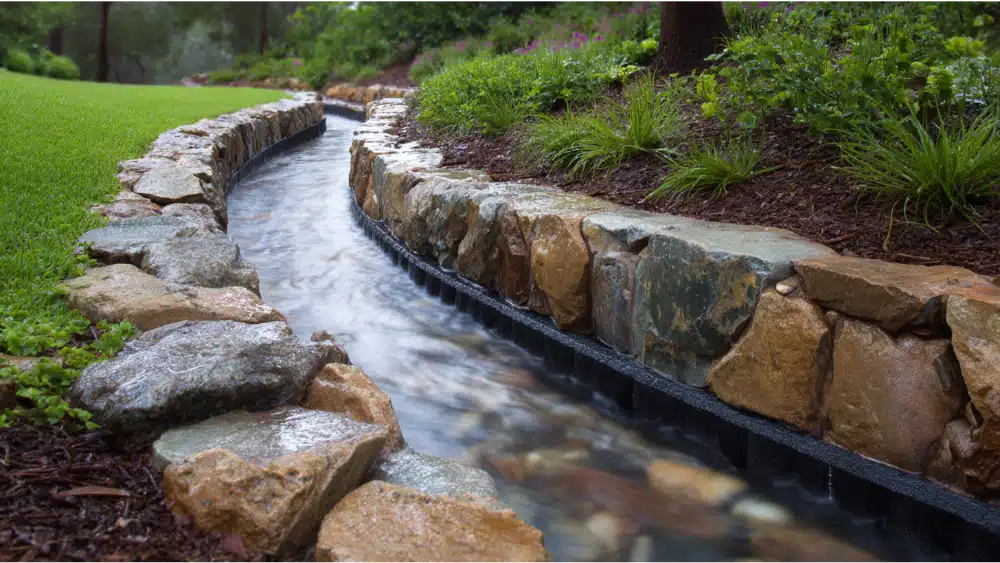
A perforated drain pipe sits at the base of the wall and collects water as it moves down through the drainage zone. These perforated pipe systems are essential for moving water away from the wall and preventing pressure buildup.
The drainage pipe must be installed with the correct slope so water can flow freely toward pipe outlets. Without proper placement, even the best materials cannot ensure proper drainage.
2 | Gravel Backfill, Letting Water Flow Instead of Sit
Gravel backfill creates a drainage zone that allows water to flow freely behind the wall. Using clean crushed stone or drainage aggregate instead of soil prevents excess moisture from becoming trapped.
A gravel layer made of crushed stone or pea gravel helps direct water toward the drainage pipe. Compacted gravel backfill also supports the wall while maintaining proper water flow.
3 | Filter Fabric, The Hidden Protector
Filter fabric is one of the key drainage components that protects the system over time. It separates soil particles from the drainage aggregate and prevents clogging.
Without filter fabric, soil particles can fill the gaps in the gravel layer, reducing effective drainage and leading to poor drainage conditions.
4 | Weep Holes, Relieving Pressure Through the Wall
Weep holes allow water to escape through the face of the wall. They are commonly used in concrete blocks and brick wall designs.
Weep holes help reduce hydrostatic pressure and provide an additional path for water flow. However, blocked weep holes can lead to water buildup, so they must be maintained as part of the wall’s drainage system.
5 | Surface Drainage and Grading, Stopping Water Before It Starts
Surface drainage plays a major role in retaining wall drainage. Proper grading helps direct water away from the wall and prevents excess water from entering the drainage zone.
French drains and other surface solutions can help control water flow across the surrounding landscape. When you manage water before it reaches the wall, the entire drainage system performs better.
Choosing the Right Drainage Solution for Your Yard
The best retaining wall drainage system depends on several factors, including soil type, wall height, and the surrounding landscape.
Clay soil tends to hold water, which increases the need for effective drainage. Sandy soil allows water to flow freely but still requires proper drainage systems to prevent erosion.
Taller walls and mechanically stabilized earth systems often require more advanced drainage components to handle increased water pressure.
Working with a structural engineer or professional retaining wall installers in Sacramento can help ensure proper drainage systems are designed to match your specific retaining wall system and prevent structural failure.
Common Retaining Wall Drainage Mistakes (And How to Avoid Them)

Many retaining wall problems come from simple mistakes. Skipping the drainage pipe, using the wrong drainage aggregate, or failing to install drainage correctly can all lead to poor drainage conditions.
Some walls are built without proper pipe outlets, which prevents water from exiting the system. Others rely only on weep holes without a full drainage system, which is not enough to handle heavy rainfall. This is especially important when using pressure treated wood retaining walls, where moisture control directly affects long-term durability.
These mistakes lead to hydrostatic pressure buildup, soil erosion, and eventually wall failure. Avoiding these issues starts with understanding that drainage matters as much as the wall materials themselves.
Can You Add Drainage to an Existing Retaining Wall?
In some cases, it is possible to improve retaining wall drainage without rebuilding the entire structure. Adding drain pipes, installing French drains, or improving surface grading can help control water flow.
However, if the wall has already experienced structural failure or severe movement, a rebuild may be necessary to restore wall stability.
A professional evaluation can help determine whether retrofitting drainage components will be enough or if a new retaining wall system is the better long-term solution.
How Much Do Retaining Wall Drainage Solutions Cost in 2025?

The cost of retaining wall drainage solutions depends on the size of the wall, access to the area, and the level of work required.
Simple improvements like adding a drainage pipe or adjusting grading may be more affordable. Larger projects that involve excavation, gravel backfill, and full drainage system installation will cost more.
While costs vary, investing in proper retaining wall drainage helps prevent costly repairs and protects the wall’s structural integrity for years to come.
DIY vs Professional Installation: What Homeowners Should Know
Some drainage improvements, like extending downspouts or minor grading, can be handled by homeowners. However, installing perforated pipe systems, compacted gravel backfill, and full retaining wall drainage systems requires experience.
Improper installation can lead to inadequate drainage, which increases the risk of wall failure and structural failure.
Working with professionals ensures proper drainage, protects wall stability, and helps you avoid costly repairs in the future.
How Proper Drainage Transforms Your Yard: Before and After
Before proper drainage, your yard may feel unpredictable. Water buildup, soil erosion, and shifting structures create stress every time it rains.
After installing a well-designed drainage system, everything changes. Water flows away from the wall, the soil stays stable, and the wall structure remains strong.
A well-drained wall supports a safer, more enjoyable outdoor space where you can relax without worrying about hidden damage.
FAQs About Retaining Wall Drainage Solutions
Do all retaining walls need drainage?
Most retaining wall structures require proper drainage to handle water flow and prevent hydrostatic pressure buildup.
What is the best drainage system for a retaining wall?
The best system combines perforated drain pipe, gravel backfill, filter fabric, and proper grading to ensure optimal drainage.
How do I know if my wall is failing due to water?
Signs include cracks, leaning, water seeping, soil erosion, and excess moisture in the surrounding soil.
Can poor drainage damage nearby structures?
Yes, poor drainage can affect fences, patios, and other elements in your outdoor space by weakening the ground beneath them.
How long should a properly drained retaining wall last?
A well-designed drainage system can extend the life of a retaining wall for decades.
What happens if water has nowhere to go?
Water buildup leads to hydrostatic pressure, pressure buildup, and eventually structural failure or wall failure.
Final Thoughts: Build It Once, Build It Right
A retaining wall should feel solid and dependable. But true strength comes from what is happening behind the wall, where proper drainage controls water flow and protects the entire structure.
When you invest in effective drainage, you are not just building a wall. You are protecting your home, your yard, and your peace of mind.
Let’s Make Sure Your Wall Is Built to Last
If your retaining wall is showing signs of poor drainage or water buildup, now is the time to take a closer look. A well-designed drainage system can restore stability and protect your investment for the long run.
Your yard deserves to feel safe, dry, and strong. Let’s build something strong together.