The Real Answer Depends on Your Usage — A Sacramento Fence Professional’s Perspective
If you search online for “what type of fence lasts the longest,” you’ll find dozens of articles ranking materials in neat little charts. Most of them give you numbers pulled from manufacturer brochures and national averages. Those are fine as a starting point, but they don’t tell you the whole story.
Here at Fantastic Fence, we’ve been building, repairing, and replacing fences across the Sacramento region for years. We’ve seen what actually holds up and what doesn’t—in our specific climate, in our soil, under real-world conditions with dogs, kids, wind, heat, and everything else Sacramento throws at a fence. The answer to “what lasts longest” isn’t always what the internet tells you.
More importantly, the fence that lasts the longest isn’t always the right fence for you. Longevity is only one piece of the puzzle—the right fence for your property is a combination of lifespan and the function you actually need. A galvanized chain link fence might outlast everything else on the market, but if you need privacy, pet containment, or curb appeal, it’s not the right answer. So let’s walk through what we’ve actually seen in the field, and help you understand typical lifespans here in the Sacramento area so you can make the best decision for your home.
What We’ve Actually Seen: Fence Lifespans in Sacramento
Based on our years of professional experience installing and servicing fences throughout the Sacramento area, here is how the major fence types rank in terms of real-world longevity:
Tier 1: The Longest-Lasting — Galvanized Chain Link and Agricultural Woven Wire
Expected lifespan: 30–50+ years
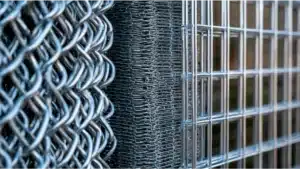
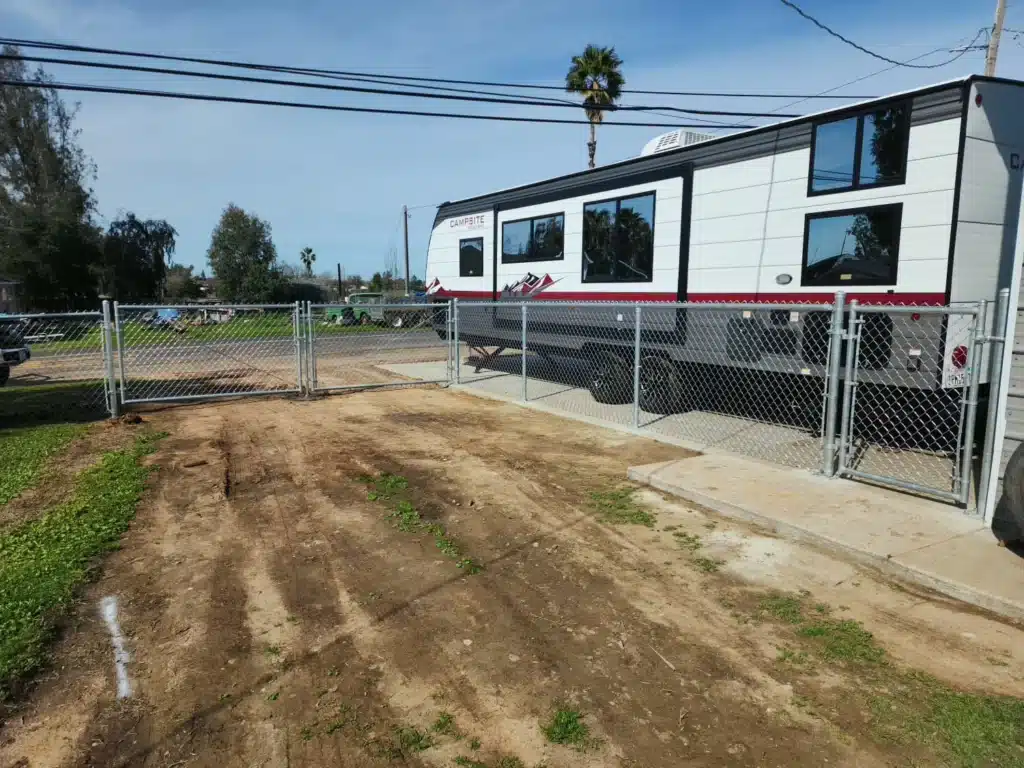
If we’re talking purely about which fence material outlasts everything else, galvanized chain link and agricultural woven wire on driven T-posts take the top spot—and it’s not even close. These fences are simple, strong, and nearly indestructible. The galvanized coating resists rust, the steel framework handles wind and impact without flinching, and there are virtually no moving parts to wear out. We’ve seen galvanized chain link fences in the Sacramento area that are 40 and 50 years old and still perfectly functional.
Agricultural woven wire on T-posts is equally durable. The wire mesh is galvanized, the posts are steel driven directly into the ground, and the entire system requires essentially zero maintenance. For rural properties, ranches, agricultural land, and utilitarian applications, nothing outlasts these options.
The trade-off: These fences provide no privacy, limited aesthetic appeal, and won’t meet the needs of most residential homeowners looking for a backyard privacy fence. They’re the longevity champions, but they’re not the right fit for everyone—which is exactly why longevity alone shouldn’t drive your decision.
Tier 2: Excellent Longevity — Wrought Iron and Vinyl

Expected lifespan: 25–50+ years (wrought iron); 25–40+ years (vinyl)
The next tier down includes wrought iron (and ornamental iron) and vinyl fencing. Both of these materials deliver outstanding longevity when properly installed and maintained.
Wrought iron and ornamental iron fences are extremely strong, resistant to impact, and hold up well in Sacramento’s hot, dry summers. With periodic rust-prevention treatment every few years, a quality iron fence can last 50 years or more. The main vulnerabilities are corrosion at welds and connection points if the protective finish is neglected, and the ornate detailing that makes these fences beautiful can also create more surface area for rust to take hold. Iron fences provide security and elegance, but they offer no privacy—you can see right through them.
Vinyl (PVC) fencing has come a long way in recent years and is now one of the most durable residential options available. Vinyl doesn’t rot, doesn’t attract insects, never needs painting or staining, and holds up well against moisture. Modern vinyl fencing includes UV-resistant compounds that help prevent the cracking and fading that plagued earlier generations of the product. In Sacramento’s climate, a quality vinyl fence can easily last 30 years or more with nothing more than an occasional rinse with a garden hose. The main limitations of vinyl are that it can become brittle in extreme cold (less of a concern in Sacramento), it can crack under heavy impact from large dogs or fallen branches, and replacing damaged panels tends to be more expensive than replacing individual wood pickets.
Tier 3: Solid Longevity with the Right Setup — Wood (Redwood and Cedar)

Expected lifespan: 15–30+ years (depending heavily on post type and maintenance)
Wood fences—specifically redwood and cedar—are by far the most popular choice for residential privacy fencing in the Sacramento area, and for good reason. They’re beautiful, versatile, provide full privacy, block sound, and can be built in a wide range of styles from basic dog-ear to custom board-on-board designs with caps and trim. The question with wood is never whether it’s the right material for the job—it’s how to make it last as long as possible.
Here’s the reality: a wood fence built with standard pressure-treated wood posts will typically give you 15 to 20 years before the posts begin to fail. The posts are almost always the first thing to go. They sit in the ground, surrounded by soil and moisture, and despite the pressure treatment, they eventually rot. Once the posts fail, the fence leans, sags, and ultimately falls—even if the pickets and rails are still in perfectly good shape. We’ve replaced hundreds of fences over the years where the wood above ground was fine, but the posts had rotted out at the base.
It’s worth noting that the pressure-treated wood available today is not the same product it was 10 or 15 years ago. The chemical treatments used to preserve fence posts were changed several years ago to be more environmentally friendly, but the result is that modern pressure-treated posts don’t hold up as well as the older formulations. We’ve seen posts rot out significantly faster than they used to.
The Game Changer: Hidden Steel Fence Posts

This is the single most important upgrade you can make to a wood fence to extend its lifespan, and it’s something most of those online longevity articles never mention: replace the wood posts with hidden galvanized steel posts.
Hidden steel posts—sometimes called bolt-up hidden steel posts—are galvanized steel posts that are set in concrete just like a traditional post, but they’re designed to be completely concealed behind the fence pickets. From the outside, your fence looks like a beautiful all-wood fence. But on the inside, the structural backbone is steel that won’t rot, won’t warp, won’t attract insects, and won’t deteriorate in the ground the way wood does.
When you build a wood fence on hidden steel posts, you shift the lifespan equation dramatically. Instead of your fence being limited by the 15-year life of a wood post, the structural foundation of your fence can last 30 to 50 years or more. The pickets and rails—which aren’t in the ground and don’t face the same moisture and rot issues—will last much longer than the posts, especially with periodic staining. And if individual pickets or rails do need replacement over the years, that’s an affordable repair that doesn’t require touching the posts.
In our professional opinion, this is the upgrade that pushes a wood fence from the 15-year range toward 30 years and beyond. It’s the difference between replacing your entire fence in 15 years and only needing to maintain and repair individual boards over the course of decades. The upfront cost is higher than standard wood posts, but the long-term savings—both in replacement costs and in not having to redo your entire fence—make it one of the smartest investments a homeowner can make.
We’ve installed thousands of bolt-up hidden steel posts over the years, and we’ve seen firsthand how they outperform every other post option. They don’t have the wobble or flex that some other steel post systems have, and they integrate cleanly with kickboards, lattice, retaining walls, and gate hardware. If you’re investing in a wood fence, hidden steel posts are the foundation that makes that investment worthwhile.
Sacramento Fence Lifespan Comparison
Here’s a summary of typical fence lifespans as we’ve observed them in the Sacramento area, based on proper installation and reasonable maintenance:
|
Fence Type |
Lifespan Range |
Maintenance |
Best For |
|
Galvanized Chain Link / Woven Wire on T-Posts |
30–50+ years |
Very low |
Security, agricultural, utility, pet runs |
|
Wrought Iron / Ornamental Iron |
25–50+ years |
Moderate |
Security, decorative, pool enclosures, curb appeal |
|
Vinyl (PVC) |
25–40+ years |
Very low |
Privacy, low-maintenance, pool areas, decorative |
|
Wood (Redwood/Cedar) with Hidden Steel Posts |
25–30+ years |
Moderate |
Privacy, pets, families, shared boundaries, curb appeal |
|
Wood (Redwood/Cedar) with Wood Posts |
15–20 years |
High |
Budget-conscious privacy, short-to-mid term |
|
Wood (Pine/Spruce) with Wood Posts |
5–12 years |
High |
Temporary, budget applications |
Notice the difference hidden steel posts make. The same wood fence that might last 15 to 20 years on standard wood posts can push well past 25 to 30 years when built on a steel foundation. That’s the kind of real-world insight you won’t find in a generic online ranking.
Longevity Is Only Half the Equation: Matching Your Fence to Your Usage
As we said at the outset, the right fence is not just the one that lasts the longest—it’s the one that lasts the longest while doing the job you need it to do. Here’s how different usage scenarios should influence your material choice:
If You Have Dogs
Dogs are the single biggest source of fence wear we encounter. They dig at the base, chew on lower boards, crash into fence panels during bouts of fence-line reactivity, and pace repeated paths that erode soil around post footings. For pet owners, you need a fence that provides full visual privacy (to reduce fence fighting and anxiety), can withstand physical impacts, and is easy to repair when individual components take damage.
Our recommendation: A board-on-board wood fence with hidden steel posts, a pressure-treated kickboard at the base, and a third rail on shared fence lines where dogs are active. The overlapping pickets eliminate visual gaps that trigger fence fighting, the kickboard resists digging and chewing, and the hidden steel posts give you 30+ years of structural life. Chain link might last longer, but it provides zero privacy and actually makes fence fighting worse because the dogs can see each other clearly.
If You Have Kids
Kids put constant low-level stress on fences—balls hitting panels, bikes leaning against pickets, climbing, hanging, and pushing. Over the years, this loosens boards, bends metal components, and cracks rigid materials like vinyl.
Our recommendation: Wood or vinyl privacy fencing. Wood absorbs impacts without cracking and is the most affordable material to repair section by section when damage occurs. Vinyl offers the advantage of no splinters and no painting, which matters with small children. Both are excellent choices—wood has the edge on repairability and cost of repairs, vinyl has the edge on day-to-day maintenance.
If You Have a Pool
Pool fences face constant moisture and chemical exposure and must meet strict local code requirements for height, gate latching, and picket spacing. A failed pool fence isn’t just an inconvenience—it’s a safety hazard.
Our recommendation: Aluminum or ornamental iron for open pool areas where visibility is desired, or vinyl for pool privacy fencing. All three materials resist moisture and chemical exposure far better than wood. Make sure your installation meets all local code requirements, including self-closing and self-latching gates.
If You Share a Fence Line with Active Neighbors
Shared boundary fences take stress from both sides—especially when both properties have dogs, kids, or heavy yard activity. These fences need to be strong, private, and attractive from both sides.
Our recommendation: A board-on-board wood fence on hidden steel posts with a third rail. The board-on-board design looks good from both sides (making it a true “good neighbor” fence), the third rail adds structural support against impacts from both directions, and the hidden steel posts ensure the fence’s structural foundation outlasts the wear and tear of heavy use.
If Your Fence Sees Minimal Activity
For quiet side yards, decorative front-yard boundaries, or property lines with minimal foot traffic, raw material longevity becomes the dominant factor because there’s little usage wear to worry about.
Our recommendation: This is where wrought iron, ornamental iron, vinyl, and even galvanized chain link truly shine. Without pet impacts, kid activity, or heavy yard use, these materials can last a lifetime with minimal attention. If you want the longest possible lifespan and don’t need privacy, iron or chain link is your answer. If you want both longevity and privacy with near-zero maintenance, vinyl is the way to go.
Installation Quality: The Factor That Trumps Everything
We can’t stress this enough: a premium material installed poorly will fail faster than a standard material installed correctly. Post depth, concrete footings, proper spacing, hardware quality, and drainage around posts all have a greater impact on how long your fence lasts than the material alone.
We’ve replaced fences that were less than five years old because the posts were set too shallow, the concrete wasn’t done properly, or the builder used cheap hardware that rusted and failed. We’ve also maintained fences built decades ago that are still standing strong because they were installed correctly from day one. No amount of expensive material can compensate for a bad installation.
The Maintenance Reality Check
Every lifespan number in this article assumes you’ll do at least basic maintenance. Be honest with yourself: are you realistically going to stain your wood fence every two to three years? Will you inspect your iron fence for rust spots and touch them up? If the answer is no—and for many busy homeowners, it honestly is—that changes the equation.
A cedar fence that could last 25+ years with regular staining might only make it to 15 without it. A wrought iron fence that could last a lifetime might develop serious corrosion in 20 years if the finish is neglected. For homeowners who want longevity without a maintenance commitment, vinyl and aluminum are the strongest choices. Both require little more than occasional cleaning with soap and water.
If you love the look of wood but aren’t sure about the maintenance, hidden steel posts become even more important. They remove the most catastrophic failure point (post rot) from the equation, so even if you fall behind on staining, your fence won’t collapse—the cosmetic wood can be refreshed or replaced while the steel structure holds everything together.
Don’t Overlook Repairability
Longevity isn’t just about how long a fence stands before it needs total replacement. It’s also about how easily and affordably you can fix damage along the way. This is where wood fencing has a major advantage that often gets overlooked.
A broken wood picket can be replaced for a few dollars. A damaged rail can be swapped out without disturbing the rest of the fence. These individual repairs extend the overall life of a wood fence almost indefinitely—you’re replacing components rather than the entire structure. When your posts are steel, those component repairs are the only repairs you’ll likely ever need to make.
Vinyl fences typically require replacing entire panels when damage occurs, and matching older vinyl colors and styles can be difficult. Metal fences may need welding for structural repairs, adding cost and complexity. When you factor in repairability, a wood fence on hidden steel posts can effectively last as long as you want it to—because you’re continually renewing affordable components on an indestructible foundation.
The Bottom Line
If you want the absolute longest-lasting fence material and don’t care about privacy or aesthetics, galvanized chain link and agricultural woven wire on T-posts are the clear winners. If you want excellent longevity with an upscale look, wrought iron and vinyl are outstanding choices. And if you want the most popular residential privacy fence in Sacramento—a beautiful wood fence in redwood or cedar—the single most important thing you can do to maximize its lifespan is build it on hidden steel posts.
But remember: the right fence for you isn’t just the one that lasts the longest. It’s the one that lasts the longest while giving you the privacy, security, pet containment, curb appeal, or pool safety you actually need. Longevity and function together—that’s the winning combination.
Let Us Help You Choose
At Fantastic Fence, we install wood, vinyl, steel, chain link, ornamental iron, and Durabond steel fencing throughout the Sacramento area. We offer free consultations where we’ll walk your property, talk through how you use your yard, and recommend the material and construction method that will give you the best-performing, longest-lasting fence for your specific situation.
Because the fence that lasts the longest isn’t always the most expensive one. It’s the right one.
Call us today for your free estimate: Rocklin 916-790-7100 | Sacramento 916-248-5518 | Elk Grove 916-345-0142
Or visit us online at callfantasticfence.com
Note: Fence height regulations vary by municipality. Always check with your local planning and zoning office before building or modifying a fence. The strategies described in this article are recommendations based on industry experience and should be combined with professional training for dogs exhibiting severe aggression or anxiety.