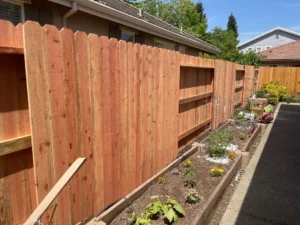
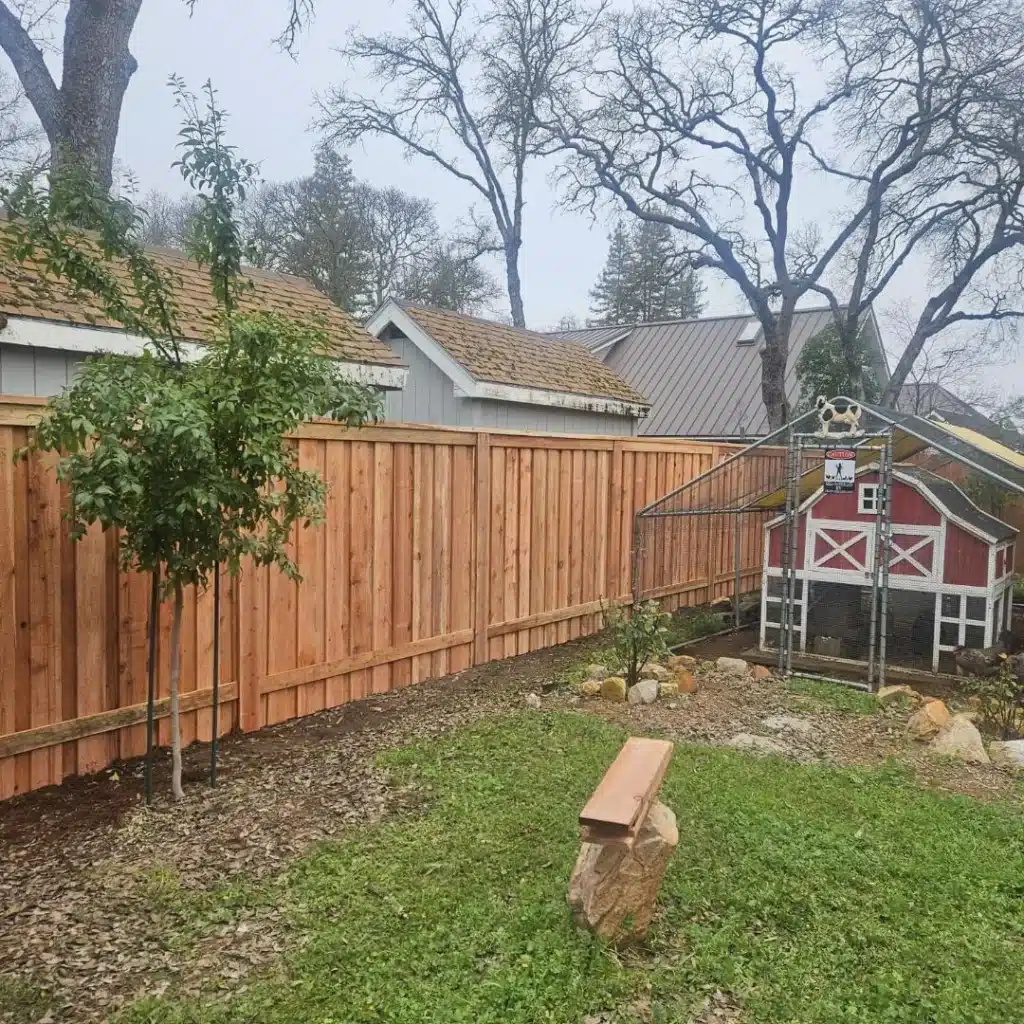
A solid wood Dog Proof Fencing secures a yard with a red chicken coop.

How to Dog Proof Your Yard with the Right Fence

If you’re a pet owner, your backyard fence isn’t just a property boundary—it’s your dog’s first line of defense against the dangers of the outside world and, in many cases, the only thing standing between your pet and the neighbor’s dog on the other side. For far too many homeowners, the daily ritual of letting their dog outside comes with an unwelcome soundtrack: barking, growling, snarling, and the sound of paws and bodies slamming against fence boards. This is fence fighting, and it’s one of the most stressful and destructive behaviors a dog owner can deal with.

The good news? The right fence design can dramatically reduce fence fighting, lower your pet’s anxiety, keep escape artists contained, and protect your investment from damage caused by agitated animals. In this article, we’ll walk you through the most effective strategies for dog-proofing your yard with proper fencing—starting with the single most impactful upgrade you can make: a board-on-board overlap design.

Understanding Why Fence Fighting Happens

Before we talk about solutions, it helps to understand the problem. Fence fighting is a form of barrier frustration—sometimes called barrier reactivity or barrier aggression. When two dogs can detect each other through a fence but can’t actually reach one another, the resulting frustration often manifests as aggressive behavior. According to animal behaviorists, this aggression is typically rooted in territorial instinct, anxiety, overexcitement, or stress rather than genuine malice between the animals.

What makes fence fighting particularly concerning is how quickly it can escalate. Dogs that repeatedly rehearse aggressive responses along a fence line can develop generalized anxiety and reactivity that carries over into other situations—even with dogs they might otherwise get along with perfectly. Veterinary and training professionals consistently note that dogs who fence fight frequently may redirect that pent-up aggression onto other pets in the household, visiting people, or even their owners.

The most critical trigger for fence fighting is visual access. When dogs can see each other through the gaps between standard fence pickets—even through seemingly narrow half-inch cracks—it’s often enough to set off a chain reaction of arousal and aggression. This is the core problem that the right fence design addresses head-on.

The Board-on-Board Solution: Eliminating Visual Triggers

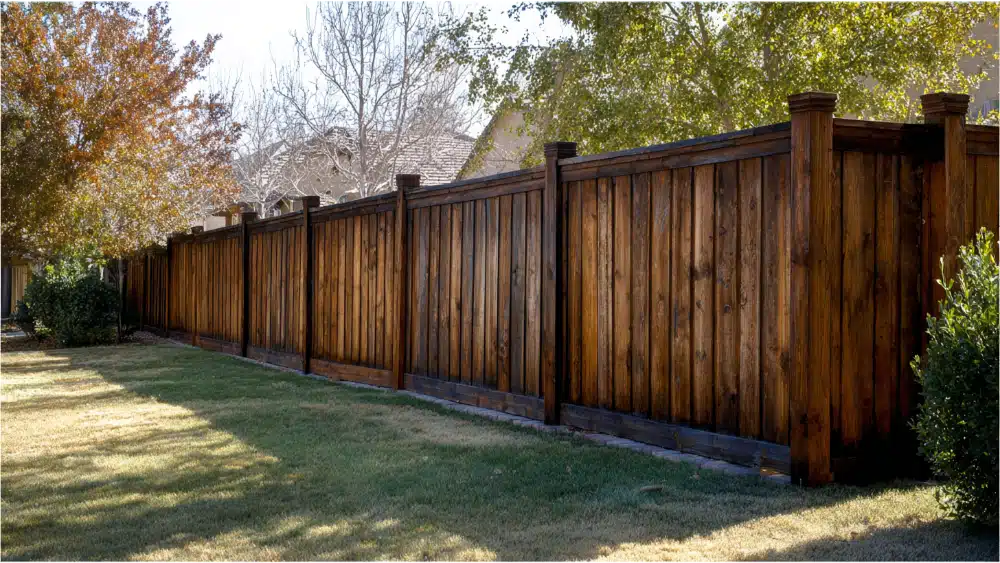
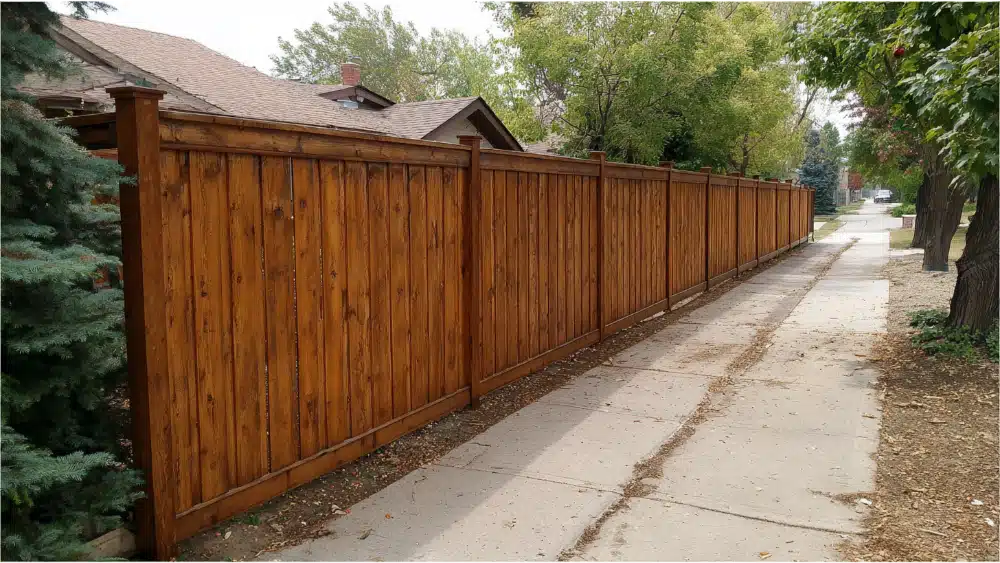
Our experience in fence installation has shown time and again that the single most effective upgrade for pet owners dealing with fence fighting is switching to a board-on-board overlap design. This construction method uses overlapping pickets that completely eliminate the gaps found in standard privacy fences, creating a truly solid visual barrier between neighboring yards.

How Board-on-Board Construction Works

In a traditional privacy fence, pickets are installed side by side on the same plane. Over time, as the wood dries and shrinks, visible gaps appear between the boards. Dogs are remarkably perceptive, and even small gaps provide enough visual access to detect movement on the other side—which is all it takes to trigger reactive behavior.

A board-on-board fence takes a different approach. The first layer of pickets is installed with intentional spacing between each board. A second layer of pickets is then installed over those gaps, overlapping the first layer on both sides. This overlapping technique ensures that even as the wood naturally shrinks and seasons over the years, no gaps will ever appear. The result is a fence with true 100% privacy—no peeking, no sightlines, no visual triggers for your pets.

Why It Works So Well for Pet Owners

Multiple fence companies across the country have recognized the pet benefits of this design. The overlapping picket construction reduces pet stress by preventing dogs from catching glimpses of neighbors or other animals through fence gaps. When the visual trigger is removed, most dogs simply lose interest in patrolling and reacting along the fence line.

The benefits extend beyond behavior. Board-on-board fences also provide enhanced sound dampening compared to standard privacy fences. Since much of fence fighting is triggered by auditory cues—the sound of a neighbor’s door opening, the jingle of another dog’s collar—the denser, layered construction helps muffle these sounds and further reduces your dog’s reactivity.

From a structural standpoint, the overlapping boards also add significant strength and rigidity to the fence. Dogs that throw themselves against fence panels during episodes of fence fighting can cause substantial damage to a standard fence over time. The double-layered picket design of a board-on-board fence distributes that force more effectively, meaning less warping, fewer broken boards, and a longer-lasting fence overall.

Solutions for Jumpers: Adding Height Safely

Some dogs don’t just fight along the fence—they try to go over it. If you have a jumper or a climber, the standard six-foot fence may not be enough to keep your pet contained. The consequences of a successful escape can be severe: dogs that get loose face risks from traffic, encounters with aggressive animals, and the possibility of becoming lost.

The good news is that in most communities, residential fences can be built up to seven feet tall—that’s a full extra foot of height over the standard six-foot fence. This additional foot can make all the difference for athletic breeds that have learned to scale a shorter barrier. Before adding height, always check with your local planning and zoning office, as fence height regulations vary by municipality and can differ between front yards, side yards, and backyards.

For existing fences, there are also extension systems available that attach to the top of your current fence to add height. Some of these include angled extensions that lean inward, making it physically impossible for a climbing dog to pull themselves over the top. Coyote rollers—spinning bars installed along the top of the fence—are another effective option, as they prevent dogs from gaining the grip they need to haul themselves up and over.

Additionally, consider your landscaping. Trees with low-hanging branches, outdoor furniture, storage sheds, or play equipment positioned near the fence can all serve as launching pads for a determined jumper. Keeping the area along your fence line clear of climbable objects is an important and often overlooked step in containment.

Solutions for Diggers: The Pressure-Treated Kickboard

Solid wood Dog Proof Fencing featuring an overlapping design and kickboard.

If your dog prefers to go under the fence rather than over it, a pressure-treated kickboard is one of the most reliable solutions available. A kickboard is a horizontal board that runs along the bottom of the fence, closing off the gap between the bottom of the pickets and the ground.

We specifically recommend using pressure-treated lumber for kickboards rather than standard fence pickets for several important reasons. Pressure-treated wood is significantly more durable and resistant to moisture, rot, and insect damage—all critical factors for a board that sits at or near ground level where it’s exposed to constant soil contact, rain splash, and irrigation. More importantly for pet owners, pressure-treated kickboards are substantially harder for a determined dog to chew through or break compared to a standard fence picket, which a large, motivated dog can destroy surprisingly quickly.

The kickboard also serves a dual purpose by elevating the bottom of your fence pickets off the ground. This means the decorative pickets of your fence aren’t sitting in dirt and moisture, which dramatically extends the life of the entire fence. It’s a smart investment that protects both your pet and your property.

For particularly determined diggers, you can reinforce the kickboard by partially burying it or by combining it with buried wire mesh along the fence line. Some homeowners also place gravel or decorative stone along the base of the fence, which dogs find uncomfortable to dig through.

The Third Rail: Extra Reinforcement for Active Fence Lines

Standard wood privacy fences are typically built with two horizontal rails running between the posts—a top rail and a bottom rail—to which the vertical pickets are attached. For most applications, two rails provide adequate support. However, when pets are actively engaging with the fence on a regular basis, that standard construction may not hold up.

This is why we recommend adding a third rail when dogs are frequently interacting with the fence line. The third rail is installed midway between the top and bottom rails, providing an additional point of attachment for every picket on the fence. This significantly increases the overall rigidity and impact resistance of the fence panels.

Think of it this way: when a seventy-pound dog hits a fence panel at full speed during a bout of fence fighting, that force is concentrated on the pickets and transferred to the rails. With only two rails, each picket has just two points of support, leaving a large unsupported span in the middle where boards can flex, crack, or pop loose over time. Adding a third rail cuts that unsupported span roughly in half, distributing the forces more evenly and preventing the kind of cumulative damage that leads to expensive repairs or premature fence replacement.

A third rail is a relatively inexpensive addition during initial fence construction, and it’s one of the best investments a pet owner can make in the long-term durability of their fence.

Additional Dog-Proofing Strategies

Supervise and Redirect

Even the best-built fence works more effectively when combined with proper management. Dog trainers and veterinary behaviorists consistently advise that dogs should be supervised during outdoor time, particularly if fence fighting has been an issue. When your dog heads toward the fence line, interrupt the behavior early with a recall command or redirect their attention with play or training. The more you prevent your dog from rehearsing reactive behavior, the faster it will diminish.

Coordinate with Your Neighbors

Fence fighting is a two-dog problem, and the most effective solutions often involve cooperation between neighbors. Consider discussing staggered outdoor schedules, joint training efforts, or even a controlled introduction between the dogs on neutral ground. Many dogs that fight aggressively through a fence are perfectly friendly when they meet without that barrier between them.

Landscaping as a Buffer

Planting dense shrubs or hedges along your fence line creates a natural buffer zone that keeps your dog several feet away from the fence itself. This added distance makes it harder for dogs to interact through the fence and can significantly reduce the intensity of reactive episodes. Choose pet-safe, non-toxic plants, and avoid anything with thorns that could injure your dog.

Exercise and Enrichment

Dogs that are well-exercised and mentally stimulated are far less likely to engage in fence fighting. Boredom and excess energy are major contributors to reactive fence-line behavior. Make sure your dog is getting adequate daily exercise and mental enrichment—puzzle toys, training sessions, sniff games, and interactive play—before being turned loose in the yard.

Putting It All Together: A Dog-Proof Fence Checklist

When planning a dog-proof fence for your yard, consider the following combination of features for maximum effectiveness:

Board-on-board overlap construction to eliminate all visual gaps between pickets, removing the primary trigger for fence fighting and pet anxiety.

Appropriate height for your dog’s athletic ability. For jumpers, consider going up to seven feet where local ordinances permit, adding up to one foot over the standard fence height.

A pressure-treated kickboard at the base of the fence to deter diggers. The durability of pressure-treated lumber makes it far more resistant to chewing and breakage than a standard picket.

A third horizontal rail for fence lines where pets are most active, providing extra structural support and preventing damage from repeated impacts.

Clear landscaping along the fence line to remove any objects that could help a dog climb or jump over, and consider adding buffer plantings to create natural distance.

Ongoing management including supervision, training, exercise, and neighbor communication to support the structural solutions with behavioral ones.

The Bottom Line

A fence that works for pet owners needs to do more than mark a property line. It needs to keep your dog safely contained, reduce the stress and anxiety that come with fence-line reactivity, prevent damage caused by fence fighting, and maintain good relationships with your neighbors. The right combination of board-on-board overlap construction, appropriate height, a pressure-treated kickboard, and a third rail creates a fence system that addresses all of these needs.

Every dog is different, and every yard presents unique challenges. Whether you’re building a new fence from scratch or looking to upgrade an existing one, we recommend starting with the board-on-board overlap as your foundation—it’s the single most impactful change you can make—and then layering in additional solutions like height extensions, kickboards, and extra rails based on your dog’s specific behaviors.

Your dog’s safety, your peace of mind, and the longevity of your fence are all worth the investment. Contact us today to discuss the best dog-proof fencing options for your property, and let’s build a yard where your pets can relax, play, and enjoy the outdoors—without the stress of fence-line battles.

Note: Fence height regulations vary by municipality. Always check with your local planning and zoning office before building or modifying a fence. The strategies described in this article are recommendations based on industry experience and should be combined with professional training for dogs exhibiting severe aggression or anxiety.

Best Fence Company in Sacramento

Schedule Your Service Today!

"*" indicates required fields

This field is for validation purposes and should be left unchanged.

By Submitting you agree to receive text messages at the number provided. Message/data rates may apply.

Other Post

123-456-7890

Call the Number for Your Area

Book Online

What can we do for you?(Required)
Which side of the property?(Required)
Name(Required)

Call the Number for Your Area