Timing, Weather, and the Science of Getting a Beautiful, Long-Lasting Finish
You just had a beautiful new wood fence installed—or maybe your existing fence is due for a refresh. Either way, you’re thinking about staining it. Great idea. A quality stain protects the wood from moisture, UV damage, and everyday wear, and it keeps your fence looking rich and vibrant instead of turning gray and weathered. But here’s the thing most people don’t realize: when you stain matters just as much as what stain you use.
Stain your fence at the wrong time—when the wood is too wet, the air is too humid, or the temperature is too extreme—and you’ll end up with a finish that looks blotchy, peels prematurely, or simply doesn’t last. Stain it at the right time, and you’ll get deep, even penetration that protects the wood for years.
Here in the Sacramento area, our climate actually gives us some terrific advantages when it comes to fence staining—if you know how to time it right. Let’s break it all down.
The Science Behind Stain Absorption: Think of a Towel

To understand why timing matters so much, think about how a towel works. Pick up a completely dry towel and pour water on it—it soaks everything up instantly, absorbing deep into every fiber. Now try the same thing with a towel that’s already wet. The water sits on the surface, rolls off, and barely penetrates at all. The towel simply can’t absorb what it doesn’t have room for.
Wood works exactly the same way. Fence stain is designed to be absorbed into the wood’s pores and fibers—not just sit on top. When the wood is dry, those pores are wide open and ready to drink up the stain, pulling it deep into the grain where it bonds with the fibers and creates lasting protection. But when the wood is wet or damp—from recent rain, morning dew, high humidity, or simply not having enough time to cure—those pores are already full of moisture. The stain can’t get in. It sits on the surface, dries unevenly, and won’t hold up nearly as long.
This is why the moisture content of the wood is the single most important factor in determining when to stain your fence. And that’s directly tied to the season, the weather, and the climate where you live.
The Best Time to Stain a Fence in the Sacramento Area
Late Spring through Early Fall. May through September is the ideal staining window for Sacramento, Elk Grove, Folsom, Davis, Carmichael, and Auburn.
For homeowners in the greater Sacramento region, late spring and summer are the prime staining seasons. This is when conditions come together perfectly for deep, even stain absorption and a durable, long-lasting finish. Here’s why our climate makes this window so ideal:
- Dry wood. Sacramento’s famous hot, dry summers mean your fence wood has had months of warm weather to shed any residual moisture. By late May or June, the wood is as dry as it’s going to get all year—which means maximum absorption when you apply the stain.
- Low humidity. Sacramento’s summer humidity drops to some of the lowest levels of the year—averaging around 46–53% in June and July, compared to 75–83% in the winter months. Lower humidity means the stain can dry and cure properly without moisture interference.
- Virtually no rain. Sacramento receives almost zero rainfall from June through September. That gives you a long, reliable window of dry weather to stain your fence without worrying about an unexpected downpour ruining the finish before it cures.
- Warm temperatures. Most stain manufacturers recommend applying stain when the air temperature is between 50°F and 90°F. Sacramento’s summer days regularly hit the upper 80s and 90s, so you’ll want to time your staining for the morning or late afternoon to avoid applying in direct midday heat, which can cause the stain to dry too quickly on the surface.
Season-by-Season Breakdown for Sacramento
|
Season |
Temp Range |
Humidity |
Rain Risk |
Staining Verdict |
|
Spring (Apr–May) |
65–80°F |
Moderate (40–60%) |
Low to moderate |
Excellent — Wood is drying out, temps are ideal, rain becomes rare by May |
|
Summer (Jun–Sep) |
85–95°F |
Low (46–53%) |
Very low |
Best window — Driest wood, lowest humidity, no rain; stain morning or evening to avoid extreme heat |
|
Fall (Oct–Nov) |
65–80°F |
Rising (50–65%) |
Increasing |
Good early; risky later — October can work, but rain returns in November |
|
Winter (Dec–Mar) |
45–60°F |
High (70–83%) |
High |
Avoid — Wet wood, high humidity, frequent rain, slow drying; poor absorption and finish |
When to Stain a Brand-New Fence

If you just had a new fence installed, don’t rush to stain it right away. New wood needs time to cure and acclimate to its environment before it’s ready to accept stain. Here’s a general guide based on the type of wood:
|
Wood Type |
Wait Time Before Staining |
Why |
|
Redwood / Cedar |
2 to 4 weeks |
Lower natural moisture; dries quickly in warm weather |
|
Pressure-Treated Pine |
3 to 6 months |
Saturated with chemical preservatives that need time to dry |
|
Kiln-Dried Lumber |
1 to 2 weeks |
Pre-dried at the mill; acclimates quickly |
The Water Drop Test: Not sure if your wood is dry enough? Sprinkle a few drops of water on the fence. If the water beads up and sits on the surface, the wood is still too wet. If the water absorbs into the wood within a few seconds, you’re ready to stain. This simple test takes the guesswork out of timing.
The Ideal Conditions for Staining: A Checklist
Whether you’re staining a new fence or refreshing an existing one, here are the conditions that stain manufacturers and professional painters recommend for the best results:
- Air temperature between 50°F and 90°F. Most major stain brands—including Behr, Cabot, and Thompson’s—recommend this range. The sweet spot is around 70–80°F.
- Humidity below 60%. Lower humidity allows the stain to dry and cure evenly. Sacramento’s summer humidity levels are ideal for this.
- No rain for at least 48 hours before and after staining. The wood needs to be dry before you apply, and the stain needs at least 24–48 hours to cure before getting wet.
- Avoid direct midday sun on hot days. When the wood surface gets too hot (over 90°F), the stain can dry on the surface before it has time to penetrate—leading to lap marks, uneven color, and reduced durability. In Sacramento’s summer heat, stain in the early morning or late afternoon when the fence is in shade.
- Wood moisture content below 15%. This can be checked with an inexpensive moisture meter, or you can use the water drop test described above.
Why Sacramento’s Climate Is Actually Perfect for Fence Staining

Compared to many parts of the country, homeowners in the Sacramento area have a significant advantage when it comes to fence staining. Our Mediterranean climate delivers long stretches of dry, warm weather from late spring through early fall—exactly the conditions that produce the best staining results.
Consider the numbers:
- Sacramento averages fewer than 2 rainy days per month from June through September. That’s almost guaranteed dry conditions for your staining project.
- Summer humidity hovers around 46–53%—well within the ideal range for stain application and curing.
- Average high temperatures range from 85°F to 95°F in summer, which keeps the wood thoroughly dry but does require you to time your application to avoid the hottest part of the day.
- Sacramento gets over 14 hours of daylight in June and July, giving you a long working window even when staining in the cooler morning or evening hours.
Whether you’re in Elk Grove, Folsom, Davis, Carmichael, Auburn, or anywhere in the greater Sacramento metro, you’re working with some of the best staining weather in the country. Take advantage of it.
When NOT to Stain Your Fence
Just as important as knowing the right time is knowing when to hold off. Avoid staining your fence in the following situations:
- During or immediately after rain. Even light rain can saturate the wood enough to prevent proper stain absorption. Wait at least 48 hours after the last rainfall and confirm the wood is dry before starting.
- During Sacramento’s rainy season (November through March). The combination of frequent rain, high humidity (70–83%), and cooler temperatures means the wood stays damp, drying times are extended, and the stain won’t penetrate or cure properly.
- In extreme heat without shade. When Sacramento hits triple digits, the fence surface can easily exceed 100°F in direct sun. Stain applied to extremely hot wood dries on contact before it can soak in, leaving a surface coating that will crack and peel.
- On brand-new wood that hasn’t cured. Fresh lumber—especially pressure-treated wood—still contains high levels of internal moisture and treatment chemicals. Staining too early traps that moisture and leads to a poor finish that won’t last.
- When morning dew is still present. Wait until the dew has fully evaporated and the fence surface feels dry to the touch before you begin.
How Often Should You Re-Stain?

Most fence stain manufacturers and professional painters recommend re-staining every 2 to 3 years to maintain optimal protection and appearance. However, several factors can shorten or lengthen that interval:
- Sun exposure. South-facing fences that get full sun all day will fade and weather faster than shaded sections. In Sacramento’s intense summer sun, UV exposure is a major factor.
- Quality of the stain. Higher-quality stains with UV blockers and water repellents will last longer. Investing in a premium stain up front saves you from re-staining sooner.
- Type of wood. Naturally durable woods like redwood and cedar hold stain well. Softer woods like pine may need more frequent treatment.
- Oil-based vs. water-based stain. Oil-based stains tend to penetrate deeper and last longer on fences, while water-based stains are easier to clean up and have lower VOC emissions. Both have their place.
Use the water bead test to check: Splash a small amount of water on your fence. If the water soaks in quickly, the stain’s protection has worn off and it’s time to re-stain. If the water beads up and rolls off, the sealant is still doing its job.
Pro Tips for a Great Staining Job
- Clean the fence first. Dirt, mildew, and grime prevent stain from reaching the wood. Power wash the fence or scrub it with a wood cleaner, then let it dry completely—at least 24 to 48 hours—before staining.
- Use a wood brightener on older fences. If your fence has turned gray, a wood brightener (also called a wood restorer) will open up the pores and bring back the natural wood color, allowing the stain to absorb much more effectively.
- Stir the stain regularly. Pigments settle to the bottom of the can. Stir thoroughly before you start and periodically throughout the project for consistent color.
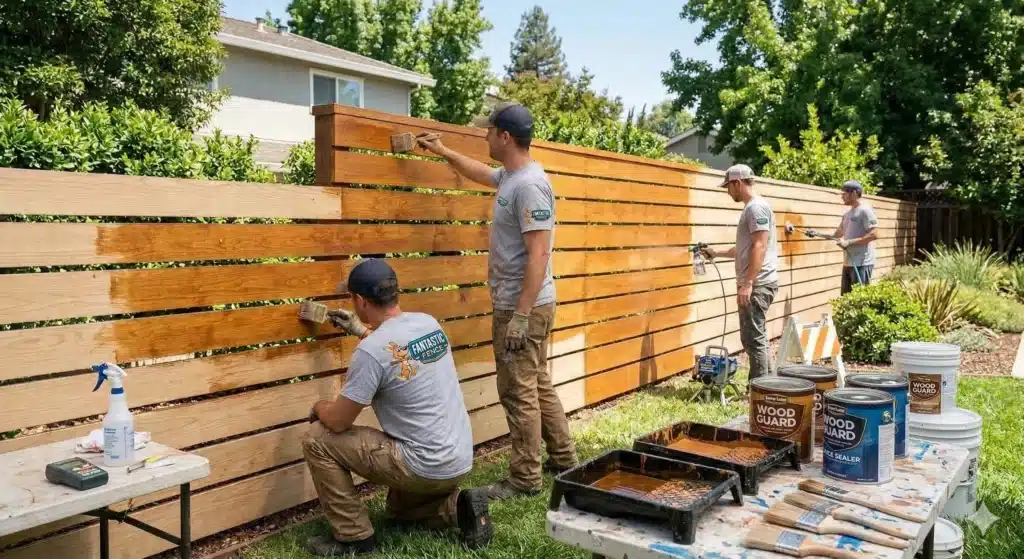
- Apply with the grain. Work from top to bottom, following the direction of the wood grain. Use a brush for detail areas and a roller or sprayer for larger sections, always back-brushing to ensure even coverage.
- Don’t over-apply. More is not better with stain. Thick coats sit on the surface instead of absorbing, leading to a sticky finish that peels. Apply thin, even coats and let the wood drink it in.
- Protect your landscaping. Lay down drop cloths or plastic sheeting to protect plants, grass, and hardscape from drips and overspray.
- Time it right on hot days. In Sacramento’s summer, start early in the morning or wait until the fence is in late-afternoon shade. Staining in direct sun above 90°F causes the stain to dry too fast and leads to lap marks and poor penetration.
You’re Busy. We Make Fences Easy.

Whether you need a brand-new fence installed, an existing fence repaired, or guidance on the best time to stain and protect your investment, we’re here to help. We serve homeowners and property managers across Sacramento, Elk Grove, Folsom, Davis, Carmichael, Auburn, and the surrounding communities. We’ll take care of the hard part so you can enjoy your backyard. Contact us today for a free estimate—and if you have questions about staining, timing, or anything else fence-related, we’d love to hear from you. Have questions? Reach out anytime. We’re here to help.
You’re busy. We make fences easy.