Key Takeaway
Electric fence wire carries high-voltage, low-amperage pulses that deliver a corrective shock when an animal completes the circuit to ground. For permanent perimeters, 12½-gauge Class 3 galvanized high tensile wire is the standard, offering roughly 56.4 ohms of resistance per mile. Poly tape works best for temporary horse paddocks due to its superior visibility. Match wire type and gauge to your animal, application, and soil conditions before buying.
For a permanent pasture perimeter, 12½-gauge Class 3 galvanized high tensile wire is the default product. For temporary or rotational fencing, use poly wire, poly tape, or poly rope. An electric fence sends a brief pulse through the conductor that conditions livestock to respect the boundary, so the wire is only one part of the system: the animal, total energized wire length, energizer, and grounding decide whether it works. This guide covers above-ground pulsed fencing for livestock, not buried pet-containment cable or electrified security fence.
Electric Fence Wire Types Compared: High Tensile Wire vs Poly Wire

Every product trades something away. Match the wire to the job, not the other way around.
| Wire Type | Best Use | Permanent or Temporary | Conductivity | Main Tradeoff |
|---|---|---|---|---|
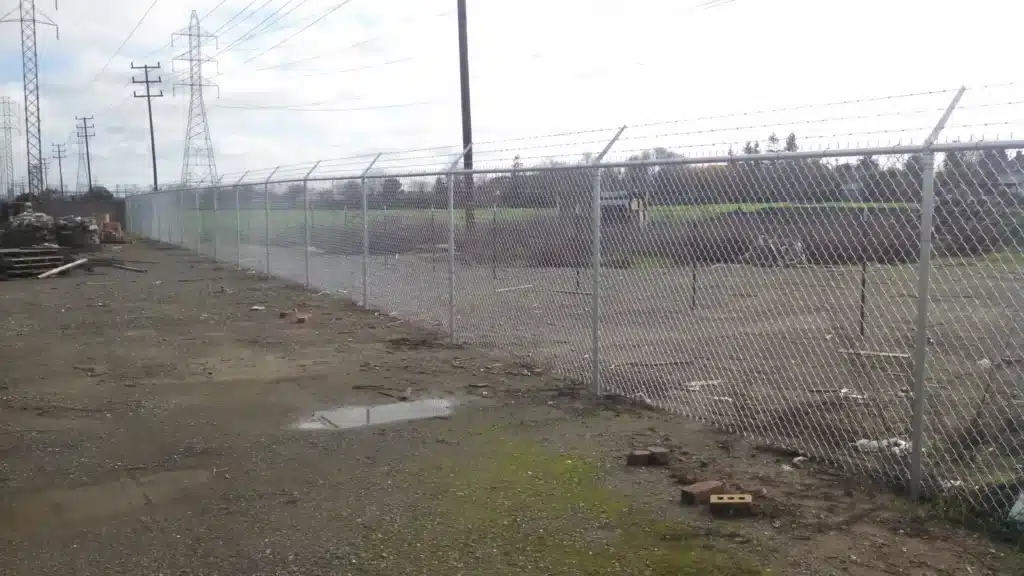
| High tensile galvanized steel (12½ ga, Class 3) | Pasture perimeters, long runs | Permanent | Good | Needs solid corners and bracing |
| Aluminum | Shorter permanent runs | Permanent | Excellent | Softer, stretches and fatigues |
| Poly wire | Rotational grazing paddocks | Temporary | Fair | Higher resistance, strands break |
| Poly tape | Horse paddocks | Temporary | Fair | Highly visible, catches wind |
Class 3 coating carries roughly three times the galvanization of Class 1, so it resists rust longer on exposed runs. Poly products are constructed from 3 to 9 thin metal strands woven into plastic, and more strands means better conductivity and strength. Review the product specs instead of buying by price, and watch your splices.
What Gauge Electric Fence Wire Should You Use?
A lower gauge number means a larger diameter, and thicker wire usually means lower resistance and more strength across long spans. Virginia Tech Extension recommends 12½-gauge high tensile wire for permanent fencing, and Texas A&M Extension points to 12- to 14-gauge products for most permanent applications.
Gauge alone doesn’t decide fence wire performance: coating condition, connectors, corrosion, and total energized length all matter. The lead-out cable from the energizer to the fence, under a gate, or through a building should be insulated electric-fence cable rated around 20,000 volts. Household wire isn’t rated for fence pulse voltage.
Matching Wire to Livestock, Fence Length, and Spacing

- Permanent boundary or cattle: Class 3 galvanized steel wire, the recommended product for long runs.
- Rotational grazing: poly wire, easy to roll up and move.
- Horses: wide poly tape for visibility and lower injury risk.
- Sheep and goats: more strands, tighter spacing, and higher voltage, since wool insulates the stock.
Size the energizer by total energized wire length, not perimeter. One mile of four-strand fence is about four miles of energized wire, per Alabama Cooperative Extension. Virginia Tech Extension suggests strands no more than 10 inches apart for general livestock.
Why an Electric Fence Loses Power (and How to Keep It Working)
The pulse travels the wire, and the animal completes the circuit through the soil back to your ground rods. So the fence needs no closed loop, and grounding is half the system. Common voltage killers:
- Vegetation touching the wire
- Weak or dry-soil grounding
- Undersized or damaged lead-out cable
- Corroded connections and hand-wrapped splices
- Broken poly products and cracked insulators
- More energized wire than the energizer can carry
Review the line with an electric-fence voltmeter at the energizer and at several points downline. Dry Western soil weakens the earth return, so a continuous-ground design is often more reliable here. Use a current-limiting intermittent-pulse controller meeting UL 69 or IEC standards, as California Food & Agricultural Code §17152 requires. Keep grass and brush off exposed line: the National Interagency Fire Center links fence-caused ignitions to poorly maintained equipment. Call USA North 811 at least two working days before digging post holes or ground rods.
Frequently Asked Questions
What type of wire is best for an electric fence?
For permanent fencing, 12½-gauge Class 3 galvanized high tensile wire. For temporary applications and rotational grazing, poly products: poly wire, poly tape, or poly rope.
Is an electric fence cheaper than wire fence?
Per foot, electric is usually the more affordable way to cover large acreage. But it depends on maintenance, training, and power, while a permanent fence still does its job during an outage. Our fence price calculator gives you a sense of cost.
Does electric fence wire have to make a complete loop?
No. The animal and the grounding system complete the circuit. Tying hot wires together at both ends lowers resistance on multi-strand runs.
Electric wire is a deterrent. For roadsides and untrained stock, a permanent fence is the better call, often with an electric offset. We’re a licensed, bonded, and insured local fence company (CSLB License #979657) installing affordable agricultural fencing across Sacramento, Placer, El Dorado, Yuba, Yolo, and Nevada counties. Flat pricing, zero hidden fees, background-checked W-2 crews. Get a Free Fence Estimate.