
Key Takeaway
A hog panel fence uses rigid welded-steel livestock panels fastened to posts or set inside a wood or metal frame to create an open-view barrier. Standard panels feature graduated openings, tight at the bottom and wider toward the top, to resist animal pressure without sagging. They cost less than many fencing options when unframed, but a framed residential version often runs higher than a standard wood fence.
A hog panel fence uses rigid welded-steel livestock panels, either fastened straight to posts or set inside a wood or metal frame, to create an affordable open-view barrier. The fence panels are heavy-gauge welded wire with smaller openings near the bottom, which is what keeps animals from pushing through underneath. They’re sturdy, versatile, low-maintenance, and increasingly common in residential fencing.
If you’re a homeowner, gardener, or farm property owner weighing open-view fencing, here’s the thing to understand first: hog wire isn’t one standardized product. Specs vary by manufacturer, and the panel you get decides whether the fence works.
What Is a Hog Panel Fence?
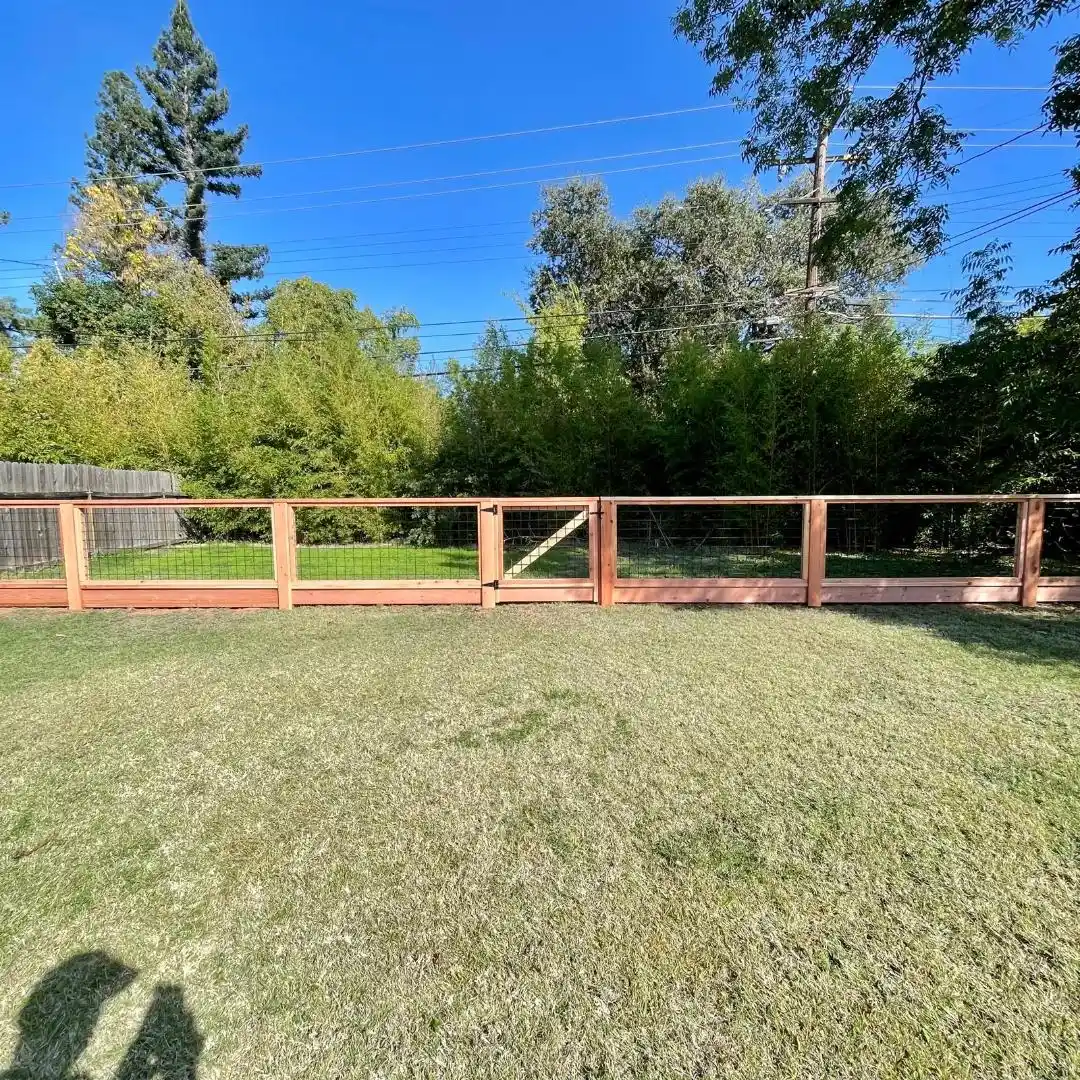
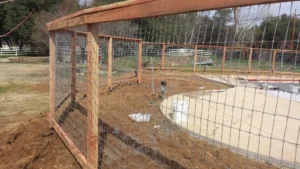
A hog panel is a rigid welded steel panel, not a roll of wire. The grid is graduated: openings are tight at the bottom and wider toward the top, because hogs root low and rarely climb. These panels have taken animal pressure on working farms for decades, so they hold their shape instead of sagging or stretching like rolled wire. No stretching equipment is needed, which makes for easy installation on level runs.
One manufacturer’s standard hog panel (OK Brand) runs 34 inches tall and 16 feet long, with 11 line wires, 8-inch vertical spacing, and graduated horizontals of 2, 3, 4, 5 and 6 inches. That’s one product’s spec, not a universal rule. You’ll find fence panels at feed and farm supply stores in a variety of sizes and finishes, and most stores carry more than one grade. Loading a few panels onto a cart at the farm store is the easy part. The frame, posts, and gate are what take time and skill. Those same versatile panels now show up in decorative backyard fencing.
Hog Panels vs. Hog Wire, Cattle Panels, and Welded Wire Fence Panels
These names get used interchangeably. They shouldn’t be.
| Product | What it actually is | Typical use |
|---|---|---|
| True hog panels | Rigid welded, graduated openings, tight at the bottom | Hog and small livestock containment, garden fencing |
| Cattle / ranch panels | Taller, wider and more uniform openings | Cattle and larger stock |
| Uniform utility panels | Even grid throughout | Garden and decorative sections |
| Woven wire | Knotted or woven, flexible, comes in rolls | Long agricultural fencing runs |
| Flexible welded-wire rolls | Light gauge, often 14 gauge 2×4 mesh | Light garden and pet fencing |
Gauge numbers run backward, which makes 4-gauge rigid panels far thicker than 14-gauge rolled wire. If a quote just says “hog wire fencing,” ask for the exact product name, gauge, panel size, and opening pattern in writing.
Where Hog Panel Fencing Works Well, and Where It Doesn’t
Great fit:
- Garden and raised-bed enclosures, including climbing plant support
- Backyard sections where you want to keep the view
- Larger dogs, when the mesh size, height, and gate gaps are suitable
- Livestock containment and rural boundaries, since visibility keeps nervous animals calmer
- Modern farmhouse and country design ideas
- Light commercial fencing applications like nursery yards
Poor fit:
- Real privacy, or wind and noise screening
- Puppies and small pets, unless the lower mesh is tighter
- Climbers and jumpers, since horizontal wires make good footholds
- High-security fencing applications
- Steep grade changes without a stepped layout
You’ll see hog wire marketed for pool areas. A standard hog wire panel with 8-inch openings and climbable horizontals is not suitable for a pool barrier under California rules.
Framed vs. Unframed Hog Wire Panels
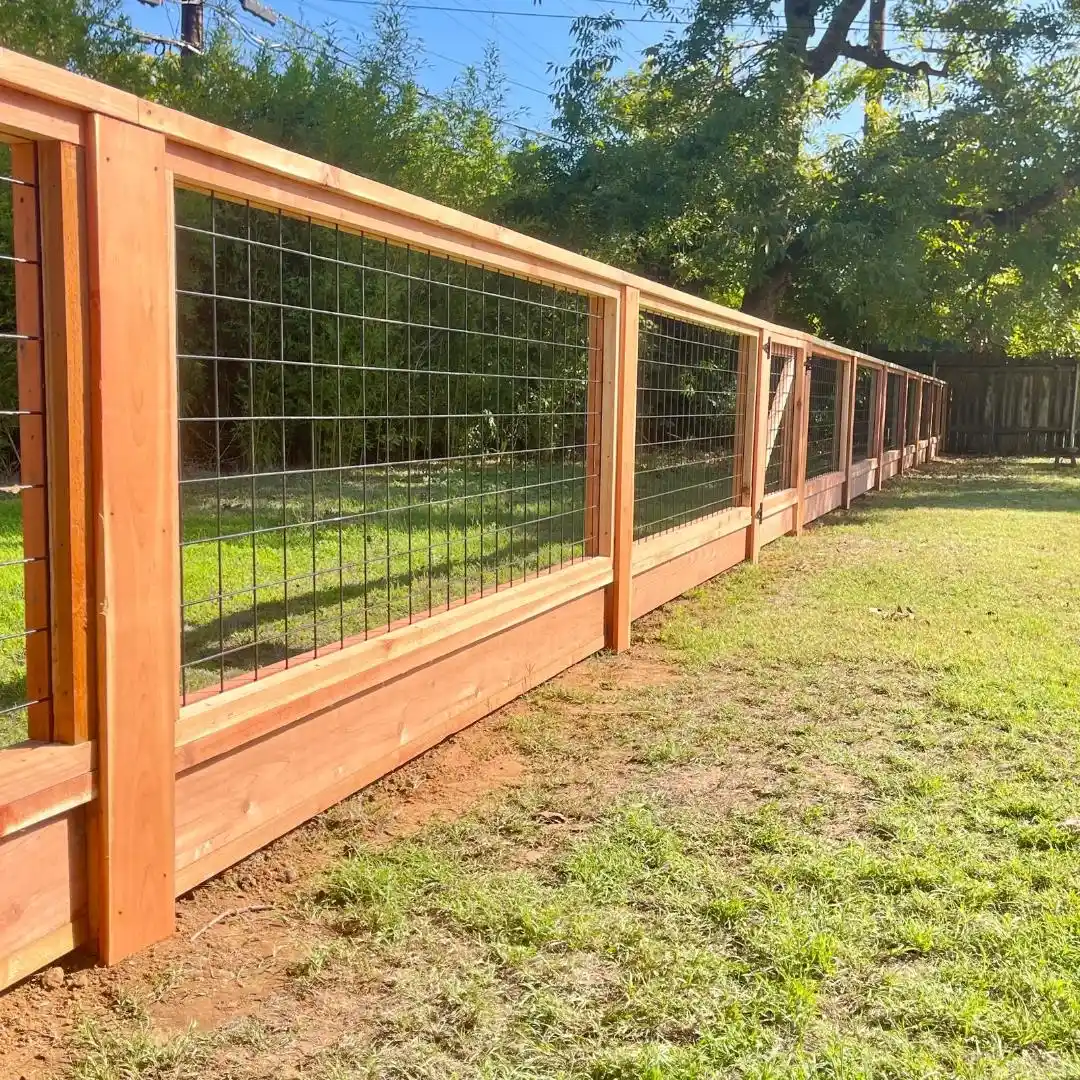
Unframed fence panels bolt straight to posts. Fast, affordable, easy to install, and honestly agricultural in appearance. That’s perfect for pasture fencing, but it’s rarely what a homeowner pictures.
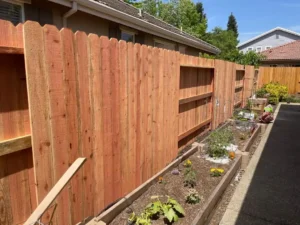
Framed hog wire panels sit inside a wood or metal frame, and that’s what produces the clean architectural look people search for and save to their design favorites. Metal frames stay sturdy longer than wood. Done right, a framed panel is a handsome addition to a backyard, but the frame, posts, fasteners, and gate decide whether the result looks intentional or makeshift, and homeowners often find the framing costs more than the panels. Gates carry more weight, so they need their own frame and proper hardware. A sagging gate is the first thing to fail, which is why ours are built separately with every cut edge sealed.
Do Hog Wire Panels Rust? Coating and Maintenance
Hot-dip galvanized fence panels resist corrosion well, but performance depends on coating quality, and whether the wire was galvanized after welding makes a real difference. Surface rust usually shows up first at cut ends, welds, soil contact, sprinkler overspray, or mismatched fasteners. For most residential fencing applications, good galvanized panels need far less maintenance than wood. No one can honestly promise a lifespan without naming the product and coating.
Elk Grove and California Fencing Rules to Check Before You Install

Elk Grove’s zoning standards generally allow 3 feet in a required front yard and at driveway visibility areas, 7 feet in required interior side and rear yards, and up to 8 feet with a City building permit. Agricultural zones allow qualifying open-view fencing to 6 feet within a required yard and 10 feet outside it with an equal setback. Anything above those standards needs minor design review, and alternative materials may need discretionary approval.
For pools, California Health & Safety Code §115923 requires a qualifying enclosure at least 60 inches tall, no more than 2 inches of bottom clearance, no gap passing a 4-inch sphere, and a self-closing, self-latching gate. Section §115922 requires two drowning-prevention features on newly permitted or remodeled residential pools. Use a purpose-built pool safety fence, not a livestock panel.
Also: call USA North 811 at least two working days before digging post holes, check your HOA CC&Rs, and remember that California Civil Code §841 generally requires 30 days’ written notice before shared boundary fence work. Confirm current rules with the local building department.
What to Specify When You Request an Estimate
Bring this list to your estimate appointment:
- Exact panel name, manufacturer, gauge, opening pattern, and size
- Coating and color; frame and post material; cut-edge treatment
- Ground clearance, gate size and hardware, slope handling
- Who pulls permits, handles HOA submittal, and calls 811
- Cleanup and written guarantee
We’re licensed, bonded, and insured under CSLB License #979657, with background-checked W-2 employees, flat pricing, zero hidden fees, and a written guarantee: the job isn’t done until you give the thumbs up. We install hog wire fence panels built into wood or steel frames, and we can compare them with woven wire, ornamental iron fencing, and pool safety fencing.
Try the Fence Price Calculator, or get a free fence estimate. Call our Elk Grove office at 916-345-0142 or book online. Financing is available for Sacramento-region residents.
Frequently Asked Questions
What are the disadvantages of a hog fence? No privacy, climbable horizontal wires, an agricultural look when unframed, cut edges that can rust, and awkward transitions on slopes.
Is there a difference between cattle panels and hog panels? Yes. Hog panels are shorter with graduated openings that tighten near the bottom. Cattle and ranch panels are taller with wider, more uniform openings.
Is hog wire fencing more affordable than wood? It depends on framed versus unframed. Panels bolted to posts are affordable. A wood-framed version built for a residential yard can cost more than a standard wood fence. Check the Fence Price Calculator.
Are hog panels stronger than rolled wire fencing? Rigid welded fence panels resist sagging and animal pressure better than rolled wire, which makes them the better pick for livestock. Rolled wire follows uneven terrain more easily.