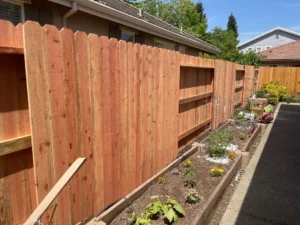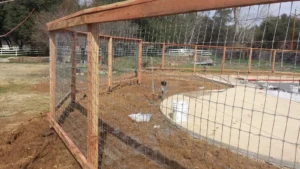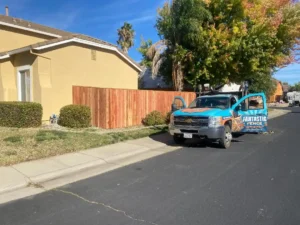
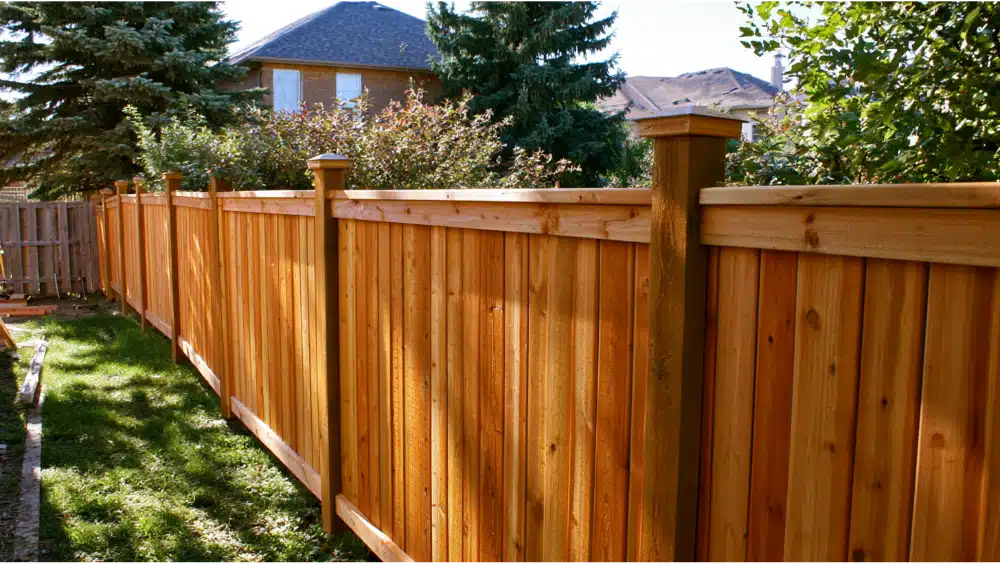
When homeowners ask, “what spacing is ideal between wood fence boards,” the clear answer is none. For most wood privacy fence projects, boards should be installed with no gap at all, butted tight, board to board. That’s not the final look, though: fresh lumber holds a lot of moisture, and as it dries over the first couple of weeks after installation, it naturally shrinks and pulls apart, creating a gap anywhere from 1/8 inch to 1/2 inch. Installing tight from the start keeps that natural gap as small as possible once the wood finishes drying.
The Simple Answer for Most Homeowners
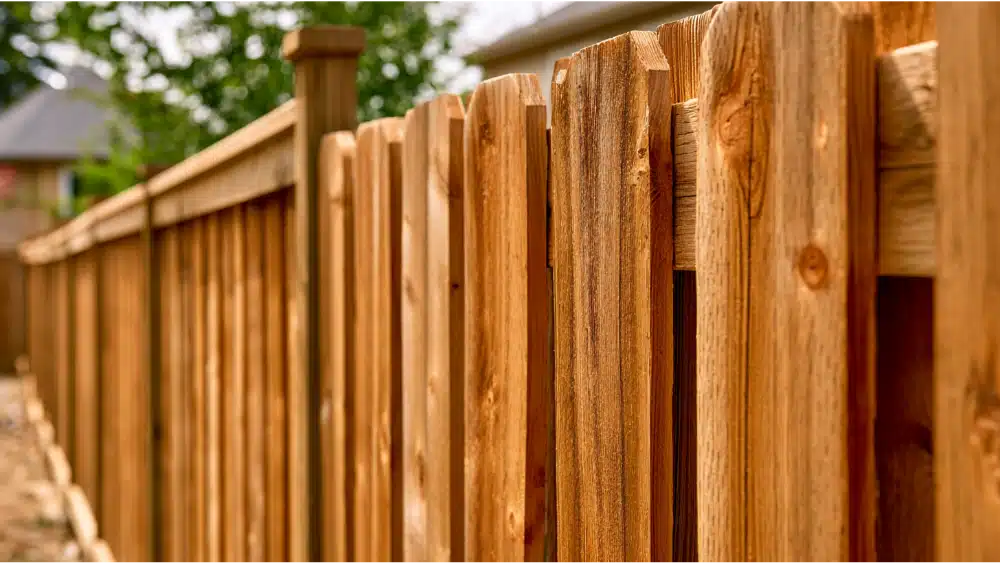
For a standard privacy fence, boards are installed with no gap between them at all. Fence boards arrive holding a lot of moisture; they sit bundled tightly in units of hundreds of boards, which traps moisture inside. Even wood bought straight from the mill and left to sit for several months — stored inside through the winter, outside through the summer — doesn’t truly dry out until it’s installed and finally has room to breathe. That moisture is actually helpful at installation: damp boards are more forgiving when a nail or screw goes through them, and far less likely to crack than dry, brittle wood. The tradeoff is that the boards will shrink as they dry, so starting tight is what keeps the fence private once that shrinkage happens.
For picket fences, gaps are wider because the style is more open and decorative. For a board fence with overlap, the front boards cover the gaps behind them, helping maintain privacy while still allowing airflow.
The right spacing is not just about looks. It is about building a fence that feels secure, attractive, and dependable from the beginning, working together with backyard fence designs that transform outdoor living.
Why Fence Board Spacing Matters
Fence spacing affects privacy, security, airflow, and long-term strength. If the gaps are too wide, your yard may feel exposed and privacy suffers. Installing boards with no gap is standard for privacy fences — the wood is expected to shrink and pull apart naturally as it dries, so the moisture concern resolves itself over the first few weeks rather than requiring a gap up front.
The right space gives the wood room to act naturally. It helps the fence handle pressure from wind, seasonal humidity, and everyday weather.
A well-planned fence should protect your family, mark the property line clearly, and create a yard that feels calm and finished.
Understanding How Wood Moves Over Time
Wood moves because it is a natural material. It can shrink, swell, bend, and settle based on moisture, sun, and temperature.
Wood Shrinks as It Dries
Many boards still hold moisture during installation. As they dry, they shrink and pull apart on their own. This is exactly why a privacy fence is installed with no gap at all, boards butted tight, board to board, so the gap that opens naturally over the following weeks stays as small as possible.
Wood Expands When It Gets Wet
Wood arrives from the mill holding significant moisture, especially after sitting bundled in tight units. That moisture is actually useful during installation, since damp boards take a nail or screw more easily and are far less likely to crack than dry wood. As the boards dry out over the following weeks, they shrink and naturally pull apart, typically somewhere between 1/8 inch and 1/2 inch. This is expected, and it’s the reason boards are installed with no gap in the first place.
Sacramento Weather Plays a Role
In the Sacramento area, hot summers, damp winters, dirt, sprinklers, and changing humidity all matter. A fence in full sun may dry faster than one in shade. Good installation takes these elements into account, especially when considering durable materials like Durabond steel fencing.
Ideal Spacing for Different Wood Fence Styles
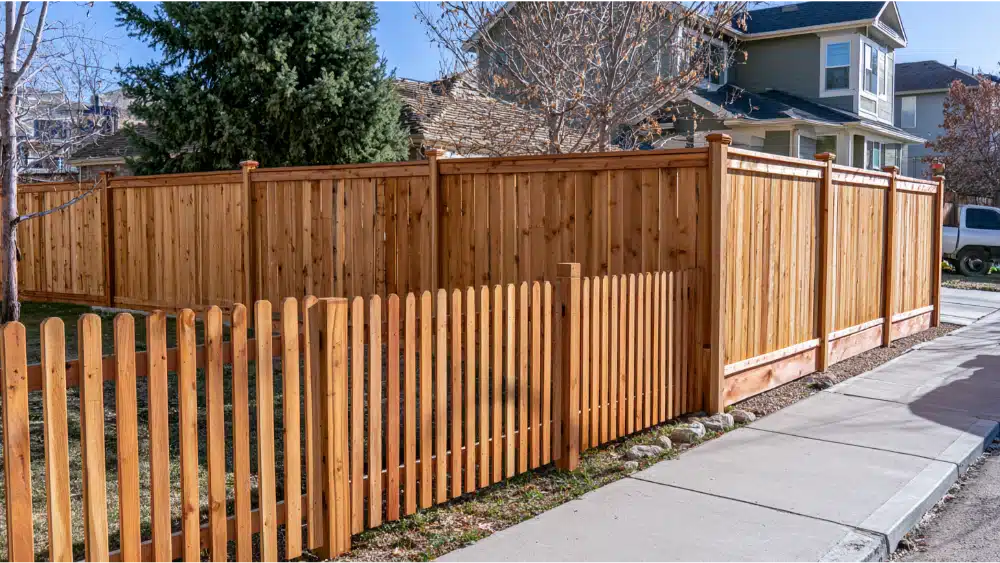
Different fence styles need different spacing. The intended look and purpose should guide the plan.
Standard Wood Privacy Fence Board Spacing
For most privacy fence builds, boards are installed with no gap at all, butted tight board to board. As the wood dries over the first couple of weeks, natural shrinkage opens a small gap on its own, typically in the 1/8 inch to 1/2 inch range. Starting with zero gap keeps that eventual gap as small as possible, which is what gives the fence its maximum privacy.
Cedar, redwood, and pressure-treated wood can all shrink differently. A skilled installer will measure the materials, check the moisture, and plan accordingly before the first section goes up.
Board-on-Board Fence Spacing
A board-on-board fence with an overlapping style is a strong choice for homeowners who want privacy. The back boards are spaced apart, then the front boards cover the gaps.
This style allows airflow, reduces direct sightlines, and helps the fence maintain coverage as the wood moves.
Wood Picket Fence Spacing
Picket fences are usually more open. The space between pickets is part of their charm. These decorative fences are often used near front yards, gardens, and areas where a welcoming look matters more than full privacy.
Pickets still need careful measurement. Uneven gaps between pickets can make the whole fence look rushed.
Horizontal Wood Fence Spacing
Horizontal boards need consistent spacing from one end to the other. Because the line is so visible, even a small mistake can stand out.
Some homeowners prefer tight horizontal boards for privacy. Others leave a small, even space for a modern look.
Should Wood Fence Boards Touch Each Other?
Yes, and this is intentional. Boards are installed touching, with no gap, specifically because the wood will shrink as it dries. Starting with a gap on top of that natural shrinkage means ending up with a fence you can see straight through. Butting the boards tight at installation is what keeps the eventual gap as small as possible.
What Happens If Fence Boards Are Spaced Too Far Apart?
Boards spaced too far apart can hurt privacy and appearance. The fence may look unfinished, and the gaps may grow as the wood continues to shrink.
Large gaps can make the property line feel less protected. A backyard should feel safe and private, not open to every neighbor or passerby.
This is a common DIY mistake. A gap that looks small during the job can become too wide later.
What Happens If Fence Boards Are Too Close Together?
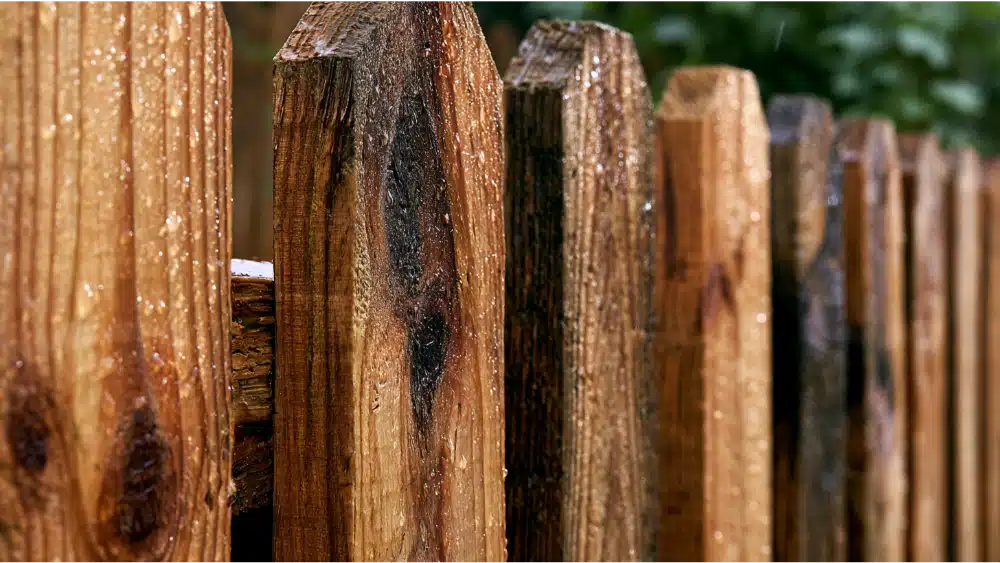
This generally isn’t a concern with fresh lumber installed the standard way. Boards installed with no gap are expected to shrink and pull apart naturally over the first few weeks as they dry, so “too close together” resolves itself. The bigger risk is the opposite: installing with a gap already built in, which stacks on top of the shrinkage to come and can leave the fence with far less privacy than intended.
How Professionals Decide the Right Fence Board Spacing
A professional looks at the full fence system, not just the gap between boards.
They Look at the Wood
The installer checks the materials, including cedar, redwood, and pressure treated boards. Moisture, thickness, quality, and shrinkage all matter.
They Consider the Fence Style
A privacy fence needs tighter spacing. Picket fences need even gaps between pickets. Decorative fences may leave more open space because that is part of the design.
They Account for the Yard
Sun, shade, terrain, dirt, sprinklers, wind, and drainage all affect the plan. Fence posts must also be set correctly because strong posts help protect structural integrity, and scheduling a free estimate with Fantastic Fence makes it easier to match your property conditions with the right backyard fence design.
They Plan the Finished Look
A careful installer will measure each section, keep the line straight, set posts properly, place nails correctly, and watch alignment around gates, corners, and the property line.
The posts, boards, rails, nails, and pickets all need to work together.
Best Fence Board Spacing for Privacy
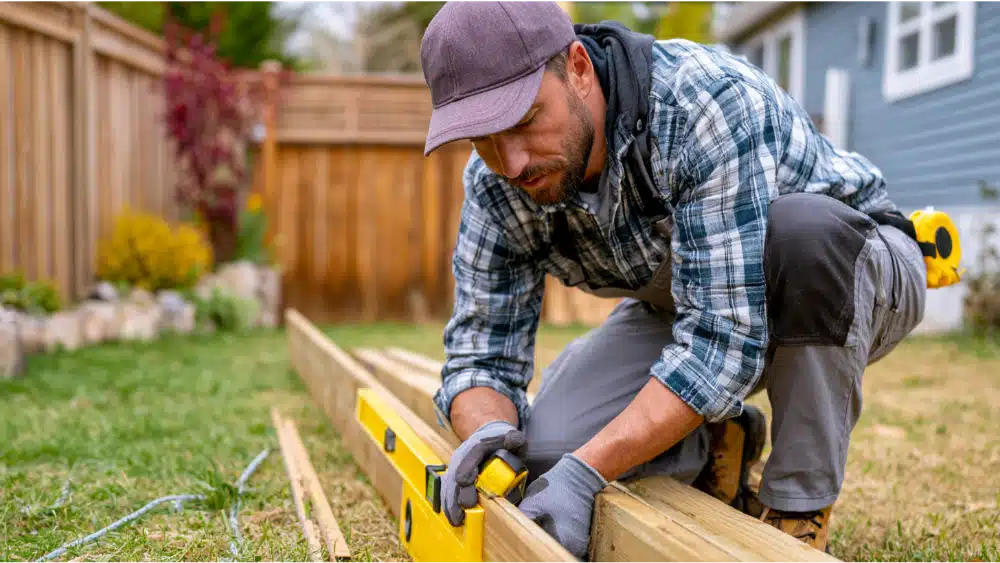
For privacy, boards should be installed with no gap, butted tight. This gives the smallest possible gap once natural shrinkage happens over the following weeks, which is what determines how private the finished fence actually feels. A board-on-board style can add even more coverage, since the front boards hide the gaps that open up behind them.
Best Fence Board Spacing for Airflow and Wind
Wind can put pressure on a solid fence. In open yards, some airflow can help reduce stress.
A board-on-board design, small gaps, or semi-private sections can help the fence handle wind while still keeping the yard comfortable.
The best fence works with the elements instead of fighting them.
Common DIY Fence Spacing Mistakes
One common mistake is using the same spacing for every job. Wood type, posts, humidity, location, and materials can all change what works.
Another mistake is failing to measure each section. Fence spacing should stay consistent from one end to the other. Poor measurement can make the fence look uneven.
Some homeowners also skip sealing, use the wrong nails, set posts in a shallow hole, cut boards too quickly, or forget to leave space near the ground.
That bottom clearance matters. Boards should not sit directly in dirt. A little room at the bottom can extend the life of the fence and help prevent rot.
Why Professional Installation Makes a Difference
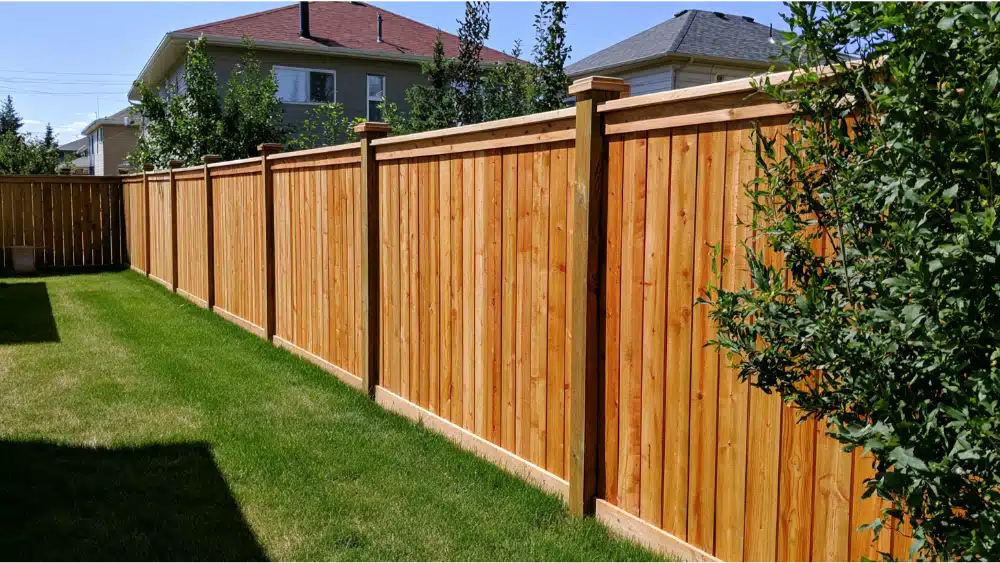
A fence may look simple, but every part matters. Posts need the right hole depth. Boards need clean spacing. Pickets need consistent gaps. Nails need proper placement. Sealing helps protect the wood from sun, water, and weather.
Professional installation can save time, effort, money, and frustration because it reduces the chance of repairs later, especially when you know what to look for when hiring a fence contractor.
At Fantastic Fence Company in Sacramento, we build with care from one end of the line to the other. We plan the spacing, set the posts, align the boards, and create a fence that feels strong, safe, and beautiful.
How Much Does a New Wood Privacy Fence Cost?
In California, especially around Sacramento, many privacy fence projects cost about $2,500 to $3,500 per side of the house. A full backyard often ranges from about $7,500 to $10,500, which aligns with average fence prices in the Sacramento area.
A wood privacy fence often costs about $40 to $60 per linear foot. For 150 feet, that is usually around $6,000 to $9,000, and flexible fence financing options can make that investment more manageable.
Cost depends on length, terrain, materials, height, gates, and style. Fantastic Fence also includes old fence removal and disposal at no extra charge.
FAQs About Wood Fence Board Spacing
What is the best spacing between wood fence boards?
For most privacy fence designs, boards should be installed with no gap at all. They’ll naturally shrink and pull apart by 1/8 inch to 1/2 inch as they dry over the following weeks, so starting tight keeps that eventual gap as small as possible.
Should fence boards touch?
Yes. Boards are installed touching, with no gap, because the wood will shrink as it dries. This keeps the fence as private as possible once that natural shrinkage happens.
How much space should be between pickets?
Pickets on picket fences usually have wider gaps because the style is more open and decorative.
Do pressure treated boards shrink?
Yes. Pressure treated boards often shrink as they dry, so spacing should be planned carefully.
Why do fence posts matter for board spacing?
Fence posts support the whole structure. If posts are not straight or set correctly, boards and gaps can fall out of alignment.
Should there be space at the bottom of a fence?
Yes. Leave a small space above the ground so the boards do not sit in dirt or hold moisture.
Can sealing help a wood fence last longer?
Yes. Sealing helps protect wood from water, sun, and weather.
What is the biggest spacing mistake?
The biggest mistake is failing to plan for shrinkage, humidity, and long-term movement before installation.
Final Thoughts: The Right Gap Builds a Better Fence
The right space between boards helps your fence look better, last longer, and feel more secure.
For most privacy fence designs, installing boards with no gap at all is the strong rule; natural shrinkage will open a small gap on its own over the following weeks.
From worn and wobbly to strong and attractive, a well-built fence can change how your whole yard feels.
Your yard deserves careful planning, honest work, and a fence built to last. Let’s build something strong together.