When homeowners ask, “how do installers secure metal fence panels to posts,” they are usually asking something deeper. They want to know if their new fence will stay straight, feel sturdy, and hold up through wind, snow, soil movement, daily use, and years of changing weather.
The short answer is this: installers secure metal fence panels to posts with a careful combination of post placement, concrete, proper spacing, manufacturer-approved fasteners, and one of two connection methods: bracket-and-screw or welding.
Why the Panel-to-Post Connection Matters
A fence is only as strong as the places where the panels meet the posts. If those connections are loose, the whole fence can feel weak. Over time, poor installation can lead to leaning fence posts, rattling panels, rust around hardware, or sections that split away from the line.
That is true for metal fencing, wooden fence designs, wood fences, privacy fences, and even chain link fences. Every style needs proper structural support. With metal posts, the connection is especially important because metal does not flex the same way wood does.
Unlike wood posts, metal posts are often used because they are resistant to rot, moisture, and insect damage. They also offer strong durability when installed correctly. But even the best metal posts need the right method, the right brackets, and the right screws to keep fence panels secure.
The Two Main Ways Installers Secure Metal Fence Panels
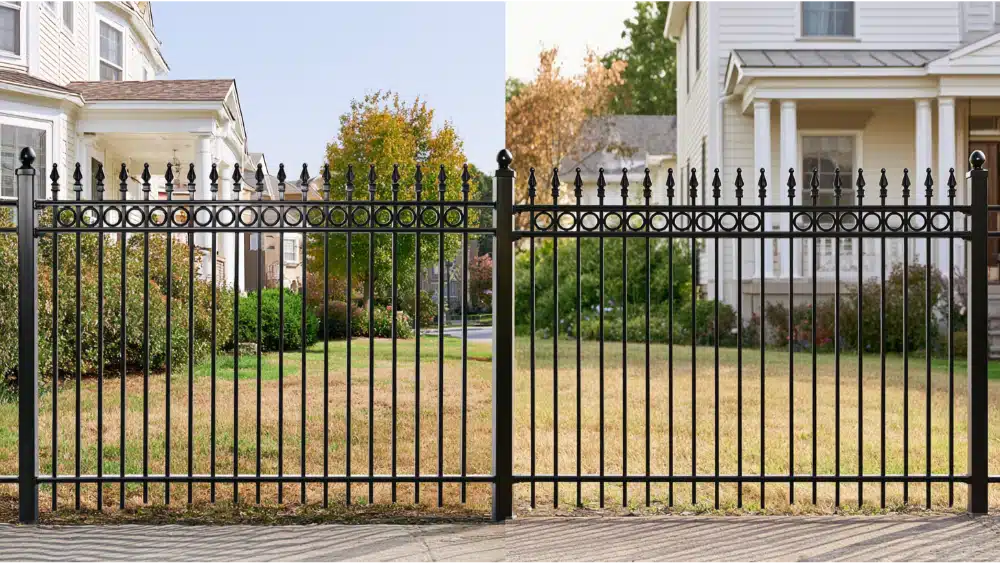
Method 1: Bracket and Screw (Not Our Preferred Method)
The first method uses a bracket and screw. The bracket is shaped like an “L” — one leg slides into the end of the rail, and the other leg is screwed directly to the post.
The upside is cost. Because this method requires no welding, it’s slightly cheaper to install. The downside is durability. A bracketed-and-screwed connection is inherently weaker than a welded one, and over time the screw can rust out and fail. Once that fastener goes, the connection between panel and post is compromised.
It works, but it’s not the connection we want our name on for a fence that’s meant to last.
Method 2: Welding (Our Preferred Method)
The stronger method welds the rails directly to the posts. This takes more time and requires real skill and experience to do correctly — not every crew can do it well — but the payoff is a connection that’s far stronger. A proper weld fuses the panel and post into one continuous structure, with no fastener to loosen, no screw to rust out, and no weak point to fail down the road.
Bracket-and-screw saves a little money up front, but welding delivers the strength and longevity a fence needs to last. When done by an experienced crew, a welded metal fence connection is in a different league for durability, and that’s the standard we hold ourselves to.
How Installers Secure Metal Fence Panels to Posts, Step by Step
Mark the Fence Line
A good fence installation starts with a clear plan. Before digging, the installer will mark the fence line, corners, gates, and end points. A tape measure, stakes, and string line help determine the exact path.
This step may feel simple, but it is key. If the line is crooked, every post and panel after that can look off. A clean mark at the beginning helps the finished fence look strong, straight, and intentional.
Call Before Digging
Before any post holes are dug, the property should be checked for underground utilities. Digging without this step can create safety risks and expensive problems.
Once the area is clear, the installer can begin digging post holes. The size of each hole depends on the height of the fence, soil conditions, post style, and local requirements.
Measure Post Spacing
The installer will measure the distance between posts based on the width of the panels. This is essential for metal systems because panels are usually manufactured to fit specific spacing.
A careful measure prevents gaps, forced connections, and panels that do not sit properly. For wood fence panels, installers may have more flexibility because boards and rails can sometimes be cut to fit. But with metal panels, accuracy matters from the start.
Dig the Post Hole
Each post hole must be deep enough to give the fence stability. A common rule is to place about one third of the post below ground, though the exact depth depends on the fence height, soil, and design.
The installer removes loose dirt from the hole and checks that the post can sit at the correct height. Good post holes help secure posts and protect the fence from movement over time.
Set the First Post
The first post anchors the run. The installer places the post in the hole, checks it with a post level, and adjusts it until it is straight.
Concrete mix is then added around the post. The installer may fill the hole in stages, tamping or settling the concrete to reduce air pockets. Concrete gives the post strength, stability, and protection against shifting soil.
Attach or Insert the First Panel
For bracket-and-screw systems, brackets are attached to the post and the panel is secured to those brackets with screws. For welded systems, the panel rails are welded directly to the post to form one continuous connection.
Set the Next Post Around the Panel
With many metal fences, the next post is set after the panel is in place. The panel helps determine where the post should go. This post-panel-post method keeps spacing accurate.
The installer places the next post, checks the line, confirms the distance, then adds concrete. The process continues down the fence line until all panels are attached.
Secure Fasteners and Inspect the Line
After the panels are in position, the installer tightens screws, checks brackets, and inspects each connection. The goal is secure, not over-tightened. Too much force can damage certain materials or strip screws.
A final inspect helps catch small issues before the concrete fully cures. The installer looks for loose brackets, uneven panels, low spots, and any place where water, dirt, or rust could become a problem.
What Hardware Is Used to Secure Metal Fence Panels?
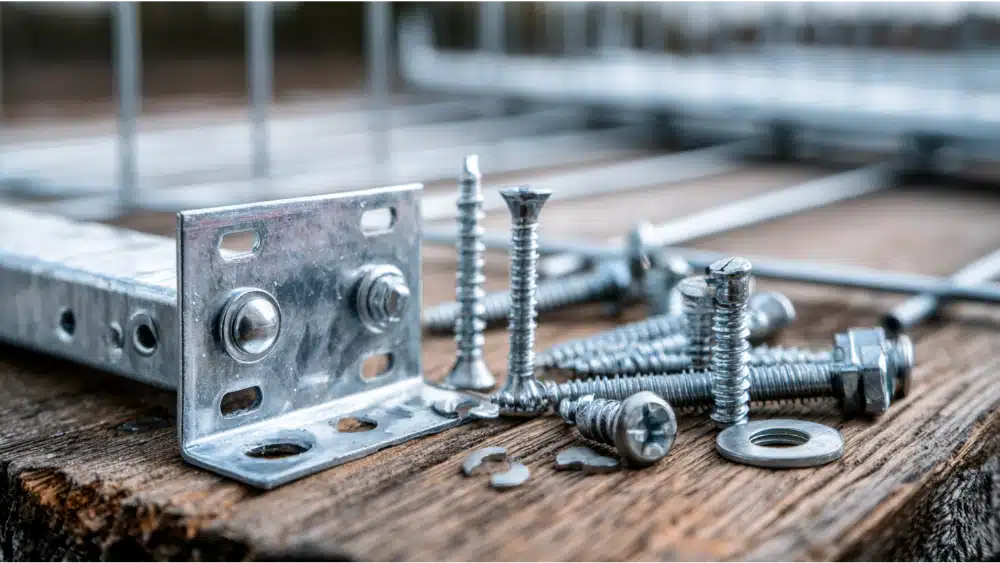
Brackets
Brackets are one of the most common ways to secure metal fence panels to metal posts. They may be standard rail brackets, end brackets, corner brackets, swivel brackets, or wall-mount brackets. The right bracket depends on the fence style and layout. A straight run needs one type of bracket, while corners, gates, and slopes may need another
As with any bracket-and-screw connection, the tradeoff is durability: the screw fastening the bracket to the post can rust and fail over time, which is why welding is the stronger long-term option.
Screws and Tek Screws
Screws are often used to fasten brackets to metal posts. Self-drilling screws can be helpful because they drill into the post as they are driven.
The installer chooses screws that match the materials. Galvanized steel or coated hardware can help reduce rust and improve long-term durability.
Bolts, Nuts, and Washers
Heavier metal fencing may use bolts instead of simple screws. Bolts create strong attachment points and are often used where extra strength is needed, such as gates or high-use areas.
Consistency With the Chosen Method
Whether a fence uses bracket-and-screw or welded connections, the method should stay consistent across the full run. Mixing approaches on the same fence can create uneven strength from section to section, so a good installer commits to one method and applies it throughout the job.
Manufacturer-Specific Fasteners
All our products should be installed with the proper hardware for that system. Manufacturer-approved fasteners help the fence fit correctly and perform as intended.
How Installers Keep Metal Fence Panels Straight and Strong
Proper Post Depth
Post depth is one of the biggest factors in fence strength. If a post is too shallow, it may lean. If the hole is too narrow, the concrete may not provide enough support.
Soil type matters too. Soft soil, wet soil, or rocky soil can change the installation method. A thoughtful installer will determine what the ground needs before setting the post.
Concrete Footings
Concrete helps secure the post and reduce movement. For long fence runs, corners, and gates, concrete is especially important.
A proper fill around the post helps create a firm base. Once cured, the concrete works with the post to hold the fence upright through wind, weather, and everyday pressure.
String Lines and Levels
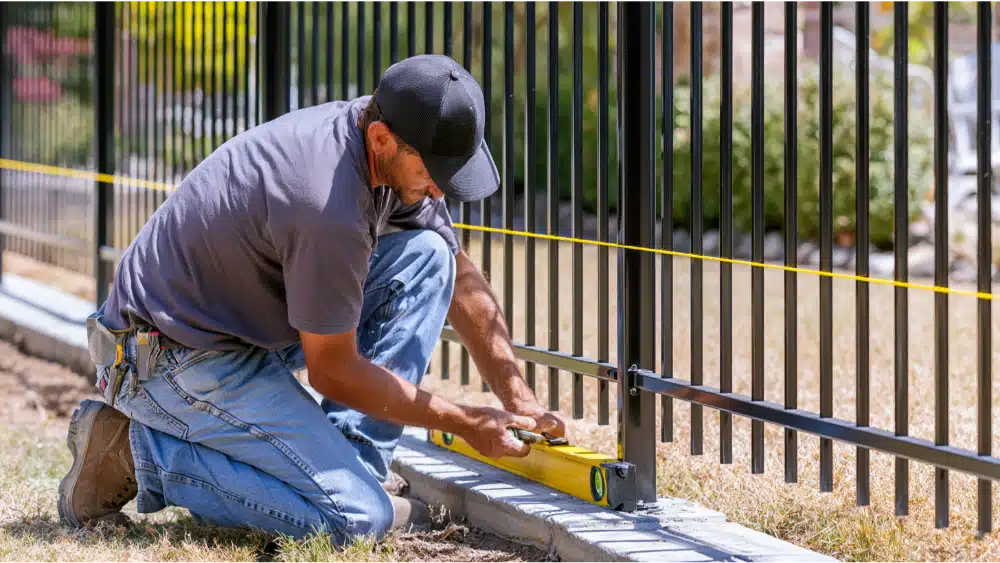
Simple tools make a big difference. A tape measure, string line, drill, level, and post level help installers keep every section aligned.
This is where craftsmanship shows. The fence should not just be strong. It should look right from the patio, the sidewalk, and the kitchen window.
Correct Panel Clearance
Panels should not usually sit directly in dirt. A little clearance above the ground helps with drainage, mowing, and seasonal movement.
This also protects the bottom of the panels from moisture and rust. With wood fences, ground contact can lead to rot. With metal fences, trapped moisture can shorten the life of the finish.
Secure Gate Posts
Gate posts need extra care because they carry weight and movement. A gate is opened, closed, pushed, and pulled far more than a standard panel.
For that reason, gate posts often need deeper holes, more concrete, and stronger hardware. This gives the gate better stability and helps prevent sagging.
Do Metal Fence Panels Get Welded to Posts?
Yes, and it’s the stronger of the two available methods. Panels can be attached with a bracket-and-screw connection or welded directly to the post. Bracket-and-screw costs less because it skips welding, but the screw connection is inherently weaker and can rust out and fail over time. Welding fuses the panel and post into one continuous structure, with no fastener to loosen or rust out. It takes more time and skill to do correctly, but it’s the method that holds up best over the long term.
How Sloped Yards Affect Metal Fence Panel Installation
Stepped Installation
A stepped installation keeps each panel level while the fence moves up or down the slope in sections. This creates a stair-step look.
This method works well when panels are rigid and cannot angle with the ground. The installer must plan the bottom gaps carefully so the fence still feels balanced.
Racked Installation
A racked installation allows the panels to follow the slope more closely. Not every metal panel can rack, so the installer must know the system before starting.
When it works, racking can create a smooth look across uneven ground.
Bracket-and-Screw on Slopes
Sloped yards often need adjustable brackets. These brackets help the panels attach at an angle while still staying secure, and they’re a practical choice when a bracket-and-screw connection is being used on uneven ground.
Without the right bracket combination, a sloped fence can end up with awkward gaps, twisted panels, or stress at the post connections. As with bracket-and-screw connections anywhere on the fence, the tradeoff for that flexibility is a fastener that can eventually rust and loosen, which welding avoids.
Common Mistakes Homeowners Should Watch For
Some fence problems begin with small installation mistakes. Posts may be set before the panels are measured. The wrong screws may be used. Brackets may be installed too low, too high, or out of line.
Other mistakes include shallow post holes, weak concrete, ignoring drainage, setting panels too close to dirt, or rushing the process before concrete has time to firm up.
These mistakes can affect any fence, including wood fences, metal fences, and wooden fence styles. A wooden fence may split, rot, or pull away from wood posts if installed poorly. Metal panels may rattle, rust around hardware, or become loose if brackets are not secured correctly.
A good installer slows down, checks the work, and makes sure every post, panel, screw, and bracket has a purpose.
Can You Secure Metal Fence Panels Yourself?
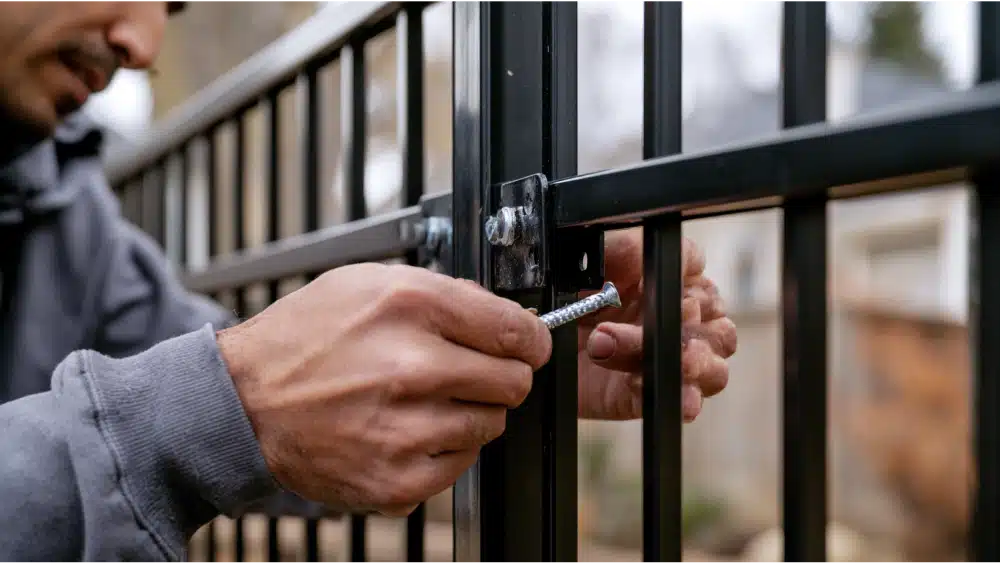
A handy homeowner can install some fence systems, especially with the right tools and a clear plan. But metal fence installation takes accuracy. You need to measure carefully, dig correctly, set posts plumb, mix concrete properly, and attach panels without forcing them.
The same is true when trying to attach wood fence panels. Wood fence panels can be forgiving in some ways, but they also bring their own challenges. Wooden fence posts can shift, wood posts can rot, and wood panels may split if screws are placed too close to an edge.
Wood fences remain a popular choice because they are warm, familiar, and often budget friendly. But a wooden fence needs maintenance and protection over time. Metal posts can be paired with wood fence panels in some designs, giving homeowners a strong combination of wood beauty and metal support.
Additionally, some homeowners choose metal posts for wood fences because they want extra strength without giving up the classic look of a wooden fence. It can be a helpful way to balance beauty, durability, and cost.
Still, for many homeowners, hiring a professional saves money in the long run because it helps avoid rework, wasted materials, and a fence that has to be repaired too soon.
Why Professional Installation Makes a Difference
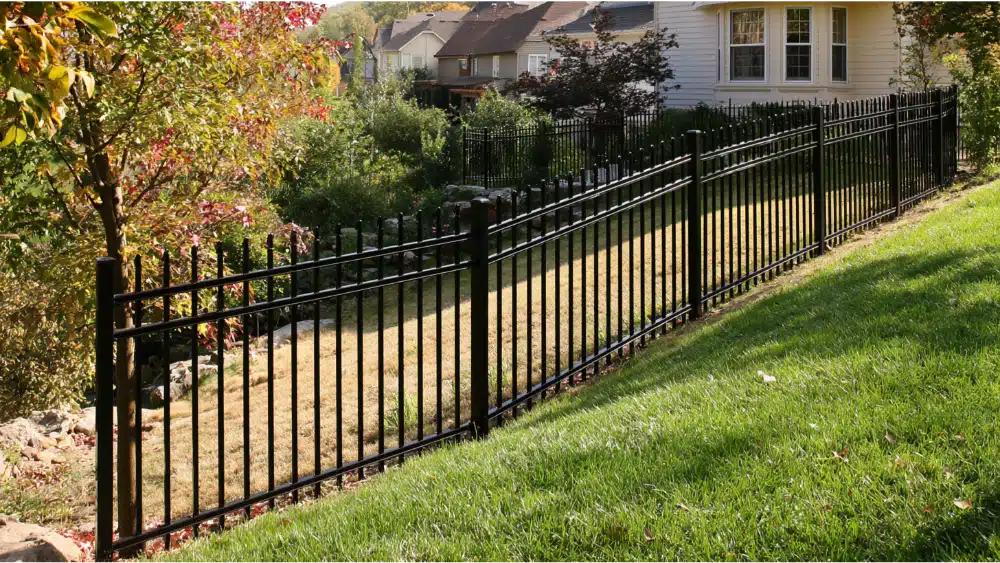
Professional installation is about more than digging holes and driving screws. It is about understanding the whole yard.
A skilled installer looks at the soil, slope, layout, gate placement, materials, and long-term use. They know how to install posts so they stay straight. They know how to attach panels so the finished fence feels solid. They understand how metal posts behave differently from wooden fence posts and how wood fences need different care than metal systems.
The result is a fence that feels dependable. From worn and uncertain to clean, secure, and beautiful, the right installation changes the way a yard feels.
For a family, that can mean more privacy. More protection. More pride when you pull into the driveway. More confidence when the kids or pets are outside.
Frequently Asked Questions About Securing Metal Fence Panels to Posts
Can I use wood fence panels with metal posts?
Yes, wood fence panels can be attached to metal posts using brackets and appropriate fasteners. This combination offers the durability of metal posts with the classic look of wood panels.
How far apart should metal fence posts be spaced?
Metal fence posts are typically spaced 6 to 8 feet apart, depending on the panel size and fence type. Proper spacing ensures structural stability and prevents panel sagging.
Do metal fence posts need to be set in concrete?
Setting metal fence posts in concrete footings is recommended for maximum stability and longevity. Concrete prevents shifting due to soil movement, wind, and weather conditions.
What type of screws should be used to attach metal panels to posts?
Corrosion-resistant, self-tapping screws are commonly used to secure metal fence panels to metal posts. These screws provide a strong hold and resist rust over time.
Can brackets be used on sloped ground?
Yes, adjustable or swivel brackets help secure metal fence panels on sloped terrain by allowing panels to pivot while maintaining a secure connection.
Is welding necessary to attach metal fence panels to posts?
It’s not strictly necessary, but it’s the stronger option. Panels can be secured with a bracket-and-screw connection, which is cheaper since it skips welding, or welded directly to the post for a connection with no fastener to loosen or rust out over time. Welding takes more skill to execute well, but it holds up better long-term.
Final Thoughts: Strong Connections Build a Strong Fence
So, how are metal fence panels secured to posts? They are secured through careful planning, accurate post spacing, strong concrete, the right brackets, proper screws, and steady attention to detail.
Panels are typically secured one of two ways: bracket-and-screw, which costs less but relies on a fastener that can eventually rust and fail, or welded directly to the post for a connection with no weak point to fail down the road.
A quick note for anyone planning a new fence: the best results come from choosing the right materials, the right installation method, and a crew that treats your yard with care.
Whether you are comparing metal fencing, wood fence panels, wood fences, or a wooden fence with metal posts, the best choice starts with the right installation.
Your yard deserves a fence that feels as solid as it looks. Let’s build something strong together.