Key Takeaway
A goat fence should be woven wire or no-climb sheep and goat fence at least 48 inches tall, with openings 4 inches or smaller to prevent heads and horns from getting stuck. Reinforce corners, gate posts, and the bottom edge, and add an interior hot wire if your herd includes climbers or leaners. Four to five feet is the proven working range for most permanent perimeters.
For most permanent goat enclosures, install a tightly stretched woven wire or no-climb sheep and goat fence at least 48 inches tall, with openings small enough that heads and kids can’t slip through. Reinforce the gates, corners, and bottom edge, and add an interior hot wire if your herd includes climbers or leaners. Four to five feet is the common working range, and woven wire is the proven default for a permanent perimeter.
If you’re raising goats on acreage and you’re tired of animals escaping down the driveway, this guide walks through material comparisons, height and mesh guidance, and the weak points that actually cause escapes. One idea to hold onto: a goat fence is a containment system, not a roll of wire. It has to stop them from going over, through, under, around, and through steady pressure. And keep two categories straight. Woven wire, panels, and chain link are physical barriers. An electric fence is a behavioral deterrent.
Why Are Goats Harder to Fence Than Sheep?
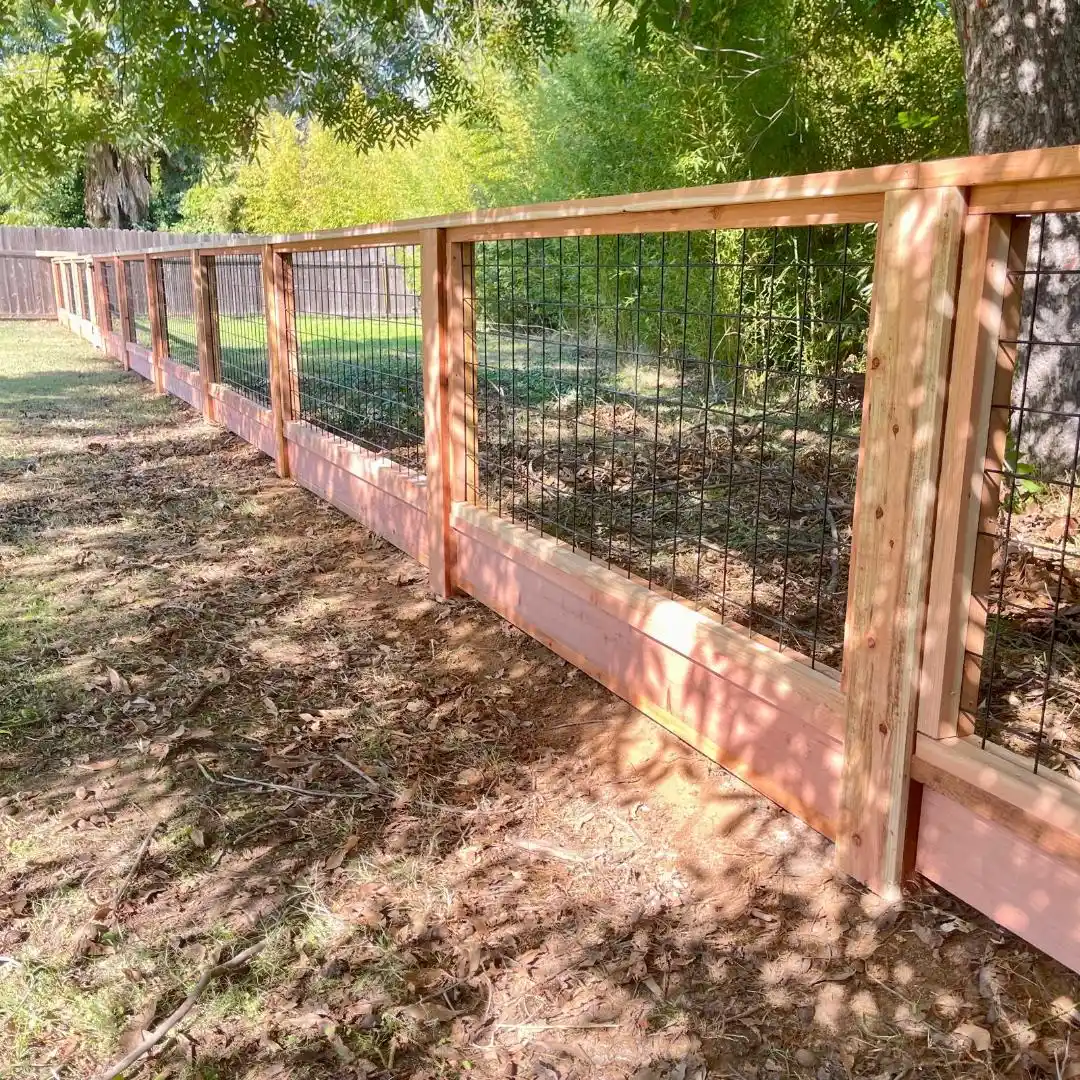
Goats climb. They lean, rub, and push. They’ll stand on their hind legs and reach through any opening for the grass on the other side. UC Agriculture and Natural Resources points out that goats are harder to contain than sheep precisely because they climb and actively try to go through or under obstacles. Sheep tend to test the bottom of a fence; goats test all of it.
Pressure also changes with the season. When forage runs short, goats typically test a fence much harder than they do on good pasture, and a herd that has grazed a paddock bare will find the one weak panel you missed. That’s why we design around every escape route rather than one number on a spec sheet.
Goat Fencing Options Compared: Woven Wire, Cattle Panels, Electric Netting and More
No single material is right for every part of a property. The smart approach is matching each fence type to the job it does well.
| Fence Type | Best Use | Watch Out For |
|---|---|---|
| Woven wire / no-climb (sheep and goat fence) | Permanent pasture perimeter | Needs proper tension and braced corners to stay tight |
| Cattle or livestock panels (4×4 openings) | Small pens, kidding areas, buck enclosures, high-pressure zones | Cost adds up fast over long runs |
| Welded wire | Light-duty or small enclosures | Welds can break under sustained goat pressure |
| Chain link | Smaller pens and finished-looking residential enclosures | Oklahoma State notes goats climb and rub it, which leads to buckling and bowed fabric; horned goats can tangle |
| Electric netting | Temporary paddocks and rotational grazing | Must stay energized at all times |
| High-tensile electric fence (five wires, alternating hot and grounded) | Long runs on open pasture | Requires training, testing, and good grounding |
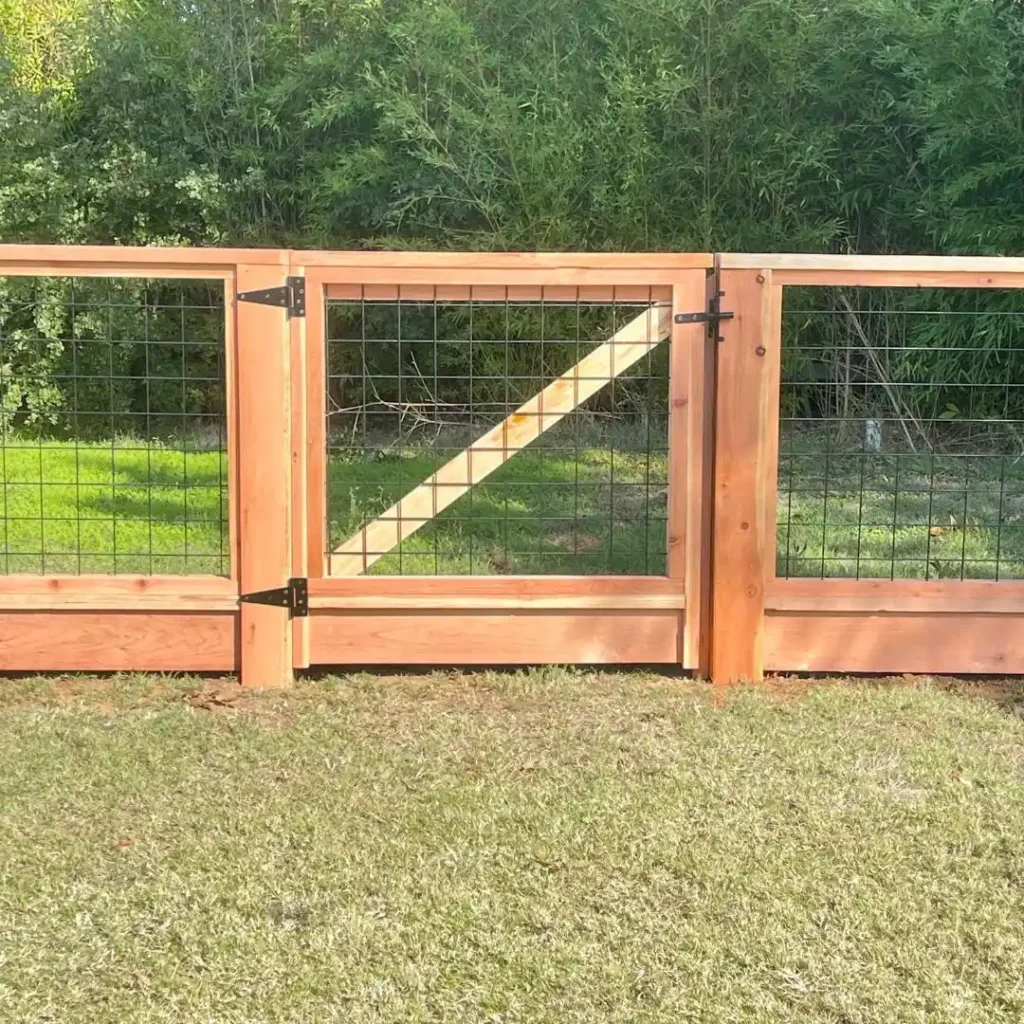
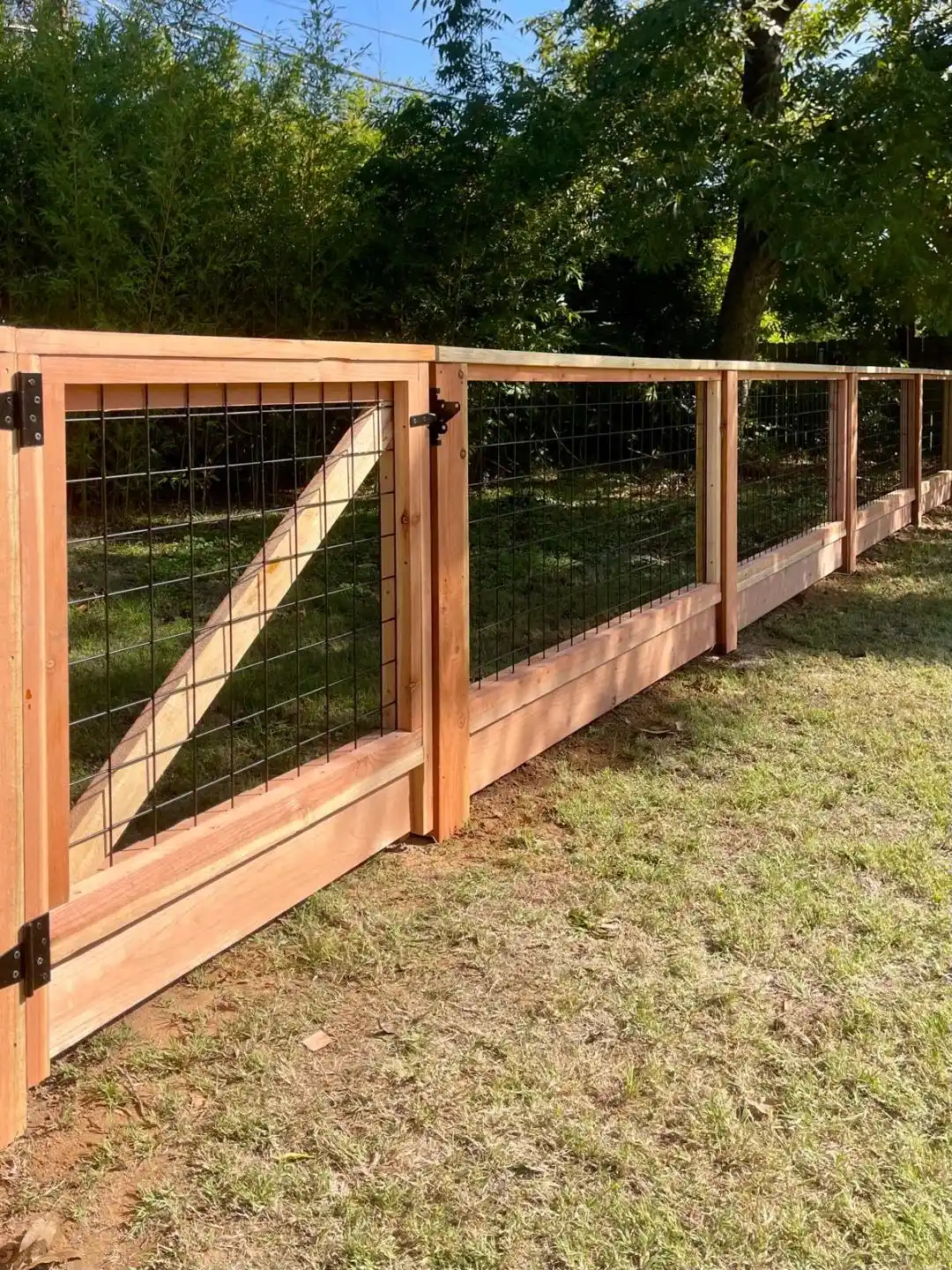
| Wood or ranch rail with mesh backing | Appearance plus containment near the house | Mesh does the real work; rails alone won’t hold goats |
| Barbed wire alone | Not recommended | Oregon State and Oklahoma State both warn about injury risk and poor performance |
Cattle panel fences are the workhorse in tight spots: rigid panels fastened to wooden posts hold a buck enclosure together where a goat leans on it every single day. If you prefer a cleaner look near the house, chain link or rail with mesh backing belongs there, and other options carry the long runs out on the pasture. A strand or two of barbed wire along the top of a woven fence can discourage leaners, but barbed wire on its own is a poor goat fence. It doesn’t stop animals that push through gaps, and it can cut hides and udders.
Knots and Wires: What to Look For in Woven Wire
If you’re shopping woven wire, the knot matters as much as the mesh. A square deal knot uses a separate piece of wire wrapped tightly around the line wires and the vertical wires, which holds the grid square and resists the sideways shove of a goat standing on it. Fixed-knot fencing does a similar job with a stiff collar. Hinge-joint wire, by contrast, has stays that wrap around the horizontal wires and flex, so it can walk out of square after months of leaning. Welded wire is different again: the wires are welded at every intersection, and those welds are the failure point. A welded wire panel is fine for a small pen or a garden guard, but we don’t run welded wire as a long goat perimeter.
Most woven wire sold in the US and Canada comes in standard roll lengths, so check the roll length on the tag and plan your splices where a post can back them up. Even if you use electric netting for interior paddocks, UC ANR is clear that a secure permanent outer fence still matters.
How Tall Should a Goat Fence Be?
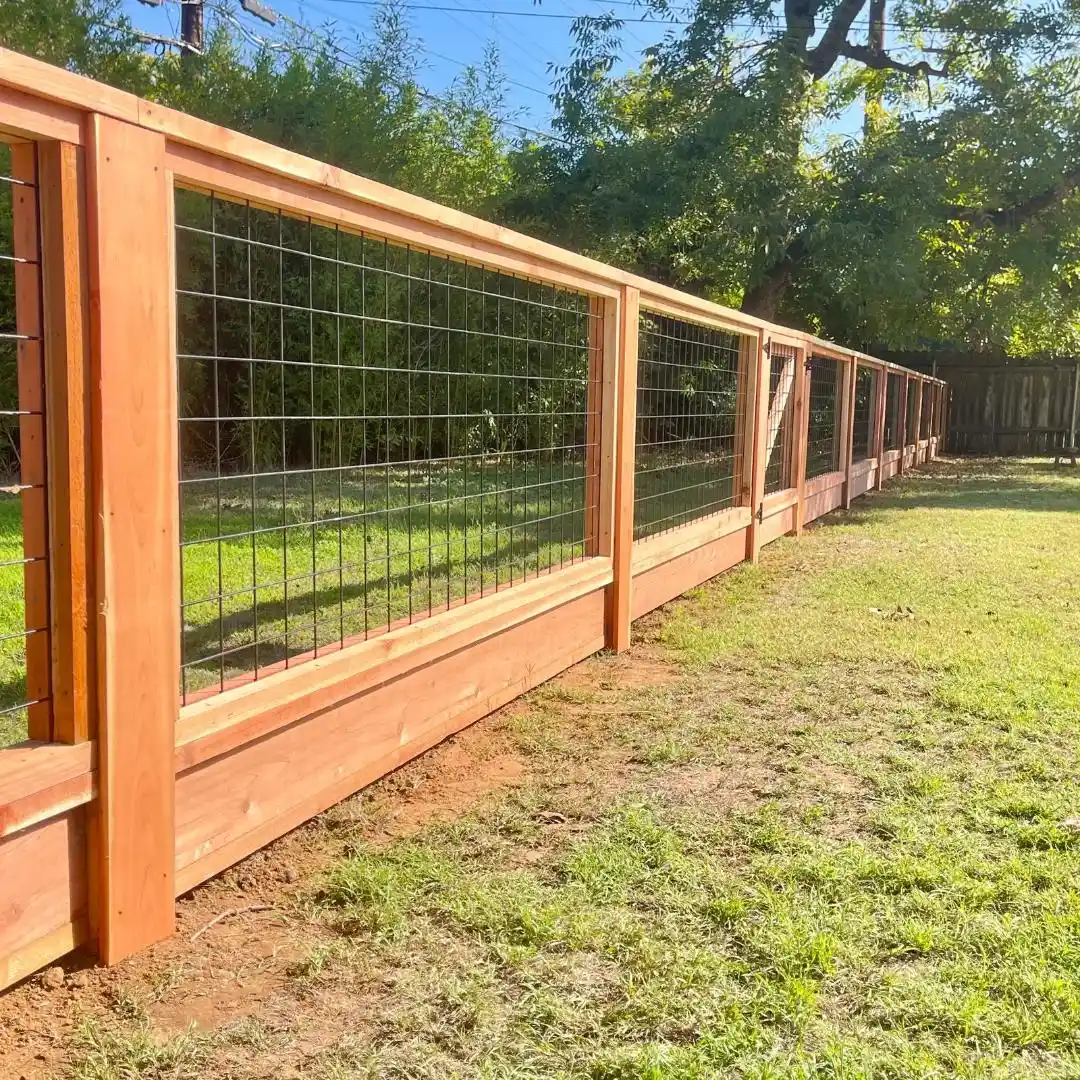
Plan on at least 48 inches for a permanent goat fence, and 4 to 5 feet where you have bucks, athletic breeds, or a known escape artist. Penn State recommends a minimum of 48 inches. Mississippi State cites 42 inches as a floor while calling five-foot livestock panels highly desirable for pens. University of Alaska Extension lists 4 to 5 feet as the common range across materials.
Here’s the honest caveat: Oklahoma State reports that individual goats have jumped or climbed fences 48 inches high. Anything a goat can stand on next to the fence, a stump, a feeder, a water trough, effectively lowers that height.
Sheep and Goat Fence Mesh: What Size Openings Keep Animals Safe?
The safest general default is 2×4-inch no-climb wire mesh, ideally a square deal knot sheep and goat fence, and 4 inches or smaller is the common guideline for keeping goats from getting their heads stuck.
But “smaller is always better” isn’t the real rule, and most guides skip this. Oklahoma State frames it correctly: the design should either prevent a goat from putting its head through at all, or use openings a goat can withdraw from safely. The dangerous zone is in between, where a panicked animal can hurt itself trying to back out. SARE’s goat production manual identifies roughly 6-inch openings as the classic horn trap. Goats stick their heads through, then get their horns stuck on the way back out. That’s why standard field fencing with graduated spacing can be a problem, since the widest openings sit up high, right where a horned adult reaches.
Kids need tight openings along the bottom, where they’ll happily test every gap. If you run sheep with your goats, the same mesh works for both, and lambs get the same protection. Watch the herd closely for the first few days on any new fence.
Seven Places Goats Escape (Fence Weak-Point Checklist)
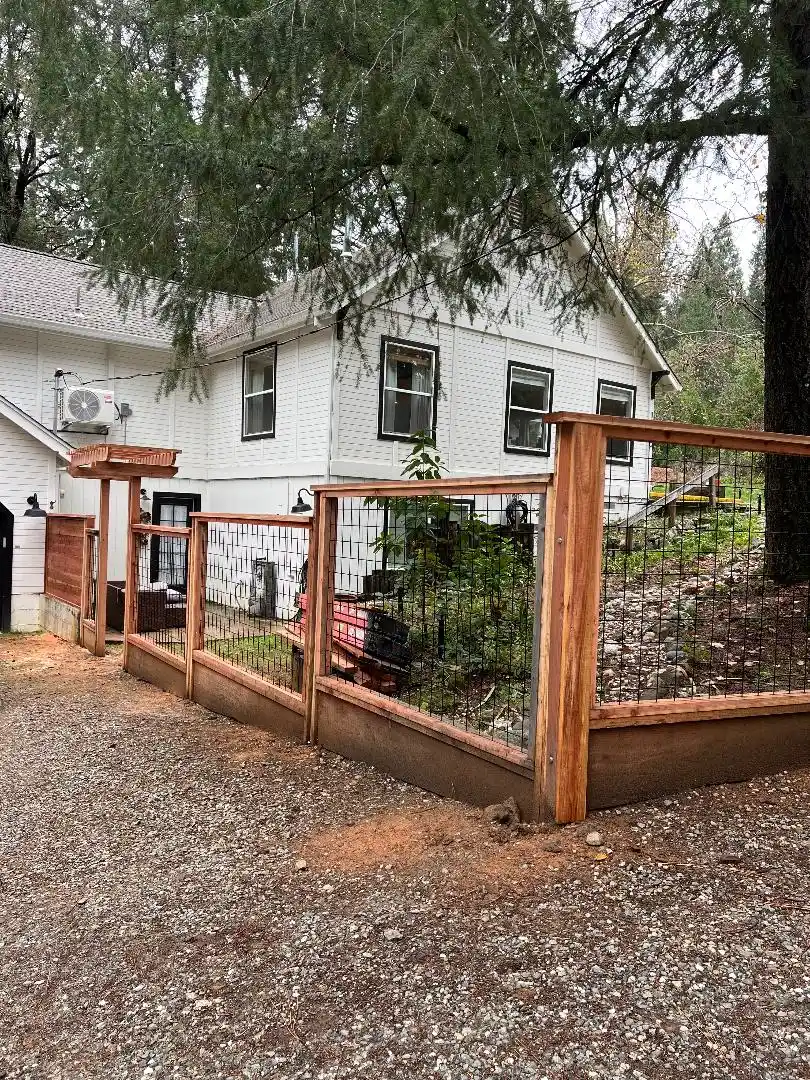
- The gap under the gate. Goats go under long before they go over, and a few inches of clearance is all they need.
- Latches a goat can work with its lips. Use heavy-duty latches and secure the bottom of the gate too.
- Sagging or loose wires from months of leaning and rubbing.
- Unbraced corners and gate posts that pull in and slacken the whole run.
- Terrain dips, erosion, and holes where the ground falls away under the bottom wire.
- Water gaps and washouts after a wet winter.
- Feeders, shelters, rocks, stumps, and play structures parked next to the fence line.
California NRCS Fence Standard 382 requires site plans to include gate locations, post spacing, and bracing details. The wire is only part of the design.
Should You Add an Electric Fence, Hot Wire or Electric Netting?
An electric fence is a psychological barrier, not a physical one. Virginia Tech describes it that way, and it’s the right way to think about it. The electricity does the teaching; the woven wire does the stopping. The strongest use for goats is an interior offset strand on a woven wire perimeter, which Penn State recommends to discourage climbing, rubbing, and head entry.
A few things to get right. Goats have to be trained to it, ideally in a small area with a physical fence behind the wire so a startled animal can’t run straight through. Virginia Tech recommends maintaining at least 5,000 volts, including in dry weather. Vegetation touching the wires drains the charge. Spacing varies by design, and Virginia Tech publishes three-, four-, and five-wire layouts as references rather than one universal prescription. Dry western soils often need a continuous-ground or earth-return system instead of relying on soil moisture alone. And never shut the charger off while goats are behind netting, or UC ANR warns they’ll learn to push through the netting. Horned animals can also tangle in netting, so watch them closely at first. Our Electric Fencing 101 guide covers the mechanics in more depth.
Fencing Goats: Planning Around Your Herd and Your Property
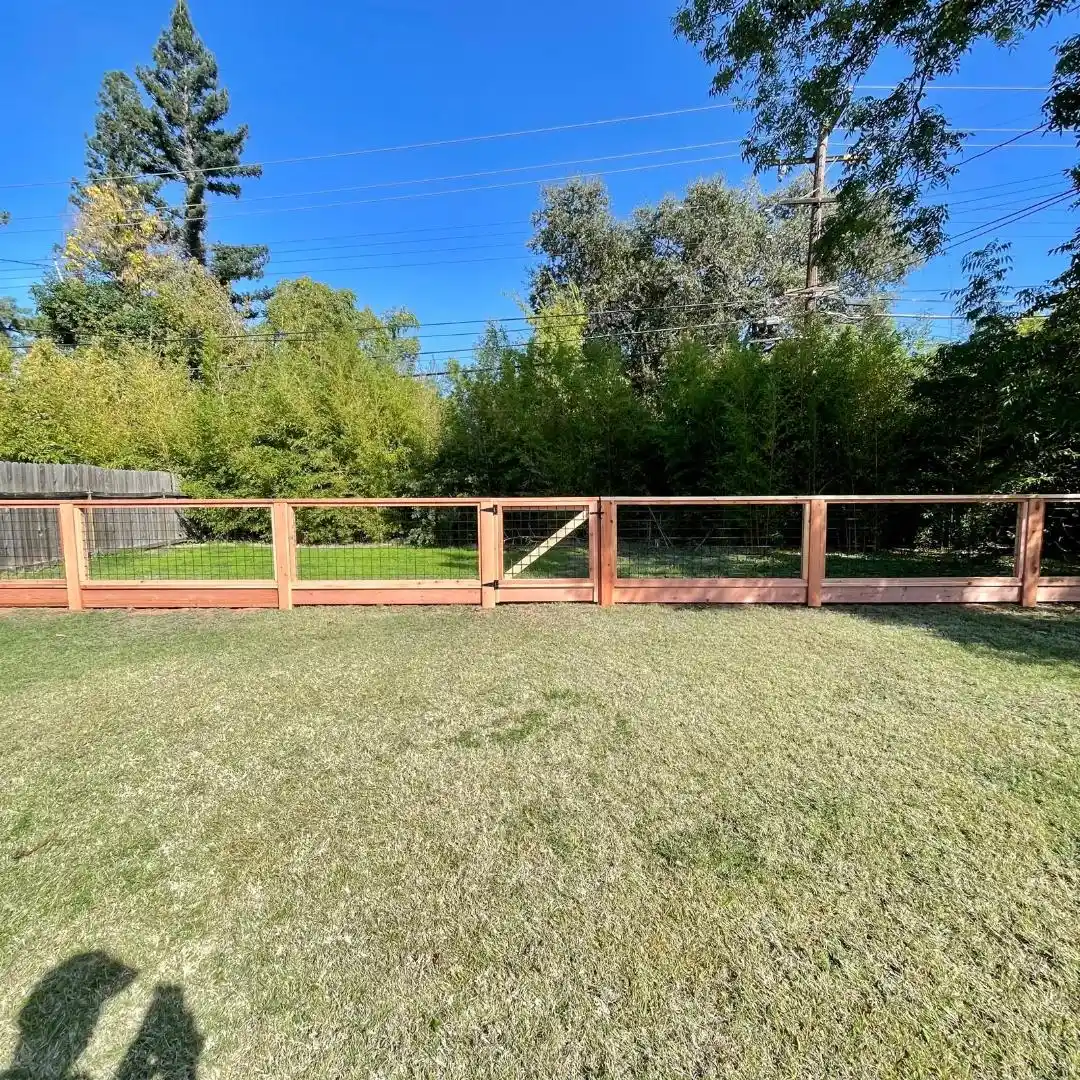
The variables that change a design: herd size and where you expect it to grow, horned versus polled animals, whether you’re running sheep and goats together, whether you need separate buck and kidding areas, terrain and drainage, gate widths for a tractor and for handling animals, and whether you want a permanent perimeter with movable interior paddocks so the herd can graze in rotation. On a working goat farm, the perimeter and the interior paddocks are two different jobs and rarely call for the same material.
One more thing. A fence that contains goats isn’t automatically resistant to predators. Coyotes and loose dogs dig, push, and squeeze. Full coverage, a tight bottom edge, and solid gates do most of that work, and we won’t promise anything “predator-proof” without walking the property first. Our guide on how to choose farm and livestock fencing goes deeper on layout.
Goat Fence Rules and Installation Considerations in the Sacramento Area
Confirm the animal-keeping and fence rules for your specific parcel before you build. A few regional points worth knowing:
- The City of Sacramento generally doesn’t require a building permit for fences under seven feet, though zoning standards still apply.
- Unincorporated Sacramento County allows an agricultural electric fence by right in certain agricultural, rural, and industrial zones. A Minor Special Development Permit is required when the electric fence sits on or within 50 feet of a boundary next to a different zone (Section 5.2.5.H).
- Check your HOA architectural guidelines and CC&Rs where they apply.
- California requires an Underground Service Alert (811) ticket before excavation: at least two working days and no more than 14 calendar days ahead, valid for 28 calendar days (CSLB).
These rules change and vary by parcel, so verify yours. We make the 811 call as part of the job, as a licensed, bonded, and insured contractor, CSLB License #979657.
How to Maintain a Goat Fence
- Walk the line frequently in the first few weeks after the animals are introduced.
- Check tension, posts, bottom gaps, gates, and latches on a schedule, and replace any rail that’s been chewed or rubbed thin.
- Test electric voltage at several points along the run, not just at the energizer.
- Clear vegetation off hot wires and off the bottom of electric netting.
- Inspect after storms, fallen limbs, erosion, or a hard push from the herd. California NRCS 382 names gates, water gaps, erosion, and broken material as standing inspection items.
Frequently Asked Questions
What type of fence is best for goats?
A woven wire or no-climb sheep and goat fence at least 48 inches tall, with cattle panels in pens and high-pressure areas. Add an interior hot wire if your goats climb or lean.
Can goats jump over a 4 ft fence?
Sometimes, yes. Oklahoma State reports individual goats going over 48-inch fences, and bucks, athletic breeds, and any goat with something to climb on nearby are the likeliest culprits. Treat 48 inches as a baseline, not a guarantee.
What is the most affordable way to fence in goats?
Match the material to the use: heavier no-climb wire on the permanent perimeter, panels only where pressure is highest, electric netting for temporary grazing paddocks. The affordable fence is the one you don’t have to rebuild in three years. Try our Fence Price Calculator or request a free fence estimate to see real numbers for your property.
What is the best way to fence in a goat?
Get all five escape routes covered: adequate height, safe mesh openings so no head or set of horns can get stuck, a bottom edge flush to the ground, braced corners and gate posts, and latches a goat can’t manipulate. Then inspect it regularly.
Get a Free Fence Estimate for Your Goat Fence
No two properties or herds are the same, so the right goat fence gets designed on site. We install durable agricultural no-climb woven wire, cattle panel and corral systems, chain link, and farm fencing and gates across Sacramento, Placer, El Dorado, Yuba, Yolo, and Nevada counties. Licensed, bonded, and insured, background-checked W-2 employees, flat pricing with zero hidden fees, a written guarantee, and a thorough clean-up when the crew leaves. Financing is available for Sacramento-region residents. Get a Free Fence Estimate: call us or book online.