When homeowners ask what materials are used for pool safety barriers, they are usually asking a bigger question than just what kind of fence to choose. They want to know how to make their swimming pool feel safer, how to protect children, how to keep pets away from the water, and how to make the backyard feel beautiful without losing peace of mind. A pool should be a place for joy, not worry. It should be where kids laugh, adults relax, and the whole family enjoys the space together. But when a pool, spas, or any water feature is present, protection matters.
A pool barrier helps create a clear boundary around the water, so the yard feels safer, calmer, and more complete. The most common materials used for barriers include aluminum, steel, wood, vinyl, composite, removable mesh, glass, chain link, masonry, block, and concrete. Each material has a place. Some pool fence options give you visibility. Others give you privacy. Some work well around an in-ground pool, while others can support safety around an above-ground pool. A successful pool barrier prevents a child from getting over, under, or through the barrier when supervising adults are not present. That is the heart of pool safety, and it is why the right material, gate, latch, height, and installation all matter.
Why Pool Safety Barriers Matter
A pool barrier is one of the most important physical barriers a homeowner can install near a swimming pool, spas, or backyard water feature. It helps restrict access, reduce the risk of children gaining access without adults, and support water safety every day. No fence replaces supervision, but the right barriers give families another layer of protection. Children can move quickly. House doors can be left open. Adults can turn away for a moment. Pool alarms, alarms on doors, safety covers, and pool covers can all help, but a properly designed pool barrier adds a steady layer of security that works even when life gets busy. The goal is simple: prevent children from reaching the water when they should not be there.
A pool fence also helps define the pool area, so family, guests, and children understand where access should happen. When a pool is surrounded by strong barriers, a reliable gate, and a clear boundary, the backyard feels more intentional and more peaceful.
A Good Pool Barrier Does More Than Mark a Boundary
A good pool barrier does more than draw a line around the pool. It gives the yard structure, privacy, beauty, and protection. It can separate the patio from the water, guide guests through the space, and help keep children safe when the swimming pool is not in use. If your current fence is leaning, full of holes, or has a gate that does not latch, the whole pool area can feel uncertain. If that same pool is surrounded by strong barriers, properly aligned gates, and a clean fence facing the house, the yard feels calmer right away.
The best barriers do not just stand there; they work every day. They help adults see where access should happen, they help children understand the boundary, and they support a safer home around pools and spas.
What Makes a Material Safe for a Pool Barrier?
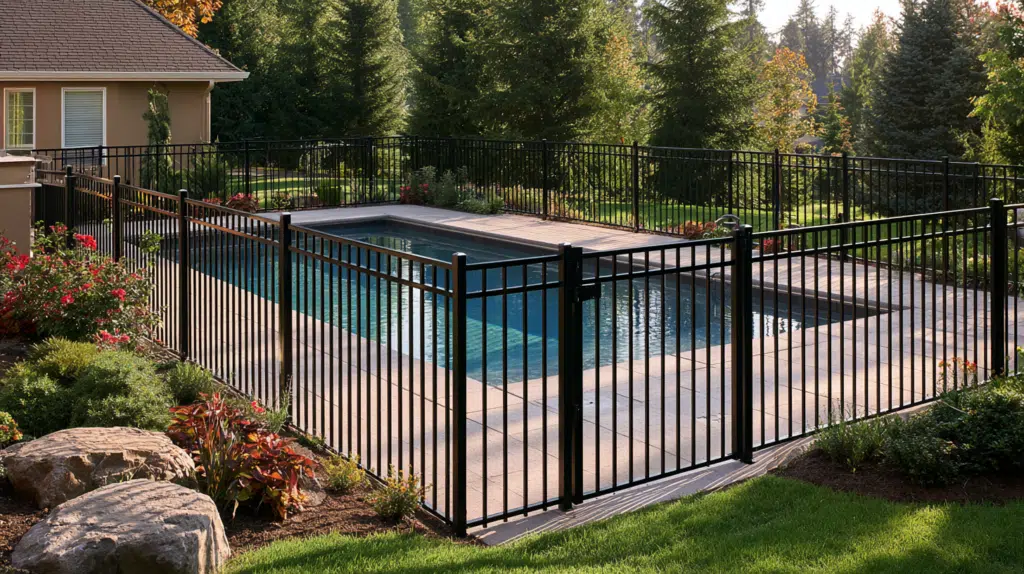
A material is only part of the answer. A pool barrier has to be properly designed, properly installed, and matched to the layout of the yard. Strong materials can still create risk if the gate does not close. Beautiful barriers can still fall short if they have decorative cutouts, unsafe holes, loose posts, or rails that make climbing easier.
A safe pool fence should help prevent young children from climbing over, crawling under, squeezing through, or opening the gate. For a swimming pool, the most important details are height, strength, spacing, gate direction, latch placement, and whether the barrier can hold up to daily use. Around spas, the same care matters. Some homes also use pool covers, safety covers, pool alarms, alarms on doors, or other alarm systems as added layers of protection. Those tools are helpful, but they do not replace a strong fence when one is required.
Height, Gaps, and Gate Hardware Matter
The safest barriers are built with small details in mind. The bottom should not leave enough space for a child to crawl under. The maximum opening should be small enough that children are unable to squeeze through. A gate should open away from the water, close on its own, and latch securely.
Self-closing and self-latching hardware is one of the most important parts of a pool fence. Self-latching gates should be placed where small children cannot easily reach the release mechanism. Self-latching devices should be strong, reliable, and protected from casual tampering. Self-closing devices help the gate return to a safer position after someone walks through. In many pool safety plans, the safest setup is closing and self-latching, with the latch high enough to discourage young hands. The gate is never just a detail. It is the moving part that has to work every time.
Always Check Local Pool Fence Requirements
Local rules matter. California pool safety laws often include specific safety requirements for pools and spas, and homeowners should check those rules before they install a pool fence. Some homes need a pool barrier between the house and water. Some need alarms on house doors that provide direct access to the pool area. Some need doors equipped with special latches or alarms. Some need pool alarms, a cover, safety covers, or additional alarm systems as part of a full water safety plan. Homeowners also need to understand whether they must have a fence around a pool at all, since many areas require a compliant barrier by law.
For an above-ground pool, the ladder and pool structure may also matter because access often happens at the entry point. A ladder should be secured, removed, or locked when required, and anything near the swimming pool side should not make climbing easier. Homeowners should also understand whether pool fences are required for above ground pools in their area. A ground pool, above-ground pool, and spas can all need different details, so the safest plan is the one built for your exact home.
Common Materials Used for Pool Safety Barriers

There are several materials that can be used for pool safety barriers. Aluminum, steel, wood, vinyl, composite, removable mesh, glass, chain link, masonry, wall systems, block, and concrete can all be part of a safer design when they are built correctly. If you are comparing the best fences for pools, the best material depends on what you need most. Do you want to see the pool from the house? Do you want privacy from neighbors? Do you want a low maintenance fence? Do you need to install protection around an older pool or spas? Do you need the pool surrounded on all sides, or only separated from one part of the yard? A thoughtful pool fence plan looks at the whole space before choosing a material.
Aluminum Pool Safety Barriers
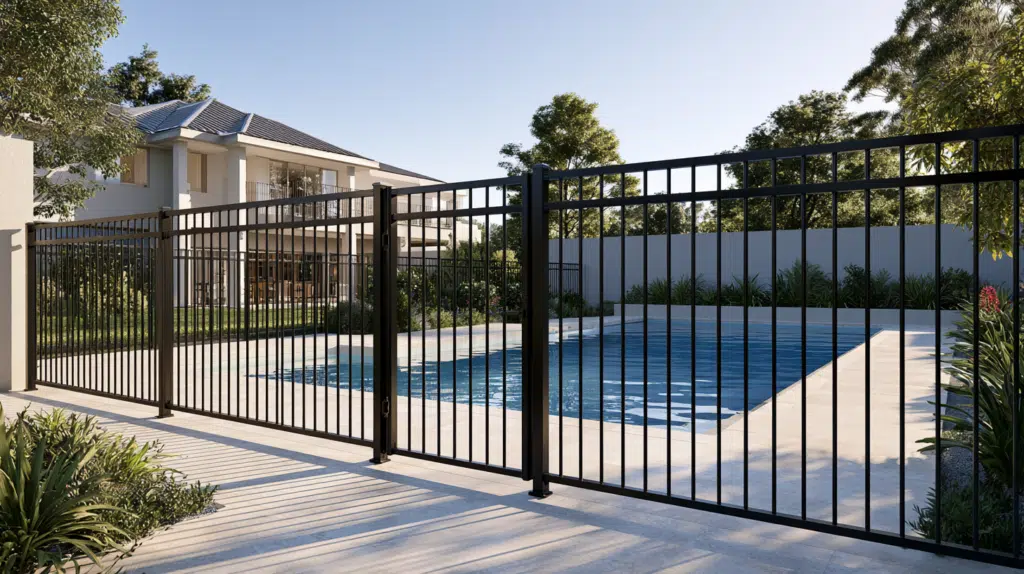
Aluminum is one of the most popular materials for a pool fence because it is strong, clean, and open. It gives the yard a finished look while keeping the water visible. That visibility matters when adults want to keep an eye on children from the patio, kitchen window, or outdoor seating area. Aluminum does not give much privacy, but it gives the home a light, open feel. It also handles moisture well and usually requires less upkeep than wood. Around pools and spas, aluminum barriers are often built with vertical members, which can help reduce climb points when spacing and rail placement are correct.
Best For:
Homeowners who want visibility, lower maintenance, and a clean look. It is a strong choice when the pool is part of the larger backyard and you do not want the fence to make the space feel closed off.
Things to Consider:
Aluminum needs correct spacing and a safe layout. Horizontal members should not create easy footholds. Vertical members should be close enough to reduce unsafe gaps. The gate must be self-closing and self-latching, and the posts should be secured well so the system holds straight over time.
Steel or Wrought Iron Style Pool Barriers
Steel and wrought iron style barriers bring a classic, sturdy look to the yard. They are often chosen when a homeowner wants something decorative that still feels strong. Like aluminum, this type of pool fence keeps the water visible. It can frame a swimming pool beautifully without blocking the view from the house. For homes with traditional landscaping, stonework, or formal outdoor spaces, steel can feel like a natural match.
Best For:
Homeowners who want a timeless design, strong protection, and a more decorative look. It works well when the pool is visible from the front or side of the home and the barrier needs to look polished.
Things to Consider:
Steel may need more maintenance than aluminum, especially if the finish wears down. Diagonal members, horizontal members, and decorative details should be reviewed carefully so they do not make climbing easier. The gate should be aligned, secured, and equipped with closing and self-latching hardware that works smoothly.
Wood Pool Safety Barriers
Wood is warm, familiar, and private. For many homeowners, a wood pool fence feels like home because it blends naturally with the yard. It can block views from neighbors, soften the look of the pool area, and make the backyard feel more protected. Wood works especially well when a pool is close to a property line, a street, or nearby house windows. A worn wood fence can make a yard feel tired and uncertain. A rebuilt wood barrier can make that same space feel calm, private, and cared for again.
Best For:
Homeowners who want privacy and a natural look. It works well around family backyards, traditional homes, pools, and spas where the goal is to create a peaceful enclosure.
Things to Consider:
Wood needs care. Sun, sprinklers, weather, and pool water can wear on boards and posts. Horizontal members should usually be placed on the interior side or designed carefully so the outside does not become climbable. Any decorative cutouts must be reviewed because openings can create risk. The gate needs to remain aligned, and the latch must keep working as the fence ages.
Fantastic Fence Perspective
A wood pool fence can be a beautiful form of protection when it is built with care. The goal is not just to install boards. The goal is to create a backyard that feels private, steady, and safer for the people you love. From worn and wobbly to strong and secure, wood can make a powerful difference.
Vinyl Pool Safety Barriers
Vinyl is a clean, low maintenance choice for homeowners who want privacy without painting or staining. It gives the backyard a bright, finished look and does not rot like wood. A vinyl pool fence can work well around pools and spas when the posts are strong, the panels are secured, and the gate hardware is chosen for safety. Smooth vinyl panels can also reduce obvious climbing points, depending on the design.
Best For:
Homeowners who want privacy, a clean style, and less upkeep. It works well in family yards where the homeowner wants the barrier to look neat year after year.
Things to Consider:
Vinyl quality matters. Lower quality materials can become brittle over time, especially in strong sun. The posts need to be installed correctly, and the gate must stay aligned. If a vinyl barrier is surrounded by landscaping, furniture, or storage items, those items should not create climbing access.
Composite Pool Safety Barriers
Composite barriers offer privacy with a more premium look. Many composite products combine wood fibers and plastic materials, which can create a strong, attractive barrier with less upkeep than traditional wood. A composite pool fence can make the backyard feel upgraded, especially when the outdoor living space includes a patio, garden beds, or modern hardscaping.
Best For:
Homeowners who want privacy, long-term durability, and a polished look. It is a good fit for pool spaces that are part of a larger backyard improvement.
Things to Consider:
Composite often costs more upfront than standard wood or basic vinyl. The material should be chosen carefully, and the installer should understand gates, posts, clearances, and safety requirements. A premium material still needs closing and self-latching hardware, correct spacing, and a layout that prevents unsafe access.
Removable Mesh Pool Fencing
Removable mesh barriers are often used close to the water as a dedicated layer of protection. This option is common for families with young children because it can separate the swimming pool from the rest of the yard. Mesh barriers are also useful when a homeowner already has a property fence but wants an added layer around the water. The mesh size, post spacing, tension, and gate all matter. Some mesh systems are removable, but they still need to be secured correctly when in place.
Best For:
Families who want a child-focused layer near the water. They can help when the larger yard is used for play, pets, guests, or entertaining, but the water needs a clearer boundary.
Things to Consider:
Mesh does not offer much privacy, and it may not look as finished as aluminum, wood, vinyl, or composite. Mesh openings should be small enough to meet the intended safety goal. Some systems use slats or specific materials to reduce mesh openings, especially when openings could otherwise be too large. The gate must be self-closing and self-latching, and the barrier should be locked or secured so children cannot move it out of place.
Glass Pool Safety Barriers
Glass barriers are chosen when the homeowner wants a clean, open, modern look. They keep the pool visible and can make a smaller yard feel larger. Glass works well when the view matters, especially from the house, patio, or outdoor kitchen. It can create a luxury look around pools and spas without blocking sightlines.
Best For:
Modern homes, upgraded outdoor living areas, and homeowners who want clear views. It can make the water feel connected to the rest of the yard while still creating a boundary.
Things to Consider:
Glass must use the right safety glazing, hardware, and installation methods. It also needs cleaning because water spots, dust, and sprinklers can show. A glass wall or panel system should be reviewed for height, strength, edge conditions, and whether nearby objects could help children climb.
Chain Link Pool Barriers
Chain link can be used in some situations, but it must be specified carefully. Standard materials may not be the best choice if the mesh openings are too large or if the design is easy to climb. Mesh size matters, and homeowners should check local rules before choosing this option.
Best For:
Utility areas, side yards, or projects where function matters more than style. It may be used when the layout is simple and the correct material is allowed.
Things to Consider:
This material does not give much privacy and may not match the look many homeowners want around pools and spas. It can also become climbable if the openings or nearby objects create footholds. For many families, a different pool fence material feels more secure and more attractive.
Masonry, Block, Stone, or Concrete Pool Barriers
Masonry, block, stone, and concrete barriers can create a strong and private boundary. A solid wall can help reduce noise, block views, and make the pool feel more enclosed. These barriers can work well when the yard needs permanence and privacy.
Best For:
Homeowners who want a long-lasting, private boundary. It works well along property lines, near neighbors, or in designs where a standard fence does not fit the style of the home.
Things to Consider:
Solid barriers should not include ledges or surface features that make climbing easier. Small variations may be acceptable within normal construction tolerances, and masonry joints are common, but the finished surface should not give children a clear handhold or foothold. A wall can be a strong barrier, but drainage, engineering, height, and local approval may all need attention.
Which Pool Safety Barrier Material Is Best?

The best material depends on the home. For visibility, aluminum, steel, and glass are strong choices. For privacy, wood, vinyl, composite, and masonry often work better. For low maintenance, aluminum, vinyl, and composite are popular. For a child-focused layer close to the water, mesh can be helpful. For a natural look, wood and composite feel warm and grounded.
But no material works well if the gate fails. No material solves the problem if children can climb nearby furniture, open doors without alarms, or gain access through an unsecured side yard. The right answer is material plus design, plus careful installation, plus daily habits. The best barriers help make children unable to reach the water without adults, while still allowing the backyard to feel beautiful and welcoming.
Pool Safety Barrier Materials Comparison Chart
- Aluminum: High visibility, low privacy, low maintenance.
- Steel: High visibility, classic style, medium maintenance.
- Wood: High privacy, warm look, more upkeep.
- Vinyl: High privacy, clean look, low maintenance.
- Composite: Strong privacy, premium look, moderate upkeep.
- Mesh: Flexible protection, limited privacy, simple appearance.
- Glass: Excellent visibility, low privacy, modern finish.
- Masonry: Strong privacy, permanent look, more planning.
Each material can be useful around pools and spas, but the safest choice is the one built to match the property and the safety requirements.
What Homeowners Should Ask Before Choosing a Pool Barrier Material
Before choosing a material, walk the yard and look at real life. Can you see the pool from the house? Are there house doors that open toward the water? Are those doors equipped with alarms or locks? Are there chairs, planters, or storage bins near the barrier that could help children climb? Are there gaps under the fence? Is the gate locked when the pool is not in use? Do you need to store toys away from the water so children are not tempted to reach through or climb? Are pool covers or safety covers part of your plan? Does the cover fit the pool, and is the cover secured when adults are not outside? These questions help turn a material choice into a full safety plan.
Questions Worth Asking
- Does the gate open away from the water?
- Is it self-closing and self-latching?
- Will self-latching gates be placed high enough?
- Is the release mechanism out of easy reach?
- Is the maximum opening small enough?
- Are horizontal and vertical members arranged safely?
- Do nearby doors, the ladder, or the pool structure create access concerns?
- How do alarms, pool alarms, and alarm systems fit into the home?
- Where will you store chemicals, toys, and furniture?
- Will the pool be surrounded on every side that needs protection?
A good plan protects the whole space, not just one section.
Why Professional Pool Fence Installation Matters
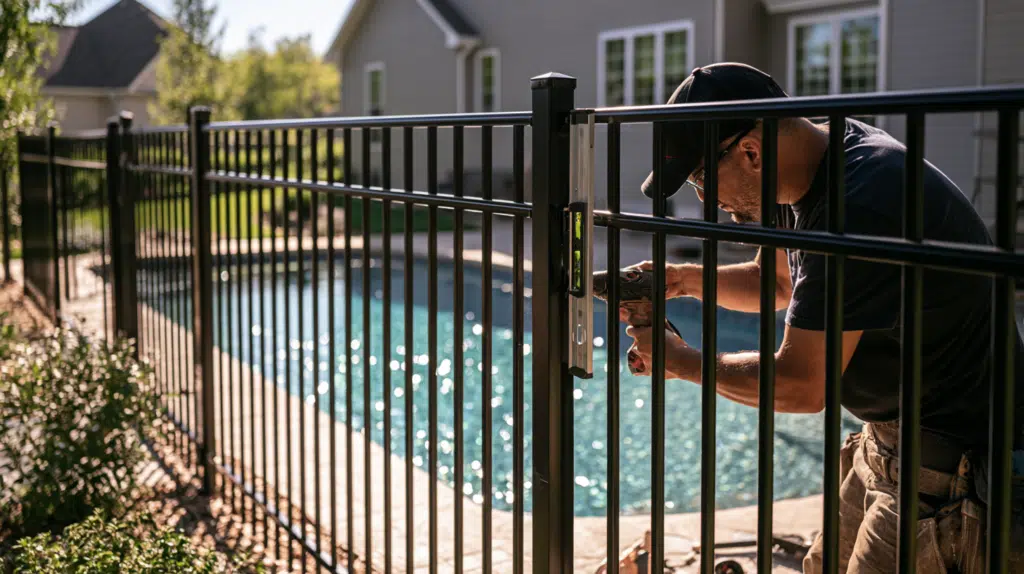
Pool barriers are not casual backyard projects. They are safety features. A loose post, dragging gate, low latch, wide gap, or poor layout can weaken the whole system. Professional installation matters because the details must work together, which is why it is important to know what to look for when hiring a fence contractor. The posts need to be strong. The fence must follow the yard. The gate must close. The latch must catch. The barrier must be secured. The area around pools and spas must be reviewed for access points. A homeowner should feel confident that the finished project is more than attractive; it is dependable.
The Details That Make the Difference
The details include post depth, gate swing, latch height, bottom clearance, transitions, hinges, and how the barrier meets the house or wall. If the pool is surrounded by multiple materials, each connection should be tight and thoughtful. If alarms are used, the homeowner needs to know which doors are covered and whether alarms are active. If pool alarms are part of the plan, they should be maintained and tested. If a safety cover is used, it should be fastened correctly. If adults are not present, protection should not depend on memory alone.
From Worry to Confidence
The right pool fence can change the feeling of the whole backyard. Instead of wondering whether children are gaining access too easily, you can feel confident that the gate closes, the latch catches, and the barrier stands strong. Instead of an open yard that feels unfinished, you get a space that feels cared for. That is the real transformation, from worry to relief, from exposed to protected, from uncertain to ready for family life.
Pool Safety Barrier Material Costs
Costs depend on the material, layout, height, gates, access, terrain, and whether old materials must be removed. A straight fence line costs less than a custom barrier around curves, slopes, steps, or multiple gates. In the Sacramento area, the average price of a fence helps set expectations, and many privacy projects run about $2,500 to $3,500 per side of the house, or about $7,500 to $10,500 for a full backyard. Nationally, privacy fencing often ranges from about $1,800 to $8,000, with many projects averaging around $4,300.
- Wood: About $40 to $60 per linear foot
- Vinyl: About $50 to $60 per linear foot
- Composite: About $70 to $90 per linear foot
- Aluminum: About $48 to $55 per linear foot
These ranges line up with many homeowners’ research into how much a pool fence costs. Pool barriers can cost more than basic fencing because gates, latches, spacing, and safety details matter.
The Right Fence Is an Investment in Peace of Mind
A cheap barrier that does not close, latch, or hold straight is not really saving you money. The right fence is an investment in protection, beauty, and long-term confidence. It helps protect children, gives adults more peace, and makes the backyard feel finished. Flexible fence financing options can also make it easier to choose the safest materials and layout for your yard. Fantastic Fence also includes old fence removal and disposal at no extra charge when replacing your fence, which makes the process simpler and easier on the homeowner.
Frequently Asked Questions About Pool Safety Barrier Materials
What is the best material for a pool safety barrier?
There is no single best material for every home. Aluminum is great for visibility, wood and vinyl are strong privacy options, composite offers a premium look, mesh can add focused protection, and glass keeps the view open. The best pool barrier is the one that meets safety requirements and fits your yard.
Can a wood fence be used as a pool safety barrier?
Yes. A wood fence can be used when it is tall enough, strong enough, and built without unsafe gaps or easy climb points. The gate should close properly, latch securely, and stay aligned over time.
Is vinyl fencing safe around a pool?
Vinyl can be safe when it is installed correctly and matched to local requirements. It gives privacy and a clean look, but the posts, gate, latch, and clearance still need careful attention.
Is aluminum fencing good for pool safety?
Yes, aluminum can be a good pool fence material because it is durable, attractive, and open to view. It works best when the pickets are spaced correctly and the rails do not create easy climbing access.
Is removable mesh pool fencing allowed in California?
Removable mesh barriers may be used in some California pool safety plans when they meet required standards and include the right self-closing and self-latching gate. Homeowners should always confirm local rules before they install mesh around pools or spas.
Can glass be used as a pool safety barrier?
Yes, glass can be used, but it must be designed with proper safety glazing, approved hardware, and professional installation. It is attractive, but it is also more specialized than many other barriers.
How tall does a pool safety barrier need to be?
Height depends on local rules. Many California communities require a tall barrier, often 60 inches. Homeowners should check city or county standards before choosing materials or beginning installation.
Does a pool barrier gate need to self-close?
Yes, a pool barrier gate is commonly expected to be self-closing and self-latching. The gate should open away from the water and latch in a way that children cannot easily operate.
What is the most private pool barrier material?
Wood, vinyl, composite, masonry, and block usually provide the most privacy. These materials are helpful when the pool is close to neighbors, sidewalks, or a shared property line.
Should I install a pool safety barrier myself?
Most homeowners are better served by professional help. Pool barriers involve height, spacing, gate hardware, alarms, access points, and local rules. A professional can help you install a barrier that looks good, works properly, and supports safer everyday use, and scheduling a free fence estimate is often the easiest way to get started.
Final Thoughts: Choose a Barrier That Protects What Matters Most
So, what materials are used for pool safety barriers? The common choices include aluminum, steel, wood, vinyl, composite, mesh, glass, chain link, masonry, concrete, and block. Each one can serve a different purpose. Some give visibility. Some give privacy. Some are simple and flexible. Others are permanent and strong, and the best pool fence ideas that keep your family safe and your backyard beautiful will balance all of these needs.
The safest choice is the one that fits your yard, follows local safety requirements, and supports the way your family uses the space. A pool should feel like a place for joy, not worry. With the right pool barrier, the right gate, the right alarms, and the right habits, your backyard can feel safer, cleaner, and more complete. Your yard deserves protection that feels as good as it looks. Let’s build something strong together.