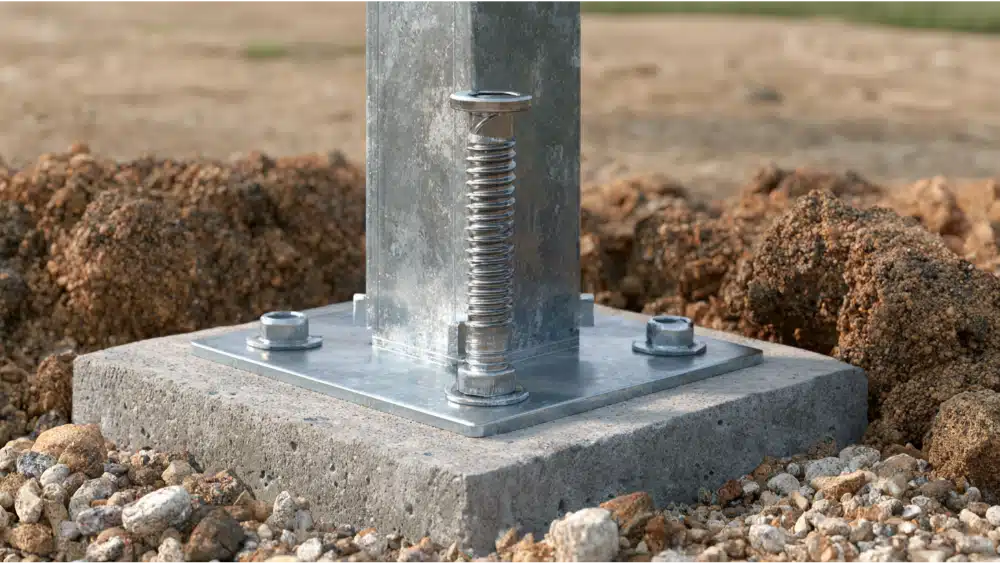
When you picture a strong fence, you may think of a post buried in the ground, surrounded by wet concrete until the concrete sets. But not every fence needs to be built that way. Some homes already have a patio, driveway, pool deck, wall, or slab where digging is not the best choice. So, how are bolt up posts anchored during installation? A bolt-up post is designed with a base plate that sits on a concrete surface and uses anchor bolts to hold it in place.
What Is a Bolt-Up Fence Post?
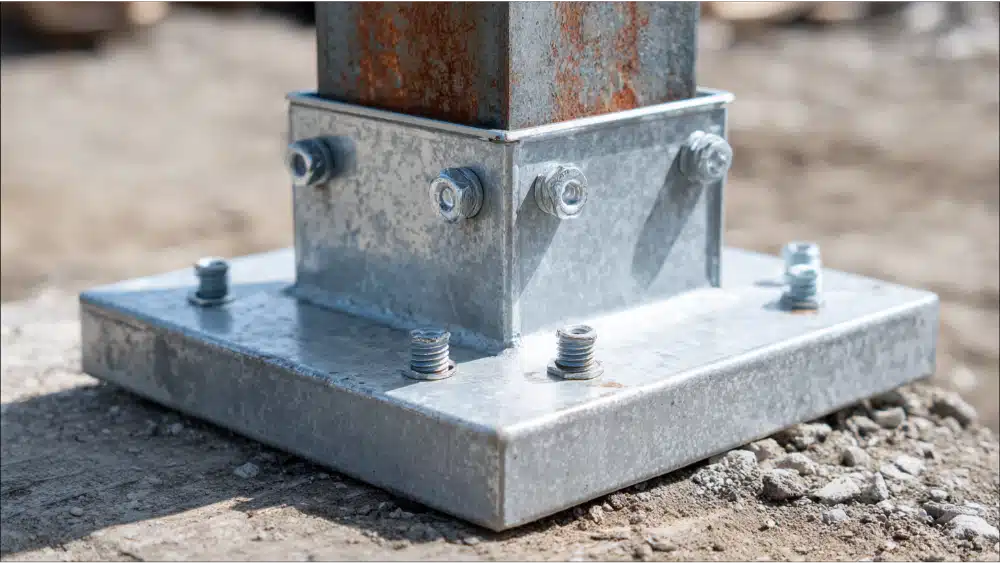
A bolt-up fence post is a post with a metal plate at the end. That plate is used to attach the post to concrete with a bolt, nut, washer, and anchor system. Instead of setting the post into wet concrete, the installer drills a hole, places the anchor, and tightens the hardware.
The Basic Parts of a Bolt-Up Post
The main parts include the post, base plate, anchor bolts, a nut for each bolt, washers, and drilled holes. Some systems use threaded rod with epoxy. Others use wedge anchors. The size, diameter, depth, and length of each anchor matter because they help the post hold steady over time.
Where Bolt-Up Posts Are Commonly Used
You may find this kind of post on patios, pool decks, walkways, driveways, short walls, and hardscape areas. It is often used when a homeowner wants to install a fence without cutting into a large area or removing a good slab.
Why Homeowners Choose Bolt-Up Posts
A bolt-up post can make a project easier when the right surface is already in place.
They Help Preserve Existing Concrete
No one wants to remove good concrete when there is a cleaner way to install a fence. A bolt-up system can protect the space you already have while still giving your yard the form and function it needs.
They Create a Clean, Finished Look
The finished picture is simple and tidy. The post sits where it belongs, the hardware is set, and the fence line looks intentional. This works well for metal, aluminum, modern privacy, and some wood designs.
They Can Make Repairs Simpler
If one post is damaged later, it may be easier to remove the nut, release the bolt, and replace the piece than it would be to dig out a buried post, and in some cases a full fence post replacement is the best long-term fix.
They Help Keep Posts Away From Soil Moisture
Because the post is not buried in the ground, it is less prone to sitting in damp soil. That does not mean water stops being a concern, but it can help protect the bottom end when the right materials are used.
How Bolt-Up Posts Are Anchored During Installation Using Anchor Bolts
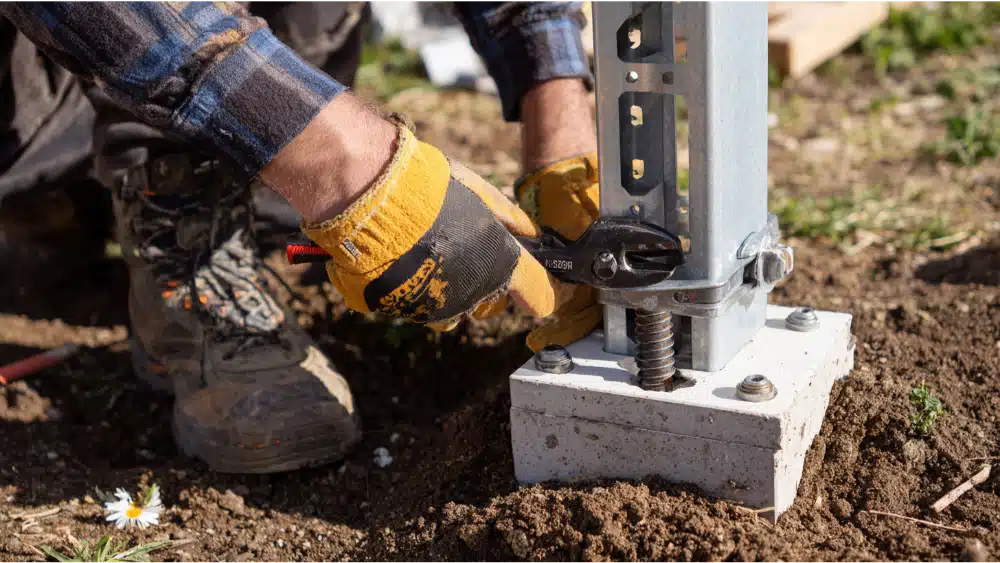
A bolt-up post is anchored by placing the plate on concrete, drilling each hole, setting the anchor, and tightening the hardware. The process may look simple, but small details can make a big difference.
The Concrete Surface Is Inspected
Before anyone starts building, the installer checks the concrete. It should be hard, sound, and stable. If there is a problem like cracking, crumbling, or thin material, the anchor may not hold the way it should.
The Fence Layout Is Marked
The fence line is measured carefully. The installer marks each post location, checks spacing, and plans the gate opening. This is also the time to find any window, wall edge, step, or corner that could affect the layout.
The Base Plate Is Positioned
The base plate is placed where the post will stand. A template may be used so each hole is marked in the right place. The installer checks alignment before drilling because once a hole is made, there is less room to adjust.
Anchor Holes Are Drilled
A hammer drill is used to cut each hole to the proper depth and diameter. The hole must match the anchor size. If the hole is too shallow, too wide, or too narrow, the anchor may not set correctly.
The Holes Are Cleaned
Dust and loose debris are removed before the anchor is placed. This clean step is easy to overlook, but it helps the anchor grip. Leaving dust inside can weaken the connection.
Concrete Anchors Are Installed
The installer may use anchor bolts, wedge anchors, expansion anchors, concrete screws, or threaded rod with epoxy. In some building work, anchor bolts are cast in place while concrete is poured. For many retrofit fence jobs, the anchors are installed after the concrete is already cured.
The Post Is Tightened and Checked
The post is checked for plumb, then each nut is tightened. The threads need enough engagement so the hardware can hold properly. Over-tightening can cause damage, while under-tightening can leave the post moving.
Rails or Panels Are Attached
Once each post is secure, the rails or panels attach to the posts. This brings the fence together as one system, and many homeowners also add gates that benefit from the strength of a welded steel frame. At this point, the full line starts to gain strength.
What Types of Anchors Are Used for Bolt-Up Posts?
Different projects call for different anchor choices. A light fence on a protected patio is not the same as a taller privacy fence in an open area.
Wedge Anchors
Wedge anchors are common for solid concrete. As the nut tightens, the anchor expands in the hole and grips the sides. They can be a strong option when the slab is in good shape.
Expansion Anchors
Expansion anchors press outward inside the drilled hole. They are often used when the post needs a firm mechanical connection.
Concrete Screws
Concrete screws can work for some lighter installs. They cut into the hole and use their threads to hold.
Epoxy-Set Anchors
With epoxy-set anchors, a threaded rod is placed into the hole with structural adhesive. The rod stays sticking out so the base plate can slide over it, then a washer and nut secure the post. This method can provide excellent strength when done correctly, just like choosing the best fasteners for wood fence installation helps the rest of the structure last.
What Makes a Bolt-Up Post Strong?
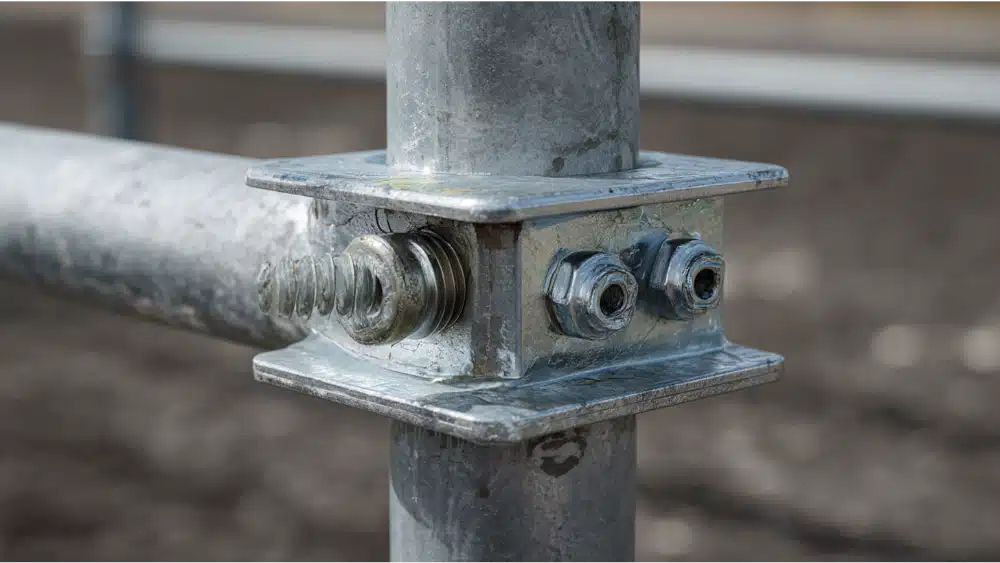
The post is only one part of the system. The true strength comes from the right surface, the right anchor, and careful installation.
Strong Concrete and Wet Concrete Considerations
A dependable base matters. Even the best anchor bolts cannot perform well if the concrete is weak or improperly poured. When setting posts in wet concrete, the bolts are cast-in-place, allowing the concrete to cure around them for a strong bond.
Proper Anchor Size
The anchor size must match the post, plate, and load. The diameter and length are chosen for the job, not guessed.
Correct Hole Depth
Depth matters because the anchor needs enough material around it to grip. Too little depth can leave the post loose.
Good Edge Distance
If the post is too close to the edge, the anchor can put pressure on a thin section. That can cause cracking.
Careful Alignment
A post that starts crooked can pull the whole fence out of line. Good layout work makes everything easier at the end.
Are Bolt-Up Posts as Strong as In-Ground Posts?
A bolt-up post can be strong when installed in the right place. But it is not always the best answer for every fence.
When Bolt-Up Posts Work Best
They often work well for pool fencing, aluminum fencing, decorative metal fencing, short privacy screens, and areas where a finished hardscape is already in place.
When In-Ground Posts May Be Better
A tall wood privacy fence, a long run in open wind, or a weak slab may need posts set into the ground instead. In many cases, traditional posts are placed in wet concrete and held until the concrete sets, creating a deep foundation.
Can Bolt-Up Posts Be Used for Privacy Fences?
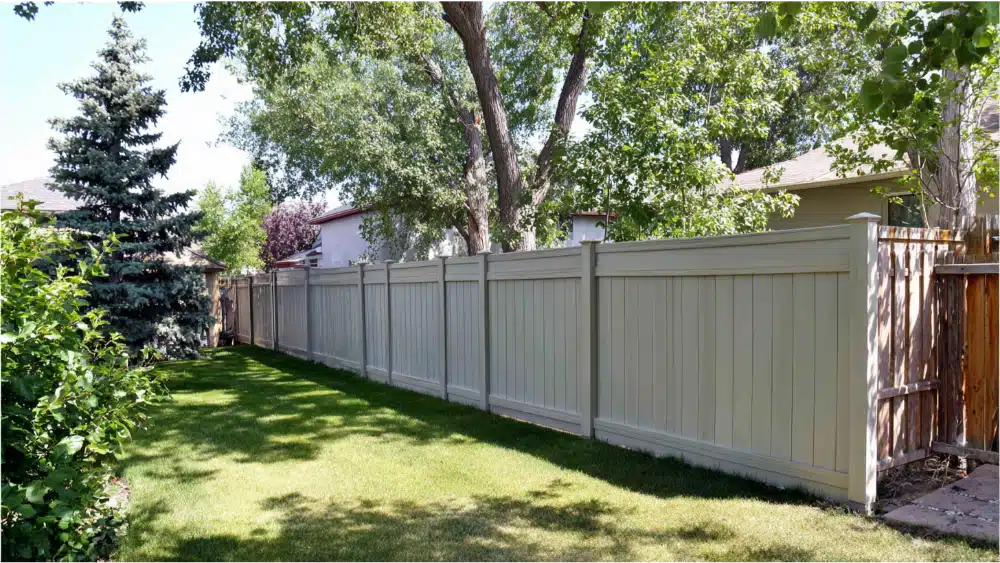
Yes, but the design has to be right. A privacy fence catches more wind than an open fence. That means the post, anchor, bolt, and panel system all need to work together.
Height Matters
The taller the fence, the more force it can put on the post. A short screen may be a good fit. A tall fence may need another approach.
Material Matters
Wood, vinyl, metal, and composite all behave differently. Wood can be beautiful and warm, but it also has weight and movement, and choosing between chain link and wood fences will change how the posts and anchors are designed. The material helps decide which anchor method makes sense.
Professional Planning Matters
This is where experience matters. We have learned that a fence should not just look good on day one. It should feel steady every time you walk by it, open the gate, or share the yard with family.
Common Mistakes to Avoid With Bolt-Up Post Installation
Most issues happen when the foundation work is rushed.
Mounting to Weak Concrete
If the concrete is cracked or too thin, the anchor may not hold.
Skipping Hole Cleaning
Leaving debris in the hole can reduce grip and create movement later.
Using the Wrong Anchor
The wrong anchor bolts can make a good post perform poorly.
Installing Too Close to an Edge
This can cause cracking and shorten the life of the install.
Ignoring Wind Load
A fence panel can act like a sail, and over time that pressure is a common reason fences lean and need repair. Wind pressure has to be part of the plan from the start.
What Homeowners Should Ask Before Choosing Bolt-Up Posts
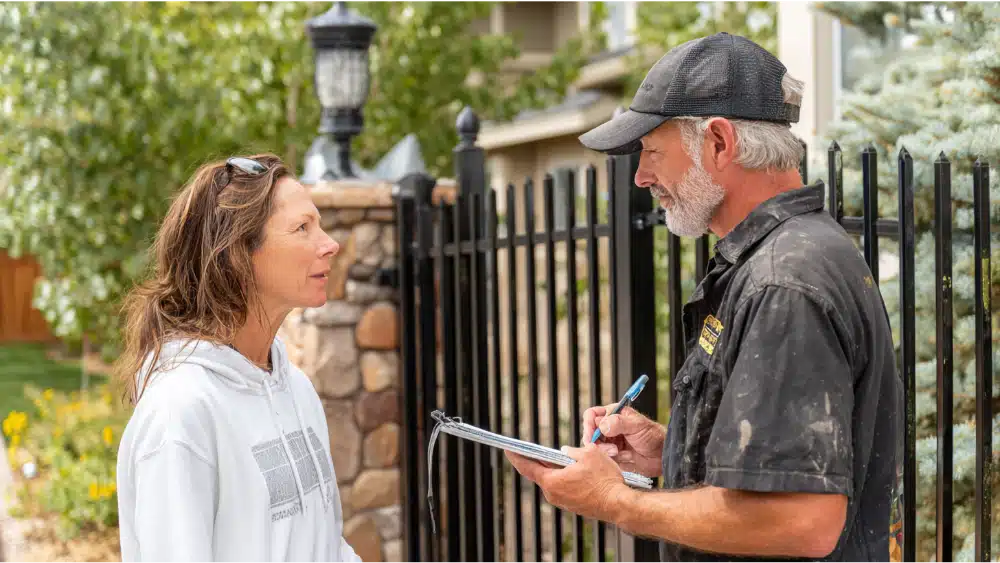
A good decision starts with clear information.
Is My Concrete Strong Enough?
The surface should be inspected before the post type is chosen.
What Type of Anchor Will Be Used?
Ask whether the job needs anchor bolts, wedge anchors, screws, or epoxy with a threaded rod.
Is This Fence Height Right for Surface Mounting?
Some heights work better than others.
Will the Hardware Resist Rust?
Outdoor hardware should be designed for weather, moisture, and time.
Is Surface Mounting Better Than In-Ground Posts for My Yard?
Sometimes yes. Sometimes no. The right way depends on your home, your layout, and what you want the fence to do, as well as whether fence financing options make one approach more comfortable for your budget.
How Fantastic Fence Approaches Bolt-Up Post Installation
At Fantastic Fence, we know you are not just asking about hardware. You want your yard to feel safe, finished, and cared for.
We Start With the Surface
We look at the place where the post will go before recommending a method.
We Match the Anchor to the Fence
Every fence is different. The anchor has to match the material, height, exposure, and surface.
We Build for Strength and Peace of Mind
We care about clean lines, steady posts, and details that last.
We Help You Choose With Confidence
You should feel comfortable before work begins. We can talk through the options, answer questions, and share clear next steps by phone, contact form, or email. When you email us, we will help you understand what is possible for your space, much like we do when people search for the best fence company near them in Sacramento.
FAQs About Bolt-Up Fence Posts
How are bolt-up posts anchored during installation?
They are anchored by setting a base plate on concrete, drilling each hole, cleaning it, placing the anchor, and tightening the nut and washer around the bolt.
Can bolt-up posts be installed on any concrete slab?
No. The slab must be stable enough to hold the anchor system.
Are bolt-up posts strong enough for a privacy fence?
Sometimes. The answer depends on height, material, wind, spacing, and the anchor method, especially if you are planning fencing for dogs and other pets.
What kind of anchors are best for bolt-up posts?
Common choices include anchor bolts, expansion anchors, concrete screws, epoxy-set rod, and wedge anchors.
Do bolt-up posts loosen over time?
They should not when installed correctly, but poor drilling, weak material, or the wrong hardware can cause movement.
Is it better to bolt posts down or bury them in concrete?
It depends on the project. Some posts are designed to bolt down. Others should be set in the ground.
Can bolt-up posts be used on retaining walls?
Often, yes, but the wall must be checked first. The structure needs enough strength to support the fence.
Final Thoughts: A Strong Fence Starts With the Right Foundation
A bolt-up post can be a clean, strong, and practical way to build a fence on a finished surface. The important things are simple, choose the right method, prepare the hole, set the anchor correctly, and make sure every post is aligned. When those details come together, the fence feels secure and looks like it belongs. Your yard deserves care from the first point of planning to the final nut tightened in place. Let’s build something strong together.