
Pool Safety Fence Installation: What We Build and What California Requires

Dominic Vella, Founder · CA C-13 License #979657 · Last updated October 2026
Short answer: Fantastic Fence installs permanent pool safety fences in ornamental iron — by far the most common choice around Elk Grove and Sacramento — and in tight-weave chain link with a custom smaller mesh. Every pool gate we hang is self-closing and self-latching, because California requires it. For a permitted new or remodeled pool at a single-family home, state law requires at least two of seven approved drowning-prevention features; a qualifying fence is one of them and must be at least 60 inches high, keep gaps under 4 inches and the bottom within 2 inches of the ground, and have a gate that swings away from the water with its latch at least 60 inches up. We do not install removable mesh pool fencing.
“Most people put ornamental iron around the pool. It keeps a really open look, it’s affordable, and it doesn’t feel like you’re inside a cage when you’re in the pool. We can also do a tight-weave chain link with a custom smaller mesh — it’s not that expensive. Either way, the gate is self-closing and self-latching, because California requires it and because that’s the part that actually keeps a kid out.”
— Dominic Vella, Founder, Fantastic Fence
Which Pool Safety Fences Does Fantastic Fence Install?
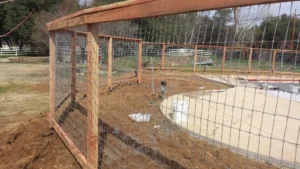
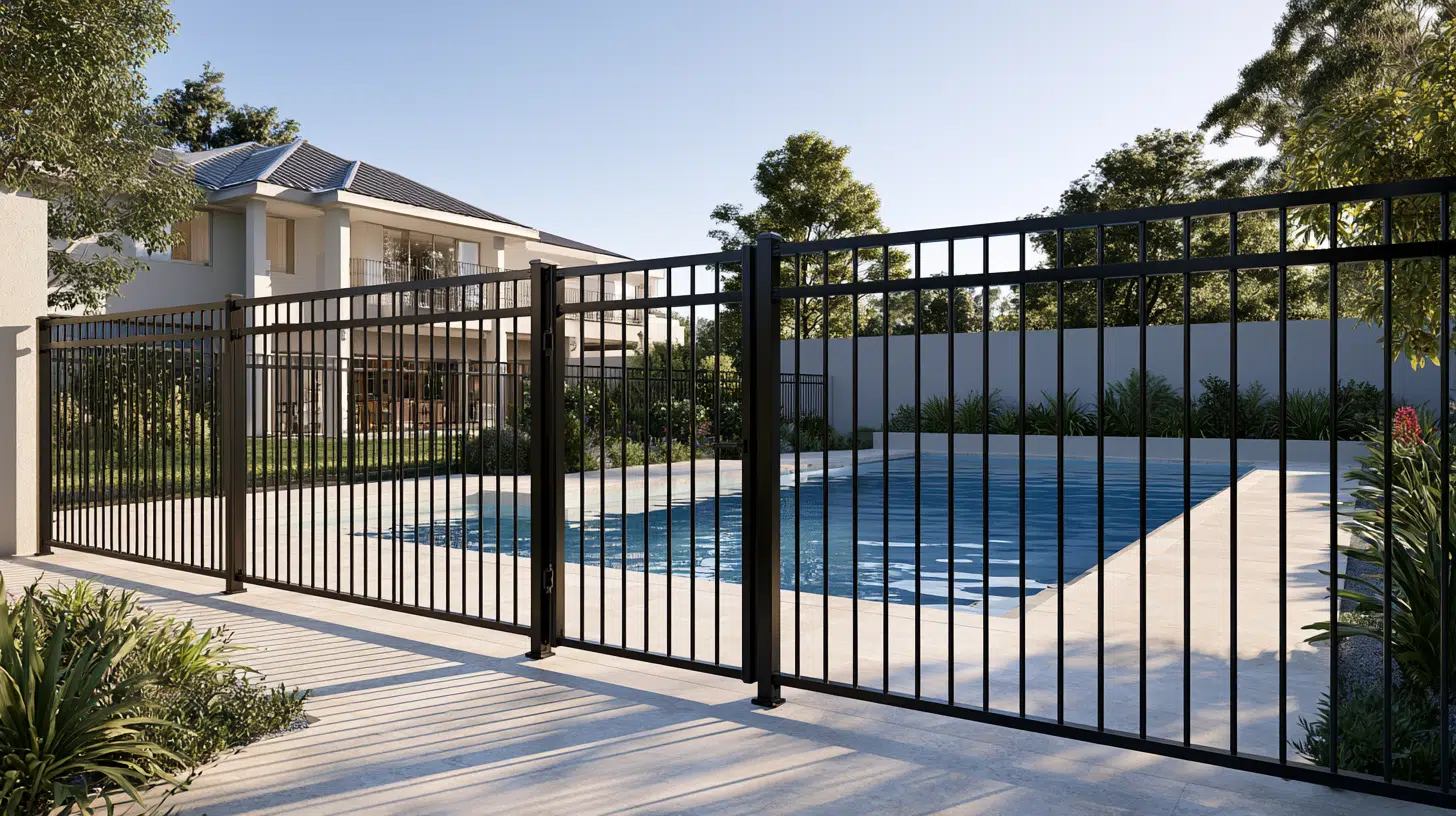
Two kinds: ornamental iron and tight-weave chain link. Iron is what most of our pool customers choose because it keeps the open look — you can see the water from the house, and you don’t feel caged in while you’re swimming. Chain link works as a pool barrier when we order it with a smaller custom mesh so the openings meet the 4-inch rule, and that upgrade is not expensive.
|
Pool safety fence |
Why homeowners choose it |
How we build it |
|
Ornamental iron (most common) |
Open look, affordable, doesn’t feel like a cage from inside the pool |
Galvanized, powder-coated steel panels welded to posts; self-closing, self-latching gate with the latch 60 inches up |
|
Tight-weave chain link |
Lowest cost when looks matter less |
Custom smaller mesh so no opening passes a 4-inch sphere; same gate hardware |
|
Removable mesh pool fencing |
— |
We don’t install it |
Both come with the self-closing, self-latching gate hardware the California pool code calls for. If you only need the gate — say, to close off a side yard that opens to the pool — we hang pool-compliant gates on their own; see our gate installation page.
“Called Fantastic Fence about a month ago for a quote to replace our pool fence and part of our back fence during our pool remodel. Right away they came out for a quote and explained what we wanted and needed to meet any city codes. They weren’t the lowest quote we got but we felt good with the interaction and went into contract. … Even with a last minute change to make sure the corner was high enough they adjusted on the fly and made it look great.”
— Jon Craig, Google review
What Does California Require of a Pool Safety Fence?

A qualifying enclosure must be at least 60 inches high, with no gap that passes a 4-inch sphere, no more than 2 inches between the ground and the bottom of the fence, a climb-resistant outside face, and a gate that opens away from the pool and closes and latches on its own with the latch no lower than 60 inches above the ground. Here is the full list we build to:
|
Requirement |
California standard (HSC §115923) |
|
Minimum fence height |
60 inches |
|
Gate swing |
Away from the pool |
|
Gate operation |
Self-closing and self-latching |
|
Gate latch height |
No lower than 60 inches above the ground |
|
Bottom clearance |
No more than 2 inches |
|
Openings |
Must not pass a 4-inch sphere |
|
Outside surface |
No handholds or footholds a child under five could use to climb |
54 inches vs. 60 inches: the two numbers get mixed up constantly. The 54-inch figure is the release height on a house door that opens into the pool area, measured from the floor. The 60-inch figure is the pool fence gate latch, measured from the ground. They apply to different features.
The fence is one of seven features the state recognizes, and a permitted new or remodeled pool needs two of them — a fence usually counts as one, so you also need a second layer such as door alarms or a safety cover. The full list and the combinations that don’t count are on our page on pool-compliant gates and fences in California. Verified against California Health and Safety Code §115922–115923 (2025 code), October 2026. This is general information, not legal advice; your city’s building official makes the final compliance call.
When Do Homeowners Need Pool Safety Fence Installation?
Usually when something forces the issue: a new pool or a permitted remodel, a house you just bought with questionable fencing around the water, a new baby or grandchild, a gate that no longer closes and latches on its own, or a sale coming up. Failed inspections are rare for our pool fences — we hardly ever see one — but if an inspector flags something on a fence we built, we get it fixed immediately.
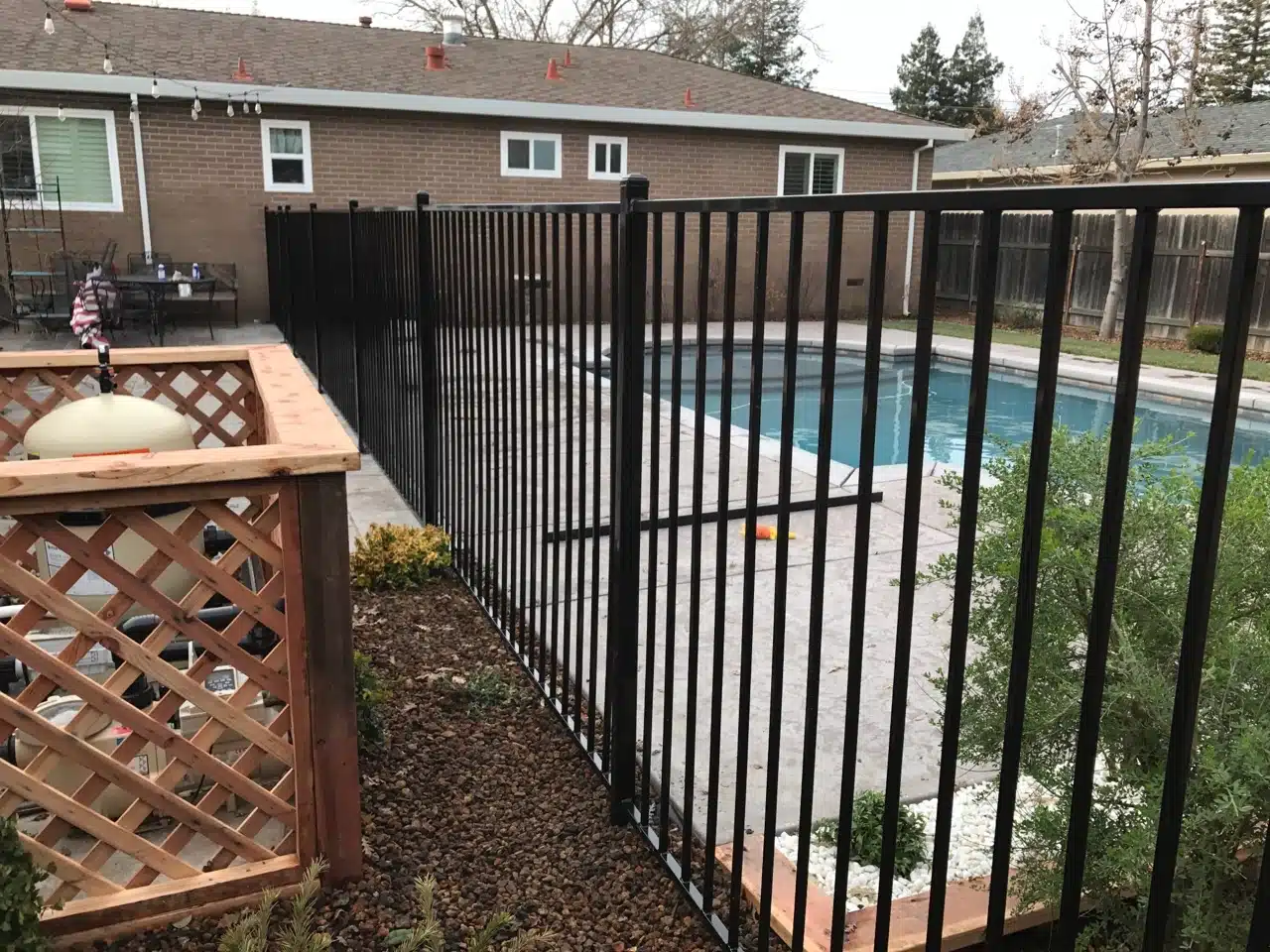
How the pool, the house and the gate relate to each other. On the free estimate our estimator looks at:
- Which doors and windows open into the pool area, and whether the fence can isolate the pool from the house
- The deck, concrete, pavers and soil the posts will go into, and any grade changes that would open a gap under the fence
- Where each gate goes, which way it swings, and where the latch will sit
- Furniture, planters, walls and equipment a child could climb from
- Pool equipment access, drainage and irrigation lines
- HOA rules and the condition of any existing fence
Steve, our co-founder, still runs many of these estimates himself. If you’re at work, we can do the estimate remotely and walk you through it by phone or video.
Should You Repair or Replace an Existing Pool Safety Fence?
Repair when the fence itself is sound and the problem is the gate: worn hinges, a latch that doesn’t catch, a gate out of alignment, or one damaged section — with the height, gaps and climb resistance still intact. Replace when posts or panels lean, the fence is too short or has gaps you can’t close, the layout doesn’t actually separate the pool from the house, the gate swings the wrong way, or repeated gate adjustments won’t hold. Either way, test your gate yourself now and then: let it go from a few inches open and from wide open, and make sure it closes and latches both times.
“Flawless service! Our pool fence was installed in just a few hours and the team of Saul and Aaron clearly have experience with all the little details, some of which we hadn’t even considered until they pointed them out. With their kind guidance and efficiency we now have exactly the fence we needed and it’s even better than we expected.”
— K Hall, Google review
Do You Need a Permit for Pool Safety Fence Installation in Elk Grove?
For a new or remodeled pool, the barrier is part of the pool permit and gets inspected before the pool work is finaled, in Elk Grove and in every other city we serve. A pool barrier is not an ordinary backyard fence, so don’t assume the usual no-permit allowance for fences under 7 feet covers it — confirm the permit path with your city’s building department before you install or change one. Researching the requirements and obtaining the permit is the property owner’s responsibility; we provide drawings and specs for the application and build the fence to meet them. Your HOA may have its own rules on top.
What Does Pool Safety Fence Installation Cost?
It depends on fence length, iron versus chain link, the number and width of gates, what the posts go into (dirt, concrete or pavers), old-fence removal, and how easy it is to work around the pool. Our pool fence cost page walks through the ranges, and the Fence Price Calculator gives you a starting figure for your yard. When we put the scope in writing, it’s flat pricing with zero hidden fees.
Frequently Asked Questions
Can my existing backyard fence count as the pool safety fence?
Sometimes. A perimeter fence can qualify if it meets every requirement in the table above — but if the house opens directly into the pool area, the fence doesn’t isolate the pool from the home, and you’ll need a second feature such as door alarms or a safety cover. Your building official decides.
Does a spa or hot tub need a pool safety fence?
Under California law a “swimming pool” includes any structure holding water more than 18 inches deep, so a permitted new spa or hot tub falls under the same two-of-seven rule.
Can you add a pool-compliant gate to a fence you didn’t build?
Yes. Adding a self-closing, self-latching gate to an existing side yard or backyard fence is one of the most common pool jobs we do.
Can a pool safety fence follow a curved patio or a slope?
Yes. Iron panels can be set to follow a curved deck, and on sloped yards we bias the panels so the 2-inch bottom gap holds along the whole run.
Ready to Schedule Pool Safety Fence Installation?
Whether you’re getting ready for inspection, protecting little ones, or prepping a home for sale, book your free pool safety fence estimate online, or call or text the office nearest you:
- Elk Grove: (916) 345-0142
- Sacramento: (916) 248-5518
- Rocklin: (916) 790-7100
Fantastic Fence is licensed, bonded and insured under CSLB License #979657, with background-checked W-2 crews, flat pricing, zero hidden fees and a written completion guarantee. Financing is available.