A Strong Fence Starts Underground
A strong fence begins long before the first board goes up—it starts underground, where the posts do the quiet work of holding everything steady. This crucial part is easy to forget because homeowners do not see it once the fence is finished, but it is one of the biggest reasons a fence stays straight, secure, and beautiful over time. If you are asking, what depth should wood fence posts be installed? the answer depends on several factors: fence height, soil type, wind exposure, post material, and the purpose of each fence post. For a standard 6-foot privacy fence, most posts are installed about 30 to 36 inches deep, with deeper settings for gate posts, corner posts, end posts, loose soil, high winds, and heavier materials. Proper post depth gives the whole fence confidence. It helps protect your yard, your family, your pets, and the space you come home to every day.
The Simple Answer: How Deep Should Wood Fence Posts Be?

Most wood fence posts are set about one third to one half of the visible post length below the ground. For a 6-foot fence, that often means a post depth of 30 to 36 inches. Some light fences may be set closer to 24 inches, but that should be treated as the bare minimum in many backyard situations. A privacy fence, especially one built with solid fence panels, catches more wind load than an open style. That means the posts need enough depth, concrete, and support to resist movement. The general rule is simple: taller fences need deeper holes, heavier materials need stronger concrete footings, and weaker soil types may require digging deeper. Fence post depth is not only about reaching a number. It is about building a base that fits the fence height, post material, local soil conditions, and wind exposure in the yard.
When Should Fence Posts Be Installed Deeper?
Posts should be set deep when the fence is tall, the soil is loose, the layout includes gates, or the fence faces high winds.
Quick Fence Post Depth Guide by Fence Height
- 4-foot fence: hole depth around 18 to 24 inches
- 5-foot fence: hole depth around 24 to 30 inches
- 6-foot fence: hole depth commonly 30 to 36 inches
- 7-foot fence: deeper digging to 36 to 42 inches may be wise
- 8-foot fence: holes deeper than 36 inches may be needed depending on code, fence height, soil type, and materials
These numbers are helpful planning ranges, not hard rules for every fence project. No two yards are created equal. Sandy soil may not hold posts the same way firm soil does. Clay soil can shift with moisture, expanding and shrinking through the seasons. A good installer looks at the whole yard before setting posts, because proper depth depends on several factors working together.
Why Fence Post Depth Matters So Much
Fence post depth matters because posts are the foundation of the fence. Rails, boards, gates, trim, caps, and fence panels all depend on posts staying straight. When posts are too shallow, a fence may look fine at first, then slowly begin to move. A little lean becomes more noticeable. A gate starts rubbing. The latch stops lining up. The top line begins to wave. Shallow posts can loosen as the soil changes, especially after rain, irrigation, or strong wind. Proper post depth helps the fence resist wind load, soil movement, everyday use, and the weight of the materials attached to it. This is why fence post depth matters for more than appearance. It affects safety, comfort, privacy, and the life of the whole fence. A well-built fence should feel steady when you walk outside. It should make the yard feel calm and cared for, not uncertain.
The Problem With “Good Enough” Fence Installation
A fence can be rushed in ways a homeowner may not notice right away. The post hole can be too shallow. The concrete can be thin. The gravel base can be skipped. The post base can be left where water collects. The posts may not be braced long enough while the concrete sets. On day one, everything may look clean and new. Months later, the problems begin. Good enough underground often becomes frustrating above ground. The difference between a fence that lasts and one that leans can be a few inches of depth, better concrete footings, and more care when setting posts. Those details may be hidden, but they are what turn a fence from temporary looking to built with pride.
How Deep Should Posts Be for a 6-Foot Wood Privacy Fence?

For a 6-foot privacy fence, posts are usually installed about 30 to 36 inches deep. In some yards, a full 36 inches gives better support, especially when the fence is solid, the soil is soft, or the fence line is exposed to high winds. A 6-foot fence often uses an 8-foot post, with 6 feet above ground and the remaining post length placed below ground. Some installers may use shorter posts for certain layouts, but the total height and buried depth still need to support the finished fence. A 6-foot privacy fence acts more like a wall than an open fence. It blocks views, creates comfort, and helps your yard feel private, but it also catches wind. That is why digging deeper is often worth it. Proper post depth gives the fence a stronger base and helps the finished line stay straight through real weather and real life.
Line Posts vs. Gate Posts
- Line posts support the regular sections of a fence.
- Corner posts carry pressure from two directions.
- End posts finish a run and help hold the last section steady.
- Gate posts have the hardest job because they carry weight and movement.
A line post may only need to support rails and boards, but gate posts deal with swinging, pulling, hardware, and daily use. That repeated motion creates significantly more stress. For that reason, gate posts often need deeper holes, stronger concrete, larger materials, or extra support. Terminal posts are also important in certain fence styles, especially chain link fence layouts, because they anchor the ends, corners, and gates. Even though this article focuses on wood posts, the idea is the same with chain link, steel posts, and vinyl posts: the posts with more responsibility need more strength below ground.
What Size Should the Fence Post Hole Be?
Depth is only part of the job. The fence post hole also needs the right width. A common rule is to make the hole about three times the width of the post. For a typical 4×4 fence post, that often means a hole about 10 to 12 inches wide. A hole that is too narrow may not allow enough concrete around the post. A hole that is too wide may waste concrete and disturb more soil than needed. The goal is balanced support. The fence post needs room for concrete to surround it and hold it firmly, while the ground around the footing stays stable. Good hole depth and good hole width work together. When both are right, the posts are better prepared to hold the fence straight.
Why Wider Is Not Always Better
A wider hole can help when a fence post carries extra weight, but bigger is not always better. What matters most is the right combination of depth, width, concrete, and soil conditions. A clean hole with firm sides, a compacted gravel base, and properly placed concrete often performs better than an oversized hole with poor preparation. For a sturdy fence, the installer should think about the soil type, post material, wind load, and fence height before setting posts. That kind of care helps the finished fence feel solid instead of patched together.
Should Wood Fence Posts Be Set in Concrete?
Most residential wood posts for a privacy fence are set in concrete. Concrete helps lock posts in place, keeps them plumb, and gives the fence more resistance against side-to-side movement. This is especially important for 6-foot fencing, gate posts, corner posts, end posts, and areas with high winds. Concrete is not magic by itself, though. It has to be used the right way. The fence post should be straight, the concrete should be properly placed, and the top should be shaped to shed water away from the wood. When concrete is flat or sunken around the post base, water collects where it can cause trouble. That can lead to accelerating rot, insect damage, and early failure. Some concrete products require you to add water after the dry material is placed, while other methods are mixed before pouring. A careful crew follows the right process and does not just pour concrete. They use it to protect the fence.
The Moisture Problem
Wood and trapped moisture do not work well together. When water sits at the base of posts, the materials can break down faster. Concrete should help stabilize the fence, but poor concrete work can hold moisture against the post. That is why proper drainage matters. In Sacramento and nearby communities, winter rain, irrigation, shade, and clay soil can all keep certain parts of a yard damp longer than expected, which are also some of the conditions that explain why fences lean and how to fix them. A good fence is built for the whole year, not just the dry season. The right depth, the right concrete, and the right finish around the post base all help protect the fence.
Gravel at the Bottom of the Hole
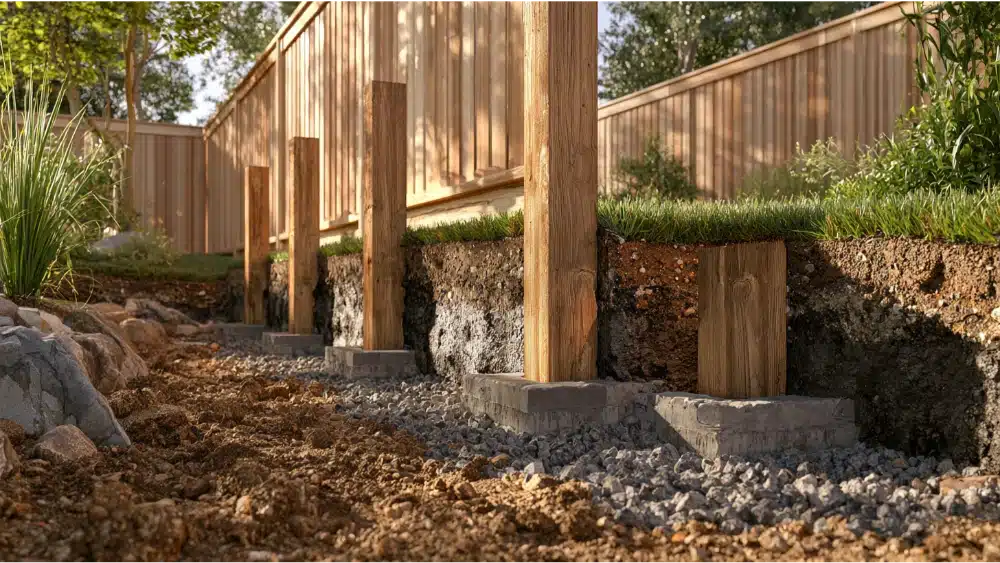
A gravel base at the bottom of the hole can help drainage under the post. This is a small detail, but it matters. If the post needs 30 inches of buried depth and the installer adds 6 inches of gravel, the total hole may need to extend to about 36 inches. The gravel base should be compacted before setting wood posts, so the post has a stable starting point. Some crews use a tamping bar to firm the bottom of the hole and help the materials settle properly. These details are not fancy, but they are part of good craftsmanship.
What Type of Wood Post Should Be Used Underground?
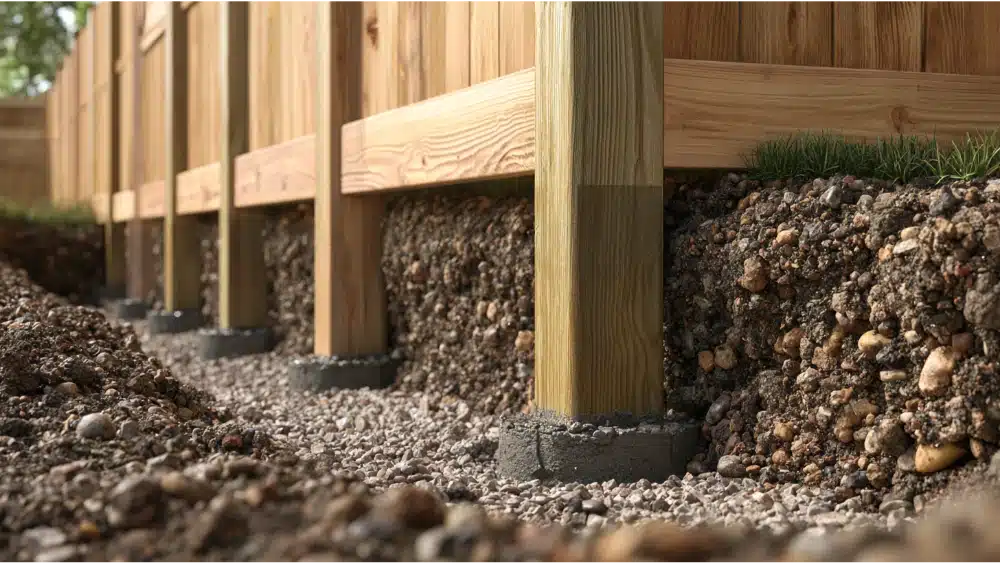
The post material matters as much as the depth. Buried wood posts should be rated for ground contact. Regular untreated wood should not be buried, and above-ground rated materials are not the same as ground contact materials. Pressure treated posts are commonly used because they are made to handle moisture, soil, and insects better than untreated wood. The visible boards may be cedar, redwood, or another attractive wood, but the structural posts need to be chosen for strength. In areas with termite pressure, insect damage is a real concern. The best fence starts with materials that match the job. When posts touch soil, ground contact protection is not a luxury—it is part of building responsibly.
Ground Contact Rated Pressure Treated Posts
Pressure treated posts are often the practical choice for a wood fence because the posts are the parts most exposed to soil and moisture. Ground contact rated posts are made for that condition. That does not mean every board in the fence must be the same material. It means the post material should be selected for the hardest part of the job. Some homeowners ask about steel posts as an alternative. Steel posts can offer strength and long life when designed into the fence correctly. Other homeowners compare wood posts, steel posts, and vinyl posts because they want less maintenance, and they also think about the best fasteners for wood fence installation to support long-term durability. Each option has different materials, installation methods, and appearance. For a warm, natural look, wood remains a favorite, but it needs proper post depth and the right post material underground.
Sacramento Soil, Wind, and Weather: Local Factors That Affect Post Depth
Many national articles focus heavily on the frost line. In colder areas, the frost line matters because posts may need to extend below frost depth to prevent frost heave. Frost heave happens when freezing soil lifts or shifts the ground around posts. In Sacramento, the frost line is not usually the main concern the way it is in colder regions. That does not mean depth is less important. It means the reasons are different. Local soil conditions, wind load, drainage, clay heavy soil, and termite exposure matter more for many Sacramento fence projects. A 6-foot privacy fence in a yard with open wind exposure may need stronger setting than a shorter fence protected by landscaping. If the soil is loose, digging deeper may help. If the yard has poor drainage, the post base needs extra care.
Why Frost Line Advice Can Be Confusing
Online advice often says posts must go below the frost line. That is true in places where frost depth is a major building concern. It is less helpful when the local frost line does not drive the design. Sacramento homeowners still need strong posts, but the focus is usually wind, soil, drainage, and materials. Frost heave is a real issue in cold climates, and the way to prevent frost heave is to place posts below the frost depth and protect the concrete footings from movement. Here, the better question is not only how deep is the frost line. It is what depth gives this fence enough strength for this yard.
Why Drainage Still Matters in a Warm Climate
Warm weather does not mean dry ground all year. Water can collect near sprinklers, downspouts, shaded areas, low spots, and clay soil. When water collects around posts, it can weaken the base and shorten the life of the materials. A post that is too shallow and poorly drained has less protection against movement and decay. A post that is deeper, properly set in concrete, and finished to shed water has a much better chance of staying straight. Frost line concerns may be lower here, but drainage and soil type still matter.
How Fence Height and Style Change Post Depth

Fence height is one of the biggest factors in post depth. A 4-foot decorative fence does not place the same demand on posts as a 6-foot privacy fence. The taller the fence, the more leverage wind can place on the posts. Solid fence panels also increase wind load because air cannot pass through them easily. A horizontal fence may need careful spacing and strong line posts because clean lines show movement quickly. A chain link fence handles wind differently because it is more open, but chain link still depends on strong terminal posts, corner posts, and gate posts. Steel posts are common in some chain link layouts because the materials and design are different from a traditional wood privacy fence. No fence style should be treated as one size fits all.
Privacy Fences Need More Strength Than Open Fences
A privacy fence gives a yard comfort. It blocks views, softens the feeling of exposure, and creates a space that feels more like home. But a 6-foot privacy fence also catches more wind than an open design. That means the posts need enough depth, enough concrete, and enough support to handle the pressure. If the fence is built in an open area, near a corner, or along a long straight run, high winds can push against it repeatedly. Proper post depth helps the fence stand up to that pressure without leaning.
How Gate Posts Should Be Installed Differently
Gate posts should be treated with extra care. A gate is a moving part, not just another section of fence. It swings, carries hardware, and gets used every day. That movement puts more stress on the posts. If gate posts are too shallow, the gate may sag, drag, or stop latching correctly. For a 6-foot wood gate, deeper concrete footings and stronger posts are often a smart choice. Gate width, gate weight, hardware, wind load, and soil type all affect the final depth. This is where professional judgment matters. Setting posts for a gate is not the place to cut corners.
Signs a Gate Post May Not Be Deep Enough
- The gate rubs the ground
- The latch no longer lines up
- The gap changes
- The post leans toward the opening
Sometimes the hardware can be adjusted, but sometimes the post itself is moving. If many posts along the same fence line also lean, the issue may be bigger than one gate. It may point to shallow depth, weak concrete, poor drainage, or old materials reaching the end of their life.
Do You Need a Permit for Fence Post Depth?
Post depth itself is usually not what triggers a permit. Fence height, location, front yard placement, corner visibility, pool safety, retaining walls, and local rules are more likely to matter. Still, depth requirements can be affected by the type of fence, the height, and the conditions around the property. A standard backyard fence may be simple, while a taller fence or special location may need more review. Before starting a fence project, it is wise to check local rules and property line details. A beautiful fence should bring peace of mind, not questions later.
Front Yard and Corner Lot Rules Can Be Different
Front yard and corner lot fences often have different rules because visibility matters near sidewalks, driveways, and streets. Even if the posts are installed at the right depth, the fence still needs to fit the property location. A short front fence, a 6-foot backyard fence, and a chain link fence near a side yard may all be treated differently. The safest approach is to confirm the rules before digging.
Call 811 Before Digging Fence Post Holes
Before digging any fence post hole, the safe step is to contact 811. Utility lines can run through places homeowners do not expect. A fence project may seem simple, but digging holes for posts still means opening the ground. Marking the area before digging protects the home, the crew, and the neighborhood. It is one of those small steps that shows care before the work begins.
A Small Step That Protects Your Home
A good fence should start safely. Calling 811 is not about slowing the project down. It is about making sure the digging happens with confidence. Whether the project uses wood posts, steel posts, or a chain link fence layout, the first step is knowing what is below the ground before the first hole is opened.
Common Mistakes That Lead to Leaning Wood Fence Posts
Leaning posts usually come from a few common mistakes: the hole may be too shallow; the concrete may be weak or poorly shaped; the wrong materials may have been used; the post base may trap moisture; the installer may not have braced the posts while the concrete cured; gate posts may have been treated like line posts even though they carry much more movement. Industry standards exist because these details matter. A fence built with care underground has a better chance of staying beautiful above ground.
Mistake 1: Digging Too Shallow
Digging too shallow is one of the most common reasons a fence starts to lean. The posts may stand for a while, but over time, wind, rain, and soil movement can loosen them. Digging deeper gives the fence more grip and stability.
Mistake 2: Using the Wrong Wood
Not all wood is made for the same job. Boards that look beautiful above ground may not be the right materials below ground. Buried posts need to resist moisture, insect damage, and decay.
Mistake 3: Skipping Drainage
Drainage is easy to miss because it disappears once the post is set. But when water collects around posts, problems can start. A gravel base, well-shaped concrete, and careful grading help the fence shed water instead of holding it.
Mistake 4: Not Bracing Posts While Concrete Sets
Posts need to stay straight while concrete sets. If they shift early, the whole fence line can show it later. A careful installer checks the posts, braces them, and gives the concrete time to hold.
Mistake 5: Treating Gate Posts Like Line Posts
Gate posts need more strength than ordinary line posts. They carry movement, weight, and stress. Setting posts for gates with extra care helps prevent sagging and dragging later.
How to Know If Your Existing Fence Posts Are Too Shallow
You may not know the exact depth of your existing posts, but the fence can give you clues: if it leans after wind or rain, the posts may not be deep enough; if a post moves when pushed, the footing may be loose; if concrete is cracked or rising, the base may be failing; if the gate no longer closes smoothly, the gate posts may be shifting; if the fence line waves, many posts may be affected — all signs that fence post replacement might be needed. Shallow posts do not always fail right away. They often fail slowly, which is why the yard can go from secure to stressful over time.
Repair or Replace?
One loose post may be repairable. A single gate post may be reset. But if many posts are leaning, rotted, or unstable, replacement may be the better long-term choice. A new fence gives you the chance to correct the depth, improve the materials, add stronger concrete, and build a cleaner line from the start.
Professional Installation vs. DIY: What Homeowners Should Consider

A small DIY project can be a good fit for a handy homeowner, especially if the fence is short and the soil is easy to work with. A full backyard fence project is different. Long runs, gates, slopes, shared property lines, clay soil, sandy soil, tree roots, and high winds all add complexity. A professional crew understands how depth requirements change from one yard to another. They know when digging deeper is smart, when a gate needs extra support, and when the soil type calls for a different approach, which is why it is important to know what to look for when hiring a fence contractor. The goal is not just to install posts. The goal is to build a fence that makes the yard feel finished, private, and secure.
What a Well-Installed Fence Should Feel Like
A well-installed fence should feel settled. It should stand straight, hold its gates properly, and make the yard feel cared for. It should not leave you wondering what will happen after the next storm. From worn and wobbly to strong and steady, the transformation begins below ground with proper post depth, thoughtful materials, and careful workmanship.
FAQs About Wood Fence Post Depth
How deep should a wood post be for a 6-foot fence?
For a 6-foot fence, a post is usually installed about 30 to 36 inches deep. Some lighter fences may use less depth, but a solid privacy fence usually benefits from deeper support.
Is 2 feet deep enough for fence posts?
Two feet can be enough for some short or light fences, but it may not be enough for a 6-foot privacy fence, especially with wind exposure, heavy materials, or soft soil.
Should posts be set in concrete or dirt?
Most residential privacy fence posts are set in concrete because concrete gives the fence more stability. Dirt alone may not provide enough support for taller fences or gates.
How much gravel should go under a fence post?
Many installers use about 6 inches of gravel at the bottom of the hole. The gravel helps with drainage and gives the post a more stable base before concrete is added.
Do posts need to go below the frost line?
In cold climates, posts often need to extend below the frost line to help prevent frost heave. In warmer areas, the frost line may be less important, but depth, drainage, wind, and soil still matter.
How deep should gate posts be?
Gate posts often need to be deeper and stronger than line posts because they carry weight and movement. A 6-foot gate may need deeper concrete and stronger materials than a regular fence section.
What kind of materials should be used for buried posts?
Buried posts should use materials rated for ground contact. Pressure treated posts are common for wood fencing, while steel posts may be used in some designs and chain link layouts.
Why do some fences use steel posts instead of wood posts?
Steel posts can add strength and resist some forms of decay. Some homeowners like them for durability, while others prefer the natural look of wood posts. The best choice depends on the fence style, budget, and desired appearance.
Is chain link post depth different from wood fencing?
A chain link fence often uses steel posts, terminal posts, and concrete footings. Chain link layouts may have different spacing and depth requirements, but the same basic idea applies: stronger posts and deeper settings are needed where the fence carries more stress.
Final Answer: The Best Depth for Wood Fence Posts
The best depth for most posts is about one third to one half of the above-ground post length. For a 6-foot privacy fence, that usually means 30 to 36 inches deep. Gate posts, corner posts, terminal posts, end posts, taller fences, sandy soil, clay soil, high winds, and heavier materials may call for deeper holes, stronger concrete footings, or extra support. The hole should usually be about three times the width of the post, with a stable gravel base when needed and concrete shaped to shed water. The right depth helps protect the fence from leaning, movement, moisture problems, and early failure. Your yard deserves a fence that feels steady, looks beautiful, and stands with confidence. Let’s build something strong together.