
When homeowners ask, “what type of posts are used for chain link fence installation,” they are really asking what makes a chain link fence strong, straight, and secure. The answer starts below ground, with the right post in the right hole, set with care.
Why Fence Posts Matter in Chain Link Fence Installation
Fence posts carry the strength of the whole chain link fence. They support the chain link fabric, top rail, tension wire, gate, and chain link mesh. A good link fence depends on solid post holes, proper concrete, correct spacing, and careful installing.
The Main Types of Posts Used in Chain Link Fencing
The main chain link fence posts are:
- Line posts
- Terminal posts
- End posts
- Corner posts
- Gate posts
- Sometimes pull posts
Line posts, also called intermediate posts, support straight sections. Terminal posts anchor the fence at ends, corners, and gate openings.
Line Posts
Line posts run along the fence line and support the top rail and mesh. On a standard 5- or 6-foot chain link fence, line posts are typically 1⅞-inch tubing, spaced every 10 feet. These intermediate posts are spaced evenly so the chain link mesh does not sag. When installing a chain link fence, crews dig each hole with a post hole digger, place the post, check it with a post level, and fill the hole with concrete.
Terminal Posts
Terminal posts are the stronger anchor posts in a chain link fence. Terminal posts include end posts, corner posts, and gate posts. On a standard 5- or 6-foot fence, terminal posts, also called tension posts, are typically 2⅜-inch tubing, placed every 100 feet as well as at every corner, end, and gate. They hold the pull created when the chain link fabric is stretched tight with a tension bar, stretcher bar, come along, or fence puller. Terminal posts often use tension bands, brace bands, rail ends, and post caps.
End Posts
An end post is used where the fence begins or stops. The end post may sit near a house, driveway, or property lines. Installers attach tension bands to the end post, slide a tension bar through the mesh, and secure the chain link fabric so the link fence stays tight.
Corner Posts
Corner posts are used where the fence changes direction. End and corner posts need strong concrete because they handle pull from different angles. A few inches of poor alignment can make the whole fence look uneven.
Gate Posts
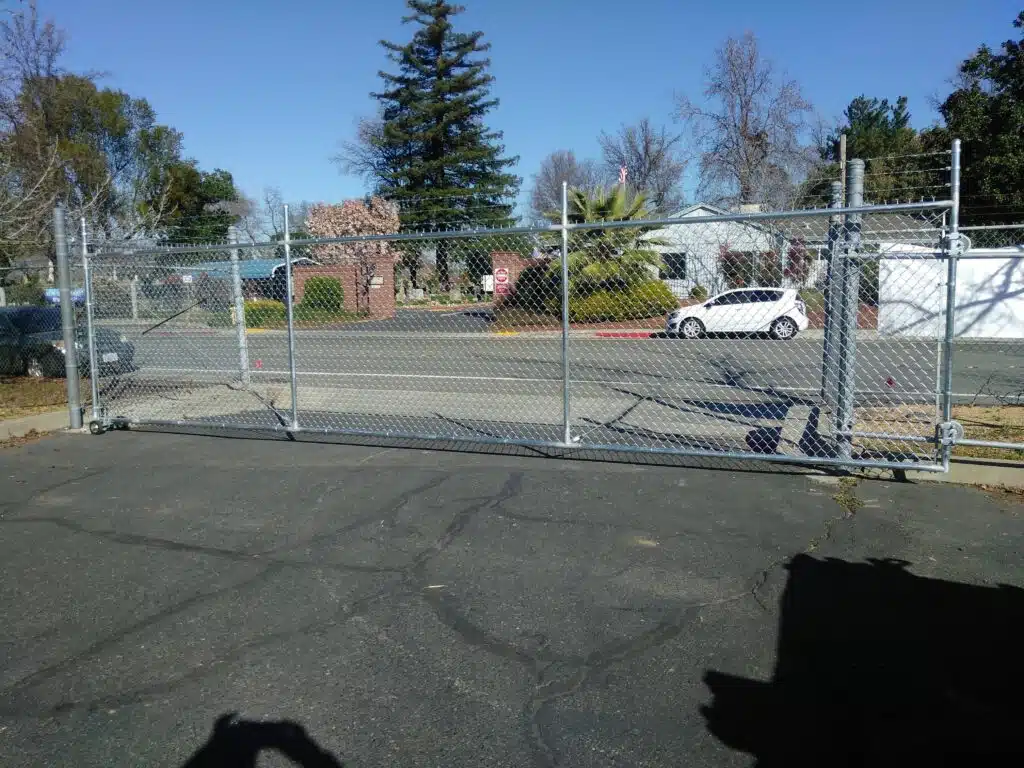
Gate posts support the gate and chain link gates. Because a gate opens, closes, and carries weight, gate posts often need a larger diameter, deeper hole, and more concrete. Gate openings must be measured carefully so the gate can hang at the correct height. A top male hinge, latch, and frame must line up cleanly.
Pull Posts
Pull posts help on long fence runs or uneven ground. They give the installer a strong place to stretch the wire and mesh. A fence puller, come along, stretcher bar, and tension bar help pull the chain link fabric tight before it is attached.
How Fence Height and Privacy Slats Change Post Size
The right post size depends on two things: how tall and heavy the fence is, and whether anything, like privacy slats, adds wind resistance.
On a traditional 5- or 6-foot chain link fence, 1⅞-inch line posts spaced every 10 feet, with 2⅜-inch tension posts every 100 feet and at every corner, end, and gate, is the standard setup.
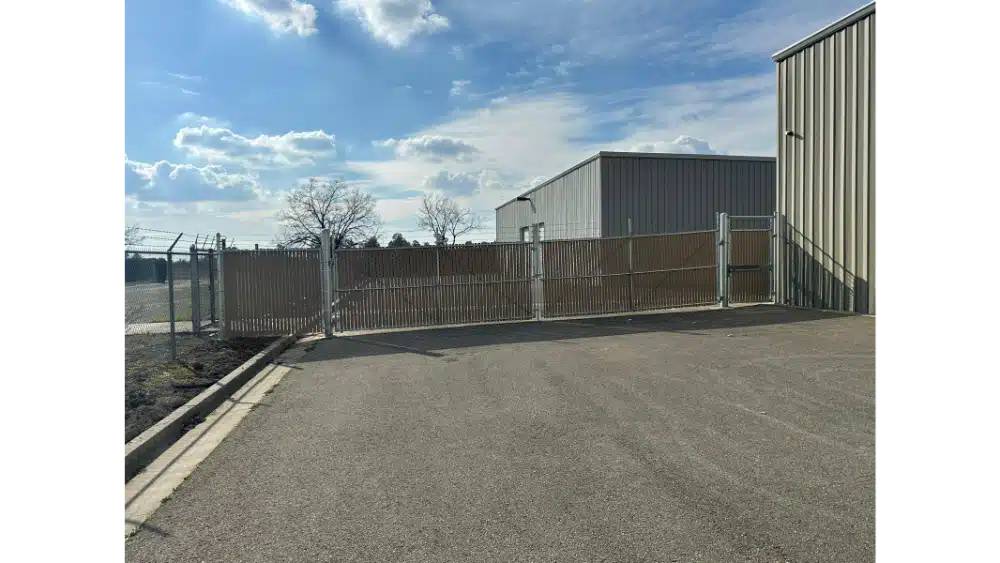
Privacy slats change that math. Slats turn an open chain link fence into a solid surface that catches the wind like a sail, and that added wind load puts far more stress on every post. When a fence has privacy slats, all the posts need to step up to 2⅜-inch, with tension posts stepping up further to 2⅞-inch. The fence didn’t get taller, but it got a lot more demanding, and the posts have to be sized for that extra force.
A shorter fence with no privacy slats, such as a 4-foot chain link fence in a front yard, can scale down. That fence can run 1⅞-inch line posts with 2⅜-inch tension posts, since there’s less fabric and less leverage at that height.
An 8-foot fence follows the same logic as a slatted fence: all 2⅜-inch posts with 2⅞-inch tension posts. The extra height means more fabric, more weight, and more wind load, so the posts beef up accordingly.
It’s Not Just the Size, It’s the Wall Thickness
A post’s strength isn’t just about its diameter. It’s about the thickness of the steel walls of the post. Two posts can measure the exact same outside diameter and have completely different strength depending on how thick the steel is.
A structural-steel-strength post is the baseline for a solid, reliable fence. Stepping up to schedule 40 thickness is a real upgrade: schedule 40 is heavier-walled pipe, meaning more steel in the wall of the post itself. That thicker wall resists bending, dents, and corrosion better and gives a noticeably stronger, longer-lasting post, even at the same diameter.
When comparing quotes, post size alone doesn’t tell the whole story. A 2⅜-inch structural post and a 2⅜-inch schedule 40 post look identical from the outside, but the schedule 40 has more steel where it counts, which can be the difference between a fence that holds up and one that starts leaning years too early.
What Are Chain Link Fence Posts Made Of?

Most chain link fence posts are steel. Galvanized steel posts resist rust and work well for many residential fence installation projects. Powder-coated steel is common for black chain link because it matches the mesh and gives the fence a cleaner look.
Residential vs. Commercial Posts
A residential chain link fence may use lighter posts than a commercial link fence. A taller fence, wider gate, privacy slats, or added barbed wire may require stronger terminal posts, larger post diameter, heavier rail, and more concrete, and failing posts may call for professional fence post replacement. T posts may appear in some temporary or specialty setups, but most permanent chain link fence posts are round steel posts.
How Post Size Affects Fence Strength
Post size matters. Line posts support the top rail and mesh, while terminal posts handle greater pull. Gate posts carry movement every day. A pipe cutter may be used to cut rail or post material to the correct length, and bolt cutters may trim wire or mesh.
How Deep Should Chain Link Fence Posts Be Set?
Post depth depends on fence height, soil, gate size, and ground conditions. Terminal posts and gate posts are often set deeper than line posts. A few inches of gravel may be added before concrete. Crews fill each hole, check ground level, and keep the post straight while the concrete sets.
Post Spacing for Chain Link Fences
Good spacing keeps a chain link fence steady. Line posts should not be too far apart, or the mesh can sag and the top rail may feel weak. Loop caps go on line posts to carry the top rail. Post caps cover terminal posts. Rail ends connect the top rail to terminal posts with brace bands.
Chain Link Fence Posts for Different Yard Needs
For pets, strong line posts, terminal posts, tension wire, bottom wire, fence ties, and hog rings help keep the mesh secure near the ground, and rural properties may also benefit from specialized agricultural fence solutions. For pools, gate openings and latch placement matter. For slopes, a bias cut in the chain link fabric may help the fence follow the ground cleanly.
Common Mistakes With Chain Link Fence Posts
One common mistake is treating every post the same. Line posts, terminal posts, end posts, corner posts, and gate posts all do different jobs. Another mistake is digging a shallow hole or skipping enough concrete. Some projects also miss post caps, loop caps, rail ends, brace bands, tension bands, fence ties, or a temporary tension band during layout.
How Fantastic Fence Chooses the Right Posts for Your Yard
At Fantastic Fence, we look at the full site before installing. We consider the fence line, soil, slope, gate openings, fence height, and how your family uses the space. Homeowners who are ready to get started can request a free fence installation estimate. Then we choose the right line posts, terminal posts, gate posts, corner posts, rail, mesh, wire, tension bands, and fittings for a secure fence project.
Frequently Asked Questions (FAQs)
What type of posts are used for chain link fence installation?
The main posts include line posts, terminal posts (end, corner, gate posts), and sometimes pull posts. Line posts support the fence fabric along straight sections, while terminal posts anchor corners, ends, and gates; you can see examples of these in our fence installation gallery.
How far apart should chain link fence posts be spaced?
On a standard 5- or 6-foot fence, line posts are spaced every 10 feet, with tension posts placed every 100 feet as well as at every corner, end, and gate. Closer spacing may be needed for increased wind loads or when privacy slats are added.
What size posts does a chain link fence need?
It depends on the fence’s height and whether it has privacy slats. A standard 5- or 6-foot fence typically uses 1⅞-inch line posts and 2⅜-inch tension posts. Adding privacy slats or building to 8 feet tall calls for stepping up to 2⅜-inch line posts and 2⅞-inch tension posts, since both slats and extra height add significant wind load.
What’s the difference between structural steel and schedule 40 posts?
Both refer to wall thickness, not diameter. Structural steel is the minimum standard for a solid, reliable fence. Schedule 40 is a heavier-walled pipe with more steel in the post itself, which resists bending, dents, and corrosion better and typically lasts longer, even at the same outside diameter.
How deep should chain link fence posts be set?
Line posts are usually set 24 to 27 inches deep, while terminal and gate posts are set deeper, often 30 inches or more, to handle greater tension and weight.
What materials are chain link fence posts made from?
Most posts are made from galvanized steel for rust resistance. Powder-coated steel is common for black chain link fences to match the mesh and improve appearance, and flexible fence financing options can make these upgrades more budget-friendly.
What are tension bands and how are they used?
Tension bands are metal bands attached to terminal posts to fasten the tension bar, securing the chain link fabric tightly to the post.
How do I ensure my fence posts are installed straight and secure?
Use a string line and level during installation to keep posts aligned and plumb. Filling holes with concrete and allowing it to cure fully adds stability while the overall design should coordinate with your broader backyard fence design goals.
Conclusion
Choosing the right type of posts and installing them correctly is essential for a strong, durable chain link fence. The right post comes down to matching size and wall thickness to the job: standard posts for a typical 5- or 6-foot fence, everything stepped up once slats or extra height are added, and structural steel as the baseline with schedule 40 available for those who want maximum strength and longevity. Size handles the load; wall thickness handles the years.