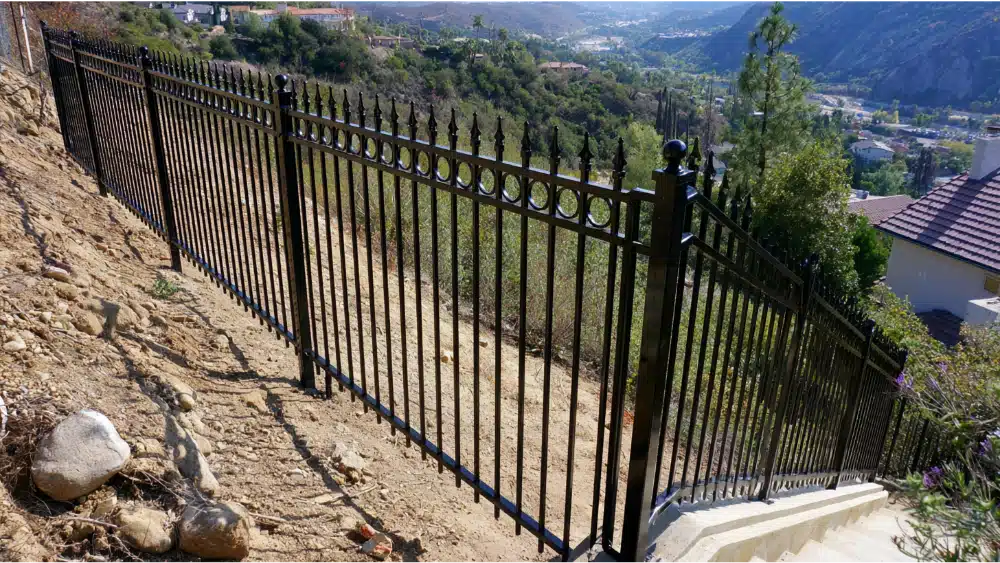
A sloped yard can make a fence project feel a little uncertain at first. You may wonder if the finished fence will look uneven, leave large gaps near the ground, or make your yard feel less polished than you hoped. The good news is that a beautiful metal fence can absolutely work on a hill when the right installation method is used.
So, how are metal fences installed on sloped terrain? Most projects use two primary methods: racking or stair stepping. The right approach depends on the slope, the panel style, the material, the grade, and how your family uses the yard.
Why Sloped Terrain Needs a Different Fence Installation Approach
Installing on flat ground is much different from installing on sloped terrain. A sloped yard has elevation changes, uneven terrain, and uneven ground that can affect the fence line, posts, rails, gates, and overall appearance.
That is why proper post placement matters so much. The installer has to measure the slope, plan the line, check the ground, and make sure the fence fits the property instead of fighting against it.
A strong installation protects structural integrity, durability, and curb appeal. It also helps the finished fence feel like it belongs there.
Common Challenges With Sloped Fence Installation
Common challenges include large gaps under the panel, changing grade, steep inclines, difficult gates, and uneven post spacing. The installer also has to think about horizontal distance, panel length, concrete depth, code requirements, and how the rails angle across the slope.
Without a thoughtful plan, the job can look unfinished. With the right materials and careful installing, the result can feel clean, secure, and built to last.
The Two Main Ways Metal Fences Are Installed on a Slope
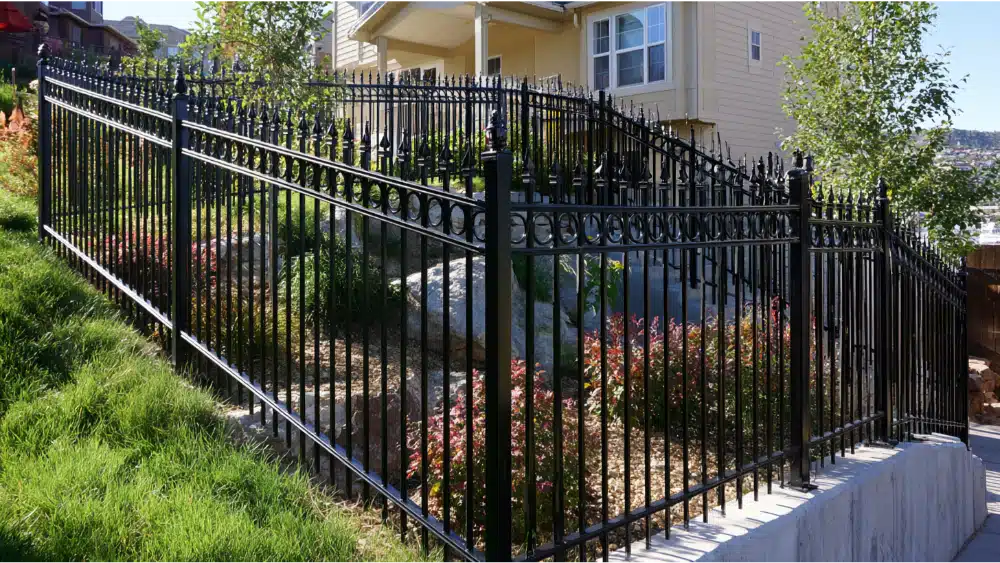
There are two methods used most often: racking and stepped fences. These primary methods help the fence respond to the slope while keeping posts plumb and secure.
Method 1 | Racked Metal Fence Installation
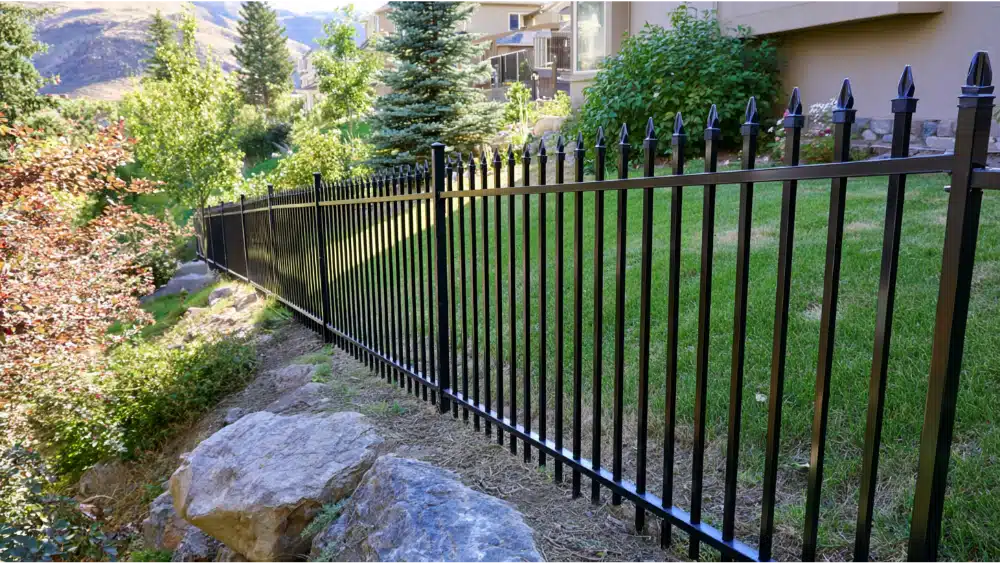
Racking means the panel follows the slope of the ground. The posts stay straight, while the rails and pickets adjust at an angle. This creates a smooth, flowing look across the terrain.
Racking is often a smart choice for moderate slopes because it helps reduce gaps and keeps the bottom of the fence closer to the yard.
How Racked Metal Fence Installation Works
The installer marks the fence line, measures the grade, checks the spacing, sets posts in concrete, and attaches rackable fence panels at the needed angle.
With racking, the rails angle with the terrain while the pickets stay evenly arranged. This creates consistent spacing and a cleaner finished line. In many cases, an aluminum fence is one of the best options for this type of installation.
Best Types of Metal Fences for Racked Installation
An aluminum fence is often a strong fit for racking because many styles are made to adjust with the slope. This makes it easier to install aluminum fence sections on uneven ground without leaving the yard looking choppy.
Chain link can also work well because it is flexible. Some ornamental iron styles can rack too, but a welded solid panel or rigid welded design may need a different installation method.
Pros of Racked Metal Fencing
Racking follows the land naturally. It helps reduce triangular gaps, creates a smoother appearance, and makes the fence feel custom to the property.
For homeowners with pets or children, this can make a big difference. Fewer gaps can help the yard feel safer and more complete.
Limits of Racked Metal Fencing
Racking has limits. A steep slope may require shorter fence panels, adjusted post spacing, or field modification. Some rigid panels simply cannot bend enough to match the grade.
When the slope is too steep or the panel cannot adjust, stair stepping may make more sense, and understanding the tradeoffs between stepped and sloped fence styles can help you decide what will look and function best.
Method 2 | Stepped Metal Fence Installation
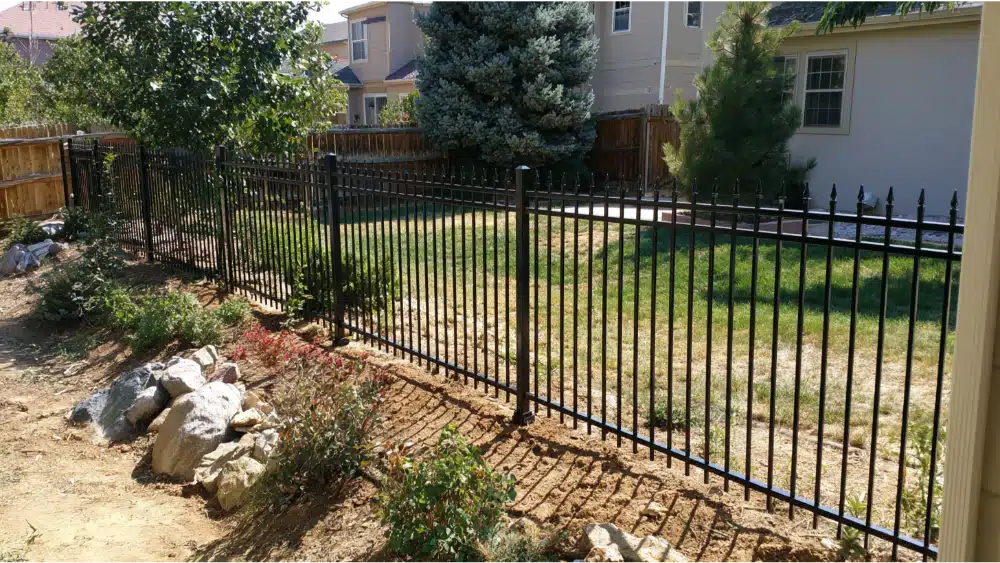
Stepped fences use level sections that move down the slope in steps. Each panel stays level, while posts are installed at different heights.
This creates a more structured look. It is common with ornamental metal, iron-style fencing, and rigid panel designs.
How Stepped Metal Fence Installation Works
The installer sets the upper post and lower post to match the change in grade. The panel stays level between the posts, then the next section drops at the lower end.
This method works well when the panel is welded, rigid, or designed to stay square.
When Stepped Fencing Is the Better Choice
Stepping is often the better choice for steep inclines, formal designs, and panels that cannot rack. It is also helpful when the rails must stay straight and the pickets need to remain even from top to bottom.
Pros of Stepped Metal Fencing
Stepping protects the shape of the panel. It keeps each section level and creates a clean, orderly look across the slope.
For certain homes, especially those with a formal front yard or decorative fence style, this can be the right approach.
Possible Drawbacks of Stepped Metal Fencing
The main drawback is gaps. Stepped sections can leave triangular gaps on the uphill side or near the lower end of the panel.
These gaps may need to be reduced with adjusted spacing, added pickets, small grading changes, or a custom solution.
Racked vs. Stepped Metal Fences: Which Is Better?
The difference comes down to the slope, material, and goal of the project. Racking usually creates a smoother look and fewer gaps. Stepping is usually better for steep ground or rigid panel styles.
Choose Racked Fencing If
Choose racking if your sloped yard has moderate slopes, your aluminum fence can adjust, and you want the bottom line to follow the ground more closely.
Racking is also helpful when you want the fence to feel soft, natural, and connected to the landscape.
Choose Stepped Fencing If
Choose stepping if the slope is steep, the panel is rigid, or the design should stay level. This method helps maintain structural integrity when racking is not possible.
How Professional Installers Prepare a Sloped Yard
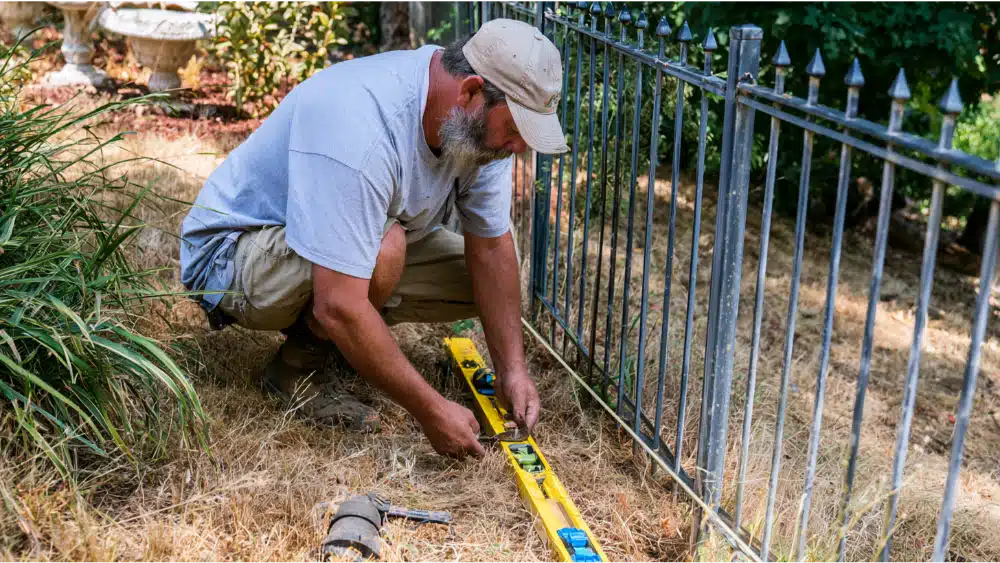
Good installing starts with a careful plan. Before digging, the installer should walk the property, measure the slope, check the soil, and decide on the right installation method.
Inspect the Slope and Soil
The installer checks uneven ground, drainage, roots, rocks, and soft spots. This helps determine where posts should go, how deep they should be set, and where concrete will provide the best support.
Plan the Fence Line
A clear fence line helps every post, panel, gate, and corner land in the right place. On a sloped yard, the line guides the full installation and helps prevent awkward transitions.
Measure Post Spacing Carefully
Spacing may need to be adjusted on a slope. With racking, the panel shifts at an angle, which can affect how far apart the posts should be. The more significant the slope, the more spacing typically needs to change on steeper terrain. Adding more posts and shortening the sections between them, the runs where the chain link mesh or iron panels are secured, gives the fence more anchor points to follow a dramatic grade cleanly, keeps each panel manageable, and reduces the leverage working against any single post.
Consistent spacing helps the fence look balanced and intentional.
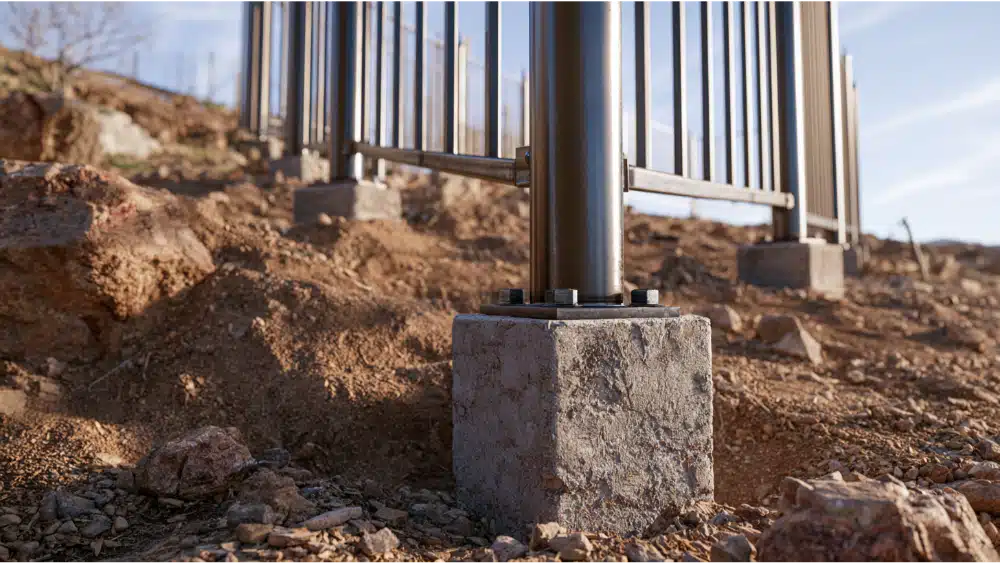
Set Strong, Plumb Posts
Posts must remain plumb even when the panel angles with the grade. The single most important rule on a slope: every post is set perfectly vertical — never leaned to follow the hill. A post angled to “match” the slope looks wrong the moment you step back from it, and it’s structurally compromised, since gravity and wind load are constantly working to pull a leaning post further over. The posts stay vertical, and it’s the fence sections — racked or stepped — that adapt to the grade, not the posts.
Footing depth also has to scale with the fence. The baseline rule is a footing depth equal to roughly one-third the height of the fence, so a 6-foot fence gets about a 2-foot-deep footing, with taller fences going deeper. The logic is leverage: the taller the fence, the more force wind and impact put on the post, so the footing has to scale up to resist it.
On a hillside, that baseline often isn’t enough. When a post sits on a significant slope, and especially right on an edge where the ground falls away, footings typically need to go deeper, down to 3 feet as a baseline. That’s because a concrete footing gets its holding strength from soil packed solidly around it on all sides — on the downhill edge of a slope, the ground falls away on the low side, leaving less earth bracing that side of the footing. That’s the weak direction, and it’s exactly where wind load wants to push the fence. Going deeper puts more of the footing into solid, undisturbed soil below the slope line, restoring the bracing the post needs. In high-wind conditions, that extra depth is often the difference between a fence that holds and one that starts to lean.
Install Panels With the Right Grade Clearance
A panel should not drag on the ground. The installer leaves enough clearance for durability while still working to reduce gaps. Looking at a variety of real-world fence installation projects can give you a sense of how this balance looks on different types of slopes.
This is where experience matters. The right balance helps the fence look clean and perform well.
What About Gates on Sloped Terrain?
Gates need extra planning on sloped terrain. They must open, close, and latch without dragging. Sometimes the best location for gates is a flatter part of the yard, and choosing between a swing gate or a slide gate can also depend on how that slope affects clearance and space.
Why Gate Placement Matters
A gate gets used often, so it needs to feel smooth and safe. On a slope, poor placement can create stress, uneven gaps, and hardware problems. Using a welded steel frame for your gate can also add strength and help it stay square over time even when the terrain is challenging.
Good placement makes the whole job feel easier and helps the finished fence work better day after day.
Best Metal Fence Materials for Sloped Yards
The right materials make installing easier and help the finished fence look better, whether you are comparing chain link vs. wood fences or looking at different metal options.
Aluminum Fencing
An aluminum fence is a popular choice for a sloped yard because many aluminum fence styles allow racking. Aluminum fence panels are durable, clean-looking, and well suited for decorative areas, pools, front yards, and side yards.
Ornamental Steel or Iron-Style Fencing
Steel and iron-style fences offer strength and beauty. If the panel is welded or rigid, stepping may be needed instead of racking.
Chain Link Fencing
Chain link is flexible and practical. It can follow uneven terrain well and is often used for pets, side yards, utility areas, and security spaces. Over time, paying attention to soil conditions and drainage can also help prevent issues like leaning or shifting fences on sloped ground.
How to Reduce Gaps Under a Metal Fence on a Slope

Gaps can often be reduced with racking, shorter panels, careful post placement, added pickets, or small grading changes.
The goal is to create a fence that feels secure without making the terrain look forced. A good installer will look at the slope, listen to your concerns, and choose a solution that fits your yard.
Can a Metal Fence Be Installed on a Very Steep Hill?
Yes, but steep terrain needs careful planning. The installer may use stepped sections, shorter panel length, custom cuts, or field modification.
On very steep ground, the best plan may combine racking and stepping. This helps the fence match the slope while protecting strength and appearance.
Why Professional Installation Matters on Sloped Terrain

A sloped yard leaves less room for mistakes. The angle, posts, rails, gates, spacing, and panels all need to work together.
Professional installing helps protect durability, appearance, and safety. It can turn a difficult project into a polished result that feels secure and complete, especially when you follow guidance on what to look for in a fence contractor.
What Homeowners Should Ask Before Installing a Metal Fence on a Slope
Helpful Questions to Ask
- Can this aluminum fence rack with my slope?
- Will the project need stepping?
- How will gaps be handled?
- Where should gates go?
- Will posts be set in concrete?
- Are there code requirements for height, placement, or pool safety?
- What is the best installation method for my yard?
These key considerations help homeowners feel confident before the job begins, and many homeowners choose to take the next step by requesting a free fence installation estimate from a professional company.
Frequently Asked Questions
Can wood fences be installed on sloped terrain like metal fences?
Wood fences can be installed on slopes, but they often require more maintenance due to shifting soil and moisture exposure. Compared to metal fences, wood may need additional adjustments and upkeep to maintain appearance and stability on uneven ground, and choosing the right fasteners for wood fence installation becomes especially important.
How do installers prevent gaps under fences on steep slopes?
Installers reduce gaps by choosing the right installation method—racking for moderate slopes and stepping for steeper inclines. They may also use shorter panels, adjust post spacing, or add extra pickets to cover gaps. Small grading changes near the fence line can also help provide better ground coverage.
Are there special considerations for setting fence posts on a slope?
Yes. Posts on sloped terrain still need to be set perfectly plumb — never leaned to match the hill, since an angled post is structurally compromised against gravity and wind load. Footing depth typically follows a baseline of about one-third the fence height, but on a slope, especially right at an edge where the ground falls away, that depth usually needs to increase, often to around 3 feet, since the downhill side of the footing has less surrounding soil to brace it against wind load.
What materials work best for metal fences on sloped yards?
Aluminum fences are ideal for slopes due to their ability to rack and adjust with terrain changes. Steel and iron-style fences are durable but often require stepping if panels are rigid. Chain link fencing is flexible and adapts well to uneven ground.
How does frost heave affect fence installation on slopes?
Frost heave occurs when water in the soil freezes and expands, pushing posts upward and out of alignment. On slopes, this effect can be uneven and cause twisting or leaning. Proper post depth below the frost line and good drainage help minimize frost heave damage.
Can gates be installed smoothly on a sloped fence line?
Yes, but gates require careful planning. Gates should ideally be placed on the flattest part of the slope or designed with enough clearance to swing freely without dragging on the ground. Proper hardware and installation techniques ensure gate operation remains smooth on uneven terrain.
Final Thoughts: A Sloped Yard Can Still Have a Strong, Beautiful Fence
A slope does not have to hold your yard back. With the right materials, careful installing, and the right approach, a metal fence can feel strong, clean, and built to belong.
From uneven ground to a finished space you feel proud of, the transformation is worth it. Your yard deserves a fence that fits, both in function and in style, and exploring backyard fence designs that transform outdoor living can help you picture what is possible. Let’s build something strong together.