A Beautiful Fence Starts with Understanding the Land
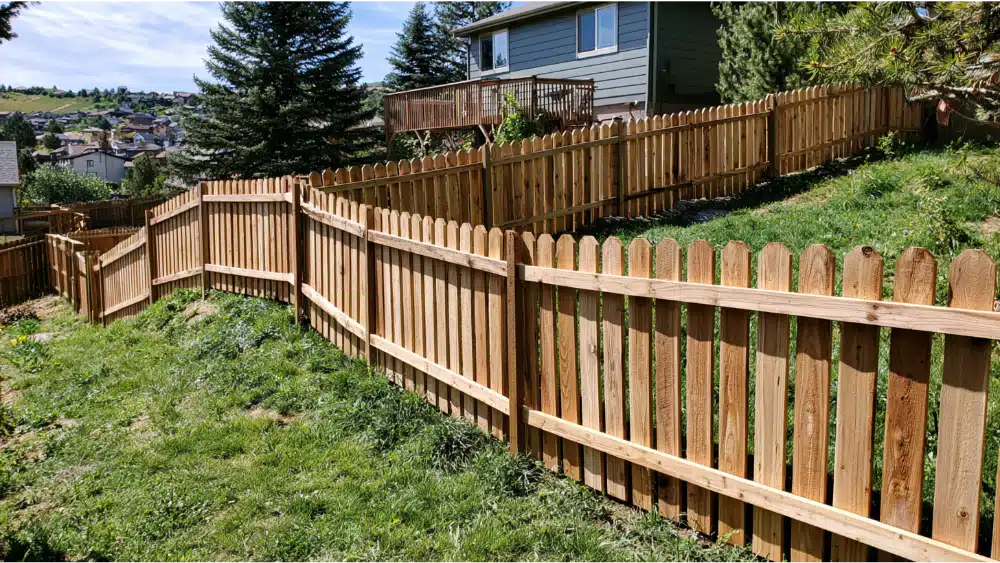
How do contractors design custom fences for uneven terrain? They begin by studying the ground, planning the fence line, selecting the right materials, and building each section to fit the yard instead of forcing a standard layout where it does not belong.
Many homeowners worry that uneven ground means visible gaps, crooked sections, or a fence that never looks quite right. The truth is, your yard does not have to be perfectly flat to have a strong, beautiful, and secure fence. With the right fence design and careful installation, an uneven yard can become a space that feels private, polished, and cared for.
A custom fence should work with the slope, not against it. Professional installers consider grade changes, soil, drainage issues, gate placement, post spacing, and the final result you want for your property.
Why Uneven Terrain Makes Fence Design More Complicated
Uneven terrain creates unique challenges because every section of the fence may need a slightly different approach. The posts, rails, pickets, bottom rail, and fence panels all need to meet the ground in a way that looks clean and stays strong.
Every Yard Has Its Own Slope, Soil, and Layout
Some yards have gradual slopes. Others have moderate slopes, steeper slopes, dips, roots, retaining walls, or irregular terrain. A sloped yard may look simple at first, but once installation begins, small changes in the ground can affect the entire line.
Poor Planning Can Lead to Gaps, Leaning Posts, or Uneven Lines
When installing fences without a clear process, visible gaps can appear under the panel. Posts may lean. Rails may look uneven. A gate may drag across the ground. The fence line may lose its straight line and create an unfinished appearance.
Privacy, Pets, and Curb Appeal All Depend on the Right Design
For homeowners, a fence is about more than materials. It is about security, comfort, privacy, and aesthetic appeal. Thoughtful backyard fence designs that enhance outdoor living can make your yard feel like an extension of your home. A backyard fence should help your family feel settled and provide secure, dog‑friendly fencing, not leave you worrying about gaps, weak posts, or an uneven appearance.
The First Step: Measuring the Slope of the Yard
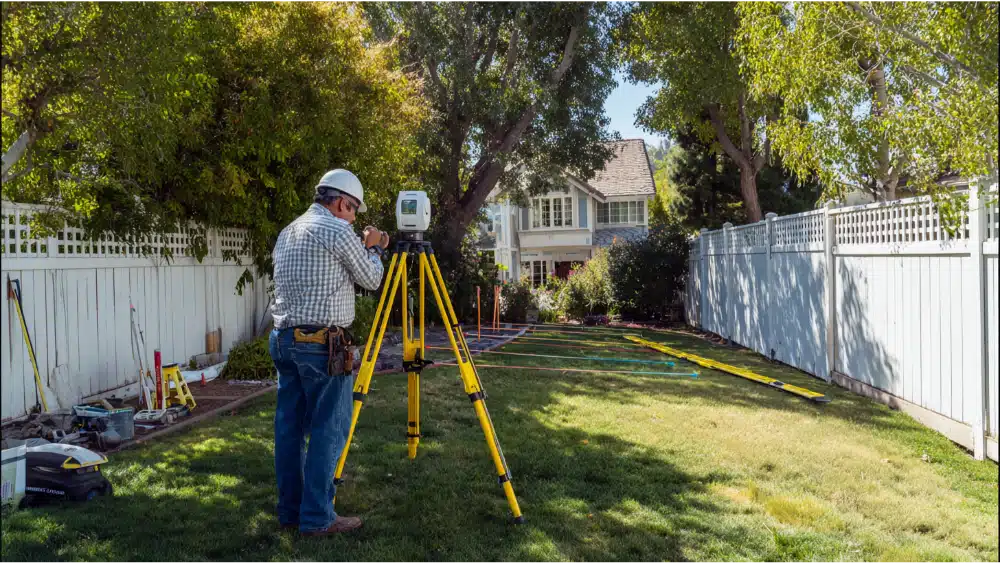
Before a contractor recommends a method, they measure the slope and look closely at the terrain.
Contractors Look at Rise, Run, and Grade Changes
The rise shows how much the ground moves up or down. The run shows how far that slope stretches across the property. These measurements help decide whether the best method is a racked fence, a stepped fence, or a custom cut approach.
They Identify High Spots, Low Spots, and Drainage Areas
Low areas can create gaps. High spots can push against rails or pickets. Drainage issues can weaken posts over time. Contractors look at the full landscape before the new fence is installed.
They Plan Where Posts, Gates, and Panels Will Sit
Good planning includes posts, rails, panel layout, gate placement, and the way the fence connects to the rest of the property. On uneven land, contractors also plan gate placement carefully so the gate opens smoothly and does not scrape the ground.
Racked Fencing: Following the Natural Slope
A racked fence is one of the most common ways to build a fence on a slope.
What Racked Fencing Means
A racked fence follows the slope of the ground. The rails angle with the terrain, and the pickets stay more vertical. This method helps the bottom rail stay closer to the landscape.
When Racked Fencing Works Best
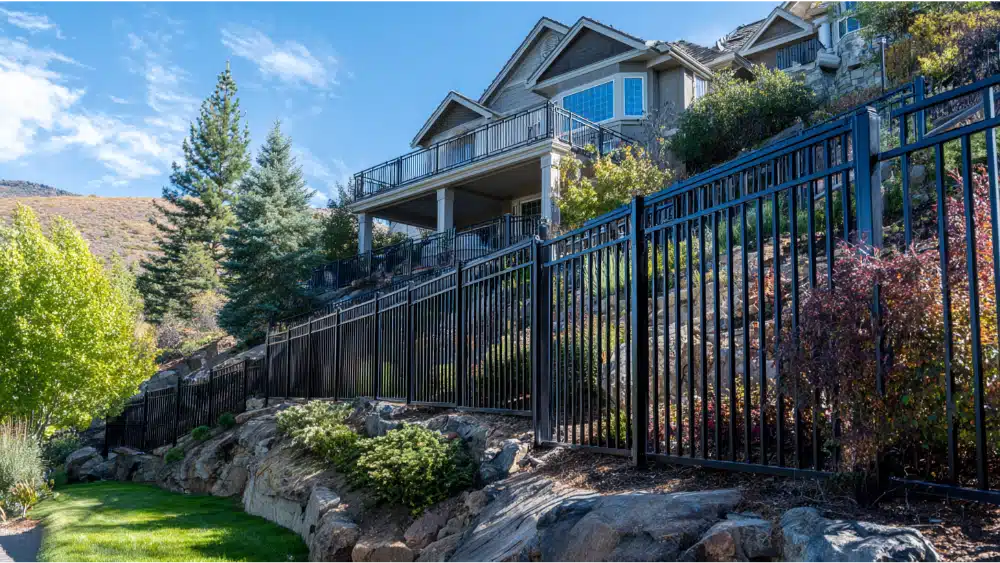
Racking panels works best on gradual slopes and moderate slopes. It is often used with aluminum, vinyl fence systems, chain link, and certain wood fence styles. The rack method helps the fence on uneven ground look smooth and natural.
Benefits of Racked Fencing
A racked fence can reduce visible gaps, improve security, and create a consistent appearance across the yard. Because the panel follows the slope, it often gives the fence a more uniform appearance.
Possible Limits of Racked Fencing
Not every panel can rack. Some materials are too rigid. A horizontal fence may not look right when angled. On steeper slopes, racking panels may not provide enough adjustment, so contractors may recommend a stepped fence instead.
Stepped Fencing: Creating a Clean Stair-Step Look
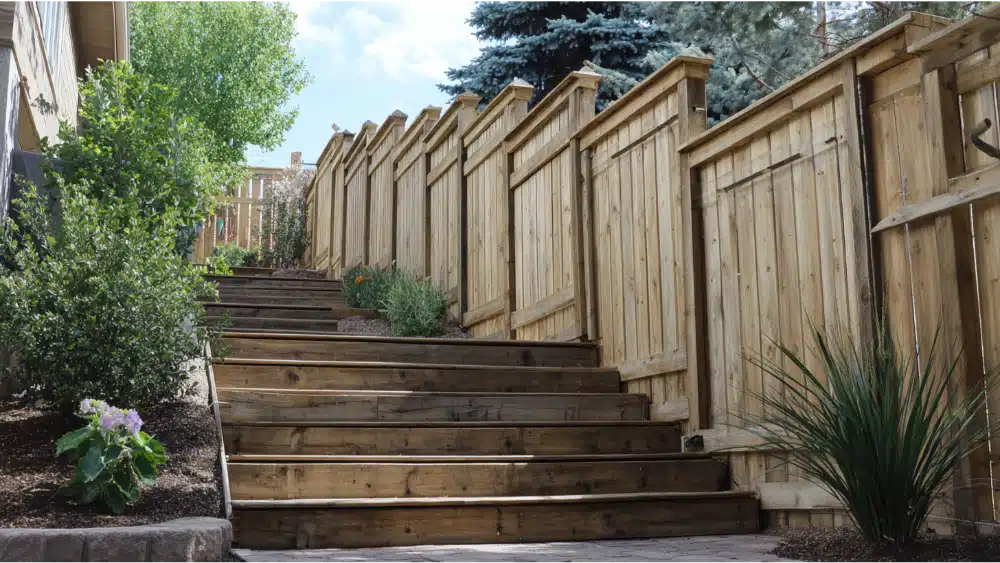
A stepped fence is another trusted method for uneven terrain.
What Stepped Fencing Means
A stepped fence keeps each panel level while each section moves up or down with the slope. Instead of following the ground closely, the fence steps across the yard.
When Contractors Use Stepped Fencing
Contractors often use a stepped fence for steeper slopes, rigid fence panels, composite materials, vinyl fence sections, or a horizontal fence that needs level rails. This method can create a clean appearance when installed with care.
How Contractors Manage Gaps Under Stepped Panels
The main challenge is filling gaps under each panel. Contractors may add kick boards, adjust varying heights, use longer posts, or custom cut the lower edge where needed. Filling gaps is important for pets, privacy, and security.
The Visual Style of Stepped Fencing
A stepped fence can look crisp and intentional. The key is consistent post spacing, thoughtful panel placement, and a layout that feels balanced across the property.
Custom-Cut Fence Panels for Irregular Ground
Some terrain needs more than one method.
Why Some Yards Need More Than Standard Panels
A fence on uneven ground may cross dips, roots, drainage paths, and changing slope conditions. Standard panels may leave visible gaps or make the line look uneven.
How Custom Cutting Helps Reduce Gaps
Custom cut boards allow contractors to shape the bottom of the panel so it follows the ground more closely. This is especially helpful for a wood fence, where pickets can be adjusted section by section.
Balancing a Polished Look with Structural Strength
A custom fence should look good, but it also needs to last. Contractors balance appearance, rails, posts, soil conditions, and materials so the final result feels strong and finished.
Choosing the Right Fence Material for Uneven Terrain
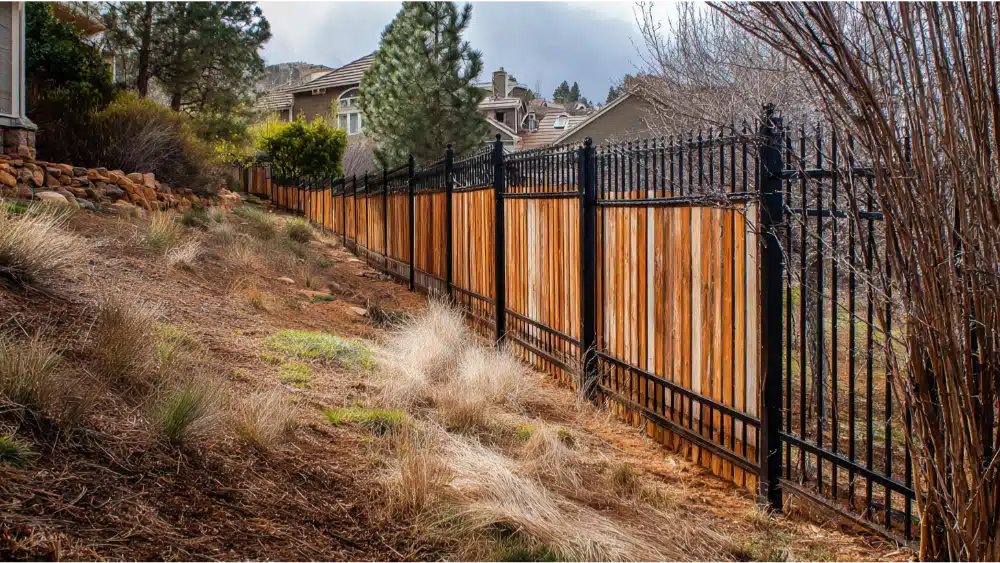
Material selection makes a big difference when building a fence on a slope.
Wood Fences
A wood fence is flexible, warm, and easy to customize. Wood can be cut to fit irregular terrain, and individual pickets can be adjusted to reduce gaps. For many homeowners, a board on board wood fence design offers the best mix of privacy, beauty, and flexibility.
Vinyl Fences
A vinyl fence gives a clean appearance and low maintenance. Some vinyl fence systems can rack, while others need a stepped installation. The right choice depends on the slope, panel style, and manufacturer design.
Aluminum Fences
Aluminum works well on many slopes because many aluminum systems are made to rack. Aluminum does not provide full privacy, but it offers security, visibility, and strong aesthetic appeal.
Composite Fencing
Composite materials are durable and attractive, but they often need careful installation on uneven ground. Many composite panels are better suited to a stepped fence layout.
Chain Link Fencing
Chain link is one of the most adaptable materials for uneven terrain. Chain link can follow the ground well, handle grade changes, and work for pets, security, and practical property needs. For long runs over uneven land, chain link can be a smart solution.
How Contractors Handle Gaps at the Bottom of the Fence
Gaps are one of the biggest concerns with a fence on uneven ground.
Why Bottom Gaps Matter
Gaps can affect security, privacy, pets, and appearance. Even a small gap can make a homeowner feel like the installation is unfinished.
Common Gap-Control Solutions
Contractors may use racking panels, kick boards, custom cut pickets, adjusted posts, or careful landscape transitions. They may also change the method from rack to step depending on the slope. The goal is to reduce gaps without trapping moisture against wood or creating future soil problems.
Gate Design on Sloped or Uneven Ground
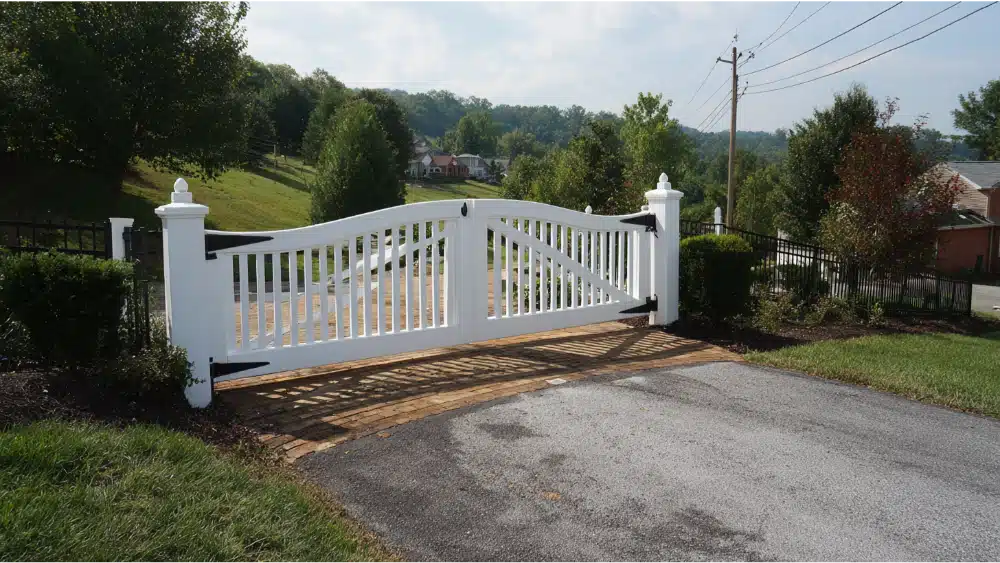
A gate can be the hardest part of installing fences on a slope.
Why Gates Are Often the Trickiest Part
A gate has to open, close, latch, and stay aligned. On uneven ground, the gate may hit the ground if the slope rises in the swing direction.
Swing Clearance and Slope Direction
Contractors study the slope before deciding where the gate should go. Gate placement matters because even a beautiful fence can feel frustrating if the gate drags or does not latch.
Custom Gate Framing and Hinge Placement
A sloped yard may need a stronger gate frame, adjusted hinges, or a different latch location. These small choices help the gate work smoothly in real life.
When a Gate May Need to Be Moved to a Better Spot
Sometimes the best answer is to move the gate to flatter ground. Good professional installers will explain this early so homeowners understand the reason.
Post Placement and Structural Support
Posts carry the weight of the fence.
Why Strong Posts Matter More on Uneven Land
On uneven terrain, posts deal with slope pressure, soil movement, water flow, and changing panel heights. Strong posts help protect the entire installation.
How Contractors Adjust Post Depth and Spacing
Contractors may use longer posts, deeper holes, or closer post spacing depending on the materials and terrain. Proper posts keep rails aligned and help the fence stay secure.
Drainage, Soil Movement, and Long-Term Stability
Soil and water matter. If drainage issues are ignored, posts can weaken. A strong fence installation accounts for soil type, landscape movement, and water flow.
Avoiding Future Leaning or Sagging
Careful installation helps prevent sagging rails, leaning posts, and shifting panels by addressing the common reasons fences lean and how to fix them. This is where experience in the fencing industry truly matters.
Drainage and Soil Considerations
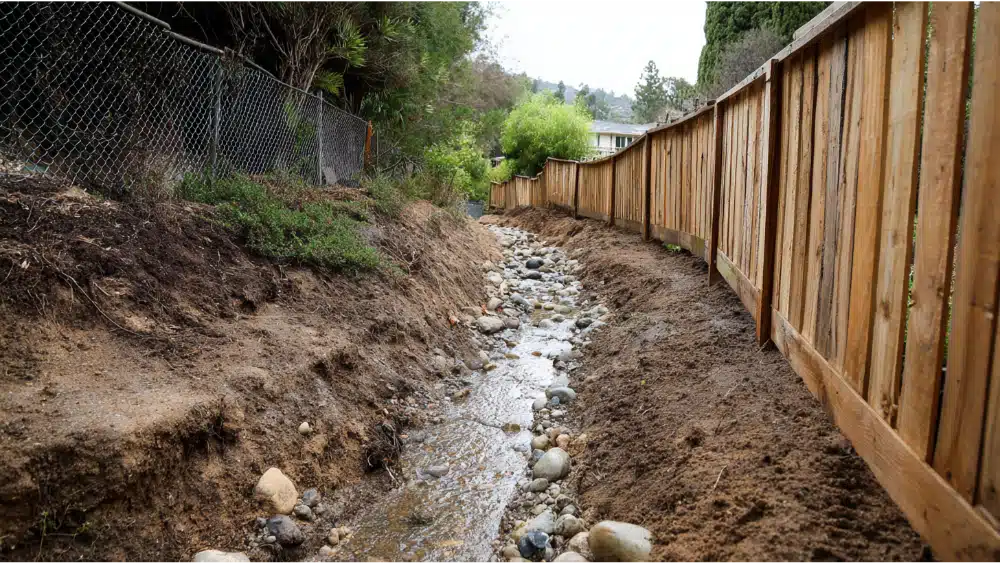
A fence is only as dependable as the ground supporting it.
Why Water Flow Affects Fence Performance
Water naturally follows the slope. If the fence blocks that flow, the landscape can erode or collect moisture around posts.
Avoiding Posts in Problem Drainage Spots
Contractors try to place posts where they will stay stable. Sometimes that means adjusting the line slightly to protect the fence.
Protecting Wood Fences from Moisture
Wood should not sit in constant wet soil. Understanding the causes of wood fence rot and how to prevent it helps ensure a wood fence can last beautifully when the bottom rail, pickets, and posts are protected from trapped moisture.
Planning Around Retaining Walls, Roots, and Landscaping
Roots, walls, rocks, and landscape beds all affect installation. Choosing whether to slope or to step a fence on a hill is part of making sure a fence on uneven terrain respects the land around it.
Local Rules, Fence Height, and Property Lines
Rules matter before any fence is installed.
Why Fence Height Can Be Confusing on Slopes
On a slope, one side of the fence may appear taller than the other. This can affect local height rules.
How Contractors Check Local Requirements
Professional installers understand that property rules, height limits, and setback requirements can change by area.
Property Lines, Neighbor Communication, and Permits
Clear property lines help avoid future stress. Before installing fences, homeowners should know where the property begins and ends, and whether a permit is required to build a fence in their area.
Special Considerations for Retaining Walls
A fence on a slope near a retaining wall may need extra review because combined height can matter, especially in communities with HOA fence rules on height and style.
What Homeowners Should Ask Before Building a Fence on Uneven Terrain
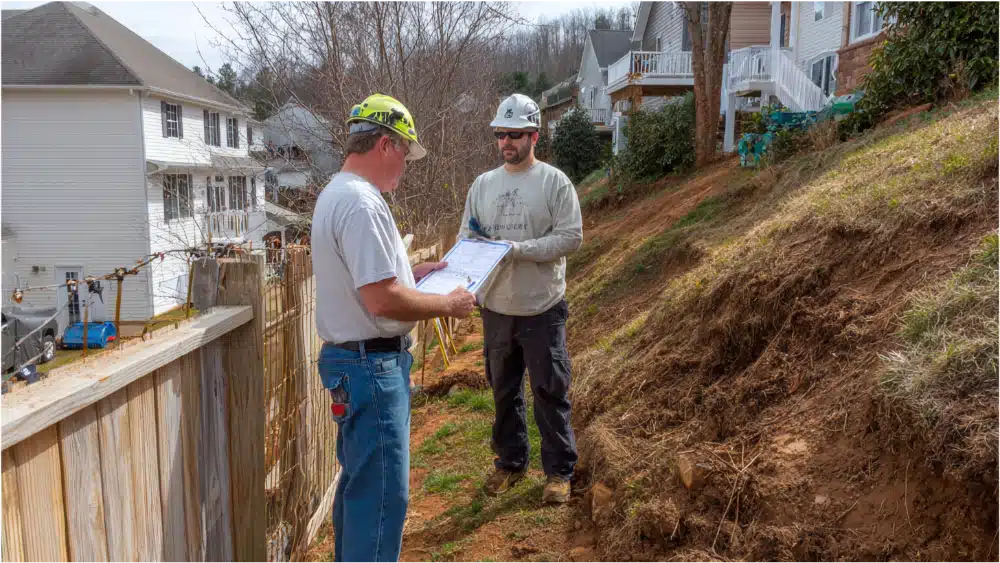
The right questions help homeowners feel confident.
- Will my fence be racked, stepped, or custom-cut?
This helps you understand the method and appearance before installation begins. - How will you handle gaps at the bottom?
Ask about gaps early. A good contractor should have a plan for filling gaps and protecting security. - Where should the gate go?
Ask about gate placement before the posts are installed. The right location can make daily use easier. - Will drainage affect the fence?
Water flow can affect posts, rails, and soil. It should be part of the process from the start. - Is old fence removal included?
Old fence removal can make the project feel harder. At Fantastic Fence, old fence removal and disposal are included at no extra charge.
Why Working with an Experienced Fence Contractor Matters
Installing a fence on uneven terrain is not the same as installing one on flat ground. Homeowners should know what to look for when hiring a fence contractor so they can choose a team with the right skills, communication, and support, then feel confident when they book a free fence estimate.
A Custom Fence Should Fit the Yard, Not Fight It
A custom fence is designed around the yard, the slope, the materials, and the homeowner’s goals.
Experience Helps Prevent Costly Mistakes
DIY fence projects can be tempting, but DIY-ing a fence on a slope can quickly become frustrating. A string line, level, and basic tools help, but uneven ground requires judgment that comes from experience. A skilled contractor knows when to rack, when to step, and when a panel needs a custom solution.
The Right Design Brings Security, Beauty, and Peace of Mind
A fence on uneven land should feel secure, look natural, and bring comfort every time you step into the yard. That is the value of thoughtful craftsmanship.
FAQs
What is the best fence style for uneven ground?
The best fence style depends on the slope, materials, and purpose. A racked fence works well on gradual slopes, while a stepped fence is often better for steeper slopes or rigid panels. A wood fence can also be custom cut for irregular terrain.
Is racked fencing better than stepped fencing?
A racked fence is better when the slope is smooth and the panel can rack. A stepped fence is better when the slope is steep or the materials need to stay level.
Can a privacy fence be installed on a slope?
Yes. A privacy fence can be installed on a slope with the right method. Contractors may use rack sections, stepped panels, custom pickets, or kick boards to reduce gaps.
How do contractors prevent gaps under a fence on a hill?
They prevent gaps by racking panels, using a stepped fence design, adding kick boards, adjusting posts, or custom cutting the panel to follow the ground.
Can vinyl fencing be installed on uneven terrain?
Yes. A vinyl fence can be installed on uneven terrain, but the method depends on the system. Some vinyl fence panels can rack, while others need stepped installation.
Are gates harder to install on sloped yards?
Yes. A gate on a slope needs careful planning. Contractors look at swing clearance, slope direction, hinge placement, and gate placement before installation.
Does uneven terrain make a fence more expensive?
It can. Uneven terrain may require more labor, longer posts, custom cuts, extra planning, and more careful installation.
Do I need a permit for a fence on uneven terrain?
Permit rules depend on your location, fence height, property lines, and whether retaining walls are involved. A contractor can help you understand what needs to be checked before installation.
Final Thoughts: Uneven Ground Can Still Have a Beautiful Fence
Uneven ground does not have to stop you from having a fence you love. With the right planning, materials, and installation method, even a challenging landscape can become private, secure, and beautiful.
A fence on uneven terrain may need racking panels, stepped panels, custom cut wood, stronger posts, or special gate planning. What matters most is that the design fits the land and gives homeowners confidence in the result.
Your yard does not need to be perfectly flat to feel finished. From uneven ground to a clean, strong fence line, the right team can help you build something lasting.
Let’s build something strong together.