When homeowners ask, “how do installers align bolt up steel posts accurately,” the answer starts with care, patience, and a clear plan. A strong fence depends on straight fence posts, a clean fence line, and a proper installation process from the very first mark. Whether the project is a metal fence, wood fence, or a mix of wooden panels with steel support, the post work sets the tone for the entire structure.
Why Accurate Steel Post Alignment Matters
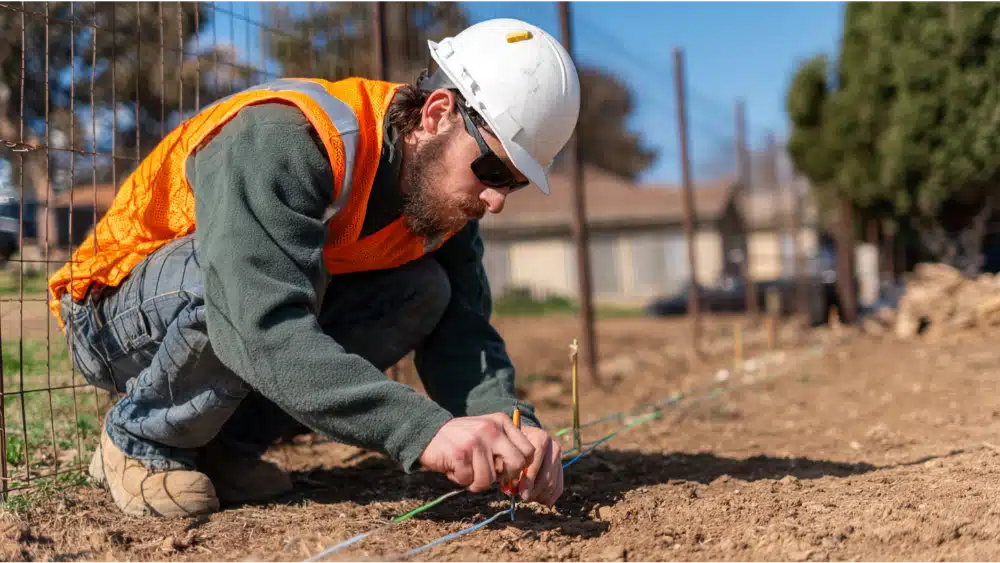
A fence can only stay straight when the fence posts are aligned from the beginning. If one post leans, the line can look uneven, panels may not fit, and the gate may not close the way it should. Accurate alignment protects the fence, improves stability, and helps the finished structure feel secure. A straight fence line also makes the yard feel more polished. It gives the home a cleaner edge and helps protect the property line. This matters even more with metal posts because steel is strong, but it is not forgiving when the post locations are wrong.
What Are Bolt-Up Steel Posts?
Bolt-up steel fence posts are metal posts attached to concrete using a base plate, anchors, and bolts. Instead of digging a hole and pouring concrete around the post, the installer secures the post to an existing concrete surface, like a patio, deck edge, walkway, or retaining wall cap. These steel posts are common in metal fence installation, gate areas, and places where digging into the ground is not practical. A wood fence can also use steel fence posts for added strength, especially when a homeowner wants the warm look of wood with the durable support of metal.
Installers Start With a Clear Fence Layout
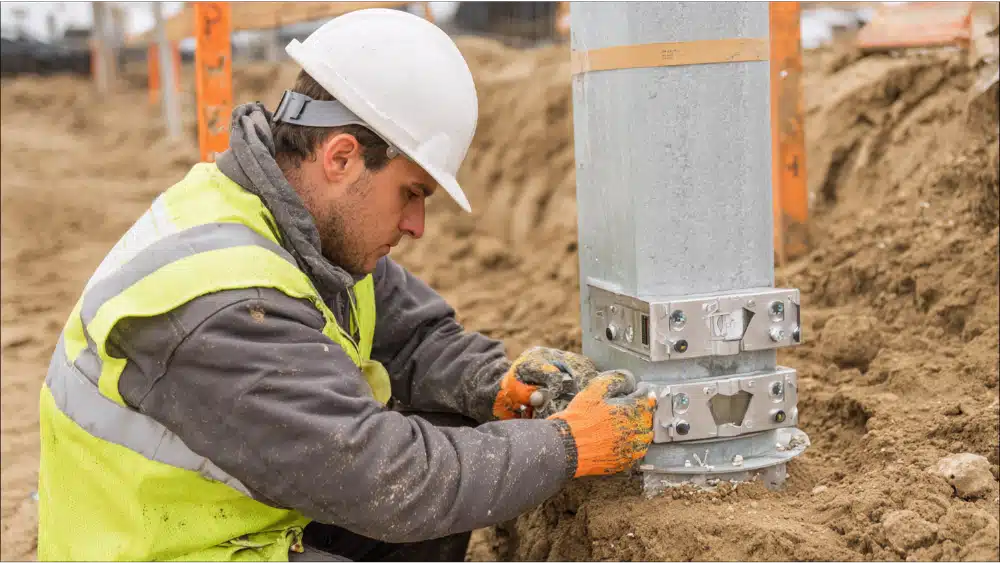
A proper installation starts before any hole is drilled. Installers measure the fence line, mark the post locations, and confirm the spacing between fence posts. They use a measuring tape to measure from two points, often from end posts, corners, or a known property line. The goal is to create a straight line that guides the rest of the installation. For a long run, even a small mistake at the first post can grow into a big problem by the middle of the fence. That is why the installer will mark carefully, check the line, and make necessary adjustments before putting any anchors in place.
Using a String Line
A string line is one of the most trusted tools for keeping posts straight. The installer pulls the string tight between the end posts or layout points. This gives a visual guide for the fence line and helps each post stay aligned with the rest. The string should be tight enough that it does not sag. A loose string can give a false line. When the string is set correctly, the installer can position each post so the face of the metal fence or wood fence follows one clean path.
Installers Check the Concrete and Ground Conditions
Even bolt-up steel posts depend on what is underneath them. The installer checks the concrete for cracks, weak areas, slope, and rocks or debris. If the concrete is uneven, the post may not sit straight. If the concrete is weak, the bolts may not hold.
For fence posts set in the ground, the installer would check soil, digging depth, ground level, and drainage before pouring concrete. With bolt-up metal posts, the same care applies in a different way. The surface must be strong enough to support the post and the entire structure.
Environmental factors also matter. High winds, shifting soil near the slab, water, and uneven terrain can all affect stability over time. A careful installer thinks about the life of the fence, not just how it looks on installation day.
Installers Position the Base Plate Carefully
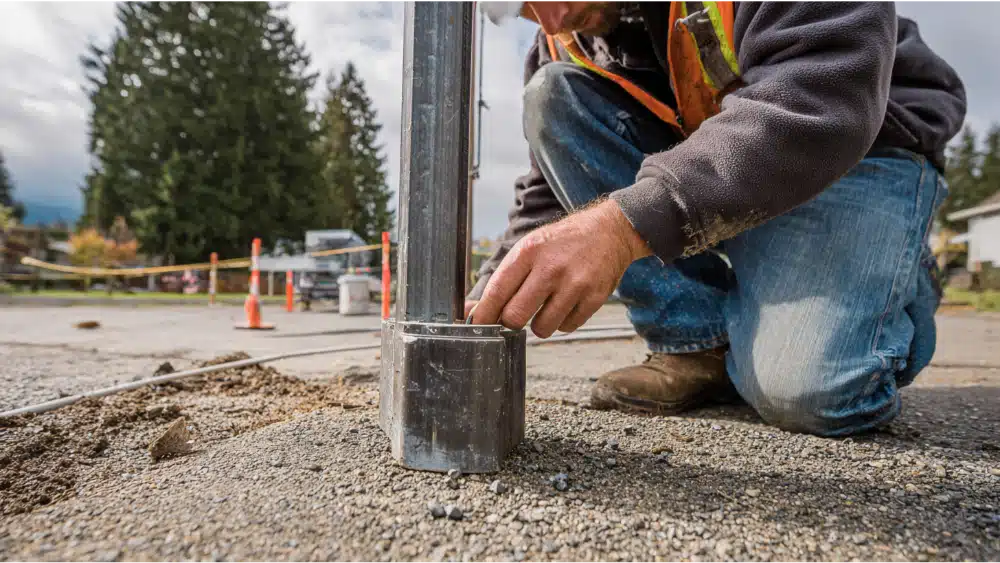
Once the line is marked, the installer places each steel post in position. The base plate is lined up with the string line, the spacing is checked again, and the post is tested before drilling. This dry fit helps the installer see whether the fence posts will stay straight across the yard. It also helps confirm whether the panels, gate, and rails will fit. If something looks off, this is the best time to adjust.
Bolt-up steel posts often have slotted holes in the base plate. These give the installer a little room to make necessary adjustments before the bolts are tightened. That small movement can help the post align with the straight line while still keeping the structure secure.
Installers Drill Anchor Holes Correctly
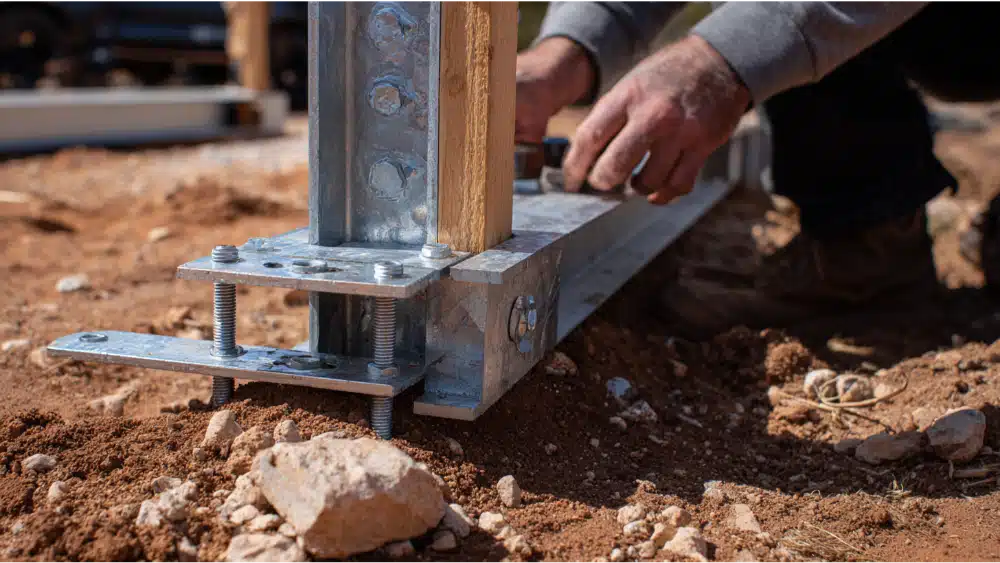
After the post position is confirmed, the installer marks each hole. The hole must be drilled in the right place, at the right depth, and at the right angle. A crooked hole can pull the post out of alignment when the bolts are tightened.
The installer uses the right tools for the concrete and anchor type. The hole is drilled cleanly, then cleared of dust and loose material. This step matters because a dirty hole can weaken the anchor. A clean hole helps the bolts hold better and helps maintain stability.
This is one of the common mistakes in poor installation. Some people rush through drilling, skip cleaning the hole, or assume the base plate will fix the problem later. It usually will not. A strong metal fence or wood fence needs careful hole placement from the start.
Installers Set the Post Loose Before Final Tightening
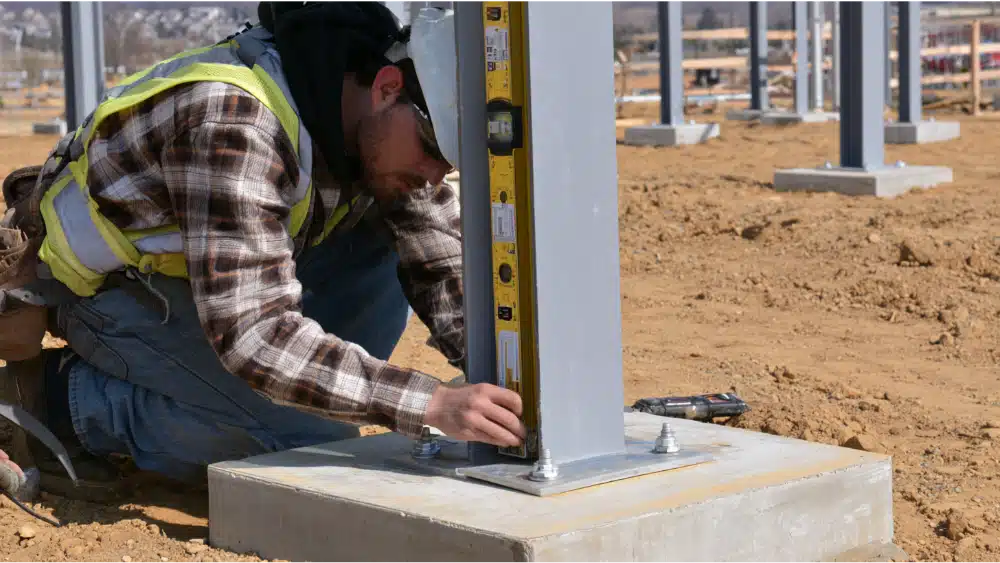
Professional installers do not fully tighten the bolts right away. They insert the anchors, set the post, and keep the bolts loose enough to adjust. This lets them bring the post into alignment before locking it down.
A post level is used to check the post from multiple sides. The post must be straight front to back and side to side. The installer checks the post against the string line too, because a post can be plumb by itself and still be out of line with the fence.
Once the post is aligned, the installer tightens the bolts slowly. Pulling one bolt too tight before the others can shift the base plate. Tightening each bolt evenly helps the post stay straight and secure.
Installers Use Levels, Lasers, and String Together
Good alignment usually takes more than one tool. A post level checks each post. A string line checks the fence line. A laser may be used on a long run or where height changes matter.
The installer may stand back and look down the line to make sure the fence posts are visually aligned. This old-fashioned check still matters. Tools help, but experience helps the installer see what feels right.
For a metal fence, this precision creates a clean, finished appearance. For a wood fence, it helps wooden panels sit evenly without strange gaps. Choosing the best fasteners for wood fence installation supports that clean look and strong connections. For any new fence, it helps the whole project look intentional and well built.
Installers Shim or Level the Base When Needed
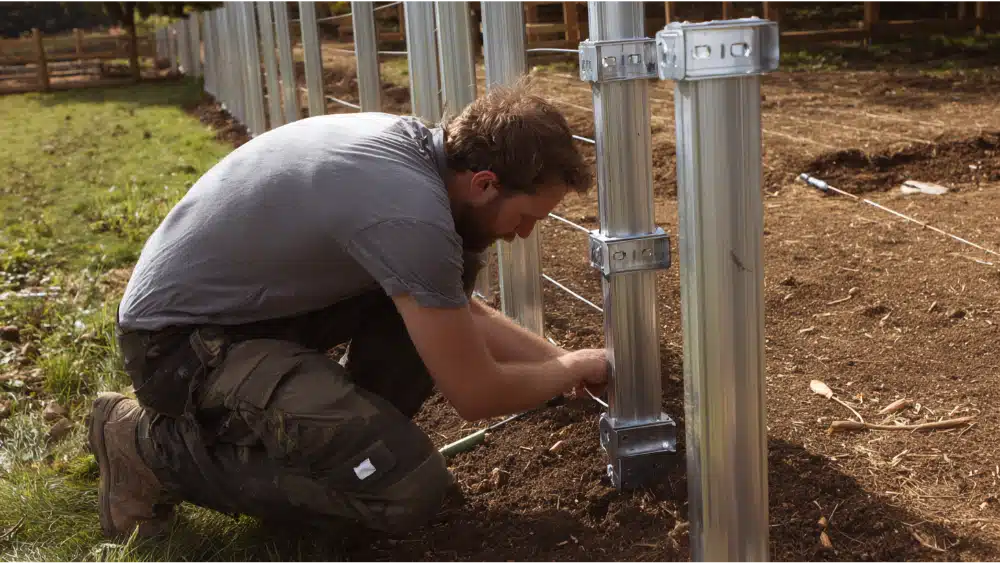
Concrete is not always flat. Outdoor surfaces often slope so water can drain. That is good for the yard, but it can make a post lean if the base is not adjusted.
Installers may use durable shims to adjust the base plate. In some cases, they may fill small gaps beneath the plate with an approved material so the post has firm support. The goal is to keep the post stable, straight, and attached without rocking.
Ground helps support traditional fence posts when they are set properly in soil with fast setting concrete or standard concrete. With bolt-up steel posts, the base plate and anchors do that work. Either way, proper installation means the support under the post must be solid.
Installers Tighten Anchors in the Right Sequence
Once the post is aligned, the bolts are tightened in a careful pattern. The installer tightens a little at a time, checks the post, then tightens again. This prevents pulling the post out of position.
After the bolts are tight, the installer checks the post level one more time. This final check is important because the post can move slightly as the bolts pull the base plate down. If it moved, the installer can adjust before the panels are installed.
This is how posts straight from the start are able to stay straight after the rest of the fence is attached.
Installers Confirm Panel and Rail Fit
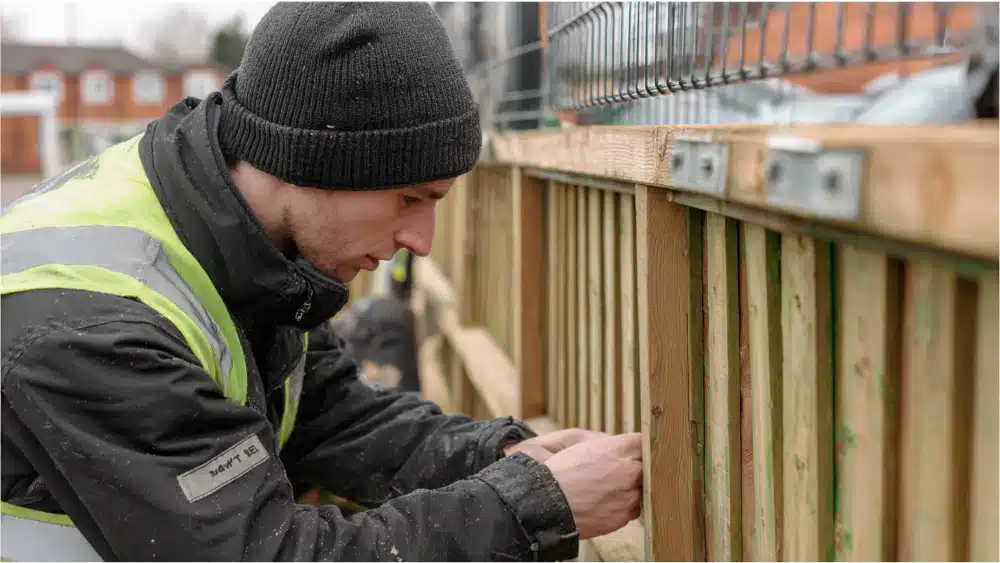
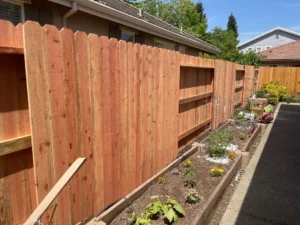
The true test comes when the panels, rails, or gate are attached. If the fence posts are aligned correctly, the panels fit cleanly, the gate swings properly, and the fence line looks even.
For a wooden fence, the installer checks that the wood panels do not bind or leave uneven gaps. For a metal fence, the installer checks that the rails connect cleanly to the metal posts. This protects the structure and helps maintain the finished look.
If the old one was leaning, wobbly, or uneven, this is where the transformation becomes clear. Issues like that often call for professional fence post replacement. The new fence starts to feel secure, durable, and built with care.
Common Mistakes That Lead to Misaligned Steel Posts
Common mistakes include skipping the string, failing to measure carefully, drilling the hole too soon, ignoring slope, tightening bolts too early, and not checking the post after tightening. Over time, these issues can lead to fences leaning and needing repair.
Another mistake is assuming every post can be adjusted later. Some adjustments are possible, but not all. Once anchors are set, the installer has less room to fix poor spacing or a bad mark.
Gate posts are another area where precision matters. A gate puts more stress on the post than a normal panel section. If the gate post is not aligned, the gate may sag, drag, or fail to latch.
Can Homeowners Align Bolt-Up Steel Posts Themselves?
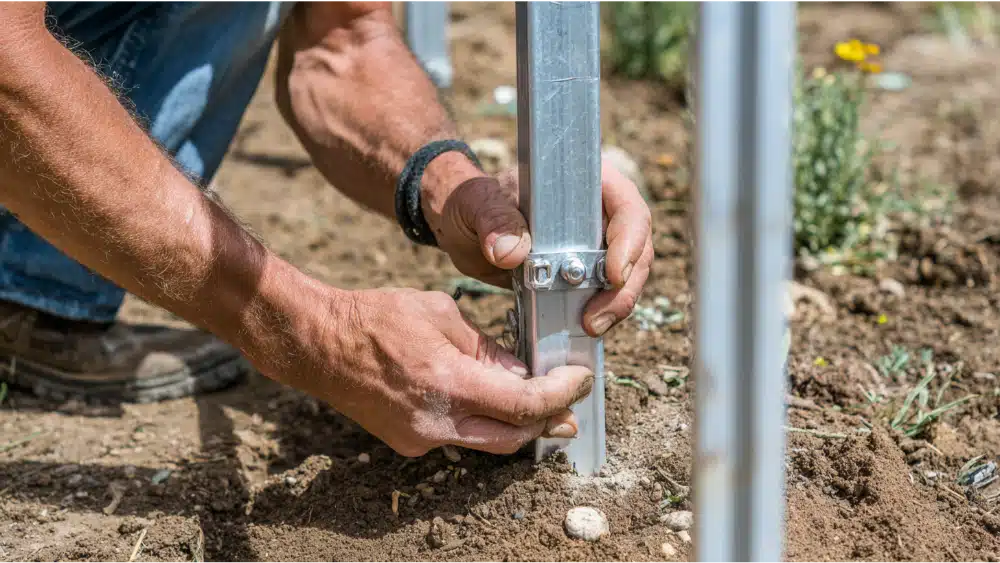
Some homeowners can handle small projects, but a full fence installation takes precision. A long run, uneven terrain, concrete conditions, and gate placement can make the project more complicated than it looks, which is why it is important to know what to look for when hiring a fence contractor.
Putting a post into the right position is one thing. Keeping every post aligned across the fence line is another. The installer must measure, mark, drill, insert anchors, adjust the post, tighten bolts, and check the line again.
A professional installation reduces risk and helps protect the investment. It gives the homeowner a fence that looks straight, feels secure, and is ready for everyday life, and companies like Fantastic Fence make it easy to book a free estimate for your fence project.
How Fantastic Fence Builds Straight, Strong Fence Lines
At Fantastic Fence, we know a fence is more than a row of posts. It is part of your home. It helps protect your family, frame your yard, and make the space feel complete.
We take time with the details that matter. We mark the line carefully, check the post locations, inspect the concrete, set the metal posts with care, and make each necessary adjustment before the final bolts are tightened, especially around gate openings where welded steel frames provide strength and stability.
Whether we are building a metal fence, replacing a wood fence, or adding steel fence posts for extra strength, our goal is the same. With options like flexible fence financing for your project, we want your fence to stay straight, feel strong, and look beautiful for years.
FAQs About Aligning Bolt-Up Steel Posts
How do installers keep fence posts straight?
Installers keep fence posts straight by using a string line, measuring tape, post level, and careful marks. They align each post with the full fence line before tightening the bolts.
Can bolt-up steel posts be installed on uneven concrete?
Yes, in some cases. Minor slope can often be handled with shims or leveling methods. Badly cracked concrete may need repair before the post can be secure.
Are steel posts better than wood posts?
Steel posts are durable and strong. Wood posts can work well too, especially in a wooden fence, but steel may offer better resistance to movement, rot, and long-term wear.
Why is my post leaning after installation?
A post may lean because the hole was drilled incorrectly, the bolts loosened, the concrete was weak, or the post was not aligned before final tightening.
Do bolt-up posts work for gates?
Yes. Bolt-up steel posts can support gates when the concrete, anchors, and installation are right. Gate areas need extra precision because the post carries movement and weight.
What makes a durable fence last longer?
A durable fence starts with proper installation, strong materials, correct spacing, secure posts, and regular care. Preventive maintenance, like understanding why wood fences rot and how to prevent it, also helps. The better the post work, the stronger the rest of the fence will be.
Straight Posts Make a Stronger, Better-Looking Fence
A straight fence starts with careful post alignment. Installers measure the line, mark each position, check the concrete, drill every hole cleanly, insert anchors properly, and adjust each post before tightening the bolts. Making sure your project follows local rules and fence permit requirements for homeowners is also part of a successful installation. That is how a fence moves from uncertain to secure, from worn to beautiful, and from temporary to lasting. Your yard deserves a fence that feels strong every time you step outside. Let’s build something strong together.