Key Takeaway
Lattice fence ideas for privacy without feeling boxed in work best when you layer and offset three panels so sightlines are blocked while air and light still pass through. Standard overlap lattice suits decorative dividers and vine support, while triple-layer offset lattice delivers near-full privacy for patios, hot tubs, and equipment hides. Openings around 1 to 2 inches hit the sweet spot between screening and airflow. Picture-framing every panel keeps the result looking built-in rather than temporary.
A lattice fence gives you privacy that still breathes. Instead of a solid wall, you get a screen that filters sightlines while letting light and air pass through, which is exactly why it works best inside the yard rather than along the fence line with a neighbor. If you want a private patio, a quiet spa corner, or a way to hide your AC unit without walling off the whole property, lattice is often the smarter tool. Here are the ideas that work, how private it really gets, and how to build it so the appearance reads as intentional instead of temporary.
Why a Lattice Fence Works for Backyard Privacy Without Closing In the Yard
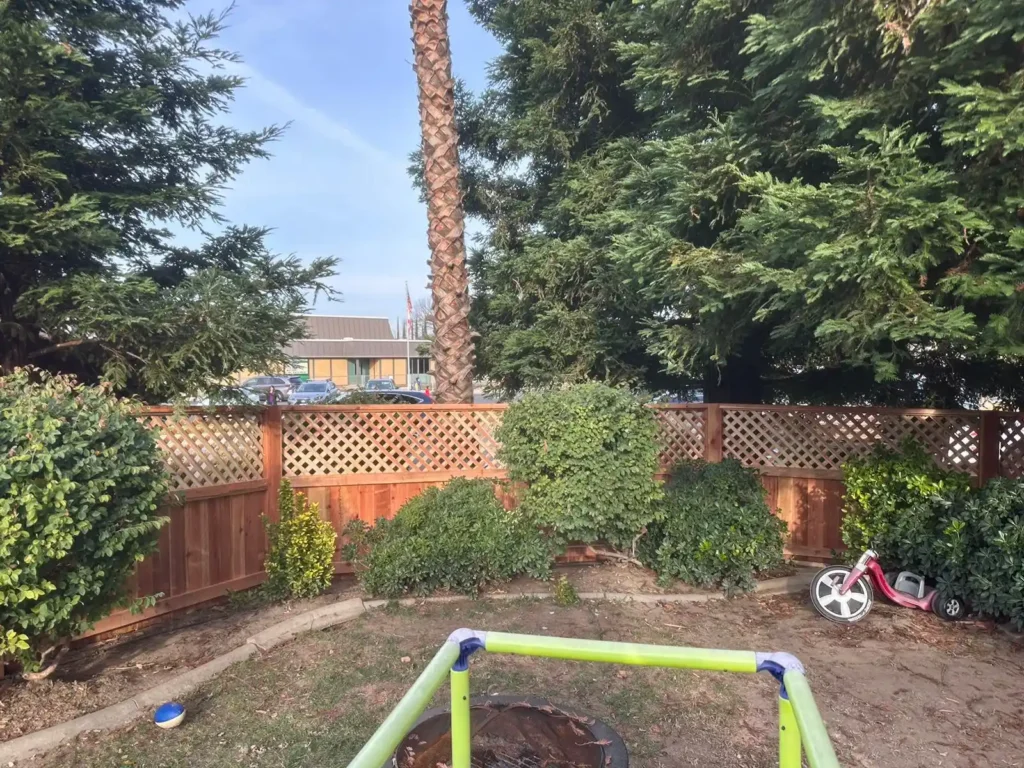
The core idea is simple: screen the view you want to block, not the whole yard. Drop a solid 6-foot board fence across the middle of a lot and you’ve cut the space in half visually. A lattice fence does the same screening job without that closed-in feeling, because your eye reads past it and the backyard still feels connected. That connected quality is what makes lattice such a useful tool for backyard privacy in tight lots, and it’s one of the privacy ideas many homeowners overlook when they default to a basic fence.
The practical wins stack up:
- Airflow and light. Sacramento summers are hot and still. Sacramento Executive Airport averages a 92.6°F high in July and about 14 days a year at or above 100°F. A solid privacy screen traps heat and throws a dead shaded strip. A lattice fence lets the delta breeze and afternoon light through.
- Wind load. Open lattice takes less wind pressure than a solid panel. Purdue Extension notes that force on a solid fence rises about ninefold when wind speed climbs from 10 to 30 mph, and that fences with 25% to 50% open space handle wind well. Lattice isn’t wind-proof, but it’s easier on fence posts on a tall fence.
- Connected space. Small yards stay feeling open rather than chopped up, so the backyard reads as one designed space instead of a set of boxes.
Lattice Fence Options at a Glance
Not all lattice screens the same way. The open grid pattern and opening size drive everything, and openings around 1 to 2 inches tend to be the sweet spot for balancing privacy with airflow. Here’s how the common fence ideas compare, from an open garden divider to a near-solid privacy fence.
| Option | Privacy level | Light and airflow | Best for |
|---|---|---|---|
| Standard overlap lattice | Partial, you can see through it | Excellent | Garden dividers, vine support, decorative screening |
| Triple-layer / offset lattice | Near-full | Good, still breathes | Equipment hides, spa and patio screens, private corners |
| Solid board fence | Full | Poor | Property lines and street frontage |
Standard Overlap vs. Triple-Layer Lattice
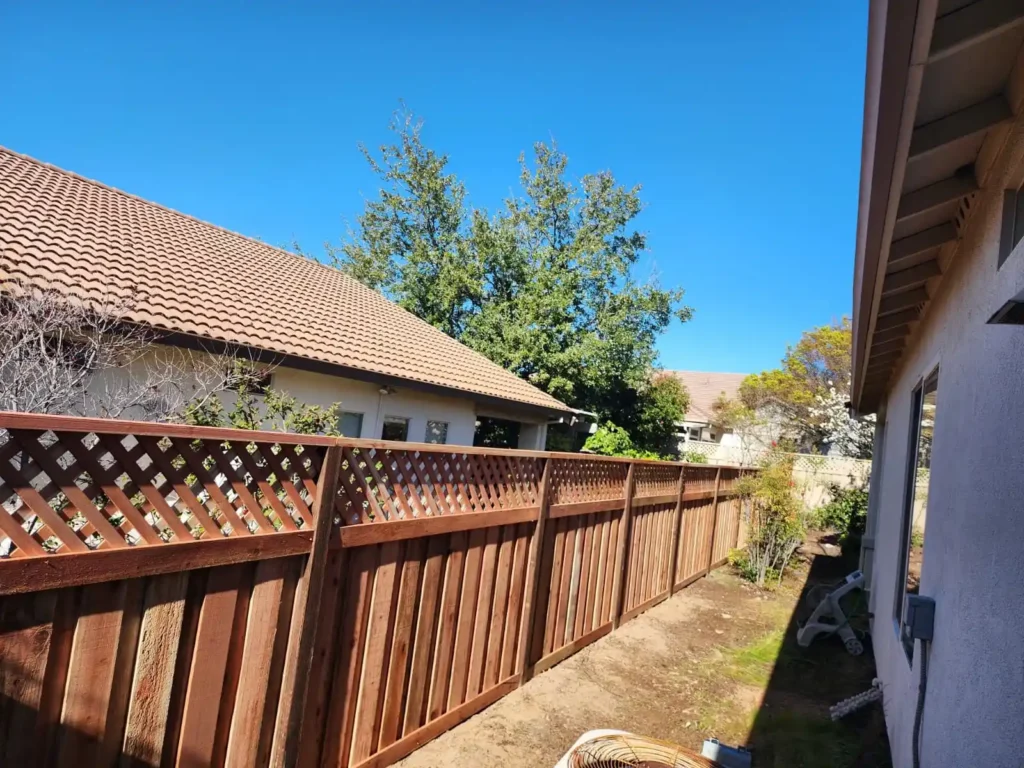
Standard overlap lattice is what most people picture: thin slats crossed in a diamond or square grid with visible gaps. It’s right when you want to suggest separation rather than block it, like dividing a garden bed from a lawn, skirting a deck, or supporting climbing plants. In that role it does light work, adding style and structure to the garden without acting as a full privacy fence.
Triple-layer lattice is what we use when someone actually wants a privacy screen. We stack three layers of standard lattice and offset them so the openings don’t line up. The result is near-full privacy from normal viewing angles, while it still reads as lattice and still lets air through. That offset is the whole trick. One layer is decorative, two is a screen, three offset layers is a wall you can breathe through. It blocks direct sightlines the way a solid board fence does, but keeps the light.
Triple-layer is uncommon between neighbors, where a solid wood fence usually wins on the fence line. Inside the yard it’s excellent, giving a hot tub or seating area real privacy without walling off the property.
Picture Framing: The Detail That Makes a Lattice Fence Look Built In
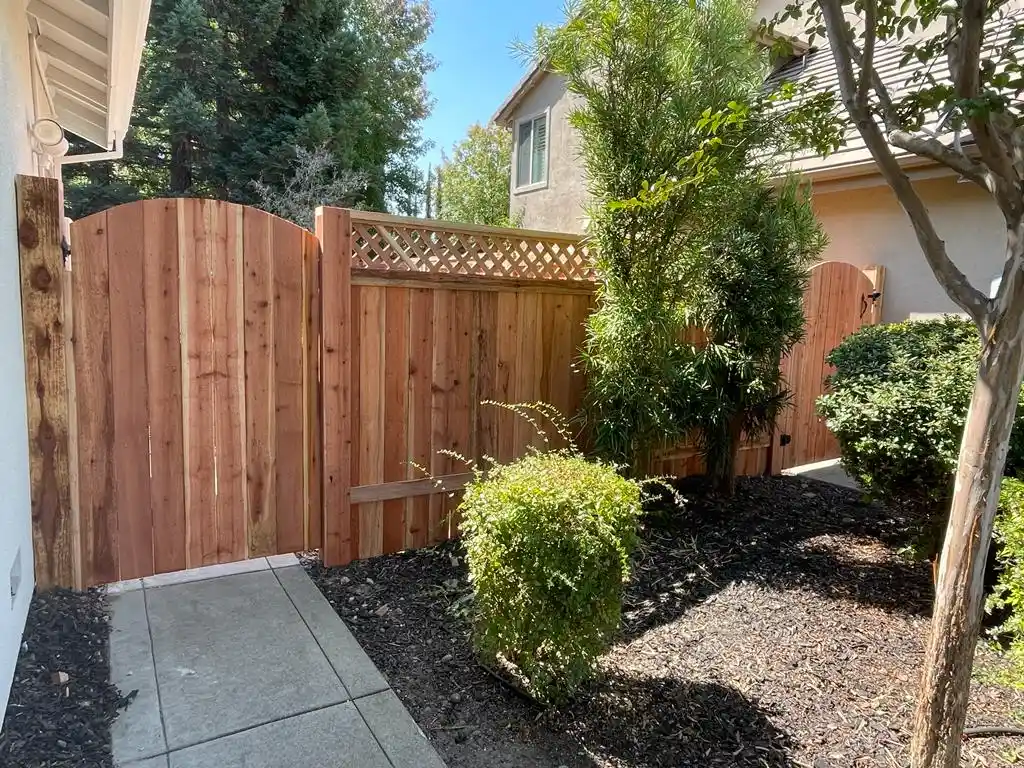
Raw lattice panels screwed between two posts read as temporary no matter how good the material is. We picture-frame ours, setting the lattice into a built frame with clean edges on all four sides so the panel has a defined border instead of a cut edge. That’s the difference between a screen that looks bought and one that looks built into the yard.
Framing does structural work too. It stiffens the panel so it doesn’t flex or rattle, and it protects the cut ends from weathering, splitting, and rot. Those exposed edges are the first place unframed lattice fails, so this small detail is what keeps a screen and its appearance looking sharp for years. Panels that are securely attached to solid posts and built from quality materials are what separates a lasting fence from a quick fix, and that focus on long term durability is the difference the right installation makes.
Best Places to Use a Lattice Fence Inside the Backyard
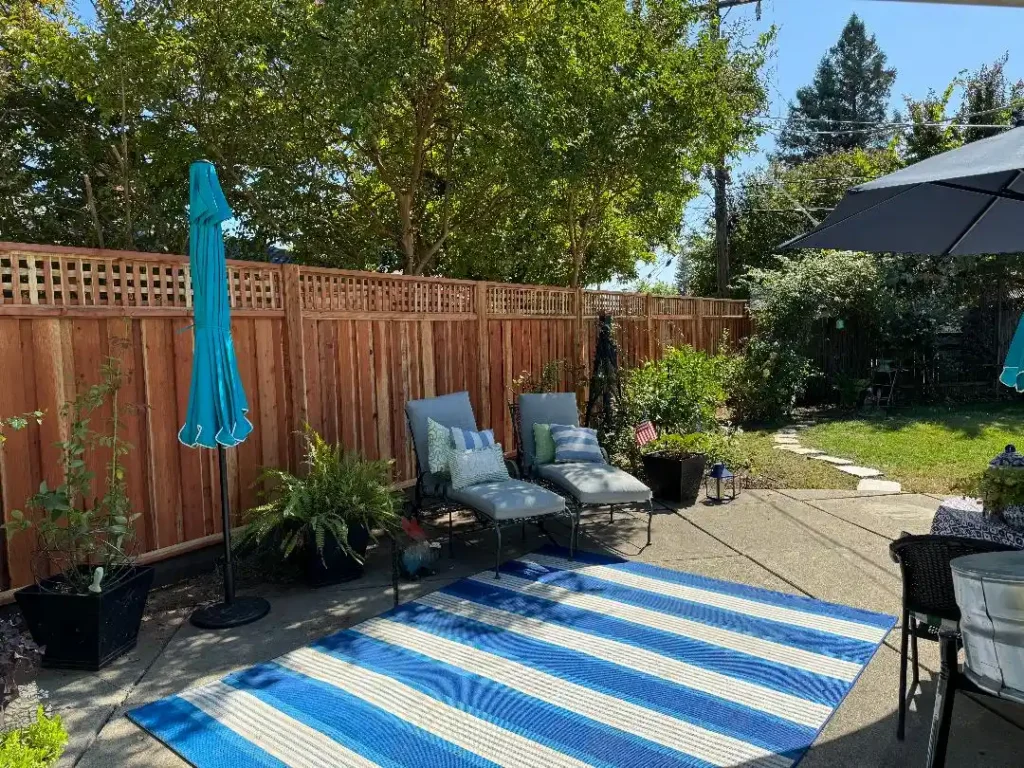
Equipment and utility hides are where a lattice fence earns its keep. AC condensers, pool and spa equipment, trash bins, well heads, and irrigation manifolds all need to stay accessible and ventilated, which rules out a solid enclosure but suits lattice perfectly. Build a hide as a picture-framed three-sided structure with a gate wide enough for service access, and you keep the eyesore out of view without cooking your equipment.
- Patio privacy screens that carve out a quieter seating area.
- Hot tub and spa screens for real privacy without walling off the property.
- AC condenser and equipment hides that stay ventilated and easy to reach.
- Pool equipment screens around pumps and filters.
- Trash bin and utility screens near the side yard.
- Side-yard dividers to break up a long run without closing it in.
- Garden-room panels that give a bed or dining spot its own edge.
- Deck skirts to screen the open space under a raised deck.
- Screens along a driveway or porch to soften a hard edge near the house.
- Lattice with climbing plants for a living wall over time.
- Lattice gates for screened access that still matches the panel.
Hanging pots on a lattice panel add greenery right at eye level and let you create a green corner without building a solid barrier. Pair it with the right landscaping and trees for shade, and a plain corner becomes a beautiful way to make the yard feel finished.
When a Solid Wood Fence Is the Better Choice
Lattice isn’t always the answer, and we’ll tell you when it isn’t. For property lines, street frontage, full neighbor screening, security for kids and dogs, and cutting noise or dust, a solid fence wins because see-through openings defeat the purpose there. A lattice fence blocks a view partway; a solid wood fence blocks it fully, which is why some privacy needs point straight to solid vertical boards.
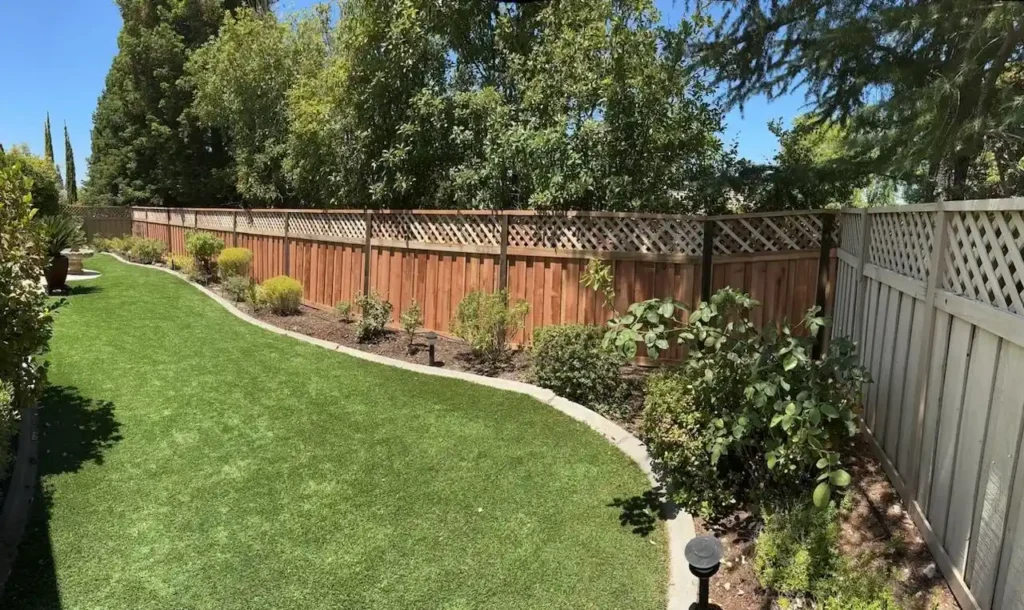
A few wood privacy fence ideas homeowners weigh: board-on-board gives strong privacy with good weather resistance, shadowbox offers a balanced look from both sides and makes a fine good neighbor fence for a shared line, and tongue and groove creates a seamless enclosed design. If you like the open feel but need more height along a boundary, a lattice top fence splits the difference, putting a solid wood fence below and a lattice band up top for a custom look and a little extra airflow. We install all of them in wood, vinyl, ornamental iron, Durabond steel, and chain link, so the right pick for your new fence comes down to the view you’re actually trying to block and your home style.
Privacy Fence Ideas That Make Lattice Feel Intentional
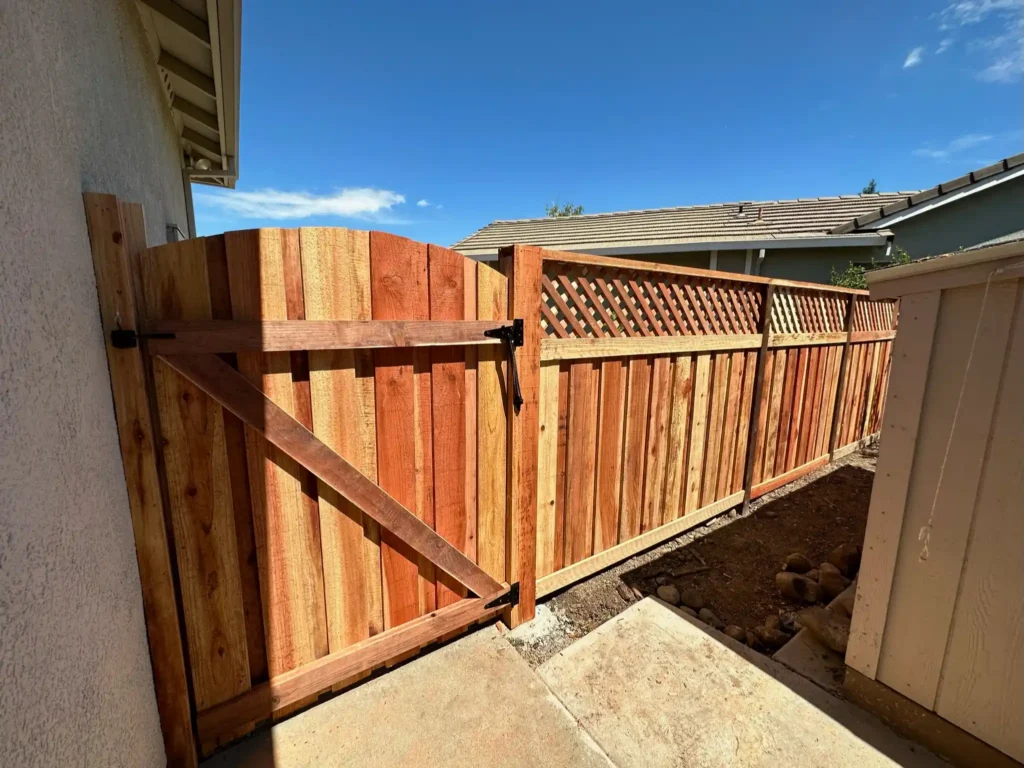
A few moves separate a privacy screen that looks planned from one that looks tacked on:
- Match the frame to your existing fence color, stain colors, style, or material so it reads as one piece.
- Use lighter colors to keep the feel airy, or a darker stain where you want the screen to visually recede.
- Stagger panels instead of running one long wall, so air and light still filter through.
- Weave in a board or a solid material behind the lattice for more privacy in a specific spot.
- Train jasmine, clematis, or climbing roses through the gaps so vines and flowers create a living wall.
- Build a private corner rather than fencing off the whole backyard, keeping decorative screens where the eye lands.
Plants are worth planning for. UC guidance notes climbing plants need regular irrigation and can add real weight and maintenance as they mature, and some varieties spread aggressively, so it’s smart to check invasive-plant lists before you commit. If you’d rather skip the upkeep, a vinyl lattice fence is a low-maintenance, weather-resistant alternative, while a wood fence keeps that natural look and warm appearance in the garden. Keep HOA rules in mind too, since some boards weigh in on gates, panel style, and screen height.
California and Rocklin Considerations Before You Build
A few local rules to check before posts go in for a new fence:
- Height limits. Rocklin allows fences up to 6 feet in side and rear yards and 30 inches in front yards. Local zoning and any HOA or CC&R rules still apply.
- Permits. The 2025 California Building Code (effective January 1, 2026) exempts non-pool fences not over 7 feet from a building permit, but that doesn’t override local rules.
- Pool and spa safety. A decorative lattice fence does not automatically meet California pool safety requirements. Health & Safety Code §115922 and §115923 call for a minimum 60-inch height, no more than 2 inches of ground clearance, no gaps passing a 4-inch sphere, and at least two of seven safety features. Confirm with the city.
- Call 811 before digging. California law requires notice at least two working days before excavation for post holes.
- Wildfire. CAL FIRE’s Zone 0, the first 0 to 5 feet around the home, discourages combustible wood screens attached to the house in fire-prone areas. Verify locally.
When in doubt, your local building department can confirm what applies to the rest of your lot before installation begins, and that should be a priority before crews arrive.
How Fantastic Fence Helps You Get It Right
We help homeowners choose the right screen for the view they actually want to block, not just sell a fence panel. Fantastic Fence has been locally owned since 2011 and is one of the region’s largest local fence and gate companies. We’re licensed, bonded, and insured under CSLB License #979657, with a Rocklin office at 3800 Prosperity Drive and approximately 35 background-checked W-2 employees, not subcontractors. You get flat pricing with zero hidden fees and a written guarantee: the job isn’t done until you give the thumbs up. Financing is available for Sacramento-region residents.
Ready for a fence you’ll actually love? Let’s talk. Contact us today to get a free fence estimate for your lattice fence, privacy fence, or gate project. Have a question or a specific screen in mind? Leave a comment or give your local office a call.
Lattice Fence Privacy FAQs
How do you make a lattice fence more private?
Layer and offset the panels. Stacking three sheets of standard lattice so the openings don’t line up gives near-full privacy from normal viewing angles while still letting air through. Training plants through the lattice fills the remaining gaps over time for more privacy.
Can you see through a lattice fence?
Standard overlap lattice, yes, and that’s often the point for a decorative divider in the garden. Triple-layer offset lattice blocks most direct sightlines while keeping the open, breathable appearance.
Is a lattice fence better than a solid privacy fence?
It depends on the job. For interior screening around a patio, spa, or equipment, a lattice fence wins because it keeps light and airflow. For property lines, street frontage, and full backyard privacy, a solid wood fence is the better choice.
Can lattice be used around a pool or hot tub?
Around a hot tub or lounging area for privacy, absolutely. But a decorative lattice fence does not automatically satisfy California pool safety code, so confirm barrier requirements with your local building department before relying on it.
How do you keep lattice from looking temporary?
Picture-frame it. Setting the lattice into a built frame with clean edges on all four sides stiffens the panel and gives it a finished structure and border, so it looks built into the yard instead of screwed between two posts.