
Key Takeaway
Dog fences work best when the design directly counters how your specific dog escapes: height for jumpers, smooth interior faces for climbers, openings under 4 inches for squeezers, and bottom barriers extending one to two feet below grade for diggers. Most suburban yards do well with solid wood or vinyl privacy fencing, while chain link and ornamental steel suit larger runs when openings and gate details match the dog. The gate is where most real escapes happen.
The best dog fence is designed around how your dog could escape: height for a jumper, a smooth interior face for a climber, openings too small to squeeze through, protection at the bottom edge for a digger, and a gate that latches every time. Dog fences built from solid wood fencing or vinyl handle most suburban yards, though chain link fences, ornamental iron, and steel all work when the details match the dog. Secure containment comes down to design details, not brand names.
Before you compare fence options, figure out what your dog actually does. Escapes almost always happen one of six ways:
The American Kennel Club is clear there’s no universal breed-based height standard. Judge the dog in front of you: strength, prey drive, activity level, jumping ability, and whether it has escaped before. Humane World for Animals points out that many dogs climb by pushing off the fence itself, and that patio furniture, a doghouse, or a woodpile near the fence line becomes a launch point.
A dog fence is a pet containment system, not a material and a number of feet. Five parts work together:
Walk the fence line crouched at your dog’s eye level. You’ll spot loose boards and daylight under the gate you’d never notice standing up.

Every material here can make a good pet fence. Privacy, climb resistance, and durability vary, but design decides the outcome, not the brand of picket or panel.
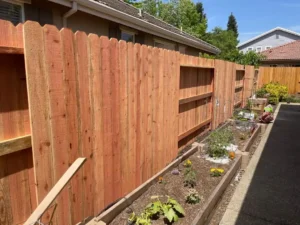
A solid wood fence blocks the view that sets dogs off, and height and style are affordable to customize. Watch the interior rails, since they give climbers footholds, and inspect yearly for loose boards and rot. Bolt-Up Hidden Steel Posts add strength behind a clean, seamless look.
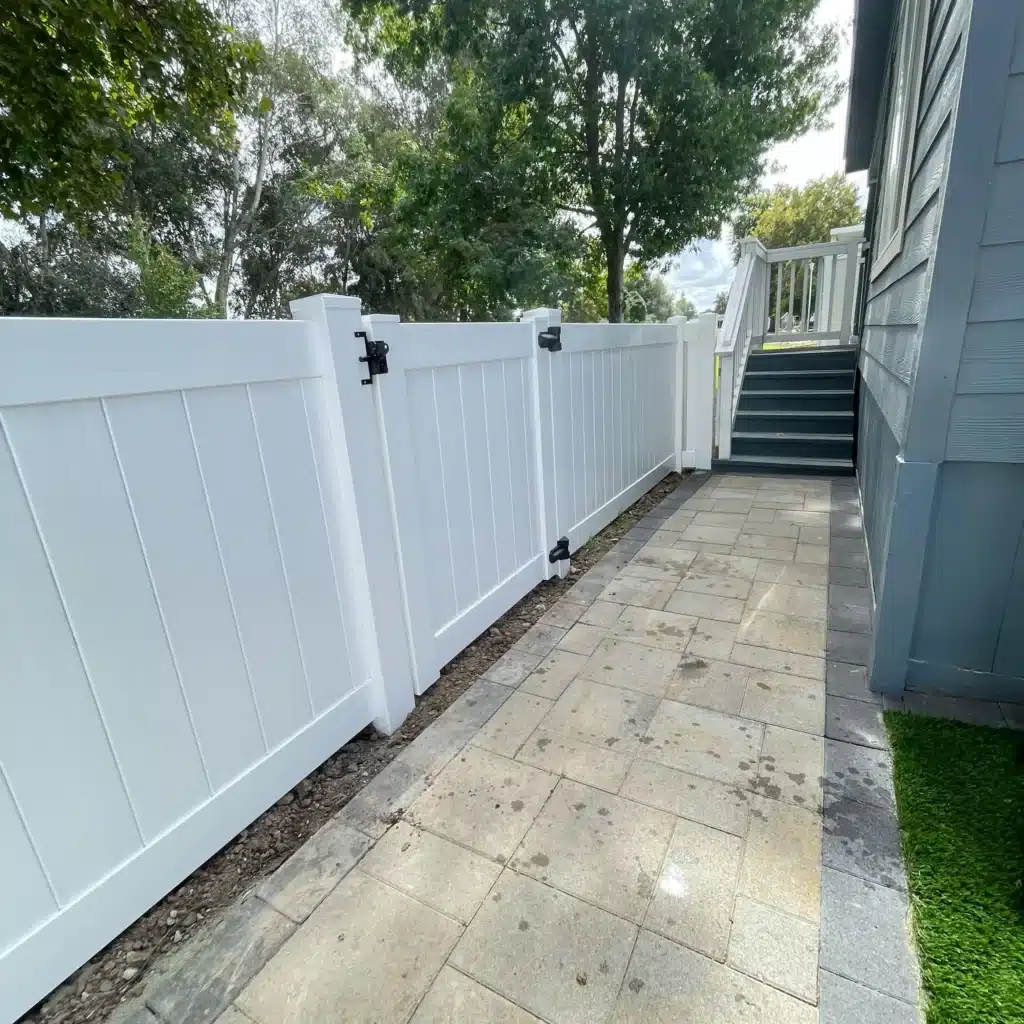
Smooth panels are genuinely hard to climb, with no picket gaps to squeeze through. Vinyl shrugs off weather and rot, which matters when a dog leans and scratches along the same stretch for years.
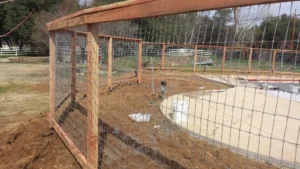
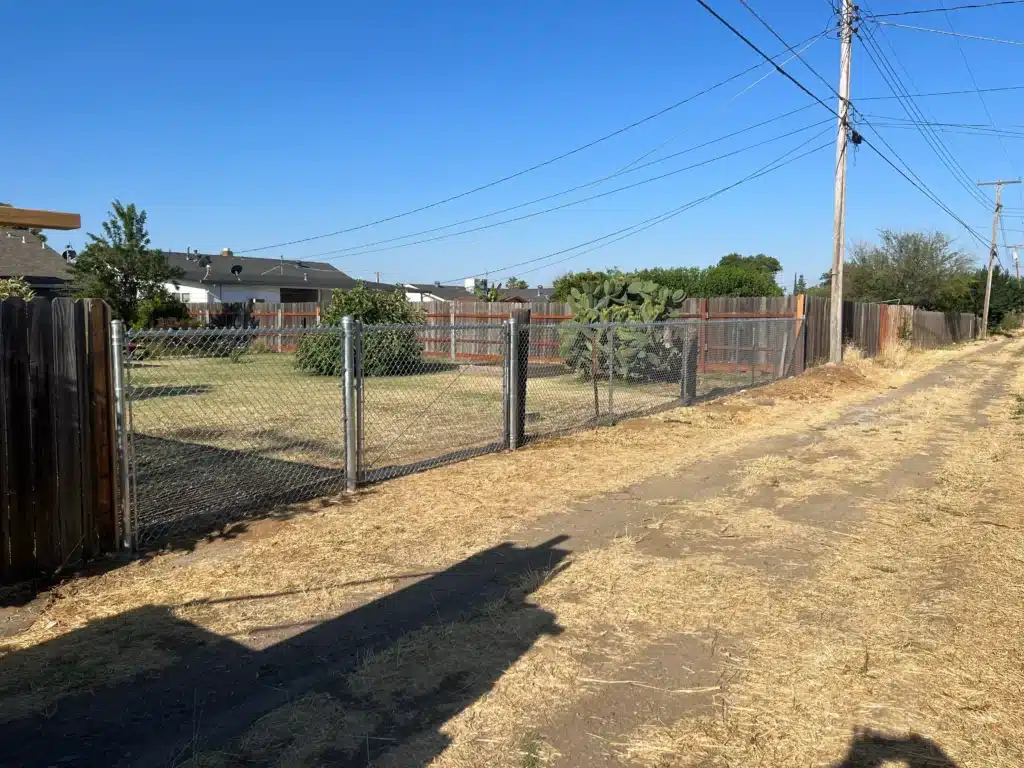
Affordable for enclosing a bigger backyard or a dog run, and cost effective on long runs. There’s no visual barrier, the mesh gives a climber toeholds, and the bottom edge and gates need extra attention.
Elegant, durable, and full of visual appeal for decades. Measure the openings against your smallest dog, and remember an open design does nothing to block outside activity.
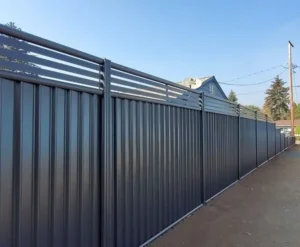
High-security, sleek, and rust resistant when the finish stays intact. Dog suitability still comes down to openings, height, the gate, and ground clearance.
Common trade and animal-care recommendations land roughly between 4.5 and 6 feet, and plenty of suburban yards end up at six. Large dogs that nap in the shade may need less fence than a 25-pound escape artist, and a dog that has already cleared a fence tells you more than any chart. A downhill slope shortens the fence, and anything stacked nearby gives a boost. For proven climbers, Humane World suggests an inward-tilting extension at roughly 45 degrees. That’s expert guidance, not code, and any extension still has to fit local height limits and HOA rules.
Close the gap at the ground line. AKC guidance points to bottom barriers of metal, concrete, or large rock extending roughly one to two feet below the fence line. Fix low spots and erosion at the same time, and plan around garden beds and irrigation along the fence. Any digging means calling 811 first: the CPUC advises contacting them at least two working days before excavation, and an 811 ticket won’t locate privately owned irrigation, lighting, or pool lines.
It may help. The ASPCA lists secure, opaque fencing as one management option for territorial barking triggered by seeing people, dogs, and vehicles, which also cuts the fence-line noise your neighbors hear. It won’t treat the underlying behavior, and sound triggers remain.

An invisible fence, sometimes sold as an underground fence or in-ground pet fence, uses a buried wire and a collar. Wireless units create a roughly circular zone with a radio transmitter, and GPS systems draw boundaries in an app with no digging, which is why some owners take one along camping. All of them are boundary-warning and training systems, not physical barriers. What the pet learns is where the correction starts, which is a very different thing from a fence. They don’t keep other dogs, wildlife, or strangers out, and they depend on power, batteries, and training. The American Veterinary Society of Animal Behavior recommends reward-based methods over aversive tools, including electronic collars.
Repair covers isolated loose boards, a sagging gate, small gaps, or one failing post. Modify means adding bottom protection, filling low spots, adding an extension, swapping in a self-closing latch, or tightening mesh. Replace makes sense with widespread rot or rust, multiple failing posts, or a height and opening design that doesn’t suit your dog. Gate repair deserves its own mention, because a good fence with a bad gate isn’t secure. Financing is available for Sacramento-region residents.

Elk Grove’s zoning code currently shows these general limits, worth verifying before you build:
The city’s animal code requires a fenced enclosure adequate to contain the dog unless it’s lawfully tethered, and tethering is capped at two hours in any 24-hour period, with the dog unable to reach the sidewalk, street, or anything past the property line. Because local regulations change lot by lot, check with the Elk Grove Planning and Building Division, your HOA guidelines and CC&Rs, and our Fence Ordinance Quick Links. Our Elk Grove office is at 9245 Laguna Springs Dr, Suite #228.
Ask any contractor: How will the design address my dog’s escape behavior? Who handles the gates and grade changes? Are the people doing the work your employees? Is pricing flat and in writing? What guarantee applies?
Our answers: licensed, bonded, and insured under CSLB License #979657, approximately 35 background-checked W-2 employees, flat pricing with zero hidden fees, and a written guarantee that the job isn’t finished until you give the thumbs up. Every crew takes pride in cleaning up thoroughly, because we’re guests on your property. We started in 2011 because a homeowner couldn’t get a fence contractor to return his calls.
Chain link is usually the most budget-friendly permanent option among dog fences for a larger area. Temporary wire mesh or pallet panels rarely survive a determined dog. Try our Fence Price Calculator before you purchase anything, or ask for a free estimate.
Solid wood or vinyl privacy fencing suits most suburban yards. Chain link, ornamental iron, and Durabond steel all work when the height, openings, gate, and ground clearance match your dog.
A fenced dog run, supervised time outside, an indoor gate across a doorway, or an invisible fence paired with consistent training. A virtual boundary gives a dog room to roam, but it still doesn’t keep anything out of your yard.
Wireless and invisible systems need the least physical work but depend entirely on training and power. Among physical dog fences, chain link goes up fastest. Post depth, grade, and utility locating are why professional installation lasts longer.
We handle repair, replace, and installation for wood, vinyl, chain link, ornamental iron, and Durabond steel, plus gates and gate openers. Whatever your furry friend gets up to, the right fence gives your pets the run of the yard and makes outdoor life easier for the whole family. Three local offices serve Sacramento, Placer, El Dorado, Yuba, Yolo, and Nevada counties. Call the number for your area or Book Online for a free consultation and a free fence estimate. Ready for a fence you’ll actually love? Let’s talk.
About the Author
Dominic Vella
Founder, Fantastic Fence
CA C-13 License #979657
Dominic Vella is the founder of Fantastic Fence, a Sacramento-based fencing company he grew from a two-person crew into a $10 million business serving six California counties. A licensed C-13 Fencing Contractor (#979657) with 15+ years of hands-on experience, Dominic has overseen thousands of fence installations across the Sacramento region.
When he’s not on the jobsite, he coaches small business owners in the Entrepreneur Organization Accelerator Program helping them navigate business ownership.
Ready for a fence that lasts? Get a free estimate from our team.
"*" indicates required fields